Category: 1995
-

While Hackers is a terrible film, it does afford one the opportunity to see Jonny Lee Miller attempt to essay his lead role as a Ferris Bueller-type thing, only to instead do a strange rendition of Peter Sellers as Clare Quilty. It’s not worth seeing for this performance, not at all, but if you’re ever…
-

Until the final scene, director Mann is still carefully plotting out Heat. The film’s narrative construction–when he introduces a character, when he returns to a character, how he transitions from one character to another–is magnificent. Heat is a delicate film, with Mann never letting a single element carry a scene. He’s always working in combination–sound…
-

There’s a cute little reference to Ultraman and Owlman on the news at the beginning of the issue. Alec’s travels bring him to Earth-Three (or something like it) but he doesn’t run afoul of the supervillains. Instead, he finds himself with the Arcanes. Only, Anton’s the good one and Abby’s the bad one. There’s a…
-

Village of the Damned has three major problems. In no particular order… I’ll start with the stunt casting. Christopher Reeve, Kirstie Alley, Mark Hamill and Michael Paré are all–to varying degrees–genre actors. While Reeve and Paré are both fine, Alley’s out of her depth and Hamill’s just terrible. Some of Alley’s failings–and some of Hamill’s…
-

While Tom Hanks, Bill Paxton and Kevin Bacon’s characters are the only ones in danger in Apollo 13, they remain calm for almost the entire runtime. There’s no point to panicking, something Hanks points out in dialogue. Instead, director Howard focuses on an exceptional assortment of character actors–as the NASA Mission Control–for the dramatic parts.…
-

Halloween: The Curse of Michael Myers spends about twenty minutes resolving the previous movie in the series and, gingerly, setting up the characters for this one. Chappelle sets these events to a radio talk show–Curse screams early nineties–but there is an attempt to make it feel “real.” The shock jock is a ludicrously bad Howard…
-

Dolores Claiborne isn’t just a mother and daughter picture… it’s not just a mother and daughter picture made by a bunch of men (directed by a man, produced by men, screenplay by a man based on a novel by a man), it’s Panavision visual experience mother and daughter picture. Director Hackford–ably assisted by Gabriel Beristain’s…
-

Roger Donaldson has these great sweeping camera shots in Species. He doesn’t restrict them to the action scenes, but uses them to dynamically bring his five principals into the frame together. It’s always beautifully done and, if one could separate Donaldson’s work from the film’s content, Species would seem a lot more impressive. Unfortunately, the…
-

I love Goldeneye’s plotting. It’s clear they plotted the film to be most enjoyed the first time through, but in terms of reveals and action sequences. The opening sequence doesn’t work particularly well in the end, though, a problem I had the last time I watched the film as well. It’s simply not interesting on…
-

Clockers opens with actual crime scene photos juxtaposed against filmed sequences of a crowd gathering to watch as the police arrive. Lee is dealing with a lot in the film and opening with that startling sequence—against a beautiful song—at least shocks the viewer into paying attention. Though the film is too apolitical to be “about”…
-

I can’t think of another movie with such a dearth of acting ability. It’s another reason Mortal Kombat, specifically its financial success, is something of a milestone. Combined with the terrible CG, the movie’s box office achievement shows how little general audiences—specifically males—care about anything of quality. I think Trevor Goddard gives the best performance.…
-

So when Trevor Goddard gives a film’s best performance, what can you really say about the film? And calling Illegal in Blue a film is a compliment… but apparently it really was made by a motion picture company. Orion, no less. Two credits stick out. First, Orion. I had no idea they were trying to…
-

About halfway through Bye Bye Love, I realized it was reminding me of “The Bradys,” the hour-long drama sequel to “The Brady Bunch.” Two very successful sitcom writers wrote this movie; it’s like an hour-long comedy drama… Only the movie runs about a hundred minutes. It’s way too long. What’s interesting—there’s not a single laugh…
-

Jumanji is a thoroughly decent film, mostly due to good production values and Johnston’s direction. It’s sort of hard to talk about the film due to the plotting. The film’s not real time, but the present action is still short… or not. In some ways, it’s twenty-six years, in others, it’s a day and a…
-

Talk about padding. Before I forget, the fiancée does come up again for a brief mention. No appearance, but a mention. The issue itself is David and the Rabbi going through some more strange stuff and then waiting for this ancient, immortal woman. It turns out she’s David’s soulmate or something, but he doesn’t know…
-
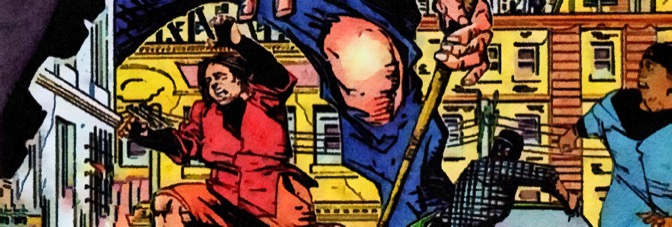
This issue, concentrating on the second xombi, is pretty good. Rozum always does well with these done-in-ones and this issue, though it’s part of a bigger story (there’s some subplot brewing going on too), is basically one of those issues. David and his problems are barely mentioned (everyone has seemingly forgotten the fiancée… it’s amazing…
-

After what seems like his editorially mandated guest star issues… Rozum gets Xombi back on track. This issue continues directly from what Rozum promised three issues ago—David gets to find out about the strange world he lives in. It doesn’t open with him, however. Instead, it opens with the reader finding out David is going…
-

Okay, by not reading the cover, I missed knowing the giant rat—Boogieman—was guest-starring from one of the Milestone superhero books. It looks like this issue is where Rozum had to bring in guest stars to try and up the sales on Xombi. There’s some other character in it too, some flying chick with a bad…
-

Yeah, Xombi’s definitely taken a change in direction. This issue, Rozum brings back some barely relevant monsters and makes them attack the population. Can David and his friends stop them? Who knows, there’s a cliffhanger first—this issue makes the third where David’s powers don’t make a significant appearance. Neither does his fiancée. No mention either,…
-

I think I just hit the point in Xombi’s publication history when it got an editorial mandate. This issue does not contain the story promised at the end of the last issue. It does not feature David’s fiancée returning. It does not even mention her. Instead, David’s hanging out with his nanotechnology expert friend. He’s…
-

I think this issue is Rozum’s best on Xombi, but it’s hard to say. It’s so unrelentingly, hostilely downbeat, it’s difficult to fully appreciate it. The issue’s not about David. He appears at the bookends, consulting the Rabbi as to how to inform his fiancée about his… lifestyle change. The Rabbi tells David about his…
-

Rozum brings in David’s fiancée here—though only on the phone—but he doesn’t really need her. The issue, written from David’s perspective (which is good as it was the last time), is more about introducing David’s friends. His regular friends… who don’t notice he looks twenty years younger. Birch now draws David like a punk teenager…
-

So the big revelation this issue? David Kim is kind of an angel. The guest-starring angels, off panel, tell him so. And, just as Rozum has pushed the series as far away from tangible reality as possible, the back matter promises to bring it back. Next issue will feature David’s fiancée, who apparently hasn’t missed…
-

Rozum paces the issue somewhat well. He was some twists in the first few pages by the end, I thought they happened last issue as the hard cliffhanger. It lets him utilize a couple different tones to it. Of course, Birch helps with the tone too. The end becomes this frantic chase sequence, usually comedic;…
-

More mentions of Xombi‘s meaning—it’s pronounced zombie, notch—but nothing explaining how David became one (it’s not just a science thing, presumably, but also a magic thing) when he had his science-driven origin. His friends don’t talk much about it either. Rozum does something very strange here, bringing another of the supporting cast into the issue…
-
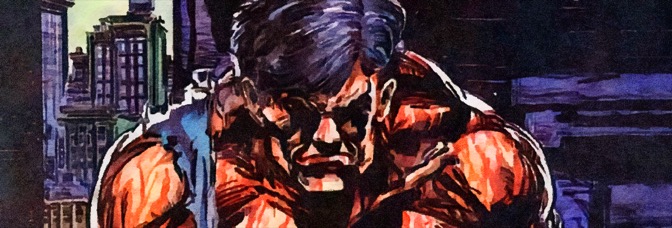
So apparently the title, Xombi, isn’t just a riff on zombie, but some way of describing David Kim. We learn about it from the latest bunch of new characters Rozum adds this issue. I don’t think he goes a single issue without introducing two new characters. Here it might be four. Again, not much of…
-

Musgove and Chamberlin have a Helen Keller joke in this installment of The Pink Tornado, presumably because they thought it makes them edgy. They’re really just incredibly stupid and rather terrible writers. Their dialogue’s endless and their art’s bad. As for Niles’s Cal McDonald, it’s fine. I mean, it’s bad, but it’s Jones’s fault. Niles…
-

I want to take back all the nice things I said about Shaw’s Alan Bland. This installment is annoying and idiotic–Shaw has so many sight gags, he eventually runs out of space on the page. And the script thinks old hippies (who look more beatnik) are hilarious. It’s atrocious. Pope’s got second slot, which is…
-

Shockingly, the Niles story story this issue–one of his Cal McDonald ones–is mildly inoffensive. It’s poorly written detective narration, but at least he’s work in a recognized genre (badly written detective narration). It’s stupid and Casey Jones’s art isn’t any good… but it’s not intolerable. Oh, the Marz and Wrightson Aliens story ends this issue…
-

Wow, has Steve Niles ever been able to write? He has a story in this issue and it’s the worst written police procedural I think I’ve ever read. A hundred issues or no, if Dark Horse was publishing Niles… imagine what made the reject pile. The Paul Lee art on the story is bad, but…
 The Stop Button