Category: 1999
-

I feel a little like one of those jokes about training an AI to write something because this episode of “Becker”—specifically how I write about it—is going to be very similar to the last time I wrote about an episode of “Becker” written by Ian Gurvitz. I thought having Andy Ackerman directing would make a…
-

There are some weird optics to P.C. World. You’ve got Ted Danson, who just six years earlier burned out due to a really bad public blackface incident and is coming back with this “Becker” show, reformed. Now, Danson’s gone on to be one of the least problematic Hollywood liberals and a damn fine actor, but…
-

It hadn’t occurred to me some of “Becker”’s problem so far might have been direction. I rarely think about sitcom (the three-camera style) direction. They’re just going through the same kinds of shots over and over. But then again, maybe some of the directors are infinitely better with the format and the actors. Case in…
-

It’s distressing how little writer Ian Gurvitz handles Alex Désert’s Jake character. Last credited episode he didn’t do anything with except make blind jokes. This time Désert gets more to do, but barely—we see his apartment, partially, for the first time—and it’s not funny. And I think there’s an opening blind joke because when I…
-

When Richard Farnsworth’s estranged and offscreen brother suffers a stroke, Farnsworth wants to reconcile but can’t drive and stubbornly has to go see him on his own. So he hopes on his riding mower and off to Wisconsin (from Iowa) he goes. He has some problems along the way, runs into some wayward folk who…
-

Despite excellent lead performances, Tumbleweeds is almost entirely inert–dramatically speaking. Janet McTeer is a thirtysomething single mom with bad taste in men who drags tween daughter Kimberly J. Brown all around the country after her latest romance goes bad. The romances never go too bad because McTeer has a preternatural ability to stay away from…
-

The Winslow Boy utilizes all the trappings of a stage adaptation without ever being stagy. Director Mamet opens the film with a family entering their home–there’s some muted conversation before they get completely inside, then the introductions begin. So it’s a very play structure too, at least as far as the first and third acts…
-

But I’m a Cheerleader is too short. It runs eighty-five minutes, which would be fine if the narrative fit into director Babbit’s affected, aspirationally camp style. But Brian Peterson’s script is front heavy. And Jules Labarthe’s cinematography is too flat. Rachel Kamerman’s production design is loud, but Labarthe shoots it too shallow. He’s also not…
-

It’d be hard to call The Thirteenth Floor a missed opportunity because that statement suggests there was some promise to it. There’s no promise anywhere near Thirteenth Floor. But it does have some gorgeous set decoration and, presumably, production design from Kirk M. Petruccelli. The presumably qualifier because even though Petruccelli does excellent work on…
-

Three Kings ought to appeal to every one of my liberal affections–director Russell very seriously wants to look at the Gulf War and how it failed the people it should have been protecting. Over and over, Russell goes out of his way to make the American soldiers take responsibility. Not for the war itself, but…
-

Hi. My name is Andrew. And, from 1999 to sometime in 2000, I was a Star Wars: Episode I: The Phantom Menace apologist. When writing out the title, I forced myself to type it Star Wars: Episode I – The Phantom Menace. Because having two colons in a title is weak sauce. It was a…
-

Director Peirce makes an interesting choice with Boys Don’t Cry–she never gives the viewer enough information about Hilary Swank’s protagonist. As a result, it’s occasionally difficult to think of Swank as the protagonist. For the first eighty or so minutes of the film, Swank is just this skinny little guy who falls in with a…
-

Liberty Heights is about protagonist Ben Foster's last year in high school. Levinson never puts it in such simple terms because the film is about quiet, deliberate, but perceivable life events. Every moment in the film's memorable because Levinson is going through these people's memorable moments of the year. Of course, he never forecasts the…
-
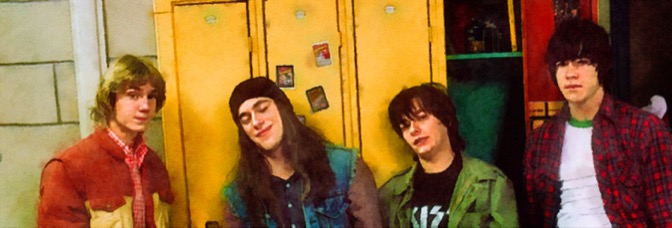
Detroit Rock City is going to be difficult to talk about. It’s painfully unfunny, yet fully embraces the idea it’s the complete opposite. Maybe director Rifkin really thinks his weak seventies pop culture references, his sight gags, and his terrible cast are funny. Or maybe he’s just good at hiding any awareness of the film’s…
-

Office Space is the model of efficiency. Judge never races through things, he just tells them really fast or implies them. There’s the fantastic opening montage of everyone going to work, which ought to be a clue to who is and isn’t going to be important in the film, and then things just breeze along…
-

My favorite moment in The Rage: Carrie 2–and favorite is a stretch–is when the camera pans over a hippy playing guitar as the soundtrack plays ska. There’s a disconnect between the audio and visual; it’s disruptive, the kind of subtle move utterly absent in director Shea’s terrible work. Shea’s a female director so one might…
-
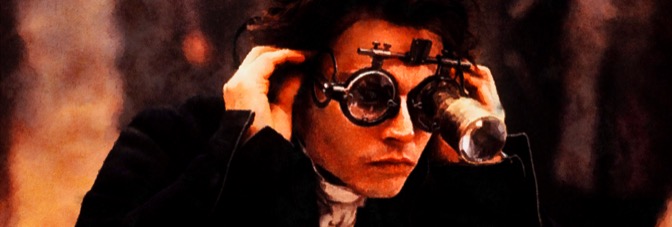
For the majority of the running time, at least Sleepy Hollow isn’t boring. Burton gets in an event every ten minutes, which keeps it moving. It often gets really stupid and watching Johnny Depp’s histrionics get tiresome after the first five minutes, but at least it moves. Until the finale, which drags incredibly. Since the…
-

Muppets from Space is definitely missing some important elements (like subplots and a first act), but it usually doesn’t matter. Even though Hill is a poor director–the film doesn’t just lack personality, it looks like a TV show–the Muppet performers are incredibly strong and the script has a bunch of great lines. The film focuses…
-

I can’t imagine not liking Galaxy Quest, but I suppose appreciating it does require on a certain level of previous knowledge. I can’t imagine how it plays to people who aren’t familiar with “Star Trek,” not to mention knowing William Shatner’s an egomaniac and “Trek” fans have big, weird conventions. Having some passing knowledge of…
-

It’s hard to unravel the layers of this television special. It’s supposed to be a promotion for the Galaxy Quest movie—but from the reality there was a show. It’s not clear if the movie promoted is the actual movie (where the sci-fi TV actors actually go to space) or if it’s some other movie. If…
-

Grayson’s back to true form here, with terrible dialogue and sexy smooth talker Matt Murdock. It appears he’s got a cell built in to his Daredevil costume. He shows up towards the beginning, talking to the Black Widow II. I’m sure this story wasn’t Grayson’s idea—maybe someone at Marvel thought it sounded good—but it’s just…
-

So who shoots her (Natasha) at the end? Is that SHIELD? Why’s SHIELD shooting her? This issue might be better written than the last. The conversation between Natasha and Matt is nowhere near as bad, though Grayson’s characterization of him as a lech seems a little off. Well, no, it seems a lot off. Grayson…
-
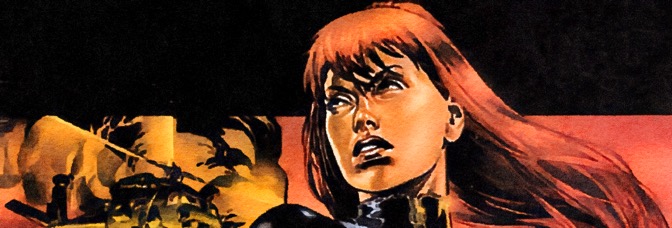
For some reason, I was expecting more from Jones. I wasn’t expecting anything from Grayson (and, oh, did she deliver), but Jones… I thought he’d at least do a consistently good issue. Instead, it’s like he’s alternating. One panel is good, the next isn’t. He has these terrible eyeglass lenses, which makes Matt Murdock’s cameo…
-

The combination of everyone looking alike and Shanower being deceptive for emphasis really plays in this issue. He opens with Helen’s two brothers coming home to find her missing. They look like Paris, only with facial hair. At least their identities are quickly revealed. The problem comes with the rest of the issue, which doesn’t…
-

Shanower constructs the plot of this issue well. It keeps the reader engaged–the focus moves from the unidentified Helen to Paris to other people around them, only becoming linear at the end. Shanower saves the big reveal–Paris is disobeying his father out of selfishness and is about to start a war–for the last couple pages.…
-

Shanower seems to have worked past his problems now. The protagonist is no longer Paris, who is developing more into a villain (due to lack of intelligence) and the issue is better for it. Having Paris, with his fantastical history, works against making the book feel real. Instead, Shanower moves the focus–for some of the…
-

Well, Shanower took a lot less time to get to the revelation than I thought… turns out Paris is a prince of Troy. That scene, the one where Paris gives up his old life for his new (he really doesn’t have a say as it turns out), is rather awkward. This issue features Kassandra going…
-

Truman finishes Guns of the Dragon indistinctly. His Bat Lash is such a strong character, it mostly works. Unfortunately, Truman’s art is weak again—which answers whether I had just grown accustomed to it. I had not. He also doesn’t use dialect here, so clearly he was making choices with the series. The issue is, again,…
-

The backup this issue is from Jerry Ordway, so the art’s good. It’s not really a backup, it’s more an aside to give the reader some more information. But Moore and Ordway present it as a fifties or sixties sci-fi comic, albeit with better dialogue. Tom Strong gives Moore a nice opportunity to do revisionist…
-

It’s the first two-parter (or multi-part, I have no idea) story. I sort of figured Moore would do Tom Strong as done-in-ones, just because it fits. Though he does get to a good hard cliffhanger–I’m going to start using the terms hard and soft cliffhanger, sort of like hard sci-fi–I just wish I hadn’t been…
 The Stop Button