Tag: Steve Gerber
-

This comic is difficult to believe. Not the content of the issue, where Gerber just goes wild with a look at American presidential candidacy, but its very existence. Marvel Comics published a comic about the American public rabidly anticipating the assassination of political candidates. They let Gerber get away with it, they even paid Gene…
-
It’s an amazing issue. Primarily because it ends with Howard the Duck being made a Presidential candidate, but also because Gerber hits every right note throughout the issue. He introduces politics into the comic after finishing up the previous issue’s cliffhanger. It involved a giant gingerbread man attacking Howard and Bev after being brought to…
-
Part of me desperately wishes Gerber and Mary Skrenes (who helped with plotting) just gave Colan a scary house script and then had the absurdism added later. Because if you took out the word balloons and the narration boxes, it would seem like Howard and Beverly had ended up in a twisted Marvel horror comic.…
-
If you’re a duck stuck in the Marvel Universe, how are you going to earn some quick cash? Wrestling, of course. Everyone knows fighting crime doesn’t pay and you’ve got to look out for number one! Howard and Beverly are having money troubles–I love how Gerber gets around to discussing the obvious logic problems in…
-
Gene Colan pencils this issue and does a good job of it. He’s not a definitive Howard illustrator except he does manage to draw everything besides the duck perfectly. And his duck is really good, it just doesn’t have as much personality as it could. The story this issue has Howard and Beverly happening across…
-
What’s so great about Howard the Duck–or one of the great things, as I’m now discovering there are a lot of them in the comic–is how Gerber is able to use the absurdity of the concept to examine comic book reality. Howard and Beverly exist in a world with the fantastical nature of the Marvel…
-
What an amazing comic. Gerber tells the story straight–so it’s this very simple tale of a talking duck, this girl he likes, this boy who likes the girl the talking duck likes and then the talking turnip who controls the boy who likes the girl who the talking duck likes. The turnip and the duck…
-
It’s not clear if it’s going to be the secret of the series or just the secret of this issue, but the way writer Steve Gerber makes Howard the Duck work is by coming up with this hippie political commentary plot and except have it narrated by Sam Spade. Only Sam Spade isn’t a P.I.…
-
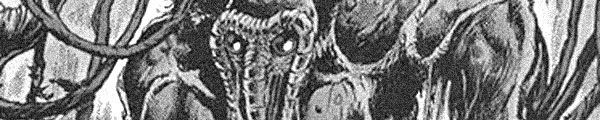
In some ways, this issue has Gerber's most predictable comics scene. Man-Thing and his arch-nemesis, Schist, duke it out in a laboratory where Man-Thing could regain his humanity and Schist could gain immortality. Sure, it's got Ploog artwork, but there's nothing special about it. Man-Thing's almost human again and Gerber can't think of anything to…
-
Gerber only puts in a few pages of about Man-Thing's erstwhile human sidekicks, but it's all rather effective. It grounds the issue in reality, while elsewhere Gerber pulls even more out of it. Turns out Schist isn't just a bad guy industrialist, he's actually a bad guy industrialist looking for the fountain of youth. Unconnectedly,…
-
Gerber nails it again, this time using Man-Thing to write an epitaph for a character. He’s also introducing most of this character in this issue. He uses a three act device–obviously so, with the regular cast and guest stars put to work as actors in a play–and runs the character development throughout. He has enough…
-
Here’s a rarity–the cliffhanger successfully ties the issue together. Gerber–with Mike Ploog joining him on the art–spends most of the issue bringing the players together. Rory and the biker chick, a couple circus performers, a dead clown and Man-Thing. They all converge at the end, where Gerber finds time for a fight scene. He also…
-
Abel inks Mayerik even better this issue; occasionally there’s an almost Eisner-like roundness to the figures and the faces. The hair too–the hair’s not Eisner-like, but there’s often a lot of phenomenal hair. Gerber continues with the Foolkiller, recounting his origin. It’s a tad much, actually. There’s some anti-religion, anti-military propaganda in Gerber’s story for…
-
I almost want to cut this issue slack for the art; Jack Abel inking Val Mayerik is an interesting thing. Abel adds not just a lot of detail–to Man-Thing in particular–but comic expressions for most of the characters. Man-Thing all of a sudden seems to recognize its humor. And a good deal of the issue…
-
One problem I can see Gerber having with Man-Thing is what to do on the regular issues, the ones where he has a somewhat ambitious narrative structure, but isn't doing anything fantastical. Gerber excels at the fantastical. This issue is not fantastical. The structure's kind of neat. Man-Thing saves a guy who runs into a…
-
At one point during the issue, the editor–or writer Steve Gerber–apologizes for the visual madness in Gerber’s script. This apology is for the reader. But given all the insanity Gerber throws together, which ranges from superheroes, Howard the Duck, wizards, barbarians, politicians in big cars and then army guys–not to mention castles, swamps and cosmic…
-

Apparently Mayerik and Trapani are keeping this new style, which is Trapani doing bad faces most of the time. Very unfortunate. The issue is a mess of alternate realities, barbarians, ducks, GIs and something else. Magicians. Gerber is writing about the walls of reality collapsing and somehow he’s just got to get Man-Thing involved. But…
-
It’s really bad art. From Mayerik and Trapani too. Maybe the inks are a little off but I think a lot if it must be the pencils. I really hope it’s not some new style they’re working on. Because it’s bad. Gerber tries very hard with this story, which is sort of a talking heads…
-
This story is the best so far in Gerber’s Man-Thing run so far. He does a story introducing a Superman analogue, only without growing up in the world and some other significant changes. But what’s important is how Gerber writes this character as encountering the world. Gerber does a second person thing and it’s fascinating…
-
Sal Trapani inks Mayerik fairly well. Everyone looks a little too Marvel house style for it to be a horror comic, but it’s good art. There’s a lot of action in the issue, with Man-Thing getting involved with these Native American kids who decide to attack an industrialist destroying the swamp. They do it in…
-
Gerber writes the heck out of the first feature length Man-Thing story. There’s a lot of new information introduced, with Gerber doing a lengthy flashback. The flashback–to Atlantis and an explanation of something the present–takes the place of a backup story. But put as a second chapter, it relieves a lot of drama. Not too…
-
The Man-Thing feature is pretty good. Gerber starts clarifying the nexus in the swamp and also the real villains behind the story. They’re not the most original villains–demons from hell–but the way Gerber sets it up is strong. While there’s a forward-thinking element to the top story with the kids hanging out with Man-Thing, the…
-
Oh, very good news–Val Mayerik is on the pencils (with Frank Bolle in inks). From the first couple pages of Man-Thing, it's clear the art is going to be a lot better. It shouldn't be particularly obvious, as it's a Man-Thing story and Mayerik doesn't illustrate him until later in the story but the way…
-
Gerber does the stupid second person narration, but not a lot of it. Most of the Man-Thing story he does a close third person for Man-Thing; it works a lot better. Especially he confirms Man-Thing has no mouth. Instead, Man-Thing listens a lot. He makes a new friend, a black guy on the run from…
-
Steve Gerber writes the entire Man-Thing feature with second person narration. Everything thing is the narration talking to Man-Thing, who can’t respond as he doesn’t speak. And because it’s the narration. But if he had talked back to the narrator, the story would be better. Because otherwise there’s not a lot of personality to it.…
-
This issue Daredevil fights a guy whose power is creating optical illusions. Instead of just kicking his butt, Daredevil falls victim to the optical illusions. It’s like Steve Gerber doesn’t realize Daredevil’s actually blind. His powers might make it seem like he can see… but he can’t. Unless I’m missing something. I mean, I had…
-
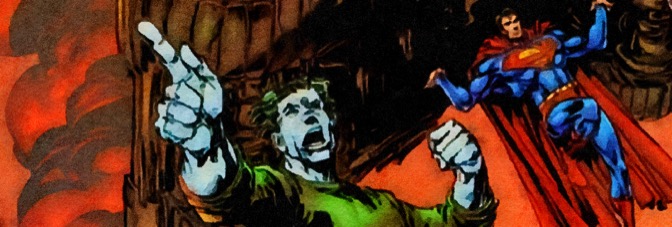
Gerber finds his way to a conclusion—an unexpected one, actually. It’s nice how limited series used to be able to build over their run. His excellent pacing has something to do with it. Gerber gets in a lot of story, especially considering he focuses on multiple characters throughout. Unfortunately, Lex is no longer amusing this…
-
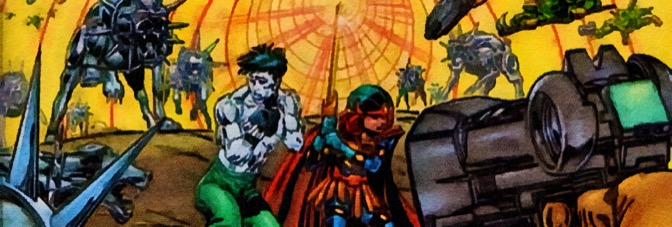
Al heads to Apokolips—after Lex proposes to breed him with some of his female staff—and meets up with a preteen Fury. They form a musical duo. Gerber comes up with some outlandish ideas, but he curbs them in the reality of DC continuity, which just makes the read all the better. I still haven’t really…
-
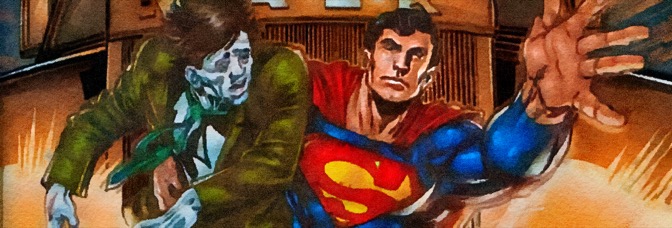
Superman shows up this issue and Bright draws him so poorly I want to take back everything complimentary I said about his art on the first issue. Bright can’t draw Superman’s face–he gets the proportions of the head wrong–and he also can’t draw him flying. It’s a disastrous opening for the issue. Thank goodness there’s…
-
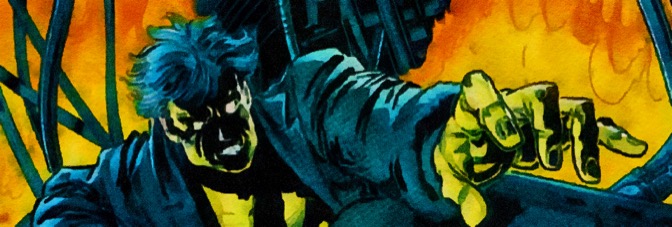
I knew the concept—regular guy gets a Bizarro made of him—but Gerber still does manage to get some surprises out of it. When the issue opens, Al (the Bizarro) is slowly losing his faculties as he turns into a regular Bizarro. It makes him immediately sympathetic, something Gerber keeps up because the character talks to…
 The Stop Button