Category: 1971
-

Rowlf is the story of a very good dog named Rowlf who does not play the piano but is devoted to his owner, the fair maiden Maryara. Maryana’s sort of royalty, just of an impoverished land. So her best suitor ends up being a twerp who wants to assume command and lead the land to…
-

For the first hour, Trafic has a lot of gems. The film opens with a car manufacturing plant with a lot of nice, precise composition and editing, and director Tati maintains an interest in the goings-on of cars and their drivers. The action centers around an auto show in Amsterdam (presumably filmed at a real…
-

After a cliffhanger resolve with Gil Kane pencils (Vince Colletta inks, which shockingly is an improvement over previous Kane inkers on the Batgirl backups), Don Heck takes over the pencils with Dick Giordano on inks. Can Dick Giordano inks save Don Heck pencils? It’s not terrible. Even after Giordano leaves and the Batgirl strips are…
-

A Safe Place tracks the relationship of apparently financially secure but listless hippie Tuesday Weld and her square of a new boyfriend, Phil Proctor. Weld spends her time presumably stoned—though we don’t see her smoke, her friends are always rolling a joint or smoking one—and dwelling on the past. She can’t get over the lack…
-

The first act of Duel ought to be enough to carry it. Spielberg’s direction, Frank Morriss’s editing, even Jack A. Marta’s workman photography—it’s spellbinding. It even gets through lead Dennis Weaver calling home to fight with his wife and revealing to the audience he’s a wuss. See, last night he and the wife went to…
-
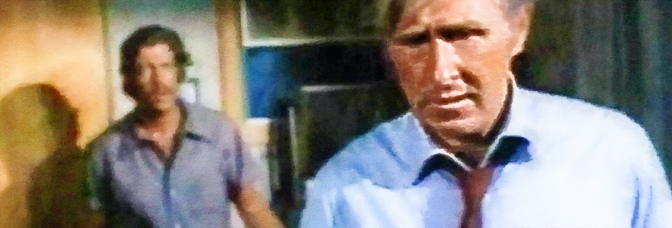
Surprisingly solid TV thriller about veteran cop Lloyd Bridges losing it when he finds out son-in-law Frank Converse is stepping out on daughter Sallie Shockley. As Bridges spirals more and more out of control, his partner (Murray Hamilton) starts investigating him and it ends up being up to Converse to mitigate the fallout. Simple enough…
-

Effective short about the only female scientist in a lab (Marianne di Vettimo) contending with the night custodian (Michel Such) and his unwanted attentions. Director Leconte does an exceptional job controlling expectations. DVD (R3).Continue reading →
-

Sometimes a Great Notion is all about the joys of toxic masculinity and apathy. At some points in the near two hour runtime, it might hint at being about the virtues of rugged American individualism, family, and maybe capitalism, but it’s not. Screenwriter John Gay avoids exploring those virtues like the plague or directly contradicts…
-

Dirty Harry only has one significant problem. It has a bunch of little problems, but it gets past those–sometimes manipulatively, sometimes just nimbly thanks to director Siegel and star Clint Eastwood–but the big one. It can’t overcome the third act. Villain Andy Robinson (I can’t forget to talk about him) has kidnapped a bunch of…
-
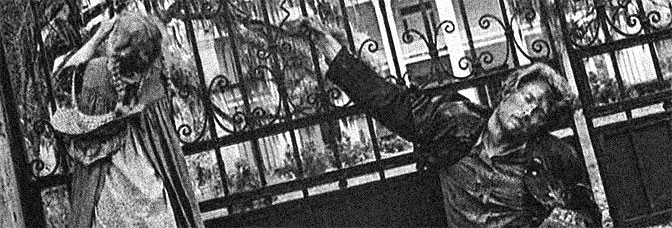
While The Beguiled is a thriller, the film keeps the thrills exceptionally grounded. The film’s set during the Civil War, with wounded Yankee sniper Clint Eastwood taking refuge at a girls school in Confederate territory. The school is quite literally set aside from the war. The war is outside the gates and everyone wants to…
-

The French Connection has a linear progression. No flashbacks, no flashforwards; it’s never implied two events are happening simultaneously. One thing happens after another. Only there’s nothing connecting those things, other than the actors, other than the cops’ investigation. Because French Connection unfolds for the viewer just like it does the cops. Or if the…
-
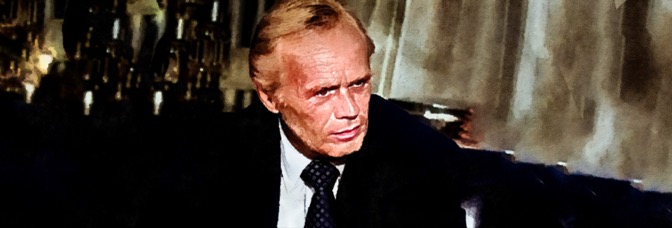
Even for a TV miniseries, Vanished feels like it runs too long. There are always tedious subplots, like folksy, pervy old man senator Robert Young plotting against President Richard Widmark. Widmark is up for re-election and he’s vulnerable. Even his own press secretary’s secretary (Skye Aubrey) thinks Widmark is “an evil man,” possibly because he’s…
-

Maybe I’ll Come Home in the Spring opens with a montage sequence. Sally Field is hitchhiking cross country (supposedly, it’s all California) while audio of her calling home to her parents–after running away to become a hippie–and letting them know she’s all right. The exact amount of time she’s away, where she went, how she…
-

Part of Willy Wonka & the Chocolate Factory’s greatest successes is the plotting–how top-billed Gene Wilder doesn’t show up until almost halfway into the film–but it’s also one of the film’s problems. It needs another five or ten minutes with Wilder; probably not at the very end, but somewhere before it. There’s so much going…
-

Fun, odd-ball Godzilla movie has the monster defending Japan from a giant radioactive sludge monster. Director Banno uses the film to make an impassioned environmental statement and, against the odds (and despite a terrible suit for the sludge monster, Hedorah), he succeeds. Great special effects otherwise. Banno goes all in on his Godzilla as Japan’s…
-
The best part of The American Dreamer is some of Warner E. Leighton and co-director Schiller’s editing, which only works thanks to Schiller and Carson’s filmmaking. They have this wonderful device where they film their subjects listening to recordings of their previous filming and then cut, often imperceptibly, between the subjects listening to themselves and…
-

Men of Crisis: The Harvey Wallinger Story recounts the rise to power of one Harvey Wallinger, friend and aide to Richard M. Nixon. Wallinger is one part buffoon, one part creep, one part sex addict–Allen revels in the part. He opens the short with a recounting of the 1968 election with some creative editing before…
-
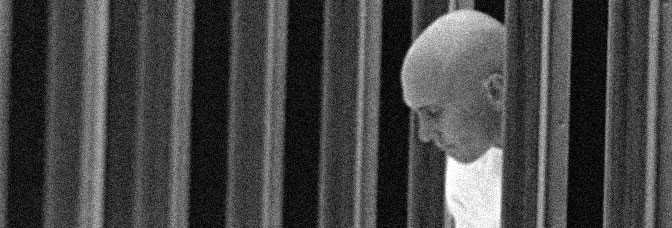
Director Lucas makes one attempt at audience accessibility in THX 1138. It’s actually the first thing he does–he shows a clip from an old Flash Gordon serial to let the audience know the story is about the future. The clip also lets the audience know the future isn’t going to be happy. And once he’s…
-

Sunday opens with lovely music from B. Güttler and a slow zoom to the planet Earth. The zoom is actually fades, with retouched photographs immediately giving the short a particular feel. There isn’t a lot of motion in Sunday. Often the animated figures are superimposed over photographs and movement is minimal. Maybe three or four…
-

It would be nice to have one positive thing to say about The Deadly Trap. Clements’s direction is so odd, Paris doesn’t even look good. Clements barely shows it; he tries hard to stylize–extreme close-ups on random objects, no establishing shots. Actually, wait, Andréas Winding’s photography isn’t bad. It’s the only competent technical effort present.…
-

“Play It Again, Charlie Brown” is shockingly bad. About the only good part of it comes near the end, as Danny Hjeim’s Schroeder debates whether to play rock instead of Beethoven at a concert. There’s actual internal conflict and so on. Unfortunately, it’s a small scene and can’t make up for the rest of “Play…
-

I don’t think I’ve ever seen pre-eighties Jim Aparo before. It’s absolutely stunning. The tight faces are present, but there’s also a bunch of energy. I never would have thought he’d be a great Phantom Stranger—or any supernatural story—artist, but he excels. Len Wein comes up with two good stories for the issue, though the…
-

I’m not even sure how to describe Thank You Mask Man. It’s a Lenny Bruce routine animated-it’s about the Lone Ranger and Tonto, which isn’t completely clear at the beginning. At the beginning, it’s more about the idea of a hero and the problem with him not accepting thanks for his actions. He’s too busy…
-

Conan has another dalliance, this time as consort to a queen. It doesn’t turn out so well for him—well, he gets in trouble because of her fetching handmaid as well. At least in the queen’s perspective. To Conan, he’s getting weary of women. The sex is so obvious, I was a little surprised to see…
-

Windsor-Smith has this amazing close-up of Conan during a fight with an ape (the ape has gone amok, the pet of Conan’s target). There’s still the significant nose problem, but the panel just looks so great it’s hard to believe Windsor-Smith didn’t think maybe drawing a reasonable nose was in order. Thomas continues the previous…
-

Oh, the noses. Why, oh why, can’t Windsor-Smith get noses right? He didn’t start out having problems with them. It must have been some kind of weird creative decision to draw bad noses. I don’t see how any of the characters gets enough air to breath. Otherwise, he does a good job with the issue.…
-

So, The Garden of Fear–Howard’s original story this issue is based on–did come out after Burroughs’s Out of Time’s Abyss. They feature a very similar evil winged race of men… though with different motives for kidnapping women. That possible “homage” of source material aside–and Windsor-Smith’s continually weak noses and prominent brows–this issue is excellent. It…
-

How sweet, Conan ends the issue with a girl on his arm. Well, actually, they’re on horseback fleeing for their lives, but it’s the first time he’s gone off with anyone else and the first girl to be around for the last page. Windsor-Smith is doing something bad with the noses. It’s not the inkers.…
-

The art this issue is a mess. Buscema and Adkins each hurriedly handled a half of the book. I assume Windsor-Smith was speeding along too because the result is people with huge eyes and minuscule noses. Sometimes it looks like Conan’s face is off-center on his head. It’s an ugly issue, which is too bad.…
-

Thomas is really bad about following a story with something very similar but not exactly alike. This issue Conan has to rescue a girl from a tower, a tower where there’s something mysterious going on. Thomas doesn’t come up with anything awesome like a flying elephant from outer space, just a giant bat. Sure, it’s…
 The Stop Button