• The Punisher 4 (July 2000)

    The Punisher #4I wonder if Molly the detective wears sunglasses so Steve Dillon gets a little less to draw. I assume they’re also there so she looks too cool to hang out with Detective Soap, but still. It’s disconcerting having a character without expressions.

    This issue, save the killer priest scene, which is particularly crappy, is rather good. Ennis sets up the detectives teaming up and does a little comedy relief with Soap. But most of the issue is real time with Frank on the run through Central Park. Some of the exposition is odd–Frank pauses to watch polar bears eat a bad guy and Ennis all of a sudden introduces the idea he’s a sadist for sadism’s sake. It’s brief, all by itself and very strange.

    There’s a gentleness to how Ennis handles some of it. Frank’s oddly gentle, even when vicious, and Ennis handles Soap gently.

    It’s good stuff.

    B+ 

    CREDITS

    Wild Kingdom; writer, Garth Ennis; penciller, Steve Dillon; inker, Jimmy Palmiotti; colorist, Chris Sotomayor; letterers, Richard Starkings and Wes Abbott; editor, Joe Quesada; publisher, Marvel Comics.
  • Velvet (2013) #5

    Velvet  5

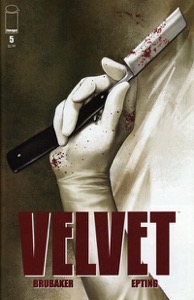
    Maybe half the issue is really good background stuff with Velvet’s training after World War II and her mentor. Brubaker’s hostile to the new reader–and even to the regular reader with the bad memory–he doesn’t establish the story in context, he just starts out with his alternating flashbacks.

    The training and the mentor is the better stuff because of Velvet’s narration. Brubaker gets in about ten percent history, ten percent character building, eighty percent story. The other stuff, with Velvet’s marriage to a fellow spy, is convoluted and done way too subtly. The comic opens with a Dr. No era James Bond homage, there’s no room for subtlety.

    The front-heaviness ends up hurting. It’s just a bridging issue, which Brubaker tries to disguise. There’s some good Epting art and the finish is fine–maybe if Brubaker hadn’t revealed the flashback was all due to a single conversation.

  • Rocket Girl 5 (May 2014)

    Rocket Girl #5Rocket Girl ends its first arc with an explosion, not a bang. Meaning, there's an explosion in the issue, but Montclare doesn't do anything too outlandish with the story. He wraps up the cliffhanger from the previous issue, with DaYoung discovering the populace is willing the help her. Reeder does a great eighties shopping scene with it.

    Then there's some resolution for the future stuff and the laboratory stuff. Montclare does a big WarGames homage, which doesn't make too much sense since the series isn't set in 1983 and there was cable and VHS so it's not like it'd still be playing in the theater. But, who cares, since Reeder does such a fabulous job with the eighties New York stuff.

    As for the arc's finish… it's mellow, thoughtful. There's a nice action scene, but the way DaYoung works things through and her revelations about her situation makes it special.

    CREDITS

    Time Will Tell; writer, Brandon Montclare; artist, colorist and letterer, Amy Reeder; publisher, Image Comics.

  • The Radiator Springs 500½ (2014, Rob Gibbs and Scott Morse)

    There's some charm to The Radiator Springs 500½, but nowhere near enough. There are hints of good ideas–like a Western showdown motif at the beginning–and some of the failed gags should have worked–a car who comes along to do the cymbals after a pun. Oh, right, it's a Cars spin-off cartoon short. Forget to mention that part.

    Anyway, there's nothing cohesive about it. Half the short is the good car (voiced by Owen Wilson, who must have been busy because he has almost no lines) racing against these bad cars who have no respect for the town. Then the town cars are on this idyllic anniversary drive.

    There's an effective junk yard sequence towards the end, but otherwise it's tepid and without any excitement. Springs's greatest stylistic influence appears to be video game cut scenes. Whoop-de-doo.

    It might get points for being harmless, but why give points for being harmless?

    1/3Not Recommended

    CREDITS

    Directed by Rob Gibbs and Scott Morse; written by John Lasseter, Jeremy Lasky and Gibbs; edited by Torbin Xan Bullock; music by Mark Mothersbaugh; production designer, Anthony Christov; produced by Mary Alice Drumm; released by Walt Disney Pictures.

    Starring Owen Wilson (Lightning McQueen), Larry the Cable Guy (Mater), Steve Purcell (Sandy Dunes), John Cygan (Idle Threat), Jess Harnell (Blue Grit), Bonnie Hunt (Sally Carrera), Cheech Marin (Ramone) and Danny Mann (Shifty Sidewinder).


    RELATED

  • Stray Bullets 28 (December 2002)

    Stray Bullets #28Lapham almost brings it back, he really almost does. The comic’s been missing active intelligence from Beth–and Virginia–for quite a while (seriously, Virginia’s been on her own how long and she couldn’t sniff out a pedophile, especially one who looks like Sideshow Bob) but the end of this issue has Virginia come back. It’s fantastic.

    There’s a lot of the interconnected nonsense, with Joey and Rose showing up again and reminding of better days. Especially Rose. She’s been one of Lapham’s better characters and he does write her stuff pretty well here. But Joey? He’s annoying. Again. Lapham beats it in like a hammer–remember him being crazy, here’s why.

    Anyway, the ending falls off a bit because Lapham goes too long to bring everything together. It could have been a lot better. But it’s far from bad and closer to good.

    Even if the art’s really loose.

    B- 

    CREDITS

    The Prize; writer, artist, and letterer, David Lapham; editor, Deborah Purcell; publisher, El Capitán Books.

  • Velvet #5Maybe half the issue is really good background stuff with Velvet’s training after World War II and her mentor. Brubaker’s hostile to the new reader–and even to the regular reader with the bad memory–he doesn’t establish the story in context, he just starts out with his alternating flashbacks.
    The training and the mentor is the better stuff because of Velvet’s narration. Brubaker gets in about ten percent history, ten percent character building, eighty percent story. The other stuff, with Velvet’s marriage to a fellow spy, is convoluted and done way too subtly. The comic opens with a Dr. No era James Bond homage, there’s no room for subtlety.

    The front-heaviness ends up hurting. It’s just a bridging issue, which Brubaker tries to disguise. There’s some good Epting art and the finish is fine–maybe if Brubaker hadn’t revealed the flashback was all due to a single conversation.

    B- 

    CREDITS

    Before the Living End, Part Five; writer, Ed Brubaker; artist, Steve Epting; colorist, Elizabeth Breitweiser; letterer, Chris Eliopoulos; editor; David Brothers; publisher, Image Comics.

  • Stray Bullets (1995) #27

    Stray Bullets  27

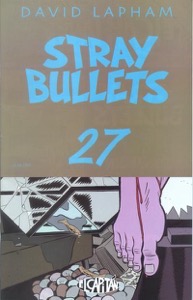
    How does Lapham resolve a story he didn’t have any reason to do? Poorly.

    He fractures Beth’s search for Virginia, cutting in scenes in their past, scenes of Beth’s investigation, lots of little cameos from other cast members. And then he turns it into an action movie. The entire issue has a frantic pace, so having a car chase at the end only seems logical. And having an open ending? Well, it’s Stray Bullets after all.

    I don’t think I’ve ever said something has jumped the shark before and it’s unclear if this issue signals a downward trend for the series, but it’s a terrible, terrible comic. It’s inept. Lapham takes one of his two best characters and reduces her to a crying mess before building her into Charles Bronson. But a bad Charles Bronson.

    The issue’s a bunch of manipulative scenes strung together. Every one of them is pointless.

  • The Punisher 3 (June 2000)

    The Punisher #3Ennis brings in Daredevil for what seems like a bad idea cameo and turns out to be a great one. It’s a lot of talking heads with Frank and Matt Murdock arguing about what’s justice and whatnot. Only Ennis makes sure to bring in some action every few pages so it doesn’t get boring.

    Elsewhere, Ennis is building up the black comedy adventures of the cop. There isn’t much to the scenes, but they’re fine. All of the issue, except the serial killer priest, is fine. Ennis doesn’t get ambitious, except maybe with the Daredevil twists; he and Dillon are selling a deliberate product.

    The rest of the issue has just Ennis setting up for the Daredevil confrontation. It figures into the big mob family plot tangentially. I think they just wanted to have the cameo. Or guest star. Daredevil’s in here a lot.

    It’s a shame about the priest.

    B+ 

    CREDITS

    The Devil by the Horns; writer, Garth Ennis; penciller, Steve Dillon; inker, Jimmy Palmiotti; colorist, Chris Sotomayor; letterers, Richard Starkings and Wes Abbott; editors, Joe Quesada and Palmiotti; publisher, Marvel Comics.

  • Black Angel (1980, Roger Christian)

    Until the finale, which features a risible fight sequence, Black Angel at least looks and sounds good. The story is atrocious, but the production values make it tolerable.

    Based on that fight sequence, the short concerns a clumsy, vain and mostly incompetent knight–Tony Vogel in a terrible performance–who finds himself hunting a mystical evil in order to save a fair maiden. Except director Christian’s script cuts a lot of corners, so it’s unclear if Vogel realizes he’s surrounded by sorcery. Probably, since according to Angel, the Dark Ages is just full of the stuff.

    The short has an excellent score from Trevor Jones and some gorgeous photography from Roger Pratt, but once the stupid starts, it just gets worse and worse. That fight sequence, which Christian starts in ill-advised slow motion (before speeding up the film), has to be seen to be believed. Or, more preferably, not.

    1/3Not Recommended

    CREDITS

    Written and directed by Roger Christian; director of photography, Roger Pratt; edited by Alan Strachan; music by Trevor Jones; produced by Christian and Leslie Dilley; released by 20th Century Fox.

    Starring Tony Vogel (Sir Maddox), James Gibb (Anselm), John Young (Old Man) and Patricia Christian (Maiden).


    RELATED

  • The Auteur 3 (May 2014)

    The Auteur #3What just happened here? It’s like Spears put together two weak ideas–the very Hollywood one of how does his lunatic producer deal with an actress who won’t take off her top and then what happens if the producer’s serial killer sidekick actually kills someone. The result is a pointless, personality-free issue of The Auteur.

    Maybe Spears just hit the mid-arc plateau and doesn’t know what to do. A five issue story sometimes needs to be four. Or six. This issue suggests four.

    Not even the jokes are funny. Way too much time is spent on puke jokes. Even the hallucinogenic sequence is weak. Callahan doesn’t have anything to do with it, just some ghosts and a giant bunny. But they aren’t even around long enough to leave an impression.

    The issue’s problems are worrisome, like maybe the comic has run out of steam.

    I really hope not.

    CREDITS

    Presidents Day, Part 3 of 5: Unprecedented Realism!; writer and letterer, Rick Spears; artist, James Callahan; colorist, Luigi Anderson; editor, Charlie Chu; publisher, Oni Press.

  • Stray Bullets #27How does Lapham resolve a story he didn’t have any reason to do? Poorly.

    He fractures Beth’s search for Virginia, cutting in scenes in their past, scenes of Beth’s investigation, lots of little cameos from other cast members. And then he turns it into an action movie. The entire issue has a frantic pace, so having a car chase at the end only seems logical. And having an open ending? Well, it’s Stray Bullets after all.

    I don’t think I’ve ever said something has jumped the shark before and it’s unclear if this issue signals a downward trend for the series, but it’s a terrible, terrible comic. It’s inept. Lapham takes one of his two best characters and reduces her to a crying mess before building her into Charles Bronson. But a bad Charles Bronson.

    The issue’s a bunch of manipulative scenes strung together. Every one of them is pointless.

    How does Lapham resolve a story he didn’t have any reason to do? Poorly.

    He fractures Beth’s search for Virginia, cutting in scenes in their past, scenes of Beth’s investigation, lots of little cameos from other cast members. And then he turns it into an action movie. The entire issue has a frantic pace, so having a car chase at the end only seems logical. And having an open ending? Well, it’s Stray Bullets after all.

    I don’t think I’ve ever said something has jumped the shark before and it’s unclear if this issue signals a downward trend for the series, but it’s a terrible, terrible comic. It’s inept. Lapham takes one of his two best characters and reduces her to a crying mess before building her into Charles Bronson. But a bad Charles Bronson.

    The issue’s a bunch of manipulative scenes strung together. Every one of them is pointless.

    F 

    CREDITS

    Broken; writer, artist, and letterer, David Lapham; editor, Deborah Purcell; publisher, El Capitán Books.

  • Prophet 44 (May 2014)

    Prophet #44There was an unfortunate amount of time I spent on this issue waiting for Old John and crew to show up. I should have been appreciating the wonder Graham and artist Dave Taylor were doing instead. Luckily, I caught on in time.

    The issue is from the perspective of a being who is part of the empire ruling the galaxy. Graham only hints at how the empire works and who actually runs things and why, but the possibilities he raises are glorious.

    The issue is first person, from the perspective of this agent of the empire. She’s got a mission to investigate a planet. On the way she has side adventures and there’s a lot of history to things and Graham has already established the character anyway. He opens on this lovely scene with the protagonist and her lover.

    Xurxo G. Penalta’s cute but trite backup can’t dim the issue.

    A+ 

    CREDITS

    Writer, Brandon Graham; artist and colorist, Dave Taylor; letterer, Ed Brisson. Lasersaw Crystal Canals; writer and artist, Xurxo G. Penalta. Publisher, Image Comics.

  • The Punisher 2 (May 2000)

    The Punisher #2Everything is going swimmingly until the end. Sure, Ennis doesn’t write Frank’s threatening dialogue as well as he writes his narration, which continues to be sublime, but the plotting is phenomenal. Frank methodically goes up the food chain on the mob family, with Ennis showing the steps in Frank’s investigation.
    Ennis also brings in some of the supporting cast. He uses them for humor–the poor, unlucky cop and his peers. It’s a good relief valve for the Punisher story. While Frank’s got a certain sense of humor, it tends to make things more tense.

    The end, however, is a disaster. Ennis breaks the reality he’s creating for the comic, introducing a villain more appropriate for Preacher. At this point, the comic goes from being Garth Ennis writing Punisher to Ennis writing his “style” in a Punisher comic. Ennis even changes the way humor works for that ending.

    Rather unfortunate.

    B 

    CREDITS

    Badaboom, Badabing; writer, Garth Ennis; penciller, Steve Dillon; inker, Jimmy Palmiotti; colorist, Chris Sotomayor; letterers, Richard Starkings and Wes Abbott; editors, Joe Quesada and Palmiotti; publisher, Marvel Comics.

  • Ghost of Goodnight Lane (2014, Alin Bijan)

    Ghost of Goodnight Lane is nearly okay. It's definitely amusing throughout–director and co-writer Bijan inexplicably throws on a terrible epilogue thing–and the constant joking really helps it. Most of the scenes play like a horror movie spoof, only one where the movie doesn't take the time to laugh at itself. There's a joke, there's a moment for the viewer to laugh or smile, but there's a prolonged delay. It moves. But then there are also these lame insert shots of the haunted house with bad CG ominous weather. And the movie's about a small film production company, so there should be some acknowledgment of the disconnect–a movie changing in editing.

    There are a couple good running jokes and they're always coming at the most inappropriate time. It's set in Dallas, not Hollywood, which makes the apathy somehow more grounded. And funny.

    The most important component are the leads. Billy Zane plays the dimwit narcissist director and producer. He's hilarious. Every line delivery is played for maximum effect (and humor). Lacey Chabert and Matt Dallas are the young couple working for him. They're both good. Neither has much to do, but they're likable and play off Zane's silliness well.

    Christine Bently is surprisingly solid as the bimbo actress. Actually, all of the supporting players are fine except Lynn Andrews III. He's bad (and is in the first act a lot).

    Bijan occasionally has some good shots.

    Ghost goes on too long, but thanks to cast and script, it has its moments.

    0/4ⓏⒺⓇⓄ

    CREDITS

    Produced and directed by Alin Bijan; written by Bijan and Amy Acosta; director of photography, David Blood; edited by Bijan and Jonny Revolt; music by Amin Emam; production designers, Adam Dietrich and Matthew Englebert; released by Inception Media Group, LLC.

    Starring Billy Zane (Alan), Lacey Chabert (Dani), Matt Dallas (Ben), Adam Whittington (Johnny), Christine Bently (Laurel Matthews), Danielle Harris (Chloe), Brina Palencia (Micah), Lynn Andrews III (Amin), John Franklin (Nico), Allyn Carrell (Thelma) and Richard Tyson (Ron).


    RELATED

  • MPH 1 (May 2014)

    MPH #1Leave it to Mark Millar to screw it up when he's got a good thing going. Even without the terrible soft cliffhanger, MPH does have some fantastic art from Duncan Fegredo. Fantastic enough to probably make the comic worth a look even if it didn't have a serviceable script.

    There are all the standard Millar problems. It's too self-aware, the pop culture references are too forced, probably a few other things but I ignored them. However, Millar does write a good first person narration for his protagonist. It's some small time crook who ends up in prison for a relatively small crime and then gets superpowers.

    The superpowers come from a pill called MPH. There's going to be an idiotic explanation for it, which the soft cliffhanger foreshadows. Still, the way Millar shows the guy's experience is fantastic.

    The comic's predictably problematic (given Millar) but it's better than expected.

    B- 

    CREDITS

    Writer, Mark Millar; artist, Duncan Fegredo; colorist and letterer, Peter Doherty; editor, Jennifer Lee; publisher, Image Comics.

  • Stray Bullets 26 (June 2002)

    Stray Bullets #26And now Lapham just decides to mess with the reader. The story has Amy Racecar–you know, Virginia’s alter ego–kidnapped by a bad guy, along with her male friend. She escapes, leaving the male friend behind. Is Lapham finally going to break from the Amy Racecar stuff into Virginia’s real life, where she’s escaped from the pedophile in the previous issue (Lapham’s worst?). No, no, he’s not.

    Speaking of worst–this issue is actually awesome at the end and Lapham really does some great stuff with the Amy character but it’s so cheap. He’s learned how to manipulate the reader with forced machinations. Or maybe he always intended to manipulate the reader and there’s some Stray Bullets story bible out there with all the plans.

    It’s doesn’t matter because Lapham’s still produces a great comic here. The manipulation hurts, but Amy Racecar can’t be defeated by cheap narrative tricks. She’s bitching.

    A- 

    CREDITS

    Wild Strawberries Can’t Be Broken or Don’t Blame God Your Dog’s Dead; writer, artist, and letterer, David Lapham; editor, Deborah Dragovic; publisher, El Capitán Books.

  • Stray Bullets: Killers 3 (May 2014)

    Stray Bullets: The Killers #3It’s another outstanding issue. This one goes a little cute, with Virginia now a babysitter to a mob guy’s bratty kids and searching the house for his missing fortune. Not missing fortune, the money his wife has stashed he now needs. He’s out with the wife. And there’s a mistress in the mix and one of the kids reminds Virginia of herself.

    What’s particularly interesting about the issue is how Lapham shows his nostalgia. There are some big nods–with Virginia standing in for Lapham’s nostalgia and the reader’s. Doing a sincere, loving tribute to Stray Bullets should be impossible given the comic’s content, but Lapham does it. He can even use it to get away with logic gaps; he knows the reader is on his side.

    There’s some lovely art in the issue too. Lapham’s very careful with the people and especially the sequences with the older daughter and Virginia.

    A- 

    CREDITS

    The Five Fingers; writer, artist and letterer, David Lapham; editors, Renee Miller and Maria Lapham; publisher, Image Comics.

  • The Punisher 1 (April 2000)

    The Punisher #1Garth Ennis has a real sense of exuberance with The Punisher. Steve Dillon not as much–maybe he realized how round Jimmy Palmiotti’s inks would make the pencils–but the art’s still good. Every line of Ennis’s narration from Frank is enthralled, though. Even though nothing happens this issue, that narration makes it worth it.
    Until the end maybe. Ennis has to address recent changes in the character history and the lines recounting the Punisher’s days as an angel are too jarring. Ennis can get wrapped up in Frank’s worldview but there’s no way to make that angel stuff sound good.

    The narration is tempting; Ennis brings the reader over to Frank’s side. The way Frank thinks, the way he plans out his attacks, the mindset–it almost immediately makes perfect sense. Probably because of the awesome opening sequence.

    It’s commercial Ennis. He’s funny and tender; any viciousness is superficial.

    B+ 

    CREDITS

    Welcome Back, Frank; writer, Garth Ennis; penciller, Steve Dillon; inker, Jimmy Palmiotti; colorist, Chris Sotomayor; letterers, Richard Starkings and Wes Abbott; editors, Joe Quesada and Palmiotti; publisher, Marvel Comics.

  • Starlight 3 (May 2014)

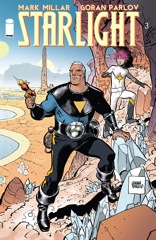
    Starlight #3For the third issue of Starlight, things are coming together. Well, not so much things, but Millar’s writing. He’s pacing out the narrative a lot better. There are probably six or seven scenes this issue and they’re mostly good scenes. The cliffhanger is a little abrupt and he spends too much time with the lame villain, but the stuff with Duke is all pretty great.

    Except maybe how Millar resolves the big action sequence. There’s this fantastic fight scene with Duke taking on a bunch of bad guys–Parlov does beautiful work with the figures, but also with how he lays out the panels on the page–except then Millar remembers Duke is an old guy and has to get real. The real part’s problematic.

    And the followup with Duke; not great. But otherwise, all of Duke’s scenes are great.

    It’s a well-executed comic book. Parlov’s abilities outweigh Millar’s lack of imagination.

    B- 

    CREDITS

    Writer, Mark Millar; artist, Goran Parlov; colorist, Ive Svorcina; letterer, Marko Sunjic; editor, Nicole Boose; publisher, Image Comics.

  • Stray Bullets 25 (April 2002)

    Stray Bullets #25After threatening it since issue five or so, Lapham finally has a pedophile attack Virginia. He appears to be an equal opportunity pedophile because he goes after Virginia’s friend, Bobby, too.

    Lapham sets up the issue differently than usual–by usual I mean the usual for when he’s threatening Virginia with rape and possibly murder–and spends the first half of the issue showing her on the run from a truant officer. There’s some better stuff in that part of the issue. The stuff with the creep is weak.

    The creep also looks a lot like Sideshow Bob.

    It’s a hell of a “promise” to fulfill and not one Lapham really has to do. He’s already shown he’s capable of hinting at it and going another direction, threatening it and going another direction, it’s unclear why–given he uses a hard cliffhanger–he wants to do it now.

    Except explotation.

    C 

    CREDITS

    Compulsion; writer, artist, and letterer, David Lapham; editor, Deborah Dragovic; publisher, El Capitán Books.

  • The Field 2 (May 2014)

    The Field #2The Field gets better this issue because Brisson turns up the craziness. He also gives Roy a great action sequence–the kidnapping Christian versus some elderly bikers. That action puts the comic on its own level, where something should be funny but it isn’t. There’s no humor in way Brisson writes the comic and Roy never pauses on a comic moment. So to describe the comic, it might sound like there’s humor… and there isn’t.
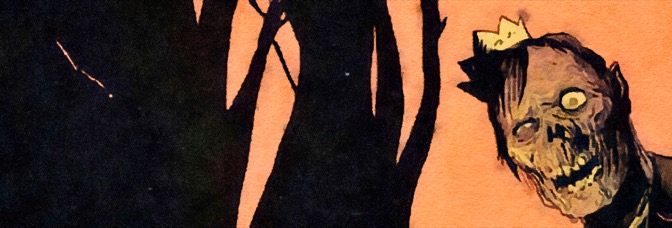
    But Brisson also goes ahead and hints at the big reveal. There’s some kind of time travel going on; time travel or mass hysteria. The protagonist is starting to piece things together. Brisson reveals to him and the reader at the same time. It’s not the most original device but it’s an effective standard to employ.

    The hard cliffhanger should be scary and funny, but isn’t. Instead, it just promises further inventiveness from the comic.

    B 

    CREDITS

    Writer and letterer, Ed Brisson; artist, Simon Roy; colorist, Simon Gough; publisher, Image Comics.

  • Wonder Woman: The Once and Future Story (1998)

    Wonder Woman The Once and Future Story

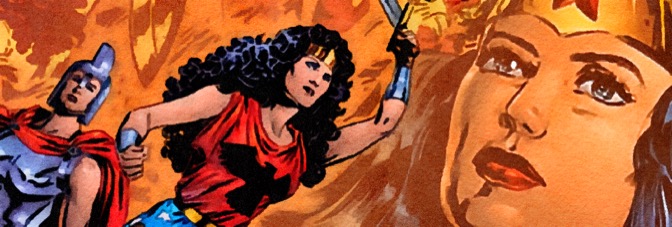
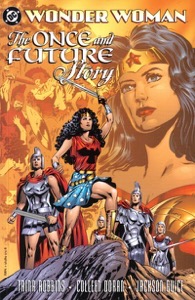
    Trina Robbins does a rather good job hiding The Once and Future Story’s PSA status. It’s a perfectly good one too–Wonder Woman is translating some tablets and there’s spousal abuse in it and then Diana also discovers something similar going on with the archeologists she’s working with.
    There are multiple interventions and the situation generically escalates, but the art–from Colleen Doran and Butch Guice–is really good, especially on the Greek historical stuff. Robbins could have easily done the comic without Wonder Woman, who’s basically around to be strong and awesome when need be. She’s got nothing else to do.

    Oh, right–translate. She’s the translator.

    It probably would have been more effective without the gimmick, with Wonder Woman actually intervening in less complicated situation. There’s nothing distinct about the present day stuff. None of it’s memorable. The past stuff, definitely. Not the present. It’s too bad.

  • Wonder Woman: The Once and Future StoryTrina Robbins does a rather good job hiding The Once and Future Story’s PSA status. It’s a perfectly good one too–Wonder Woman is translating some tablets and there’s spousal abuse in it and then Diana also discovers something similar going on with the archeologists she’s working with.

    There are multiple interventions and the situation generically escalates, but the art–from Colleen Doran and Butch Guice–is really good, especially on the Greek historical stuff. Robbins could have easily done the comic without Wonder Woman, who’s basically around to be strong and awesome when need be. She’s got nothing else to do.

    Oh, right–translate. She’s the translator.

    It probably would have been more effective without the gimmick, with Wonder Woman actually intervening in less complicated situation. There’s nothing distinct about the present day stuff. None of it’s memorable. The past stuff, definitely. Not the present. It’s too bad.

    B- 

    CREDITS

    Writer, Trina Robbins; penciller, Colleen Doran; inker, Butch Guice; colorist, Chris Chuckry; letterer, Gaspar Saladino; editors, L.A. Williams and Paul Kupperberg; publisher, DC Comics.

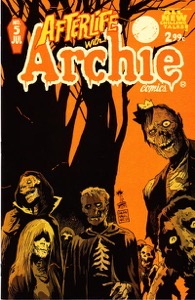
  • Afterlife with Archie (2013) #5

    Afterlife with Archie  5

    Aguirre-Sacasa and Francavilla take their impossible series and finish the first arc and it’s glorious. Aguirre-Sacasa tells it from the butler’s point of view, which gives the issue a very proper, classical adventure narration. He’s journaling. It’s good to have journaling butlers.

    Some of the issue is spent covering what the supporting cast is doing–how they’re reacting to being under siege from zombies and so on. All of these scenes are fantastic and deeply layered. I love how Aguirre-Sacasa is able to get such depth out of his implications. It puts Afterlife on a higher level.

    But it’s not just catching up, there’s also a big momentous event and the way it works with all the characters, and the narration figuring in, is simply masterful.

    As for Francavilla, he doesn’t get to do recognizable characters as zombies much this issue. Instead, it’s raw human desperation.

    Fantastic.

  • The Terminator: Enemy of My Enemy 3 (May 2014)

    The Terminator: Enemy of My Enemy #3Seriously? They team up. A human and a Terminator team up in a Dark Horse comic? Didn’t I read this comic many times as a teenager? I was kind of hoping for something more. Maybe the big problem is the team up comes so late. There’s only one more issue to the series.

    Enemy of My Enemy continues to be blandly unimpressive. Jolley’s scripting is competent. His protagonist is annoying but it’s unlikely anyone would be able to make a disgraced CIA agent fighting a Terminator a good character. She’s supposed to be cool, not likable.

    Then there’s Igle’s art. He does a great job with it, but there’s nothing to it. There’s a lengthy fight scene and since Igle’s so sturdy in his matter of fact presentation, it’s boring.

    The series is getting less and less engaging as it goes on. Then again, The Terminator has rather limited potential.

    C 

    CREDITS

    Writer, Dan Jolley; penciller, Jamal Igle; inker, Ray Snyder; colorist, Wes Dzioba; letterer, Nate Piekos; editors, Ian Tucker and Brendan Wright; publisher, Dark Horse Comics.

  • Stray Bullets 24 (March 2002)

    Stray Bullets #24Sometimes–and this issue is definitely one of those times and in its entirety too–Stray Bullets feels like Lapham hasn’t realized he isn’t doing a Love and Rockets with crime and violence. This issue has Monster in L.A., after Beth and looking for the money and cocaine. Beth has a couple ex-boyfriends there and the girl from a few issues ago who likes breaking up marriages or whatever.

    Why are they all together? The “nice girl,” the “nice guy,” the greaser and the strumpet? Because they look interesting together. Maybe all the dark hair reminds of Love and Rockets too. But it’s a talking heads issue where no one has anything to say and the situation isn’t particularly engaging because it’s all supposed to be about making sure Virginia is safe from Monster and Lapham doesn’t resolve it.

    He instead apparently does a perfunctory, disappointing resolution to the entire plot line.

    C 

    CREDITS

    Man Or HU-Man; writer, artist, and letterer, David Lapham; editor, Deborah Dragovic; publisher, El Capitán Books.

  • Afterlife with Archie #5Aguirre-Sacasa and Francavilla take their impossible series and finish the first arc and it’s glorious. Aguirre-Sacasa tells it from the butler’s point of view, which gives the issue a very proper, classical adventure narration. He’s journaling. It’s good to have journaling butlers.

    Some of the issue is spent covering what the supporting cast is doing–how they’re reacting to being under siege from zombies and so on. All of these scenes are fantastic and deeply layered. I love how Aguirre-Sacasa is able to get such depth out of his implications. It puts Afterlife on a higher level.

    But it’s not just catching up, there’s also a big momentous event and the way it works with all the characters, and the narration figuring in, is simply masterful.

    As for Francavilla, he doesn’t get to do recognizable characters as zombies much this issue. Instead, it’s raw human desperation.

    Fantastic.

    A 

    CREDITS

    Escape from Riverdale, Chapter Five: Exodus; writer, Roberto Aguirre-Sacasa; artist and colorist, Francesco Francavilla; letterer, Jack Morelli; editors, Victor Gorelick and Jamie Lee Rotante; publisher, Archie Comics.

  • Godzilla (2014, Gareth Edwards)

    Instead of focusing on the giant monsters fighting, Gareth Edwards tells his Godzilla from the human perspective. It's too bad because Edwards occasionally will set up an action shot well–he's inept at following through with these setups and actually doing a good action scene, but he's always terrible with the actors. The most interesting question Godzilla raises is in regards to its character actors… why can David Strathairn keep it together with Bryan Cranston looks increasingly more humiliated to be delivering Max Borenstein's terrible lines?

    There's nothing good about Godzilla. There's not some gem of a little performance, there's not some fantastic sequence to partially redeem the film. Borenstein rips off a plot point from the last American remake (with some garnish) but it's all right because most of the first half has Edwards ripping off everything he can from Steven Spielberg. Poorly, of course, because Edwards, Borenstein and Godzilla are all terrible.

    Particularly bad also is Alexandre Desplat's score. There's not a single good note of music, but given the film's atrocious sound design–which is usually meant to heighten the emotional impact of leads Aaron Taylor-Johnson and Elizabeth Olsen's lousy acting–one would be unable to hear it.

    Real quick–Taylor-Johnson's awful, Olsen's awful, Cranston's embarrassed–Sally Hawkins looks like she's ready to cry being in this turkey. Ken Watanabe gives the second best performance (after Strathairn); Borenstein gives him the most idiotic dialogue.

    Godzilla's truly American now. The film would fail a fourth grade science quiz. It's exceptionally stupid. And bad.

    0/4ⓏⒺⓇⓄ

    CREDITS

    Directed by Gareth Edwards; screenplay by Max Borenstein, based a story by Dave Callaham; director of photography, Seamus McGarvey; edited by Bob Ducsay; music by Alexandre Desplat; production designer, Owen Paterson; produced by Thomas Tull, Jon Jashni, Mary Parent and Brian Rogers; released by Warner Bros

    Starring Aaron Taylor-Johnson (Ford Brody), Ken Watanabe (Dr. Serizawa), Elizabeth Olsen (Elle Brody), Juliette Binoche (Sandra Brody), Sally Hawkins (Graham), David Strathairn (Admiral Stenz), Richard T. Jones (Captain Hampton) and Bryan Cranston (Joe Brody).


    RELATED

  • Godzilla (1954, Honda Ishirô)

    Godzilla is a peculiar picture. It’s intensely serious, with director Honda never letting the viewer get a moment’s relief. This approach is all throughout the film, which opens with a documentary feel. Honda and co-screenwriter Murata Takeo set up their main characters quickly and without a lot of fanfare–Takarada Akira and Kôchi Momoko’s first scene sets up their relationship before sending them away–she actually just disappears for a while, while he becomes a background player during the first act.

    Their romance is the best character work in the film, with the possible exception of Suzuki Toyoaki’s grieving orphan. Takarada and Kôchi’s romance is never quite star-crossed but it’s always difficult. They’re both excellent. All of the film’s emotions play out through Kôchi; it’s like the film has greater need of her than to just have a difficult romance.

    Honda moves Godzilla through a few phases–mystery, exploration, devastation–always ratcheting the tension a little tighter. The creature’s destruction of Tokyo is exhausting and relentless. The film implies subtext to those scenes–the creature discovering man’s world–but Honda doesn’t explore them. He presents them matter of fact, the documentary style returning.

    The last act is where the film stumbles; Hirata Akihiko gives a histrionic performance. Some of it is the writing, most of it is Hirata. The film already has problems with Shimura Takashi, in a similarly poorly written role. There’s way too much strained symbolism in the finish.

    The music, photography and editing are all exceptional.

    The film is thoughtful, intricate and affecting.

  • Tom Strong 18 (December 2002)

    Tom Strong #18I think all of the jokes Moore gives Svetlana X–proud Russian science hero who has an interesting way of saying things (Moore gives her the cursing, only with accurate if misunderstood translation)–just primes for the big finish. He ends the story arc involving the giant space ants with a great cheap joke. There’s a lot of humor throughout, but the finish is an easy, wonderful joke.

    Sprouse gets three big moments this issue. He’s an illustrating intergalactic battle and the script builds to each reveal. Sprouse has to make each bigger than the last. Given the first one involves a solar flare from the sun, it’s an accomplishment he’s able to properly amp up the others.

    There’s good stuff with the supporting cast and Tom finally gets himself back in joint. He and Svetlana are hilarious together (he’s too polite to correct her).

    As usual, Strong is reliable.

    B+ 

    CREDITS

    The Last Roundup; writer, Alan Moore; penciller, Chris Sprouse; inker, Karl Story; colorist, Dave Stewart; letterer, Todd Klein; editors, Kristy Quinn and Scott Dunbier; publisher, America’s Best Comics.