Category: 2007
-

Ennis gets downright playful with the way he uses narrative in this issue. It’s a relatively simple move, but it focuses the reader on the page for a determined amount of time, regardless of how fast he or she usually reads. It’s a nice little trick. The issue opens with Danny bickering with his father—his…
-

Stop me if you’ve heard this one… Jesus and the Anti-Christ are sitting in a bar and…. And there’s the pitch for Chronicles of Wormwood. While Ennis does, on occasional, embrace his readers in terms of giving them something not just profound and good but also entertaining, Wormwood takes it to another level. It’s funny,…
-
For the finale, Vaughan tries to bring back the charm of the early issues and sort of does. Not enough to really matter, but he’s referencing it. The last issue is more about Dr. Strange than anything else, with Vaughan looking at the relationship between medicine and magic. Given the villain, it makes for a…
-
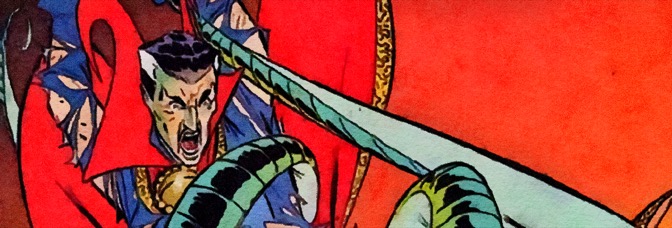
Vaughan gets back on track this issue (it probably should have been combined with the previous one, of course). There’s not as much palpable charm, but Vaughan makes up for it with the return of Strange’s overconfidence. It turns out—spoiler alert—the overconfidence is somewhat warranted (though Vaughan does play pretty loose with what Strange can…
-
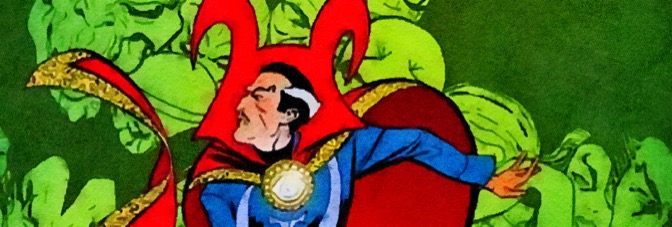
Vaughan is starting to lose a little of his steam. The majority of the action takes place resolving last issue’s cliffhanger. We learn the secret villain, after some red herrings—very short red herrings, almost like Vaughan only half-heartedly included them—and it’s not particularly exciting. It’ll probably be more exciting next issue but this one… is…
-

Dr. Strange and friends head out to discover what’s going on—there’s really not much action, just going to the Bronx, then to a secret base. What Vaughan concentrates on (besides the humor) is the flashbacks to Strange’s past. Vaughan’s read on the character is a lovable jerk. Wong’s got to know he’s a prick, but…
-

I’ve been avoiding seeing Purple Violets for almost four years–I thought it was going to be one of Burns’s lesser works. So, obviously, it shouldn’t be a surprise it’s his best film (it’s also his best film as a director). I’m having some trouble trying to figure out how to start talking about it. It’s…
-

Sick shows being earnest doesn’t necessarily mean being good. A lot of other films prove this point, but Sick does it in about fifteen minutes, so at least it’s not time-consuming. Director Rymer knows how to compose shots—Sick looks great, its production values are quite impressive. He tries hard to write a good script but…
-

Another remake where they credit the original screenwriter as a contributing writer in order not to call it a remake. Halsted Welles wrote the original 3:10 to Yuma’s screenplay… not sure why Mangold and the producers thought Michael Brandt and Derek Haas, writers of some vapid action movies, would match him. I assume Brandt and…
-
I’m going to regret making this statement… The last issue of Phonogram is great. Gillen retroactively pretends the series was about people and he sells it effectively. Instead of all his music-based “modern fantasy” special vocabulary, he just tells a story about a egoist who ends up doing something good and helping people. It’s fantastic.…
-

Wait, this whole musical movement they’re talking about in Phonogram is Oasis? Those guys who were bigger than the Beatles, so they proclaimed, and then they disappeared in like two years? I remember them being awful too. This issue might be the best of the series–like the last issue, it approaches being a reasonable comic…
-

It’s got a cliffhanger. A genuine cliffhanger. It’s like Gillen’s writing a serialized narrative. How exciting. Before I actually start saying nice things about Gillen (for a change), let me keep with the standard of saying something nasty. Gillen makes a big reference to Dante’s Inferno—the protagonist’s guide is Virgil, same as Dante. Well, I’ve…
-
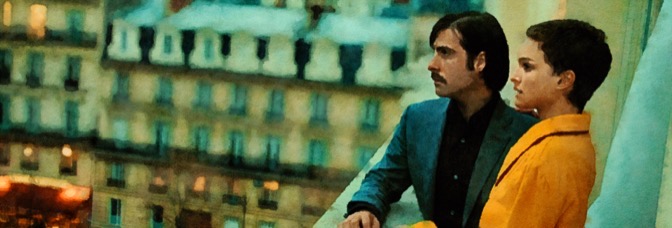
It’s wrong to call Hotel Chevalier Anderson’s best film. The end of the film is some of the best work he’s ever done and a lot of the writing is some of the best writing he’s ever done (alone). The dialogue in Chevalier cuts in a way similar to Hemingway (maybe the Paris setting implies…
-
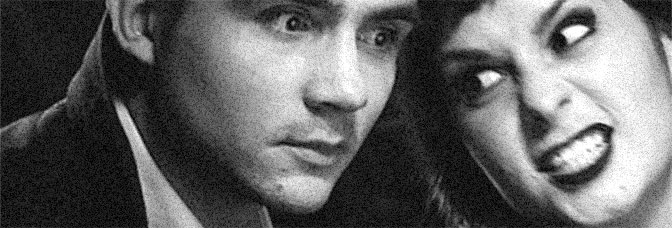
Cisiecki eschews a traditional narrative for a series of short segments—the longest takes place in a room in the same chain as Lynch’s lodge from “Twin Peaks”—and binds it all together with this cassette tape playing. Smoke opens a lot better than it finishes. Cisiecki’s static composition is fantastic and the first minute or two…
-

Bunn brings Damned to a predictable, yet still unpredictable conclusion. The main story about the mob war ends predictably… but there’s a lot unexpected elements here. One’s a new story thread introduced, another’s a conclusion for a character—both have to do with how little Bunn has actually revealed about his protagonist. Unfortunately, the ending is…
-
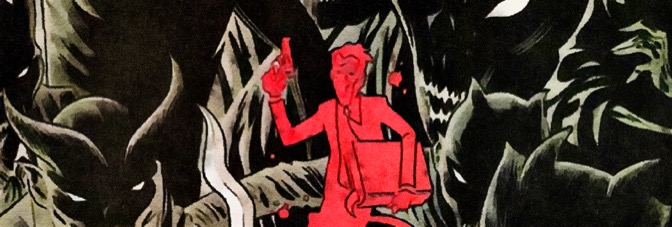
I’m not sure if I just remember the twist in The Damned or if it’s obvious. It’s probably a little of both. Here, in the fourth issue, Bunn gets around to really establishing the demon mythology (still no word on when they first showed up). Hurtt really shows his range here. He’s got the period…
-
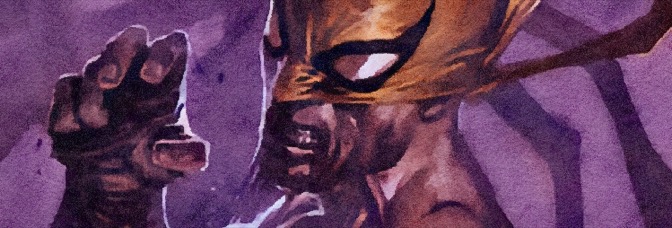
It’s nice Danny gets the cover, because he’s not in the issue at all. The intrigue really starts coming together here, with the Thunderer revealed to be in some secret society with Orson’s daughter, terror priests (guessing priest has a different connotation in K’un-L’un) sent out into the world to hunt for Danny, the Hydra…
-
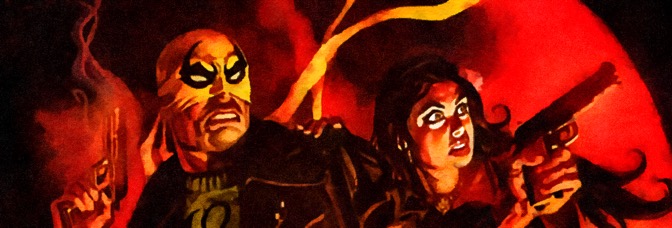
Are there really enough Howard Chaykin fans out there to make getting him to fill in desirable? His work has gotten so shoddy over the last ten years, it’s stunning. But even with Chaykin on the modern stuff, this issue is just fantastic. It’s very hopeful and glorious–Brubaker and Fraction reveal Orson Randall had a…
-
Koblish’s flashback pages start all right, but in the second set, he draws Wendall Rand rapidly punching and it looks like he’s got eight arms. It really drags one out of the narrative. The principal story, with Danny losing his match in the competition so he can go out and save the world, moves a…
-

The big Enter the Dragon fight competition starts off here… only there’s not a matched fight. Instead, we get to see Danny in K’un-L’un. It’s interesting, sort of, to see Danny trying to acclimate. But he’s mostly trying to figure out what’s happened to Jeryn (his mix of Alfred and Lucius Fox). Turns out Jeryn’s…
-
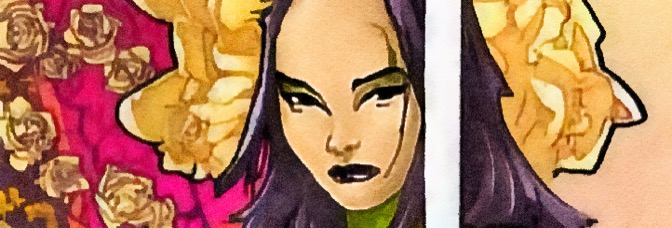
Fraction and Brubaker take a break here to focus on one of the previous Iron Fists. They present the story like a fable and get really cute with it. I don’t think the cuteness necessarily has to do with the Iron Fist in question being female, but because she’s got a goofy, sweet but stupid…
-
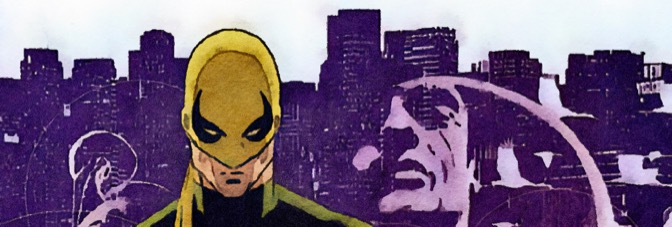
What Brubaker brings to his Marvel work is a retro vibe. His good comics feel like familiar seventies comics modernized. What Fraction brings is a smart blockbuster. His comics feel like big Hollywood movies written by John Sayles. Lots of set pieces, sure, but lots of humanity. I’m not sure this issue is the perfect…
-
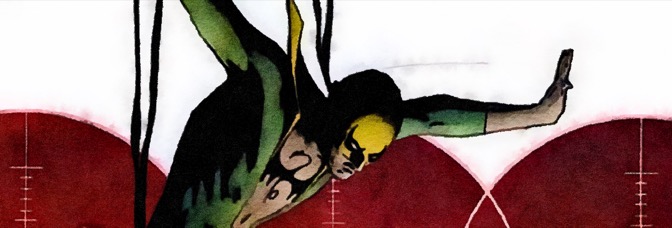
The Travel Foreman back up art really does not work here. Well, some of it does, but when he flashes back to Orson’s origin… it’s awful. Ed McGuinness proportions. Yucky. It’s such an awkward flashback, it tears the reader out of the book. The book needs the flashback to work not just for Orson’s emotional…
-

I expected more from the Buscema and Palmer pages. The art feels like they were supposed to be going retro instead of bringing a specific style. It’s sort of strange how much Brubaker and Fraction skip here. The issue starts with Orson and Danny being big buddies. Orson’s been showing him tricks, which we also…
-
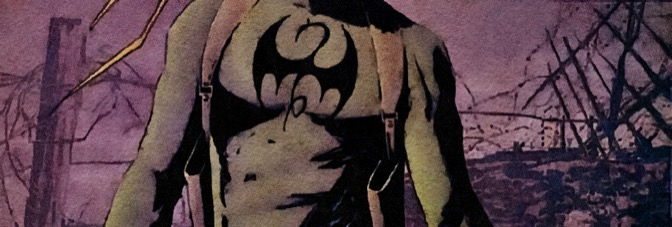
I’m a little unclear on what actually happens this issue. Things do happen, it’s a good issue, but not many things happen. But Fraction–not Brubaker, because Brubaker’s Marvel work never makes an issue feel fuller than it is–manages to make it feel like a real experience, even though the only really important thing is when…
-

Lots this issue. Well, kind of lots. It seems like lots. But as it turns out, the titular Iron Fist isn’t Danny Rand this issue, it’s Orson Randall. Danny spends some of the issue being funny, then having a really great scene with Luke Cage–the way Brubaker and Fraction characterize the two of them, it…
-
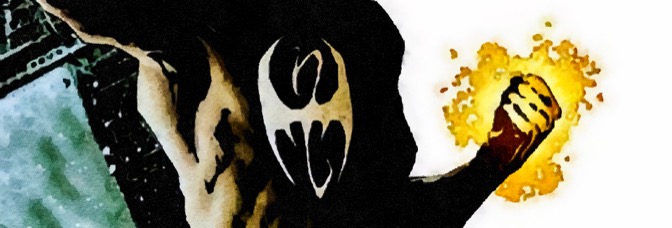
Fraction and Brubaker do a nice double cliffhanger here. The first one isn’t really a cliffhanger because it’s just Danny Rand falling off a roof. We know he’s not going to die. Well, presumably, he’s not going to (he doesn’t). But it provides a nice close to his part of the issue, while being able…
-
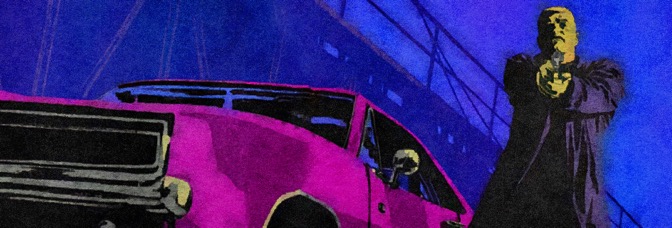
Now I remember this story arc and why I didn’t have any bad memories of it–because it’s great. What Brubaker does in this arc is take a character who’d be on the periphery of another story–a bigger story–and examine him. Tracy’s a tough guy who’d be in one scene of a more traditional noir story…
-
It’s in film noir’s nature to have a double-cross, to have a secret inopportunely revealed and have it affect the protagonist’s plans, whether he be a good guy or a bad guy. So I’m not surprised Brubaker has both of those elements in this issue (maybe twice for each). But Criminal isn’t a film. It’s…
-

In some ways, this issue is the first regular one of the arc. Brubaker’s not introducing anything startling, he’s just telling a story–he’s got enough established already he has material to work through. The result is a very nice issue. The only negative thing I can think of to say about it is Phillips’s one…
 The Stop Button