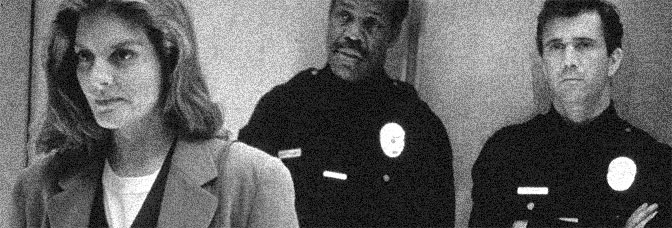
Timeline (2003, Richard Donner)

Timeline is really bad. The opening sequence starts Donner regular Steve Kahan in a terrible bit part but at least there’s the stunt casting; the rest of the poorly edited sequence has ER doctors and anonymous law enforcement looking into the mysterious death of a man who appeared in the middle of the highway for Kahan to almost hit. Of course, we the viewers know he’s somehow travelled through time because we see a knight on horseback about chop him down before cutting to Kahan in the desert.

That opening shot of the knight cutting down the time traveller should be a trailer shot, should have some kind of major visceral impact… it’s got squat. The shot’s boringly composed—somehow Donner manages to suck all the life out of his wide Panavision frame, ably assisted—unfortunately—by cinematographer Caleb Deschanel, who’s never got any interesting or thoughtful lighting. Timeline looks boring, with its “renaissance village at a Six Flags” not even a Medieval Times, much less renaissance faire production design or the laughably bad costumes. The knights all look like they belong on a White Castle commercial and the time traveling heroes look like they’re trying to prove cosplay can be macho. Gerard Butler’s outfit is something else.

Though Butler is something else too. Donner apparently gave Butler two directions—make it more Scottish and play it like 80s Mel Gibson. Shirt off, hair wild, soulfully love the ladies (in this case, Anna Friel, who manages to be the only person outside Billy Connolly, who’s exempt, not to embarrass or humiliate themselves it some point during Timeline).

See, Timeline, which is about locable eccentric old archeologist Connolly going back in time through Michael Crichton-stereotype modern megalomaniacal rich recluse scientist David Thewlis’s time machine. Only he gets stuck back in time and so his team—Butler, Frances O’Connor, plus Connolly’s son, bro Paul Walker, who’s around the dig site because he’s got the hots for O’Connor and trying to tempt her away from her work to apparently quit her job and marry him and pump out babies. O’Connor’s real bad in Timeline, which sucks because O’Connor’s great, and it’s not all Donner’s fault, it’s not all the script’s fault—okay, a lot of it’s both Donner and the script’s fault, like, wow, terrible character. But O’Connor’s still bad. She’s not as bad as Walker, but she’s close, although bad in an entirely different way. If the film embraced its spoof potential—bro Walker going back in time to save his dad, Indiana Jones wannabe Butler, the silly battles, Thewlis’s mad scientist–it might’ve been… good. I was going to say amusing, but I really think about the only way you could make Timeline work is to do it as a comedy of itself. Albeit with a different script, cast, director, composer, cinematographer, production designer, and costume designer. Anna Friel and Billy Connolly can stay too if they want, Friel because she’s got the ability to—if not rise above—at lease not drown. Connolly because it’s Billy Connolly, who cares if he’s any good.

At the beginning, when Connolly’s lecturing, for a moment I thought he got the part because it was going to be “Head of the Class,” which too might’ve saved Timeline, if it were actually a “Head of the Class” spin-off. But no, then Butler’s Scottish burr dominates and it seems like it’s been dubbed it’s so over the top and you don’t realize yet what you’re in for with Butler. Even when Butler’s not particularly bad he’s disappointing because of how the film positions him. It keeps giving him chances to “breakout” and Butler never takes them. O’Connor seems to understand what a mistake she’s making, Walker can’t be bothered to care, they literally have him bro-hugging fifteenth century knights and whatnot, everyone else seems to at least get they’re in trouble. But Butler keeps it together throughout. He’s a trooper.

Who gives a risible performance.

Some spectacularly bad acting from Matt Craven and Ethan Embry. Neal McDonough is quite bad. He’s the ex-Marine security guy who takes the dreamy nerds back in time and immediately loses his cool and they have to compensate. Michael Sheen’s the evil English lord. He’s bad. He’s funny but he’s bad. Sheen might get to stay for the spoof, but only if his already hilariously big armor gets bigger.

Marton Csokas is the evil guard with a secret who becomes everyone’s nemesis at one point or another. He’s awful. He and Butler’s big fight scene actually gets put on pause—with the guys passing out stunned—so the movie can catch up with Walker and O’Connor, who get paired together for a third act mission where Walker’s got to trust the smart woman and it turns out to be a bad idea because she’s just an emotional silly. Truly bad part for O’Connor, can’t emphasis it enough. Especially for 2003 or whatever. There are better female parts in male-targeted medieval action movies from the 1950s and 1960s. I’m not sure how many because it’s not a good genre, but there are at least a few. Because it’s really bad for O’Connor here.

It doesn’t help she and Walker’s romantic chemistry is at the visibly uncomfortably disinterested miscasting error level. Though Butler and Friel’s rapport isn’t much better. It’s just not as bad in such bad ways.

There is one “must be seen to be believed” sequence in Timeline. When they travel back in time, for about fifteen seconds all the actors have to make faces to show brief, unimaginably intense pain. It’s horrible but wonderfully so.

Otherwise… I mean, I knew better than to watch Timeline. It’s on me. But did those involved in its production also now better than to be involved with it; most of the experience of watching Timeline is wondering who the hell thought this something or that something was a good idea when said somethings are so obviously terrible.

Superman (1978, Richard Donner), the extended cut

The extended version of Superman runs three hours and eight minutes, approximately forty-five minutes longer than the theatrical version (Richard Donner’s director’s cut only runs eight minutes longer than the theatrical). The extended version opens with a disclaimer: the producers prepared this version of the film for television broadcasts (three hours plus means two nights). The director was not involved.

Neither, one must assume, was original editor Stuart Baird because I’m not sure anyone could stand to see their work so butchered. Superman’s already had one somewhat inglorious revision–the director’s cut–and this extended version takes it one step further. Scenes will now drag on and on as actors try one more line. The subtly of the cuts, which enhance the performances, is either gone or severely hampered. The John Williams music is rearranged to fit the lengthened scenes and sequences, with no attention paid to how the music fits the scenes.

Worse, padding the film out changes the emphases. Margot Kidder is far less relevant (Christopher Reeve’s Superman as well) because most of the added footage is Gene Hackman and company. In addition to introducing Lex Luthor (Hackman) as a piano-playing crooner, the extended edition has all sorts of physical humor and lame jokes for Hackman’s sidekicks, Ned Beatty and Valerie Perrine. Perrine gets a little more character–in fact, she’s the only actor who benefits from the extended material–while Beatty gets a lot less. The constant jokes make his presence drag, especially since he and Hackman aren’t funny with the physical humor.

The extended edition does explain a few things, like why Larry Hagman isn’t with the missile on Hackman and company’s second attempt at it. And Chief Tug Smith gets a whole subplot. In the other versions of Superman, he gets maybe a line or two in an interview with Kidder.

And there’s more at the beginning on Krypton. With everyone except Brando and Susannah York–though, wow, you forget how amazing they are together in their one scene. So good.

Actually, the extended version starts just fine. Terence Stamp’s microexpressions are preserved as well as Baird’s exquisite cuts between them. Then there’s a little more dialogue, here and there, with Brando and the other council members. The scene starts to drag and instead of the drag being corrected, it just gets worse. All the added lines are superfluous (as the two successful versions of the film attest).

Then the flying guard out to bust Brando for using too much power shows up. It’s a pointless addition–I assume it got cut because they couldn’t get the special effects to work or just decided it was a waste of time. But the producers want to waste some time with this cut. Well, executive producers. Original producer Pierre Spengler apparently didn’t have anything to do with bloating the film out. Ilya and Alexander Salkind, however, wanted to get it to those two nights for television.

Most of the added material–after the three major additions (Krypton, Hackman and company, Smith and the Native Americans)–is surplus dialogue. Lines no one would’ve kept. Including the actors. Besides Hackman seeming lost in the slapstick, Glenn Ford’s got a real awkward added line and can’t get any traction out of it. Though the extended scenes of the Daily Planet are interesting. They’re still too long.

After the surplus dialogue, the Salkinds threw in a lot of establishing shots. Lots of second unit. Lots of unfinished special effects–like during the way too long destruction of Krypton. Or special effects director Donner wisely cut just because they didn’t look any good even when finished. There’s some great helicopter footage of New York City though. Sorry, Metropolis. And, actually, Smallville too. It just doesn’t do anything.

Except add time. As scenes play long, even unpadded scenes start to drag–the mono soundtrack with the rearranged score doesn’t help–and subplots stop developing. Kidder disappears for way too long. Reeve gets some added material, which starts the character in a mildly new direction, but then there’s nothing else. The extended material is dead weight. Even when it’s good for character development, like with Perrine. And, to a lesser extent, Marc McClure.

Superman: The Movie: The Extended Cut is a swell curiosity, but nothing more. Maybe it really should be seen in two parts. Except, of course, it’s not like the Salkinds tried to do anything to make it feel like a two-part story either. Because their additive editing is disastrous and an ignoble diss to the film, its cast, and its crew. Not to mention the screenwriters, who clearly wrote some rather wordy, rather unnecessary lines.

However, if you’re a Fawlty Towers fan… Bruce Boa (from “Waldorf Salad”) does show up for a second and gets very angry. There’s also more John Ratzenberger, if you’re an avid Cliff fan.

Anyway. Editing is important. So is not purposely bloating out a film. The extra forty-five minutes are kryptonite to Superman.

The Omen (1976, Richard Donner)

The Omen is a terrible bit of cinema. It’s a long bit, almost two hours, filled with Jerry Goldsmith’s–shockingly Oscar-winning–chant filled “scare” score. It doesn’t scare. It annoys, which just makes everything go on longer. Director Donner certainly doesn’t help with it. He drags things out too. Like anyone needs more scenes of Gregory Peck failing to feign emotion.

When the movie starts, Peck is the U.S. ambassador to Italy. It’s important because Peck has to be both rich and powerful. He seems to be an ineffective ambassador, who’s just there because his college roommate is now President of the United States. Probably Yale. Plantation Owner’s Tech and all.

Anyway. Peck’s married to Lee Remick, who’s just given birth. Only the baby dies and they call to tell Peck before they tell Remick. Because, even though Peck’s incapable of emoting, failed man emoting is more important in The Omen than any womanly emotion. The film shafts Remick on her part, which is something of a blessing because it means she gets to do fewer terrible scenes. Only a mysterious priest offers Peck a new baby, which Peck accepts, deciding to never tell Remick because ladies are fragile.

Five years later, The Omen occurs. An incredibly public suicide is the single event in the film qualifying as an omen. It’s a very loud omen. A mysterious nanny joins the Peck-Remick household, played by Billie Whitelaw. Maybe when it becomes obvious David Seltzer’s script is going to be really stupid and when no one is going to care–not Donner, not Peck–is when Whitelaw just appears to care for the child without being hired. When confronted, she has the flimiest story–oh, right, the action has moved to England now. Peck got a promotion because his friend is president.

Until Whitelaw shows up, it seems like there might be some chance the film’s going to work out. Sure, Peck and Remick entirely ignore their son–now played by Harvey Stephens, who maybe has four lines and two of them are just “Daddy”–but they’re still beautiful and still getting it on in the middle of the day. Although Peck does look a little like he should be playing grandpa; he’s twenty years older than Remick.

Then there’s a priest (Patrick Troughton) who shows up to tell Peck his son’s actually the antichrist. And photographer David Warner who knows something weird is going on. The film sort of mocks Troughton and idealizes Warner; neither deserve the treatment. Warner’s better at the start than the finish. Peck’s kind of better at the finish, the material’s just far worse.

After Goldsmith’s silly score, Gilbert Taylor’s photography is the biggest technical problem. The action leaves England for Peck and Warner to travel Europe looking for answers and mixes a lot of soundstages and locations. Taylor can’t match them at all. The first action set piece–the wind attacking Troughton–is all right. It’s too long, it’s got lousy music, but it’s ambitious. The rest are either on soundstage made up to be exteriors or just plain interiors. Taylor and Donner butcher the last set piece, when Peck has to try to beat up Whitelaw. Donner’s real bad at the scene. Not even editor Stuart Baird, who does the only consistently solid work in the film, can save it.

The biggest offender isn’t Peck, isn’t even Goldsmith. It’s writer Seltzer. The Omen has a crappy script. It has crappy dialogue, crappy characters, crappy everything.

The film gets unbearable before the halfway point and then it’s just all downhill until the end. It’s like the movie is punishing you for watching it. How ominous.

0/4ⓏⒺⓇⓄ

CREDITS

Directed by Richard Donner; written by David Seltzer; director of photography, Gilbert Taylor; edited by Stuart Baird; music by Jerry Goldsmith; produced by Harvey Bernhard; released by 20th Century Fox.

Starring Gregory Peck (Robert Thorn), Lee Remick (Katherine Thorn), David Warner (Jennings), Billie Whitelaw (Mrs. Baylock), Patrick Troughton (Father Brennan), Martin Benson (Father Spiletto), and Harvey Stephens (Damien).


RELATED

Ladyhawke (1985, Richard Donner)

Two things about Ladyhawke without getting to the script or some of the acting. First, Andrew Powell’s music. It’s godawful; it’s stunning to see a director as competent as Richard Donner put something so godawful in a film. Intentionally put it in a film. It’s silly. It sounds like a disco cover of the “Dallas” theme song at its best and it tends to get much, much worse from that low peak.

Second, Vittorio Storaro’s photography. Not all of it, but the day for night stuff is terrible. Again, it seems like Donner and Storaro should know better, especially since there’s actual fine nighttime photography in other parts. Just not when the film needs it to visually make sense.

Now for the script. The film’s about Rutger Hauer and Michelle Pfeiffer. They were carefree young lovers in Northern Italy after the Crusades, even though lots of people have French names, which gets confusing. I don’t think the location really matters. The evil bishop of this castle and settlement–John Wood in a really lame performance–curses them because he’s a Catholic bishop in the Middle Ages so he’s perving after Pfeiffer. By day, she lives as hawk. By night, he lives as a wolf. Both animals mate for life, something it seems unlikely anyone would know about in the Middle Ages, but the occasionally lamer than it needs to be script feels the need to point out.

But, Hauer’s not the lead and neither is Pfeiffer. Instead, it’s Matthew Broderick. He plays a young thief who escapes Wood’s prison and finds himself basically squiring for Hauer’s knight. He meets Pfeiffer and soon learns their tragic fate. The script doesn’t give anyone enough to do–except Wood and he’s got too much to do given his performance–but there’s a lot of trying. Broderick tries, Hauer tries, Pfeiffer tries. Pfeiffer’s the most successful, not because the writing is better for her, but because the plotting isn’t as bad for her scenes. Just the day for night photography. Hauer has it the worst. Any time he starts to show personality, it’s nightfall and he disappears for a bit.

The music and photography mess up quite a bit of what otherwise seems like a good production. There’s some wonky editing from Stuart Baird, like Donner didn’t get enough coverage, which isn’t a surprise, but it’s mostly fine. It’s not great, but it’s fine.

Leo McKern is all right as the disgraced priest who has the plan to reunite the lovers. Ken Hutchison’s kind of okay as Wood’s henchman. Better than Wood anyway, even if his part’s lame.

Even without the terrible music and the problematic photography, Ladyhawke would still have that script. All it’s got going for it is likability, which Broderick, Hauer and Pfeiffer all have; Donner just doesn’t utilize it. Instead, he relies on the script, the music, the photography and Ladyhawke’s… well, it’s too lukewarm to be a disaster. It should be a disappointment, but there’s not enough wasted potential to be one.

CREDITS

Directed by Richard Donner; screenplay by Edward Khmara, Michael Thomas and Tom Mankiewicz, based on a story by Khmara; director of photography, Vittorio Storaro; edited by Stuart Baird; music by Andrew Powell; production designer, Wolf Kroeger; produced by Donner and Lauren Shuler Donner; released by Warner Bros.

Starring Matthew Broderick (Gaston), Rutger Hauer (Navarre), Michelle Pfeiffer (Isabeau), Leo McKern (Imperius), Ken Hutchison (Marquet), Alfred Molina (Cezar) and John Wood (The Bishop).


RELATED

Lethal Weapon 3 (1992, Richard Donner)

Lethal Weapon 3 is an expert action movie. Director Donner, cinematographer Jan de Bont, editors Robert Brown and Battle Davis do phenomenal work. Even though the cop action thriller plot of the film is its least compelling–dirty ex-cop Stuart Wilson is funding real estate development through arms dealing–those sequences are still good. The actors carry over everything from their stronger subplots into those scenes.

Mel Gibson gets the showier subplot, romancing a likeminded–and similarly martial arts trained–fellow detective, played by Rene Russo. The ever-about-to-retire Danny Glover has something of a family drama, but also a crisis of character arc. Joe Pesci is around to make plot contrivances a little more palatable. He’s also great for the other actors. Everyone reacts well to Pesci, even if they don’t have a lot of dialogue.

Because Donner is excellent at directing the actors in this film. The sequence where Gibson realizes Russo’s a little bit of a goofball (after the audience is already in on the joke) is beautifully done. Gibson and Glover do get their moments–lots of male-bonding, lots of man tears–but Gibson’s scenes with Russo are basically a showcase for her. She brings such a strong personality to the character right off the bat, the subsequent character reveals are basically mini-delights for the audience. And Gibson and Glover. It’s a phenomenal part and Russo’s fantastic.

Between the two leads, Glover gets the better personal story arc. He gets the harder material–he also gets some great comic material–while Gibson basically just toggles between fun and crazy. Gibson’s really good at the toggling and there’s a maturity to his performance–just because the beast looks upon the face of beauty, it doesn’t mean he’s as one dead, not in Lethal Weapon 3.

The score–one assumes Michael Kamen did all the Michael Kamen sounding action music while Eric Clapton and David Sanborn handled the soul-searching, but who knows–is omnipresent and occasionally too much. It’s too slick against that beautiful de Bont photography and Lethal Weapon 3 starts to feel plastic. But then the actors do something, something in their performance, something in the script, and the integrity comes through. Sometimes the music even ends up helping with it.

Solid supporting turns from Steve Kahan, Damon Hines and Gregory Millar. Glover’s family otherwise doesn’t have enough to do–Darlene Love’s in maybe three scenes, gets one good one. Ebonie Smith has zip. Traci Wolfe has a couple decent moments, but again, not enough. Lethal Weapon 3 is a strange picture in it having too many good things going on while it still needs to be an action movie. Going longer wouldn’t have helped either, the pacing is perfect.

Stuart Wilson’s villain is a bit of a liability. Donner uses him sparingly, or always with a better performance in the same scene. Except maybe two with chief henchman Nick Chinlund–the villains in Lethal Weapon 3 are really lame, thank goodness the rest of the film makes up for it.

Also want to mention the great production design from James H. Spencer.

Lethal Weapon 3 is a great time at the movies. Donner finds just the right mix of comedy, action, drama and suspense.

2.5/4★★½

CREDITS

Directed by Richard Donner; screenplay by Jeffrey Boam and Robert Mark Kamen, based on a story by Boam and characters created by Shane Black; director of photography, Jan de Bont; edited by Robert Brown and Battle Davis; music by Michael Kamen, Eric Clapton and David Sanborn; production designer, James H. Spencer; produced by Joel Silver and Donner; released by Warner Bros.

Starring Mel Gibson (Martin Riggs), Danny Glover (Roger Murtaugh), Rene Russo (Lorna Cole), Stuart Wilson (Jack Travis), Joe Pesci (Leo Getz), Darlene Love (Trish Murtaugh), Steve Kahan (Captain Murphy), Damon Hines (Nick Murtaugh), Traci Wolfe (Rianne Murtaugh), Ebonie Smith (Carrie Murtaugh), Gregory Millar (Tyrone), Delores Hall (Delores), Nick Chinlund (Hatchett), Jason Rainwater (Edwards) and Mary Ellen Trainor (Stephanie Woods).


RELATED

The Twilight Zone (1959) s05e03 – Nightmare at 20,000 Feet

Nightmare at 20,000 Feet races. Director Donner and writer Richard Matheson pace out the episode perfectly–though it being a “Twilight Zone” episode means they can also utilize some of the series’s credit formula to great effect.

The episode has a few phases. Introducing William Shatner and Christine White (they’re married, he’s just recovering from his mental breakdown while on an airplane), putting Shatner in the window seat, him seeing the gremlin. Those events all happen in the first phase. Second is him trying to get help with the gremlin, third is him taking it into his own hands. These phases take place inside a three act structure. It’s an intense story, made more intense through the direction and then Shatner’s performance.

Shatner does fantastic work, as the viewer has to believe they’re going crazy with him. There’s a hesitation; Shatner, Matheson and Donner make sure the viewer gets past.


The Goonies (1985, Richard Donner)

There’s a lack of consistent mood to The Goonies. The film has its phases and the mood and tone change from phase to phase, but Chris Columbus’s script changes characterizations between these phases as well, which is rather disconcerting. For example, while the film introduces the villains–Anne Ramsey as the mother, Robert Davi and Joe Pantoliano as her sons–with some humor, but by the end they’re entirely slapstick.

And Donner can’t really direct the slapstick. There’s a noticeable lag, which editor Michael Kahn (who otherwise does a phenomenal job) can’t do anything with. But Donner does well with the actors. Even the weak performances, like Jeff Cohen (whose annoying overweight kid isn’t just annoying, he’s also the butt of all the script’s jokes), are generally all right thanks to Donner’s direction.

There are some stronger performances–Martha Plimpton and Corey Feldman are both good. Josh Brolin and Kerri Green have their moments too. Jonathan Ke Quan simultaneously has a lot to do, physically, but not much to do acting-wise, which is good… he doesn’t do well in his big scene. As the de facto lead, Sean Astin is more appealing than good, but he does have some fine moments.

Excellent music from Dave Grusin and photography from Nick McLean help through the rougher spots–like the entire third act. Oddly, J. Michael Riva’s great production design shines brightest during that third act.

It’s saccharine and superficial, but Donner’s direction is quite good. It’s a passable kiddie adventure.

1.5/4★½

CREDITS

Directed by Richard Donner; screenplay by Chris Columbus, based on a story by Steven Spielberg; director of photography, Nick McLean; edited by Michael Kahn; music by Dave Grusin; production designer, J. Michael Riva; produced by Donner and Harvey Bernhard; released by Warner Bros.

Starring Sean Astin (Mikey), Josh Brolin (Brand), Jeff Cohen (Chunk), Corey Feldman (Mouth), Kerri Green (Andy), Martha Plimpton (Stef), Jonathan Ke Quan (Data), John Matuszak (Sloth), Robert Davi (Jake), Joe Pantoliano (Francis), Anne Ramsey (Mama Fratelli), Lupe Ontiveros (Rosalita) and Mary Ellen Trainor (Mrs. Walsh).


RELATED

Maverick (1994, Richard Donner)

Maverick is a lot of fun. In fact, it’s so much fun, when the film runs into problems in its second act, it’s impossible to be disappointed. It’s still so likable, one just feels bad it doesn’t maintain its quality.

There are two major problems. The first is the music. When the film starts–and for the majority of the run time–it’s a Western. It’s a very funny Western and has an affable Randy Newman score. Then it becomes a poker game movie… and the music inexplicably becomes modern country Western music. There’s one painful montage in particular where the music choice saps the energy of the film.

The second problem is the conclusion. William Goldman has a lot of fun with the twists at Maverick‘s finish and they’re nice to watch unravel… but it’s still a lot of padding. Alfred Molina’s character, for example, gets summarized in the conclusion instead of getting his due.

Molina gives the film’s most impressive performance. He’s creepy and dangerous; a very physical performance without much show of force. Just fantastic.

Mel Gibson’s great, so’s Jodie Foster, so’s James Garner. But the film’s made for them. I guess Foster, who doesn’t usually bring as much personality, is the standout of the three.

Graham Greene’s hilarious too.

Donner does fine. He and cinematographer Vilmos Zsigmond conceive an excellent Western. Donner primarily concentrates on the mood and the actors. Zsigmond and the scenery handle the rest.

Maverick is a joy, even with its bumps.

3/4★★★

CREDITS

Directed by Richard Donner; screenplay by William Goldman, based on the television series created by Roy Huggins; director of photography, Vilmos Zsigmond; edited by Stuart Baird and Michael Kelly; music by Randy Newman; production designer, Thomas E. Sanders; produced by Donner and Bruce Davey; released by Warner Bros.

Starring Mel Gibson (Bret Maverick), Jodie Foster (Annabelle Bransford), James Garner (Marshal Zane Cooper), Graham Greene (Joseph), Alfred Molina (Angel), James Coburn (Commodore Duvall), Dub Taylor (Room Clerk), Geoffrey Lewis (Matthew Wicker), Paul L. Smith (The Archduke), Dan Hedaya (Twitchy, Riverboat Poker Player), Dennis Fimple (Stuttering), Denver Pyle (Old Gambler on Riverboat), Clint Black (Sweet-Faced Gambler) and Max Perlich (Johnny Hardin).


RELATED

Superman (1978, Richard Donner), the director's cut

If watching Richard Donner’s director’s cuts have taught me one thing, it’s Donner probably shouldn’t have final cut. His director’s cut of Lethal Weapon, for example, is atrocious.

He adds about nine minutes to Superman and, much like Coppola’s revision of Apocalypse Now, it’s a testament to the original film it can weather the additions. For the most part, Donner’s additions are small–I think the longest sequence is Superman versus Lex Luthor’s weapon gadgets–but these additions all go into the rather iconic sequences at the beginning of the film. In other words, Donner intrudes on the film in progress… it’s kind of like talking during the movie (or a big CG Jabba the Hutt all of a sudden appearing).

Worse, director’s cut editor Michael Thau can’t compare to original editor Stuart Baird (Superman‘s just an exquisitely edited film, an aspect I don’t think it ever gets recognized). And don’t get me started on the awful new sound mix.

But it can’t muck it up.

If anything, the director’s cut just shows Superman is bigger than the director and his troubles with the producers. The elements–the cast, the script, the effects crew and John Williams–are in place. Donner does a great job directing the picture, no doubt, but it’s never fit in his filmography. He’s never made anything half as good as a film and nothing a quarter as good as a director.

So, even though none of the additions add anything, Superman succeeds.

Wonderment outweighs bloating.

Lethal Weapon 2 (1989, Richard Donner)

Lethal Weapon 2 opens with the Looney Tunes music. It’s appropriate. I don’t think any other film series has so successfully adapted the sitcom to the big screen. The whole point of Lethal Weapon 2 is not to think–maybe as a ten year-old, I believed the South Africans could get away with all their crimes on U.S. soil under the veil of diplomatic immunity (hey, it’s not like there’s any oil in South Africa, so it’s totally unrealistic)–you’re not allowed to think about the plot, Mel Gibson falling in love with Patsy Kensit (which also seemed a lot more likely when I was ten or eleven) or, I don’t know, anything else. It’s a crowd-pleaser, one where the good guys are good and they win.

How the film diverts attention is rather simple, but interesting. The villains–instead of necessarily having to do bad things–are automatically villains. The terrorists in The Delta Force were more human. The South African villains–Joss Ackland is an amazing creep, he looks like he’s going to lick Kensit’s face in one scene–are perfect. They’re bad and it’s fun to watch them get killed off in interesting ways.

Gibson’s okay in this one–his character is a little too tame, so much so, when he goes wild at the end, it seems forced. Danny Glover’s got a lot of one liners but he’s good. Joe Pesci’s funny. Derrick O’Connor is a solid villain.

It’s a perfect waste of time.

2/4★★

CREDITS

Directed by Richard Donner; screenplay by Jeffrey Boam, based on a story by Shane Black and Warren Murphy and on characters created by Black; director of photography, Stephen Goldblatt; edited by Stuart Baird; music by Michael Kamen, Eric Clapton and David Sanborn; production designer, J. Michael Riva; produced by Donner and Joel Silver; released by Warner Bros.

Starring Mel Gibson (Sergeant Martin Riggs), Danny Glover (Sergeant Roger Murtaugh), Joe Pesci (Leo Getz), Joss Ackland (Arjen Rudd), Derrick O’Connor (Pieter Vorstedt), Patsy Kensit (Rika van den Haas), Darlene Love (Trish Murtaugh), Traci Wolfe (Rianne Murtaugh), Steve Kahan (Captain Ed Murphy), Mark Rolston (Hans), Jenette Goldstein (Officer Meagan Shapiro), Dean Norris (Tim Cavanaugh), Juney Smith (Tom Wyler), Nestor Serrano (Eddie Estaban), Philip Suriano (Joseph Ragucci), Grand L. Bush (Jerry Collins), Tony Carreiro (Marcelli), Damon Hines (Nick Murtaugh), Ebonie Smith (Carrie Murtaugh), Allan Dean Moore (George) and Jack McGee (the carpenter).


RELATED