Category: Muppets comics
-

Storck wraps it all up, which is a little sad–a sequel does not seem to be in the offing. He does tie it all together nicely here, though I’m not familiar enough with “The Musgrave Ritual” to know how close he sticks to it and the conclusion, from “The Final Problem,” is expectedly loose. Mebberson…
-
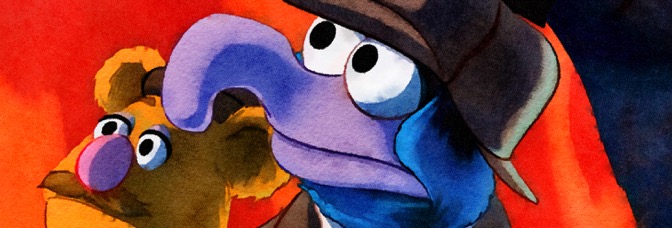
I can’t decide if this issue is the strongest or if it’s just the one where Gonzo solves the case…. The opening titles establish the cast–Kermit and Piggy are now permanent additions (Piggy’s Irene Adler now impersonating Mrs. Hudson, which is a great way to keep her around)–and it certainly seems like Muppet Sherlock Holmes…
-
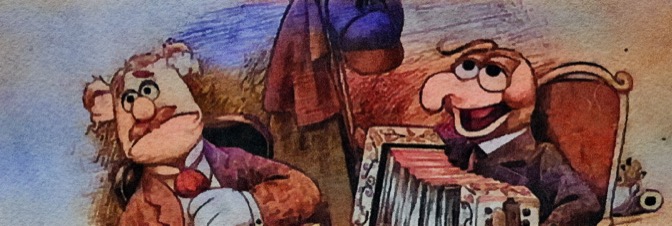
The second issue is as nice as the first. Storck doesn’t use “Muppet Show” standards (he did in the first issue for a great narrative device), but he does insert Kermit’s Inspector Lestrade–sorry, Inspector LeStrade–into the story. I don’t think Lestrade was in “A Scandal in Bohemia,” but he’s around here, a third wheel affixed…
-

Now here’s a lovely comic. Mebberson’s art alone makes Muppet Sherlock Holmes worth picking up–oh, she does the colors too. I was just going to say how great the colors work in the book. Her renditions of the Muppet characters, particularly the expressions, really bring them to life. It’s not something I think about a…
-
Now… this issue is an unmitigated disaster. Snider and Storck cut loose–free of the Snow White plot, shattering the fourth wall as the book entirely loses track of itself–and it’s bad. I don’t know if I’d come back for another Muppet book with the same writing team. It’s more a failure in editing, since some…
-
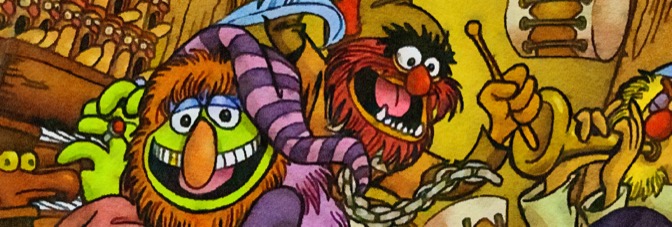
Remember when I said Snider and Storck were going to run into major pacing issues? They spend half this issue (or thereabouts) on a rock concert for the Electric Mayhem (who are the dwarves in Muppet Snow White) being threatened by one of the Queen’s assassins. Maybe both of them, I couldn’t keep track because…
-

I’ve decided Paroline’s art works well for Muppet Snow White. The book doesn’t require any suspension of disbelief–it’s hard to use that term when talking about a Muppet story–as the reader is constantly reminded it’s the Muppets doing a Snow White “performance,” as opposed to it just being Snow White told with a Muppet cast.…
-

Snider and Storck take many four pages in the middle of this issue as an aside. Yes, they introduce Snow White and her prince, but it’s mostly just them having a lot of fun with the script. When the comic opens, it’s very much in the vein of the Muppet Treasure Island movie, down to…
-
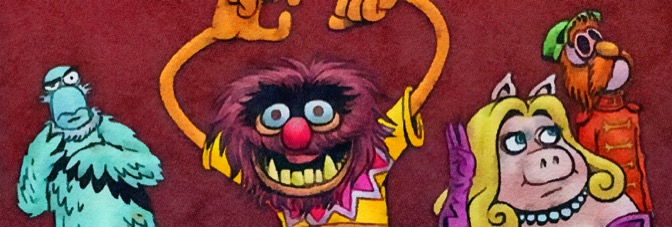
Now, another interesting move from Langridge. As opposed to the previous issues decisions, this one… well, it sort of makes even less sense in some ways. The story arc ends here–the Muppets return to their theater, which raises some questions about why Langridge focused on what he did in the previous two issues. He makes…
-
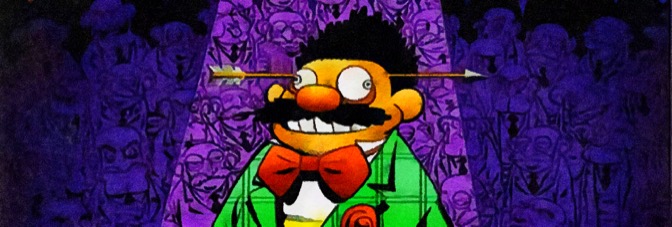
To keep things going this issue, Langridge introduces a town full of Statler and Waldorf’s relations. They make up the entire town (and the entire audience for the Muppet show). The regular cast–except Scooter, it’s a Scooter issue–has little to do. First Scooter has to contend with Fozzie’s replacement, then he has to deal with…
-

Langridge takes the show on the road–I wonder how many times someone’s made that statement about this issue. The Muppet Show, as a comic book, has a limited number of possibilities–I think I’ve already suggested Boom! have a guest star (i.e. a comic book guest star) for each issue–so Langridge’s solution is to make the…
-
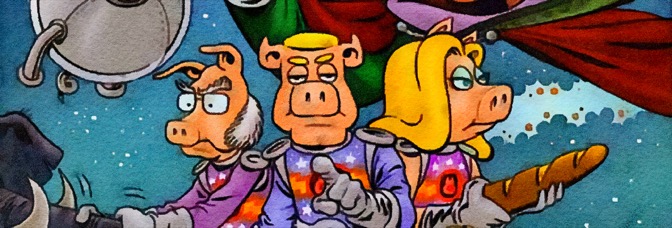
I’m not sure why Boom! did a zero issue of The Muppet Show. Maybe to show off a different artist could illustrate Langridge’s scripts to good effect? Paroline does a good job faking Langridge’s style, so much I didn’t even realize it wasn’t him until the second or third page. I just assumed he was…
-

A happy ending for King Arthur? The writers even comment on it. It does work, of course–so well I didn’t even think of a happy ending being out of place until they mentioned it. For this issue, Boom! upgraded the paper stock to something shiny. It holds the colors much better and gives Muppet King…
-
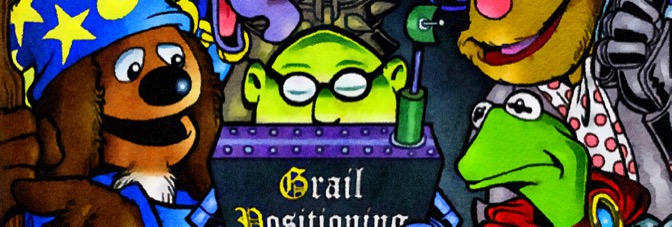
And the need for an overall narrative–or at least plot progression–finally catches up. The comic even opens with it, as Kermit (as Arthur) complains to his knights about their lack of activity. They’ve just been sitting around since the last issue. So off they go looking for the Holy Grail. Muppet King Arthur might be…
-
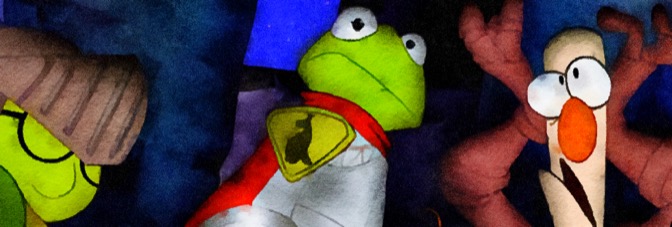
Apparently someone agreed with me. The art this issue is from James Silvani (with a different colorist too) and the whole thing is different. It looks fantastic. The Muppets are fully realized, not amateurish sketches, and Silvani loves the Camelot backgrounds. It’s an amazing difference. The script is even better too, with Benjamin and Storck…
-
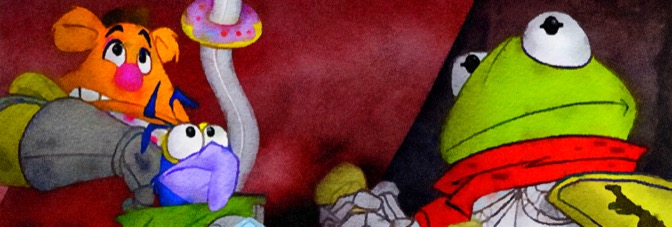
Muppet King Arthur has one rather big problem. It doesn’t really have any other problems, actually, as the writing is great–it’s funny as a Muppet comic–there’s plenty of the self-aware anachronisms the genre (the Muppet retelling) has always had, both in film and comic mediums. It’s also smart like a Muppet comic (or film) should…
-

Langridge returns to form, storytelling-wise, for his Miss Piggy issue. She’s not the issue’s protagonist, but she’s not the subject either; instead, Langridge treats it as a jumble. The show needs a guest and can’t afford anyone (it’s rather unfortunate Langridge doesn’t get to use real celebrities, since it always made the actual show so…
-
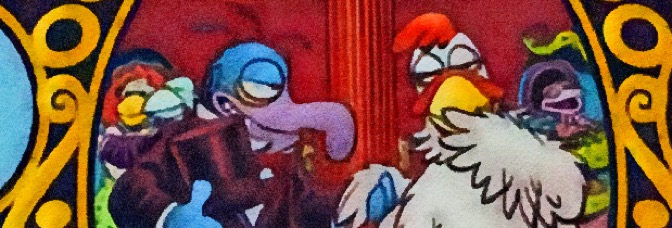
How does Langridge deal with his Gonzo issue? Unoriginally, unfortunately. Langridge’s focus on Gonzo is the traditional “what species is Gonzo” question. He has Scooter go around trying to figure it out. This issue is definitely the quickest read of the issues so far (and, I hate to say it, the least artistically–that adjective having…
-

Langridge gives himself a difficult task with his Fozzie issue. He has to make a comic about Fozzie getting funny again. Fozzie, of course, is painfully unfunny. The issue opens with Fozzie bombing, then we move through the standard Muppet sketches (some featuring Fozzie, some not) and Fozzie’s attempts at reinventing his comic style. So…
-
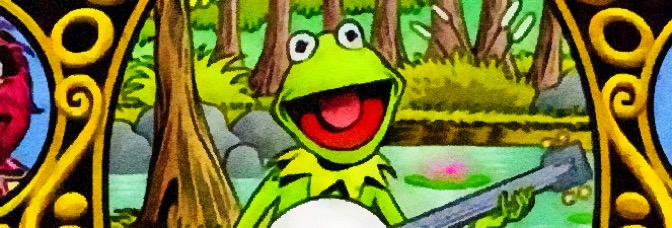
I’ve read Langridge’s Muppet Show before and remembered it was excellent, but I didn’t exactly remember why it was excellent. Langridge mixes humor and quite a bit of sentiment here but also introduces the Muppets being the focus of the off-stage antics. In other words, without a “guest star,” Langridge makes it all about the…
-
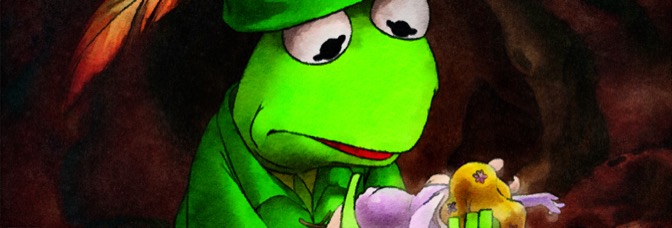
There’s a wonderful moment here, where being a Muppet comic really allows Randolph to do something neat, and she turns a battle scene into a segment for the Muppet sports’ show. It’s just a lovely way to do a comedic battle scene. As a last issue, it’s really successful. My only problem is the lack…
-

And now things are back on track. Randolph says, in a promotional interview where the letters page should be, Janice is one of her favorites to write and it really shows here. Janice sort of becomes the main character in this issue, opening it (but not closing it), and all of her stuff, whether funny…
-

While solid, this second issue isn’t as strong as the first. Some of that weakness has to do with the content. Here we get introduced to Gonzo as Captain Hook. There are some very funny lines–especially with Rizzo the Rat as Gonzo’s first mate–but there’s definitely something off. Kermit (as Peter Pan) is barely in…
-
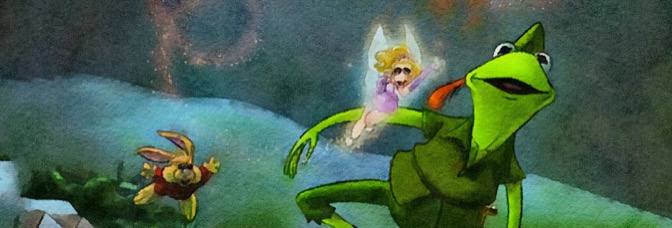
Reading Muppet Peter Pan, I’m confused why Boom! didn’t open with this series, at least as far as their themed Muppet comics go. I also want to mention I had a chance to get an Amy Mebberson sketch cover at C2E2 and did not because I hadn’t read Peter Pan yet and now greatly regret…
-
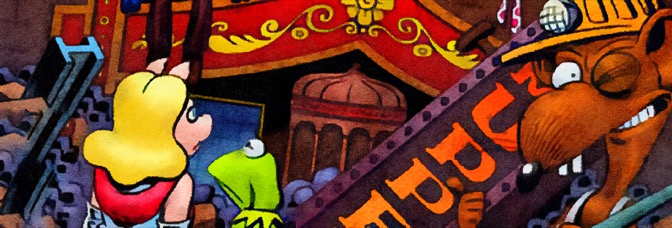
Langridge does a couple really profound things–wait, only one profound thing–the other thing isn’t profound as much as interesting. I don’t remember a lot of “the Muppet Show,” mostly the movies, so I don’t know if the theater’s history was ever discussed “in canon,” but here Langridge establishes the theater was around before Kermit and…
-
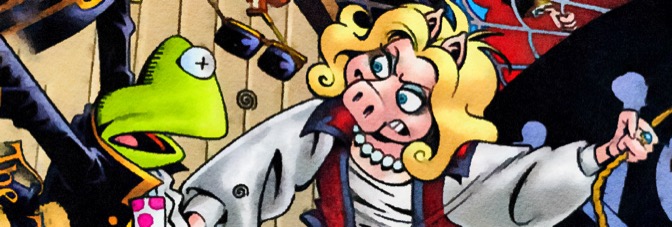
I just read this issue and I can’t tell you a thing in it except a Pigs in Space episode–not as funny because Piggy’s not in it–something about Piggy being covered in fake jewels–and a really touching scene with Animal. The series has been full of touching scenes with Animal. It’s more of a character…
-
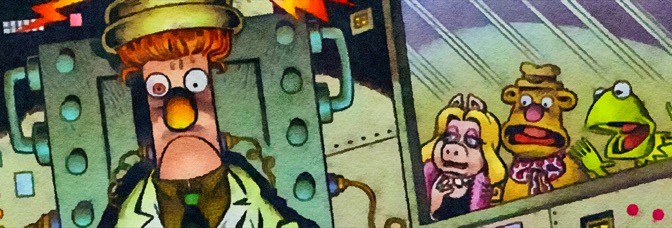
This issue has almost no Muppet Show stuff, as in sketches. Instead, Langridge is developing the Peg-Leg Wilson story. It’s a different, very successful approach (I just expected him to open the series with it). This issue is more akin to one of the Muppet feature films. There’s lots of plot. There are a couple…
-

Animal’s getting smarter, Rizzo and the rats are digging for treasure in the studio and Kermit’s acting very strange (leather jacket and shades). There’s also a ninja hanging around. While the series has a subtitle, suggesting a unifying theme (at the least), Langridge is really just doing another Muppet Show comic, with bits from the…
-
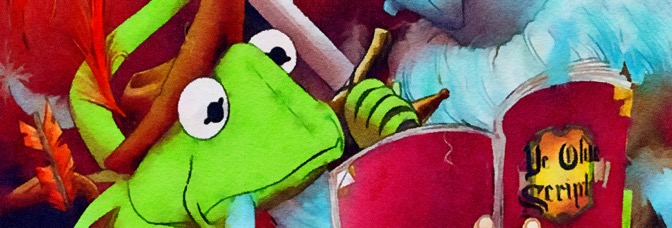
The series isn’t terrible; it has cute finish. Not a particularly successful one, but a cute one. There’s a lot of goofiness, not just in the narrative but in the handling of it. For example, when Disney gave Boom! the kids comic license, were they aware Boom! was going to do a page and a…
-
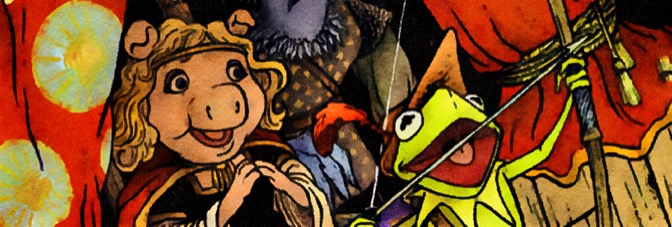
Beedle comes closer to–no pun intended–making a bullseye this issue than the previous two suggested he was capable of doing. There’s some of the silly anachronisms, but even they don’t stand in the way of it finally turning into a Robin Hood story. I can’t remember if the archery contest is a Robin Hood standard…
 The Stop Button