Category: 1994
-

Well, Morrison and Millar sort of explain how Alec Holland ended up separated from the Swamp Thing but not really. At least not to anyone who has been reading the comic for a while. And it’s not a particularly visual sequence, so it comes off perfunctory. They wrote themselves into a corner and have to…
-

Morrison and Millar open this issue with the Alan Moore Cajun dude stand-in getting killed. The new, mindless Swamp Thing kills him. Cajun Alan Moore dies protecting his family. Mindless Swamp Thing is after Abby next. It’s kind of hard not to read into what Morrison and Millar are doing–violently refreshing the series. An indeterminate…
-
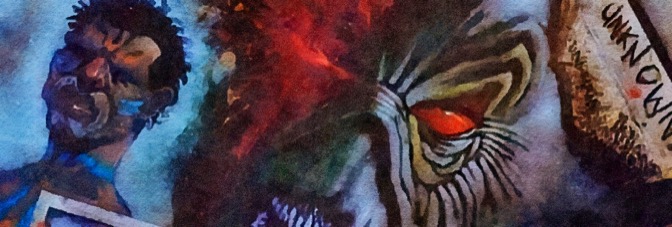
Grant Morrison and Mark Millar take over the book, starting with Alec Holland–a human one–waking up in Peru. Swamp Thing was just a bad trip but he’s better now. It’s a good idea of how to relaunch the character, only they don’t even keep the concept the entire issue. Abby shows up about halfway through,…
-

Maverick is a lot of fun. In fact, it’s so much fun, when the film runs into problems in its second act, it’s impossible to be disappointed. It’s still so likable, one just feels bad it doesn’t maintain its quality. There are two major problems. The first is the music. When the film starts–and for…
-
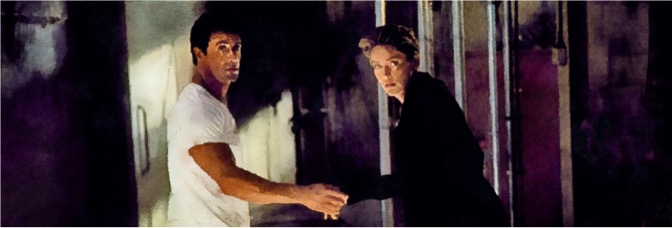
Technically speaking, the best thing about The Specialist is probably John Barry’s score. Except he ripped off his James Bond scores and threw in some of his Body Heat music. Neither mood fits The Specialist, which isn’t glamorous enough to be Bond and isn’t sexy. I would have liked to say “isn’t sexy enough to…
-

Has it been long enough since the firearms safety accident on The Crow set to point out Brandon Lee was a really bad actor and his performance in The Crow is laughably awful? Actually, I don’t care; he’s lousy and the movie’s dumb. There are good things about The Crow, which is a little surprising,…
-

Serial Mom gets a lot of mileage out of its concept–Kathleen Turner’s June Cleaver as a serial killer (actually, spree killer)–before it runs out of gas. Sadly, once it does, all of the plot problems become clear. But then Waters brings it to court and Mom is reinvigorated. Turner’s not special during the first hour…
-
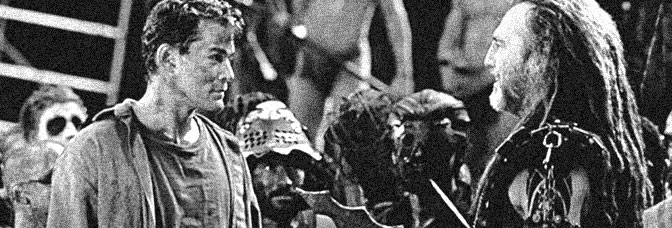
No Escape opens with this lovely piece of music from composer Graeme Revell. It’s sort of the film’s theme music and it doesn’t fit at all with the action or sci-fi elements integral to the plot. The film’s this odd mix of genres and filmmaking approaches. At times it’s anti-climatic to such an incredible point,…
-

On Deadly Ground is about a presumably Inuit (it’s never clear) special forces guy (also never clear) killing, maiming and beating up oil company goons in a number of creative ways. Strangely, Seagal makes the audience wait to discover the film’s true nature. The first scene is an exceptionally lame and poorly acted explosion sequence.…
-

Just after I’ve gotten used to the supporting cast, Rozum gets rid of them for a new one. These people have more to do with David, I suppose, but they’re his regular friends. They’re nowhere near as interesting as the wacky, magical ones. This issue starts a new arc and Rozum has returned to the…
-

I’m trying to think of good things about Mary Shelley’s Frankenstein. It starts off poorly, with an opening title seemingly made on a cheap video editor from the late 1970s, then moves into the Walton framing sequence. Apparently, no one involved with the film—Branagh, the screenwriters, the producers—understood the point of these frames in the…
-
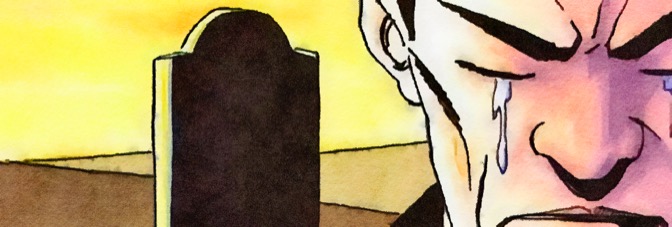
And so Rozum promised a lot, maybe without realizing it, from this issue and he delivers. He delivers more than I hoped. He seems to get how important it is for Xombi to finally be about the protagonist. This issue, the supernatural oddness of the last four are almost forgotten; their brief mentions are all…
-
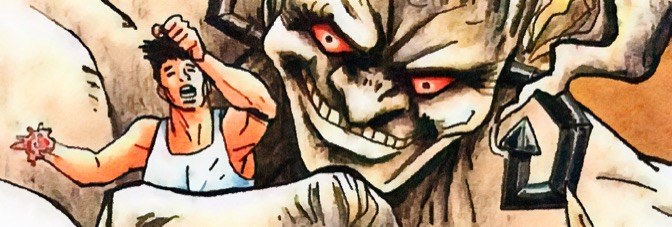
The soft cliffhanger implies Rozum is going to start dealing with David’s stuff next issue. I’m not holding my breath, but I am somewhat hopeful…. This issue is another mixed bag. The issue revolves around this giant monster—who Rozum just now introduces, even though he’s been sort of present a while—and the gang trying to…
-
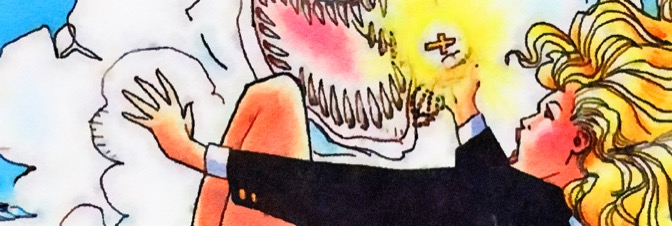
Even Birch seems to give up a little this issue, which introduces a bunch of new things—not just new characters, but new creatures—for David Kim to contend with. Birch’s faces look unfinished, like he skipped inking them because he had to much other stuff to do. There’s only a little stuff with Kim this issue;…
-
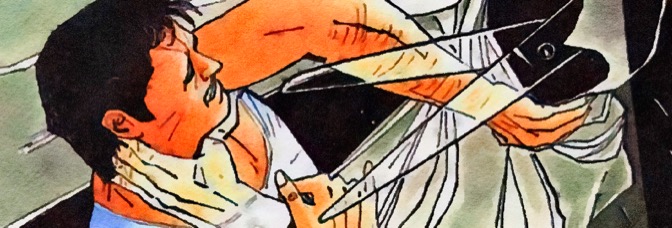
At one point this issue, the Nun of the Above—who’s that nun I mentioned last time—tells one of the new cast members she’s never heard of him. My response is similar. I’m weary at trying to keep the cast straight. From the first five pages, Rozum has got five or six people moving through the…
-
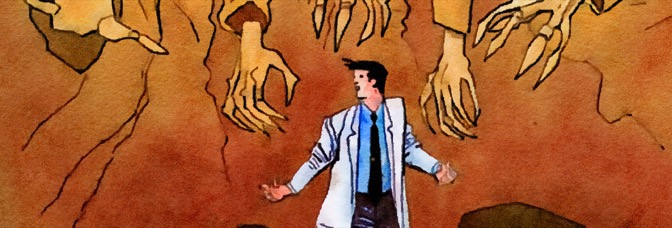
J.J. Birch is the perfect artist for this book. He can even make cute little mechanical birds like mildly scary. Rozum resolves his cliffhanger. Actually, it wasn’t a hard cliffhanger, but a soft one. There are no happy moments, no redemptive ones, no smiles. Well, maybe some smiles. Here, Rozum introduces the supporting cast—and, yes,…
-
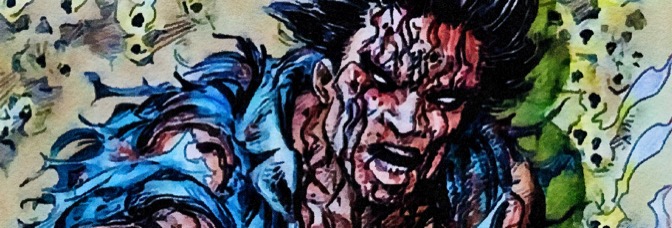
There’s a way to end on a downer…. Wow. Rozum moves between science and magic this issue. The science stuff basically just uses concepts the reader is likely familiar with—nanotechnology mostly—and shows how awesome it could be. The magic is a little different. It gives Rozum a lot of room to be creative. He also…
-
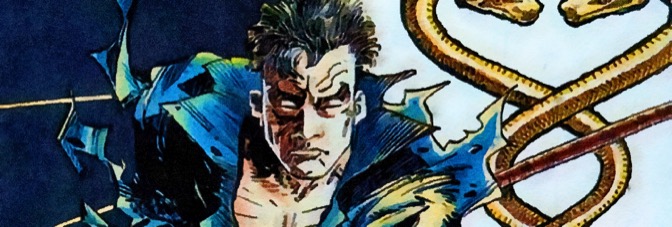
What a goofy way to launch a series. This zero issue of Xombi—introducing the character—doesn’t just take place during a crossover, it also takes place eleven issues into the regular series run. Except the series hasn’t started its regular run yet. John Rozum explains it all in the letters page, but avoids mentioning how difficult…
-

Rasputin still doesn’t get identified by name—but based on all the expository dialogue, it’s surprising Hellboy couldn’t figure it out. I guess he never took any history classes. The series winds down with some more big action sequences, one involving Abe and Liz Sherman. Well, not exactly Liz Sherman. Mignola and Byrne had very little…
-

Adams (sorry, starting with him again, I know) must intentionally draw bad faces. Everything else is so detailed… faces not. So it’s a choice. A bad one, but a choice. Mignola and Byrne get a lot of content into this issue. I don’t think Rasputin ever even gets named, just his history introduced—the majority of…
-

You know, if Adams stuck to the way he draws in medium long shots… he’d make a good comic strip artist. Sorry to talk about the Monkeyman backup, but I thought I should open with a nice comment about Adams. It’s probably never going to happen again. The Hellboy part of the issue is very…
-

All right, so Mignola and Byrne conceive Hellboy as sort of a hard boiled detective. Not in the content so much, but in the first person narration Byrne writes for him. It also doesn’t really match the way Hellboy talks in dialogue either. But the big problem is the way the story’s split. It opens…
-

It’s sort of hard to differentiate this Bottle Rocket from the subsequent feature. It looks like Owen Wilson and Wes Anderson had been working on parts of the script for a while (a handful of scenes appear verbatim in the feature) and, in a lot of ways, the short plays like an extended trailer. As…
-

When he’s doing good work, Luc Besson makes these transcendent films, but even some of his lesser works often have some moments with that quality. Léon does not. Many of the elements are there–but something’s off. Maybe it’s something simple, like Jean Reno is supposed to be playing an Italian immigrant who, apparently, just acts…
-
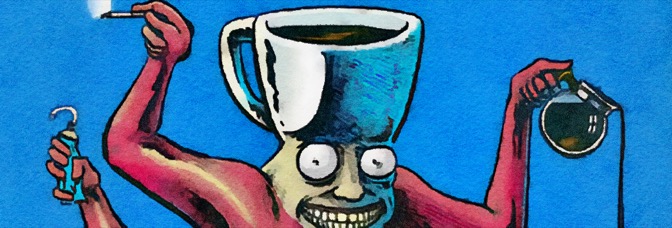
The issue opens with Wheeler’s Too Much Coffee Man, which is a cute enough story about a disaffected guy with a coffee pot for his head. Wheeler uses the character to generally rail against modern capitalist society. Wheeler’s got a good sense of design and some of the observations are funny (none are profound). It’s…
-
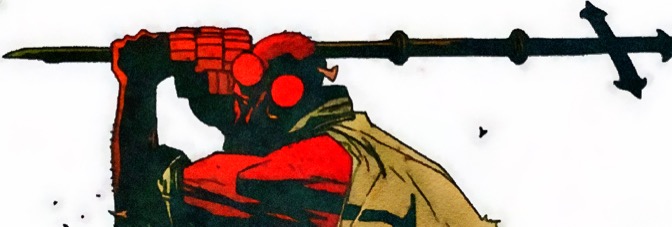
You know, Mignola doing a fight scene isn’t particular impressive. In fact, Hellboy had a fairly boring finish. Mignola tries to maintain the minimalist tone for the fight and so the fight is lame. There isn’t even any resolution to the story itself. It’s just Hellboy versus a big werewolf, who may or may not…
-

Mignola looks good in black and white. There are some very effective panels in Hellboy. The writing helps. He knows when to write and when to just let the art do its work. Up until the end of this issue, it’s almost like Hellboy is a passive force in the story. He’s an unknown quantity.…
-

This issue features something I never wanted to see… a Paleolove pin-up from Davis. You can tear it out and put bad art up on your wall. His artwork is really weak for the first half, maybe his worst ever. It gets a little better for the second half of the boring installment. The writing…
-
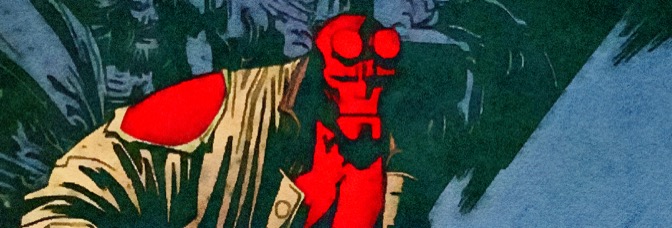
Is this issue the first appearance of Hellboy? I think it might be my first full Hellboy (not B.P.R.D.) story. It’s good, but Mignola does something weird with the conclusion. He sets the whole thing up, then has Hellboy come in and reveal it all before the first installment’s done. Makes all the setup a…
-
This issue is fairly weak. The Eighth Wonder finishes. Plunkett’s art is good and Janes’s scenic writing–his dialogue, for example–is fine, but the story lacks any real heft. It feels like they hurried or ran out of pages. It ends with a great unanswered questions–why no boats? They’re building a bridge from Europe to Colombia.…
 The Stop Button