Category: Sparta U.S.A.
-

Well… crud. Lapham explains a lot of the backstory–poorly and needlessly–and then fills the rest of the issue with a useless fight against the Nazis. It’s not even good exploitation–if he’d done football players versus Nazis, for example, it might be something. Instead it’s just a standard resistance, followed by some more fighting. I think…
-
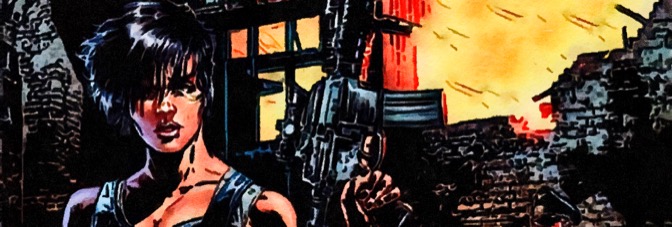
With one issue left, there’s no way Lapham is going to be able to explain everything. Especially not after this issue, when he reveals the bad guy to be the Pied Piper. Well, I suppose he could reveal it all to be a dream of Colin Farrell’s, which would make it the greatest comic book…
-
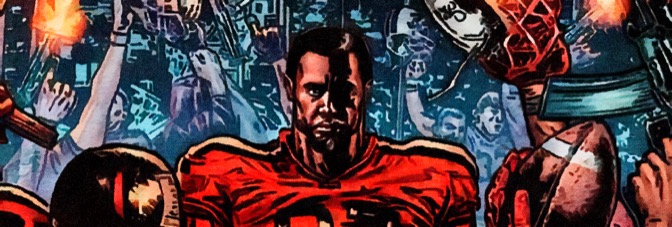
Maybe Timmons just really wanted to draw swastikas? Lapham has gone far without explaining anything at all about Sparta‘s setting; it’s modern day but there aren’t any cellphones so far and there’s no internet. So when the bad guy shows up at the end with a bunch of Nazi stormtroopers, I’m not sure what to…
-
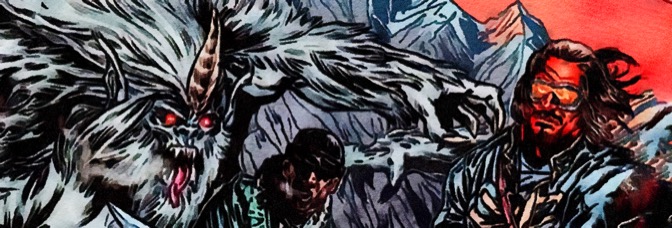
Lapham doesn’t really increase the cast numbers here, but it all of a sudden seems a lot more complicated. The comic relies a lot on the logic of the place and Lapham’s plotting this issue concentrates the attention on that logic. He should be skirting over it, since it’s not particularly comprehensive… at least not…
-
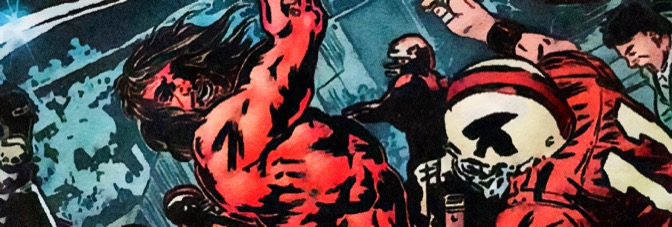
Well, I’m still completely confused–there’s a lot of magical stuff going on, fairy-tale type stuff (I think that’s Baba Yaga making an appearance in one panel)–but it’s really quite good. I’ve sort of ignored Lapham’s output since he’s slowed or stopped Stray Bullets (does anyone know for sure?), but there’s something really nice about Sparta…
-
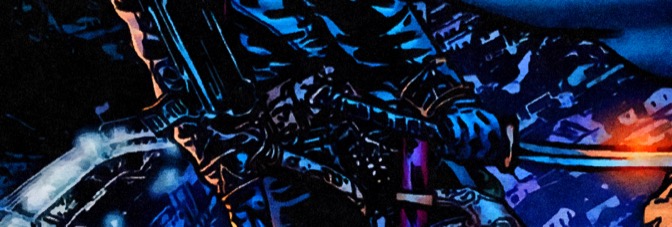
Talk about going into something cold. I had less than no idea what Sparta U.S.A. is about before reading this first issue–I also didn’t know the lead character is played by Colin Farrell (someone needs to hire artist Johnny Timmons to do licensed comics; if he can do Farrell without it being based on a…
-
Well… crud. Lapham explains a lot of the backstory–poorly and needlessly–and then fills the rest of the issue with a useless fight against the Nazis. It’s not even good exploitation–if he’d done football players versus Nazis, for example, it might be something. Instead it’s just a standard resistance, followed by some more fighting. I think…
-
With one issue left, there’s no way Lapham is going to be able to explain everything. Especially not after this issue, when he reveals the bad guy to be the Pied Piper. Well, I suppose he could reveal it all to be a dream of Colin Farrell’s, which would make it the greatest comic book…
-
Maybe Timmons just really wanted to draw swastikas? Lapham has gone far without explaining anything at all about Sparta‘s setting; it’s modern day but there aren’t any cellphones so far and there’s no internet. So when the bad guy shows up at the end with a bunch of Nazi stormtroopers, I’m not sure what to…
-
Lapham doesn’t really increase the cast numbers here, but it all of a sudden seems a lot more complicated. The comic relies a lot on the logic of the place and Lapham’s plotting this issue concentrates the attention on that logic. He should be skirting over it, since it’s not particularly comprehensive… at least not…
-
Well, I’m still completely confused–there’s a lot of magical stuff going on, fairy-tale type stuff (I think that’s Baba Yaga making an appearance in one panel)–but it’s really quite good. I’ve sort of ignored Lapham’s output since he’s slowed or stopped Stray Bullets (does anyone know for sure?), but there’s something really nice about Sparta…
-
Talk about going into something cold. I had less than no idea what Sparta U.S.A. is about before reading this first issue–I also didn’t know the lead character is played by Colin Farrell (someone needs to hire artist Johnny Timmons to do licensed comics; if he can do Farrell without it being based on a…
 The Stop Button