Category: Judge Dredd
-
Batman. Judge Dredd. They ought to be an interesting team-up, right? Judge Dredd is the law, Batman isn’t. There’s a lot of gristle for competing philosophies, if one wanted to do a story with a lot of gristle. The Batman/Judge Dredd Files consists of three one-shots and a two-parter. It took DC eight years to…
-
Gibson finally gets a story with content matching his style to my liking–lizard-men aliens who zap you and make your worst fears attack you so you lose your mind. Very fantastical stuff in a very fantastical setting–a housing block designed to be a maze, only its abandoned because no one could find their way around…
-
Ron Smith only illustrates a fourth of this issue. Then “big-chin” Ian Gibson takes over for the rest. Something about Gibson’s cartoony style doesn’t work for me on Dredd. He goes too obviously to the humor and if Judge Dredd is nothing but a laugh, it can’t sustain itself past a punchline. The writing–of three…
-
It’s an okay issue. It’s just too uneven. The first story, with art by Ian Gibson, is a flop. Gibson’s style might be how I always think of Judge Dredd–visibly British, visibly stilted. Such long faces. Literally. Grant and Wagner’s script is about a Block War, sort of. There’s a simple explanation though and a…
-
Again, it’s an excellent issue. Eagle really puts together a great combination of Dredd–though it isn’t hard with the Smith art. He just gets better and better throughout the issue; the third manages to have almost Eisner-esque thugs, the ultra-realistic future, but then the slightly cartoonish Dredd. It’s awesome. Alan Grant joins Wagner on the…
-
Judge Dredd’s Crime File has three stories in this first issue, all written by John Wagner. They all have good art–John Byrne, Ron Smith, Colin Wilson–they all have slightly different art. Wilson’s future landscape is more stylish than Byrne’s, for example. Ron Smith is the most rounded for what Wagner’s trying to do with the differing…
-
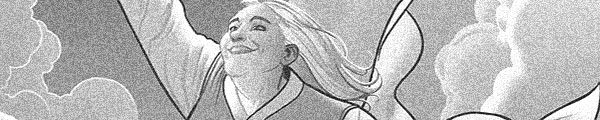
This issue has two stories–a long feature (or a combination of at least three 2000 A.D. chapters) and a backup. Wagner and Grant write both, Ron Smith does the art on both. Smith’s an interesting artist for Dredd because he doesn’t take any time with the judges. Both stories require judges to be distinguished, Smith…
-
It’s an excellent issue about a vigilante hitting various organized crime guys in Mega-City One. Does it make any sense for there to be mobsters above the Judges? No. It’s sort of weird and has something of a retro vibe–like it doesn’t really star Judge Dredd but his training officer. Nice art from Ezquerra and…
-
This issue of Dredd seems to be the strange issue, like they found all the absurdly funny strips from 2000 AD and gave them their own issue. And artist Ron Smith works for it. He has a jovial, cartoon-y style. He doesn’t draw Dredd very well, but everything else is good. Dredd–and the rest of…
-
Dredd has his showdown with the surviving Angel brothers. It’s an oddly incomplete story just because Walter has a silent but important role and Wagner and Grant never get around to resolving it. At least not in this collection of progs; maybe in the actual 2000 A.D. they got to it in a good amount…
-
Besides having some very odd angles from Ezqerra, this issue does pretty well. Even if Wagner and Grant have a really, really silly setup. The Judge Child, across the galaxy, is able to control minds back on Earth. And I think read minds too. He wrecks havoc as he plots against Dredd. Part of that…
-
It’s a tough issue. Not in a bad way, but in a post-Apocalypse War, the future is a tough place, tough issue. Wagner, Grant and Ezquerra do both stories. The writing is better than the art, but Ezquerra does pretty well with it. There’s humor and humanity. Can’t ask for much more. The first story…
-
It’s a fairly strong issue, with only one weak story–a retelling of Frankenstein, only in Mega-City One; the other three stories are good. The first couple, with art from John Cooper, shows a kinder, gentler Dredd. The first deals with animal experimentation, the second with the plastic substance they use in the future dissolving. Writer…
-
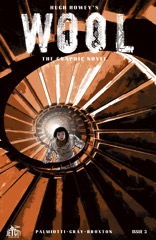
Reading Uprise, it’s hard to see the point. It’s another sequel comic to the Dredd movie, which isn’t clear–if one doesn’t read that information on the cover–until the judges show up in their movie costumes. They take a while show up; writer Arthur Wyatt jumps from regular people to judges to bad people to other…
-
It’s almost a great issue of Dredd. The opening story, with Wagner and Grant sending Dredd into the Cursed Earth (no longer called Mutieland) with a bunch of cadets for a test, is awesome. Smith’s art is good, the story has a nice flow and the supporting cast of cadets is good. It’s probably the…
-
It’s an uneven issue. Except the art, of course. Smith does a great job on the art. And Wagner and Grant do have some highs. The issue opens with the low–and the only time there’s a lot of forced symbolism about Dredd and the law. I think it comes up later, but the writers actually…
-
There’s a lot of imaginative Ron Smith art this issue. He does an excellent job mixing action with setting detail, especially since all of Wagner’s stories have something to do with Mega-City One, whether with the block architecture or with the people. Unfortunately, Wagner’s stories of Dredd and the general public, even when they’re good,…
-
Smith handles the art on both stories. The first story is about an ugly clinic (people go to get plastic surgery to look ugly). It’s a little silly, but it does get more interesting as it goes along. The problem is writers Wagner and Grant want to basically do some future musing and they don’t…
-
The Apocalypse War saga ends. There’s some silliness–like Wagner and Grant referring to Dredd’s “Apocalypse Squad”–but most of the comic works out, at least as far as narrative. Dredd’s got to take care of the enemy’s mega city, which proves easy thanks to Anderson (who the writers use to get out of plotting difficulties), and…
-
From the start, Ezquerra’s art is off. His figures are weak, his composition is worse. Maybe he just burned out on all the war stuff–there are constant empty backgrounds, like he’s trying to do less work. It actually feels like someone doing an Ezquerra impression and and a rushed one. As for the writing… Wagner…
-
It’s the war comic I’ve been expecting from Wagner for a while now. Dredd and the judges with him have a mission and they try to carry it through. There are changes, but minor ones. It’s just a war comic, even during the bewildering sequence where the judges have to knock down the supports on…
-
There are some amusing disconnects with Ezquerra’s art and Wagner’s script. It’s like Ezquerra didn’t get the jokes… or if he did, he paced them wrong. Or maybe there’s just no easy way to illustrate jokes amid a story about a nuclear attack. Wagner figures out a way to both have nuclear attacks but still…
-
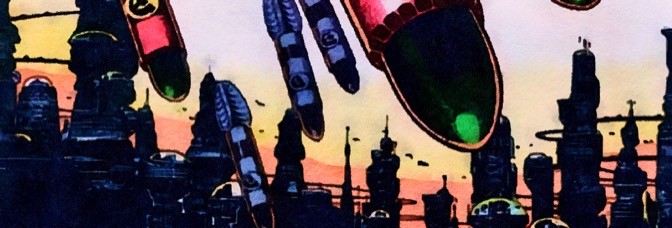
Even though Carlos Ezquerra is an odd choice for a future war–Dredd co-creator or not, Ezquerra puts a lot of emphasis on the static parts of images instead of the moving, which is strange here–and even though Wagner goes overboard with some of the symbolism, it’s an awesome issue. It’s the end of the world…
-
Even though Carlos Ezquerra is an odd choice for a future war–Dredd co-creator or not, Ezquerra puts a lot of emphasis on the static parts of images instead of the moving, which is strange here–and even though Wagner goes overboard with some of the symbolism, it’s an awesome issue. It’s the end of the world…
-

Wagner and Grant amp up the block war storyline, but turn it into a long investigation. Dredd is trying to track down the person responsible for the block war mania. It’s strange, once the suspect is identified, he also refers to the condition as block mania. It’s a small thing, but it does show where…
-
Not a lot happens this issue–well, there’s a lot of block warring and very little the judges can do about it–but there doesn’t seem to be an overarching story. Except why everyone wants to fight in a block war. I was sort of hoping Wagner or Grant would lay out the battles with some connections,…
-
The issue has two stories–one from Mills, one from Wagner, both with art by Ron Smith. The first story, Mills’s, has a regular citizen turning into a were-dinosaur. It’s kind of dumb, but Mills’s plotting of the story is fantastic. The way he starts external to the eventual characters and moves in–presumably from chapter to…
-
One of Dredd’s cases comes back to haunt him, with the sole survivor of a criminal family hunting judges. He’s a Cursed Earth mutant–with an evil super rat as a pet. McMahon draws them both very creepy. And Wagner’s script plays up that creep factor. The villain is methodical, with Wagner showing his aptitude for…
 The Stop Button