The Stop Button
blogging by Andrew Wickliffe
Category: Black Widow
-

Black Widow gets a lot better after the first act. Mostly because the prologue—set in 1995 Ohio where tween-who-will-be-Scarlet-Johansson Ever Anderson lives with her All-American family (little sister Violet McGraw, mom Rachel Weisz, dad David Harbour)—is almost classy enough. With better music and a more patient, less blandly jingoistic look at Americana, it’d be potentially…
-
It’s another all action issue–there’s some talking heads for the planning and the various plot twists, but it’s an action issue. A bunch of slightly different superheroes–the Black Knight has a magical chainsaw and Venom can pilot a spaceship and Ghost Rider’s techy–attack some slightly different other superheroes who are now bad. Human Torch is…
-
Apparently, in some realities, Captain America is a dick. Bunn gets how to write Steve’s honesty and morality. It helps here, but doesn’t fit with Bunn’s style otherwise. I also didn’t get the guy in the Doc Ock arms was the Lizard. My bad. I just thought it was some creature. But no, it’s Curt…
-
You can tell the Black Widows apart by their belts. I hadn’t realized that detail. My bad. Once again the Francavilla art is good. He’s stronger on the distance shots than he is during the close ups. Not to knock him–he’s good all the time but there are a couple fantastic long shot panels this…
-
Clearly I haven’t been reading Marvel comics for a while. Since when do they talk about a multiverse like it’s early eighties DC and what’s the deal with the big tripod monsters? Confusion aside, it’s a fairly good issue. Bunn’s plot twist is somewhat unexpected–supervillain arms dealer only employs her multiverse selves; there’s none of…
-
I like Francesco Francavilla. He’s a little awkward with Captain America out on a mission and the superhero stuff, but he makes the talking heads interesting and he’s got a great rendering of Central Park at the open. As for Cullen Bunn? He has a similar problem. The issue’s perfectly well-written, somewhat confounding stuff about…
-

Well, there’s the finish. Morgan leaves it unsatisfactory—some of it—on purpose, but I wonder if he also needed a little more space. The issue ends with a tag announcing the sequel series, almost as though they knew they needed to promise more story…. There’s a somewhat lengthy fight scene this issue. It’s got some good…
-
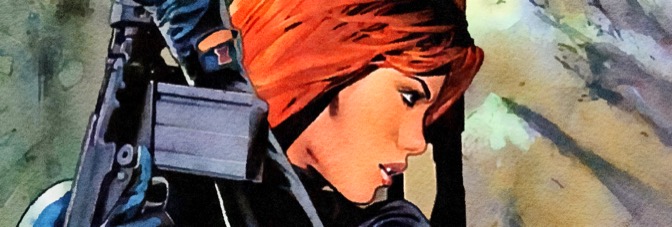
Wow, what a downer. Morgan gives the issue, for its soft cliffhanger, an extremely depressing turn of events. Not the one I was worried about, but one I dislike maybe even worse. It comes after the big revelation issue. I mean, there’s some bridging stuff at the beginning, but most of the issue is spent…
-
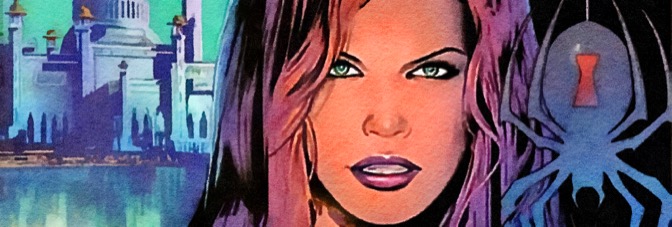
So, for the first issue of the second half, Morgan’s changing it up again. He’s got Natasha in Russia, where she uncovers her past. It’s not the past she thought—I’m not even sure if it’s in continuity anymore—and the way Morgan does it makes the entire series feel like the first Black Widow comic ever.…
-
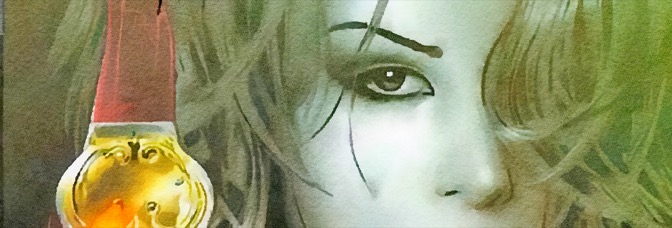
Morgan quickly makes up for any deficiencies in the last issue. It’s almost like he realized it, because this issue establishes Black Widow as being about gender issues. It turns out the bad guys are this freaky pharmaceutical company (probably using mutant gene in their face cream) and Natasha finding out about it. Along the…
-

With Parlov taking over the layouts, all of a sudden it reminds me of Ennis. Well, not really. Morgan does a fine job with Natasha—his brief first person narration works, instead of the usual, lengthy nonsense male writers do when writing first person narration for female characters—but the only other female character in the issue…
-
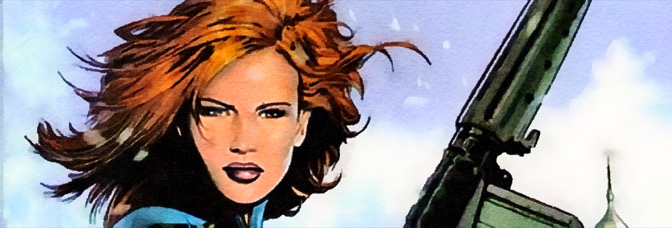
I’ve read this Black Widow series before, but it’s been so long I forgot Bill Sienkiewicz does the art. I remembered it was good, but I didn’t remember why it’s good. So it’s a nice surprise. Richard K. Morgan doesn’t have any Marvel Universe stuff here. It’s just a retired spy story so far—Natasha keeps…
-
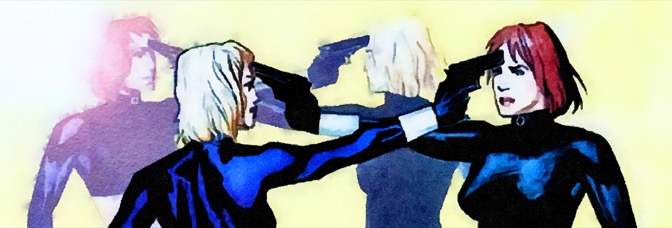
Yuck, there’s a lot of design work from Hampton this issue. A painter shouldn’t do eighties advertising style design. It just doesn’t work out. Oddly, nothing works in this comic. Well, except some of Hampton’s skies. He has some beautiful upstate New York blue skies with clouds here. Otherwise, his work is just wrong throughout.…
-

Well, the second issue—when Rucka and Grayson reveal the plot (Natasha and S.H.I.E.L.D. are out to discover the blond Black Widow’s boss’s plans to sell weapons to a foreign power)—is a whole lot less compelling than the first. More annoying Daredevil running around. Hampton doesn’t even try not to make him look silly around the…
-

Now, I generally like Scott Hampton—well, in theory anyway, I remember he’s done some good Vertigo stuff—but who thought he’d be a good fit on a Black Widow book? All of the art, because he’s not doing fully painted backgrounds, looks way too designed and artificial. There’s zero flow to it. It’s like Marvel hired…
-
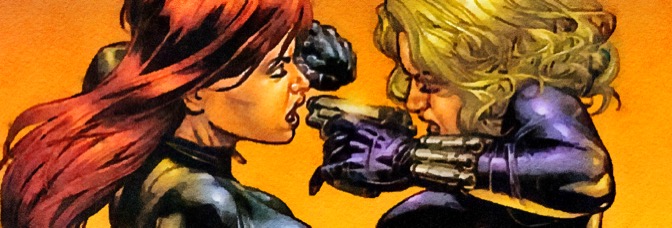
Grayson’s back to true form here, with terrible dialogue and sexy smooth talker Matt Murdock. It appears he’s got a cell built in to his Daredevil costume. He shows up towards the beginning, talking to the Black Widow II. I’m sure this story wasn’t Grayson’s idea—maybe someone at Marvel thought it sounded good—but it’s just…
-

So who shoots her (Natasha) at the end? Is that SHIELD? Why’s SHIELD shooting her? This issue might be better written than the last. The conversation between Natasha and Matt is nowhere near as bad, though Grayson’s characterization of him as a lech seems a little off. Well, no, it seems a lot off. Grayson…
-
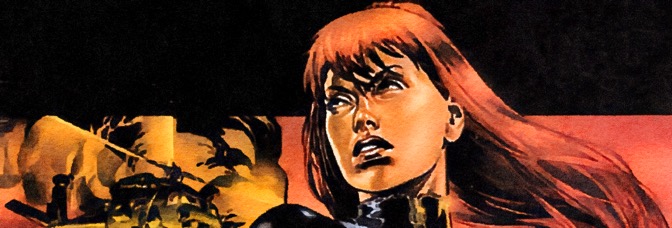
For some reason, I was expecting more from Jones. I wasn’t expecting anything from Grayson (and, oh, did she deliver), but Jones… I thought he’d at least do a consistently good issue. Instead, it’s like he’s alternating. One panel is good, the next isn’t. He has these terrible eyeglass lenses, which makes Matt Murdock’s cameo…
 The Stop Button