 Well, it’s not the best issue of Cinema Purgatorio. Not the best at all. It’s not really the worst either, I don’t think. I mean, this installment of Modded is probably Kieron Gillen’s strongest writing. But it’s not a particularly distinct issue.
Alan Moore and Kevin O’Neill explore the American Western, which is fine. There’s nothing amazing about it. It’s actually a little obvious; it’s light, which is strange.
Code Pru is okay. Ennis is trying a little harder. It doesn’t really come to anything. Maybe he if he had even two more pages, he’d be able to get someplace better with it. It’s actually an improvement over the earlier stories, it’s just still not clicking.
Like I said before, Modded is Gillen’s best writing. Nice art from Nahuel Lopez. It’s a side story from the main plot, so of course it’s going to be better than usual. Gillen still manages to screw it up at the end, of course.
A More Perfect Union has a really nice double-page spread from Michael DiPascale and some stupid Civil War reference from Max Brooks. I don’t care. No one cares, Max Brooks, no one cares. If they cared, if Avatar is really pitching Cinema Purgatorio to Civil War enthusiasts, well, those guys all left during Code Pru and Ennis’s sex positivity.
And The Vast is a reprint from last issue. I think. I don’t even care. If it’s not, nice art from Gabriel Andrade. If it is, nice art from Gabriel Andrade.
Moore and O’Neill worked up some momentum on this book and if they’re running out… well, Cinema Purgatorio is more often disappointing overall than not, it’s just they had a couple really great stories. And Ennis seemed like he was getting with it. As always, it’s too bad it’s not better.
CREDITS
Cinema Purgatorio, After Tombstone; writer, Alan Moore; artist, Kevin O’Neill. Code Pru, Men; writer, Garth Ennis; artist, Raulo Caceres. Modded; writer, Kieron Gillen; artist, Nahuel Lopez. A More Perfect Union; writer, Max Brooks; artist, Michael DiPascale. The Vast; writer, Christos Gage; artist, Gabriel Andrade. Letterer, Kurt Hathaway; publisher, Avatar Press.
 It’s another excellent issue. Ennis has got a lot of exposition in the dialogue but there’s no better place for it than a war comic; it’s not just for his narrative, it’s for the history too. Script’s steadily paced and Aira’s art flows quite well this issue.
 If there’s meant to be an ideal Cinema Purgatorio, this issue comes closer than I’d ever imagine the comic would get. Even with the occasionally phenomenal, usually good, always fine features from Alan Moore and Kevin O’Neill, there’s not much of a feel to the comic. It’s an anthology without tone, not even in terms of the story selection. It feels like Alan Moore inserted into a bad Avatar idea.
 I really wanted to like Surgeon X. Right there on the front cover, third credited, Karen Berger–the editor getting cover credit. And John Watkiss art. It has to be something special. Only it’s not. The super sad part of Surgeon X is it isn’t special.
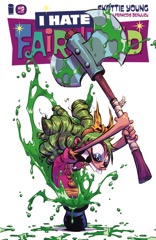 I Hate Fairyland continues on its demented way, with Young throwing Gert into her next misadventure. The recap text actually made me think there might be some kind of followup to the previous issue’s events, but no, instead Young’s full steam ahead.
 As a series, Manifest Destiny started up and slowly traveled down. Though sometimes it has charged downhill in terms of plotting quality. But Roberts’s art has always been a draw. It’s always been something the series can lean on when Dingess’s writing isn’t cutting it. Until now. Roberts is either in a rush or as bored with the story as I am. He hurries through and it looks bad. Not all of it, but enough of it.
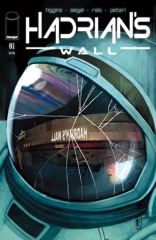 Hadrian’s Wall opens with a paragraph explaining the setting–it’s set in an alternate future because it has an alternate past (the U.S. and U.S.S.R. nuked each other in 1985 so the future’s different)–but then it’s just a traditional future cop sci-fi thing. And it’s pretty good at it too. Writers Kyle Higgins and Alec Siegel just have one major mystery for the cop to solve–who killed his ex-wife’s new husband? Who she initially had an affair with, who got him fired, who shot him four times.
 Cannon doesn’t offer a breather after a heavy previous issue. He sends Electrogor under the sea into the old gods’ territory (with Cthulhu showing up at the end) and it’s a real downer. I feel like it’s the first time he’s branched into different monster mythologies to this degree in Kaijumax–I mean, Cthulhu’s never been a kaiju (right?). Most of Electrogor’s half of the issue is spent with him feeling terrible, which is sort of his thing, but for really good reason as he meets the residents of this hidden, undersea slum. It’s heartbreaking and horrifying, but not in for any predictable reasons.
 Resident Alien is back. As always, cause for rejoicing, especially with Steve Parkhouse having a great time returning to the characters. He maintains the series’s comfortable feel, but with a visible enthusiasm. As far as the writing goes, Peter Hogan eases the reader back into the adventures of Harry and company. Even the series title–The Man with No Name–goes unanswered this issue; Hogan and Parkhouse know how to set up a limited series.
 Giant apes are more interesting than political intrigue, even political intrigue involving multiple betrayals. These betrayals all happen during a crisis and all happen with characters it’s impossible to really care about because we’re three issues into Kong of Skull Island–the title does now make awesome (and plural) sense, however.