 I was hoping Bates would keep Flash running smoothly after the previous issue, but this one doesn’t bode well for the series keeping up. Even more than usual, Barry–and the Flash–are less characters in the comic than they are movable pieces for Bates’s plot. There’s not even the attempt at showing the Flash’s fantastic powers. Instead, Bates shows him doing what equates to a grade school science project without the traditional verbose, fantastic explanation.
This issue has Flash apparently falling for the Golden Glider. Now, I’m not sure about her family situation, but she doesn’t remember Flash messing with her brother a few issues ago. I guess they aren’t in touch. SO why’s she important–do they have some deep, repressed attraction for one another? Nope, it’s all for Bates’s evil dad plot.
It’s lame.
The Firestorm backup isn’t much better. Again, fine composition from Cowans, weak detail. And rushed writing.
C+
CREDITS
Lisa Starts with L and That Stands for Lethal; writer, Cary Bates; penciller, Carmine Infantino; inker, Bob Smith; colorist, Gene D’Angelo. Firestorm, Invitation to Revelation; writer, Gerry Conway; penciller, Denys Cowan; inker, Rodin Rodriguez; colorist, Jerry Serpe. Letterer, Ben Oda; editor, Len Wein; publisher, DC Comics.
 Bates seems a lot more comfortable and assured this issue–maybe assured isn’t the right word. He’s ambitious again, both in plotting the feature story and how he gets through it. The only weak part is when the Flash has to beg for Barry Allen’s job back. It reveals how little work Bates does on either character.
 It’s too bad, but not even the Infantino art can make this issue particularly worthwhile. There’s a real lack of personality to all of it; Bates is just building towards the big event with Barry’s evil father (I wonder if he’s secretly Reverse Flash, could he be) in the next issue. Not even a scene with Barry’s dad holding a gun to his head (while Barry is sleeping) has any weight.
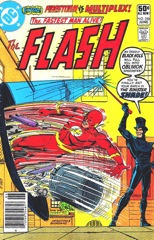 I’m not sure how to phrase it exactly, because Bates hasn’t exactly dumbed down The Flash for Infantino’s return to the book, but he’s definitely dulled the characters down. It’s like he’s changing the audience, aiming younger. There’s no character development anymore and the character details are lame. One colleague of Barry’s wonders if he’s always running off because the guy has bad breath.
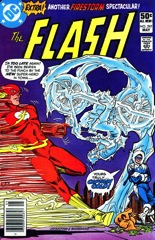 There’s something a little off about this issue. While Infantino is (hopefully) the new regular artist and he definitely has some good work in the issue–he can turn the smallest panel into the fullest one with all the movement and action–Bates is a little tone deaf.
