• Prophet: Strikefile 2 (November 2014)

    Prophet: Strikefile #2Strikefile continues with more strangeness. This time, in the individual subjects, the strangeness has to do with Rob Liefeld. He contributes a page of art–a superhero team, of course, called Youngstar. Plus there are some further Liefeld references later. It’s strange; even though Prophet never shied away from the references to old Image books… in Strikefile, they stand out more.

    The issue opens with the history of the universe–courtesy Simon Roy, Matt Sheehan and Malachi Ward. It’s strange, imaginative, engaging, makes you want to pay more attention to the details while still wanting to skim them to get to the artistic eccentricities. In other words, it’s definitely a Prophet comic.

    Opening with it, however, makes the rest of the issue–all of the subject topics getting a page or two (a pinup and a paragraph)–a bit sluggish. Grim Wilkins’s final contribution is a neat one page strip.

    B+ 

    CREDITS

    Writers, Simon Roy and Brandon Graham; artists, Matt Sheehan, Malachi Ward, Gael Bertrand, Rob Liefeld, Roy, Addison Duke, Lodroe, Grim Wilkins, Sandra Lanz, Xurxo G. Penalta, Graham and Tom Parkinson-Morgan; colorists, Sheenan, Ward and Joseph Bergin III; letterer, Ed Brisson; publisher, Image Comics.

  • Judge Dredd #20Even though Carlos Ezquerra is an odd choice for a future war–Dredd co-creator or not, Ezquerra puts a lot of emphasis on the static parts of images instead of the moving, which is strange here–and even though Wagner goes overboard with some of the symbolism, it’s an awesome issue.
    It’s the end of the world and Dredd is trying to keep it going. The action cuts between the Soviets, Dredd and company and general action. The general action is where Wagner does the lame jokes–usually related to a block’s name–and the rest has some real obvious anti-Soviet propaganda regurgitation. It’s amazing no one learned anything between the 1980s and the Dredd time period.

    Still, Wagner and Ezquerra keep the situations tense and dire and the comic works out beautifully. It’s a plummeting elevator car more than a roller coaster.

    Some nice humor throughout too.

    A- 

    CREDITS

    Writer, John Wagner; artist, Carlos Ezquerra; colorist, John Burns; letterers, Steve Potter and Tom Frame; editor, Nick Landau; publisher, Eagle Comics.

  • Wool 2 (June 2014)

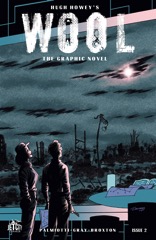
    Wool #2It can’t really be so obvious, can it? So much of Wool’s cast not seeming to be able to see what’s going on has to do with them being simple silo folk, used to living a certain way and absolutely unable to see the obvious. Like poisoned water.

    Even though Broxton does a great job with all the content he’s got to fit into the issue… It doesn’t come off. Palmiotti and Gray aren’t just doing a packed issue, they’re doing a packed issue without thinking about it like an issue. This issue needs to introduce the new sheriff. They don’t structure it for that purpose. They keep the main story going and just through her into it.

    It doesn’t work. There’s not enough character development given the series has a new protagonist. And the supporting cast is so jumbled they just appear.

    It’s still interesting, just poorly executed.

    B- 

    CREDITS

    Writers, Jimmy Palmiotti and Justin Gray; artist, Jimmy Broxton; letterer, Bill Tortolini; editor, Matt Hoffman; publisher, Jet City Comics.

  • Judge Dredd 19 (May 1985)

    Judge Dredd #19Wagner and Grant amp up the block war storyline, but turn it into a long investigation. Dredd is trying to track down the person responsible for the block war mania. It’s strange, once the suspect is identified, he also refers to the condition as block mania. It’s a small thing, but it does show where Wagner and Grant aren’t paying attention.
    The investigation is exciting, with some very nice art from Smith and Steve Dillon. There’s enough content the issue feels very substantial, especially the way the story of the suspect goes. The cliffhanger is a good one and kind of cool to be the aftermath of a mundane investigation. It’s well-done, but it’s not as interesting.

    So a good feature. Then the second, shorter story has Dredd stopping criminals while the people around them respond with apathy. It’s neat one.

    The big story was far more impressive though.

    B+ 

    CREDITS

    Writers, John Wagner and Alan Grant; artists, Ron Smith, Steve Dillon and Brian Bolland; colorist, John Burns; letterer, Tom Frame; editor, Nick Landau; publisher, Eagle Comics.

  • Major League (1989, David S. Ward)

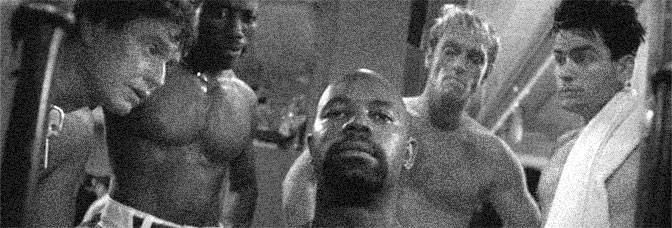
    There’s so much strong acting in Major League and director Ward’s script has such likable characters (and such a hiss-worthy villain in team owner Margaret Whitton), the film moves on momentum alone for quite a while. It’s only in the third act, when Ward throws in an unnecessary plot twist to ratchet up tension. He shouldn’t need it–it’s a baseball movie and it’s the big championship game–but, while League has a sports emphasis… it’s a comedy first.

    And character drama gets comedy.

    Thanks to nice direction, excellent photography from Reynaldo Villalobos and James Newton Howard’s score (which easily toggles between dramatic and comedic), it comes through all right. Even when the film stumbles, it stumbles likably.

    Since he’s the ostensible lead, top-billed Tom Berenger gets to romance Rene Russo, which leads to some good scenes. Charlie Sheen and Corbin Bernsen get the next billings, but don’t have a lot to do (until that third act misfire). But they’re both appealing, as is Wesley Snipes. The best acting of the ball players probably comes from Dennis Haysbert and Chelcie Ross, who distinguish themselves in caricature roles.

    Whitton’s villain is good, James Gammon’s good as the coach and Charles Cyphers has fun as management.

    Ward understands the baseball picture as an American film standard and engages with that standard. Not with much ambition, but he’s got a strong enough cast and script he doesn’t need to do much. It’s a solid and affecting enough with some good moments.

    2.5/4★★½

    CREDITS

    Written and directed by David S. Ward; director of photography, Reynaldo Villalobos; edited by Dennis M. Hill; music by James Newton Howard; production designer, Jeffrey Howard; produced by Irby Smith and Chris Chesser; released by Paramount Pictures.

    Starring Tom Berenger (Jake Taylor), Charlie Sheen (Ricky Vaughn), Corbin Bernsen (Roger Dorn), Margaret Whitton (Rachel Phelps), James Gammon (Lou Brown), Rene Russo (Lynn Wells), Wesley Snipes (Willie Mays Hayes), Charles Cyphers (Charlie Donovan), Chelcie Ross (Eddie Harris), Dennis Haysbert (Pedro Cerrano), Andy Romano (Pepper Leach) and Bob Uecker (Harry Doyle).


    RELATED

  • Working Girl (1988, Mike Nichols)

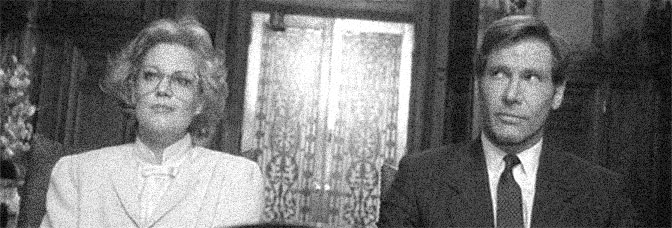
    Towards the end of Working Girl, the film seems to jump around a bit with the timeline. It seems to jump ahead, but then it turns out it doesn’t. And it only seems to jump ahead because of how director Nichols and editor Sam O’Steen structure a couple transitions. It’s not a big thing, but it does cause the viewer to reseat him or herself; it’s sort of a false ending but not. It’s a tension reliever.

    Kevin Wade’s script has a lot of obvious material, but it saves the most important revelation–one the film shockingly gets away with not revealing in the first act–until the last few moments. And it’s all paced out perfectly.

    But Working Girl couldn’t possibly function without its principal cast members. In the lead, Melanie Griffith is phenomenal. She needs to be sympathetic, but Nichols and Griffith subtly tone down the sympathy she gets for being unappreciated. There’s an initial shock value to her situation and then, over the course of the film, they show that shock was just to get the viewer paying attention.

    As her romantic interest, Harrison Ford is fantastic. His character is one of the film’s more complicated–as the evil harpy boss, Sigourney Weaver is similarly fantastic. Weaver’s able to appear likable even when she shouldn’t. Ford is able to be assured even when he shouldn’t.

    Nichols, O’Steen and cinematographer Michael Ballhaus put together some truly great scenes here.

    It’s rather great; Griffith and Ford are wonderful together.

    3.5/4★★★½

    CREDITS

    Directed by Mike Nichols; written by Kevin Wade; director of photography, Michael Ballhaus; edited by Sam O’Steen; music by Rob Mounsey; production designer, Patrizia von Brandenstein; produced by Douglas Wick; released by 20th Century Fox.

    Starring Melanie Griffith (Tess McGill), Harrison Ford (Jack Trainer), Sigourney Weaver (Katharine Parker), Alec Baldwin (Mick Dugan), Joan Cusack (Cyn), Philip Bosco (Oren Trask), Nora Dunn (Ginny), Oliver Platt (Lutz), James Lally (Turkel), Kevin Spacey (Bob Speck), Robert Easton (Armbrister) and Amy Aquino (Alice Baxter).


    RELATED

  • Random Harvest (1942, Mervyn LeRoy)

    It’s hard to imagine a more supreme melodrama than Random Harvest. Almost the entire first hour (of two and a nickel), the film chronicles the blissful romance of Greer Garson and Ronald Colman. He’s an amnesiac World War I veteran, she’s on the stage–a combination of song and comedy–and she’s his savior. They live in a little cottage. It’s all very wonderful.

    And very boring. Colman’s good as the amnesiac and Garson’s rather likable in her role–her dedication is convenient (none of the three screenwriters–Claudine West, George Froeschel, Arthur Wimperis–manage any subtlety), but Garson manages to sell it as much as possible.

    But then Colman’s memory comes back and it turns out he’s the utter bore, not the film. Random Harvest moves through phases, some small as the focus switches between Colman and Garson, but also bigger ones, like when Colman’s memory returns and seven years pass in less minutes and he’s all of a sudden romancing Susan Peters.

    Peters is actually rather good, but her role doesn’t really affect the narrative. She causes Garson–who comes back in a contrived, but inventive plot twist (and Garson excels in the second half of the film)–some consternation. Some, not a lot… and not for long. Peters inexplicably disappears from the film too, along with the entire supporting cast.

    With his memory back, Colman loses a character and gets a backstory. He did better with a character.

    He’s still likable and Garson’s great so Harvest works.

    2.5/4★★½

    CREDITS

    Directed by Mervyn LeRoy; screenplay by Claudine West, George Froeschel and Arthur Wimperis, based on the novel by James Hilton; director of photography, Joseph Ruttenberg; edited by Harold F. Kress; music by Herbert Stothart; produced by Sidney Franklin; released by Metro-Goldwyn-Mayer.

    Starring Ronald Colman (Charles Rainier), Greer Garson (Paula), Philip Dorn (Dr. Jonathan Benet), Susan Peters (Kitty), Henry Travers (Dr. Sims), Reginald Owen (‘Biffer’), Bramwell Fletcher (Harrison), Rhys Williams (Sam), Una O’Connor (Tobacconist) and Aubrey Mather (Sheldon).


    RELATED

  • ODY-C 1 (November 2014)

    ODY-C #1ODY-C is Matt Fraction and Christian Ward’s retelling of The Odyssey as a space opera, in a matriarchal society. I didn’t know about it being an adaptation going in and it just seemed like Fraction doing a science fiction comic with fantasy nomenclature instead of futuristic stuff.
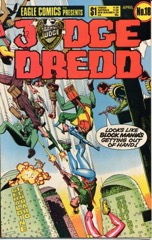
    I didn’t even catch it when the Greek gods showed up. Then, a page later, I got it. And ODY-C stopped being Fraction doing some fantasy crap like everyone else or a indie sci-fi book like everyone else. No, he’s doing a straight adaptation of one of the major classic literary works.

    And not just any classic literary work, one most of his readers will be familiar with. ODY-C will be read as it compares. Inventive adaptation is more important than actual writing with such a major work to adapt.

    It’s a preplanned event, a reasonably decent one.

    B 

    CREDITS

    Writer, Matt Fraction; artist, Christian Ward; colorists, Ward and Dee Cunniffe; letterer, Chris Eliopoulos; publisher, Image Comics.

  • The Importance of Being Earnest (2002, Oliver Parker)

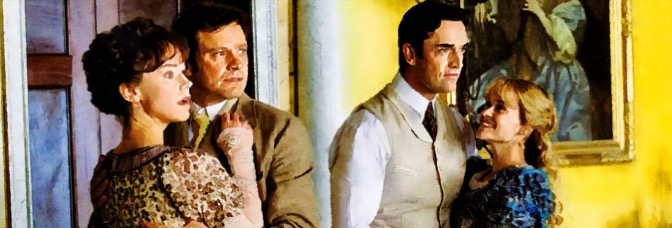
    Oliver Parker takes an interesting approach when it comes to adapting The Importance of Being Earnest from play to screen. He doesn’t worry much about opening up the film; at the beginning of the film, he showcases late nineteenth century London and later does quite a bit with Colin Firth’s country estate… but during the lengthy, dialogue-heavy scenes, he just lets the dialogue do its work.

    The playfulness of the dialogue, the combination of sincerity and humor the cast imbues in it, makes Earnest seem open even when it’s closed. Tony Pierce-Roberts’s sumptuous photography and Charlie Mole’s playful music help quite a bit–and there are some distinct, memorable outdoor sequences (not to mention a singing montage). It’s quite an interesting adaptation.

    Of the two male leads–Firth and Rupert Everett–Everett gets to have more fun. It’s appropriate, because of their love interests–Frances O’Connor for Firth and Reese Witherspoon for Everett–O’Connor gets to have more fun. It all balances out.

    The film moves through a few phases, with the focus switching between Everett and Firth, before it becomes their dual effort to win back their love interests. That structure also allows for some nice scenes with O’Connor and Witherspoon. O’Connor and Everett are outstanding.

    There’s some nice support from Judi Dench, Tom Wilkinson, Anna Massey and Edward Fox.

    As the film winds down and the contrivances stack up, it does appear a little flimsy. Luckily, Parker saves some good jokes for the finale and recovers.

  • The Spanish Prisoner (1997, David Mamet)

    Every moment, every line of dialogue, every shot–every use of sound–is so precise in The Spanish Prisoner, it’s sometimes hard to comprehend of Mamet put it all together. There are not a handful of precise moments, or a few precise scenes. Minute after minute, from the first shot, everything in the film is precision.

    But none of the filmmaking precision–Carter Burwell’s score is the most obvious, but Gabriel Beristain’s photography and especially Barbara Tulliver’s editing are essential components as well–none of these components would matter without the acting. Between Ricky Jay, who delivers his lines–usually quotes–with enough memorability, even though Mamet never makes them obvious, the viewer can call back to them and how they relate to the film’s events.

    Or lead Campbell Scott, who is simultaneously sympathetic and annoying because of his deep-seated desire for wealth, so much it causes him to ignore a possible romance with nice, regular girl Rebecca Pidgeon. She’s a little annoying herself, which often implies the pair is perfect for one another.

    The important part about Scott, Pidgeon, Ben Gazzara (who has the perfect voice for Mamet dialogue), Jay, Felicity Huffman and Steve Martin (cast against type as a mystery man) is how they’re able to sell their roles. Mamet’s dialogue should put a glass pane between the viewer and The Spanish Prisoner, the unreality should pulse, but thanks to the cast (and Mamet’s direction) it feels realer than real.

    It is an exceptional piece of filmmaking.

    4/4★★★★

    CREDITS

    Written and directed by David Mamet; director of photography, Gabriel Beristain; edited by Barbara Tulliver; music by Carter Burwell; production designer, Tim Galvin; produced by Jean Doumanian; released by Sony Pictures Classics.

    Starring Campbell Scott (Joe Ross), Rebecca Pidgeon (Susan Ricci), Steve Martin (Jimmy Dell), Ben Gazzara (Mr. Klein), Felicity Huffman (Pat McCune), Lionel Mark Smith (Detective Jones) and Ricky Jay (George Lang).


    RELATED

  • Judge Dredd 18 (April 1985)

    Judge Dredd #18Not a lot happens this issue–well, there’s a lot of block warring and very little the judges can do about it–but there doesn’t seem to be an overarching story. Except why everyone wants to fight in a block war. I was sort of hoping Wagner or Grant would lay out the battles with some connections, but they just hop around.
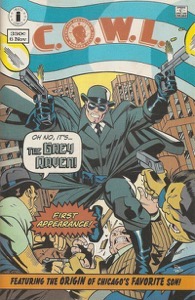
    The blocks all have memorable names–everyone and everything in Judge Dredd has a memorable name–and the initial conflict does have some block vs. block motivations, but pretty soon everything goes crazy and they don’t much matter.

    There’s a lot of good art from McMahon and Smith and the writers definitely keep the comic moving–not the easiest task as it’s a compilation–but it’s all action. There’s personality, sure, and some great details, but there’s not a lot of ambition (even measured, Dredd ambition) going on.

    B 

    CREDITS

    Writers, John Wagner and Alan Grant; artists, Mike McMahon and Ron Smith; colorist, John Burns; letterer, Tom Frame; editor, Nick Landau; publisher, Eagle Comics.

  • C.O.W.L. (2014) #6

    C O W L  6

    It’s a gimmick issue, with artist Elsa Charretier filling in. The comic is supposed to be a licensed biography of the Grey Raven from 1962. The best part of the gimmick–conceptually, not in execution–is the sixties advertisements for other modern Image Comics. The ads don’t come off, but the idea is cute.

    The big problem with the issue is the disconnect between it being an official biography of a character and what it actually conveys to the reader. The Grey Raven discovers his father isn’t just a corrupt cop, but an actual bank robber. There’s no character development, since Higgins and Siegel are doing their version of a sixties comic… no character development, no subtlety.

    It’s a reductive gimmick and doesn’t offer much. It’s still a competent enough outing and Charretier fits the gimmick perfectly. She doesn’t have much detail or compositional ingenuity.

    It’s passable, if remarkably unambitious.

  • Lazarus (2013) #13

    Lazarus  13

    It’s a decent issue, but not one with much content. Most of the politicking takes place off page and Rucka even turns the cliffhanger resolution into an expository recap. He does it to show Forever’s burgeoning romance with one of the other Lazari, which is good from the character development standpoint… Only it’s all Rucka really does this issue.

    He ends on a setup for what’s next–and I really hope this issue’s developments for Forever (friends, family, romantic interests) aren’t just fodder for later conflicts–but nothing really happens. Lark doesn’t get much to draw; three pages of Forever and her romantic interest’s flirtations and petting seems like a combination waste of pages and of Lark’s talents. Talking heads with one or two lines a panel….

    Still, Rucka has a good amount of steam on Lazarus and it gets through. Forever’s a fantastic protagonist, even in a dull entry.

  • The Goonies (1985, Richard Donner)

    There’s a lack of consistent mood to The Goonies. The film has its phases and the mood and tone change from phase to phase, but Chris Columbus’s script changes characterizations between these phases as well, which is rather disconcerting. For example, while the film introduces the villains–Anne Ramsey as the mother, Robert Davi and Joe Pantoliano as her sons–with some humor, but by the end they’re entirely slapstick.

    And Donner can’t really direct the slapstick. There’s a noticeable lag, which editor Michael Kahn (who otherwise does a phenomenal job) can’t do anything with. But Donner does well with the actors. Even the weak performances, like Jeff Cohen (whose annoying overweight kid isn’t just annoying, he’s also the butt of all the script’s jokes), are generally all right thanks to Donner’s direction.

    There are some stronger performances–Martha Plimpton and Corey Feldman are both good. Josh Brolin and Kerri Green have their moments too. Jonathan Ke Quan simultaneously has a lot to do, physically, but not much to do acting-wise, which is good… he doesn’t do well in his big scene. As the de facto lead, Sean Astin is more appealing than good, but he does have some fine moments.

    Excellent music from Dave Grusin and photography from Nick McLean help through the rougher spots–like the entire third act. Oddly, J. Michael Riva’s great production design shines brightest during that third act.

    It’s saccharine and superficial, but Donner’s direction is quite good. It’s a passable kiddie adventure.

    1.5/4★½

    CREDITS

    Directed by Richard Donner; screenplay by Chris Columbus, based on a story by Steven Spielberg; director of photography, Nick McLean; edited by Michael Kahn; music by Dave Grusin; production designer, J. Michael Riva; produced by Donner and Harvey Bernhard; released by Warner Bros.

    Starring Sean Astin (Mikey), Josh Brolin (Brand), Jeff Cohen (Chunk), Corey Feldman (Mouth), Kerri Green (Andy), Martha Plimpton (Stef), Jonathan Ke Quan (Data), John Matuszak (Sloth), Robert Davi (Jake), Joe Pantoliano (Francis), Anne Ramsey (Mama Fratelli), Lupe Ontiveros (Rosalita) and Mary Ellen Trainor (Mrs. Walsh).


    RELATED

  • C.O.W.L. #6It’s a gimmick issue, with artist Elsa Charretier filling in. The comic is supposed to be a licensed biography of the Grey Raven from 1962. The best part of the gimmick–conceptually, not in execution–is the sixties advertisements for other modern Image Comics. The ads don’t come off, but the idea is cute.

    The big problem with the issue is the disconnect between it being an official biography of a character and what it actually conveys to the reader. The Grey Raven discovers his father isn’t just a corrupt cop, but an actual bank robber. There’s no character development, since Higgins and Siegel are doing their version of a sixties comic… no character development, no subtlety.

    It’s a reductive gimmick and doesn’t offer much. It’s still a competent enough outing and Charretier fits the gimmick perfectly. She doesn’t have much detail or compositional ingenuity.

    It’s passable, if remarkably unambitious.

    CREDITS

    Raven’s First Flight!; writers, Kyle Higgins and Alec Siegel; artist, Elsa Charretier; colorist, Rod Reis; letterer, Troy Peteri; editor, Andy Schmidt; publisher, Image Comics.

  • Judge Dredd 17 (March 1985)

    Judge Dredd #17The issue has two stories–one from Mills, one from Wagner, both with art by Ron Smith. The first story, Mills’s, has a regular citizen turning into a were-dinosaur. It’s kind of dumb, but Mills’s plotting of the story is fantastic. The way he starts external to the eventual characters and moves in–presumably from chapter to chapter in the original 2000 AD progs.

    The big showdown between Dredd and the monster happens in Old New York City, which looks a lot like seventies New York City (fire escapes, rooftops). It’s good Mega-City One has so many locations because the showdown wouldn’t look good in the futuristic settings… but tragically haunted man wandering rainswept New York? It works.

    The second story has Dredd investigating a television game show. Wagner does a great job with both the mystery and the solution. The setup is rather imaginative too.

    Excellent issue.

    B+ 

    CREDITS

    Writers, Pat Mills and John Wagner; artist, Ron Smith; colorist, John Burns; letterer, Tom Frame; editor, Nick Landau; publisher, Eagle Comics.

  • Lazarus #13It’s a decent issue, but not one with much content. Most of the politicking takes place off page and Rucka even turns the cliffhanger resolution into an expository recap. He does it to show Forever’s burgeoning romance with one of the other Lazari, which is good from the character development standpoint… Only it’s all Rucka really does this issue.

    He ends on a setup for what’s next–and I really hope this issue’s developments for Forever (friends, family, romantic interests) aren’t just fodder for later conflicts–but nothing really happens. Lark doesn’t get much to draw; three pages of Forever and her romantic interest’s flirtations and petting seems like a combination waste of pages and of Lark’s talents. Talking heads with one or two lines a panel….

    Still, Rucka has a good amount of steam on Lazarus and it gets through. Forever’s a fantastic protagonist, even in a dull entry.

    CREDITS

    Conclave, Part Three; writer, Greg Rucka; artists, Michael Lark and Tyler Boss; colorist, Santiago Arcas; letterer, Jodi Wynne; editor, David Brothers; publisher, Image Comics.

  • Judge Dredd 16 (February 1985)

    Judge Dredd #16One of Dredd’s cases comes back to haunt him, with the sole survivor of a criminal family hunting judges. He’s a Cursed Earth mutant–with an evil super rat as a pet. McMahon draws them both very creepy.
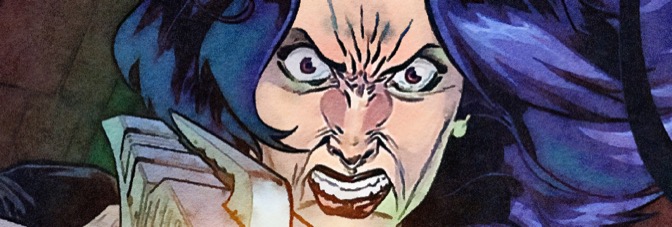
    And Wagner’s script plays up that creep factor. The villain is methodical, with Wagner showing his aptitude for the crimes. It creates a sense of foreboding, especially after the villain successfully assassinates a judge. Between the action itself (which Wagner immediately sets up as a big deal) and the eventual kidnapping of Judge Hershey, Wagner definitely implies this story–a collection of chapters from 2000 AD– has high stakes.

    There’s a lot of action in the story too, with McMahon toggling between suspense and brawling. It’s an excellent longer story.

    The other story, with Garry Leach on art, is short, to the point and successful.

    Overall, it’s an excellent issue. Rather excellent.

    B+ 

    CREDITS

    Writer, John Wagner; artists, Mike McMahon and Garry Leach; colorist, John Burns; letterers, Tom Frame and Tony Jacob; editor, Nick Landau; publisher, Eagle Comics.

  • My Cousin Vinny (1992, Jonathan Lynn)

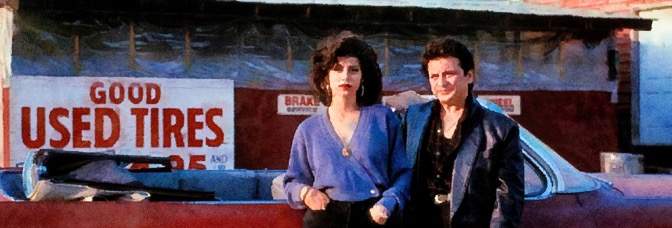
    My Cousin Vinny succeeds due to a strange combination of Dale Launer’s script and the charm of the cast. It’s a strange combination because director Lynn seems entirely inept at facilitating it–all of Lynn’s directorial flourishes flop (for a while, he tilts the camera for emphasis and then forgets about it) and the rest of the time he’s very pedestrian. Peter Deming’s photography is rather bland too. And the editing from Tony Lombardo and Stephen E. Rivkin is downright inept.

    But Vinny works. Launer’s script has a great structure–even if Ralph Macchio and Mitchell Whitfield, as two wrongly accused college students, are more annoying than sympathetic (Whitfield’s more grating, but his performance is better than Macchio’s). Launer positions all the subplots and characters; the film takes place in the South and the caricatures are distinct enough to be memorable, so when he calls them back later, there’s enough foundation.

    Later is when the film gets to the trial section, but before then there’s the introduction of Joe Pesci (as the students’ lawyer) and Marisa Tomei as his fiancée. They’re mostly caricature too, just nice ones. Pesci and Tomei get by on a lot of charm and a lot of chemistry. She’s so impressive, his best scene is reacting to one of her better deliveries (not even her best).

    Along with great support from Fred Gwynne, Lane Smith and Bruce McGill, the film ends up a decent success. It’s unfortunate the direction’s not stronger, but the acting’s what matters.

  • Letter 44 (2013) #12

    Letter 44  12

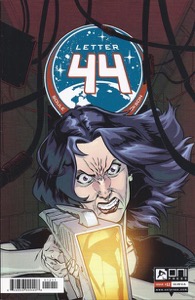
    Soule does an agitating bridging issue–sort of a ramping up of certain things. He resolves a storyline–the two soldiers in Afghanistan–while teasing things to come. There’s a bit with the First Lady, less with the President, a little bit with Germany (in his only conceptual misstep, Soule writes the German chancellor as a power hungry psychopath, just like their most famous chancellor). The outer space stuff is incidental… if it weren’t for the text recap, I might have forgotten about the baby being in crisis.
    But as an agitating issue, Soule’s focus is to keep the reader interested while delaying giving them anything. The First Lady threatens her foe… not particularly engaging. The President just looks dumbfounded. The German chancellor comes off as dumb. Only the soldier scenes resonate and then they’re over done.

    Alburquerque is rather lazy with composition this issue. His pacing is all wrong.

  • Letter 44 #12Soule does an agitating bridging issue–sort of a ramping up of certain things. He resolves a storyline–the two soldiers in Afghanistan–while teasing things to come. There’s a bit with the First Lady, less with the President, a little bit with Germany (in his only conceptual misstep, Soule writes the German chancellor as a power hungry psychopath, just like their most famous chancellor). The outer space stuff is incidental… if it weren’t for the text recap, I might have forgotten about the baby being in crisis.

    But as an agitating issue, Soule’s focus is to keep the reader interested while delaying giving them anything. The First Lady threatens her foe… not particularly engaging. The President just looks dumbfounded. The German chancellor comes off as dumb. Only the soldier scenes resonate and then they’re over done.

    Alburquerque is rather lazy with composition this issue. His pacing is all wrong.

    B 

    CREDITS

    Writer, Charles Soule; penciller, Alberto Jiménez Alburquerque; colorist, Dan Jackson; letterer, Crank!; editor, Robin Herrera; publisher, Oni Press.

  • Judge Dredd 15 (January 1985)

    Judge Dredd #15The issue has Wagner looking at various aspects of the future–block life, block wars, reasoning apes, what happens when a judge needs to retire–but none of them really stand out.

    The first story, resolving the Judge Child storyline while Dredd deals with a block war, has art from Brian Bolland. It’s gorgeous, but too static, too constrained. Bolland doesn’t have any fun with the future, but he also doesn’t have any fun with his composition.

    In contrast, Mike McMahon goes crazy in the other pages. There’s humor built into the panels and the composition is inventive. The McMahon stories–even Mills’s pointless ape one–come off a lot better; there’s something distinctive about them, whereas Bolland’s is purely functional.

    Of course, Wagner’s handling of that first story is a lot more functional and less narratively playful than the rest.

    It’s a mixed bag, but with some definite pluses.

    B- 

    CREDITS

    Writers, John Wagner and Pat Mills; artists, Brian Bolland and Mike McMahon; colorist, John Burns; letterers, Tom Frame and Tony Jacob; editor, Nick Landau; publisher, Eagle Comics.

  • Gotham by Midnight #1Thanks to Ben Templesmith’s art, Gotham by Midnight works a lot better than it should. A lot of Ray Fawkes’s dialogue is generic cop show stuff, but Templesmith has a way of visually rushing some of the conversations through how he positions the characters. In other words, he makes the problem spots shorter than they’d otherwise be… and it helps immensely.
    Some of this first issue plays like Templesmith’s famous, mysterious (and unfinished) cop comic Fell. It does not seem unintentional. The story beats for the first few pages read like a remake.

    Fawkes introduces a bunch of characters and a lot of story. The final investigation sequence is a little rushed–in the script, not the art–because Fawkes has an idea for an effective cliffhanger. It’s a little forced, but once the comic switches into full procedural mode, a lot of the seams start showing anyway.

    Not bad.

    CREDITS

    We Do Not Sleep; writer, Ray Fawkes; artist, Ben Templesmith; letterer, Dezi Sienty; editors, Dave Wielgosz and Rachel Gluckstern; publisher, DC Comics.

  • Judge Dredd 14 (December 1984)

    Judge Dredd #14It’s a really weak issue. Both writers–Wagner and Mills–go as melodramatic and sappy as possible. How can Judge Dredd be sappy?

    For most of the issue, Wagner focuses on Dredd’s sidekick robot, Walter. The joke with Walter is he is annoying and an issue of Walter stories seems a little too much. The Judge Dredd Christmas story, for example, is about as saccharine as Judge Dredd should ever get it but the subsequent stories take it even further.

    In some ways, Mills’s story with Judge Rico’s return is even worse. Most of the story is told in summary with Mills focusing on tender moments from Dredd’s life. The ending is even worse. The difference between Wagner and Mills being Wagner makes Dredd sympathetic in the context of the comic, Mills tries to make him sympathetic overall.

    Some nice art from McMahon but this issue is a stinker.

    C- 

    CREDITS

    Writers, John Wagner and Pat Mills; artists, Mike McMahon and Brian Bolland; colorist, John Burns; letterers, Tom Frame and Tony Jacob; editor, Nick Landau; publisher, Eagle Comics.

  • Wildfire 4 (October 2014)

    Wildfire #4Wildfire gets across the finish line with a lot of problems. Hawkins still manages to sell the issue, but he’s got some questionable moments throughout. Besides supporting cast members ending up dead, things go pretty well for the protagonists this issue and everything sort of works out. There’s even a time lapse towards the end of the issue to get out of character development.

    And that omission is something of a blessing in disguise because Sejic’s art looks like bad cels from a cheap CG kids movie. Like a direct-to-video Disney knockoff. Something about the way she draws the characters this issue, their expressions… it’s like 101 Dalmatians or something.

    There’s just enough of Hawkins’s attention to detail to get the story done. He reminds of better moments, better realizations. The series probably needed another issue to really get the ending done well.

    But it’s still somewhat successful.

    B 

    CREDITS

    Writer, Matt Hawkins; artist, Linda Sejic; letterer, Troy Peteri; editor, Betsy Gonia; publisher, Top Cow Productions.

  • Judge Dredd: The Judge Child Quest 5 (December 1984)

    Judge Dredd: The Judge Child Quest #5It’s not a bad ending. It’s not a good one, but it’s also not a bad one. Writers Wagner and Alan Grant–one of them does a terrible job on the first half of the issue, with the resolution to the Angel family, where the writer goes overboard with exposition. Especially about Dredd’s judge training.

    The Angel story, with McMahon art, is vaguely pointless. The second half of the issue resolves the Judge Child, but the first half is basically a western. There are a few good moments, but it’s all rather derivative of other, familiar Westerns. The writer doesn’t set up the setting well, which doesn’t help either.

    The last half of the issue has Dredd fighting a robot army. It figures into the big plot, but it’s still okay. Again, there are a couple surprises.

    It’s too bad the finale is so rushed. It definitely needed more pages.

    B- 

    CREDITS

    Writers, John Wagner and Alan Grant; artists, Mike McMahon and Ron Smith; colorist, Ian Stead; letterer, Tom Frame; editor, Nick Landau; publisher, Eagle Comics.

  • Princess Ugg 5 (November 2014)

    Princess Ugg #5Even though Naifeh has sort of reduced the supporting princesses to caricatures–there’s the nice one, the mean one, et cetera–this issue does have a lot going on. Ülga has been included in activities, though not in the other princesses’ good graces, and so Naifeh gets to showcase the contrasts between the cultures.
    Of course, she’s also getting better at being a proper princess, which doesn’t offer much narrative weight but does move the story along. And may eventually provide a good humor moment.

    Because Ugg needs good humor moments. When Ülga goes up against bandits in the last scene, even though Naifeh doesn’t make the comparison, she’s actually against honest villains. Her other villains are dishonest–the princesses, the condescending school teachers–and there’s little refuge for the character.

    All in all, it’s an outstanding issue of the comic, but Naifeh still doesn’t seem to have Ugg’s footing.

    CREDITS

    Writer and artist, Ted Naifeh; colorists, Warren Wucinich and Naifeh; letterer, Wucinich; editors, Robin Herrera and Jill Beaton; publisher, Oni Press.

  • Judge Dredd: The Judge Child Quest 4 (November 1984)

    Judge Dredd: The Judge Child Quest #4It’s another strong issue, with Wagner giving Dredd a series of imaginative sci-fi encounters. The first one is the most traditional, with Dredd trying to track down a human visitor to a strange alien world. But Wagner has already established the character–who has contracted a strange alien disease–so Dredd has to enter that story.

    But there’s also some drama with Dredd and his fellow judges based on his treatment of one of the other judges. Wagner probably could tell this subplot better but it works well enough.

    The second big story has Dredd and company against an intergalactic salesman. It’s s silly story, but s fun one. Some very nice start throughout it too. Smith handles the action well.

    The last story has the Angel family on a desert planet. It’s a little too much how Wild West Wagner makes the planet.

    But it’s still real strong.

    B+ 

    CREDITS

    Writer, John Wagner; artists, Brian Bolland, Ron Smith and Mike McMahon; colorist, Ian Stead; letterer, Tom Frame; editor, Nick Landau; publisher, Eagle Comics.

  • Dead Snow 2: Red vs. Dead (2014, Tommy Wirkola)

    How do you follow up Nazi zombies? Nazi zombies fighting Russian zombies. Sort of. That aspect of Dead Snow 2 comes near the end, with director Wirkola first having to deal with the fallout from the first movie. But Russian zombies don’t really have the bite of Nazi zombies, so Wirkola just amps up everything in this film.

    Vegar Hoel, sole survivor from the first movie, wakes up in the hospital to discover the doctor has given him a zombie arm. Snow 2 is never particularly original–even when it is original, it feels like Wirkola took some of his Army of Darkness fan-fic and changed Bruce Campbell to Hoel–but the excess succeeds more often than not.

    The absurd factor carries over to the U.S. zombie hunters who show up–Martin Starr, Jocelyn DeBoer and Ingrid Haas–not to mention the idiot Norwegian police chief, Hallvard Holmen. Stig Frode Henriksen plays Hoel’s reluctant sidekick.

    Wirkola, Hoel and Henriksen’s script is fairly light on character development. DeBoer’s an annoying Star Wars fangirl, Henriksen’s in the closet (which is nowhere near as successful as the filmmakers seem to think). Haas doesn’t have any characteristics and Starr’s a geek thrilled to discover zombies are real. But the film’s fast-paced enough it usually doesn’t matter. Except with Holmen, who only gets a couple good jokes and lots of lame ones.

    Wirkola’s direction’s adequate. Nice photography from Matthew Weston.

    Snow 2 gloriously goes too far as often as possible; sometimes it works.

    1/4

    CREDITS

    Directed by Tommy Wirkola; written by Stig Frode Henriksen, Vegar Hoel and Wirkola; director of photography, Matthew Weston; edited by Martin Stoltz; music by Christian Wibe; production designer, Liv Ask; produced by Kjetil Omberg and Terje Stroemstad; released by Well Go USA Entertainment.

    Starring Vegar Hoel (Martin), Ørjan Gamst (Herzog), Martin Starr (Daniel), Jocelyn DeBoer (Monica), Ingrid Haas (Blake), Stig Frode Henriksen (Glenn Kenneth), Hallvard Holmen (Gunga), Kristoffer Joner (Sidekick Zombie), Amrita Acharia (Reidun) and Derek Mears (Stavarin).


    RELATED

  • Sons of Anarchy #15It’s once again amazing how much Brisson is able to do with Sons of Anarchy. Especially this issue, which seems to deal a lot with continuity from the television series. Instead of that continuity dragging the issue down, thanks to Brisson’s rather impressive use of expository dialogue, it makes it better. It provides foundation.

    The issue has a rather simple plot. Gemma–the den mother of the club (i assume, still haven’t watched the show)–tells Jax (he’s in charge of the club) to go find her stolen car. The comic plays out over four scenes. Brisson has a big reveal at the end of the issue and the way he simultaneously ties that reveal into everything he’s done in the issue while still keeping it entirely separate is phenomenal.

    Even with a simple story, Brisson gets Anarchy running beautifully.

    Nice art from Matías Bergara too. Moody but still straightforward.

    B+ 

    CREDITS

    Writer, Ed Brisson; artist, Damian Couceiro; colorist, Michael Spicer; letterer, Ed Dukeshire; editors, Mary Gumport and Dafna Pleban; publisher, Boom! Studios.