Category: 1973
-

Scare-free TV movie about a transatlantic flight under attack from vengeful spirits. The story goes from disaster movie tropes followed by haunted house movie tropes without much enthusiasm from anyone involved, though William Shatner does occasionally give his material a gnaw. It’s the peculiar example of when a bad movie isn’t bad in the right…
-

One Hundred a Day is a terrifying eight minutes. Rosalie Fletcher is a factory girl in the thirties and she’s in trouble. Her more worldly friends, Jenee Welsh and Virginia Portingale, know where she can take care of it. Day’s this grainy, high contrast black and white. In the factory, where the short spends most…
-
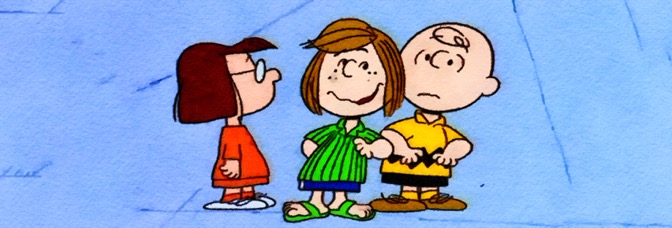
There’s No Time for Love, Charlie Brown takes about seven minutes to get into the main story–Charlie Brown and the other kids go on a field trip to the art museum–and about seventeen minutes to get to the title relevancy. At first it seems like there’s no time for love because the kids are all…
-
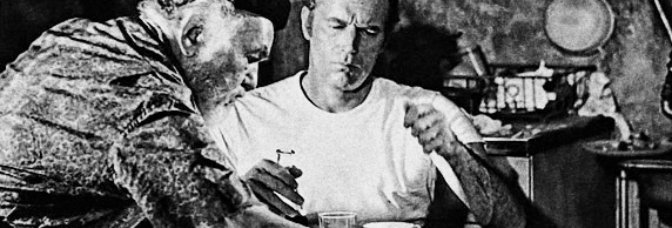
If you leave the twist–which isn’t even a twist, just a justification for conspiracy–ending off Soylent Green, it’s a detective story. The case–the murder of a wealthy businessman–isn’t as important as how that case affects lead Charlton Heston. He starts carrying on with the victim’s “widow,” Leigh Taylor-Young. The case also has some unexpected consequences…
-

Westworld is a regrettably bad film. It doesn’t start off with a lot of potential. Leads Richard Benjamin and James Brolin are wanting. But then writer-director Crichton starts doing these montages introducing the behind-the-scenes of the park. Oh. Right. Westworld is about an amusement resort with humanoid robots. Benjamin and Brolin are guests. Benjamin’s not…
-

The Friends of Eddie Coyle is an amusing, intentionally misleading title. Eddie Coyle (Robert Mitchum) doesn’t have any friends. He has various criminal contacts he sees on a regular basis, but he doesn’t consider any of them friends. Mitchum’s a down-on-luck small-time crook who’s about to go away for a couple years. He didn’t rat,…
-

Despite the title, The Exorcist is about pretty much everything except the actual exorcist. When he does appear, kicking off the third act, it’s kind of a stunt. There’s a lot of implied mythology in the film, without much connective tissue–but nothing ruling out connective tissue. Director Friedkin does a balancing act. The reveal moment…
-

There’s a lot bad about Jesus Christ Superstar. Some of it is casting, a lot of it is Jewison’s direction choices. He’s clearly thrilled to be shooting in the Middle East, but it doesn’t connect to his actual narrative. It connects to the subject matter, just not the film Jewison ends up making. The one…
-

Extremely cheap but admirably executed micro-budgeted action movie starring Black South Africans; the apartheid government banned the film after two showings. Forty years later, it was been restored. Ken Gampu is the titular hero, a karate master, a knife master, and great football coach who has to unravel a football-related conspiracy. Gampu’s a strong lead…
-

Godzilla vs. Megalon is madness. There are two distinct portions of the film and both of them are crazy. Initially, these portions might more seem stupid than crazy, but they’re crazy. Director Fukuda gets to make an espionage thriller and a Godzilla movie where Godzilla communicates with the other monsters. He even shakes hands with…
-

The Wicker Man can never decide on a tone. Director Hardy and writer Anthony Shaffer are both interested in minutiae of the film’s fictional setting, but never the same minutiae at the same time. Hardy is more interested in how the people live, cut off from the mainland, while Shaffer is more interested in how…
-
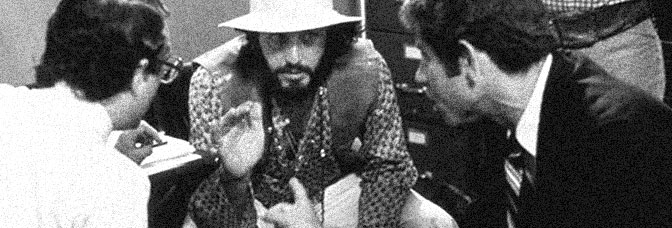
There’s a strange disconnect between director Lumet and actor Al Pacino on Serpico. The film, at least in how Pacino plays it, is a character study. Yes, it’s a character study of someone in a great deal of transition–Pacino’s cop, over twelve rather poorly paced years, goes from idealism to resignation at the corruption he…
-

Even though Jack Nicholson gets top billing and the most bombastic role in The Last Detail, Otis Young has the harder job. He’s got to temper Nicholson, both for the sake of the audience and of the narrative. The film introduces the two men simultaneously–Robert Towne’s script almost immediately establishes an unspoken bond between the…
-

Trying to figure out where The Great American Beauty Contest stands on the women’s lib movement is a headache. Actually, the whole thing is a little misogynist but not for the obvious reason–not because the titular contest’s participants are being objectified (I doubt director Day could competently objectify anything or anyone), but because it presents…
-
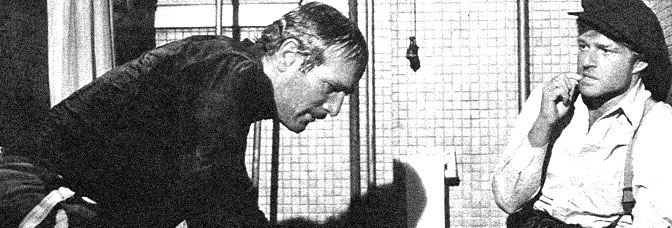
There are two immediate peculiar things about The Sting. The opening credits introduce the cast with scenes from the film, so one watches the picture waiting for a particular actor to come up. While it might have been done to get Paul Newman’s face onscreen sooner (he takes about fifteen minutes or more to appear),…
-

I don’t even know where to start mocking Please Don’t Eat My Mother. There are just too many places to start… first probably should be the pacing. Mother is a softcore–but seventies softcore, which isn’t particularly soft–remake of The Little Shop of Horrors. Buck Kartalian plays the protagonist, a peeping tom with an overbearing mother…
-

The Horse plays a little like the end of another movie, like Burnett cut off the first hour and a half and just left the finale. He forces the viewer to distance him or herself from the film’s narrative as much as possible–the characters all know one another, the viewer never gets an introduction. Burnett…
-

“A Charlie Brown Thanksgiving” only has one great scene. The special is generally good–though the usual Peanuts logic problems–but there’s a great sequence with Snoopy and Woodstock messing around to a song from Vince Guaraldi. It’s set against the precious painted backdrops and it’s lovely. The sequence also stands out because it’s the only original…
-

Swamp Thing arrives in Gotham to save Matt and Abby from the Conclave and runs into Batman. Wrightson doing Batman is something, especially seventies Batman. I love Bruce’s hair, but how does he fit it into the cowl? Wein finds a great way to integrate Swamp Thing into the DC Universe proper; for a while,…
-

It’s sort of amusing how Wein can construct these fantastic, devastatingly emotional moments for Swamp Thing… but still have inane plotting. This issue, Swamp Thing finds a little Swiss town in Vermont. He also discovers himself (as a human) and his dead wife living happily there. Wein soon reveals a Swiss clockmaker spent the thirty…
-

Wein’s writing is back on track—except one page with incredibly awkward second person narration where he addresses the reader. Swamp Thing ends up in Maine, teaming up with a young woman accused of witchcraft and her little brother. Wein and Wrightson have a good time with the setting—even coming up with a conclusion I’m surprised…
-

Okay, so this issue confirms Arcane (and Abby) were in the Balkans… so the English-speaking thing is problematic. This issue drops them (Abby, Matt and Swamp Thing) in Scotland on the moors for a bit of an “old dark house” and werewolf story. Again, the draw is Bernie Wrightson doing a werewolf on the moors…
-

This issue introduces Abby (still Abigail and oddly a great English speaker for Eastern Europe) and the Patchwork Man. The issue’s incredibly awkward, because most of it is Wrightson doing this lovely homage to old Universal monster movies. The Patchwork Man looks just like the Boris Karloff Frankenstein Monster (down to having his outfit, albeit…
-

Wrightson (and Wein) take Swampy to Europe this issue for Arcane’s first appearance. Arcane doesn’t even get a first name here. I say Wrightson first because the art is truly wondrous. He gets to do daytime scenes, so there aren’t any colors muddling his art, and he gets to do the Un-Men and a big,…
-

What an awful comic book. Not the art, the art is absolutely fantastic, making something of an Irv Novick convert out of me… but the writing is just hideous. O’Neil writes Batman as a thuggish cross between Spencer Tracy and a beach movie surfer–the Spencer Tracy imitation makes sense, since O’Neil “pays homage” to multiple…
-

Badge 373 sounded good because it’s seventies Robert Duvall (before he was eighties and nineties Robert Duvall). My high hopes were quickly dashed. It’s poorly written, with lousy direction. It’s amateurish, far beneath Duvall’s abilities. I thought Howard W. Koch was somebody–I thought it was because of the New York mayor (Ed Koch), but it’s…
-

I was in high school the first time I saw Badlands. I’d seen a lot of movies–I think by that time, I’d even made a top one hundred list. I know I’d seen True Romance, so I must have been at least fifteen. There’s nothing else like Badlands in cinema, which is a bit of…
-

What is this film and how have I never heard of it. Summer Wishes, Winter Dreams is somewhat indescribable in terms of plot. I mean, it obviously isn’t indescribable–I could list the scenes (there are about fifteen in the film, which means it averages a scene every six minutes and that calculation sounds about right)…
-

I don’t know where to start. The most flippant place to start–the most colloquial–is with George Lucas… specifically, what happened to the George Lucas who made American Graffiti. But it’s not just Lucas. Gloria Katz and Willard Huyck didn’t go on to write anything close to Graffiti–the conversations in the film, the dialogue, is exceptional,…
-

From the first scene in The Long Goodbye, it’s obvious Robert Altman was on to something with casting Elliott Gould as a character (Philip Marlowe) most famously personified by Humphrey Bogart. It isn’t just Gould not being Bogart and Gould not being a traditional noir detective in any way (Gould’s Marlowe is more concerned with…
 The Stop Button