Batman, Inc. 5 (May 2011)

812083.jpg
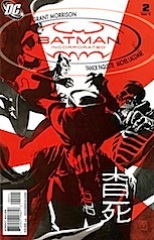
Saying it’s all red herrings might be a little harsh, but it is accurate. Morrison went through a lot of creative trouble to introduce a new villain–and a new Batman, Incorporated franchise (while never exactly explaining what happens in Argentina). But the whole thing with Batwoman? Both Batwomen? Unresolved. The modern Batwoman is a very nice cameo though. Morrison writes her better than Batman here; Batman hasn’t had a personality in Inc. since Catwoman left.

Paquette is back on the art and he has the same problem he had last time. Everything is great except Batman. Paquette’s Batman is just wrong.

Morrison’s lack of ambition is frustrating. He’s a tease… All those labyrinths he promised? They’re not even real in a labyrinth sense. He doesn’t just fail to realize the comic’s potential, Morrison eschews the idea of it having any potential.

Still, it’s a breath of fresh bat-air.

CREDITS

Masterspy; writer, Grant Morrison; penciller, Yanick Paquette; inker, Michel Lacombe; colorist, Nathan Fairbairn; letterer, Pat Brosseau; editors, Katie Kubert, Janelle Siegel and Mike Marts; publisher, DC Comics.

Batman, Inc. 3 (March 2011)

802712.jpg
Sometimes being too ambitious–especially if well-read–can get a writer in trouble. In this case, Morrison tries marrying a Batman comic to a Borges labyrinth. It’s an interesting comic, but the pacing is all off and that pacing ruins the reading experience.

There’s just too much “regular” comic here. Morrison opens with a prologue set in World War II, he then has a Bond-like intro with Batman and an Argentinian crime fighter, then he finally gets the actual story going. Wait, I forgot… he has Bruce tango with a female assassin. Very Bond this issue.

Anyway….

He gets to the Borges part and it’s intriguing, but then it turns into a regular Batman comic again for the finish.

On one hand, maybe Morrison is introducing Borges to a new audience. On the other, he should be concentrating on producing the best comic, not doing a literacy campaign.

CREDITS

Scorpion Tango; writer, Grant Morrison; pencillers, Yanick Paquette and Pere Perez; inkers, Michel Lacombe and Perez; colorist, Nathan Fairbairn; letterer, Pat Brosseau; editor, Katie Kubert, Janelle Siegel and Mike Marts; publisher, DC Comics.

Batman, Inc. 2 (February 2011)

787190.jpg
All in all, Morrison’s resolution to the first Batman, Inc. outing is conventional. Batman and Catwoman take down the bad guy. Sure, he’s an interesting bad guy–Morrison mixes an absurd character with some creepy powers–but he’s nothing special. Morrison amps up the violence (though it’s all action-oriented or off-panel) in an attempt to make the reader take him seriously.

Paquette still draws a strange Batman (and Bruce Wayne), but otherwise the art is good. He brings an element of fun to Selina, both obvious and implied.

The most peculiar element of the issue is Morrison’s handling of Bruce’s ethics. Killing a heinous villain is out, but a fate worse than death? Well, it’s okay. And Selina being a high profile jewel thief? Just as long as Bruce can foil her, it’s okay with him too. His condescension could even be considered sexist.

Nevertheless, it’s great stuff.

CREDITS

Resurrector!; writer, Grant Morrison; penciller, Yanick Paquette; inker, Michel Lacombe; colorist, Nathan Fairbairn; letterer, John J. Hill; editor, Janelle Siegel and Mike Marts; publisher, DC Comics.

Batman, Inc. 1 (January 2011)

779299.jpg
Yanick Paquette is a fine artist for Batman, Inc. but he’s not a good artist for Batman. He draws him very large than life and Inc. has enough Tom Strong similarities, it doesn’t need one more.

Obviously, Morrison is having a lot of fun–he ends it with the “Batman” TV teaser for goodness sake, but his most impressive thing is Bruce and Selina. He writes a sexual Bruce Wayne, which is sort of strange to actually read, but it works just great. The banter between Bruce and Selina alone would make the book.

The humor all pays off too, which is nice, and Morrison creates a likable side character who the heroes end up saving. Sort of. They get there a little late, which lets Morrison reveal a hilarious cliffhanger.

His storytelling is abbreviated, letting him make an impression without spending too much time on exposition.

It’s excellent Batman.

CREDITS

Mr. Unknown is Dead; writer, Grant Morrison; penciller, Yanick Paquette; inker, Michel Lacombe; colorist, Nathan Fairbairn; letterer, John J. Hill; editor, Janelle Siegel and Mike Marts; publisher, DC Comics.

Swamp Thing 3 (January 2012)

2065478-1_8aec8fdba5_super.jpeg
It’s terrible.

It’s incredibly terrible.

Snyder’s first couple issues never even hinted at his terrible idea for Swamp Thing.

Though he does seem to think a callback to the Swamp Thing movie is going to earn him brownie points… as he craps on Len Wein, Alan Moore… Rick Veitch… Nancy Collins… Josh Dysart… Well, maybe not Collins.

What’s so stupendously bad about the plot–from the editorial standpoint–is how Snyder’s creating his own organic elemental, which is already going on over in Animal Man. I assumed the two things would tie together.

Apparently not.

I’m also not clear why Abby is so badly written. I understand Snyder’s trying to revive the character, make her tough and whatnot, but it didn’t have to be ludicrous.

He also takes the book away from Alec Holland, who–shockingly–turns out to have been a better lead.

And the final reveal’s crap.

CREDITS

Come Hither, Child; writer, Scott Snyder; artists, Victor Ibáñez and Yanick Paquette; colorist, Nathan Fairbairn; letterer, John J. Hill; editor, Matt Idelson; publisher, DC Comics.

Swamp Thing 2 (December 2011)

Swamp-Thing_Full_2.jpg
Big sigh.

Why does every hero have to be the “Chosen One” these days? Is it because of Harry Potter or The Matrix? It didn’t happen after the first Star Wars trilogy.

Anyway, Snyder impresses a little with his creativity here (before flushing it all down the toilet). He opens with Swamp Thing visiting Alec Holland. The World War II Swamp Thing who I think was in a Rick Veitch issue. So Snyder’s playing into the mythology, before he craps all over it.

He’s also pretty picky and choosy about what he’s bringing over—where’s Tefé, for example? When do we get to hear about her? Because if Snyder’s doing a modification and not actually crapping, I’d like to know. I’d be less harsh, because I see he’s struggling to make the book commercially viable.

Paquette’s okay… though, the only time he seems inspired is with the surprise guest star.

CREDITS

When It Comes A’Knockin’; writer, Scott Snyder; artist, Yanick Paquette; colorist, Nathan Fairbairn; letterer, John J. Hill; editors, Chris Conroy and Matt Idelson; publisher, DC Comics.

Swamp Thing 1 (November 2011)

233894_20110908162218_large.jpg
Swamp Thing is not a series with many weak writers. It’s had a couple recent ones, but then Josh Dysart resurrected it. So Scott Snyder’s got a difficult task—how to make Swamp Thing part of the DC Universe without getting rid of everything good about the series.

This issue suggests it’ll be a bumpy ride. Superman shows up (along with some other nonspeaking superhero cameos) and Alec Holland—the resurrected Holland, who has Swamp Thing’s memories and emotions but isn’t Swamp Thing… or something along those lines—spouts all this expository dialogue about how he feels.

It’s okay. It is okay. Snyder nails the emotional state. But why he uses expository dialogue instead of interior monologue (like he primarily does throughout the issue) is inexplicable. Unless he wanted a Superman cameo.

The series could go either way. Though Yanick Paquette is a little too loose for the plant stuff.

C+ 

CREDITS

Raise Dem Bones; writer, Scott Snyder; artist, Yanick Paquette; colorist, Nathan Fairbairn; letterer, John J. Hill; editors, Chris Conroy and Matt Idelson; publisher, DC Comics.