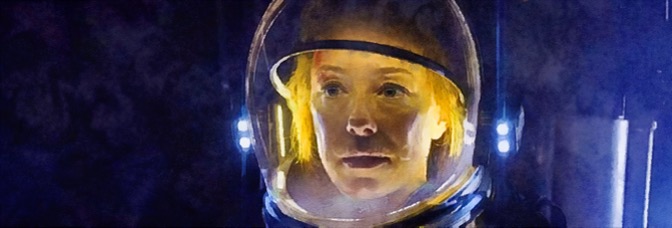
• Lost in Space (2018) s01e08 – Trajectory

    Will Robinson, falling for Dr. Smith’s shit since 1965. Having not seen the original show and not having great memories of the obvious evilness of Gary Oldman’s Dr. Smith in the Lost in Space: The Movie, I don’t know how this show’s version of Will Robinson, played by Maxwell Jenkins, falling for Parker Posey’s very obvious machinations—“Your parents lie to you to make you feel better because you’re just a kid”—when she’s literally locked up for being a supervillain… I’m not sure if Jenkins’s is a particularly dippy Will Robinson or just the norm.

    Posey tricking Jenkins into helping her escape and wreck havoc doesn’t happen until the third act and then mostly just to screw up the imminent resolution to the rescue A-plot. It’s all for the cliffhanger, which is fine. Jenkins and Posey have the least amount of charisma together, and it’s thankfully not a running subplot.

    The episode’s kind of an Apollo 13 riff. There’s a quick resolution to the previous episode’s hard cliffhanger, which had colony leader Raza Jaffrey being a bigger dick than usual and then losing his authority to Toby Stephens and Molly Parker. They’re a team now too. It makes Stephens more likable when he admits he needs to check with his wife.

    But now all the survivors know there’s not much time left before the planet self-destructs—or at least burns all the humans off the surface—and there’s barely enough fuel for one ship. Parker’s got to figure out what to do, then Jenkins somehow makes her think of the time she saw Apollo 13 and how they should do a science no hyphen fiction episode where they need to strip down a space-camper, so it can get to the atmosphere with less fuel.

    There’s a very brief thread about Yukari Komatsu having to fly it because she weighs the least, which upsets Cary-Hiroyuki Tagawa—the scene where they argue in Japanese makes you wish the show were about them. And in Japanese.

    Turns out the only person who can wake up from unconscious in time is Stephens, which means Parker, Jenkins, Mina Sundwall, and Taylor Russell all have to work out dad going on a potential suicide mission while training him for it. Luckily, they’ve got a few days, so they’re going to work it all out.

    Not. The mother-ship has to leave sooner, so it’s now or never.

    Probably series best acting from Stephens, which isn’t too high a bar for him to clear, but also terrific acting from Parker and Ignacio Serricchio. Even though Parker knows how the ships are supposed to work based on the manuals, Serricchio knows how they really work. It also gives Serricchio time with the other kids—not just Russell, though they have a rushed resolve to their investigating Posey plot—and it works.

    Sundwall’s got a little to do with Ajay Friese—dealing with the fallout from her parents usurping control from his shitty dad, but otherwise, she and Russell end up all support to the main plot. Appropriately end up all support to the main plot. It’s a “clocks ticking” science and engineering action story.

    Stephen Surjik directs Ron Howard-style just fine. Katherine Collins and Kari Drake (who are both producers as well) get the script credit. It’s most enthusiastic when on the main plot, which is enough to cover for the drags.

    Like Jenkins somehow never realizing, after so much recent experience, it’s not okay when adults talk to children the way Posey talks to him.

  • Visiting Hours (1982, Jean-Claude Lord)

    At the beginning, Visiting Hours pretends it will be about network news commentator Lee Grant. Despite being openly Canadian, the film also pretends it takes place in Washington D.C., based on the hate mail responses protagonist Michael Ironside frames on his wall. They never specify, so maybe he did write Grant when she worked in D.C., before she up and moved to somewhere else. Still not Canada, as her news program is called “America Today.”

    And while her boss and seeming boyfriend William Shatner has some flexes throughout—particularly in wardrobe, Shatner’s baby blue suit is a look—he doesn’t seem to be running a Canadians mock Americans TV show. Bummer.

    The movie opens with Grant interviewing some prosecutor about a case. A woman killed her abusive husband in self-defense, and the prosecutor is very much “that’s not allowed,” a position Grant takes issue with. Bad guy, but lead of the movie Ironside has snuck into the studio to watch her record this interview, and it really pisses him off. Ironside’s character motivation is pretty simple—his dad, who molested him, tried raping his mom once, and the mom defended herself. Hence, kill all women. At least the ones who talk.

    Ironside also hates every marginalized group, something potential love interest Lenore Zann notices right before their already awkward date turns into an assault. That scene is where I realized even though she’s top-billed in the opening titles, Grant is not the lead of Visiting Hours, because there’s no reason to have it except to track Ironside’s creep. Zann comes back a couple times later on, first to meet hospital nurse Linda Purl when Purl’s out at the community clinic, then, later on, to try to save the day.

    The day needs saving because the cops in Visiting Hours, may they be the Washington D.C. cops or the Quebecois mais angalis cops, are some of the most incompetent cops in movie history. They’ve encamped at the hospital for much of the film because Ironside keeps trying to kill Grant but only manages to kill other patients or staff. The cops can’t figure out how he’s getting in, possibly because they don’t ever figure anything out. Or even try. Visiting Hours lacks doctors and hospital administrators in the story, presumably because their presence would break the movie’s too thin logic.

    There are a series of suspense sequences, primarily for Grant or Purl (who Ironside starts targeting because she’s a single mom; her ex-husband was apparently abusive, but the movie speeds through it), and none of them are ever suspenseful. The film’s got shockingly little going for it technically—Lord’s directing is bad, but René Verzier’s blue-tinting photography is worse. The scenes all look bad; it doesn’t matter how Lord or co-editor Lise Thouin cut them. The sound is particularly poorly done in the film, not the actual sound design or editing, but whatever Lord told them to do with it. Or not do with it.

    Jonathan Goldsmith’s music is probably the best technical element. It’s usually acceptable, briefly good, rarely terrible.

    I’m not sure how you’d write Visiting Hours well, but Brian Taggert doesn’t know either. It’s probably impossible given the movie doesn’t want to sympathize or empathize with Ironside, which is fine, but given most of the film is spent hanging out with him, it’s a problem. It’s also unclear if Ironside could be any better. He’s awful, but how could he be any better. He’s a stone-faced slasher movie villain with boring subplots.

    Grant, Purl, and Shatner all do okay given the circumstances, though it’s a blatant waste of Grant. It’s not an obvious waste of Purl (or Shatner), which isn’t exactly a compliment. However, there should’ve been more Shatner and Grant—he gets a kick out of their scenes—whereas there’s probably too much Purl. Terrorizing her little kids is a little much.

    Visiting Hours is probably too competent for its own good—there’s no schlock value—but it’s a complete waste of time.

    Other than Shatner’s phenomenal wardrobe. At one point, he’s got what appears to be a combination dressing gown trench coat. It’s unreal.

  • Lost in Space (2018) s01e07 – Pressurized

    So, there’s a lot good about this episode. Director Tim Southam leans in heavy on the “we’ve got John Williams music anyway, let’s make it like a Spielberg” to good effect. There’s a very nice arc for Taylor Russell and Ignacio Serricchio (who still aren’t romantic, yay), and there’s a pretty good one for Molly Parker and Toby Stephens. Maxwell Jenkins and Mina Sundwall have a brother and sister bonding arc because Jenkins is so upset about what happened at the end of last episode.

    We don’t see Jenkins tell his family about it, so there’s no resolution to that significant plot point and character development moment. Instead, he and Sundwall come up with activities to show the state of his grief over telling his robot to self-destruct. Not even an “I know why you cry” moment. It’s got to be the biggest dodge the series has done to date. Not sure if they didn’t think they could write it or Stephens or Jenkins could act it.

    Anyway.

    Serricchio and Russell are still working with colony leader and general asshole Raza Jaffrey. Does someone call him an “asshole?” Maybe. The quickly deteriorating planet is making things difficult for everyone out and about (except Parker Posey, who has an uneventful field trip to get her plot in place for next episode). The expedition has to do a timed special effects sequence to get back home, and something goes wrong, leading to a casualty and a stand-off between Russell and Jaffrey. Russell may be a doctor and all, but what does she know, Jaffrey says.

    Serricchio’s got to take a side, which then has further repercussions.

    It’s a manipulative arc, to be sure, but expertly directed by Southam and very well-acted by Russell, Jaffrey, and Serricchio. If “Lost in Space” doesn’t screw up Russell and Serricchio’s friendship, it’s looking likely to be the best thing about the show.

    Parker and Stephens are on their own day trip. Thanks to unexpected seismic activity, they end up in mortal danger. Since Parker and Stephens know the planet’s breaking up, but no one else is aware (well, Sundwall, but it’s only important later on), it adds a certain dramatic weight to their arc. Plus, they finally get a scene together where they aren’t mad (or Parker isn’t mad) and can appreciate one another. It’s… better? I’m not sure what “Lost in Space” gets out of the Robinson family being mad at dad Stephens for the first six and a half episodes of a ten-episode season, but I’ll bet it’s less than twenty minutes of material.

    Parker holds up their arc.

    There’s a big development in the rescue plotline, which leads to a compelling hard cliffhanger. The cliffhanger also ties into the Posey plotline, as it works to verify her seemingly random lies.

    Southam’s direction is first-rate. He really likes doing this kind of show. The scene where they lay on the John Williams isn’t even good. It’s just the most appropriate place for the music.

  • Lost in Space (2018) s01e06 – Eulogy

    Another episode, another new writer and director. Also, the opening titles are back. It’s also the longest episode so far (I’m pretty sure), clocking in just over an hour. Because a lot happens, and everyone gets something to do. However, the script (credited to Ed McCardie) compensates for its numerous supporting players by sticking Molly Parker in the space-camper for the episode. She’s recovering from injuries last episode, which heal really fast since the previous episode ended with cuts on her face, and they’re dirt this one.

    She’s busy trying to decide whether to tell the other survivors the planet they’ve crashed on is going to freakishly burn up like David Marcus used protomatter in his equations. It’ll tie into Parker Posey’s arc, which has Posey trying to convince Sibongile Mlambo to lose her shit about the robot. Parker gets one really good scene; it’s opposite Cary-Hiroyuki Tagawa; it’s too bad they don’t have Tagawa do more. He’s the best of the supporting players. Mlambo is the worst. She’s never had so much to do, and she doesn’t do much with it.

    Though it’s a rough part—Posey, posing as a therapist, is trying to traumatize Mlambo to… do something. It’s not clear what. The audience knows what’s going to happen, and one presumes Posey has a plan, but when Mlambo gets around to lashing out, it doesn’t seem like Posey knows what’s about to happen.

    Toby Stephens and Maxwell Jenkins have the least successful storyline of the episode. Stephens is trying to teach Jenkins how to take responsibility for the robot, having been a bad guy before Jenkins tamed it. They have a very physical and visual arc to show Jenkins is learning, but it’s an internal character development thing, and externalizing it, especially with so much sentimentality, is weird. Though it ties together nicely with the humdinger of a soft cliffhanger.

    Mina Sundwell and Ajay Friese are off on a hiking date. It’s good stuff. Like, Sandwell’s a lot better with Friese than her siblings. Unfortunately, their subplot isn’t as much for character development as showing off more of the rapidly deteriorating planet. But they’re sympathetic, and there is one good character development moment.

    The main plot has Taylor Russell and Ignacio Serricchio going on an expedition to get some fuel. If they find the fuel, Parker won’t have to tell everyone about the planet burning up, so it solves her problems too. Raza Jaffrey is also along on the plot to add some classism (everyone thinks Serricchio is mercenary, but then they’re leaving him on another dying planet, Earth, while they all go off to paradise). It’s an excellent episode for Serricchio, whose less flirty and more friendly with Russell, and all of a sudden, their character relationship has potential.

    While Russell does get some character development towards the start, she ends up just supporting Serricchio’s arc. There’s also some drama regarding their suspicion of Posey, but it’s their secret at this point.

    It’s got a very three-act structure, with Stephens starting out trying to sort out what to do about the killer robot and all the excursions getting planned out. Then the third act really echoes the first. The timing’s not great, like Jenkins and Stephens’s responsibility arc probably should’ve come sooner—or that aforementioned humdinger of a finale should’ve come later—but it’s a surprising, compelling episode.

    The show seems very confident in its swings. Hopefully, it’s justified.

  • Lost in Space (2018) s01e05 – Transmission

    Even though this episode opens with Parker Posey trekking back through the forest after watching the Robinson kids hide the robot last episode… it seems like more time has progressed than a few hours. Unless all the survivors moved all their space-campers (the Jupiter space-camper) to the same campground overnight and legitimately elected, but dipshit leader Raza Jaffrey has got a plan for communicating their mothership.

    They're going to build a tower and put a bunch of lights at the top and hope the mothership sees them from orbit. There aren't any establishing shots of the tower during construction, which makes it kind of hard to visualize, but director Deborah Chow instead focuses on Jaffrey being a jackass and how much better it would be if Robinson dad Toby Stephens was in charge.

    It's obvious stuff, but it's also totally fine. Compared to the other guys, Stephens is definitely a winner.

    After Posey's walk through the dewy woods, the action cuts to Molly Parker. She will have a solo mission this episode, something to do with her calculations of the planet's changing seasons. They're changing way too quickly. Juxtaposed with Parker going out and investigating, there are flashbacks to her relationship with her kids on Earth, scenes where Stephens just happens not to be there. First up, we discover Maxwell Jenkins was born premature and in a NICU, and so obviously, Parker was going to fudge his scores to make sure he got to get lost in space with the rest of them. Later, there's more with the other kids and shade at off-screen Stephen's expense. Maybe not the best flashbacks, but okay.

    The majority of the episode's character development and it all happens onscreen. Taylor Russell and Ignacio Serricchio become erstwhile friends and allies. Hopefully, they don't have a romance because Serricchio's fifteen years older than Russell, who's twenty-four playing an eighteen-year-old, so he looks a full eighteen years older than Russell. We also get Serricchio finding out Posey's still alive—or, more, vice versa—and some drama from that interaction, especially since it gets Russell suspicious.

    Meanwhile, Mina Sundwall spends most of her time flirting with Ajay Friese. Friese is Jaffrey's son, and Jaffrey's an asshole to his kid. Good enough banter and Friese calls Sundwall on her brattiness.

    Jenkins's plot has him wanting to tell Stephens about the robot and never getting the courage. Posey also snoops on that subplot, using it to cause some drama. Really get to see Posey machinating this episode.

    The ending is an unexpected (though forecasted) action sequence with heavy Jurassic Park nods, like straight riffs on scenes. Chow's very intentional about it in the direction, but then composer Christopher Lennertz doesn't lean into the John Williams-esque stuff he's done before. It's also weird a little later when there's a big Spielbergian "boy and his robot" moment.

    It actually made me wonder if they shouldn't have tried harder to make the movie feel like Spielberg. Maybe they would've gotten a sequel.

    The episode definitely has a different feel than the previous ones—the now enormous background cast—but "Lost in Space" still seems to know where it's going.

  • The Stop Button Guide 58

    A critical episode guide discussing the all eight first-season episodes of Around the World in 80 Days, a period drama adventure television series based on the 1873 Jules Verne novel of the same name. It is produced by the European Alliance, a co-production alliance of France Télévisions, Rai and the ZDF. The show stars David Tennant, Ibrahim Koma, Leonie Benesch, Jason Watkins, Peter Sullivan, and Anthony Flanagan.

  • Around the World in 80 Days (2021) s01e08

    The season finale for "Around the World in 80 Days" punts pretty much everything except resolving the villain arc for Peter Sullivan. It doesn't give him a character arc—he and Jason Watkins's minor subplot last episode confirmed they wouldn't be going that route—and instead is just about whether or not lead David Tennant's going to lose to Sullivan again. There's some additional backstory on their "friendship," but it doesn't go anywhere; it just makes Sullivan more villainous and Tennant's need to succeed direr.

    But Tennant's character development? There are four crucial character moments in the episode, but they're transitory, not conclusive. Ditto Ibrahim Koma and Leonie Benesch's romantic possibilities. It becomes about Koma's character development, and then, when they need to do something with it, the show handles it offscreen. Something else to be dealt with next season, which apparently will involve a different Jules Verne property. It sounds like it'll be fine, I greatly anticipate it, but it's a letdown from where the show was headed for most of the season.

    The episode itself is a marvel of pacing. There's time for a cliffhanger resolve, some character development for Koma and Benesch, a big scene for Tennant and guest star Dolly Wells, then an unexpected, excellent fight scene, all in New York. But there's a whole other plot waiting for the cast once they get on the boat, including Koma and Benesch dealing with shitty American racists. The show went six episodes without having overt racism, then throws in Americans, and they're abhorrent. Accurate, both in characterization and circling the globe east-to-west, but the balance is off.

    Especially since Tennant, who the show's finally established needs to be more cognizant of racism (having become cognizant of sexism and classism earlier in the series), has nothing to do with the scene. It's a moment for character development, and Pharaoh runs away from it.

    The conclusion, which has Tennant suffering one setback after another, is masterfully timed as well. Steve Barron's back directing; it's not his showiest episode, but the way he moves the episode along is extraordinary. It's forty-five or fifty minutes and feels like a ninety-minute two-parter, the way the drama hinges on these actually short scenes from the main cast. Mainly Tennant, who unfortunately gets his season finale character development done through him remembering important scenes in earlier episodes. But when he actually gets to do scenes, they're pretty good.

    Especially opposite Wells, who's a delight.

    But as for his friendships with Koma and Benesch, the episode skirts dealing with their impact and importance. Actually cuts them from one of the flashbacks. But, again, there's presumably plenty of time since there's another season. And the episode does acknowledge there's been some character development in the last scene. It's not too little, too late, but it's very little, very late. Very little in the last possible moments, actually.

    It's a terrific show. Uneven only because it seemed more ambitious early on, and then also deciding at the last minute to address Koma being Black and doing a perfunctory job of it. But excellent acting from Tennant, Koma, Benesch, and Watkins, and an outstanding production. Narrative punting aside, Pharoah's script is spectacularly paced and has some enjoyable twists. Especially for guest star Richard Wilson.

    I just hope next season knows where it's going.

  • Around the World in 80 Days (2021) s01e07

    After spending six full episodes ignoring the Black part of Ibrahim Koma’s Black Frenchman, this episode tackles and wrestles with the subject for most of the episode. Because they’re in the United States now and, what you’re not going to agree the United States, is really racist? Throughout the episode, it feels like “Around the World” is sticking up a superior European nose. The Klan leader John Light will say something, and it’s something in the modern United States both-siders political discourse and, well, no, show’s right.

    This episode, our heroes are traveling by stage from San Francisco to Battle Mountain, Nevada, to catch a train. It’s a bumpy but uneventful ride—stage operator Elena Saurel flirts with David Tennant to Leonie Benesch and the audience’s amusement. Otherwise, they’re on track to make their train and make-up time.

    Until first Black U.S. Marshall Bass Reeves (Gary Beadle) needs a ride on the stage with prisoner Light. Koma immediately takes to Beadle since he’s the first fellow Black person on the show since episode one and favors letting them join the plot. But, it’s simpler for Tennant and Benesch—Light’s polite and gentlemanly, what could be wrong with him.

    Light, of course, assumes Tennant understands the world through Confederate values, whereas Tennant apparently knows and cares nothing of the U.S. political landscape. Even as Light tries to warn Tennant of Koma and Benesch’s tentatively romantic relationship, Tennant doesn’t get the hint. Koma, Benesch, and everyone else gets the hint, but Tennant can’t imagine thinking about such things.

    It’ll eventually lead to a tense shootout in a saloon with lots of heroics and bonding for the good guys. The Southerners, besides aristocrat Light, are all toothless imbeciles. All the Westerners are moral cowards at best. I suppose the episode’s more Western than not, though Charles Beeson’s direction emphasizes character over action.

    But does it successfully address how race and class intersect? No. Does it successfully reconcile how it avoided that topic all series? Also, no. I mean, Tennant’s too much of a good egg to really understand racism or even sincere jingoism, and it’s a downer conversation, so why dwell. Problematically, those sentiments are Koma’s in addition to the show’s. Anyway, they’re nearly out of America by the end of the episode, so chalk it up complete. It really does screw Koma over, emphasis-wise, however.

    The episode itself is good. The character development for Tennant’s not sincere but successful within its constraints. Koma and Benesch’s flirtations at flirtations are good. Beadle, Light, and Samuel are probably the best examples of British actors playing Americans on non-American television in memory. I had to keep reminding myself they probably weren’t actually American.

    The ending reveal cliffhanger does a nice job looping back to the beginning of the series, successfully focusing on Tennant’s quest instead of his privileged ignorance.

    I sound more bearish on it than I “feel,” but maybe not more than the episode deserves; I wish British shows would take the subject of racism in the United States more seriously in their productions and not just vague sentiments.

  • Around the World in 80 Days (2021) s01e06

    Outside the way too quick resolve to last episode's cliffhanger and either a continuity gaffe (or a lousy narrative choice), nothing is wanting about this episode. However, given its simplicity, it should be a slam dunk. And it is a slam dunk. It's maybe just not an exciting slam dunk. But, given the setting, the actors, and the character dynamics, our three heroes stuck together on a tropical island while angry at one another and having to work it out… it's going to be successful. It's got to be successful. There are the right amounts of drama, danger, and friendship, and then good acting.

    Of course, it's going to work.

    However, the episode's got more than just the tropical island castaway plot; it's also got a London plot. And the London plot is unexpected and ambitious from a character perspective.

    Okay, the main plot is David Tennant, Ibrahim Koma, and Leonie Benesch stuck on a tropical island. The continuity gaffe involves how far they were from Yokohama when they went off-course. The end of the last episode suggested it was all immediately following the main action, so there were no two days to play with. Unless Tennant moped around the bar for forty-eight hours straight, which is possible, actually.

    Given their close proximity—and Tennant beating himself about getting Koma and Benesch stranded in the middle of the Pacific—pretty soon, Koma breaks down and tells Tennant the truth about some things. I don't think even all the things, though some of the confessing happens off-screen, but enough Tennant's outraged. Tennant and Benesch take one part of the beach, Koma takes another. Only Koma knows how to survive, and he's trying to make amends, so he's always present in one way or another. Even if it's just Benesch considering the situation and how hard to try to influence Tennant.

    There's excellent acting from all the actors, but no clear best. Tennant gets a great monologue, but his character would be a partial fail overall if it wasn't a great monologue. Koma gets some excellent scenes but not the arc. Benesch primarily supports the two men but does raise some of the more challenging questions. For example, she and Tennant have a great scene talking about privilege, mirroring the one they had a few episodes ago. In that one, Tennant did the talking; in this one, Benesch does it.

    The main plot has a good resolution, the right amount of gentle humor, and some burgeoning character drama (but positive drama).

    The B plot, with Jason Watkins and Peter Sullivan in England, has character drama but all negative. Even when it seems optimistic—against all odds—it's actually harmful. Because the heroes are castaways long enough to be reported dead. So Watkins thinks daughter Benesch and friend Tennant are dead, while Sullivan thinks he's indirectly responsible for the deaths. I mean, he'd be directly responsible for it, but Sullivan's not going to take on that kind of guilt.

    So it's this very British mourning stuff, which then gets referenced in the A-plot when Koma and Tennant have it out over British friendships and French friendships.

    Superb acting from Watkins and Sullivan. There's a chance Sullivan will have the second-best character arc in the show. There's the potential for it. And then Watkins is mired in regret. Very, very heavy stuff, even knowing the characters are alive (for now).

    Excellent direction again from Brian Kelly and another good script (credited to Peter McKenna). This episode might be "Around"'s most straightforward—or at least its most traditional—but they do an exquisite job with it. Thanks mainly to the actors, sure, but the production's marvelous as well.

  • Around the World in 80 Days (2021) s01e05

    A couple things jumped out from the opening titles for this episode. First, there’s a new director—Brian Kelly—but more interestingly, there’s a “story by” credit. “Around the World in 80 Days” is a novel adaptation. Debbie O’Malley gets the story credit, Jessica Ruston gets the writing credit. Jules Verne gets his credit, too (but not his residuals). Once more, not having read the source novel, I’m ignorant.

    There are several plot points I wouldn’t guess are in the original. Maybe David Tennant’s adventurer being stuck in Hong Kong because bad guy Anthony Flanagan has impersonated a cop and told the bank not to give him any money because he’s a con man. Maybe Ibrahim Koma knowing someone in Hong Kong. But not Koma’s friend being a Chinese crime boss (played by Thomas Chaanhing), who wants him to steal back an artifact from the British.

    Koma’s in a good spot to steal back the artifact because the British governor, Patrick Kennedy, throws Tennant a party for being an adventurous Englishman. Well, actually, Kennedy’s throwing the party because his wife, Victoria Smurfit, and all her friends think Tennant’s a dashing romantic hero. Thanks to Leonie Benesch writing a feature article about Tennant’s lost love, which Tennant told her in confidence (actually while tripping) and wrote about without permission.

    I doubt the romantic hero thing is in the source novel. Though maybe Verne did address toxic masculinity. Also, probably not Benesch’s father, Jason Watkins, supporting his daughter’s attempts to make the newspaper medium more writerly.

    Definitely not the thing about the artifact’s potential return to the Chinese being justified. Though the episode doesn’t hold its punches when characterizing the British empire.

    It’s a reasonably simple episode, albeit one with a lot of drama. Without cash, Tennant has to rely on Koma to find them lodgings in Hong Kong, the least eventful plot point in the episode. The need for money leads to all the problems, whether it’s Tennant palling around with Kennedy and Smurfit or Koma trying to get a loan from Chaanhing. Tennant’s character drama starts later in the episode—and ends up being shockingly intense—while Koma’s got a lot going on from the start since he knows what’s Flanagan’s doing but can’t tell without revealing too much truth about himself.

    Benesch’s attempts to keep Tennant from reading her article are the closest thing the episode has comic relief, though it’s definitely got its dramatic moments as well. Director Kelly balances things well, and Benesch does an outstanding job this episode.

    The episode ends with a big cliffhanger and not just Tennant starting to learn more about Koma; “Around the World: Season One” seems to be heading into its third act.

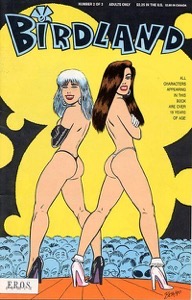
  • Birdland (1990) #2

    Bl2

    Oh, good grief. Either I missed it, or creator Gilbert Hernandez didn’t make it clear enough—the guy in love with Fritz is her brother-in-law. It’s important to this issue because it turns out the brother-in-law, Simon, is carrying on with Fritz’s sister, Petra, who’s in love with Mark. Mark being Fritz’s husband and Simon’s brother.

    Also, Simon is fooling around with Inez.

    The issue starts with Inez worried about Bang Bang, who’s not at work and has been missing a few days. We don’t actually find out what Bang Bang was doing between last issue and this one, but we get some hints in a reveal. Presumably, Beto will clear it up next issue, though also maybe not; there are a couple of things he established last issue he doesn’t continue with this issue. I also don’t remember him trying to rhyme so many ribald remarks. Lots of rhyming ribald remarks this issue.

    But once Bang Bang returns, another dancer—La Valda—is watching her and Inez’s show to seize up the competition. La Valda might have been in the last issue. There are so many characters, and they’re just saying the same names over and over. It’s challenging to keep track and doesn’t seem to matter.

    La Valda’s Mark’s ex-wife, and they get together before she gets together with Bang Bang. I think Inez is mooning over Simon? Or at least wants Simon to give her a job. I mean, the narrative’s obviously just a bunch of slight gags to string together the sex.

    I also think it’s a better issue? Like, Simon and Petra are star-crossed (just not to each other), making them more sympathetic. Though Beto does acknowledge Fritz is basically a Republic serial villain as she hypnotizes her male patients into sex. Still, I’ll bet she doesn’t get in trouble for it next issue.

    It’s fine? Like, there’s some good art. It’s a little weird when the non-sex setups feel like regular Love and Rockets though. I kept expecting Petra to be worried about her niece’s fitness empire or whatever.

  • Around the World in 80 Days (2021) s01e04

    While it’s not the concept episode I want (an hour of David Tennant, Ibrahim Koma, and Leonie Benesch waiting for a train), this episode does a fine job introducing new elements to the show while still sticking to the “formula.” Though calling it, a “formula” might be stretching it. The episodes cover salient experiences during their trip “Around the World in 80 Days.” Unfortunately, there’s just no audience for “Fogg After Hours.”

    This time, the trio is stuck in India, thanks to Tennant assuming the cross-continental Indian railway was completed. He read about it in Benesch’s article, but she wasn’t writing a travel guide, instead a feature on technology. It’s day twenty-eight of eighty, about nine days since the last episode. Seems like Benesch’s inaccuracies could be a go-to trope.

    In what’s either a Temple of Doom reference or just how the British tell stories about India, Tennant and company come across an Indian kid who takes them back to her village. Reeya Gangen plays the kid. I don’t think her character ever gets named in the episode, but she’s going to have this gentle relationship with Tennant, who trips balls around her, and she thinks it’s funny in a caring way.

    There are quite a few guest stars in the episode, which has them interrupting a wedding celebration. Or trying to interrupt a wedding celebration. Matriarch Shivaani Ghai isn’t giving Tennant a guide to get him to their next point of departure until the following day, no matter how much Tennant complains or tries to be a British aristocrat. Her daughter, Rizelle Januk, is the bride-to-be. The groom is Kiroshan Naidoo, a soldier in the British Indian Army. Charlie Hamblett is his commanding officer, who Naidoo told everyone gave him leave to get married, but Hamblett very much did not.

    After Hamblett arrests Naidoo, Ghai says she’ll give Tennant a guide if he white guy talks Hamblett out of prosecuting. Except Koma’s really upset at how selfish Tennant’s being about the trip and decides to take matters into his own hands, dosing his tea with a sleeping agent. Except it’s too much, and Tennant trips out, beginning in his meeting with Hamblett.

    Meanwhile, Benesch and Januk bond, partially over Januk’s problems, partially over just being women.

    There’s a grand finale with Tennant laying bare parts of his reserved British soul. There’s a lot of good acting in the episode, whether Benesch and Januk becoming friends, Koma’s disappointment, anger, and regret, and Tennant and Ghai’s polite but honest conversations. None of it compares to Tennant’s monologuing at the end. It’s excellent writing throughout, especially on that monologue (because it’s got to account for a lot of Tennant’s colonizing bullshit too). The script’s got four credited writers Ashley Pharoah, Claire Downes, Ian Jarvis, and Stuart Lane.

    As usual, really good direction from Steve Barron. There’s pretty much no action and a lot more comedy (Tennant’s trip), but also lots of dramatic tension for everyone at one time or another. Barron does it all quite well.

    There are seven main actors in this episode—the trio, bride, groom, mom, British officer—all give phenomenal performances. Any single one of the guest star performances would be enough to put it over, so having all four be stellar is, frankly, special. “Around the World in 80 Days” is a spectacular success.

  • Around the World in 80 Days (2021) s01e03

    During the previous episode recap, I had the hope “Around the World in 80 Days” wouldn’t be formulaic—David Tennant gets in travel trouble, either due to historical events or his inexperience and anxieties. This episode’s formulaic. It does indeed involve travel troubles and a resolution—complete with Tennant’s thoughtfulness saving the day. It’d be nice to see an episode do something else, to put the characters in some non-dramatic situation.

    Not happening this time.

    Tennant, valet Ibrahim Koma, and journalist Leonie Benesch start the episode two weeks since we left them in the previous one. Apparently, nothing exciting happened on their trip from Italy to Yemen. However, upon reaching Yemen, there’s some travel trouble due to pirates. Tennant and Koma can travel across the desert by camel, but Tennant isn’t willing to risk Benesch’s life on the trek. More, he’s not ready to risk his best friend Jason Watkins’s daughter’s life on that trek. Tennant very much only thinks about Benesch in those terms.

    Unfortunately, in addition to not vetting the guide he hires to take them across, he also doesn’t think about how being stranded in Yemen will play out for Benesch.

    Luckily, they’ve happened across another Brit, albeit a disgraced one, played by Lindsay Duncan. She’s in exile from British society for apparently being a loose woman and then marrying a poor Arab (Faical Elkihel). When Tennant abandons Benesch, she gets help from Duncan and Elkihel; they’re more interested in rescuing Tennant and Koma from the desert than guiding them across, but Benesch isn’t being picky.

    She takes the time to send father Watkins a telegram, which turns out to be a problem since it was Watkins who defamed Duncan in the first place. When Duncan challenges Watkins’s account later on, it forces Benesch and Tennant to reexamine truth outside the context of being wealthy white English people. It’s a short little scene with the two of them talking about it, but it’s quite good. Not as good as when Benesch and Duncan bond and bicker, but good. Tennant gets a bunch of action this episode but no real character development. Benesch gets most of it, then Koma gets some towards the end, and Tennant provides slight support to each. It’s just not his place to provide the support, which the episode makes clear. He’s just not the right person to do it.

    For Benesch, the right person is Duncan. For Koma… well, he gives Tennant the chance to step up, but Tennant’s still British, after all. I’m not sure the show’s intentionally pacing out Tennant’s character development to have him become more sympathetic to a white British girl over a black Frenchman, but it does ring frustratingly true. Moreover, the indifference puts Koma in a quandary; with fellow white woman Duncan around to provide counsel, Benesch doesn’t need Koma’s.

    The episode doesn’t talk about any of it, of course—well, except Duncan, it goes into length about Watkins’s assassination of her character, and then Elkihel will get a great monologue about the repercussions—but there’s so much frustrating tragic subtext.

    This episode has some terrific director from Steve Barron and probably the series’s most successful effects sequence (a sand storm). Great support from Duncan and Elkihel, and Benesch’s best performance so far.

    Hopefully, they’ll stop threatening to send Benesch home because she’s a woman after this episode. They promise they will, but I think they promised it in both previous episodes. And hopefully, there will be time for a relaxed episode at some point.

    But even with adhering to its formula, “Around the World”’s truly superb.

  • The Equalizer (2021) s02e08 – Separated

    So when they said Chris Noth would not be appearing on future episodes of “The Equalizer,” I guess they meant after this episode. Though the entire time it seems like they’re setting Noth up for a farewell hero arc and it as a surprise when he didn’t ride off into the sunset. What’s stranger is if it’s not a farewell hero arc; they saved the “Adam Goldberg gets caught” story only to resolve it in a single episode.

    Noth spends the episode trying to convince government types to let Goldberg go, leading to a very frank scene where Noth tells a general (Peter Jay Fernandez) the U.S. maybe shouldn’t be proud it tortured people. This episode has a lot of very frank talk overall. The A-plot is about a little kid Logan J. Alarcon-Poucel who ICE lost after taking him from mom Andrea Cortés and the episode doesn’t talk around calling out the inhumanity and international criminality of the United States government.

    Though the show also makes up a Biden policy about anyone affected by the child separation policy getting a free three-year visa. Like the U.S. government admits wrongdoing.

    Speaking of wrongdoing… there’s also a scene where Noth asks Liza Lapira why she doesn’t like him, which I feel like they should’ve cut. It doesn’t add much to the episode and it’s cringe as hell.

    But it’s a good episode for Lapira, who gets to do the tech stuff since Goldberg’s in jail, but she also gets to do action stuff. There’s also some cute moments for Tory Kittles and Queen Latifah since their mission this time is unquestionably on the side of the angels. Though without Goldberg to do better Googling about suspects, Latifah finds her assumptions incorrect.

    It’s an uncomplicated good guys and bad guys episode—I don’t know the last time Latifah kicking a bunch of shitty white men’s asses ever felt as thrilling to watch—and reasonably tense throughout.

    Lorraine Toussaint’s only in the episode for a scene and Laya DeLeon Hayes’s away, maybe because Noth’s got such a big—but also just filler—subplot.

    It feels very weird having Noth get such a glowing spotlight episode for his (presumably) last appearance, given they shit-canned him following numerous sexual assault allegations. I wonder if the made-up fairy tale ending for people who suffered incalculable harm at hands of the U.S. government (because the show’s assuming no one affected would ever be watching this show, kind of ditto Noth’s victims), was meant to give it another obvious, potential distraction.

    Like, without any context or responsibility or accountability, it’s a fine episode but it’s also a hell of a thing.

  • Lost in Space (2018) s01e04 – The Robinsons Were Here

    So Ignacio Serricchio is playing Don West, a character from the original show (Matt LeBlanc in the movie). If they mentioned his name before, I missed it. However, given Serricchio refers to himself multiple times in the third person this episode, maybe I wasn’t the only one confused.

    Last episode ended with the heroes finding out the colony spaceship survived; this episode begins with Molly Parker and Toby Stephens heading over to another escape ship to confab with their fellow survivors. Cary-Hiroyuki Tagawa plays the dad on the other ship (apparently, they’re all families and all cishet). It’s good to see Tagawa in something, but he’s gone after a second once the episode reveals Serricchio made it (along with Sibongile Mlambo). Posey abandoned them to a killer storm a couple episodes ago, and so now Posey’s in additional danger of being found out. She was already worried about the colony ship, knowing she’s an imposter; now everyone on the planet’s going to find out she’s an attempted manslaughterer.

    The other significant development is Mlambo telling Taylor Russell about the killer robot attacking them. She immediately goes to tell her parents, who’ve already left on an adventure with Serricchio. So Russell goes home to confront Maxwell Jenkins about the robot, and since he already knew, he’s going to run away and hide it in a cave so she can’t rat him out to dad Stephens. Or something. It’s unclear why Jenkins is hiding the robot once everyone finds out it’s a killer robot. Because Russell goes with Jenkins to hide the robot, then Mina Sundwall tags along too, so it’s an outing.

    It’s a good outing too. The character development between the kids is solid stuff, even if the excursion seems ginned up (though by an eleven-year-old, Jenkins, so a little better given that context). Posey’s following them because she wants to get the killer robot on her side. It’s a kids’ quest trope; it works.

    The other plotline is Parker, Stephens, and Serricchio going to a crashed portion of the colony spaceship for supplies. There they make a few discoveries like they’re in more trouble than they thought, but also, Serricchio’s a smuggler who talks about himself in the third person. It’s funny how much different Serricchio’s character plays in this episode than in the one where he and Posey were trying to survive immediately post-crash. He was likable in that episode.

    He’s a jackass in this one.

    We also get a big reveal in the backstory with Stephens and Parker—what he did to wrong his family—and it’s underwhelming. No wonder it’s hard to write the character relationship when they’ve got such a slight conflict.

    There’s a really funny Ferris Bueller’s Day Off reference, some more great Christopher Lennertz riffing on John Williams music (Jurassic Park this time), and generally better timing with the cast. Finally, we’re getting to the actors working off each other, which is nice, especially for Parker and Stephens. Even if their backstory is jank.

    It’s the best episode so far. Really good direction from Alice Troughton, and hopefully, the characterizations in the script (credited to Katherine Collins) hold.

  • Lost in Space (2018) s01e03 – Infestation

    After two episodes making a lot of noise but not really doing anything productive, Toby Stephens finally finds something he’s good at—fighting fuel-consuming alien eels. It’s another job the killer robot could do better, but the killer robot is too busy protecting Maxwell Jenkins. Once the robot deems there to be too much danger for Will Robinson (Jenkins), he blockades the kid in a storage closet until the rest of the family can solve the problem. Not too sure about the robot’s critical thinking skills.

    Also in the storage closet is Parker Posey, because it’s her bedroom. They don’t have anywhere else for her to stay; Molly Parker showing her the room is one of the few comic beats for the adults this episode. There’s some kid banter, but it’s a high-stakes episode otherwise. The eels are consuming the fuel at an alarming rate, and it’s a race against time. If they lose too much fuel to take off, they’ll be trapped in the glacier forever.

    So the A-plot is that crisis, with the episode also spending some time on Taylor Russell’s PTSD from being trapped in the ice in the first episode. She was there for hours, thinking she would freeze or suffocate or both, and even though mom Parker’s a smart lady, she doesn’t understand PTSD. Luckily, Stephens does and is going to help Russell whether she’s talking to him or not.

    Stephens’s character—the rough and tumble career Marine—is an odd fit with the rest of the family, partially because he and Parker don’t have any chemistry together, and the show’s been telling us for ages she hates him. The kids aren’t thrilled with him either. And it’s an almost entirely physical performance, with Stephens feeling like the Netflix streaming version of Hugh Jackman or if he were believable as a dad, Michael Fassbender. It doesn’t help the show’s trying to make him… questionably reliable. This episode seems to be turning it around a little, especially with the bonding with Russell.

    Because Russell’s so far the only character who isn’t either questionably reliable, dangerous, or annoying. Parker, Stephens, and Jenkins all have failings (though Jenkins’s character is eleven, which qualifies the situation a little), Mina Sundwall actively pesters and nothing else, and Posey’s a villain. Russell’s not the show’s protagonist, but she’s the closest thing to a hero it’s got.

    As for Posey’s villainy, we get some flashbacks explaining how she got on the colony ship, including a fantastic cameo from Selma Blair as her sister on Earth (Blair and Posey as sisters should be a show), but also the trouble she got on while onboard. Posey leans into impersonating a psychologist, trying to figure out how to manipulate the family she’s found herself stranded with.

    The episode opens with an opening title sequence—the previous episodes did not—and it’s not great but does distinguish a new phase of the show. As does composer Christopher Lennertz leveraging the original “Lost in Space” theme song from John Williams. The music’s all very Williams-esque, including a spaceship sequence out of a Star Wars movie. Lennertz makes it work really well. So well it’s a surprise they didn’t start doing it in the first episode, but this episode’s also got a different director (Tim Southam) and doesn’t feel like part of the pilot movie. It does, however, feel like they’re still setting up the season instead of doing the show.

  • Lost in Space (2018) s01e02 – Diamonds in the Sky

    This episode feels a little bit like “Pilot: Part Two” since it introduces Parker Posey to the series. The soft cliffhanger last episode had her assuming a false identity and getting onto an escape spaceship with mechanics Ignacio Serricchio and AnnaMaria Demara. As the bigger spaceship was under attack from a killer robot before all the ships—including the escape vessels—get sucked into a black hole.

    The regular cast will find out all that spaceship information, though not all of it for everyone (and not the specifics). For instance, Maxwell Jenkins will discover his pet Terminator (they even play catch at one point) attacked the ship and killed a bunch of people. But the robot’s changed so Jenkins is going to keep it to himself. Molly Parker and Toby Stephens find out they’re way off course—in another galaxy—though it’s more Parker finds out and has to tell Stephens about it. There’s quite a bit about who’s in charge, Parker or Stephens, and the show tries hard to make Stephens a reasonable leader but… then he does something dumb and callous, whereas Parker’s never callous even when she makes a mistake.

    Parker, Stephens, and Jenkins are off investigating other crashed ships—one of their fellow colonist vessels and then the alien robot’s ship. Back at their ship, Taylor Russell and Mina Sundwall are in charge of slowing freeing said ship from an underwater ice lake. Except Sundwall is worried about an approaching storm front and wants to get their RV out of storage while Russell wants to follow the rules.

    Under threat from the same storm is Serricchio and Posey. They’ve survived their crash and are trying to find other survivors. Except we, the audience, know there’s something shady about Posey and it seems like Serricchio might be in danger. Except Serricchio is a working class hero and he’s not going to let a little straightedge lady like Posey cramp his style. It’s an interesting way to do character development, having Posey discover the sympathetic truths under Serricchio’s bravado while she’s still a danger to him. Posey mostly plays it restrained, letting Serricchio run the scenes, only with her character developing underneath it. It’s good banter and sci-fi action survival stuff. Serricchio’s so sympathetic he makes Posey seem less dangerous.

    While the whole cast gets something to do—although Russell ends up with less and less as the episode goes on—introducing Posey is the point and it’s successfully done. The family drama is all building—the conflicts between sisters, parents, then Jenkins and everyone but his killer robot—there’s no time for relief here, not when the storm is imminent and the planet has diamond-sharp sand that storm will be kicking up.

    Again, it feels very much like the conclusion to the pilot movie for the show. The board is set, the pieces’s rules and responsibilities define, time for the game to start.

  • Lost in Space (2018) s01e01 – Impact

    I must confess I didn’t remember my “Lost in Space” enough to know they had three kids. I thought Taylor Russell was added for the new show. I also don’t think I’ve ever seen the original series, just the movie. But there are three kids.

    Besides Russell, who’s the Doogie Howser teen doctor, there’s Mina Sundwall, who’s the annoying middle child, and Maxwell Jenkins, who’s the unspectacular youngest. The episode opens with the family sitting around the proverbial dinner table—albeit on an interstellar spacecraft hurtling to an Offworld colony in another star system—playing Go Fish. We find out Jenkins doesn’t cover his cards, and Sundwall takes advantage. We also find out Russell isn’t happy with dad Toby Stephens. Also, they’re crashing and trying to stay calm as they do it.

    The episode has a series of flashbacks filling in the backstory, which has an asteroid hitting Earth and basically making it a shithole in a few years, so all the capable smart people are going to go colonize another planet. Luckily, mom Molly Parker, Russell, and Sundwall are all very, very smart and capable people. Dad Stephens was in the Marines on Earth, and everyone’s mad at him about something, even though the first time we see them in flashback, they’re all pleased with dad. Presumably, being in the Marines means he gets to go Offworld with them.

    Jenkins, it turns out, wasn’t good enough to cut it for the mission, and Parker had his record hacked to bring him along. So when he’s feeling inadequate, it’s because he’s actually inadequate. Luckily, he will tame a killer robot before the episode’s over, so he’s a lot more useful.

    But since I didn’t remember Russell’s character was a series staple, I thought when they were threatening to kill her terribly, they might do it. What a way to do a tough new “Lost in Space” and immediately kill one of the kids. “Lost in Space”’s future is nice looking (except for the really crappy UX on the computers), but the society is really messed up.

    Anyway.

    Russell spends most of the episode in a life-threatening situation, with Jenkins also getting into one in the second act. Stephens’s questionable dad skills will be involved with both situations, leading to a lot of drama with Parker. Then we find out she was kind of ready to just divorce him when he decided to tag along on their interstellar relocation.

    It helps the cast is mostly likable—well, mainly Parker and Russell are likable, while Jenkins is sympathetic. Sundwall gets the least character and but the most personality. And then Stephens is shifty and questionably competent.

    Neil Marshall directs, usually emphasizing character drama and the resulting development (a plus since the special effects are iffy at times); he’s thoughtful about how he puts the children in danger, though the sequence where Jenkins is taming the robot ratchets up the intensity a tad much for the pay-off. The first half of the episode seems more budget conscious (limited sets) before the second half opens things up. It scales nicely.

    The last flashback reveal introduces Parker Posey’s “Doctor Smith” (in a way you don’t have to know anything about the series or even the accompanying Bill Mumy cameo) in addition to giving the audience a bunch more information than the characters about the crashed spaceships and the robot. It’s a good hook for next time.

  • The Stop Button Guide 57

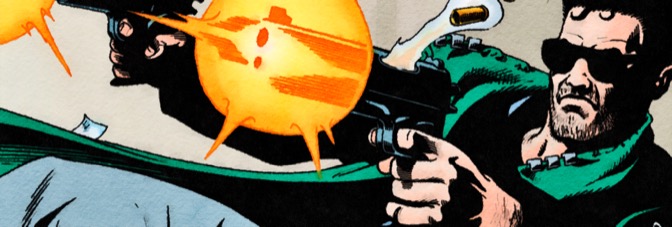
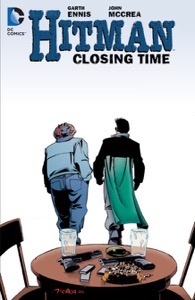
    A critical guide discussing the HITMAN comics by Garth Ennis, John McCrea, and Garry Leach. Hitman (Tommy Monaghan) is a fictional character, a superpowered hitman in the DC Comics Universe. The character was created by Ennis and McCrea and first appeared in The Demon Annual #2 before receiving his own series by Ennis and McCrea that ran for 61 issues. All seven of the HITMAN collected editions, containing the entire series, are discussed here.

  • Selected Declarations 22.01.03

    If The Stop Button has a theme, it’s killing your darlings. It’s a lot easier to shit on a childhood favorite than to expound on Fellini. At its best, it’s curated nostalgia. At its worst, it’s assassinated nostalgia. Except I haven’t been watching and reading about many old favorites. I made a 2022 watch list, and most of it’s repeats of old movies, a handful of suggestions, and the not new but newly released Edward Burns. What’s novel about the watch list is it’s doable. It’s not 370 movies or even a hundred. It shouldn’t be hard to get through at all.

    I may keep track of how many previously beloved darlings get the chopping block for a future Selected Declaration. I also may not. Early days here with the Selected Declarations. Early days.

    I’m not sure how I’m going to structure these posts—I haven’t really gotten to the planned topic, how at the same time I’m disappointed in Tom Holland Spider-Man, I’m thrilled with The Matrix, as well as disinterested in the Star Wars franchise more than ever (really, “Boba Fett”?), and, I don’t know, finally finished the Scream movies. Just in time for the fifth one, only it’d take a miracle for it to be worth seeing in the theater, if at all. But would I have said the same thing about The Matrix? I say the same thing about The Batman. But that’s a long-dead darling.

    While this year’s film programming is set and the comics catalog reading is set–Love and Rockets Volume 1.5 through Two (starting with Beto doing a porno, it turns out)—I’m staying loose with the TV. No extensive schedule, just a few titles scrawled in no order. What’s funny about the TV posts is they’re the most popular. I mean, somehow, the Spider-Man 3 post got confused for a bootleg link, but otherwise, the TV and streaming posts get the most eyes. Not, however, the TV or streaming posts for shows I’m interested in. It was a big deal for me to get to watch “Michael Hayes,” but it was not a big deal for the blog.

    On the other hand—although the second season is good, actually—I’ve got no investment in “The Witcher: Season Two” posts getting hits.

    Though I suppose I don’t invest in any posts getting hits. It’s my darlings I’m lopping off at the neck, not anyone else’s. Well, mostly. Sometimes it’s fun to shit on bad movies in general, not ones I used to like specifically.

    I watched Scream 4 to balance out Spider-Man and Matrix, but it’s too bland; it confirmed what I already knew—media nostalgia isn’t the best investment.

    So the year’s watch list will partially survey such investments. Just not as a purpose, but because it’s how I blog.

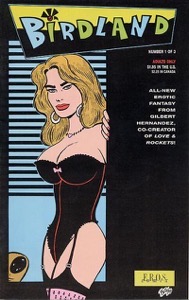
  • Birdland (1990) #1

    Birdland1

    So, I wasn’t actually aware Birdland is a porno comic.

    I also wasn’t aware it was from during Love and Rockets: Volume One’s run and not immediately following it, meaning Fritz Herrera from Birdland goes on to become Luba’s half-sister in Love and Rockets. I was also unaware strippers Inez and Bang Bang are from the early issues of Love and Rockets, where they fought monsters and killer snowmen and did not have an affair with the same guy, one of them unknowingly. That guy is Fritz’s husband. And then Fritz’s sister—Petra, also Luba’s half-sister in Love and Rockets, wishes she were having an affair with Fritz’s husband.

    The husband’s name is Mark. One of the issue’s running gag is he almost has an earth-shattering epiphany when he has or causes an orgasm.

    I’m not sure what else there is to say about the comic. Creator Beto Hernandez sets it up as a series of sex scenes and reveals thanks to the identity of the participants. Bang Bang and Mark, Petra fantasizing about Mark, Bang Bang and Inez dancing, Fritz and her patient, Inez and Mark, Fritz and her patient (revealing he’s a patient), then Inez in for therapy with another big reveal. It’s a bunch of sex and gotcha connections.

    Even though Inez and Bang Bang didn’t make it through the second year of the Love and Rockets comic (and I thought Beto moved Fritzi over to a porno comic, not brought her out of one), I sort of thought I’d remember them. But the comic opens with a flashback to what seems to be Palomar and Bang Bang and Inez were separate from those stories. Though maybe I’m not remembering.

    I feel like it takes a lot of work to contextualize Birdland #1when it’s really just an x-rated soap opera with most of the soap opera cut out.

    Good Beto art, I guess. He’s got some mildly amusing running gags. Knowing it’s Bang Bang and Inez, I wish they were fighting killer snowmen instead.

  • Scream 4 (2011, Wes Craven)

    Oh, no, Scream 4 is Wes Craven’s last movie. At multiple times throughout, I remember thinking, “at least this isn’t Wes Craven’s last movie.” Not sure what I thought his last movie would have been, but I didn’t really think it would be this mess of a too-late sequel. Though I guess I’m curious if the story is what franchise “creator” and writer Kevin Williamson had in mind for the original Scream 3before he got fired, and they went with something else. Craven, however, returned. But if Scream 4 is what 3 was supposed to be a decade earlier… maybe there wouldn’t have had to be a Scream 4?

    The movie’s first act is an object lesson in the dangers of recurring cast horror franchises, before the lumpy second act where the film pretends it might have something to say about itself. The third act reveals it very much does not have anything to say about itself, though if they’d just written for the finish instead of the reveals, they may have had something. Not a movie Craven could’ve directed, or Williamson could’ve written, but someones else maybe. Because even though Scream 4 is ostensibly about franchise stars Neve Campbell, David Arquette, and Courteney Cox getting older and wiser… they’re none of those things. Scream 4 ages worse than the original trilogy because Craven and Williamson haven’t learned anything. They’re ironically referencing tropes, like girls in lingerie and terrible performances from suspicious boyfriends, but it’s not like they’ve also learned how to be funny about it.

    For the first half of the movie, it appears Craven is directing now-sheriff Arquette and his obsessive sidekick, Marley Shelton like they’re in a comedy. The music’s not for a comedy, the editing’s not for a comedy, but if Arquette and Shelton aren’t going for absurdist stupid cop comedy…

    Because what else can you do with it? The movie opens with multiple false starts to mess with the audience; sadly, none of them improve the main action. The main action keeps churning along until they get to the third act and can do the big killer reveal. Only the movie’s spent the last hour and fifteen minutes reminding why there’s no reason to care about a Scream movie. It’s all about Craven and Williamson being, well, craven.

    The movie’s also profoundly unsuccessful with its attempts to modernize, not even leaning into streaming video as well as the Halloween movie with Busta Rhymes, even though it’s years later, the tech’s better, and everyone has iPhones. Though Williamson’s script seems to misunderstand how people use smartphones, which might explain why no one knows how to text except the character with the Sidekick. They also don’t know how to be scared of mass murderers out to get them, as every character who’s in direct danger does absurdly dangerous things just to get some pop scares. Craven tries to do a pop scare every thirty seconds through the first act, seemingly to wear out the trope. So he can use a different but similar trope later. Though is it better when he tries tropes for the suspense sequences, instead of just creating so much empty headspace one can muse whether or not they should’ve hired someone better at suspense for these movies.

    Or with actors.

    The best performances in Scream 4 are Hayden Panettiere, Adam Brody, and Mary McDonnell. Brody and McDonnell are barely in it, which works to their advantage. They don’t have characters, just bit parts. Getting to the end of your bit part well is a gift in Scream 4. Someone, usually Williamson, not Craven, will ruin it for you. Panettiere’s “reboot” lead Emma Roberts’s cool friend. Panettiere’s not so much good as not bad and more able to guide her performance than Craven. Roberts lets Craven direct her. It doesn’t go well. Roberts’s part is too small given she’s the lead, with the time instead going to Cox, Arquette, and Campbell. The original trio is just in the story because the movie doesn’t trust Roberts, Panettiere, and their friends. More, no one wants to see another Scream movie without some forced nostalgia going on.

    There aren’t actually too many terrible performances. They’re usually unsuccessful or pointless. Cox, Arquette, Campbell, they’ve all got pointless performances. They don’t have anything to accomplish, so not doing so doesn’t affect them.

    The worst performance is Nico Tortorella, but it’s not his fault. He’s being written as Luke Wilson making fun of Skeet Ulrich but broody. Tortorella didn’t have a chance with the script or the direction.

    He’s one of the new teens, along with Roberts, Patteniere, Rory Culkin, Erik Knudsen, and Marielle Jaffe. Hopefully, most of them reconsidered their agents after this movie.

    Scream 4 isn’t as bad as it could have been. It might not even be the worst in the series (though it doesn’t encourage a rewatch to find out). The third act has its moments. Unfortunately, it’s also got a lot of bad, cheap, craven (pun intended) moments. But there’s occasional potential. With better direction, with a much better script. It’s an unfortunate but possibly accurate capstone to Craven’s career.

    Also, Marco Beltrami’s scoring has managed to get worse. I kept wishing 4 had his overcooked music, and then it turns out it does, and he’s just lost his enthusiasm. Much like everyone else involved. Scream 4: I Mean, You’re the One Watching It, What Are You Going to Watch Next, Die Hard 7?

  • The Matrix Resurrections (2021, Lana Wachowski)

    The Matrix Resurrections opens with a "cover" of the opening of the original Matrix movie. It takes a while before it makes sense in the narrative, but basically, new cast members Jessica Henwick and Toby Onwumere are watching the scene where Carrie-Anne Moss escapes from Hugo Weaving. Only it's not Carrie-Anne Moss or Hugo Weaving; it's some kind of modeling software. Someone's trying to train a program, and that program, Yahya Abdul-Mateen II, is becoming aware of it, leading to him and Henwick teaming up even though she's a human living outside the Matrix, and he's a program living inside it.

    It gets really confusing for a while—especially when they end up in Keanu Reeves's apartment from the first movie—before the film's done with it and just cuts to Reeves in the modern-day. He's a world-famous video game developer—didn't you play his award-winning series, The Matrix Trilogy—and he's kind of a sad old man. His business partner, Jonathan Groff, knows how to motivate Reeves to good result, but they're not really friends. The only friend Reeves has got is a young incel-y sycophant, Andrew Lewis Caldwell, and most of Reeves's personal time is spent mooning over the cute lady in his coffee shop. She just happens to remind him of Carrie-Anne Moss from The Matrix (because it's Carrie-Anne Moss). Oh, and going to his therapy sessions with shrink Neil Patrick Harris. See, once upon a time, Reeves had a nervous breakdown, thinking he was living in a simulation and had to break free of it. Good thing he channeled that energy into making the game series.

    Resurrections has a very long first act, leading to a very long second act. Once the action gets underway towards the end, it's a race to see if the good guys can succeed and whether or not director and co-writer Wachowski can make the sequel work. Whenever the film has a chance to comment on the previous movies or lean into sentimentality, it's going to do it. Resurrections isn't quite an apology tour for Matrix 2 and 3, but it learns from all the mistakes and seems to promise it's not going to make them again. Wachowski even goes back to fix some of the misses in the first film, drawing attention to what they'd overlooked and how she can fix it. Resurrections is a supremely confident sequel; it's hard to believe no one had it in mind at the time.

    Though I guess the only way to really guess at one of the callbacks would be to racially profile, so probably better there aren't more breadcrumbs.

    The film's got three inciting incidents, starting with Henwick and Abdul-Mateen becoming pals, then Caldwell embarrassing Reeves in front of Moss. Finally, Groff announcing their shitty parent company, Warner Bros., is making a Matrix 4 game whether Reeves wants to make one or not. The last one's a bit of a MacGuffin, just something to allow for some jokes, exposition, and hints at character development for Reeves. Resurrections will eventually put on its blockbuster hat, and Wachowski will embrace the sequel-ness; that sequence with Reeves muddling through his mundane, disappointing reality is probably Wachowski's best work in the film. She finds this sadness in Reeves's impotence. Therapist-prescribed impotence in the form of a blue pill.

    He'll eventually get his mojo back and find himself in a very unexpected world, one with a much different story than anyone expected. He'll make new friends and find old friends—sometimes literally making new friends out of old friends—and try to figure out what he can do in the world with his eyes open.

    And whether or not he wants to do it by himself or try—against all odds—to convince Moss there's something more to them than coffee shop missed connection chemistry.

    Reeves is pretty good in the lead. He doesn't ever get any heavy lifting, with Wachowski relying on imagery from the previous movies for some salient character development moments. The movie footage is apparently footage from his video games in Resurrections, making the film's least believable detail a world where a live-action cutscene video game was mega-popular and aged well. To the point soccer mom Moss can sit around and casually play them, seeing herself in films and having the dudes around her laugh at her for thinking she was ever so badass. In the first half, before the sci-fi action kicks off, there's a particularly great scene where Reeves and Moss hash out the lives dealt them. Again, the non-sci-fi action parts of the film are Wachowski's best. She can't keep it going forever, but it sometimes seems like she can, and Resurrections will really just be sad Reeves working at a software company.

    But it's not. It's going to get into the mythology of the originals, bringing back Jada Pinkett Smith (who's much better in a combination of old-age makeup and CGI than she ever was in the original trilogy) to bridge Henwick and Reeves's worlds. Henwick's great. She doesn't get much to do in the third act because the focus's changed, but she's great.

    Also back in a sort of cameo is Lambert Wilson, who'd make the movie if it weren't so good, as he manages to deconstruct the problems with the original trilogy as well as modern media. He mumbles a lot, and it's interspersed with French because he's still a poseur; I don't think he says anything about movies shouldn't be watched on smartphones, but you know he thinks it. There are a handful of purely joyous moments in Matrix Resurrections and Wilson's one of them. The movie's not sure how serious it wants to be—it acknowledges it raises many questions, but they're usually deftly introduced, and there's this tacit agreement—too many answered questions just lead to the last Matrix sequels, and no one wants those happening again.

    Groff's fantastic, an agent of exuberant chaos. He's one of the Matrix 2 and 3 mea culpas.

    Moss is good. She's got to do a lot in a limited amount of screen time. She manages, though losing her time to Harris (who really, really likes getting into Reeves's business) in the second half… unfortunately mirroring the original film and how it is lost track of her. It's different this time, which is what Wachowski's saying over and over. She's figured out how to make a Matrix sequel and make it well. Just took two bad sequels and almost twenty years.

    Though the maturity helps Reeves.

    Harris is fine. In a film of exuberance, he's muted.

    Oh, and Abdul-Mateen's a combination red herring and gimmick. He's got presence, he's got purpose, but he's got no story. Not like literally everyone else. Including Thelma Hopkins in what might be the most fabulous cameo of all time.

    Technically, it's good. Wachowski's direction is mostly excellent; again, the first half is better than the second, partially because the second seems to be done at a higher frame rate (for IMAX?), making the action rote. Along with Daniele Massaccesi and John Toll's kind of rote photography. Resurrections never wows, which is another joke—the idea a Matrix movie needs to be Matrix 2: Bullet-Timeyer. Whenever there are effects sequences, which look great, it's always from the characters' perspectives. It's about the people, not the bang-bang.

    Good editing from Joseph Jett Sally. Wanting music from Johnny Klimek and Tom Tykwer. I kept waiting for the music to go off, and it never does. Outstanding production design by Hugh Bateup and Peter Walpole. And then Lindsay Pugh's costume design is fantastic. Another place where the film learned from its less artistically successful predecessors.

    Matrix Resurrections is an intentionally, earnestly rousing success. Who knew you should wait until you want to see a Matrix sequel to make a Matrix sequel. What a concept. And very lucky it was such a good Matrix movie Wachowski wanted to see.

  • The Stop Button Guide 56

    A critical episode guide discussing the all six series thirteen of the BBC television show, Doctor Who, as well as the holiday special preceeding the season. The season, called "Doctor Who: Flux," stars Jodie Whittaker as the Thirteenth Doctor, and Mandip Gill and John Bishop as her companions. Costarring Jacob Anderson, Jo Martin as the Fugitive Doctor, Jemma Redgrave, Robert Bathurst, Thaddea Graham, Blake Harrison, Kevin McNally, Craig Parkinson, Sara Powell, Annabel Scholey, Gerald Kyd, Penelope Ann McGhie, Rochenda Sandall, Sam Spruell, Craige Els, Steve Oram, Nadia Albina, Jonathan Watson, Sue Jenkins and Paul Broughton.

  • Doctor Who (2005) s13e07 – Eve of the Daleks

    I was recently listening to a podcast and the host explained the holiday “Doctor Who” specials are meant for a more general audience than the regular series. I believe he said something British-y like, “It’s when everyone’s watching BBC all day on the telly.” And it stuck with me for Eve of the Daleks and not just for when Thirteenth Doctor Jodie Whittaker has a particularly terrible “Doctor Who inspires the humans” monologue. The terrible isn’t as much Whittaker’s fault as writer Chris Chibnall’s. It’s like an elevator pitch for a show no one would ever think they’d watch.

    The Eve is New Year’s Eve. 2021’s New Year’s Eve in Manchester, to be exact. It’s Manchester so still new companion John Bishop—he’s in his fourth year as companion, story-wise, but only seventh episode—can talk some crap about Manchester. For BBC New Year’s bingers, I guess. It’s also more appropriate a story for Groundhog Day, as it’s about our heroes repeating the same few minutes over and over again. The Daleks are gunning for Whittaker and they’ve tracked her to a self-storage warehouse. But every time they kill the humans—there are five total, Whittaker, her two companions, and then two likable guest stars—time resets and the humans try to survive.

    Aisling Bea and Adjani Salmon are the guest stars. She’s the irate, disgruntled self storage warehouse owner (she doesn’t like working New Year’s Eve) and Salmon’s a customer. And he’s got a crush on her but she’s too busy being snarky to notice. Salmon and Bea will have their lethal romantic comedy arc through the special and it’s moderately successful. It can get away with going through intense experiences together to bandaid some of the problems. But mostly once Bea finds out about the crush, Salmon stops being a character. Even if he turns out to be a thin one.

    It happens towards the end so it’s not a problem for long. The time loops where the humans try to survive get shorter throughout (countdown to midnight, natch), so there’s a nice rising tension. Chibnall and director Annetta Laufer do a fine job with the procedural, problem-solving aspect of Eve. Though it very much does not stand up to the rest of, well, time. When there’s real-time action, the characters eventually are just taking up lots more than the story pretends they are so as to keep the counting down to midnight gimmick.

    Where the special simultaneously stalls out and goes into the ditch is with a big reveal involving Mandip Gill. Bishop’s other point in the episode is to force conversations with his costars to gin up character development. It’ll be Gill’s first character development in ages. But it’s also going to involve Whittaker, who’s gotten no character development her whole time as Doctor (backstory reveals don’t count).

    Except it’s Whittaker’s second-to-second-last appearance as the Doctor. Even if they take the time to do the arc, it’s going to be rushed. And, ultimately, pointless, which seems likely to be the epitaph on Whittaker’s tenure.

    Sure, she’s the first female Doctor, but she exists in the BBC’s reality where Rona’s not just real, racism and sexism in modern day England are over too, and portraying it historically is rosy-colored as well. Toothless might be the better description.

    But, you know, general disappointments aside, a fairly good holiday special.

  • The Stop Button Guide 55

    A collection of film responses discussing the Heisei Era GODZILLA movies, starting with the 1984 reboot GODZILLA (or, THE RETURN OF GODZILLA), directed by Koji Hashimoto, with special effects by Teruyoshi Nakano, and ending with 1995's GODZILLA VS. DESTOROYAH, directed by Takao Okawara, which saw Momoko Kōchi (from the 1954 GODZILLA) return to the franchise. Discusses the original Japanese language versions of all seven entries.

  • The Fabulous Dorseys (1947, Alfred E. Green)

    The best scene in The Fabulous Dorseys is the jam session with Art Tatum. It’s the only time in the movie about jazz there are Black people, and it’s the only time the movie really lets The Fabulous Dorseys be fabulous. The film’s a biopic about band leaders brothers Tommy and Jimmy Dorsey, who play themselves, and their professional disagreements and rivalries. The Tatum scene stands out because it’s them playing, but it’s also them artistically engaged with their craft. And director Green gets to actually film musicians playing their instruments. There are some big band performances (including one where one of the orchestra members can’t remember to stop looking straight into the camera), which are fine and good, but there’s no energy to them.

    Everyone’s got energy for that Tatum scene. It’s the realist Dorseys ever seems to get, even though the film’s constantly bumping up against reality thanks to its stars playing themselves, albeit decades older than they ought to be. Plus, neither of them are good actors. Tommy’s better than Jimmy, but Jimmy looks low-key terrified the entire time like he wants nothing more than the scene to be over. Considering the central drama is about Tommy showboating, it kind of works.

    But the Dorseys aren’t really the protagonists of The Fabulous Dorseys. Most of the time, the movie’s about Janet Blair, their childhood friend (albeit fifteen years their junior when they’re playing adults) who acts as surrogate sister and parent. Blair’s eventually got to pick between the brothers and her love interest, William Lundigan. Only then, when the movie breaks up Blair and Lundigan over her loyalty to the Dorseys, it brings back the parents and pushes Blair into the background until the third act.

    Sara Allgood and Arthur Shields play the parents in the opening flashback and the present. The present taking place over twenty-ish years, though the timeline’s very loose. There’s no Great Depression in The Fabulous Dorseys timeline, which must’ve been nice.

    Allgood narrates the movie, with all her narration accompanying cursive text on the screen. It’s an unsuccessful device, but I guess you don’t need establishing shots as much when you can just use the text. The film starts in Shenandoah, Pennsylvania, where Shields is a miner who also teaches music. He’s got his two sons learning trombone and saxophone because they’re the rarest instruments, and it’ll be easier for them to get jobs. Uncredited Bobby Warde and Buz Buckley play Jimmy and Tommy, respectively, with Ann Carter playing the young version of Blair. Also uncredited. That lack of credit is rather unfair since the kids run the ninety-minute movie for at least ten minutes.

    The flashback establishes Tommy is a jackass who showboats, the brothers fight, the women (Allgood and Carter) have to monitor them, and Shields smacks them around. Initially, the film’s anti-hitting kids, but later on, when they’re adults, and Tommy’s still a showboating jackass, everyone wishes Shields could just beat some sense into them.

    For the flashback sequence, Allgood holds the whole thing together. She’s got a nothing part and plays support to lesser actors (not just the kids, but also Shields, who’s only sympathetic thanks to Allgood), but she’s a trooper. And the production values are fine, and Green’s direction is decent.

    Once they’re adults, Blair’s going to get that “holding it together” position. In fact, her keeping the brothers together is most of the second act. For a biopic starring the subjects, The Fabulous Dorseys does everything it can to avoid being about Tommy and Jimmy, instead focusing on Blair and her love life.

    When Blair first meets Lundigan, the band needs a new piano player. Lundigan’s the local silent movie accompanist, and his skill at composing on the spot impresses everyone. It’s a good scene, especially since Lundigan’s not really playing the piano, but Blair’s got to be thrilled with his playing. Green does a good job directing around it; the silent movie sequence is one of the film’s standouts.

    The movie will lose track of Lundigan’s musical abilities, and ambitions as he and Blair get lovey-dovey. Only she can’t give up on the Dorseys and Lundigan’s not having it. Lundigan’s not good, but he’s likable at the start. So when he becomes a dick about whether Blair should consider herself part of the Dorseys, it’s hard to miss him.

    The film will employ a couple contrivances and a couple deus ex machinas to resolve the story—again, the busywork seems to be covering for Jimmy and Tommy not being able to act—and it’s occasionally a little mawkish but never craven. Dorseys feels sincere enough, which is crucial because it’s more about sick parents than creative independence. And even if Tommy was comfortable with the film making him out to be a jackass every single time, he wasn’t willing to do a reconciliation scene with Jimmy where he admits it.

    Blair’s reasonably good. She’s usually better than the scenes, and her singing numbers work out. Even if she’s way too young to be mothering the brothers.

    There are some funny supporting performances, too—Dave Willock and James Flavin being the standouts.

    The Fabulous Dorseys isn’t exactly fabulous, but it’s an entirely acceptable outing; it’s not an advertisement for the brothers outside their musical abilities. And while it’s not an innovative movie musical, Green does a good job showcasing the numbers.

  • Hitman: Closing Time (1999-2007)

    Hitman vol 07

    Hitman: Closing Time opens the only way it can (or should) following the previous collection’s gut-wrenching conclusion, which saw Tommy’s surrogate father, Sean, die protecting him. It starts with a Lobo crossover. And writer Garth Ennis spends the entire issue shitting on Lobo. It’s a done-in-one crossover with art from Doug Mahnke. The art’s perfectly excessive, starting with Tommy and Sean (there’s an editor’s note explaining it takes place in the past) spitting in Lobo’s beer. Lobo’s in Gotham on an interstellar bounty hunt and stops by the bar, initially annoying everyone but then becoming a problem when he starts picking on Sixpack.

    Thanks to his mind-reading superpower, Tommy knows how Lobo’s super-healing works and concocts a way to take him on. It becomes a foot chase of destruction through Hitman’s Gotham, complete with gangsters and Section 8 (Sixpack’s super-team). Lots of blood, lots of laughs (almost all of them at Lobo’s expense), and a lot of nice art from Mahnke.

    Sure, the resolution gag is definitionally homophobic, but if you squint and look at it from a certain point of view, it’s fine… ish. It’s also just the resolution gag; the comic needs a way to wrap up, given Tommy can’t take on an indestructible space mutant forever. The rest of the jokes are just about Lobo being a stupid character. The crossover politics of DC Comics and Hitman must be a great story.

    Then there’s a short story about Sixpack’s drunk-dream adventures with Superman, art by Nelson DeCastro (pencils) and Jimmy Palmiotti (inks). It’s from a Superman 80-Page Giant and is entirely for laughs, with Sixpack arguing about superhero morality with Superman, opting for killing the bad guys. Or trying to kill them, with Big Blue having to curb Sixpack’s enthusiasm. It’s very classy art for a comic where Lex Luthor gets gut-punched for a gag.

    The story placement also sets up Sixpack as a significant player in Closing Time. The Lobo crossover kicks off because of Sixpack, has him bring in Section 8, then the Superman “crossover” is entirely his story. The following story–as Closing Time starts collecting Hitman proper—is also Sixpack-focused. Sure, Tommy and Natt are chasing a naked guy through the Cauldron, but the drama is about Section 8 giving up on Sixpack’s dream of a super-team. If only there were something he could do to prove himself.

    Luckily, Natt and Tommy aren’t chasing just any naked guy. He’s a lab assistant at the Injun Peak Research Center. Thanks to demonic dealings, some scientist turned him into a tesseract (the infinitely vast container variety, not the Avengers MacGuffin). The first part of the story’s split between Tommy and Natt chasing the naked guy (who can pull pretty much anything he wants right out of his you-know-what), Sixpack and his colleagues arguing about their super-team efficacy, and the bean counter discovering worse and worse details in the scientist’s practices. The science talk has Ennis’s most inventive writing, while Tommy and Natt’s chase gives artists John McCrea and Garry Leach a nice absurd, slightly gross-out comedy action sequence.

    The second half of the story has more gross-out comedy action, but also actual gore as interdimensional demons find a toe-hold in our universe. Ennis does horror, comedy, heart, and action with it, finding a rather nice resolution while also revealing it’s a story out of time. While not set in the past like the opening Lobo one, it’s detached from the overall Hitman narrative. Ennis is just doing a Sixpack story in Hitman, not fitting Sixpack into a Tommy story.

    The three and a half issue starting bookend and then a two-issue closer will set Closing Time’s main arc (appropriately titled Closing Time) apart from the rest of the collection, which is appropriate. The Closing Time arc, an eight-issue epic closing off the series and its so far surviving cast, is a doozy.

    Mainly having resolved all the mob stuff last collection—there’s still a bounty on Tommy and Natt’s heads, but the mob itself isn’t a villain, just its hopeful hitmen—Ennis goes back to the start to find strings to tie up the series. Though he takes his time revealing where all those strings come from. Instead, he sticks to the first one he introduces–the mom who lost her kid to the vampires a while back. She’s in trouble and, if you’re lucky enough to know him, there’s no one better to help you with trouble than Tommy Monaghan. It’s a nice way to open the story, with Ennis then putting in an echoing device. That echoing device is a quick, devastating rumination on the series’s overall tragedy; great stuff. But Closing Time is just a series of great stuffs.

    Starting with giving Tommy’s on-again-off-again girlfriend Tiegel a character development subplot for the arc. She doesn’t get in on the action this time, with Ennis bringing back a rogue female CIA agent as Tommy’s love interest and he and Natt’s third. The rogue CIA agent, McAllister, is one of Ennis’s archetypes—the capable female espionage agent–with McAllister being both softer and harder than he’ll go with the template in the future. It’s particularly interesting because she’s a deus ex machina too early in the plot. Most of Closing Time is about her bonding with Tommy and Natt and the supporting cast. She gets to be a regular cast member faster than anyone else in the comic ever has (though I guess Ennis never really tried with anyone else).

    The story’s villain will turn out to be an evil CIA guy trying to make government superheroes with alien technology from the Bloodlines. The experiments aren’t going well, though there’s actually a lot less with the flesh-eating human monsters than I was expecting. Ennis contains most of the gore to a subplot with the lead scientist. The villain, Truman, is another returning character. McAllister’s back from the Green Lantern crossover issue, Truman’s back from early on, then there’s the main hitman nemesis, the son of a vanquished baddie. Not to mention the mom in trouble. Or the Dirty Harry-esque cop who’s promised to protect Tommy against any enemy. Lots of return appearances, all tied together thanks to Tommy. No one can escape the Cauldron.

    Ennis also does a bunch of flashbacks, setting up Tommy and Natt as teenagers in the Marines and Tommy growing up in the Cauldron, which means some old Sean and Pat appearances. Ennis writes Hitman to be binge-read, not just for the callbacks to earlier in the series. The Closing Time arc is paced for a single reading. It must’ve been very frustrating DC took forever to collect it.

    The Closing Time story has a good three-act structure throughout the eight installments, with some big action set pieces throughout and a whole lot of heart. Everyone gets their appropriate farewell in the comic, with Ennis grabbing the heartstrings and yanking as hard as he can. There are some hints the story’s a rushed conclusion, the occasional plot detail Ennis has to push too hard on to make fit, the things he wasn’t done exploring. But they make it work. It’s a lovely finish for the comic.

    So it not being the last story in the collection is initially a little odd, especially since the coda is a JLA crossover, originally intended for the JLA Classified anthology series, which got canceled before the Hitman one ran. So instead of a four-parter, it’s a two-parter, set six years after the main series, when everyone’s fate has cemented, and an intrepid reporter has some questions about Superman’s relationship with professional hitman Tommy Monaghan, a known killer, and man of notoriously vicious and intemperate disposition. The reporter—named Kirby, with Ennis showing his soft side—interviews Superman’s de facto press agent, one Clark Kent.

    At some point in the past, the Bloodlines aliens came back, and the JLA needed someone who they’d give powers for scientific reasons. So they go get Tommy and bring him to the moon, where Kyle Rayner Green Lantern’s embarrassed to know him, and Batman takes delight in telling Superman about Tommy’s profession. Ennis balances the alien threat with Superman reconciling being emotionally invested in a “bad guy” and Tommy having a blast in a superhero crossover. Some excellent writing on the characters from Ennis, who might not have wanted to write DC superheroes, but it’s too bad they didn’t convince him to do more of it.

    The conclusion works as a rumination for the whole series.

    McCrea pencils and inks the JLA crossover, busting ass to give it a unique, distinct feel from the regular series. Especially after Closing Time, it’s kind of hard to imagine Hitman without Leach inking McCrea. But then the crossover isn’t a Hitman comic; it’s a Superman story about Hitman.

    And it just makes you want to read the whole comic, all sixty issues plus crossovers, all seven trades, all 1,600 pages, all over again. Ennis, McCrea, and Leach do one hell of a job.
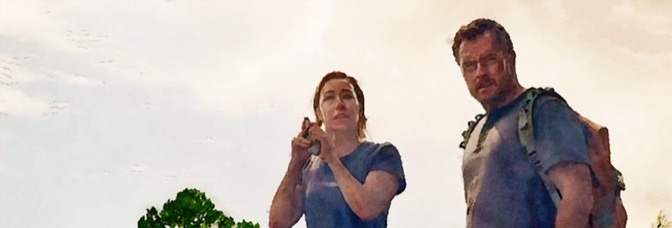
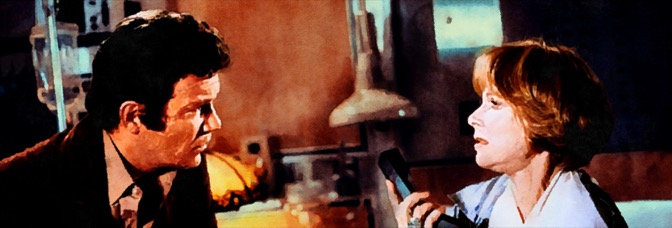
  • The Linguini Incident (1991, Robert Shepard)

    I watched most of The Linguini Incident’s 108-minute runtime waiting to go read the IMDb trivia page and discover what wealthy New Yorker bankrolled a movie for their kid to star in with Hollywood actors. Except there’s no such item on the trivia page, and it doesn’t appear to be the backstory to the film’s production. And now Linguini makes even less sense.

    The Linguini Incident takes until the third act to reveal what the title’s referencing, and then it skips through it because writers Tamar Brott and director Shepard couldn’t come up with a compelling story. So they punt. They punt on the “linguini incident” being at all relevant, which kind of carries for the film itself. There are multiple times Brott and Shepard’s script introduces character traits as reveals (not to mention a big twist with one of the main actors), and if it were an artlessly produced vanity project, not going back and fixing the movie would make sense. But if they’re doing Linguini straight? It’s bewildering what they miss.

    The film takes place mainly in a swank New York nightspot called “Dali” because the interiors are surreal. Sort of. There are some nods to surrealism like they had enough money to decorate a quarter of a wall, and then the rest of it was just a warehouse turned into a restaurant. It’s okay, Meatpacking District, whatever. Though it’s not supposed to be in a trendy area, at least not based on the street location for the entrance.

    All the staff wear silver latex-y outfits, except the owners, Andre Gregory and Buck Henry (who hack and ham their way through this thing like they’re trying to find the bottom of a pit). Gregory and Henry wear big band suits. Linguini really doesn’t understand how to make quirky happen. Director Shepard’s got fail after fail in the movie—and, arguably, the direction of Gregory and Henry’s even worse than not being able to make it quirky—but still. Gregory and Henry aren’t in it very much until the last third. They’re at the opening, they’re terrible, but then they go away. They have to come back for one of the reveals. Their third act spotlight takes the movie away from Rosanna Arquette, who’s been losing the picture to every costar after the first sequence—including at one point a rabbit—but it’s still a surprise.

    Okay, fine, the quirky. Let’s talk about the quirky. Outside the costumes and Arquette’s character—she’s a former Catskills tween entertainer trying to make her comeback as a Houdini-inspired escape artist, only she’s terrible at it—Shepard’s big idea for quirk is to have people utterly incapable of delivering comic lines deliver comic lines. Usually, Eszter Balint, who plays Arquette’s best friend and her ostensible rival for David Bowie’s affections. Also, Viveca Lindfors. Shepard does a terrible job directing Lindfors’s cameo as an antique shop owner. Bowie’s not quirky. He’s also better dressed when he’s not at work—he’s a bartender, Arquette’s a waitress—which seems weird, but then he also has really precise hair throughout. It’s like Bowie brought along his own costume designer and hair person, not trusting Linguini’s. I mean, rightly so. But still.

    Bowie needs to get married for a green card, and he’s got his sights set on hostess Marlee Matlin. Matlin’s one of the only well-timed comedic performances, James Avery’s the other; Avery’s got three lines and better timing than anyone else in the movie. You can almost see him ignoring Shepard’s direction and just doing the delivery well.

    So Matlin wants a pay-off to marry Bowie; he’s going to have to rob their place of work to get her the cash. But then Arquette wants to rob Gregory and Henry too so she can buy some memorabilia from Lindfors. No spoilers, but the robbery thing is a red herring to get the movie into its third act, which makes sense if you’re trying to appease some kid’s rich parents bankrolling your movie. For an actual motion picture where, presumably, at least one person read the script more than once… not so much.

    Linguini could be worse, to be sure. What if Bowie, Arquette, and Balint were as lousy as Gregory and Henry, for example. But they’re also not unlikable. It’s hard for them to be sympathetic because they’re absurd and poorly written, but Bowie’s got some energy. Arquette and Balint run out of it quickly—possibly because they’ve got no chemistry—but they aren’t energy vampires like many other cast members.

    The music—from Thomas Newman—is best described as half-ass, and the other technicals aren’t any better. Sonya Polonsky’s editing is terrible, Robert D. Yeoman’s photography is bland; however, given they’re working with Shepard’s direction, it’s not like it could be any other way. There’s no way to cut Shepard’s shots together any better, no way to light them better.

    A rewrite, a better director, some recasting, The Linguini Incident would still be missing a protagonist and a point. Shepard and Brott can’t commit on Arquette, Balint, or Bowie and hand it off to Gregory and Henry instead of making any decisions.

    It’s kind of incredible it’s comprehensible at all. Some of the acting’s terrible and whatnot—some of the writing—but it’s clearly all director Shepard’s fault.

  • The Stop Button Guide 54

    A collection of film responses discussing the career of French director, Jacques Tati, who made films such as MON ONCLE, PLAY TIME, and JOUR DE FETE, starring his comic character, Monsieur Hulot. Covers all of Tati's films as a director, as well as the short subjects he directed or starred in.