• Legends of Tomorrow (2016) s07e11 – Rage Against the Machines

    One of “Legends of Tomorrow”’s greatest strengths—which I don’t think started until the second season—is finding these absurd, literally comic book relationships between characters and then having actors ably essay them. For example, Olivia Swann has a subplot this episode where she’s being overprotective of Amy Louise Pemberton and showing it through rudeness to Pemberton. It starts as an aside—Swann’s seemingly unconscious of her behavior, so Adam Tsekhman confronts her about it. Tsekhman’s worried about girlfriend (not sure if they’re official actually, but close enough) Pemberton and thinks Swann’s doing it because Pemberton’s basically Swann’s child. Albeit one created through magic and possessing the intellect and memories of a time-traveling supercomputer.

    It’s fantastical and ludicrous, and all three actors do a superb job with it. It’s not about finding the mundane humanity in the extraordinary; it’s about humanity scaling up to extraordinary. It’s very cool and “Legends” is very good at it.

    The main plot still has the Legends trying to reclaim their time ship. Though it’s more like claim because it’s an evil universe version (sort of). They just don’t know the Robo-Legends are happy to kill every single thing in their way, which forces captain Caity Lotz to reassess and then reassess again after the next tragedy. And then again after the next tragedy. It’s a good episode for Lotz, who has to work through helplessness and futility, mostly on her own, because she’s keeping the futile aspect of it all from the team. Including wife Jes Macallan, who directs the episode and gets injured out onscreen early to give her that time.

    Instead, Lotz has to rely on Matt Ryan and Nick Zano for support, with Ryan concocting the eventual plan (though, really, anyone could’ve done it, just gives him something to do). And since everyone else is busy, it teams Zano and Lotz, the series’s longest-running regulars at this point. Some of the time, however, Zano’s playing his Robo-version, which has some obvious and desperate Terminator jokes; Zano’s able to make them work. They’re just silly enough, and he’s just funny enough.

    Shayan Sobhian gets a bunch to do as he’s got to infiltrate the evil version of the ship, though he quickly enlists Tala Ashe and Swann’s help. Ashe gets an absolutely phenomenal scene opposite “herself,” having a slapstick fight while no one can figure out which version to help. There’s a strange narrative gaffe—the human Ashe needs to hack a computer, but she’s just a social media megastar, not a hacker, so there are difficulties. She could’ve just brought in her alternate timeline self, who’s literally a hacker. But it’s okay. Ashe is great.

    The episode still doesn’t move things along as much as I’d have liked, but I’ve since discovered there are only thirteen episodes this season. They only have a couple more, which means they’re in fine shape. Well, outside the show not having been renewed yet.

    The cliffhanger’s excellent too. A little convenient but emotionally rending nonetheless.

  • Seobok (2021, Lee Yong-ju)

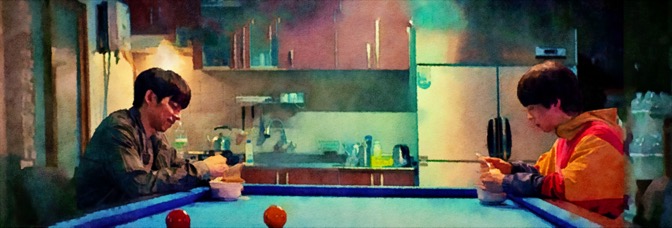
    The first act of Seobok is an espionage thriller (or the first act of one), the second act is a buddy action road picture, the third act is a Sturm und Drang superhero movie. Well, superhuman movie, at least.

    The best part is the second act when spy-who-tried-to-get-out-but-they-pull-him-back-in Gong Yoo is teaching new charge Park Bo-gum the ropes of the world. Park is the world’s first cloned human, except the scientists couldn’t resist genetically engineering him a bit, so he’s also got a decent set of mutant powers. Telekinesis mostly, which looks exactly like Magneto’s powers in a fight scene.

    Despite only being ten years old, Park looks twice the age. And we find out there are reasons he’s more verbose and intellectually capable than a tween. He’s awkward, constantly asking Gong questions with the Five Ws. Treacherous action scenes will fully pause so Park can ask Gong why he’s phrasing a statement a certain way. It’s not quite comic relief, but it does make for some amusing interchanges between the pair as they bond.

    Gong only took the job—from former boss, Jo Woo-jin—for selfish reasons, which he’s happy to tell Park about, then surprised when Park gets upset about it. Even though all of Park’s mortality lessons have come from “mom” Jang Young-nam, the lead scientist on his project. Her chief sidekick is Park Byeong-eun, who’s kind of a wiener, but is also Gong’s point of contact in the lab. So when it comes time to show off Park Bo-gum’s superpowers, Jang gets him to demonstrate, while Park Byeong-eun tells Gong what they’re seeing.

    Also involved with the cloning company is owner Kim Jae-gun, who doesn’t show up until halfway through the movie, despite having a bunch to do in the third act.

    The spy stuff is okay—Jo Yeong-wook’s music covers for there not being a lot of story with it, just mood and intensity. Gong and Jo have some history, which we find out about during one of the flashbacks, and their relationship bristles just enough without the details. Especially with the music. Music’s awesome.

    The flashbacks are not a particularly successful device. As something happens in the present action, the movie cuts to a pertinent flashback. Sometimes Gong is telling Park a story, sometimes Park is telling Gong, but writer and director Lee skips over giving the actors the chance to act out those moments, instead going full into flashback. There are no rules; there are other flashbacks just for viewer edification. The scenes themselves are usually compelling because Lee tries hard with them; even the worst flashbacks are well-directed sequences. But there are also some well-acted ones, particularly by Jang and Park, whose “mother and son” relationship only exists in those flashbacks.

    Seobok opens with one American actor, Paul Battle, not getting any lines, just emoting and being assassinated well, which made it seem like the film would avoid bad American performances. The plot involves the South Korean National Intelligence Service working with the CIA, so more Americans seem inevitable, but it’s a long time until Andrea Paciotto shows up for a terrible monologue. Paciotto’s real bad. But predictable.

    Lee Mo-gae’s photography is quite good; again, the scenes where Gong’s introducing Park to the world are the best, not just for actors, but the lighting as well. The world from Park’s perspective has a lot of personality.

    Given all the narrative constraints and contrivances, Seobok starts forecasting likely resolutions before the halfway point. But the ending’s worse than it needs to be. Lee goes for visually impressive bombastic instead of anything character motivated, which was where the film got its momentum.

    Despite having little to do in the third act, Gong’s a great lead. It’s a movie star-type role, and he excels. Park’s successfully essays the film’s most challenging part. Jang’s pretty good; her performance suffers because she’s barely in the movie. Sidekick Park Byeong-eun’s in it slightly more, and he’s good. Ditto Jo. Most of Seobok’s acting is solid.

    There’s just not much acting to do in the third act when the VFX take over. The end’s inevitable by the third act and obliviously so, which turns it into a race against time. Is the film going to make it to the finish before its charm runs out?

    It makes it. Barely. And leveraging a lot of that earlier momentum. Then the postscript’s okay, with good Jo music making it all more palatable.

    Thanks to Gong and Park and their buddy action road movie, Seobok’s got a lot of good moments. They add up to a mostly entertaining, occasionally too wanting, genre mishmash.

  • The Stop Button Guide 65

    A collection of film responses discussing the RAMBO movies, starring Sylvester Stallone as John Rambo, based on novels and characters by David Morrell, starting with the 1982 FIRST BLOOD directed by Ted Kotcheff and ending with the 2019 sequel, RAMBO: LAST BLOOD, directed by Stallone. Includes all the original movies.

  • The Color of Money (1986, Martin Scorsese)

    The Color of Money opens with a brief narration explaining the pool game variation nine-ball. Director Scorsese does the narration, which is the most interest he ever shows in the game of pool for the rest of the movie. The narration serves a straightforward purpose—it lets the audience know when to know the game is won. Later in the film, Paul Newman will give a brief history of nine-ball as the regular money game for pool players and pool hustlers, but that description’s for texture. Scorsese’s opening one is all the film needs.

    Scorsese loves shooting pool games; he, cinematographer Michael Ballhaus, and editor Thelma Schoonmaker go wild showing the games in progress; the cues hitting the balls, the balls moving across, sinking. But the game itself—which is the focus of all the characters’ attention—Scorsese’s got zero interest in it.

    The film is an extended-length sequel—twenty-five years before Money, Newman played the same character in The Hustler. Though there’s minimal connection between the films. I think they reference one of Newman’s shots from the original, and it gets briefly discussed, but there aren’t any other echoes. Because Newman’s playing the guy his Hustler character became in the twenty-five years since that picture.

    After he gave up playing pool, Newman became a liquor salesman. When or how he became a liquor salesman, how he ended up in Chicago mostly, sort of dating bartender and bar owner Helen Shaver, sort of stakehorsing John Turturro. Outside the vague intimations about his pasts with Shaver and Turturro, which both seem recent, the film doesn’t offer anything else about Newman’s past. Instead, the film’s got to create the character from near scratch. Or, at least, nothing more than a paragraph description. A short paragraph.

    Newman’s got to do it on his own, too, because Scorsese’s busy directing the hell out of the movie, and Richard Price’s script focuses on Newman’s proteges, Tom Cruise and Mary Elizabeth Mastrantonio. Cruise is the pool player who reminds Newman of his pre-Hustler self; Mastrantonio is Cruise’s girlfriend and “manager,” but she’s got her eyes on the angle just like Newman, and he sees an opportunity for the three of them to make some money.

    Now, if Color of Money were a real sequel to The Hustler, there’d be some very obvious analogues between the films because Hustler’s about what happens when your stakehorse ruins your life for his own benefit. The Color of Money is about what happens when… well, when your stakehorse screws up your life for no one’s benefit. After Scorsese’s nine-ball monologue and the opening titles, the first thing in the film is Newman trying to sell Shaver on some cheaper but smooth enough booze. He’s not hustling her; the stuff works so well when added to top-shelf booze, not even Newman can tell the difference, but he’s selling her something.

    And it’s going to turn out what Newman’s selling kids Cruise and Mastrantonio is different from what they think they’re buying. Feelings get hurt, suckers get hustled. The film bodily, jarringly forces the narrative distance from Cruise and Mastrantonio to Newman at a certain point, with Scorsese, Price, and Newman pushing forward to make it seem like a natural shift.

    Since the film’s kept the characters generally flat and let the actors bring all the drama, they get away with it for the most part. The first two-thirds of the film is great scenes followed by okay but occasionally dull scenes. The boring scenes are usually breathtakingly directed and consistently well-acted, so they’re passable, but the film has no rhythm to the character drama. The filmmakers know they won’t need it after a certain point, so why bother.

    Newman and Mastrantonio are great. Cruise is good. When she’s got something to do, Shaver’s good. The movie forgets about her too much—Newman calls her from the road, but we never see or hear Shaver’s side of the conversation. It’s a peculiar misstep in the film, which is otherwise very sure of all its moves. Sure, it showcases Newman’s performance, but it’s expressly telling and not showing.

    The film starts stumbling in the second act, when Cruise keeps pissing Newman off—Cruise is too arrogant—promises never to do it again, does it again. Money makes Cruise into a caricature while also giving Newman and Mastrantonio more depth. With an entirely different third act, it might work. With the one, the film’s got… well, if you’re going to have a half-baked resolution, do it with a great cast and outstanding filmmaking.

    There are some nice supporting performances, particularly Forest Whitaker, who’s got a showy scene. Then Bill Cobbs is occasionally around to show what may have happened to Newman if he hadn’t gotten into liquor sales.

    The Color of Money is way better than it should or needs to be. Not just Scorsese’s meticulous, glorious direction or Newman’s patient, simultaneously patient and agitated performance. Cruise and Mastrantonio are just as key to the overall success, with Mastrantonio tempering Cruise’s (intentional) excesses.

    Technically, the only things wrong with it are the so-so opening titles and then Robbie Robertson’s middling score. Scorsese leans on the music a lot too. Robertson’s got like one theme and uses it for everything, which really doesn’t work when you’ve got a movie about three very different characters, two different romances, pool hustling, and—with caveats—love of the game.

    It should’ve been twenty minutes shorter or twenty minutes longer. In the middle, The Color of Money just seems an unsteady, incomplete gesture. Price’s script has the places where it most definitely succeeds but also places where it most definitely does not.

    So it’s a mixed bag; a very, very good one.

  • The Stop Button Guide 64

    A critical episode guide discussing the all ten second first episodes of the Netflix streaming show, Dead to Me. The show stars Christina Applegate and Linda Cardellini as two grieving women who bond during therapy. It also stars James Marsden, Max Jenkins, Sam McCarthy, and Luke Roessler.

  • The Stop Button Guide 63

    A critical episode guide discussing the all nine first-season episodes of the HBO prestige drama, Watchmen, based on the DC comic book by Alan Moore and Dave Gibbons. The show stars Regina King, Hong Chau, Tim Blake Nelson, Yahya Abdul-Mateen II, Jeremy Irons, James Wolk, and Jean Smart.

  • The Stop Button Guide 62

    A critical episode guide discussing the all twenty-three fourth episodes of the 1990s NBC hit, Frasier. The show, starring Kelsey Grammer, David Hyde Pierce, Jane Leeves, John Mahoney, and Peri Gilpin, currently streams at Paramount+

  • The Stop Button Guide 61

    A critical episode guide discussing the all three seasons and twenty-eight episodes of the 2018 Netflix streaming show, Lost in Space, based on the television series created by Irwin Allen. The show stars Molly Parker, Toby Stephens, Maxwell Jenkins, Taylor Russell, Mina Sundwall, Ignacio Serricchio, and Parker Posey.

  • 709 Meridian – 1×4 – Halloween H20 (1998)

    Halloween H20 709 Meridian

    An audio commentary for the 1998 film, Halloween H20, directed by Steve Miner, starring Jamie Lee Curtis, Adam Arkin, Josh Hartnett, Michelle Williams, Adam Hann-Byrd, Jodi Lyn O'Keefe, Janet Leigh, and Joseph Gordon-Levitt.

    WHERE TO LISTEN

    Apple Podcasts
    Google Podcasts
    Spotify
    Stitcher
    RSS
  • Resident Alien (2021) s02e02 – The Wire

    This episode allays sophomore slump concerns, maybe completely.

    While there are still leftover plot threads from last episode and season, the show seems to be going full ahead with sheriff Corey Reynolds and deputy Elizabeth Bowen investigating Alan Tudyk as a serial killer. There’s a very funny moment when they confront Sara Tomko about it; however, she knows the easy explanation is he’s a formerly genocidal alien visitor but can’t tell.

    Reynolds and Bowen’s investigation is the B-plot, but the show plays it more like a comedy plotline, where they’ve got to pose as a married couple to find out details into Tudyk’s past. But Tudyk’s an entirely different “person” now; the revelations would surprise him just as much as anyone else, which sort of figures in.

    The A plot is Tudyk building a bunker so he and Tomko can hide out when his alien species sends someone else to nuke Earth. Tudyk’s now got a regular roomie—Nathan Fillion voicing a rescued-from-the-kitchen octopus (Fillion’s outstanding)—and so there’s constant banter. Tudyk still gets some great narration, including a lengthy bit during a diner scene with kids Judah Prehn and Gracelyn Awad Rinke. Will it ever stop being funny when Tudyk’s alien is super-shitty to ten-year-olds? Possibly, but probably not. It remains absolutely hilarious, especially since Rinke keeps up with Tudyk’s malarky, and then they both can laugh when Prehn’s behind.

    Tudyk’s got to use his Starman balls to build the bunker. Prehn’s stolen one, and it’s having odd effects, but that resolution’s not in this episode. It does create some good rancor between Tudyk and Prehn, which Rinke doesn’t understand because Prehn’s lying to her about stealing the space ball too. The balls appear to have the same rules as Starman: The Movie and maybe “The TV Show,” where Tudyk can use it once to do something seemingly magical, but really it’s alien technology. One he uses to build the bunker, the other he saves for something else. There are four total, so there are two left. “Resident Alien”’s not wasting its time moving through them either.

    After an awkward interaction with Tudyk, Gary Farmer advises Tomko she needs to get Tudyk caring about more humans than just her. The A plot then turns into Tudyk trying to bond with the locals, including a poker game against Reynolds, mayor Levi Fiehler (whose absurdist kinky sex subplot with wife Meredith Garretson gets back-burnered, but they leave the flame on), and some other folks, including nurse Diana Bang. Bang’s been in the show since the pilot or soon after, usually giving Tomko crap at the medical clinic where they work, but now she’s loose amongst more cast, and she’s incredible.

    Besides being around for Tudyk’s bunker-building plot (though she knows nothing about it), Tomko gets the C plot, which is just she and Alice Wetterlund being best friends and figuring out how to support one another. Even though Tomko can’t dump all the secrets on Wetterlund (only dad Farmer also knows Tudyk’s an alien, well, plus the kids), the scenes give Tomko a space to decompress from the rest of her adventures.

    Sarah Beckett gets the script credit. It’s excellent; lots of good jokes for everyone and peculiar character moments for Tudyk. Robert Duncan McNeill’s directing again and doing well. There are still some very CGI-looking backdrops, but the show’s also got an extended mountain lake boating sequence, which widens the scope for a bit.

    And the cliffhanger’s good.

    “Resident Alien”’s fantastic as ever.

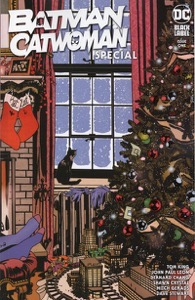
  • Batman/Catwoman Special (2022) #1

    Bcs2022

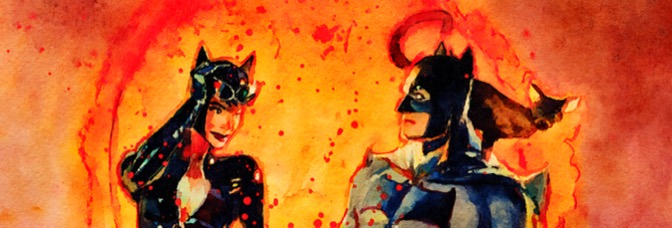
    I’m a sucker for Catwoman and Batman as marrieds stories. I blame that Earth-2 story in Greatest Batman Stories Ever Told. The feature in Batman/Catwoman Special is one of those stories. It’s got a gimmick—it follows Selina Kyle through life but only on Christmas Day. And it’s Elseworlds Selina Kyle. Or Black Label Selina Kyle.

    The longest scene comes at the beginning, seven-year-old Selina in the Wayne orphanage making a Christmas present for her only friend, similarly aged Bruce Wayne, in the benefactors’ portrait. The scene’s a little forced—writer Tom King gives Selina a fifth-grade reading level so her monologue can be more verbose—but artist John Paul Leon finds the inherent cuteness to it.

    He then toggles to the viciousness of an orphanage nun.

    Leon passed away while working on the Special; he finished the first thirteen pages and got through breakdowns up to page twenty. Bernard Chang and Shawn Crystal do the art from the breakdowns (the issue includes the breakdowns, so you can see what they’re working from), then Mitch Gerards takes over for the story’s second half. There are no more multi-page Christmases after the first one. Instead, it’s every year or a few in Selina’s life as of Christmas Day.

    There are some fun Batman adventures; some are just for the smile (Selina and Joker’s interactions over the years as she changes from Rogue to ally). Some are a little deeper, like one where Selina calls Batman out for exploiting her and the inherent inequity of their romance; for a page, it seems like Taylor’s going to take the book somewhere very interesting. He doesn’t. In fact, he gives Batman an accountability pass overall, even after Selina brings it up multiple times.

    Kind of amazing Batman’s never got to learn a damn thing, even as we watch him age sixty years.

    There’s a bunch the comic skips, like the Robins and Alfred’s inevitable death at some point. Because there doesn’t need to be character development if you’re just doing the one-page gimmick.

    Still, it’s an affecting main story.

    Then there are a bunch of pin-ups and a few written homages in Leon’s memory. Plus two reprint Leon Batman-related stories. There’s a Batman Black and White about the Riddler being a Lewis Carroll fanatic. Leon’s art is fine; Walt Simonson’s writing is not.

    The second reprint is from something called DC’s Crimes of Passion. It’s a Question story, written by Ram V. There was some point Question didn’t read like PG-13 Rorschach, right? Art’s fine. Leon puts in the work.

    If you’re a classic Catwoman and Batman shipper, the feature story is worth a look, even if it’s not entirely successful.

    The Leon pages are the best, then the Chang and Crystal ones. The Gerards ones are fine but very much just “Batman house style.” Morbid or not—I mean, the comic invites it by its very existence: You can’t help but wonder how much better Leon would’ve realized the script than Gerards. Could he have taken it from “worth a look” to Greatest? I mean, the script’s got a lot of problems, but maybe. The way Leon can sell that kid’s monologue is exceptional, and his initial pages get the Special’s momentum going, which continues until about halfway through the Gerards pages.

    I need to note the momentum doesn’t fall off because of Gerards; it falls off because of the script. Leon just was able to keep ahead of the writing better.

    It also might’ve played better with the pin-up artists doing a page a year. The story lends itself to a Many Hands approach.

    So, as is, okay and interesting. Not a failure and only a mild disappointment. But clearly could’ve been better.

  • The Nice Guys (2016, Shane Black)

    I recently joked to a friend I wanted to claim “audacity” as a complementary phrase, but just for Stanley Kubrick. Something simple like, “Stanley Kubrick: Audacity can be a compliment.” But then she called me on it being gross.

    The Nice Guys is basically, “Shane Black: Humility is for [slur we’re allowed to use because the movie’s set in 1978].” It’s never terrible, though Black’s got his usual “no, but, maybe you’re misogynistic for saying this scene or characterization is misogynist,” which gets exasperating. Especially since it’s in the Boogie Nights riff part of the movie. Nice Guys is a pseudo-noir and mostly a series of lifts from other movies, including ones Black wrote for other directors.

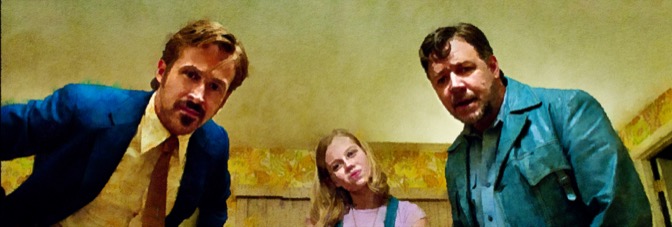
    The film’s heroes, The Nice Guys, are soulful bruiser Russell Crowe, who hates his comically evil ex-wife and protects young women from predators, and sad drunk private investigator Ryan Gosling. Except the de facto protagonist of the movie is Angourie Rice, playing Gosling’s daughter. Since she’s a thirteen-year-old in 1978 L.A., tagging along on her dad’s job to porn parties, hunted by vicious hitmen, she’s always in danger, and the audience knows it. Gosling and Crowe forget about it at the drop of a hat, but the film’s always about reminding terrible things could happen to Rice anytime. So when she’s not around, it just means she might be in danger, which focuses the film on her.

    Of all the things Black didn’t think to rip off… it’d be a fine “Veronica Mars” riff.

    Gosling is bilking client Lois Smith (the film’s most successful cameo but only because the others mostly stink); she’s convinced her pornstar granddaughter is alive, even though the movie showed her dying in the first scene. You know, kind of like Lethal Weapon 1.

    He’s actually doing some investigating—which the movie never shows and instead uses as gotchas from Gosling to other characters—and is pretty sure Smith really saw Margaret Qualley. Qualley knows Gosling is after her, so she hires Crowe to beat him up.

    Then the actual bad guys looking for Qualley—an okay but wasted Keith David and an annoying Beau Knapp—go after Crowe, so he has to team up with Gosling (and Rice).

    There are various chase scenes, drunk comedy scenes, objectified young women (it’s the seventies so it’s okay), fight scenes, kidnappings, and so on. At one point, Knapp warns the real villain of the movie isn’t even in town yet, letting Crowe know he’s got a big fight in the third act.

    At some point, Nice Guys becomes just a period-action comedy instead of something else with those themes. No one gets an actual character arc, just the potential for a sequel.

    Both Crowe and Gosling seem like they’re playing sidekick to the star. Of the two… Crowe’s better most of the time. Rice is fine. Her performance is more successful thanks to script and blocking, but she’s charming enough.

    As the film progresses, there’s more supporting cast introduced. Kim Basinger, Matt Bomer, Yaya DaCosta. Basinger’s terrible and derails the movie. Boomer’s terrible, but because of the script and the directing, he’s just aboard while it derails. DaCosta’s got a thin part, but she’s good.

    Technically, Nice Guys is solid. Black’s direction is fine—he doesn’t have a single well-directed action sequence, though, which is a problem—Philippe Rousselot’s photography is good, John Ottman and David Buckley’s music always seems like it’s just about to get good and never does. The visual stars are obviously production designer Richard Bridgland and costume designer Kym Barrett’s recreation of seventies L.A. In some ways, it’s more impressive how much they’re able to recreate, not their actual designs.

    Nice Guys is fine. It’s got a whole bunch of problems, and all of them are Black’s, but it’s fine. It’s better than the Shane Black movies it rips off but not better than the other movies it rips off.

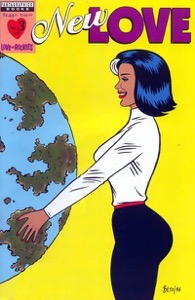
  • New Love (1996) #3

    New Love #3

    Creator Gilbert Hernandez starts the issue with the “Letters From Venus” entry, the second feature (as in the second half of a double feature). At six pages, it’s the second-longest story. Besides the A feature, “Venus” is the only other story longer than a page. Beto’s got two and a half other single-page strips in the issue. The half because one of the stories is a montage sequence.

    “Venus,” both the story and the character, introduces the cast of characters to the issue. Venus won’t be around for most of the main feature (for good reasons, I’ll mention in a moment), but her observations kick everything off for the comic. Her story starts with Sergio—Pipo’s football star son—arriving to drive Venus home. Venus has been hanging out at Pipo’s for the day, but she’s too busy to take her home. Of course, once we find out what Pipo’s too busy doing, it seems like she could’ve run the kid home, but whatever.

    Instead, heartthrob Sergio will take her home; he just needs to stop along the way a few times. The first time is in a bad neighborhood, the second time is with some New Age goons, the third ties back to Pipo, then finally Venus gets home. As usual, Beto does a fantastic job using Venus as the protagonist and narrator, and the story’s chill. It’s got some “growing up” moments–like realizing “just because they’re nice to you” white ladies can be garbage racists—and it’s gritty but genial.

    Then comes two of the one-pagers. First, we get a recap of Doralis’s popular television show—I wonder how New Love read without having read Love and Rockets; Doralis’s rise to TV fame was a significant subplot in that comic. Then the next one-page strip is a scene with Fritz and Petra hanging out with Doralis and realizing her TV show isn’t just a variety dance show anymore, but sort of an investigative reporting dance variety show now. It’s a nice strip, with Beto extending the traditional comic strip beats out to nine panels.

    The feature story is called “Mama’s Boy” and is about Sergio and Pipo. And what people think of Sergio and Pipo, with Beto using documentary interviews as a framing device. Along the way, we find out Sergio’s side of the opening “Venus” story, but Beto also plays with the timeline a bit. For instance, the opening story has Sergio interacting with Fritz and Petra, but this feature story does a lot to retroactively inform those interactions.

    Beto maintains a triple-layered narrative throughout the story (thirteen pages but really twelve and a cover), occasionally dipping into a fourth flashback layer. They all progress chronologically, with it eventually becoming clear the “Venus” story takes place in between one of them. There’s more character work for Pipo than Sergio; Sergio’s got to remain somewhat obtuse not to give away the narrative device too soon.

    It’s also a really sexual story, with Beto using gag nudity for emphasis. But basically, everyone’s got the uncontrollable hots for Sergio and Pipo, and they’re mostly happy to put out.

    But there’s also a subplot about Pipo vindictively targeting a TV critic who doesn’t like her show, which might give the most guidance to sorting out the three action streams and how they fit with each other.

    The story’s more about Beto’s inventive plotting and less about the characters, but it’s still quite good. It’s just not as effective as the “Letters From Venus,” which has the more sympathetic protagonist. There’s nothing unsympathetic about Sergio; he’s just beefcake.

    The issue doesn’t end with his story, either. Beto brings it back for a one-pager with Venus and her family (mom Petra, dad, little brother), waiting for Fritz and Doralis to come over. Nine panels and it ties back to most of the stories in the issue, including the one-pagers, as they inform Venus’s perception of Doralis compared to the adults’ take. It’s a really nice way to finish the issue, which otherwise would read like a somewhat random anthology. It’d just Luba’s Friends and Family without the closer; with it, the issue does encapsulate the opening, Sergio-related theme.

    Reading the issue is kind of just like reading Love and Rockets, which is also completely wonderful.

  • Lost in Space (2018) s03e08 – Trust

    Remake show creators Matt Sazama and Burk Sharpless are back with the script credit for the series finale. It’s an entirely acceptable conclusion, with competent but unambitious direction from Jabbar Raisani; most plot threads get resolved. However, the big one—Toby Stephens and Russell Hornsby playing “My Two Dads” with Taylor Russell—gets rushed through while raising the question about Hornsby’s age difference to Molly Parker. If he went into cryosleep twenty years ago and just woke up, he was in his mid-forties when he fathered Russell; Parker was in her twenties. But they already established they were in astronaut school together, so maybe she was just better at it than him?

    Doesn’t matter.

    There are big resolutions for Mina Sundwall, Maxwell Jenkins, and Parker Posey. Everyone else—including Russell—has smaller, mundane ones. Actually, almost entirely professional ones. Sundwall and Posey get the most character development. Jenkins gets another chance to do his messiah arc, with “Lost in Space” leaning in on as many last-minute deus ex machinas as it can fit in the episode.

    It’s too bad there wasn’t more for Russell since it was her show for the first half of the season, and no one replaced her; things just got busy.

    The evil robots attack, and thanks to some entirely predictable and very convenient plot developments, there’s both a full robot battle. The action focuses on the kids—Sazama and Sharpless’s recurring theme for these finales is putting as many children in immediate danger as possible—but the special effects work is all solid.

    Speaking of the robots, the show cops out once and for all on the “humans enslaved intelligent beings” story thread.

    It’s a better episode for Posey and Sundwall than anyone else; Posey because she gets an actual character arc, Sundwall because she gets to run the episode for a good while. They take it away from her to focus on Jenkins, having to get in a last-minute appeal to the tween male demographic.

    Parker’s big moment this episode involves a continuity-lite recollection of her marriage to Stephens (forgetting she spent the first season and however much time before very angry with him). Stephens has even less, playing second-fiddle in his scenes with Hornsby.

    With a stronger show bible, maybe a shorter second season, and a different male lead—sorry, out of the twenty-eight episodes, there’s probably two Stephens is good in—“Lost in Space” would’ve been more successful. As is, it’s much better than expected. Though Parker and Posey both have their moments, Russell and Ignacio Serricchio are the standout performers. And Sundwall and Jenkins are about as good as can be expected for whiney super-kids who whine they’re not super enough. They’re always sympathetic.

    It’s a decent show and a nice sci-fi adventure production, albeit highly derivative.

  • Lost in Space (2018) s03e07 – Contingencies on Contingencies

    This episode has such an exhausting amount of Toby Stephens being macho someone calls him on it to his face. Stephens is convinced the robot—now on Alpha Centauri with the humans—has gone rogue. Raza Jaffrey, who points out he almost stole a space-camper and abandoned over a hundred people to the elements, tells him to take it down a notch and think it through.

    Complicating the issue isn’t the robot’s guilt or innocence, it’s his “victim.” Douglas Hodge, the guy who enslaved the alien robot, lied to the people of Earth (and the colony), tried to kill a bunch of mechanics, and so on; he’s got the only key to saving the colony from the imminent alien invasion. If this guy had died or been incarcerated after his first blatant act of murderous villainy, the show could’ve been a season shorter. For all his macho posturing, Stephens never held him to account for trying to kill his kids or whatever either.

    Instead, Stephens wants to take it out on the robot. If they just included the subtext about the robot being a better dad than Stephens, it might be something; the whole family is like, “Maybe the robot’s not a bad guy,” and Stephens telling them he’s smarter. Though “Lost in Space” is always about Stephens never being smarter.

    Too much Stephens and too much green screen hurt the episode, which is otherwise a fine Leslie Hope-directed outing. Easily her worst episode, but not her fault and still better than most.

    The episode begins with the Robinsons arriving at Alpha Centauri to discover… the alien robots haven’t beaten them there. Everything’s jimdandy, other than Mina Sundwall having to decide between nerdy poet Ajay Friese and bro Charles Vandervaart. But all the stakes are otherwise chill. Even Parker Posey just gets to get into an SUV and autopilot off to her own little plot of land.

    At least until the robot goes rogue and Sundwall and Taylor Russell decide Stephens is wrong, so they go looking for it, bringing along Ignacio Serricchio. They’ve got a race against time, race against Stephens plot going, while Molly Parker and Russell Hornsby try to figure out how to prepare the colony for an eventual attack. We get some backstory on Parker and Hornsby. It’s relatively boring stuff, which tracks since it never should’ve been a plot point in the first couple seasons—mixed-race Russell and her mostly ginger family. The biggest question gets resolved with an institutional cop-out to alleviate responsibility or accountability from everyone. “Space” really has no idea what to do with its long-running story arcs.

    Eventually, there’s some Rock’ Em Sock’ Em robot action and a deluded callback to the first episode for Russell, plus potential character development for Sundwall. Though the script—credited to Zack Estrin—has a chance to give her the agency for it and instead transfers it to Friese, which could be better.

    But it’s a compelling episode. Way too much hinges on believing Stephens is a brash, thoughtless asshole, but what can you do.

  • Lost in Space (2018) s03e06 – Final Transmission

    Yet another short episode. And it’s got a huge dramatic beat in the latter half, but not for the cliffhanger. In fact, everything after the dramatic beat just serves to reduce the impact of that beat. It plays very awkwardly, which isn’t director Julian Holmes’s fault, just the script’s. Katherine Collins gets the credit; as per her usual, there’s a lousy sappy monologue from one of the cast members. It’s worse than usual because it’s not in dialogue but pre-recorded monologue, so they’re trying to edit to match.

    Despite crashing on a bog planet—Dagobah without matte paintings—for once, the space-camper is almost ready for flight. They just need to clean things up and wait for Ignacio Serricchio to arrive. He’s busy walking with his pet chicken in a long shot. Maxwell Jenkins and Toby Stephens go up top to watch him approach and have a painful conversation about Jenkins getting older. I think he’s as tall as Stephens or taller, but I don’t remember them mentioning it.

    There’s a better check-up scene between Molly Parker and Parker Posey, harkening back to their original bonding scenes in the first season. It’s okay, but a reminder the show never really gave the two of them anything to do together.

    Then we get some earth-shattering news (well, not really) about how the Cylons found Earth in the first place (and when), and it changes everything, meaning Jenkins is going to have to go out and have a showdown with the alien boss. There are a handful more revelations (“Lost in Space” really does go with “It’s okay to enslave artificial beings”) before the huge dramatic beat and fallout. The fallout is everyone scrambling to get to the next episode so they can have their narrative stakes and eat them too.

    The episode features Stephens’s worst acting on the show (I’d say so far, but it’s almost over, right… this season’s it). A lot of it is the script’s fault, though the show has never written Stephens’s character to suit the performance, so what can you really do about it. We’re in the final three episodes, not much.

    What’s so much worse about it is when the show acknowledges the deficiency—Parker Posey comments on it this time—only it never improves.

    There’s also some middling acting from Jenkins, but it’s big swing stuff—embracing his Messianic possibilities—so it’s easier to let it slide. The Stephens stuff isn’t even disappointing; instead exasperating and tedious.

    The episode resolves one of the show’s longest-running “mythology” arcs, and it’s the weakest weak sauce. You’d think with so much activity on this arc, they’d have something better planned for the finish.

  • New Love (1996) #2

    It’s a very religious issue. Creator Gilbert Hernandez does four saint pin-ups, each with a text paragraph describing their lives and sainthood. Beto calls the series “A Gallery of Humanitarians and Beloved Martyrs” and leans so heavily into it, the angry atheist protagonist of the final feature story is a big surprise. The pin-ups are the issue’s only recurring element, and they set some of the mood, which Beto further explicates with the final pin-up’s saint and story placement.

    But while there’s religiosity at play—including in the story about some prehistoric humans (well, with some caveats)—Beto also includes some secular humanitarians. The first strip of the issue is about the iron lung; in a nine-panel grid (minus one for the title), Beto establishes the medical need for the device, how it works, problems in its development, and then the eventual success. It’s history comics in a page. Very impressive stuff and more successful than the later “Beto’s Notes” version of Moby Dick, which is a fine strip, but the iron lung strip is didactic; the Moby Dick one is instead a neat trick.

    The issue has three feature stories.

    First, there’s another “Letters from Venus,” which has Venus learning more about her parents—and how other people, specifically Aunt Fritz, see them. There’s also a nice “growing up” anecdote in there, albeit one with a lot more family drama than it’d be if Venus’s mom weren’t a Love and Rockets character.

    It also takes place just after life on Mars has been discovered, something Venus muses about in her thought balloons as she roams around a festival where everyone’s in a costume. It’ll be interesting to see if Beto’s including that otherworldly detail as a throwaway or if it’ll actually figure into the strip going forward.

    Beto does an eight-panel, two-by-four layout on most pages. He’s got fantastic pacing, and Venus is a great narrator. The art does require a lot of attention. Beto’s got no time for stragglers, with the big twist being a tiny movement in one of the panels.

    It’s quite good.

    And in no way prepares for the next story, the prehistoric human one. Specifically prehistoric men. Except they know about things like brain chemistry—without understanding it, they just know about it—and their world is full of strange creatures, like giant teddy bears and model airplane-shaped birds. Two guys are jealous of another’s fishing and hunting prowess; they also aren’t thrilled with him because he’s from another tribe.

    The story’s thoughtfully paced and somewhat gruesome. There’s religiosity to it, although just at the base level. As a parable, it’s excellent.

    The last story is where all the built-up religion comes out. The story is set in a toy land, where a jack in the box and his music box ballerina argue about his bad mood. The jack in the box, Bolo Cereal, is sick of racist, misogynist Republicans who claim they’re Christian without following any of Christ’s teachings. So wind-up ballerina girlfriend Fléchette suggests they go to church and see if it makes Bolo feel any better.

    It does not and leads to a tragic, then mildly baffling, conclusion. The art’s fantastic on the story, but the art’s fantastic on the entire issue. There’s such a wide range of settings—modern-day California, prehistoric whatever, toy land—with Beto telling each story a different way, it ends up just being a showcase of Beto’s varied talents.

    The Venus story could’ve been longer—but only because Venus is such a good protagonist—otherwise, there’s nothing to gripe about. New Love #2 is great comics.

  • Lost in Space (2018) s03e05 – Stuck

    It’s another short episode, but it’s also a Leslie Hope-directed episode, and she does not disappoint. Even saddled with flashbacks to when Taylor Russell was a baby, and Molly Parker has taken her home to mom Colleen Winton’s farm to raise her. It’s where we find out Parker gave up being an astronaut to have Russell and, even though most of their relationship development’s in the flashback, it’s a reasonably good episode for the two of them.

    The Robinsons’ space-camper has crashed on an unknown world, having diverted away from the Alpha Centauri colony at the last minute to keep the evil robots from finding it. Everyone except Parker and Russell could eject, but their seats malfunctioned. So the episode’s the two of them in danger—not only is Parker sitting on a seat of dynamite, they’re sinking into alien goop, and the engines are offline. I wonder how many times the engines work on “Lost in Space.” I feel like it’s less than a third of the time.

    Anyway.

    The rest of the cast is paired off on adventures, even if it’s just Ignacio Serricchio and his pet chicken. The pet chicken sequences are outstanding, with Hope finding humor in the absurd dangers.

    Toby Stephens and Mina Sundwall go looking for the robot together, bonding along the way. It’s a good sequence for Sundwall, not so good for Stephens. It’s probably Stephens’s best work this season so far, but—once again—it relies on his character not actually being anywhere near as with it as he’d need to be to survive so long “Lost in Space.”

    Maxwell Jenkins and Parker Posey have the least amount of material, which has Jenkins trying to recover his backpack from a precarious hanging situation while Posey yells at him to hurry up. There’s a little bit of character work for Posey, who’s on—if not a redemption arc—at least a considered failed redemption arc. Though it’s a little weird her confidant is a kid. They don’t quite make that angle work.

    But the stuff with Russell and Parker is where the episode excels, thanks to Hope, Russell, and Parker. While “Lost in Space” isn’t really anyone’s showcase, Russell’s gotten the best arc throughout the series, with this episode just drawing attention to the differences in her story and the other kids’. Jenkins has his tween boy adventurer thing, which isn’t character development, and then Sundwall’s got a love triangle. Unfortunately, that love triangle is thinner than the relationship stuff she had before because they can reduce it to tropes.

    It’s so well-done, it makes up for the finale’s solution being something they could’ve done the entire time and even talked about doing. They just had to put it off for dramatic tension’s sake.

    Hope’s direction is “Space”'s greatest discovery.

  • Lost in Space (2018) s03e04 – Northing Left Behind

    So far, this season has had fifty-ish-minute episodes. This episode’s only forty. It’s got a couple things to do, and it does them expediently, which makes it a bridging episode of sorts.

    While the kids are safely in spaceflight, thanks to Taylor Russell and Russell Hornsby, their parents—half a galaxy away or whatever—are in more danger than before because the evil robots know where they’ve got their spaceships hidden. So it’s going to be a countdown to disaster episode for Molly Parker and Toby Stephens. They’re out of time (again) and have to prepare for imminent destruction (again), but they’re going to make sure the robots can’t get to their kids (again). Or to the Alpha Centauri colony. They’ve got to destroy all their records.

    It ends up being a reasonably amusing Ignacio Serricchio sequence, where he gets to pal around with former boss and now subordinate and good friend Tattiawna Jones. We also get to see some other familiar faces, though not Cary-Hiroyuki Tagawa, who I think got killed off offscreen so they wouldn’t have to bring him back.

    Except the evil robots aren’t just satisfied destroying the adults, they want to get rid of the kids too, so when the kids get ready to fly to safety, an evil robot possesses their robot. Again, so convenient the robots have the technology to communicate across galaxies in real-time with no lag. It’d be such a pain for the narrative if they couldn’t.

    But even if the kids do go save the adults, they’re still no match for the Cylon fleet, which means they’re going to need a great plan to succeed. After some character development masquerading as escalating action for Russell and Hornsby, Maxwell Jenkins takes the lead on the “saving the day” stuff. Because Jenkins isn’t just trying to save the adults, he’s also trying to figure out how he and his robot can go off on their secret mission.

    Despite the stakes being weird—the adults burning documents like they’re expecting the SEC inspectors to serve them a warrant, the kids bickering like a Disney after-school special—once the episode gets going with the sci-fi action suspense, it does pretty well. Julian Holmes’s direction is outstanding on those sequences.

    There are some decent reuniting moments, and the cliffhanger setup is appropriately harrowing, even if it does just get the show right back to its… end of season one ground situation? Makes you wish someone would just say, “Oh, no, we’re lost in space… again!”

    Another notable item—there’s finally a gay couple in “Lost in Space.” They don’t get names, they don’t get dialogue, but they do get to embrace each other, waiting for the robots to blast them out of the sky, just like all the straights in a montage sequence.

  • Resident Alien (2021) s02e01 – Old Friends

    It’s been nine months since the first season finale of “Resident Alien” aired, and this episode picks up the following day. So, long enough I’ve forgotten who was doing what and where; other than Alan Tudyk finally free of Earth and his evil pursuers, headed into the stars, on his way home.

    Only to discover kid nemesis turned pal Judah Prehn stowed away.

    This season premiere starts with Prehn back home with mom Meredith Garretson and dad Levi Fiehler, who successfully defeated assassins last time and are now very into each other. Obnoxiously kinky on main, basically. Sara Tomko and Prehn have a great moment uncomfortably watching Garretson and Fiehler canoodle, with many other cast members getting similarly great moments throughout the episode.

    Prehn knows where the spaceship crash-landed but not where Tudyk has ended up. The audience, however, knows he’s in the hospital somewhere (a nearby town, it turns out), and he’s got amnesia. But only of his cover story; he’s more than happy to tell everyone he’s an alien come to Earth to decimate the population.

    The main action is getting Tudyk back home and back to normal—it’s a bumpy road to recovery, including a diversion into pretending he’s Jerry Orbach’s Lennie Briscoe character from “Law & Order Prime,” which is hilarious. There are several subplots, including Tomko and best friend Alice Wetterlund checking in after Wetterlund found out town teen Kaylayla Raine is Tomko’s kid. It’s season finale resolve material held over for the next season premiere, but it’s what happens when you’ve got big cliffhangers.

    But the biggest subplot is sheriff Corey Reynolds’s investigation into Tudyk; he and deputy Elizabeth Bowen don’t think he’s an alien monster, of course, just a serial killer.

    Lots of great acting. Tudyk gets numerous showcases thanks to amnesia, then Tomko and Reynolds both get subtle and profound arcs. The stuff with Garretson and Fiehler’s hilarious. Also really funny—as always—is Gracelyn Awad Rinke as Prehn’s friend. Rinke’s actually superfluous, but she’s so delightful it doesn’t matter. Kind of like how Gary Farmer seems a tad extra—very, very welcome, but he’s mostly around for the one-liners, even when he and Tudyk have a nice bonding moment.

    “Resident Alien” doesn’t seem to be suffering any sophomore slump—there’s a little more CGI composite shots than before, presumably because of COVID-19 restrictions—and the cast is strong as before. Especially Reynolds. Tudyk, of course, but it’s his show. Reynolds has always quietly walked off with “Alien,” but even more now, since he gets to share his scenes with Bowen instead of crowding her out (due to character hubris, not Reynolds’s performance).

    The episode—script credit to series creator Chris Sheridan, directed by Robert Duncan McNeill—also makes sure to check in on the friendship between Tudyk and Tomko after the latest developments have settled, including her knowing he’s a genocidal alien invader.

    Last thing—great cameo from Nathan Fillion. He only does a voice, but his timing opposite Tudyk’s so outstanding it’s an even better performance if they recorded asynchronously.

    Season two’s off to a fine start.

  • Lost in Space (2018) s03e03 – The New Guy

    While I’m sure they didn’t bring in Russell Hornsby—as Taylor Russell’s long-lost (in space) biological father—to offset Toby Stephens’s energy vampiring, but Hornsby does have that effect. The nicest “Lost in Space” has been in ages is when Mina Sundwall, being introduced to Hornsby, gives him a hug.

    Hornsby will have an arc, mostly with Russell, about being a real spaceship captain and not one who lets the computer fly for him. They’re prepping the ship for take-off, and he can’t stop talking about the importance of real experience over autopilot, even an autopilot programmed by Molly Parker. The show’s cagey about Parker and Hornsby’s history, allowing for a backstory bombshell in the resolution. Well, as much as a twenty-year-old, mostly inconsequential reveal can be a bombshell.

    Parker spends the episode with Stephens, Ignacio Serricchio, and their robot. Regular robot is just helping get the ship ready for take-off, but the new robot (the one the humans enslaved to fly them across the galaxy) is helping Parker and company get an alien engine to save the day.

    Stephens doesn’t trust the robot (what with the enslaving thing), while Serricchio tries humorously to bond with it, and Parker tries to form a meaningful connection. That plot is an action-thriller one, involving planning, a chase sequence, and last-minute twists and turns. The CGI is a little off—not the action, but the rock formations where Parker and the robot hang out (down the block from Kirk and the Gorn). The director, Sarah Boyd, directs for better scenery than Parker ends up with. It’s okay—thanks to a good twist—but ought to be better.

    It’s not all the CGI’s fault. Mopey Stephens drains the energy out of scenes.

    Meanwhile, Maxwell Jenkins has a sci-fi Indiana Jones plot in the alien ruins, complete with Indiana Jones-esque music. Sure, it’s more like a Kingdom of the Crystal Skull spin-off than Raiders and kind of tedious for the payoff—he finds a giant space pipe organ and plays tones while he ought to be getting ready to get on the spaceship.

    His delay does give Parker Posey something to do, in this case, ominously threaten Russell because the kids are planning on putting adult Posey in cryosleep for take-off. They’d rather have Hornsby be the awake adult, sucking up extra oxygen. Posey’s got a decent arc about not wanting to be put under since she’s kind of a fugitive. The writing on it’s not great, but Posey’s panic is good. Plus, it all ties up neatly with Jenkins needing a co-conspirator.

    The tense action finale—space action John Williams riffs, not space grandeur John Williams riffs—has a lot of emotional impact, which is cool. But, on the other hand, the hard cliffhanger is less effective because it’s a wheel-spinner.

    The episode’s better throughout than its conclusion, with some definite highs.

  • Legends of Tomorrow (2016) s07e10 – The Fixed Point

    This episode’s so well-paced when the surprise guest star appears, I thought it was the end of the episode cliffhanger. Nope, there’s time for another action beat and setting up for next time.

    The team goes back to June 28, 1914, intending to save Franz Ferdinand from the assassin, throwing the time line into turmoil so their evil doppelgängers have to fix it. That fixing will require the ship be temporarily without a crew and able to be taken back. Except when Caity Lotz tries to stop the assassins, a mysterious stranger (a well-cast Timothy Webber) takes her aside and explains she’s got to get in line.

    Webber’s got a bar for time travelers who are all out to prevent WWI. You get a ticket to try, then everyone watches on a constantly changing news reel. Most people who attempt it die immediately; Lotz has got her alien recovery powers so presumably she’ll be able to survive a failed attempt. But, they still need her to succeed eventually.

    That part of the episode is kind of Groundhog Day in 1914 Sarajevo, with Lotz trying and having to repeat after making corrections. They make a great Edge of Tomorrow reference, with Shayan Sobhian telling Olivia Swann they’ll have to watch it. Sobhian and Swann are in the episode a bunch but without anything to do but flirt. They’re not dating yet, they’re just romantically friendly.

    Their pairing off leaves Tala Ashe and Lisseth Chavez needing a new bestie to spend the episode with. The Ashe and Chavez subplot starts funny and ends profoundly touching. Similarly, Jes Macallan and Matt Ryan have an arc where Macallan’s trying to get Ryan to see past his religiosity and religiously fueled self-loathing (he’s gay). Ashe and Chavez have the better plot, but it’s less ambitious. The one with Ryan and Macallan forces the issue, with Macallan unrelenting. It’s real good.

    The episode also allows Amy Louise Pemberton and Adam Tsekhman to be cute together, when appropriate (they don’t have a lot to do throughout). And Nick Zano gets a number of good comedy scenes.

    Former series star Maisie Richardson-Sellers is directing (again) and does a good job with it, especially after there’s a plot twist revealing how the time travel snafus have been occurring.

    It’s also a good lead episode for Lotz. There’s a balance between the cast, but it’s another outing where she’s very obviously the star of the show, ensemble or not.

    And presumably, next time, the show will be done with bridging episodes and they can get back to the season’s A-plot.

  • Halloween H20 (1998, Steve Miner)

    Halloween H20 is an impressively short motion picture. It’s got an eighty-six-minute runtime, but the end credits run four minutes plus. The opening titles run three minutes, plus the cold open teaser runs ten. So the main action barely runs seventy minutes, thirty minutes of story, forty minutes of slasher suspense.

    It’s been twenty years since the original Halloween. Jamie Lee Curtis has moved away, faked her death, gotten married, had a kid, gotten divorced, and become an education professional. She runs an isolated private school in Northern California, where she only has to go into town when she wants, and she can keep herself and her teenage son Josh Hartnett away from the world.

    Except this Halloween, unlike the nineteen previous, is the one where her slasher movie villain brother comes back.

    The movie eventually explains the timing. It’s one of those humdrum eureka moments; all Curtis needed to do was verbalize in a particular way, and everything becomes obvious. Well, minus bad guy Michael Myers (Chris Durand) being unkillable. Though the film works out how to address that situation. It never figures out what to do about Durand’s lousy mask. They apparently had four and were never happy with any of the results, which tracks; the main mask shows a lot of Durand’s cheeks and eyes, which actually ends up working for it. The goofy hair almost looks like a Muppet riff on a Halloween mask, leading to the violence being all the more affecting when they get to it.

    There has to be some way to check all those boxes and not have the goofy mask.

    Director Miner and cinematographer Daryn Okada compensate for the wanting villain with mood lighting, with H20 having a few distinct styles. The first is the prologue—set in Illinois, fellow Halloween 1 and 2 survivor Nancy Stephens finds herself the victim of a home invasion; she gets neighborhood teens Joseph Gordon-Levitt and Branden Williams to help, only they try to help too much, leading to the first scare sequence and a good showcase for Gordon-Levitt’s mugging. Miner and Okada give that sequence a Midwestern, outer suburb American feel. It’s fall, the leaves are falling, it’s almost Halloween.

    Because the actual Halloween is in the Northern California location. During the day, Curtis goes into town for a lunch date with mildly inappropriate boyfriend Adam Arkin (they either work together or he’s her subordinate). While it’s clearly Halloween, it’s not one where Curtis has to participate. She can remain detached. And then Halloween just plain isn’t allowed at the private school, something son Hartnett rebels against. While most of the school is away on a camping trip, Hartnett and his friends plan a romantic Halloween weekend. There’s girlfriend Michelle Williams and their friend couple, Adam Hann-Byrd and Jodi Lyn O’Keefe. Hartnett and Williams are the chaste, romantic couple; Hann-Byrd and O’Keefe are the amusingly debauched couple. But H20 isn’t really about the teens.

    It’s always Curtis’s movie. At least once the story proper starts, thirteen minutes in. The prologue suspense sequence actually doesn’t have anything to do with the main plot, with the pertinent information coming in the opening titles. They’re a montage of news clippings about Halloween 1 and 2 and what’s happened since to Curtis. A Donald Pleasance impersonator reads Halloween 1 lines as it goes; they use a clip later, so it’s unclear why they didn’t use the Pleasance audio.

    Then the next half hour establishes Curtis’s character as deserving a movie, including Curtis having to develop the character from scratch, albeit with some Sarah Connor nods, starting with the nightmares and the suffering son.

    Every character relationship, every character development arc start point, everything character-related—it gets one scene setup. Robert Zappia and Matt Greenberg’s script is all about the logistics. Get character A to point X, character B to point Y, and so on. They get away with it because even though all the action at the school takes place in a single day—Halloween—Miner, and composer John Ottman create this summary style for most of the second act. It’s Halloween, but Halloween’s not important; getting to know the characters is important, and they’ve still got a regular school or work day to get through.

    We also meet security guard LL Cool J, the lone Black person in the main cast. He’s the diversity. He’s working as a posh school security guard, so he has time to write his romance novels, which he reads over the phone to wife LisaGay Hamilton. It’s charming in its lack of success. They try really hard to make it charming, and it never quite makes it, but the effort’s there.

    Oh, and there’s also the Janet Leigh cameo. Leigh’s only in a couple scenes, including one where she has an aware but not too aware talk with Curtis about being slasher movie victims. It’s not great dialogue, but Leigh’s so earnest about it and so good at being oblivious to the bit it works out. Especially since it sets the mood for the following suspense sequence.

    H20’s efficiencies are never more brutal than with the dialogue. It’s short conversations; once the actors hit their marks, it’s over, on to the next scene. No one gets to ramble; there’s no scenery-chewing except maybe Gordon-Levitt at the beginning. The short runtime is almost a necessity; H20 knows what its concept can support and never tries to go further.

    As a director, Miner’s strangely better with the actors than with the suspense. H20’s suspense sequences have some personality—and the film likes its pop scare gags—but the character stuff feels more considered. Though some might just be the plotting, the film keeps checking in with Curtis and about how, either way, the twentieth anniversary of Halloween 1 was going to be special.

    If her slasher movie brother hadn’t come back, Curtis would still be making a lot of personal progress thanks to Hartnett’s teenage rebellion and Arkin’s sweet and horny attentions.

    Then, much like the character gets a eureka moment, the film makes a comparison between Curtis and Victor Frankenstein (in the novel) and their respective Frankensteins, and something just clicks for H20. The movie can get away with a whole bunch, just thanks to that one detail.

    Curtis is great. No one else comes close, but then no one else should be able to come close. Hartnett and Arkin are the obvious standouts, Hartnett more. Arkin’s doing a riff, Hartnett puts in some character work. LL Cool J’s really sympathetic; troubled part but very likable. Leigh’s fun. It’s a scene and a half; she doesn’t have to do much. Hann-Byrd and O’Keefe are fine. They’re perfunctory. Williams is just a little bit less perfunctory and also fine. H20 never tries to be more than it needs to be, including with characters.

    The technicals are all solid without ever being extraordinary. Okada’s photography ranges from very good to perfectly fine. Patrick Lussier’s editing’s good. Ottman’s music is… an anti-Halloween Halloween score? The music does a lot of work setting the mood for the film and the performances; it’s usually successful. But it’s also a little ostentatious in how much it avoids the traditional theme.

    Halloween H20 is a good “extended period” later sequel. It couldn’t possibly exist without the sequels it ignores, but it also gets to do something entirely different thanks to that feign ignorance. Miner and Curtis, with help, make H20 much more special than it needs or ought to be.

  • Selected Declarations 22.01.31

    I just turned back on WordPress’s publicize posts feature for Twitter, which I turned off when I started working on all the catalog posts for podcasts and blog collections. That project took about a month. I intended to do it gradually but steadily, five posts a day, but I started doing them in bulk as I fell behind.

    And I didn’t want oodles of “old” posts going live on Twitter. Especially since I’m not tweeting a lot lately. The timeline would just be this episode of that podcast, then that episode of this podcast, ad nauseam. With the same art for most of the posts.

    Then if I posted the eBook posts in bulk, it’d look like desperate self-promotion.

    The eBook collections themselves may be desperate self-promotion. I tell myself they’re part of the hobby. And they have made money. Hopefully never enough money I have to report it, but it’d be nice to cover WordPress.com expenses. Because WordAds don’t cut it. Or they do every three or four years. Or more. I don’t want to check how long I was accruing the check I finally got a month ago.

    The other night, I had occasion to tell someone (IRL) about the blog, and when I explained it was “just a hobby,” I had this odd twinge of aughts shame. Have blogs caught on with MFA students, or didn’t it ever happen? MFA, AWP, etc., are mutually exclusive from blogging because blogging’s not about writing; it’s about creating content. Also, there’s something inherently egotistical about blogging, whereas there are probably millions of worth reading MFA short stories stored in boxes, on floppy disks, forgotten Dropbox folders, Notes apps, and so on. Hundreds of thousands.

    Fifty thousand. I’m comfortable saying there are fifty thousand worth reading short stories out there in the world not being read. But this post will be read. Might not be finished, but it will be read.

    Just had the wonderful moment realizing I’ve got more in common with Stephen King re: digital fronting than I’m comfortable with. Though I did once say, my Leo only came out online.

    If I’m remembering astrological babble I didn’t just impolitely ignore, which basically was the first thirty-six years. Though there’s a lot less of it lately. Recycled generalities can’t really predict a mundane but profound social apocalypse. Mundane, with the asterisk, it’s only mundane from a particular level of privilege. It’s actually a super-duper low one if you’re just white and cis. Like. Disney+ basically turned us into the WALL-E people.

    Anyway.

    Twitter crossposting is back on. So now I can self-promote better. Get those… eleven hits a month?

    Maybe I won’t turn it back on. Good grief.

    Or maybe I should just do the passive posting and retweeting thing.

    I think I’m going to work on setting that system back up.

  • New Love (1996) #1

    New love 1

    I was unclear about a couple things when I started New Love. First, I thought it would be Gilbert and Jaime Hernandez splitting like the old days, but it’s just Beto.

    Which tracks. Beto was more about the Love than Rockets.

    Then I wasn’t sure if I was supposed to remember the main character from the first story from somewhere else. She’s an opera singer who, after leaving the opera, finds herself pulled over in a park by a walking owl creature. They have sex, and the owl creature transforms into a human, and the singer becomes an owl creature. Since I just read Beto’s porno comic, Birdland, it really didn’t come off too weird. Other than not being sure if I should remember the lead character from somewhere else.

    It’s a good little strip—not really a story—with Beto doing a lot of stylized, art deco-ish art.

    Then there’s an actual three-panel comic strip about Frida Kahlo and Diego Rivera. It’s funny and dirty and reminds of Beto’s excellent Frida biography from Love and Rockets: Volume One.

    The issue’s got two main stories, one Luba Family—focusing on her tweenage niece, Venus (daughter of Petra, who appeared in Birdland and it also threw me)—and one Palomar. Or at least Palomar Extended Universe; it’s never explicitly Palomar, but it’s got the vibe.

    Beto structures Venus’s story as a letter to her cousin, recounting an experience involving her mom, Aunt Fritz, a record store, and a gay porno comic. It’s only six pages, but it’s chockfull of dialogue establishing Venus as a protagonist to be reckoned with. She’s got an adoring best friend, Yoshio; they’re too cool for school—the scene with Fritz has them hanging out in a coffee shop, smoking cloves and drinking de-caf.

    Eventually, it turns into this really touching story about Venus and Petra, with a lot of humor and profound embarrassment at one’s parent along the way. It’s a good one; no matter what else Beto did in the issue, the Venus story is enough to make New Love #1 a success.

    Since it’s Beto, however, the second feature story—which is longer but has a lot less dialogue and a lot more mood—is also excellent. A femme fatale arrives in a rural, Palomar-y town and immediately captivates a local man, who happens to have a hunchback, an overbearing mother, and who communicates with a supernatural force living in a tree.

    Beto plots it like a fairy tale, with the unnamed hunchbacked man consulting the force to accomplish various tasks, usually to garner favor with the femme fatale. The lead never speaks. His mom yells at him, the children mock him, the femme fatale’s rude to him—and the spirit talks a lot.

    It’s a tidy little fable, very noir-ish, with occasional hints at tenderness. Not as good as the Venus story, but very good comics.

    Then there’s a short (but not three-panel) strip crossing Fritz over with the opera singer. It’s got a great punchline.

    New Love’s off to a fine start. Of course, it’d be surprising if it weren’t.

  • Superman ’78 (2021) #6

    Superman '78 #6

    I read this comic twice because I’m going to make many negative comments about it, and I wanted to see if I was missing something. The only thing it appears I missed—outside the Goonies cameo, which is something or other—is writer Robert Venditti really wanted to get in a last-minute dig about how science is dumb.

    But all my other observations stand. Venditti managed to write the worst “Christopher Reeve Superman” story ever. And I learned how to dislike screenwriters by name, thanks to the Superman IV guys. Venditti is worse. Though at least he doesn’t draw attention to how much better IV’s writing is than Superman ’78’s writing. He does, however, kind of ape the finale of Superman III and show how much better written that ending is compared to this one.s

    The comic starts with Superman fighting Brainiac while Metropolis levitates in the air, waiting to be shrunk into a bottle. It’s a terrible fight scene. Unfortunately, Wilfredo Torres doesn’t really have a knack for fight scenes. I think six issues of bad fight scenes is enough to call it. I mean Venditti’s writing of the fight scene—which has Superman and Brainiac bickering about the planet Earth and Superman saying “my daddy says” like he’s in a Christopher Nolan movie—Venditti’s writing is atrocious. And would be the worst thing in the comic if it weren’t for the somehow even worse Lois Lane scene, followed by the somehow even worse last page. But Torres never cracks the fight scene.

    After that fight scene, there’s still the Metropolis dangling in the atmosphere problem, and it turns into Superman Returns and its nonsensical disaster conclusion. Only with The Goonies and Streaky the Wonder Cat and a Watchmen reference (maybe). Technically, Torres is worse at the disaster movie stuff because he loses track of the action between panels, but the fight scene’s still worse. Superman’s not soapboxing during the disaster scene.

    Then the end goes from bad to worse to worse.

    I don’t think Superman ’78 is worthless, per se. I mean, the colors are fine; Torres has some moments. But it certainly doesn’t have any value. Not with Venditti’s writing.

    Whatever. It’s over. I hope they don’t make another one; I’m sorry I read this one and sorrier they made it.

  • Lost in Space (2018) s03e02 – Contact

    It’s only taken twenty-two episodes, but “Lost in Space” finally addresses some fundamental questions about its robots. Did something make them, or did they make themselves? The show skirts around the robots having agency and sentience to make the human eagerness to enslave them a little less creepy, presumably. Though Molly Parker salivates over the idea of doing it in this episode. It’s so funny how they brought it up once and then completely forgot about the morality issue.

    Everyone’s got something to do this episode, even if it’s staring into the main action of the scene like you’re superfluous (both Parker Posey and Ignacio Serricchio do it). I haven’t checked, but I’m assuming season three is the last one for “Lost in Space,” so they’re trying to wrap things up. And doing it very quickly; thank goodness the robots come equipped with a walkie-talkie feature allowing communication across half a galaxy or so.

    But I’m getting ahead of myself.

    The episode starts with Taylor Russell finding real dad Russell Hornsby alive in his cryotube. It’s unclear whether he escaped the ship or if the ship moved him over to an escape vessel without waking him up. It seems like the latter, but there’s also not a lot of talk about Hornsby. See, Russell can’t bring herself to tell him he’s her dad, so instead, they talk around it. When they finally start getting on the same wavelength… well, the writing’s not good, but Russell’s sincerity carries through.

    Zack Estrin has the writer credit. It’s not his first (though the last episode he got a credit on was episode two of season three, so exactly one season before), but he’s not particularly impressive. Combined with Kevin Rodney Sullivan’s direction and the frantic but good special effects, it all feels like “Lost in Space” is in a hurry to wrap up. The time for character development has passed.

    And not just for surprise reveal characters, but the main cast as well. Mina Sundwall has reverted back to her sarcastic mode, which has some okay lines, just nothing for the character. She, Maxwell Jenkins, and Parker Posey are trying to find the robot, who wandered off last episode with the reveal of an alien civilization in the distance. There are some setbacks and fretting about Posey’s reliability as a comrade, but eventually, the episode gets to setting up its way out of the current predicament. Luckily, Jenkins and Sundwall get into position at just the same time Parker and Toby Stephens do in their plot.

    Parker’s full of life again, ready to go get her kids and stop feeling sorry for herself. So she and Stephens are flying down to a planet to recover a destroyed robot, so they can torture it into flying them where they want to go. Serricchio is along for the ride, which just means wisecracks. There are some all right ones too.

    One Aliens riff later, they find themselves in danger from an unknown robot. And over in the other plot, the robot keeps telling Jenkins they’re in danger. Shame the robot’s got such a limited vocabulary because if he could string two sentences together, they wouldn’t have needed the episode.

    It feels like the end of the first act (of “Season Three”). It could be better, could be worse. But trying to wrap up the series in eight episodes gets “Lost in Space” a lot of leeway. As does avoiding having all the little kids in it. The action just sticks to the main cast; it also seems we’re leaning in on Jenkins as messiah, which will at least be a flex, something the show’s managed to avoid doing for almost its entire run.

  • Legends of Tomorrow (2016) s07e09 – Lowest Common Demoninator

    “Legends of Tomorrow” doesn’t have bridging episodes; it has rest stops and layovers. Last episode had the cast playing their evil android counterparts; this episode has them back playing their regular parts, just in a trashy reality show. Several characters get subplot work, mostly Shayan Sobhian and Olivia Swann, Tala Ashe and Nick Zano (and Tala Ashe), Jes Macallan and Caity Lotz, and Amy Louise Pemberton and Adam Tsekhman.

    Pemberton leaps the Legends into the “Manor Dimension,” an extra-dimensional mansion where they can hide out and usually get free by going through a door. There’s a magic key. It’s been used to good effect throughout the season. Except they don’t have the key. The mansion is sitting just outside Hell, and when Matt Ryan, freaking out about the situation, leaves the window open, some damned souls get in.

    These particular damned sold their souls to demon Giles Panton in exchange for making a successful reality TV show. Something went wrong; now they haunt people, and their presence amps up the drama.

    Even someone like Ashe, who grew up on a reality show, finds herself unable to control the demonic influences. That reality show’s going to be important because we find out all about how Sobhian hid from it and that hiding changed the course of his life. He’s also just a boy trying to ask a girl (Swann) out on a date, which means he makes the gallant mistake of following her into Hell. She’s going to negotiate her friends’ safe passage with Panton.

    Until Sobhian screws it up and makes things worse.

    Though not as worse as when Pemberton, miffed the team is upset at her choice of quantum leap location (not to mention her romance with Tsekhman), turns off her emotions to better navigate the alliances and betrayals of the reality show.

    Macallan and Lotz have subplots where they’re melting down individually instead of together, with Macallan obsessed with homemaking and Lotz planning an island vacation.

    The biggest drama throughout the episode is Ashe and Zano. And Ashe. So, now regular Ashe is the social media influencer from the near future who Zano can’t stand. Only since they’re on a reality show and it’s turning him into a “Jersey Shore,” there’s a lot of tension between them. They go from almost making out to Ashe deciding Zano’s going to mess up his relationship with her alternate universe version (who lives in her magic bracelet). Ashe creates the subplot out of thin air (and the script, credit James Eagan and Emily Cheever), but it works thanks to Ashe. She’s so good overall, but especially here with the comedy.

    Also good with the comedy is Lisseth Chavez, who decides she will outplay her teammates to win the reality show. Though it’s unclear if there are any actual (even demonic) rewards.

    Eric Dean Seaton’s direction is fine. The episode’s got a Steadicam vibe, but not cheap aughts reality show Steadicam. It’s a little too professional.

    The episode requires a lot from Sobhian—getting into his teenage trauma—and while he’s not the best actor, he’s incredibly sympathetic. And Swann’s able to hold up her part of their burgeoning romance arc.

    Plus, the Pemberton and Tsekhman stuff is funny, but also not, but also funny about it not being funny.

    Good episode, with some great performances from Ashe, Chavez, and Zano; they’re the three most obviously comedically inclined, and it pays off here.

  • Whoa, Nellie! (1996) #3

    Whoa Nellie, #03

    Leave it to Jaime Hernandez to get me tearing up for a wrestling story.

    But he’s got a great finale reveal, which ties the series together as well as echoes back to Love and Rockets Prime. Even after deliberating establishing reveals are going to be a thing in the issue, the last one comes as a perfect surprise. Jaime plays around with time a bit here. He’ll have a person going to talk to someone, they’re there immediately having the conversation, but time has passed in between. It’s all about what’s happening off-page, between the panels.

    And, of course, the wrestling. There’s a whole lot of wrestling this issue, starting with the second half of Xochitl’s first fight as Texas champion. It does not go well, and it turns out her rise to the championship was just a way for the wrestling organization to give their pick a suitable venue for the win. Worse, everyone knows about it except Xo and Gina. It’s a coming of age story for Gina, her first real glimpse into the sadness of experience.

    There are some great scenes for Xo and Gina. Jaime also gives Vicki an emotional life chapter closing scene; he writes the hell out of it. He draws it beautifully as well, but the writing acknowledges the gravity of the character. Vicki’s been an almost literal superhero in Love and Rockets. Jaime does it well.

    The comic’s serious, but Jaime uses foreground and background action to maintain humor throughout. The way the wrestling open works—how Jaime dissects the impact of a fight scene in a comic, how the presentation controls how it’s read; it’s an outstanding, masterful comic book. It also just happens to be pretty funny, emotionally impactful, and just wild, wonderful women’s wrestling.

    The issue ends with a wrestling exhibition, where Jaime gleefully introduces multiple wrestlers before they start pairing off to fight. There’s a ring commentator—catchphrase, Whoa, Nellie!—who handles all the exposition, which Jaime writes really well. He finds the character’s voice immediately. Then he works up this momentum of the announcer’s fight narration, against the actual fight, against the contextual information the reader might not have. It’s exceptionally well done.

    Whoa, Nellie! is not the comic I was expecting. But it’s very much exactly what I needed.

  • Lost in Space (2018) s03e01 – Three Little Birds

    When I said “Lost in Space” was going the “Battlestar Galactica: The Revival” route, I didn’t realize how far “Space” remake creators Matt Sazama and Burk Sharpless were going to go with it.

    This season premiere opens soon after the previous one, with Taylor Russell in a spacesuit in the spaceship wreckage they found last season finale, looking for information about her dad. Her real dad. He was lost in space too! And he was lost in this ship, information the show didn’t divulge until the very last moment it could. If it was always in the show bible, someone did a lousy job surfacing it.

    Because it’s “Lost in Space,” there’s a disaster, and Russell has to leave the ship without the desired information. We get a teaser—there’s an evil robot on the wrecked ship—and then we resolve the “Parker Posey stowed away” hint from last time real quick, with Posey saving Russell from tumbling through space for eternity.

    Then it’s a year later, and the humans live in encampments under Cylon control and… wait, wrong show. But only sort of.

    The year later jump lets the show account for Maxwell Jenkins having his big boy voice now and being much taller and barely looking like his kid-self. They’re stuck on a destroyed planet in the one good valley, where they can farm and mine for titanium to repair the spaceship. It’s taking longer than anyone expected, which is just aggravating the tension between siblings. First, Mina Sundwall is mad at Russell for saving her and all the kids from death last episode, then Jenkins is just being weird (which makes less sense after a plot reveal), and Russell is feeling the weight of leadership.

    Russell’s trying to contact her real dad if he made it to the planet, something Sundwall resents. Sundwall’s busy with hot boy Charles Vandervaart, which makes ex-boyfriend and frequent collaborator Ajay Friese very sad. It’s actually a good subplot, even if Friese’s mooning gets obnoxious, just because he’s at least likable in it. Sundwall, Russell, and even Jenkins are positioned not to be particularly likable initially. It’s about how much they’ve lost their luster without their parents around.

    Or because they’re marooned for all eternity in the center of a dead planet. I was worried “Lost in Space: Season Three” would be a Children’s Crusade and obnoxious with all the little kids, but so far, the show ignores all them kids. Posey’s teaching them French, which is apparently giving them structure—and Posey positive purpose—but otherwise, the kids are just worker drones, mining titanium.

    The second half of the episode has disaster imminent—because, of course—and Sundwall, Russell, and Jenkins having to work together to save the day. It feels more like a big-budget kids’ show than any other time at that point. There’s a lot of Jurassic Park-y music throughout, and director Frederick E.O. Toye does the Spielberg-esque “Space” take.

    Now, also like “Battlestar” are parents Molly Parker and Toby Stephens’s story. The adults have mostly survived, hiding from the robots and doing guerrilla missions to get resources from planets. Parker’s lost purpose without having children, leading to a rift in the actually quite tenuous marriage.

    Stephens has his beard back, which helps his performance. Shouldn’t, but it does.

    Ignacio Serricchio’s clean-shaven and somehow an officer now. He’s charming but doesn’t have much to do.

    It’s kind of a good episode for Parker, acting-wise. Like, the “why live without my kids giving me attention” reveal is terrible, but her performance itself is darn good and raises the show above its even more than usual derivative feel.

    “Lost in Space: Season Three” is off to a much better start than I thought it’d be.