-

This episode, Emily and Andrew continue discussing FREE SPIRIT, including episodes featuring very recognizable guest stars, horrendous mullets (aren't they all), and discover Alyson Hannigan is the only kid on the show worth a darn. For multiple reasons. -

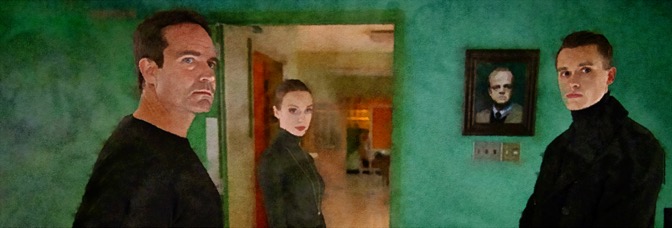
Toby Jones is back this episode, which has a flashback subplot about how architect Nimrat Kaur actually designed Wayward Pines, the town, and lied to husband Jason Patric about it when he asked a few episodes ago. Jones looks much older in the flashback than he did last season on the show when he was a regular. He also plays the part like full Bond villain, instead of how he built up to that reveal. Apparently, in the past, when putting the project together, Jones was whole-ass evil and toned it down for the future. He also got some plastic surgery to take a few years off.
Wait, that second part’s not a bad idea.
Hope Davis also appears in the flashbacks, establishing an animosity between her character and Kaur’s, which we first saw the last episode. None of the other people who ought to be in the flashbacks are in the flashbacks, meaning Melissa Leo and Terrence Howard. Though maybe they were off on a kidnapping mission together.
The idea the town was designed by an architect is the silliest detail in the “Pines” lore, as the town is not architecturally interesting, innovative, or even distinctive. Patric sees her working on the design—and apparently forgot in the future—and makes a Mayberry crack, but it’s on-point. The town made sense when the show was an M. Night Shyamalan joint. As the intentionally, willfully created future cauldron of white fascists… it’s a lousy job. Like, hopefully, Kaur’s better as a hairdresser than an architect.
There are still some other unanswered questions about Kaur’s involvement with the project, but her big reveal to Patric—in the present—isn’t even about designing the town; it’s about how she knows Josh Helman. Helman’s not in the episode very much, which is great. Outside a scene where he gets drunk–he works around kids, incidentally—and gazes what I think’s supposed to be longingly across at Kaur’s salon, he doesn’t have many shots where he needs to try to act. Though his scene opposite Patric is embarrassing for Patric. Patric’s got a lot to do in the episode, even though he’s basically supporting everyone else, and he’s really good throughout. Even when the script’s thin. Patric works. Helman takes up space. Their scene’s very existence plays like a diss on Patric.
Especially with the reveal.
Helman takes the cake on a show with some profoundly bad casting and performance decisions.
Anyway.
Besides Kaur’s flashbacks and present-day reveals, the episode’s got three subplots going. First, Djimon Hounsou, Shannyn Sossamon, and Tim Griffin are doing an agriculture survey outside the wall. The drama comes from Griffin revealing he machinated the whole pilot set up just so he could get into Sossamon’s pants. Reacting to that confession gives her something to do besides be sad about Charlie Tahan’s death; Tahan didn’t come back to play the corpse. I wonder if they lowballed or just didn’t offer.
In town, Kacey Rohl has decided Hope Davis doesn’t know anything about science and wants Patric to run the “study the monsters” project. Davis gets really mad about it because she likes torturing them to get back at them not eating her last season. Rohl’s good—she’s got a funny scene opposite Siobhan Fallon Hogan—and the personality tensions are strong this episode. At least in the present. In the flashbacks, they’re all exaggerated because Jones hasn’t got any subtlety and is a bad influence on Davis, who’s best when she’s the only broad caricature in a scene.
Then Michael Garza has a subplot—also involving Patric—about not being able to get his procreation on, no matter what girls they try him with. His conversation with Patric addresses some things the show entirely avoided in the first season when it seemed like it wasn’t aware it was creating a fascist, white supremacist future. This season they acknowledge it.
Garza’s really sympathetic.
The show’s now halfway through the season and isn’t really forecasting what they might try to get done before it’s over.
The cliffhanger’s good too.
In addition to Patric playing support, Tom Stevens has been reduced quite a bit lately. Outside yelling about one of the monsters getting into town, his big scene is threatening Kaur while dressed very much in SS summer wear. It’s weird no one’s acknowledged Jones’s reclusive billionaire very much wanted to have a little Nazi army because all of the clothes in the town were made in the past and brought into the future with them. Stevens’s outfit this episode is almost too obvious.
-

It’s like “Wayward Pines” heard my complaints there weren’t enough bad performances on the regular and felt the need to deliver. This episode features the return of Tim Griffin from season one, who was an entirely personality-free white man and goes on to one-up him with Josh Helman, who’s got even less personality and might be the worst actor on the show ever. It seems like someone’s feeding it to Helman from off-frame every single line delivery.
Helman was billed in the season premiere’s opening titles but soon disappeared outside the wall and from the titles. He’s back now, with the episode finding him unconscious in a monster pit. He meets up with Griffin, who’s been living in the wild for at least a decade, and is basically just doing a Grizzly Adams riff. That riff is much better than anything Helman’s doing.
After some world-building involving the monsters’ behaviors, the two end up back in town, where Helman reopens his ice cream shop and Griffin checks himself out of the hospital to become a town drunk. Both leader Tom Stevens and return guest star Shannyn Sossamon want something from Griffin. Stevens and Djimon Hounsou are gung ho to explore the outer world (ignoring Hope Davis and Kacey Rohl’s objections); Stevens wants Griffin’s help knowing what’s out there.
Meanwhile, Sossamon wants to tell Griffin to drop dead for getting her entire family kidnapped 2,000 years into the future and subsequently killed by shitty white people.
However, Sossamon wants to get outside the wall—they call it a fence, which seems a choice entirely based on Game of Thrones having a wall—to find Charlie Tahan’s corpse, which might require Griffin’s help.
The subplot has Emma Tremblay indeed becoming a supporting regular; she gets her first period and doesn’t want to tell Davis about it because “Wayward Pines” rules say she’s got to start trying to get pregnant, eleven years old or not. Since Tremblay works for Nimrat Kaur, Kaur decides she’s going to stand up for Tremblay against Davis. It’s a nice subplot because Kaur’s a very active performer. When she and Davis face-off, there’s palpable energy coming off both the actors.
Of course, when the show establishes Kaur knows Helman, there’s zero energy between them because Helman’s terrible. Terrible for “Wayward Pines.”
Though, of course, second season acting’s much better than the first season. Sossamon, freed of her confounded mom constraints, is far more effective here than she ever was before. Though it helps she’s opposite Griffin, who’s letting his fake beard do all the acting for him.
Tremblay’s subplot also involves brother Michael Garza, who’s got his own secrets. Unfortunately, those secrets make him susceptible to bad influences, and the fallout will put him into the sort of surprisingly but not if you listen to Ian Malcolm cliffhanger.
Despite Helman—and Griffin, really—it’s a decent episode. Kaur’s got a good arc for most of it, and Davis is a profoundly upsetting villain. Also, despite not really doing anything and having a thin character, Hounsou classes the joint up.
-

This episode has six plotlines going. Or maybe five and a half, since kids Gracelyn Awad Rinke and Judah Prehn kick off the A-plot, which has Sara Tomko suspicious Alan Tudyk’s alien radio is actually a bomb. The first scene has Tudyk trying to bully the kids into returning his silver alien ball—he’s only got the one left—and Rinke is suddenly convinced he’s got ill-intent with his new device.
So the kids warn Tomko, who decides she and dad Gary Farmer will accompany Tudyk to the transmission site to make sure he’s not going to nuke the planet. The site is on the reservation, so they all visit Tomko and Farmer’s family first; they’re celebrating the return of relation Tommy Puco. It’s never clear how he’s related.
Puco’s hilarious. Since the episode’s got so much going on, he’s only got a couple big scenes. His first one is opposite Tudyk and having an inevitably awkward conversation about belonging. Tudyk prefers spending time among the Native family on the reservation, finding them less obnoxious (and callously destructive) than the white people in town. It softens his resolve to save the humans and has him considering maybe he does need to destroy all human life to save the planet, after all.
Farmer’s got some magnificent scenes on during the reservation visit too. Because it’s Farmer, give him a scene, and he’ll nail it.
Then there are a series of sometimes interconnected subplots, starting with deputy Elizabeth Bowen getting interested in sheriff Corey Reynolds’s love life. Bowen will be in Reynolds’s subplot, Alice Wetterlund’s family subplot, and have one of her own running throughout–a dress she thought she’d lost turned up at the dry cleaners, and she doesn’t remember bringing it in.
Wetterlund’s got a flirtation subplot with charming baseball opponent Justin Rain, but we also get to meet her parents—Barclay Hope and Lini Evans—when she goes to Hope’s birthday dinner. She brings Bowen along because Hope and Evans are so awful to Wetterlund. It’s a quick scene in a quick subplot, but it turns out to be the episode’s best scene; lots of good work from Wetterlund, though it resolves real quick since it’s not one of the main plot lines.
The most significant subplot is Linda Hamilton’s return and the revelation new town doctor Michael Cassidy is still alive. Hamilton’s holding him captive as an alien in her alien jail. Mandell Maughan’s back as her faithful subordinate. While it’s a developing C-plot in the episode, it feels like a bigger plot since it’s returning special guest star Hamilton (and Maughan’s first time back this season).
Similarly, Meredith Garretson and Levi Fiehler have a purely comedic subplot about Fiehler’s rivalry with the nearby town. Sturdy comic acting from Fiehler, and then Garretson gets to do all the big work when the time comes. It’s real funny.
And I just realized there’s a whole sixth plot, not a half one, because the “kids” plotline isn’t just Tudyk versus Rinke and Prehn; it’s also got to do with Tomko’s relationship (or lack thereof) with daughter Kaylayla Raine.
The episode ends with a cliffhanger out of the comic series, which is a big surprise since the show has only used a handful of plot points from the source material.
There’s some terrific acting from Tudyk and Tomko, who gets some great scenes together—including one where Tomko’s got to maintain against an increasingly absurd, but also serious, Tudyk.
Good, packed but never too full script, credited to first-timer Timmy Pico (who’s had story editor credit before), and direction from Shannon Kohli. Kohli’s one of “Alien”’s most reliably strong directors at this point.
The show remains rock solid.
-

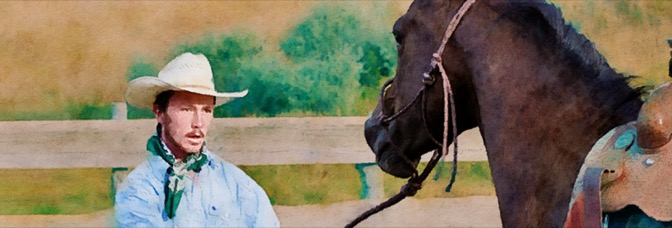
The Rider is a harrowing experience. The film establishes its stakes from the second or third scene; rodeo cowboy Brady Jandreau is recovering from a head injury. His horse threw him and stomped on his head, requiring a metal plate. He can never ride again, except his entire life has been about being a cowboy. He tells everyone he’s just taking time off to recover and will be back at it. The head injury has affected his motor control, so he can no longer rely on his hand.
The film opens with Brady taking off his bandage so he can shower—all of the principals have the same surname (to be discussed shortly), so I’m going with first names for simplicity’s sake. We then meet his father, played by Brady Jandreau’s father, Tim Jandreau (see), who’s wondering why Brady has checked himself out of the hospital early.
They live in rural South Dakota, along with Brady’s younger sister, Lilly (played by, you guessed it, Lilly Jandreau); we’ll soon find out Brady’s got no high school, no GED, nothing but years of experiencing training and riding horses. His friends are all rodeo cowboys, including best friend Lane Scott (played by Lane Scott), who had an undefined accident and is now disabled, with minimal motor skills. Brady visits him, and the two still bond over riding.
Brady’s other friends—particularly Tanner Landreau—bully him about getting back on the literal saddle. Writer and director Zhao arranges the entire film as a detached examination of toxic masculinity. But, at the end of the day, Brady needs to earn a living (dad Tim is unreliable with money, thanks to booze, gambling, and ladies), and all he knows is riding.
There are numerous discussions of Brady’s stubbornness (a trait he shares with his deceased mom); the viewer gets to see not just the inflexibility but the profound fear behind it. Brady’s fully aware of his possible fate—the film introduces Lane in conversation before the first visit—he knows all the risks and is determined to ignore them.
Just being around a horse is irresponsible and all Brady wants to do is be around horses. The film’s got some fantastic musing on riding, not just from Brady but also his friends. When they talk about it, there’s always the tragic longing for the escape those moments bring. So every scene where he’s around an untethered horse it’s a suspense sequence. Nail-biting, fist-clenching suspense. Regardless of skill—there’s a great training sequence where Brady’s got a spotter, so he’s not in the same kind of danger, and the horse training is an exceptional watch—he can’t trust his body; the viewer knows he can’t be trusted to consciously make the right decision either.
Brady knowing both those things about himself just adds further layers to the film.
The film’s semi-autobiographical (Brady and family have a different last name in the film), so Zhao is directing a cast of amateurs playing variations on themselves. And she gets incredible performances from all of them. The film’s very much the studying half of “character study,” inspecting how Brady reacts to various situations and how those reactions compound to influence his decisions.
And even though Zhao keeps the focus tight on Brady, she shows how people are seeing him, usually friend Cat Clifford. Clifford’s got a more soulful look at rodeo cowboy life than Brady’s other friends and tries to support Brady even when he’s making bad decisions (and give him the opportunity to amend those bad decisions). It’s an excellent arc for Clifford, who gives the film’s second-best performance after Brady.
All of the acting is at least good, often better. Zhao does a spectacular job with the performances. Alex O’Flinn’s cutting probably helps, but there are often long takes where The Rider stares at Brady, waiting for his interiority play (or not play) on his face. If it weren’t an amateur performance, if it weren’t semi-autobiographical, it’d be a perfect example of a “brave performance.” But given the peculiar situation of Brady’s performance, it’s even more profound. Especially since protecting his interiority is one of Brady’s character traits, he refuses help, whether from doctors, dad Tim, or friend Clifford.
Sister Lilly’s the closest thing to comic relief, but always with sincerity and sweetness, though never saccharine. She’s got an amusing technology subplot; mobile devices collide with the existing Americana in the film, with Brady and Lane spending their visits watching themselves on YouTube. It doesn’t seem like the healthiest bonding pastime, but the film doesn’t invite second-guessing. Even without knowing the film’s based on Brady’s real life, watching The Rider feels like a privilege. We’re getting to see something private.
Zhao’s direction is patient and expansive; she and cinematographer Joshua James Richards love the South Dakota prairie and big sky country. The film’s usually breathtaking, even during the suspense sequences. As we learn more about Brady, there’s a growing, aching quality to the wide-open spaces. Even more than the rodeo, it seems like that gigantic part of Brady’s life—always out his window—is cut off.
Great music from Nathan Halpern too. The technicals are all superb.
The Rider is a remarkable film; a tragedy and a triumph; an examination of Americana, machismo, and courage, with Brady—a Christian Native American cowboy in the mid-2010s—a singular protagonist. His performance, like the film, is one-of-a-kind.
-


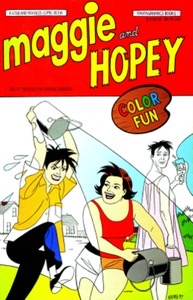
Maggie and Hopey Color Special (or Maggie and Hopey Color Fun, per the cover, not the indicia) delivers exactly what the cover title promises—a fun Maggie and Hopey comic in color.
The comic’s not just the Maggie and Hopey feature either; creator Jaime Hernandez does three different strips, all of them showcasing the color, including one of his Peanuts but Hoppers riffs, which is excellent.
The main story has Hopey calling Maggie on a Sunday to come over and try to fix a car. Joey and his fiancée Janet are on their way to Vegas to get married, only the car won’t start. Maggie can’t get it started either, so they all go for a pool party at Norma Costigan’s; Norma is one of H.R. Costigan’s ex-wives. The party gets complicated when Joey runs into people he hasn’t seen since he’s grown up.
But it’s already all complicated because Hopey’s trying to woo Janet away from Joey, with Joey still mooning over Maggie but not ready to make a move (grown-up or not). Meanwhile, Maggie and Hopey’s relationship status still has a question mark hanging over it.
By the end, some of the relationships are resolved, and some aren’t, but everything’s wrapped up quite nicely. Jaime has a way of echoing throughout the story, not just with visuals or dialogue or plot details, but with mood. The backup strips, which Jaime intersperses throughout the issue, breaking the feature into chapters, help with the echoing.
The “backups” don’t relate to the main story, which is slice-of-life and looking back at younger days with adult eyes (Hopey bonds with Janet over childhood memories and then Joey’s seeing things as an adult for the first time). Instead, Jaime goes for colorful variety.
The Ray story (the kind of Peanuts strip) is the longest at four pages and the best. Ray goes over to his friend’s house and gets embarrassed by toddler-aged Maggie not wearing underwear, and then something odd but entirely normal for kids happens. It’s great cartooning. It also shows how well Jaime’s art, regardless of style, works with color.
Jaime sticks to thin lines and well-lighted settings for most of the comic, letting the color take over; though there are some great night scenes, he’s showcasing how color works on his art. But what it also shows is how much Jaime’s traditional black and white implies the color when it’s not there. Especially in the Ray story, set on the Schultz-y squiggly-lined lawns of childhood memories.
One of the backups is about a lonely superhero robot attempting to fill her day. Then the other is about a mid-century party girl who’s short in stature but long in personality. They’re both outstanding.
But the feature, of course, with its return of the Locas, is where it’s at. Jaime does a great done-in-one with accessories, and Color Special is very much a special comic. In color. It’s a rare delight.
-

“Wayward Pines: Season Two” really is committed to the bit. There’s a scene where schoolmarm, monster researcher, and psychotherapist Hope Davis tells a group of girls there’s nothing wrong with them not having their periods yet. They just don’t get to participate in the Davis-supervised orgies with the other thirteen-year-olds yet. Not in those words, but it’s the scene. They’re just running headfirst into the Davis breeding humans with these earthen vessels. It’s incredibly creepy; Davis is great at it.
That subplot may or may not be making Emma Tremblay into a regular supporting player. It’s too soon to tell because Davis has bigger fish to fry this episode, specifically very special guest star Melissa Leo.
They apparently can only afford a single season one regulars in an episode at a time, minus—I guess—Terrence Howard and Carla Gugino in the season premiere. Though it turns out Leo was with Howard on that people-hunting expedition, they just didn’t show her because, you know, budget.
She’s back this episode to fill in what’s happened to her since last season, but not really. Instead, she’s back to retcon Tom Stevens into being Toby Jones’s town savior. From birth. Stevens showed up in the last two episodes of season one, presumably when they decided Charlie Tahan wasn’t going to be a regular in season two despite the show literally being set up for him to be the new protagonist. But he’s been around since the beginning, raised to think Leo and her brother, Jones, are his biological parents.
In the flashbacks, Leo wants to brainwash the young versions of Stevens, which runs afoul with Djimon Hounsou (who’s also retconned in like Jones’s character would ever listen to a Black guy), who thinks the awful truth is a better option. It also puts Leo and Davis on a collision course because Davis’s whole character is manipulating young boys into doing her bidding. The Leo and Davis thing, which the episode introduces since they never had a scene together in season one, plays out before the episode’s over.
In the present, Leo convinces Stevens she’s ready to be a team player again and help him with his conquest of the surrounding area. Both Stevens’s ladies, Davis and Kacey Rohl, are unhappy with Leo’s return, and more unhappy Stevens is welcoming her.
Jason Patric’s arc involves meeting Leo—who treats him cruelly, just like she did Matt Dillon, and makes her hard to like—and arguing with wife Nimrat Kaur. Patric suspects Kaur of something, which the show never confirms, and he works through it. It’s a really good performance from Patric, making up for Leo’s lackluster return. Neither the flashbacks—with bad wigs and bad writing—nor the present action material is any good. The show can’t successfully shoehorn a relationship between her and Stevens, though Stevens gives it his best.
There’s some funny cringe material for Siobhan Fallon Hogan (whose current problems apparently stem from generally living in the post-post-apocalypse, not reacting to Stevens and his teenage stormtroopers randomly murdering people).
Having Leo back, having her give a bad performance, having that lousy performance be in a tepid retcon does clarify “Wayward Pines: Season Two”’s newfound strengths. Patric’s good and is great in a lead TV part. Stevens is a good shitbird villain. The exploitative genre-y stuff is more amusing than “M. Night Shyamalan TV.” But the show’s still got a litany of problems.
-


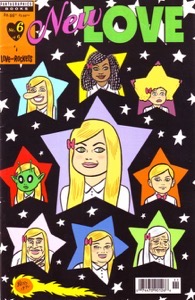
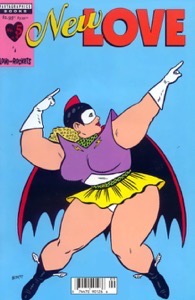
As expected (and predicted), creator Gilbert Hernandez delivers a fantastic close to New Love. And even though I figured he had it coming, Beto makes a bunch of surprise moves and callbacks, making New Love a cohesive series instead of just an anthology.
First comes the “Letters from Venus” entry, which I’m tempted to call the best in the series. And not just because Beto takes everything back to Palomar in the end. Or has a scene where Venus discusses Kirk and Spock slash fiction with Aunt Fritz.
It’s a somewhat lyrical summary of Venus’s family life as it goes through a momentous change. Mom Petra and step-dad David are breaking up. So this story recounts some milestones in their relationship and marriage, specifically how the two families integrated. There’s not just Venus bonding with her (previously unseen) teenage step-brother, Rogelio, but also how the adults react to the children embracing them as parents.
Beto does a fantastic job, especially the hurried but never rushed character development. It’s mainly about Venus’s relationship with Rogelio and how it affects them. Of course, since Rogelio’s new to the strip, Beto carefully lets these revelations further contextualize the previous “Venus” entries.
I don’t think it’s the best “Letters from Venus” in New Love, but it’s very (albeit awkwardly) wholesome and good-hearted.
The next strip is the single page “Slugs of Palomar.” It’s awesome. There are some funny gags about the slugs and proper consumption; it’s also an exquisite way of leaning into returning to that strip. It’s a teaser, reminding Beto’s not just still interested in the series, but also he’s still really good at making it. There’s also a visual nod to a previous New Love strip, which will be a recurring thing as Beto wraps up the series here.
Next is a four-panel gag strip (about a mansplainer arguing and just asking questions), which is cute. But then the next strip is a killer “porno” one-pager, only with very regular-looking folks. It stars Roy and his girlfriend from New Love #4. There’s no story, just their apparently fun and fulfilling sex life.
Then is a two-page strip about a cartoon mole who wants to go up and see the sun for the first time. His girlfriend, a rabbit, doesn’t want him to do it. A duck and a bear are going to figure in. The ending takes a very black comedy turn, but the strip’s always quirky because the animals are anthropomorphic but with their junk hanging out. It’s a success.
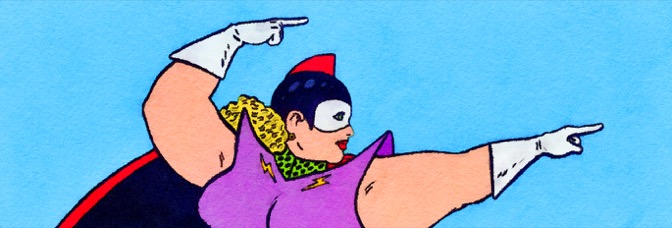
Next is “Shout Ramirez and Her Very Best Friend Dinky.” They’re members of the Leaping Elite, which is basically adventurers who’ve been trained since childhood to leap great distances in single bounds. They’ve got super-thigh muscles to let them do it. Shout’s the brash loudmouth lead, Dinky’s her quiet and devoted partner; Dinky’s also madly in love with Shout and hasn’t told her.
The strip takes a twist in the finale—where Dinky also looks like another Beto character, but it’s not clear if they just look similar with the same expression or if there’s an intentional connection. There’s a definite intentional connection in their adventure, which has them trying to stop a rampaging love gremlin, the gigantic babies who first appeared in New Love #2. It’s all connected.
It’s a great story, showing off how well Beto could do a superhero strip if he wanted, with a genuinely disquieting conclusion.
After “Shout” is another one-pager, but six different two-to-six panel strips with the same protagonist and some commentary on his odd (and gross) behavior. It’s an excellent, quick bit of work from Beto.
Finally comes “Abraxas,” the other feature. There’s “Venus” then “Abraxas.”
“Abraxas” is a semi-sequel to a story of the runaway mobster’s moll and the hunchbacked gravedigger who loves her from New Love #1. However, there’s a slightly different vibe to the tale, which follows two suspicious characters who are in town for the “sighting.” They spy on their targets and bicker with each other about who’s being too flirty with who.
A lot of the strip builds up to the two big reveals, but then when the action kicks in, Beto does this beautifully fluid sequence. It’s moody, funny, bloody, and more than a little haunting. It’s the most ambitious story in the issue and the best.
But New Love isn’t over yet. There’s a one-page strip with Venus and her Aunt Luba talking about reading. It quickly becomes a conversation about comic books and Beto breaking the fourth wall to remind his readers to, you know, read more comics. The good ones. It’s a perfect finish to the series.
Outside the one lackluster issue—by Beto and New Love’s standards—the series has been outstanding and unexpected from the start. This finale, bringing it all together, is terrific. Beto makes incredible comics.
-

Djimon Hounsou arrives this episode as the town farmer. He’s supposedly a protege of first-season villain Toby Jones, though there’s no explanation why he wasn’t around before. It stands out, of course, because Jones’s villain was pretty plainly racist; the whole project—in the first season—was about breeding white babies. In the second season, the show’s definitely gotten the note about having some Black characters; though, so far, they’re all villains.
The episode begins with a surprise resolution to last episode’s cliffhanger. Little Nazi-in-charge Tom Stevens (who’s actually great as an evil little shit) broke his promise to Jason Patric and Charlie Tahan and sent them out beyond the wall to let the monsters eat them. Only the monsters ignore them to instead pile up against the fence, which electrocutes them dead until the bodies get high enough to jump over.
I’m ninety percent sure I’ve seen the same device used somewhere else, but it’s a solid device and effective here.
Stevens gets all his teen stormtroopers in trucks and drives out to fend off the invasion. He brings his girlfriend, Kacey Rohl, along with him, which results in her getting almost immediately injured and Stevens needing Patric back from the monster side of the wall.
If Patric can save Rohl, he’ll get some semblance of a normal life again—a job as town doctor (they don’t have any others) and to live with wife Nimrat Kaur. Turns out Kaur’s got a bunch of secrets she hasn’t been telling Patric about, though he’s not ready to accept he’s living in a post-post-apocalyptic future where man-eating monsters are running around; so maybe he can’t handle her truths either.
Meanwhile, Shannyn Sossamon is back, trying to get Stevens to go out and get Tahan too. The little fascists’ only rule is they can’t kill each other, and Stevens is breaking that rule.
Sossamon being back makes almost no sense, given where things finished up last season and then with Tahan being an underground revolutionary. Apparently, since the first season, Sossamon’s gotten generally okay with living in military occupation as long as she gets her house. It’s unclear. Sossamon’s pretty good, though, albeit just in a “hysterical mom” part.
She’s got a scene opposite Kaur where it seems like Sossamon will have something to do with Patric and the new A plot, but nothing comes of it. It’s going to be interesting to see how “Wayward Pines” handles its guest stars and season one returnees.
Another returnee, Siobhan Fallon Hogan, finally gets a real scene, albeit one where she’s recovering from the electroshock therapy the kids do to keep her in line.
Patric’s good, Kaur’s good, Stevens is good. There’s a lot with Patric discovering how bad Stevens has been at caring for the townspeople, and Stevens hates Patric being right. Amitai Marmorstein’s awesome as this medical student who looks up to Patric.
Once again, there’s something almost schlocky to it, like “Pines: Season Two” is an Ozploitation flick instead of a vain attempt from Fox to get another “Lost” going. I expected the fascist teens in charge plot to stink, but they’re making it work.
Oh. Toby Jones is back for a cameo, looking markedly older than last season, which breaks the suspended animation conceit. But it’s fine; it’s first thing and over fast.
-

The season two premiere opens with Charlie Tahan, set up as the new lead in last season’s finale, narrating a recap of the first season. It’s a terrible recap, writing-wise. It does not bode well.
But then the first real scene is Jason Patric in Hawaii, in the middle of a spat with wife Nimrat Kaur, heading down to the bar and happening to meet Terrence Howard. Howard apparently got to go to fabulous vacation spots to kidnap people and put them in cryosleep for two thousand years. Good for him.
It’s an overwritten scene, but Patric and Howard are both good, so it’s mostly fine. Howard leading Patric into the bushes to knock him unconscious is a little much, but otherwise, it’s okay. Patric’s immediately a strong lead.
One fade out later, Patric wakes up in the fifth millennium, and he’s confused. A severe young woman, Kacey Rohl, tells him they need to get to the hospital so he can perform surgery. “Where am I?” Patric asks. “‘Wayward Pines,’” Rohl says. Cue opening titles and the new regular cast list, which suggests a lot of people who seemed like they’d be back aren’t back.
Instead, fascist white boy murderer Tom Stevens has been promoted to regular. And Hope Davis, who very clearly died last season, gets the “with” credit. Djimon Hounsou gets the “and” credit, suggesting “Wayward Pines” is finally getting some Black people, but he doesn’t actually appear in this episode. Though Christopher Meyer is Black, and he gets a lot to do, it’s mainly carting Patric around town and being a really good little boot-stepper.
There are some familiar names in the special guest star list: Tahan, Carla Gugino, Siobhan Fallon Hogan, and Greta Lee. Last season, Lee was a fourth-tier recurring character but a reasonably recognizable one. Fallon Hogan’s the awesome secretary; she’s barely in this episode. Tahan and Gugino get full arcs, though Gugino’s confined to a hospital bed (she’s Patric’s mystery patient), and Tahan’s barely in the episode like they just weren’t willing to pay his rate. Adult John Connor has more presence in T2.
Gugino’s around for the first season transition wrap-up. The show’s done a three year-jump ahead from where the main action left off, though last season’s cliffhanger was a jump ahead tease. So now we find out Gugino led a resistance against Howard, who militarized his Neo-Nazi sidekicks, and they rule “Wayward Pines” with an iron fist. And Davis, now in a wheelchair (she’s so nasty the monsters wouldn’t eat her), whispering in his ear. But Howard and Rohl are a couple, which complicates things a little.
Patric finds himself in this bewildering setting–Lord of the Flies with girls and guns—and isn’t sure what’s going on, especially not when they keep promising he’ll see wife Kaur in just a scene or two.
It’s a very different show than season one. It feels like a sequel from another production company, which is doing a much better job. The regular cast isn’t anywhere near as expensive (Patric and Davis are the only real names). Howard’s an A-number one creep, but in a good way (think evil Wesley Crusher).
But the other big chance is Patric. Well, Patric and the audience knowing what’s happening to Patric and not them discovering it all simultaneously. Patric’s a great lead.
There are problems, of course. Even though the show’s very different from when M. Night Shyamalan directed the pilot, episode director David Petrarca brings back his terrible framing techniques. And the writing’s way too dismissive on Gugino.
But the teenage fascist dictatorship stuff? It’s “just genre,” but in a good way.
Or maybe it’s just all worth it for a Jason Patric TV show.
-

A collection of film responses published in the first three quarters of 2005. Films discussed: 28 Days Later (2002), Alien3 (1992), Batman Begins (2005), Berlin Correspondent (1942), Blade: Trinity (2004), Blink (1994), Boys' Night Out (1962), Clean (2004), Cold Comfort Farm (1995), Danton (1983), Dinner at Eight (1933), Escape from Fort Bravo (1953), Henry Fool (1997), Japón (2000), Matewan (1987), Melinda and Melinda (2004), Night Moves (1975), Olga's Chignon (2002), Over the Rainbow (2002), Safety Last! (1923), Sea of Love (1989), September 2005, Speaking of Sex (2001), Superman II (1980), The African Queen (1951), The Ballad of Jack and Rose (2005), The Eagle Has Landed (1976), The Graduation (2002), The Lower Depths (1936), The Man in the Iron Mask (1998), The Shadow (1994), The Spies (1957), The Three Musketeers (1993), They're a Weird Mob (1966), Thieves Like Us (1974), Tremors (1990), Triple Cross (1966), Turn (2001), Versus (2000), Volcano (1997), White Dog (1982), and White Nights (1985). -

Dancing Pirate has multiple awkward points: the omnipresent brownface, the astounding action conclusion (not astounding in a good way), or just the charmless lead performances. The film tells the tale of Bostonian Charles Collins, who—on his way to visit a relation—gets kidnapped and taken aboard a pirate ship. Hence the title.
Collins is a superb dancer and a mediocre but not incompetent singer. Unfortunately, he’s also one of the least charismatic people ever to get a close-up, certainly in a classic Hollywood production. There’s a reason he didn’t become a movie star, and it’s patently obvious from the first shot in the movie. Collins is teaching the waltz to 1820’s Boston society, complete with the lead putting their hand on the follow’s waist, which causes quite a comical stir.
That scene succeeds thanks to the general comedic timing and uncredited Ellen Lowe, a dance student infatuated with Collins (for his dancing, not his acting), rather than her old man husband.
Then Collins has a well-choreographed and well-directed tap number, which gets him some goodwill. It’s like Pirate is saying at least he can dance.
Pretty soon, he’s kidnapped and aboard the pirate ship, which sails down under South America and up to California, which is still a Spanish colony. They couldn’t take the Panama Canal because too early for it too.
When the pirates go ashore for water, Collins sees his opportunity to escape.
Intercut with the pirates’ arrival is the reaction of the nearby residents. They’re freaking out because they have nowhere to go, and they’re assuming a full invasion. The film immediately introduces Luis Alberni as the “voice” of the people. He’s great. He sort of disappears in the second half, but he’s excellent when he’s around. He’s also from Catalonia, the closest the main cast is getting to Spanish.
Alberni leads people to the mayor’s house, where they have to wake him up. Frank Morgan plays the mayor. Frank Morgan is not Mexican or Spanish but doesn’t wear brownface, so it’s hard to fault him. He’s fun. While he’s not great, primarily because of the script, he’s often a lot of fun.
One thing leads to another and the only pirate coming to invade turns out to be Collins, who thinks he’s just escaping. Luckily for him, the mayor’s beautiful daughter (Hungarian Steffi Duna) wants dancing lessons, even if they’re from a pirate.
There’s a lot of action, a couple big synchronized dance numbers, and a fair amount of comedy. Collins will eventually end up in a love triangle with Duna and Victor Varconi (also Hungarian and wearing brownface). Varconi’s a military official out of Monterey who shows up unexpectedly and messes up Collins’s hopes for escape. Though the townsfolk aren’t too sure about Collins, Varconi’s presence may keep him alive depending on the circumstances.
Besides Collins being a charisma vacuum, Duna has a similar effect. She’s got more presence than Collins, but mostly in comparison. It’s also not a very good part. Pirate’s got a slight screenplay and a short runtime (eighty-ish minutes). The film constantly leverages the comedy, either with Morgan or Alberni, to move things along. And it almost always succeeds thanks to them.
The film’s early Technicolor—with gorgeous photography from William V. Skall—but director Corrigan stages the big dance numbers at night, shot day-for-night, and so all the costume colors are muted. They’re missed opportunities.
Corrigan’s not great with the actors. They do better when they don’t need direction, like Morgan, Alberni, and, to some extent, Varconi.
Technically, there’s not much notable other than Skall’s color photography. Archie Marshek’s editing is bad, but in a way to suggest there aren’t better shots, especially not for the Collins close-ups. The music—uncredited Alfred Newman—is also disappointing. He uses Yankee Doodle Dandy as Collins’s theme, which makes the cultural appropriation, brownface, white savior smorgasbord of an action finale even trippier—but it’s also just not a good theme. It doesn’t time well for how Collins moves.
Still, Pirate’s more successful than not; Collins isn’t unlikeable in his badness, while Duna’s certainly sympathetic. Then the supporting cast is all fine. It’s incredible how far a picture can get on great color, good dancing, and solid jokes.
-

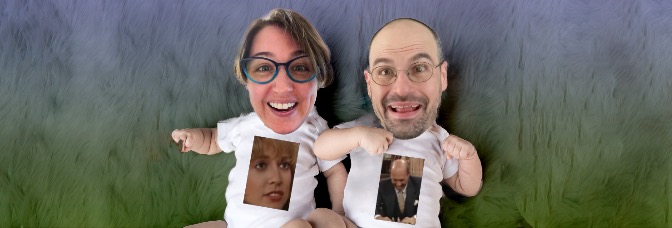
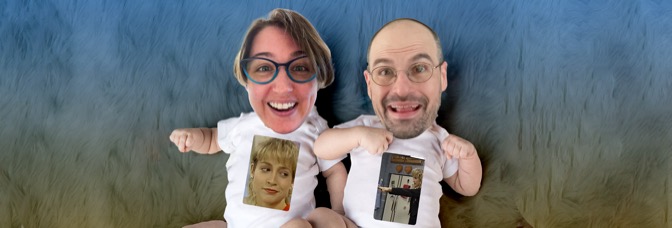
1: Free Spirit (1989), Part 1: Episodes 1-3 – Onesies
In their premiere episode, Emily and Andrew dive into the depths of FREE SPIRIT, a 1989 ABC sitcom about a witch (Corinne Bohrer) becoming a housekeeper to recently divorced dad, Franc Luz, and his three kids, Edan Gross, Paul Scherrer, and Alyson Hannigan.WHERE TO LISTEN
-

I’m thinking about headspace today. I rushed to write the last three posts for “Wayward Pines: Season One” so they’d be cleared out if we started “Season Two” tonight. We did. More on it soon, but it’s a marked, bewildering improvement. Though the lead acting is also better. And evil Wesley Crusher’s good.
In addition to “Wayward Pines,” I’m keeping up with a handful of new shows, one catalog show (“Free Spirit,” for my just launched new podcast, bringing the active number up to three), the New Love comic, the Empire of the Summer Moon book; I don’t think anything else. I mean, obviously something like Ginseng Roots. I just opened the latest issue’s box (including the charming storage box), but I’ve got no plans to read it anytime soon. I mean, maybe next week. But I’m also running into my 2022 movie watch list being a little more ambitious than I’d have liked it to be. Though it’s also only February, I want to get through it so I can, I don’t know, do something else.
I picked way too many long movies.
I’ve also got these Selected Declaration posts, which are—wait, did I forget something else I’m keeping current on. Something super obvious? Okay, no, I don’t think so.
Other than the exercise, which is daily and often rather time-consuming. At-home workouts when working from home are great and all, but when you exercise for forty-five minutes, it’s always rushed. I’ve meant to split my workouts, pre-work, then lunch, but it hasn’t happened yet. Or it’s happened but only once, and my memory’s hazy.
I’m way too media consumption goal-oriented in 2022. It’s distressing to have so many projects but for time to still drag along. We’ve got snow right now, intermittently; snow and anti-maskers. Swell combination. What a time to eat healthily.
I think I hate first-person writing because of how often I use the word “I” while writing them. Five lines, all starting with “I.” Hate it.
Is SD going to become something I’m loathed to write while still managing to forget it every week? Another missed chance to ass it to the calendar. Instead, it’s about remembering to do a mental dump; it’d help if the dumping helped, but blogging is a hobby, not a wellness activity. It’s entertaining and enjoyable, just not soothing.
Though I have just been falling behind on the book. I’m keeping on target with New Love (got to love how Jaime needs two reads and Beto needs three), and nothing else has an actual deadline.
These big blogging projects usually fizzle out eventually, sometimes for terrible reasons. Not hyperbolically terrible, actually terrible. I wanted to keep 2022 looser. It’s still loose, but the movie list is just way too daunting. Who has the time to watch Branagh’s Hamlet?
-

This season finale has four credited writers. First, there are the Duffer Brothers, Matt and Ross, who certainly haven’t been credited on the show’s worst episodes. Then there’s show creator Chad Hodge, who has been credited on the show’s worst episode. And finally, there’s source novel series author Blake Crouch, who’s had some credits and is below the Duffers but nowhere near the Hodge drecks.
It’s funny because most of the episode is action. It’s either technology suspense action with Melissa Leo realizing brother Toby Jones is going to feed all the people he doesn’t like to buff Gollum monsters, and she’s got to try to get the security system back on. Michael Crichton action, basically.
Or it’s suspense monster action with Shannyn Sossamon and Charlie Tahan hiding from a monster in a dark hospital.
Or it’s bang-bang monster action with Matt Dillon and Carla Gugino shooting at the monsters.
Lots of writer credits for a string of very basic action sequences.
Tim Hunter’s back directing and not great at any of it. The suspense action is fine, but when he gets to the sci-fi stuff (cryogenics and whatnot), he’s lost. Some of it’s the show’s production design looking good for 1982, but some of it’s Hunter.
The episode’s got a big twist ending coming after killing off many regular cast members. Less than halfway through, and it’s clear lots of opening credits names and frequent special guest stars won’t be back for another “Pines.” The character farewells range peak at middling, though none are terrible. The second twist ending changes the impact of a few of them. Not a great way to finish out the season.
Gugino and Leo give the best performances. Not Gugino’s best in the series, but closer to it than lately, and probably Leo’s best. The show did a successful character rehab on Leo, one of its few accomplishments.
Unfortunately, the four credited writers can’t come up with very many good excuses. Given the circumstances, one of the main characters who isn’t coming back goes out in a particularly nonsensical manner. Though there’s a deus ex machina in the form of a falling brick; it’s not like “Wayward Pines” tries very hard.
What’s particularly strange is the disconnect between how characters act and how other characters talk about them acting. It feels a little like some actors shot their scenes before the rewrites came in. Or the writing is oblivious, or the actors are failing. Or flailing. Though no one really flails this time, which is nice. Not many people get an arc—not even Jones, who’s full Bond villain now—and, if they do, it’s an action arc. The show’s ostensible protagonists, Dillon, Sossamon, and Tahan, are indistinguishable action movie tropes.
There’s some good acting from Barclay Hope as Hope Davis’s reluctantly concerned husband. Davis does have an arc this episode, actually. It’s an incredibly narratively problematic one, not dissimilar to how the show treated the last regular guest star, Terrence Howard.
After ten episodes, “Wayward Pines” has fewer stakes than a commercial for a disaster movie. But maybe next season’s acting, writing, and directing will be better. It’s going to be an entirely different show, the finale promises; pretty please, give us another try.
-

Second-to-last episode of the season, and it turns out “Wayward Pines” has waited this long to introduce the fascist teenagers who want to shoot the normies. Tom Stevens plays the leader. He’s both too much and just the right amount of despicably intense. Unfortunately, the show doesn’t really know what to do with him—introducing him this late—but there is a great scene where sheriff’s secretary Siobhan Fallon Hogan stares him down. It’s nice for Fallon Hogan to finally get something to do on the show, despite the “terrorized woman” trope.
Thanks to Hope Davis riling up the teenagers—with Charlie Tahan’s help in shitting on his dad, Matt Dillon—Stevens and his bros are going to execute Carla Gugino and her friends. They’re all locked up in the police station, where they sit around moping; Gugino assures them Dillon isn’t going to execute them in town square, but we’ve already seen what happens a few hours later—Dillon’s going to execute them in the town square.
The episode starts with a recap (making sure to remind viewers Tim Griffin was on the show at one point so he can “appear” later on), which ends with the monsters about to breach the wall. The action then cuts to Dillon and his gallows, finally ready to embrace his position as killer sheriff. You’d think he’d have been more worried about the breached wall.
And he will be, after the opening titles, when the show turns back the clock a day. It’s a very traditional narrative device, but it’s a little weak for “Wayward Pines,” which spent the first four episodes spinning the narrative around from twist and gimmick to twist and gimmick. Also, there’s no “twenty-four hours earlier” title card, which would’ve helped. But, just to confirm, the show’s taking itself seriously enough.
Overall, it’s definitely one of the better episodes. Some of the moments are cheap, but there’s a lot of good acting in them. The show finally lets Gugino and Shannyn Sossamon in on the secret, which immensely helps their characters and performances. “Wayward Pines” has enough problem with a single narrative distance; trying to maintain a half dozen have been a disaster.
Credited to Duffer Brothers Matt and Ross, the script gets a lot done. It would’ve been better if they hadn’t had to do so much—the insurgency is only two episodes old, and they’re resolving that storyline, but they’ve also got to insert the teenage Neo-Nazis into it. Whoever wrote the season outline did a lousy job.
Speaking of significant immediate changes—Melissa Leo. She plays her part totally straight now, no more Southern Gothic Nurse Ratched, but given how she acts around Sossamon, there’s this implication she only acted so weird in front of Dillon at the beginning of the season. I mean, there were some other scenes, but it’s like someone finally told them to stop using M. Night Shyamalan’s performance direction guidelines.
Thank goodness.
There’s a lot more with Toby Jones getting even jerkier; he’s turned out to be an even worse Bond villain than it seemed like he’d be earlier, and he seemed like he was going to be bad.
Nimród Antal directs, which is a downgrade from his theatrical work, but okay. I was expecting a little more, however. Definitely not the gimmicky structure.
There’s a good cliffhanger, and the stage is set for an intense finale. It only took “Wayward Pines” three-quarters of its season to get compelling, but it’s finally arrived.
-

Tim Hunter directs this episode, which is notable for a couple reasons. First, it means he’s been directing Matt Dillon for almost as long as Dillon’s wife on “Pines,” Shannyn Sossamon, has been alive. Hunter directed Dillon in 1982’s Tex (but also wrote Dillon’s 1979 Over the Edge); Sossamon was one when Edge came out.
Second, Hunter knows how to direct actors, which is kind of new for “Pines.” Shame it happens eighty percent of the way through the season, but better than never? There’s a terrific sequence for Melissa Leo, who’s seemingly no longer in Nurse Ratched mode.
Leo’s got one of the episode’s subplots; more and more paranoid and less and less compelling Toby Jones has her interviewing the surveillance team to see who’s giving aid to the insurgents in town. Anyone with any melanin in their skin seems to work in surveillance and not get to repopulate the planet, instead of leaving Hope Davis to cultivate the white stock of the future.
Davis has a little to do in Charlie Tahan’s recovery subplot, trying to turn Tahan against dad Dillon. She wants Tahan to tell Dillon to start executing the insurgents, something Dillon doesn’t want to do. Tahan might be recovering from a near-fatal explosion, but he’s still a dim bulb; still so’s everyone else on the show. It’s part of the conceit.
However, when Tahan confronts Dillon, Dillon tells him a teenage football anecdote because he never talks to his kid. So, it’s not like the material isn’t there for Tahan’s character arc; the show just doesn’t know how to do it. The episode’s got three credited scripters: Patrick Aison, Rob Fresco, and source novel author Blake Crouch. Apparently, none of them thought Dillon needed a father arc.
He spends most of the episode trying to find Reed Diamond, who’s still on the run after last episode’s terror attacks. He and a red shirt (maybe Toby Levins) are going to break through the wall in a stolen dumpster truck; it takes a good while for Dillon to find out about the stolen truck (he’s then chasing that lead), which suggests “Wayward Pines”’s omnipresent security systems only operate when a particular scene needs contriving.
The other big subplot is Carla Gugino sitting in her jail cell thinking about the past, including her relationship with Jones, who posed as her therapist for years. It’s a not-good shoehorning of an existing character relationship; the subplot culminates in a showdown between them, where Gugino’s able to reclaim some acting mediocrity since Jones is so inert.
What else… Shannyn Sossamon is just playing concerned mom, waiting around the hospital with Tahan. Though she does find out why Dillon had to have an affair with Gugino—Dillon needed someone with classified clearance to make his sads go away. It’s a really lazy finish to a nothing-burger plotline. And then short scenes for Siobhan Fallon Hogan and Teryl Rothery, who gossip about what’s going on in town a couple times.
The cliffhanger’s pretty good and, even though Dillon’s a lousy investigator, his performance isn’t his worst. As usual, Diamond seems comfortable getting through hacky material; maybe he should’ve been lead.
-

Thanks to the insurgency plotline—and who gets put in danger—this episode’s more compelling than most. Also, there’s less Toby Jones, which helps a whole bunch. Plus, Melissa Leo stops acting hacky around Matt Dillon, another plus.
The episode begins with Dillon telling Shannyn Sossamon about how they live two thousand years in the future, and there are monsters and whatever. She thinks he got brainwashed. At no point does Dillon talk to son Charlie Tahan, who Dillon knows knows about the future thing because Dillon’s a bad dad, and “Wayward Pines” never has honest scenes between its characters.
Dillon’s uptick, performance-wise, is apparently over. He’s not as bad as he’s been at one point or another, but he’s entirely unconvincing as an investigator. Meanwhile, Carla Gugino—now revealed to be the insurgency leader—is only slightly better than last episode’s lows. However, the show addresses Gugino as being entirely unreliable previously; she doesn’t really answer Dillon about why she lied, just making a lot of noise.
She and her husband, Reed Diamond, are going to blow up the wall and escape. Despite the entire town being under video surveillance, Dillon has to wait to catch everyone in the act. Otherwise, the timing can’t go wrong, and people can’t get hurt. Makes you wonder how Terrence Howard would’ve dealt with it.
Fertility is a big subplot, including Hope Davis giving a lecture about how it’s the teenagers’ responsibility to have sex early and have sex often. They seem to be pairing them off—turns out Sarah Jeffrey lied to Tahan earlier, and Davis did assign Jeffrey to befriend and seduce him if possible—instead of having dudes stud, which makes sense for birth defects, I guess. Down the road anyway.
Melissa Leo’s also got a fertility subplot; she’s checking in on the married couples about their pregnancies or lack thereof. She interviews Diamond and Gugino and clarifies “Wayward Pines” wants some very white babies born. More amusingly, Leo tells Diamond (aged forty-nine) and Gugino (aged forty-four) they’re the perfect age to have a baby, which seems weird.
One of the bad guys—I mean, the insurgents are murderous bad guys, indifferent to collateral damage—Andrew Jenkins is awful. It kind of helps to have worse supporting actors than your principals, something “Wayward Pines” should’ve exercised from go.
Another of the bad guys, Ian Tracey, is fine. He stands out because I thought he was the guy from Blink, but he’s actually one of the bad guys from Stakeout.
Anyway.
“Wayward Pines” is a mess and not good, but still far better than I’d have thought by this point in the season.
-

“Wayward Pines” makes a lot more sense now. Not because of the revelations in this episode, but because of what’s better and what’s worse. Well, who’s better and who’s worse. Unfortunately, the show’s got no idea when it’s good or what makes it good.
Also, can’t forget–the racism’s intentional. More on that delightful aspect in a bit.
The episode opens with Toby Jones standing amid a wrecked downtown “Wayward Pines.” Something terrible has happened, and since Jones hasn’t started talking yet, it’s not his acting. It soon will be. Jones will get a lot to do in this episode—including numerous flashbacks to when he was a rich genius who no one paid any attention—and he’s lousy.
However, we also get Melissa Leo acting a lot better. Turns out her regular characterization on “Pines” is her acting like Nurse Ratched to keep the townsfolk in line. Her regular medical professional, sister to genius with a plan Jones is a lot better. Not great, but not profoundly terrible and borderline incompetent.
Their part of the episode is telling Matt Dillon what’s really going on and showing him various things while Dillon confronts Jones about the cult-like nature of the program. Well, sort of confronts him about the cult-like nature. It’s a cult-like nature; Dillon identifies problems but doesn’t expressly say it’s a cult. But it’s culty.
Dillon’s better this episode, which would be great if it didn’t apparently mean Carla Gugino would be worse. This episode introduces a whole new plotline for Gugino and her husband, Reed Diamond (who inexplicably shaved), and it’s bad work from Gugino. It also means she’s entirely unreliable because the new plotline directly opposes what she told Dillon a few episodes ago. It also reveals things about now-departed guest stars, changing the context of their appearances and participation.
Without giving those actors the chance to act that plot.
Sigh.
Though having departed cast come back isn’t necessarily a good thing. Terrence Howard shows up to reveal before he was the “Wayward Pines” sheriff. He was a standard Black man with a hidden criminal history who peaked in elementary school—Jones recounts it to him—and needed a magnanimous, albeit megalomaniac rich white man to pull up his bootstraps for him.
At first you feel bad for Howard because he’s got to act opposite Jones. Then you feel bad because of the scenes’ content.
Meanwhile, Shannyn Sossamon—the only one in her family who doesn’t know the truth of “Wayward Pines”—investigates real estate mysteries and trades barbs with Gugino.
Son Charlie Tahan spends the episode staring out the window thinking about the last episode.
Matt Duffer, Ross Duffer, and Brett Conrad get the script credit, which isn’t as bad as some of the worst episodes, but certainly isn’t turning the ship around. Though there’s only so much anyone can do once Jones starts talking. He’s awful.
Though someone included a great deep cut reference to Barry Lyndon in the episode, which really made me want to watch Barry Lyndon again and instead.
-

I kept wondering why they weren’t using any recognizable licensed music during this episode, even though it’s about (as the title suggests) a “Girls’ Night.” They’re listening to music multiple times, and then there’s a sequence with an accompanying song, but nothing big.
Then the finale uses a very famous, very recognizable theme song, and I imagine licensing it ate up the music budget for the episode. To great effect too.
The episode begins with a flashback to the nineties, with the main townie cast all kids out camping. There’s some good old sexism and toxic masculinity—intentionally—before establishing Elizabeth Bowen’s gotten the poop end of the stick since childhood. It comes up later, with the main plot involving Bowen never getting a raise as sheriff’s deputy, but the scene primarily serves as a tension break from last episode’s cliffhanger.
Bowen and boss Corey Reynolds had just discovered Alan Tudyk killed someone (not Tudyk the alien, Tudyk the human, before the alien killed him—making alien Tudyk a “murderer murderer”). There’s a fast, simple resolution to the cliffhanger—and the entire subplot—because “Resident Alien: Season Two” is also introducing new alien powers for Tudyk. Rarely used ones, like his silver Starman balls, discussed at one point to good comic effect.
So while that leftover thread from the first season is resolved, there’s still the matter of calling off the alien armada from destroying Earth; Tudyk needs more technology than his small mountain town can provide, so it’s good there’s a guest star.
Alex Borstein guests as Meredith Garretson’s cousin, who’s just hanging out. They happen to meet Tudyk, and Borstein’s quite taken with him, eventually leading to both a hilarious seduction sequence (complete with Tudyk in a cravat) and Borstein getting to do a Tudyk impression. Borstein’s fantastic.
She and Garretson go out with Sara Tomko, Alice Wetterlund, Bowen, and some other female semi-regulars for a night on the town. At the same time, Garretson’s husband, mayor Levi Fiehler, organizes a boy’s night for him, sheriff Reynolds, and Reynolds’s dad, Alvin Sanders. Since it’s a small mountain town, they all end up at the same bar.
It’s a funny episode, which eventually gets serious as the women realize Bowen’s lack of pay raise might not be exceptional for the town’s women. Also, Tomko charges Tudyk to think about things from women’s perspectives.
The last subplot is the kids’ one, with Gracelyn Awad Rinke finally figuring out what’s going on with Judah Prehn’s testosterone boost.
It’s a really good episode, with the show—script credit to Jenna Lamia, directed by Shannon Kohli—showing it’s got places to go with many of its characters, not just Tudyk. It’s still mostly Tudyk’s show, plus Tomko’s, but it’s got some well-executed and robust ensemble tendencies.
-

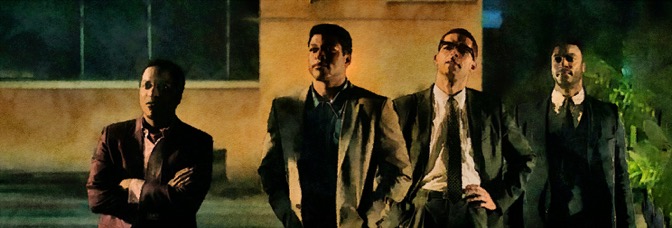
I fully expected One Night in Miami to end with a real-life picture of the film’s historical subjects. The film recounts—with fictional flourish—the night of February 25, 1964, when Muhammad Ali (then still Cassius Clay) defeated Sonny Liston to become the world heavyweight champion. He celebrated his win with Malcolm X, Jim Brown, and Sam Cooke. One of Miami’s subplots (or, at least, frequently referenced details) is Malcolm X being a camera geek. But director King never goes to the “real,” instead letting her cast carry the film to its devastating finish.
Kingsley Ben-Adir plays Malcolm X, Eli Goree plays Cassius Clay, Aldis Hodge plays Jim Brown, and Leslie Odom Jr. plays Sam Cooke. There’s a small supporting cast, basically Joaquina Kalukango as Betty X, and then Lance Reddick and Christian Magby as Ben-Adair’s Nation of Islam bodyguards; they’re kind of buzzkills for the evening.
The film’s based on screenwriter Kemp Powers’s stage play, though the film never feels stagy. King keeps it very open until the four men get into the room together, starting with prologues for each. The film opens with Goree winning a bout in England, which allows for Michael Imperioli and Lawrence Gilliard Jr. cameos in his corner. Goree’s Miami’s most singularly dynamic performance. It’s not his movie overall, but he’s always in the spotlight. He’s the champ, after all.
Odom’s prologue involves him modifying his show to play for the shitty white people at the Copacabana. Odom gets to do three “live” performances in the film, though he’s constantly teasing a jam session. His role is the film’s toughest.
Hodge’s prologue has him visiting a white family in his hometown, thinking things have changed since he’s now the star of the NFL. Not so much. Unlike Goree or Odom’s prologues, the film doesn’t give Hodge the opportunity for honest reaction, which sets him up for the film’s most important part. Hodge works his ass off in the part, and it seems like overkill at the beginning, but then it becomes clearer why he’s doing it as the film progresses.
Those prologues are all set at some time before the One Night, with the fight taking place eight months before; the Ben-Adir prologue leads right into the main action. He and Kalukango are (justifiably) freaking out about Ben-Adir’s plan to leave the Nation and start his own organization. He hopes he’ll be able to convince Goree to come along with him on this Miami trip.
One Night in Miami is finite historical fiction, but King and Powers entwine it with actual history’s expanse. Even if the audience may not, the filmmakers know what happens to the subjects and how their stories end. They’re focusing on a point before tragedy, but also one where Ben-Adir can see that tragedy in the distance well enough to describe it.
After a brief, fantastic Liston match—where King is able to give Goree an even better spotlight than before—the action moves to the motel room, where the film will spend the majority of the remaining runtime. King and Powers open it up a little, with a liquor store run, a parking lot conversation, a rooftop dialogue exchange, but really it’s about this room.
Only Ben-Adir knows the plan. Both Hodge and Odom expect more people, some booze, and a better setting. Goree’s got a basic idea of Ben-Adir’s constraints for the festivities, but not his intentions for the evening; (hopefully) no one who knows about Ben-Adir’s plans to leave the Nation is talking about it.
Ben-Adir’s plan quickly derails as he and Odom’s mutual needling turns serious. Ben-Adir doesn’t think Odom is taking his position as a Black singer seriously; Odom thinks Ben-Adir’s a killjoy. It gets more and more serious, with Goree trying to play peacemaker while Hodge waits until the fists fly to get involved.
The film’s great success with these scenes is getting the exposition in; Ben-Adir’s Malcolm X is a natural lecturer, giving Miami a lot of exposition dump leeway, but having Odom’s Cooke default to personal attacks brings in a lot of character and relationship backstory. All four men have existing history with one another, but it’s all implied, even when they talk about it. King and Powers only have one flashback, and they save it for something everyone needs to see, not hear about.
As the night goes on, people will pair off for private conversations. Hodge provides counsel to everyone at one point or another, with his conversation with Ben-Adir the most affecting. It’s when all Hodge’s character work pays off. Meanwhile, Odom and Goree have a different conversation—in many ways, Goree can synthesize Ben-Adir and Odom’s hopes and dreams, with Hodge being the experienced elder statesman.
So while Goree starts Miami and the whole film’s “about” him because he’s the champ, the conflict between Ben-Adir and Odom is the centerpiece, and then Hodge actually holds them all together.
The best acting overall is Ben-Adir or Hodge, though Goree’s the most impressive. Odom’s excellent, too; it’s just less his film than Ben-Adir or Goree’s. Hodge’s the fourth wheel, so when he proves himself so essential—Hodge’s performance as Brown, not just Brown’s part in the narrative—he’s spectacularly impressive.
King’s direction is phenomenal. Early in the film, she gets to show off the grandiosity of the era, especially with Goree’s boxing matches. But those scenes are still all very focused. When she scales down for the conversations, she widens the narrative distance to make room for all the actors. The Night is about Ben-Adir because he’s the only one who sees destiny waiting for him, but King makes sure the other actors still get to build their characters when Ben-Adir’s running the conversation. Thanks to King, Miami doesn’t just not feel stagy or like a stage adaptation; that origin is actually a surprise. The direction is so focused on the minutiae of the performances, not the dialogue deliveries. It’s not about who says what next; it’s about how hearing something or thinking something affects how someone reacts. It’s about the performances, specifically Ben-Adir and Hodge’s performances.
All the technicals are outstanding—Tami Reiker’s photography, Tariq Anwar’s editing, Barry Robison’s production design, Francine Jamison-Tanchuck’s costumes. And Powers’s script’s superlative.
One Night in Miami is a singular film about singular subjects. It’s an exceptional, profound motion picture.
-

There’s so much going on this episode I didn’t even realize Carla Gugino isn’t in it.
It’s a brand new day in “Wayward Pines,” with Shannyn Sossamon starting as a realtor—working with caricature male chauvinist pig Michael McShane, which is actually fine; the show couldn’t even manage caricatures before. Son Charlie Tahan is still in school, but he’s about to find out the capital T truth (hence the title) from intense, manipulative schoolmarm Hope Davis. Matt Dillon’s busy trying to escape to Boise to get help. His plot ties into Tahan’s, whereas Sossamon is separate. She’s living the ominous but mundane while Dillon’s in danger. Davis is explaining that danger to both Tahan and the audience.
This episode is where “Wayward Pines” pulls back the curtain to reveal what’s actually going on in the town. The kids get to know about it because they’re the future. Unfortunately, they need to keep it from their parents, who aren’t well-adjusted enough to cope.
It’s also where “Wayward Pines,” the show, explains why Wayward Pines, the town, is such a cracker-ville, and it’s not because they’re trying to mimic the racial demographics of real-life Idaho. Whether the show’s intentionally lily-white or if it’s just, you know, Hollywood, it ends up being a flex. I suppose the show could address the lack of diversity—there are no Black or brown students at the high school, so the future’s very white with maybe four Asian girls–but I don’t expect them to address it.
Maybe it’ll surprise me. If it’s not just another MacGuffin, the big reveal is a surprise. And has some interesting connotations for how all the pieces fit in the previous episodes with the timeline. They didn’t do it well; they could’ve leaned into the time disconnect much better, but… still. It was a surprise.
Dillon running through the woods with a gaggle of Gollums chasing him was not a surprise. It’s on par for the show.
The episode’s got an interesting creative team—James Foley directs, with the script credit going to novel writer and property creator Blake Crouch and then Matt Duffer and Ross Duffer (credited as The Duffer Brothers, which is obnoxious but whatever).
Foley’s direction’s okay. I was expecting more from him, but both he and the script focus the episode around Tahan, who gets a literal slide show exposition dump. If Davis had looked into the camera and asked, “Any questions,” it wouldn’t have been a surprise for how much they info dump. Also, the teen actors aren’t bad. Sarah Jeffery’s still good as Tahan’s new girlfriend, but he’s in class with Sarah Desjardins and Samuel Patrick Chu, who get a lot of reaction shots and sell them.
The guest star this episode is Scott Michael Campbell, who’s new to town and needs a house, so Sossamon shows him one. Their arc compliments Dillon and Tahan’s, but it’s got nothing to do on its own. Except give Melissa Leo a scene. She’s still not good, but she’s getting less dreadful as the series goes on. It’s still a weird miss for her.
Oh, and then Sossamon’s other scene has Tahan being really shitty to her because she wants him to listen to her and treat her with respect, and he doesn’t have to do it anymore since he’s in “Wayward Pines.” It’s interesting because Tahan’s “better” as a little shit than when he was a thoughtful kid, and also, he seriously doesn’t remember running someone over with a car two episodes ago. He really does think they’re in an ordinary little town, at least until Davis truth bombs him.
I’m not interested to see if they’ll make this material, post-reveal, good, but it’s a compelling hook. Four episodes is too long to wait for it, though. Especially those four episodes.
-


I’m trying not to be too hard on this issue of New Love, but it definitely seems like the one where creator Gilbert Hernandez ran out of momentum, if not enthusiasm. It’s strange because last issue had a teaser for the stories in this one, then these strips are kind of blah. There are some good ideas; Beto just doesn’t have full strips for them or a cohesive theme.
Other than non sequiturs, including the narration of a story not matching the visual content and general non sequitur usage in the strip to move things along.
The first story is a recounting of the La Llorona legend. It’s pretty good but slight. There’s some good art—lots of moody black panels; not really any style cohesion either. There doesn’t need to be, of course. Though it would make up for the lack of a character arc for the gruesome protagonist. I guess the Heaven scene’s funny from a specific point of view.
Then comes the first of the three ”Heroin” strips. If they’re about heroin, they’re disconnected heroin dreams. The first one is a sci-fi swashbuckler romance set to text about a guy who repulses the object of his affection. Beto writes it pretty well—demanding attention—and even if it’s bewildering, it’s intentionally so, and very well-drawn.
The second “Heroin” strip, which comes later but let’s get through them all, is a one-pager. It’s Beto detailing a guy doing a physical comedy gag. It’s, you know, totally fine, and if it came in another issue, there might be more to get excited about. But in this one, it just lends to the slapdash nature of the book.
Not the third “Heroin” strip, which is the best story in the comic. It’s a dystopian future thing where a woman gets interested in the mutant children living in the ruins of the old city. There’s a lot of drama, a lot of humanity, and absolutely no exposition establishing the setting. It’s real good. Even if the finale’s a little rushed.
The issue’s got a very sci-fi vibe to it—it’s the most Rockets, literally, New Love has felt–including a story about a superhero unintentionally spoiling a little kid’s birthday. It’s got a peculiar, unrelated title. There’s some nice art, including what appears to be a Superman: The Movie reference. Overall it’s disjointed and hurried; nice art, but overall disjointed and hurried describes the whole issue.
Finally, there’s a “Letters from Venus” entry. It starts with Venus explaining to her cousin—the framing device is Venus writing letters to her cousin—this story doesn’t really matter. Way to flex.
It’s about a time Venus went to a nude resort with mom Petra, aunt Fritz, and grandma Maria. Maria hasn’t been in New Love before, but she was in Love and Rockets a bunch. It’s not really her story, though. If anyone’s, it’s Venus and Fritz’s; they show the most agency. Beto has some good dialogue, and he enjoys drawing nudity. He just doesn’t have much of a story, something the strip even acknowledges with one of the segues.
I guess if you’re going to have a middling issue, best to save it for five of six. So instead of focusing on the tepid strips here, you remember all the good ones.
It’s not even bad, just not near the usual standards. I’m sure Beto’ll turn it out for the finale.
-

Okay, so it’s way too little, probably way too late, but “Wayward Pines” might rally into mediocrity. This episode plays like the first episode after a pilot, meaning the first three episodes of the season, with the movie stars and former movie stars, were just the setup. Now we’ve got the actual show, which seems to be about Matt Dillon, wife Shannyn Sossamon, and son Charlie Tahan living in the weird town, “Wayward Pines.”
Even though the sheriff tried to kill them and there’s a giant electrified fence around the place, it still takes Sossamon and Tahan a while to realize they’re in a strange place. Though Tahan never really groks it. Tahan was sixteen or seventeen during filming, and they never mention his age, but he comes off like a complete doofus. Or he’s just got PTSD from last episode, which is possible too.
This episode’s about Dillon becoming the new sheriff, Tahan going to school, and Sossamon confronting Carla Gugino about the affair Gugino had with Dillon. It was five weeks ago for Sossamon, Dillon, and Tahan and twelve years ago for Gugino. Thanks to these plot developments, Gugino all of a sudden starts giving the best performance on the show since she’s got some very layered emotions to essay.
There are still some problems, of course. Melissa Leo is still bad. Though not as bad as before. The episode’s got a new writer, not series creator Chad Hodge; instead, Steven Levenson gets the credit, and he’s an immediate improvement. And Zal Batmanglij is back directing, which is fine. Until the finale, anyway. After an unbelievably strong episode, they try to flush all the stakes down the toilet, then cliffhang on the swirl.
The supporting performances are better, too, with Hope Davis as Tahan’s creepy school teacher and Barclay Hope as her husband, the mayor. Hope tries to warn Dillon about the town instead of forcing him into compliance. It’s more effective.
The main guest star is Justin Kirk, who appeared briefly last episode as a realtor setting Dillon up with his new house. Kirk’s a social malcontent—something the previous episodes suggested was impossible—and Dillon’s got to protect him from the ominous forces at work. And Leo, who wants Dillon to slit his throat in town hall because Shirley Jackson doesn’t exist in this universe.
It helps seeing the ordinary people around town; it helps having Sossamon there to balance Dillon out. They really shouldn’t have drug out the pilot to almost two and a half hours. Or at least gotten M. Night Shyamalan to direct all of it so the badness could’ve been more uniform.
There’s a good scene or two for Siobhan Fallon Hogan, as Dillon’s secretary at the sheriff’s office, and Sarah Jeffrey’s decent as Tahan’s new, high school love interest. Unfortunately, Toby Jones seems entirely lost in the plot at this point, and Reed Diamond doesn’t have enough to do, but… this episode’s from a far better show than I ever thought “Wayward Pines” was going to be based on the first three.
It’s actually possible—albeit unlikely—it won’t be a waste of time now.
-

Despite a gory exit last episode, Juliette Lewis is still in the opening titles. It initially made me wonder if “Pines” is going to kill off a main actor every week and just leave them in the titles to remind who’s already gone. She shows up for a moment later, no lines; I wonder if she got paid for it.
It’s a better episode than the two previous ones. The writing’s still Chad Hodge and still insipid; Zal Batmanglij is the director, and Batmanglij has some good shots, which are the first good shots in “Wayward Pines.” There are still some bad CG composites, but there are only so many miracles competence can bring.
The plot’s a bit of a surprise, just because of how much they get done.
The episode opens with lead Matt Dillon—somewhat more comfortable as a TV star, but not much—recovering from last episode’s adventure and pestering ex-partner, ex-lover Carla Gugino, even though she tells him he’s in great danger and needs to chill out. He’s been given a second chance in “Wayward Pines,” he needs to take it.
Dillon’s arc for the first half of the episode involves trying to stow away in a food delivery van. It seems like it will have a predictable conclusion but actually doesn’t. Not in a good way.
The real plot of the episode is Dillon’s wife and son, Shannyn Sossamon, and Charlie Tahan, respectively, coming to town to look for him. Tahan’s convinced he’s run away with Gugino, which leads to some turmoil once Sossamon and Tahan find out Gugino’s there, and Dillon hasn’t provided them any context. They don’t realize they’re in a Stepford town; they just think Dillon ran out on them.
Meanwhile, sheriff Terrence Howard is getting more and more fed up with Dillon refusing to get with the program, despite all the chances Dillon’s getting. It boils over when even Sossamon is rude to Howard, and they all end up on the unpredictable collision course.
Also, a surprise is another of “Wayward Pines”’s secrets. The show’s very much doing the “It’s not just dragons… It’s zombies and dragons” approach to its mythology.
Howard lets loose this episode, performance-wise, which provides a lot of personality and actual tension. Sossamon’s better than she’s ever been before, Toby Jones has a good moment, Gugino’s solid. The end is a big twist, but the show’s definitely not as bad as it’s been to this point.
It’s not good—and it’s bitten off a lot to chew at this point—but it clearly could be worse.
-

Once upon a time, Reed Diamond appeared on a show, but just the pilot. Even though he was billed in the regular cast, his death was meant to shock viewers. “Wayward Pines” waits until the second episode to kill off one of its “regular” cast (though if the show’s just going to keep going killing off characters, it’d be fine). I wonder if someone thought about Diamond’s show when they cast him.
Anyway.
This episode’s better than last time, though the script’s just as insipid. Have you ever read The Lottery? “Wayward Pines” is like The Lottery, but mixed with a bad Invasion of the Body Snatchers redo, shot very obviously on a backlot.
The reason the episode’s better is director Charlotte Sieling. She’s not good, but she’s not bewilderingly inept at the job like M. Night Shyamalan, who directed the previous one. Sieling knows how to compose shots; at least, better than Shyamalan. And Sieling gives the actors better direction. For example, Shannyn Sossamon isn’t jaw-droppingly atrocious. She’s still not good and hopefully fired her agent, but she’s not incompetent like last time.
She’s got a subplot about worrying husband Matt Dillon has run off with ex-partner and ex-lover Carla Gugino, when the reality is Dillon’s trapped in Cracker Falls, Idaho (sorry, Wayward Pines), where the only Black guy, sheriff Terrence Howard, terrorizes the populace into obedience. Gugino’s there, but she’s aged twelve years in the five weeks since she went missing and is now happily married to Diamond. He’s a woodworker. They make toys. It’s inane.
Dillon’s still hanging out with Juliette Lewis, who knows about a plan to escape. The plan didn’t work, but they’re going to try it anyway. They just have to get through a weird couples dinner with Gugino and Diamond first.
Now, Gugino’s aware of Dillon’s mission to find her; she’s aware time hasn’t passed for him, but the rules of “Wayward Pines” mean she can’t tell him. No one can tell him. He’s just got to keep going, tabula rosa. It’s a very contrived setup for the show, enforcing nonsensical obtuseness, but it’s produced by Shyamalan, after all, so it’s on-brand.
There’s some more with Dillon and Howard investigating a dead body—the other agent Dillon’s supposed to find (Gugino and then the dead guy)—but the scenes are all bullshit once we get some of the later reveals. “Wayward Pines” just spins its wheels, posturing like it’s intriguing while writer Chad Hodge can’t find a single compelling moment.
Another nice development is Siobhan Fallon Hogan. She plays Howard’s secretary. She was really bad with Shyamalan’s direction, but without it, she’s good. It doesn’t help the show any, really; it just makes the scenes she’s in less bad.
Also, the music’s loud and lousy. Charlie Clouser does the music. It doesn’t seem possible it’ll improve any.
Kind of like the show.
-

My favorite part of this episode is when M. Night Shyamalan’s name comes up for the director credit because there have already been so many terrible shots, it seemed like it had to be a named terrible. Shyamalan’s direction throughout the episode will be godawful, both with his composition and the direction of the actors. For instance, if I never see Shannyn Sossamon in anything again, I’ll be fine, and it’s entirely Shyamalan’s infinitely lousy direction of her performance.
He even manages to get a lousy performance from Melissa Leo, which I didn’t think was possible. At least, not this wretched a performance.
Shyamalan’s also one of the show’s executive producers, with Chad Hodge getting the creating credit. The show’s based on novels by Blake Crouch, which I haven’t and would need to be paid to read at this point, so it’s unclear who wrote all the terrible dialogue. I’m assuming Hodge. Though maybe Shyamalan gave the stars license.
Speaking of stars, “Wayward Pines” has a motley crew of “used to be movie stars” traipsing across the screen, starting with Matt Dillon. He’s a Secret Service agent on a secret mission somewhere in the Pacific Northwest who wakes up injured and stumbles into Wayward Pines, Idaho. Outside the one Black guy—Terrence Howard as the sheriff—the show’s strictly as white and exclusionary as you’d expect from real Idaho.
Except Dillon soon discovers Wayward Pines is no regular town. For one thing, there are no crickets, rather noise boxes making cricket sounds.
He’s trying to get in touch with Sossamon, his somewhat estranged wife (Dillon stepped out on her with partner Carla Gugino, who he’s now on assignment looking for), but she never seems to get any of his messages. He doesn’t call her cell phone because he’s a shitty husband and doesn’t know the number. All of his personal possessions are missing, so it’s a little weird when everyone just takes it at face value he’s not lying about his identity.
Though we find out this episode while things aren’t what they seem, some things—people being out to get Dillon—are actually happening.
The only friend Dillon makes in town is bartender Juliette Lewis, who fronts him a cheeseburger and the address to a mysterious house where he makes a horrifying discovery. Sort of. If Shyamalan could direct, if Hodge could write, if Dillon could run the show.
Dillon’s a bad lead. I’m not sure how much of it’s Shyamalan or the writing, but he’s a charm black hole. He’s not as bad as the forced quirky going on around him, like Leo, but he’s not good. He’s a little better than Lewis, but Lewis’s performance feels like someone’s constantly distracting her from doing her job like Shyamalan was yelping every time she had a delivery and throwing her off.
Maybe he was chirping like a cricket.
Howard’s better than anyone else. He seems to know it’s bad.
Reed Diamond comes in towards the end and does fine. He’s apparently impervious or just knows how to work on bad TV.
The worst part of the episode might come at the very end, when the show gives away the mystery, promising the rest of the show will just be watching a bunch of unlikeable characters poorly acted.
-

I don’t know if I’m having a bad day, but I’m definitely having a disappointing and frustrating day, so I’m trying to relax. Unfortunately, I don’t have time to actually relax and still write this post, so I’m hoping the post manages to chill me out a bit.
Because I should’ve written the post yesterday when I realized I’d forgotten to do it on Monday. Despite having a detailed to-do list, I never put writing Selected Declarations on it. I have no idea why. But I’ve observed the behavior. Haven’t corrected it, just observed it.
I figured I’d wait until today because there might be something interesting to talk about. There’s not. Hence the aforementioned disappointment. It’s more disappointing than the disappointing I had prepared for, which is probably why everything’s frustrating too.
Otherwise, I didn’t have much to talk about.
I’m reading Empire of the Summer Moon: Quanah Parker and the Rise and Fall of the Comanches, the Most Powerful Indian Tribe in American History, by S.C. Gwynne, which turns out to be the true story The Searchers is based on. The Searchers is based on a novel I’ve never read, but the story in Summer Moon is historical. It’s a great, compelling, depressing, and distressing read. I imagine it’ll get pulled from libraries someday because it’s all about how barbaric white Christians were in the frontier days, which is the depressing part. The distressing part is how little we’ve changed. At least they learned things back then.
I did have an anecdote about the book and its subject. In undergrad, I wrote a paper on the Comanches for a Native American History class, curious because of The Searchers. Somehow I missed this entire story, making me feel bad about my A.
But what very clearly has not happened, six weeks in 2022, is writing Selected Declarations being a thing I remember to do without prodding. It’s still not too much of a time investment to not keep doing it, but I question what I’ll have after fifty-two of these posts, except the word count. While I admit there are times in life I wish I could’ve blathered cohesively enough to hit a word count, right now isn’t one of them. The blog is very much not one of them.
And not this kind of writing.
Back in writing school, when I did word count stuff, I did incidental writing and then word count writing. There was intentionality to the word count writing. Not actually in line with the way we were doing it, but I needed to get used to getting words out.
Now I’m always ready to crank out four hundred words. I’m permanently set to verbose, regardless of subject.
So, maybe next week will be a good Selected Declarations. There are another forty-six. Anything’s possible?
-


New Love #4 doesn’t really have a feature story. There’s a “Letters from Venus,” where creator Gilbert Hernandez checks in on the latest drama surrounding the strip’s young protagonist, and it’s six pages (twice the length of any other strip); it just doesn’t feel like a feature. The episode’s a grab bag with some echoing throughout, but they’re either vague echoes or intentional non sequiturs.
For example, the first strip in the comic is three pages about some drunk dad who doesn’t want to go home to the wife and kids. He knows he should want to go home, so he’s going to give up drinking for sure this time. Shame someone offers to buy him unlimited drinks. It’s a very stylized story, with Beto absurdly (literally, intentionally absurdly) visualizing the characters only to tighten them into “real people” at the end.
That story echoes with one later on about a concerned dad confronting his teenage daughter about her going out with her lowlife friends. He gets drunk in a bar to get his courage up. Beto’s art on this story is very dark, very inky, very moody. There’s that single echo back to the first strip because of the bar, but otherwise, it’s entirely separate. It’s a particularly depressing story; Beto’s somewhat bearish on humanity this issue.
The comic’s got eight one-page or less strips. A one-pager starring Venus and Fritz, the last strip directly nods back to another four-panel strip. But their content is entirely different. The four-panel strip is Beto playing with art and how to focus attention. The Venus and Fritz strip is a flashback to Fritz’s high school days (I can’t remember, did Beto establish teenage Fritz looks like one of the cover suspects on Love and Rockets #1 in that series). It’s all story, with Beto giving the narration to Venus so the reader wouldn’t have to translate Fritz’s lisp.
The other short strips range from black comedy gags to parables to history lessons, at least the ones written by Beto. Gary Groth and Seth contribute a talking heads script discussing modern pop culture and literacy. Beto draws them like superheroes. Some of the conversation ages OK; the part where one of them goes on about how great it was people loved their Bibles in the eighteenth century is, frankly, messed up. It’s not a matter of aging poorly; it’s a matter of the poop getting stinkier every year since publication.
That conversation will echo into the last of the three pages strips, which is about a well-meaning man who accidentally profits off the ramblings of an unhoused person and tries to make things right. There’s some talk about pop and art in the strip, which the Groth and Seth conversation set up. That story, entitled “Roy,” is probably the best in the comic. It’s the most consistently ambitious gesture.
There’s a history strip about a Black boxer, which strangely becomes all about (white boxer) Jack Dempsey. Good art. A child abduction black comedy strip. Then there’s another comedy strip with some exquisite line work. The oddest strip is the one about racism, which is somewhat noncommittal.
The best of the short strips is the “Origin of the Mosquito,” which is really funny.
The “Letters from Venus” story seems to resolve the de facto love triangle between Venus, mom Petra, and comic book store clerk Carlos. Petra’s been shagging Carlos on the side, which Venus unconsciously might know but also doesn’t. She is aware something’s wrong with mom and step-dad (I think this issue’s the first time she’s mentioned the step), but not what exactly because it’s all focused around her crush on Carlos. Venus’s crush, not Petra’s.
It’s a good entry, with very nice character work for step-dad David (the first time Beto’s really given him anything), and the plotting’s neat; it just doesn’t have much oomph overall. Some excellent art, of course.
Finally, there’s a nude self-portrait from Beto. Presumably just because.

By definition, it’s a looser New Love than usual (or ever), but Beto’s got just enough theme crossover to make it work as a package.