A critical episode guide discussing the all thirteen series two episodes of the BBC television show, Doctor Who, plus the Christmas special. The series stars David Tennant as the Tenth Doctor, and Billie Piper as his companion. Costarring Noel Clarke, Camille Coduri, Shaun Dingwall, and Penelope Wilton.
-

-

A critical episode guide discussing the all thirteen series one episodes of the BBC television show, Doctor Who. The series stars Christopher Eccleston as the Ninth Doctor, and Billie Piper as his companion. Costarring John Barrowman, Annette Badland, Noel Clarke, Camille Coduri, and Shaun Dingwall. -

I’ve been worried about “Legends of Tomorrow”’s renewal for a while now—though it’s not like The CW has renewed any of their shows, they’re just not renewing early this year—but if Knocked Down, Knocked Up ends up being the series finale… it’s a dreadful series finale.
As a season finale, it’s generally okay. It’s way too full, primarily because of how much time is spent introducing Donald Faison, who presumably will be back as regular (or at least a recurring guest star) in the potential next season. Faison’s the “fixer” at the fixed point where Matt Ryan has to go to save his potential boyfriend, Tom Forbes. Fixed points in time can’t be changed without apocalyptic consequences.
The episode ignores Forbes having no idea Ryan’s a time traveler or ready to throw caution to the wind and have a loving, gay relationship in 1915 or whenever. Presumably, that character development would happen next season.
Ditto the episode ignores Adam Tsekhman and Amy Louise Pemberton being reunited after Pemberton’s AI partner (also Pemberton, just voice) tried to kill him last episode.
The episode doesn’t even have enough time for the Forbes rescue mission, which has been Ryan’s entire purpose on the show. At least playing this character. There’s a rushed moment with Ryan realizing he’s been misremembering the battle (having suffered years of untreated PTSD); again, maybe they’ll get to it next season.
However, the episode nicely bookends the relationship between Pemberton, Olivia Swann, and Lisseth Chavez. They started the season together with Swann trying to magic a solution to their spaceship problems; they end the season with Swann trying to similarly magic a solution. Only evil AI Pemberton’s gotten wise and created herself an android body; there are a cute couple Terminator references. Well, at least one, but then also just the general vibe.
Caity Lotz gets a big arc for the episode—discovering even more repercussions to being half-alien now—and it gets the most immediate resolution. Since it’s such a dire mission—the last time they tried changing a fixed point, it was a disaster—Lotz decides to keep her news a secret from the team (and wife Jes Macallan in particular).
There’s also a farewell for a regular cast member, which comes off very convenient and somewhat underdone. It’s also potentially got huge ramifications for another cast member if the show gets renewed, anyway. Otherwise, everyone’s just left with the undercooked finish.
Other than Pemberton, Swann, and Chavez, Lotz probably gets the best episode. Tala Ashe and Shayan Sobhian get the worst. They’re accessories. Nick Zano, Tsekhman, and Ryan probably get second-best. Jes Macallan seems disinterested with the entire outing until halfway through. Maybe it’s director Kevin Mock’s fault for not keeping the energy up, or perhaps it’s just emphasizing introducing Faison at the expense of the regular cast.
Faison’s charming enough. It doesn’t matter if they don’t get renewed, though.
As many fingers crossed as humanly, alienly, and robotically possible, the show goes on, especially given the episode’s punting on all the character development.
-

Based on the Legacy title, I thought we might be getting Chris Noth’s character dying offscreen. Sadly no. They also mention him a few times, which is kind of weird. It implies the viewer’s supposed to remember the character, though—presumably—Noth won’t be back.
The episode opens with a flashback to the Tulsa massacre in 1921 when white Oklahomans murdered probably a couple hundred Black people and burned their houses to the ground after stealing all the valuables they could. The flashback shows a couple such white Oklahomans stealing a portrait. It’ll turn out they stole a lot more (basically stealing a profitable Black shipping business), but the portrait’s the Legacy.
Quincy Tyler Bernstine is the great-granddaughter of the portrait subject, and her grandmother’s on her death bed. Can Queen Latifah get the portrait back before Grandma dies? Bernstine knows who’s got the portrait—shipping magnate Ward Horton, who got it from his family, just like he got the shipping business, which they stole from Bernstine’s family back in Tulsa.
Bernstine tried getting the cops to reclaim the stolen property, but they said they couldn’t find it, though no one—including NYPD detective Tory Kittles—thinks they’d have been honest with the Black people when they can suck up to a rich white guy. But it turns out the cops didn’t lie, and Horton really did move the painting before they searched his place. He put it in “The Vault,” where wealthy New Yorkers hide all their valuables from customs. So Latifah’s got to break in and get it, only she can’t do it on her own, so she calls old acquaintance, occasional partner, and very special guest star, Jada Pinkett Smith, to help her.
Pinkett Smith is an infamous thief who can break into anywhere, steal anything. And she annoys the hell out of Latifah.
Meanwhile, at home, one of Laya DeLeon Hayes’s white friends (Cristina Angelica) shows up wanting her help claiming she’s a minority student so she can get a scholarship. Hayes tells her what for, which puts the friendship in turnaround. Lorraine Toussaint eventually offers some sage advice, and Hayes gets to a resolution point. Unfortunately, it’s a resolution with a lot less impact than the subplot initially implies.
The same thing happens in the A-plot. After the startling Tulsa opening, it soon becomes all about Pinkett Smith’s guest spot, with Bernstine mostly disappearing. Though not as much as Kittles, who’s barely in this one, unfortunately.
Horton’s a fairly great villain (especially for “Equalizer”) and makes up for Pinkett Smith being one-note, writing-wise.
I haven’t seen Set It Off, so I’m not sure if there are any direct references to that film—where Latifah and Pinkett Smith also do heists—but they definitely have more chemistry playing off one another than when Pinkett Smith’s hanging around Liza Lapira and Adam Goldberg.
Also, the plotting on the heist execution’s weak (script credit to Talicia Raggs). It’s way too amateurish and haphazard for Latifah, even if Pinkett Smith’s messing her up.
It should’ve been better, not just as a very special guest star episode, but given the first act’s promises.
-
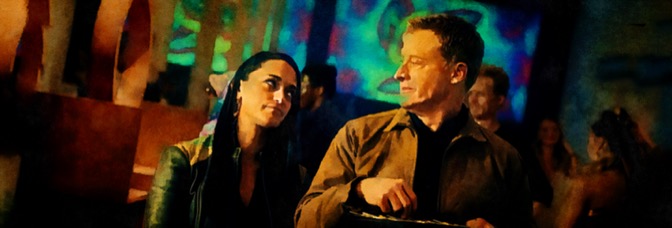
There are a couple big surprises this episode, which sees Sara Tomko and Alan Tudyk going to New York City to find another alien from Tudyk’s species. It’s not New York, New York, it seems to be the more Manhattan-y streets of Vancouver, but they do a decent enough job of it. Tudyk hates all the people, the smells, and probably the noise. There’s a lot of street noise; it’s particularly good sound for a show where they don’t have to think about constant background noise very often.
The trip to New York doesn’t start the episode—they first started talking about it in the episode before last but got busy with more pressing matters—instead, it’s trip prep, which includes the two big surprises. If you haven’t read the comic, I guess there’s another surprise later on, but the New York stuff is the most faithful adaptation of the comic’s plot to date.
One of the surprises is a profoundly affecting character death (including a montage with Bee Gees accompanying—lots of great songs this episode); it follows a hilarious scene for Tudyk and Gracelyn Awad Rinke. Judah Prehn and Meredith Garretson aren’t in this episode, which means Rinke’s got to tell Tudyk she lost his silver Starman space ball on her won, and then Levi Fiehler will be free for a character development arc with Alice Wetterlund since wife Garretson and son Prehn aren’t around.
The other surprise involves Tudyk’s human version before the alien arrived and killed him. The episode opens with a flashback to human Tudyk and town doctor Jan Bos in some kind of trouble with a New York company; serious trouble. And, of course, human Tudyk’s going to be a bad guy who kills Bos, but the show hasn’t explored their relationship (or Tudyk’s motive) until now. The surprise isn’t that flashback, however. It’s alien Tudyk having found a big bag of cash hidden in the house, presumably a pay-off. He doesn’t tell anyone about it until now when Tomko complains they’re low on spending money for their trip.
The bag of cash also has some clues about Bos’s murder, which gets Tomko into investigation mode. When they get to New York, she wants to investigate since the company’s there, while Tudyk’s fixated on finding his alien brethren. The investigating has some ups and downs, and ends with them in a trendy gallery where someone gets Tudyk to take LSD.
At first, it seems like LSD doesn’t work on aliens… but, no, it does, and gloriously so.
While Tudyk and Tomko are out of town, there are character development arcs for some of the other cast members. First, sheriff Corey Reynolds makes an effort to help mayor Fiehler, leading to Fiehler and Wetterlund’s arc. Then deputy Elizabeth Bowen toggles from her unapproved UFO investigation to trying to figure out what Reynolds has been so upset about lately.
It’s a nice arc for Fiehler and Wetterlund, with some good comedy moments. The Reynolds and Bowen arc is a lot more dramatic, again with some great acting from Reynolds.
The cliffhanger’s a little abrupt, but otherwise, it’s a very strong field trip episode. The show’s never gotten out of its little mountain town like it does here before, and they do a good job of it.
Lea Thompson’s directing again and just as solidly capable as last time.
-
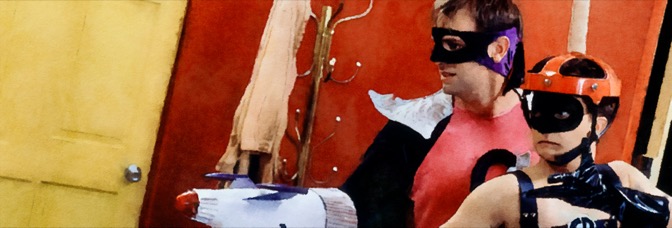
The best thing about Orgazmo is the opening title’s song, Now You’re a Man. Unfortunately, once the song’s over, there are ninety more minutes of movie.
Orgazmo tells the simple tale of a Mormon missionary (co-writer and director Parker) who happens upon a porn set and ends up the star of a superhero porno (also ‘Orgazmo’). The porno director, Michael Dean Jacobs, promises Parker enough money to go back to Salt Lake and marry his fiancée, Robyn Lynne Raab, in style. Well, style for Mormons.
Plus, Parker doesn’t have to perform the actual sex; they’ll have a stunt player handle it.
The movie tracks Parker’s experiences making the porno—including making a de facto best buddy in Dian Bachar, an engineering scientist double doctor who makes pornos because it’s the only way he can get chicks (he’s short). The porno becomes a crossover sensation, which still isn’t enough for people in Utah to have heard of it, so Raab doesn’t know anything about it when she arrives in L.A. unannounced to see her beau.
Throw in some dance club thugs terrorizing a neighborhood and Ron Jeremy in a supporting role, and it’s a movie. Apparently.
The first act’s better than the rest of it. Especially since the third act is all about the bad guys getting ready to rape Raab and the movie playing it for laughs. One of the few points Orgazmo gets is how it handles the female nudity. There isn’t any; the lack of it is one of the few successful repeat jokes, if only because the rest of the repeat jokes—there are so many—are terrible and tedious. But instead of leaning into not objectifying, Orgazmo just finds different ways to make fun of women.
There are also a whole bunch of Asian jokes, including baking in some jokes about Black people. Orgazmo didn’t age poorly or rot; it was always bad. Because it’s also really not very funny. Even when Parker and co-writer Matt Stone have a good joke, the actors tend to ruin it. Porno director Jacobs is so bad actual porno star Ron Jeremy acts circles around him. Overall, the best performance might just be David Dunn as Jacobs’s shitty bro nephew. He’s never bad, whereas everyone else ends up having at least one bad scene. Sometimes because of the jokes, but mainly just because of their acting.
Orgazmo is one of those NC-17 movies where they kept the rating instead of cutting (given Bachar’s sidekick costume involves sex toys, I doubt they’d ever get it though at R), but there’s nothing to the movie if they’re not trying to get the NC-17. There’s no story. Parker’s got a rote character arc, which—naturally—involves Raab seeing things his way because he’s the man.
Until turning the attempted rape into a gag, the running jokes (or attempted running jokes) are the worst thing in Orgazmo, which is already dull. They just draw attention to how long the movie’s been going on and not been amusing.
They could’ve used the song again in the main action instead of waiting for the end credits.
Technically, it’s low-budget middling as far as competence. Kenny Gioseffi’s photography is sometimes impressive for how good the poorly composed shot looks (Parker hasn’t got an eye at all), but then another shot will be unintentionally out of focus. Michael R. Miller and Parker’s editing is never good.
I think the fight choreography might be the most impressive technical, actually. Even when it’s not at its best—the superhero fights—it’s not bad like the acting or desperate like the script.
-
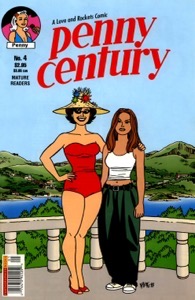
After the last issue’s full-length feature, creator Jaime Hernandez is back to the Penny Century anthology feel with this issue. The issue has two narrative arcs, split over five strips (plus a color strip and then another “To Be Announced”). The first and last strips are single-pagers, bookending and tying the arcs together neatly.
The comic opens with a very naked Penny Century hanging out at Isabel’s house in Hoppers. Since we last saw Isabel in the present, she’s shrunk back down to regular size; Penny comments on the return to normal but not how it happened. Penny’s invited herself to Isabel’s to be a houseguest while she deals with a personal crisis. Only it took her a week to mention the crisis to Isabel; otherwise, they’ve just been watching TV and drinking wine, with Penny walking around naked all the time.
Much to the neighborhood men’s delight (and embarrassment).
There are some ties to last issue’s flashback to Isabel’s childhood, like Isabel now living in the sort of haunted house and it turning out Penny grew up, for a while, in that house, something Isabel didn’t mention in her flashback sum up. While the series doesn’t seem connected, it’s always connected, whether through express detail or visual cues.
The first strip—the one-pager—has Penny inexplicably setting out a bottle of wine. It seems like Jaime’s making an art observation about certain parts of her anatomy having lines similar to a wine glass. Or martini glass. The wine bottle gets explained later, and it’s a great detail, but it’s a very peculiar opening.
The second story is one of the features. It’s ostensibly a Hopey story, only it opens with Negra suffering through mom Norma’s latest party. Jaime does reveal—thankfully—Norma’s shithead boyfriend is less a danger than a dunce. Hopey’s bartending, and she’s getting the guests too drunk, Negra’s sick of her mom sucking up to rich people, and Norma’s having a personal crisis of her own. Sort of. I mean, she’s having a personal crisis, but it’s not exactly her own.
In fact, it’ll turn out to be very similar to Penny’s crisis.
After the party, Hopey’s got to figure out a ride home, and Maggie’s not around. Has anyone seen Maggie since the possible ghoul in her back seat two issues ago? Unclear. It’s a six-page story and excellent.
Then it’s another naked Penny and Isabel story. Isabel is apparently down for the nudism, except when they have to go to the grocery store for more wine. Penny reluctantly gets dressed but only barely. This story is where she talks to Izzy about her crisis, their history with the house, and so on. It’s an excellent Izzy and Penny story; it just happens to technically be six pages of nude good girl art by Jaime.
The “To Be Announced” strip is next; it’s a page about Lil’ Ray fighting tree elves who maybe stole his ice cream. It’s weird, slight, and short enough. The weird makes up for the slight.
The next strip is the adult Ray story, which is the longest feature at seven pages. It takes place the night of the issue’s day, with a bummed out Ray falling for a stripper who doesn’t know he exists, then helping out Negra and a friend; they’re stranded thanks to no gas. The story also has Ray discovering Hopey’s in L.A. and potentially Maggie, which probably made the story read longer than the seven pages because—confession time—my greatest fear for Penny Century is Jaime getting Ray and Maggie back together. Because Ray, as this story—where he narrates–confirms, is a dick.
He could be a lot worse, obviously, and he behaves well with the teenage girls, but his rumination’s on how he’s been wronged by the women in his life… nope. It’s particularly strange because there’s so much less self-awareness than in his first story of the series when we found out about his almost life-long obsession with Penny. Not to mention their occasional booty calls.
It’s a good story, some great art, incredible storytelling from Jaime. But damn, I hope Ray keeps his toxic ass away from the Locas.
There’s an interesting nod to another of the series’s strips, “Space Girl.” Jaime introduced Space Girl and her nemesis, Cheetah Torpeda, in the Color Special and then brought the characters along here; Ray’s strip club of choice is called Cheetah Torpeda, and Space Girl is one of his other childhood crushes, it turns out. Jaime’s also got a few references to brother Beto’s works in this issue. Such a lovely tapestry.
The last black-and-white strip is the one-page conclusion to the main arc, with Penny and Izzy having another talk about her crisis. It’s simultaneously genial and haunting, even before Jaime announces a milestone in the Love and Rockets lore.
The color strip brings back party girl Mini Rivero, who Jaime also introduced in Color Special. It’s a crossover strip with Space Girl. It’s a quick bit of fun.
My personal fears for the soap opera story aside… it’s an excellent comic. Jaime’s firing on all cylinders.
-

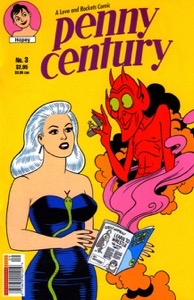
Again, creator Jaime Hernandez completely surprises with Penny Century. The content, anyway; the quality is always a safe bet.
This issue is set in summer 1966, in Hoppers, where Isabel is a little kid whose best friend is going to Mexico for the summer, and she’s got nothing to do. Thanks to older sister Chabela’s boyfriend not liking babies, Isabel finds herself taking over Chabela’s babysitting duties. The baby in question? One Margarita Luisa Chascarillo, whose still young enough to be carried, but toddler enough to walk around on her own with some agency.
Real quick–seeing as how Jaime’s set the characters in time, it’ll be interesting to see how he addresses them aging as adults. This story, Home School, is done in a style similar to the “Lil’ Ray” strips Jaime started in Love and Rockets (and has continued in Century). It’s got a lot of Peanuts energy, and it works beautifully here, the first time a girl’s gotten the spotlight.
Isabel initially finds Maggie (she’s still Perlita at this age) incredibly annoying and bullies her, similar to how Chabela bullies Isabel. Jaime never makes the comparison too direct, instead letting the behaviors echo across the relationships. Of course, things change for both pairs of girls as Isabel discovers being cruel isn’t worth the reward, and Chabela realizes life doesn’t revolve around her shitty boyfriend.
At least, not when there’s a child in trouble.
While the overarching story is about Isabel growing up over this particular summer and taking responsibility for someone else (forever, as regular readers know), there are also some great subplots running throughout. First is Isabel’s smoking. With no one to hang out with, she hides out in the dugout at the park and smokes squares.
Second is the neighborhood white owl, which Chabela convinces her was sent by witches to curse one of the neighbor ladies. Isabel spends her nights petrified as the owl hoots.
It’s a fantastic story. Jaime tells it so breezily I was shocked when it was the only story in the issue. It seemed like a feature, sure, but not the whole issue. There are some great sequences as Isabel and Perlita go from contentious to comrade, and lots of great action.
Other than the general style touches to compare to Peanuts (including a scared under-the-bed panel I’m not sure was ever close to being in a Peanuts but is very much the vibe), Jaime doesn’t do anything to tell the story like a three or four-panel newspaper strip. Instead, it’s far looser, with the passage of time sometimes just being told in Isabel’s changed outfits.
Again, it’s a particularly great comic in an already particularly great series. Jaime outdoes himself.
There’s a single page Ray comic in the color, back page “To Be Announced” strip. He’s having nightmares about someone in his apartment—suggesting the robbery last issue affected him more than narration suggested—and then the punchline actually ties into Maggie’s ghoul from last issue too.
Visually, at least. It’s a good, scary enough little horror strip, but the issue-length feature could cover it even if it weren’t any good. It’s such a good feature.
-

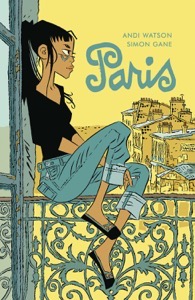
The love story at the heart of Paris could take place anywhere. But it also can't take place anywhere but Paris. This collection emphasizes the Paris setting, with artist Simon Gane doing a new visual prologue of the city waking up. The birds are chirping, the lovers are waking (or already busy), and the city is vibrant and alive.
Paris collects a four-issue series, plus the prologue to the original collection, plus this new prologue. Gane does four double-page spreads moving through the city before a single page introducing the protagonist, Juliet. Though it helps if you know to look for her because Paris is full of life, full of people.
The next prologue (the original collection's prologue) follows Juliet on her way to school. She's in art school, drinks coffee, smokes cigarettes, and loves Paris. It also introduces her love interest, Deborah, having a very different experience in Paris. She's sequestered in Hotel Anglais, her maiden aunt chaperoning and programming their Parisian visit. It's just a couple-page introduction, Deborah looking longingly at the city she's missing, but the moment does a bunch to set her up.
The collection proper—issues as chapters—begins with Juliet in class, listening to her blowhard instructor, and getting a commission for a portrait painting. Juliet has to do portrait paintings of young ladies because fathers (and chaperones) don't want male artists staring long enough to paint. Andi Watson's script quickly sets up the ground situation (what's really impressive is how well Gane's able to transition from a relaxed, visual-first pace to rapid-fire exposition). Juliet's got a male friend at the art school, Gerard, who can't shut up about his jazz and mad crushes on her. She's from the United States (New York) and can't afford her tuition without the commissions. She lives with Paulette, a revolutionary who has to hand wash (and hang dry) all her lingerie at the apartment because they're too delicate for the laundromat.
Both Paulette and Gerard are French and speak a mix of French and English to Juliet. There's a translation guide at the end of the book, but it's mostly unnecessary. One might miss some occasional details, but they always come through either in English dialogue or thanks to visual references.
Juliet goes to the portrait sitting, assuming her subject, Deborah, will be the same terrible blue blood she's always painting. After Aunt Chapman (everyone calls her "Chap," which I thought meant chaperone until I realized her last name's Chapman) is a momentary pain before exiting, Juliet realizes Deborah isn't what she expected. One of the book's most delightful, subtle strokes is when Juliet reveals Deborah introduced herself as "Debs," even though that scene isn't on the page. There will be other subtle implications throughout, but none of them is so… charming.
The chapter ends with Juliet starting her sketches, well on her way to being smitten with her subject.
The portrait painting itself is Paris's main plot, at least from Juliet's perspective. Chap doesn't want to pay for another sitting, but Juliet can't capture Debs from photographs. So Juliet has to engineer ways to see Juliet, which leads to the two exploring Paris together and falling in love with the city. And each other.
The supporting cast expands a bit, with Debs's brother, Billy, joining her and Chap in Paris. His presence allows Juliet and Deborah to get some time together, though why exactly Billy's got time to fake chaperoning his sister will figure into the plot later. There's also Rennell, a potential suitor for Deborah, who's got nothing going for her if she doesn't marry well. Finally, there's Paulette's boyfriend, who doesn't get a name but has some really funny scenes.
The comic's going to leave Paris behind for the finale, which tracks Juliet and Deborah back to their "normal" settings, all the delight of Paris behind them. Except, of course, they then learn through unfortunate experience, some of what made Paris Paris was them, not the city. It's a great finale, with Gane getting back into the full-page city splash shots by the end. In the Paris sections of the comic (proper, so going back to the original series), Gane does these splash pages of Paris street life. Sometimes Juliet will be in them, on her way to find Deborah; sometimes, it'll just be street life. The movement's the same throughout, full of Gane's little observations about the people and the place. It's lovely. Especially considering it's the fifties or sixties, Deborah and Juliet's romance might not do so well on Long Island or in rural Surrey.
Paris is a gorgeous comic, with Gane doing phenomenal character work on its leads—much of Debs's character development comes through in expressions, for example—and Watson's script is outstanding.
Like I said, in addition to being expert and excellent, Paris is also profoundly lovely.
-

My initial impulse for this post was a lengthy history of my personal “let people like what they like” realization, but it’s a real downer. The point was going to be it’s better to write about things you like or talk about things you like and enjoy. It’s immaterial whether you’re standing on the “what you like is what you think is good” hill or not. We serve mai tais from eleven on; mojitos start at one.
We just watched “Wayward Pines.” It is not good. I did not like it. We did watch all of it, and there were better and worse things about it. But I didn’t look forward to it.
Just over half the Halloween movies we’re doing commentaries for on the 709 Meridian pod are slogs. I was worried it was something about being tired, but there are just some things I don’t get interested talking about. There are only so many Joe Chappelle jokes because the joke’s always on the viewer. Doing the podcast is great, but it’s also the point, so goals for next season are figuring out how to have more fun slogging through a bad movie.
On the Onesies podcast, we’ve run into failed late eighties sitcoms not being particularly charming when it comes to… well, characterizations in general. There’s nothing it does well. So there’s a slog to it as well.
Also, I’ll note, there is no slog in Los Bros read-through (well, the porno comic was a rough starter) or Empire of the Summer Moon. Summer Moon’s beyond depressing; we’ve just gotten to the point the Kiowas are trying to decide to fight to the death or surrender, and it seems like extinction is the likely choice. But I’m still engaged with the prose reading goal.
What a day to be navel-gazing. Yikes. It’s February 28, 2022. 2022 is a really shitty year for even more people than usual. I’m pretty sure my writing constraint with Selected Declarations requires I post this post even after realizing it’s a weird time to be posting it.
Shit.
Something similar happened with the last regular blogging as writing practice attempt in 2016.
There’s a really sad pragmatism deep thought to be had right now. Though the way the Internet virtualizes the incorporeal is a very sad story. But the emotions, whether outrage or empathy, are real, incorporeal or not.
In writing class—undergrad, right after 9/11—the instructor came in after the U.S. had done something—invaded maybe—and asked if we wanted to write about it. I was the only one who did, and, unfortunately, all my hot takes probably turned out to be true, but it also would’ve given me a real space to write about it. Though, maybe, undergrad writing did?
Now might be a better time to write, not post, than vice versa. But the writing constraint must go on?
-

Describing “Resident Alien” as ‘“Northern Exposure” with an alien’ is reductive (and doesn’t properly acknowledge “Alien”’s R-rated but PG-13 executed humor). But it’s where my mind goes when trying to shortcut describe the show, especially this season. “Alien” is an ensemble. Though Alan Tudyk’s semi-reformed alien invader is the lynchpin, the core relationship is Sara Tomko and Alice Wetterlund. The character development all ties back to how Tomko and Wetterlund are experiencing their hometown as it changes, and they change and how everything around them affects those experiences.
Including Tudyk.
Tomko and Tudyk’s friendship has been one of the show’s greatest successes. No matter how wild the plot can get, no matter how absurd Tudyk can get, there’s a calm, comfort to their scenes. Whereas Tomko and Wetterlund’s scenes often bring the drama. In this episode, Wetterlund’s pissed-off Tomko spent the night at abusive ex Ben Cotton’s, and Tomko claps back, bringing up Wetterlund’s drinking problem. Wetterlund gets hangover IVs at the clinic from nurse Diana Bang (who gets a bunch of great material this episode).
Wetterlund resents Tomko for the secrets she’s kept—given-away daughter Kaylayla Raine—and Tomko resents Wetterlund’s present-day friendship with Raine. Their relationship is currently the only one on the show where there’s room for actual growth.
Mainly because everyone else’s development is in some way tied to Tudyk. For example, this episode has kids Judah Prehn and Gracelyn Awad Rinke discover they’ve lost track of Tudyk’s silver alien space ball. Unfortunately, they can’t tell anyone about it because it’s a big secret, meaning Prehn’s relationship with parents Levi Fiehler and Meredith Garretson has a significant constraint. Similarly, as Elizabeth Bowen becomes more and more convinced there’s been an alien incident (her lost memories from a day, which Tudyk indeed did wipe) when she and Corey Reynolds bond over it… it’s only going to go so far before alien space magic gets involved.
The episode actually opens with Reynolds, flashing back to the tragic end of his career in Washington DC (and the introduction of adorable puppy Cletus), and he’s got a few excellent dramatic scenes. Not really any comedic, just a handful of reminders Reynolds can act the hell out of any tone.
The A-plot involves everyone—including Tudyk—discovering human Tudyk has a teenage daughter, played by Taylor Blackwell. Thanks to bad dad tropes, they’re quickly able to get to absolutely hilarious montages of Tudyk trying to ingratiate himself to Blackwell; they just keep getting funnier as the episode progresses. The only missed opportunity is Blackwell getting to hang out with Prehn and Rinke (but she can’t because she can’t know Tudyk’s an alien).
Everyone ends up at the town’s annual Family Day, which mayor Fiehler has partially reimagined as a way to better advertise the town to tourists. There’s a play starring kids, involving lots of blood, guts, and boulders. It’s awesome.
The script, credited to Biniam Bizuneh (first-time script credit, though previous story editor credits), is fantastic. Not just in the comedy, but in the multiple tough talks the characters have to have with one another. Lots of good acting from Tudyk and Tomko opposite a wide variety of supporting cast members. Also, Blackwell’s a perfect foil for Tudyk (and Tomko). Her appearance, just as Tudyk’s understanding liking babies (before they turn into shitty teens) and Tomko’s got her… trauma arc? Oh, yeah. Okay. “Resident Alien”’s core plotline is Tomko’s trauma and recovery arc; I’m embarrassed it took me so long to describe it as such.
Anyway. It’s the right time and the right character to introduce. And Blackwell’s the right performance. She’s appropriately sullen, sardonic, and sympathetic. I also can’t believe how well they integrated her into the plot on her first appearance.
Lea Thompson directs, which seemed notable as trivia during the opening titles, but she does a fine job balancing the absurd comedy and the human drama.
“Resident Alien” keeps impressing in new ways; season two’s outstanding.
-


3: Free Spirit (1989), Part 3: Episodes 7-9 – Onesies
In the penultimate episode of season one, Emily and Andrew realize FREE SPIRIT–despite being an ostensible Corinne Bohrer vehicle–might not be a brilliant-but-cancelled situation (or even, unfortunately cancelled). Instead, the show might've had it coming. Especially with this batch of episodes.WHERE TO LISTEN

Apple Podcasts 
Spotify 
Stitcher 
RSS 
YouTube -
A critical episode guide discussing all ten third season episodes of the FX mockumentary series, What We Do in the Shadows. Based on the film of the same name (written and directed by Jemaine Clement and Taika Waititi), the show stars Kayvan Novak, Matt Berry, Natasia Demetriou, Harvey Guillén, and Mark Proksch. -

A critical episode guide discussing all eight first episodes of the Hulu show Devs, a science fiction thriller created, written, and directed by Alex Garland. The series explores themes related to free will, determinism, and Silicon Valley and stars Sonoya Mizuno, Nick Offerman, Jin Ha, Zach Grenier, Stephen McKinley Henderson, Cailee Spaeny, Karl Glusman, and Alison Pill. -
A critical episode guide discussing all ten second season episodes of the Netflix streaming show Dead to Me. The show stars Christina Applegate and Linda Cardellini as two grieving women who bond during therapy. James Marsden, Max Jenkins, Sam McCarthy, and Luke Roessler also star. -

A critical episode guide discussing both fifteen chapter BATMAN serials from Columbia Pictures: Batman (1943) and Batman and Robin (1949). The serials have different casts—the first stars Lewis Wilson as Batman and Douglas Croft as his sidekick Robin. The villain is an original character named Dr. Daka, a secret agent of the Japanese Imperial government, played by J. Carrol Naish. The cast members are Shirley Patterson as Linda Page, Bruce Wayne's love interest, and William Austin as Alfred, the Wayne Manor butler. Robert Lowery played Batman in the sequel, while Johnny Duncan played Robin. Supporting players included Jane Adams as Vicki Vale and veteran character actor Lyle Talbot as Commissioner Gordon. -
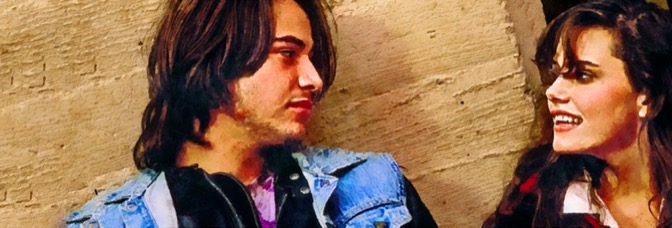
River’s Edge hinges on a few things. First, Joshua John Miller’s performance. The film’s about a group of teenagers reacting (and not reacting) to one of them killing another and showing off the body. Miller is protagonist Keanu Reeves’s little brother, who emulates and identifies with his brother’s worst traits. Second, Jürgen Knieper’s score. The music is ostentatious and emotive, blaring over the performances, and it needs to pay off for it to work. Finally, Crispin Glover. Glover’s performance is simultaneously affected, eccentric, and absurd. It really needs to work for Edge to succeed.
Working in Miller and Glover’s favor is the script, written by Neal Jimenez. Jimenez doesn’t have a lot of subtlety, starting with murderer Daniel Roebuck getting in a protracted argument with the gas station clerk (Taylor Negron in a fantastic cameo) about buying beer. River’s Edge is a movie where everyone speaks from the id, making more and more sense as the film goes on. Edge has a present action of thirty-six or so hours. It starts with Miller observing Roebuck wailing near the corpse, then meeting up with him at the gas station. It’s before the school day. Besides the epilogue, the main action wraps up before the end of the next school day.
The first half of Edge is entirely from the teenagers’ perspectives, whether it’s how Reeves sees mom Constance Forslund, Ione Skye’s fascination with teacher Jim Metzler, or Glover’s “friendship” with local sixties drop-out Dennis Hopper. Hopper provides the kids (and possibly their parents) with their weed. The kids get it for free. Unclear about the adults.
Hopper’s a mostly hermit, stoned all the time, playing with an unloaded revolver, dancing with his blow-up doll girlfriend, and talking about the time he once killed the woman he loved.
Hopper would be another of the film’s big swings if he didn’t pay off before the third act. It takes forever for River’s Edge to get where it’s going, amping up the danger as it goes, but along the way, there are some obvious highlights. The big turning point is in the second half when the film angles the narrative distance just enough to show the kids from the adults’ perspective. Or, at least, less subjectively than before.
Once the first school day begins, Roebuck tells Glover and Reeves about the murder and takes them to see the body. Glover immediately decides they need to help cover it up for Roebuck while Reeves detaches. Roebuck’s also detached from the situation, not exactly showing off the corpse with pride but as a curiosity. The first day has Glover bringing more people over to look at the body (everyone thinks he and Roebuck are pranking them), while Reeves gets more and more upset. He’s just unable to express it.
We’ve already seen Reeves’s home-life—Miller’s an uncontrollable shithead at best, a vicious bastard at worst. Mom Forslund already has her hands full with work, live-in asshole boyfriend Leo Rossi, and youngest child, daughter Tammy Smith. Miller obviously resents Smith and her still experiencing childhood, while he’s already getting stoned and hanging out with another little shit, Yuzo Nishihara. Miller looks up to Reeves’s friends, specifically Glover and Roebuck, while Reeves tries to keep him from bullying Smith too much. The film joins the arc in progress, with Miller’s resentment reaching its boiling point.
Similarly, Skye is nearly her limit with her erstwhile boyfriend, Glover. Late in the film, Reeves has the very adult observation; it’s just a very bad time for everything, and they need to try to get through it. Based on the other examples, it’s the most adult observation in the film. Metzler sees himself as the cool ex-hippie teacher who tells the Reagan Era kids about the good old days when his generation changed the world for the better (though Metzler would’ve been their age and seen it through teen eyes). Hopper’s arc is about confronting the narrative he’s been living and the reality he’s been avoiding, and how it plays out with this teenage social circle he’s inadvertently joined. Forslund’s overwhelmed and frantic. Then cop Tom Bower’s only approach to teenage interaction is to berate them into submission. No one really knows what to do. Their inability to acknowledge it puts them into an adversarial relationship with the teens, who are quite aware of what they’re going through. With some late-Cold War existential nuclear dread.
The majority of the runtime is spent on the night, specifically after midnight. Glover’s trying to get the gang together to hide the body and get Roebuck enough cash to leave town. It proves more difficult than expected since his car can’t make a significant trip, no one’s got any money, and Roebuck’s indifferent to an escape plan. Meanwhile, Reeves feels the consequences of his actions and inactions, including further alienating Miller while also getting into a dust-up with mom’s boyfriend Rossi.
Miller will spend the rest of the movie juxtaposed against Roebuck (often literally, kudos to Howard E. Smith and Sonya Sones’s sublime editing) as he becomes more and more dangerous, committing to taking his revenge on Reeves.
Circumstances—and Glover—pair off the rest of the cast. He exiles Skye for talking back (she’s wondering why the dead girl isn’t as important as bro Roebuck) and then assigns Reeves to keep her company, leading to a great character arc for them. Glover’s also stashed Roebuck with Hopper, which ends up forcing Hopper to deconstruct his own bullshit, unable to sympathize with psychopath Roebuck even when he tries to bond over macho stuff.
The film’s a graphic dissection of toxic masculinity, as it plays out over multiple generations, and the horrific effects it has on boys and girls alike.
In other words, Jimenez can get away with the id-speak. Likewise, Miller and Glover can get away with their performances (so long as they actually develop, which they do). And Knieper’s booming tragic operatic score has the right action to company.
Technically, Smith and Sones’s editing is the highlight. Frederick Elmer’s photography is good, but he and director Hunter shoot the film mostly naturalistically. Yes, the light’s muted, but it’s because the light’s muted. The editing is where the film finds its exquisite moments. Hunter’s direction is intentional throughout, taking well into the second act to do much besides observe the characters and their reactions. River’s Edge is mostly about reaction.
As far as the acting, Hopper’s the best performance. No one else gets anywhere near as good an arc. Skye and Reeves are good as the heroes. Glover’s indescribable yet successful. Roebuck’s appropriately disturbing, revolting, and tragic. It’s an elegant move. We get the most insight into Roebuck through Hopper’s perspective. It also helps everyone’s supposed to be stoned or drunk most of the time.
River’s Edge is a race. Hunter gets the momentum going in the first act, and the film never slows down, even as some of the plot’s more significant swings threaten the derail it. It takes until the finale to really pay off, and that pay-off is incredible stuff. Then the epilogue—not set to Knieper’s score but a perfect song selection—wraps it up beautifully.
I’m not sure it’s exactly a challenging watch, but it’s a thoughtful, painful one. River’s Edge is great.
-

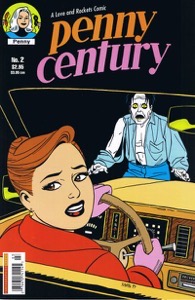
Penny Century didn’t appear in Penny Century #1 (at least, not in the present action), but this issue starts with her. It’s a direct follow-up to last issue, with Penny—who seems to have a beauty salon somewhere between L.A. and Hoppers—getting Hopey gussied up. It’s a one-page strip, followed by the further adventures of Ray in Hollywood.
The Ray story flashes back to his tween-age years in Hoppers when he hung out with older kids one summer and helped them break into houses. In the present, someone’s broken into Ray’s apartment and made off with his TV and laundry money, so his reminiscence has some immediate context.
It’s a quick story—four pages, opening with Ray’s staccato narration about his day—and foreshadows how creator Jaime Hernandez will be doing a lot with blacks this issue. There are some nighttime panels (in the flashback), and Jaime does a glorious job with shadows.
He also doesn’t try to make Ray particularly likable. He ends up being more likable than the least likable characters this issue, but Jaime’s not sugar-coating the character.
The next strip is another one-pager, with Li’l Ray playing with the television dial and discovering the UHF setting. It’s a cute strip in how it ties into the TV from grown Ray’s story, but also showing him in his more innocent days, not breaking and entering. Like the last issue, the strip’s called “To Be Announced,” Jaime’s establishing some regulars in the anthology format.
The feature story is next, and it’s very irregular, however. It reminds a lot of that first issue of Love and Rockets, which has a haunted house story (later revealed to be an Izzy story).
It starts as a regular Locas strip, with Maggie joining Penny and Hopey in the beauty shop to see how fixed up Penny’s got Hopey. Maggie’s got to drive home alone, and Penny tells her to take a “haunted highway,” leading to some teasing and good humor before the actual car trip.
Jaime writes it with that second-person narration he used for Maggie’s story last issue, with the narration directly engaging her in conversation and questioning her decisions. Only it’s not cute and comedic; it’s Maggie having a lengthy panic attack as she freaks out about being in possible danger. Jaime draws it like a Hitchcock movie (shades of Marion Crane), and it’s phenomenally effective stuff.
Especially since the ending’s a cliffhanger.
The story’s also almost entirely at night, so Jaime does a lot with inky blacks. It’s a beautifully illustrated story; Jaime’s visual pacing is perfect.
Then there’s another one-pager. A snowman wants to borrow an umbrella from his friend, a groundhog. It’s a funny, seven-panel strip, done entirely for laughs (or smiles). Though Jaime does love his shadows in it.
The next strip stars Negra and her mom, Norma; it’s the first time we’ve gotten to see how Norma treats Negra when there aren’t witnesses, and it’s not great. Negra’s in a fairly bad, borderline but quickly approaching that line abusive. It’s three pages, and literally half of it is disturbing.
The penultimate story’s a four-pager about what Hopey and Penny were getting together to go and do. Izzy’s got a book signing in Hoppers, and they’re going to be supportive. Plus, Izzy wrote a whole chapter about when she and Hopey did peyote, and Hopey burned down a liquor store.
Izzy showed up in Maggie’s story in flashback (kid Izzy scares kid Maggie with stories). It nicely ties in with the opening strip; Jaime does a great job fracturing the narrative but never gets too far away from it the proverbial plot.
Turns out Izzy’s so nervous about the reading—and real success as a writer—she’s having a physiological reaction. Hopey doesn’t think it’s funny, but Penny finds the whole thing hilarious, leading to some great banter and a nice couple of punchlines.
The strip’s strange (including a cherub-like child with an adult’s intellect), with Jaime doing some creative panel composition to include the cast. It’s a good finish.
Except there’s also another color strip on the back cover. Space Girl—who we met in the Maggie and Hopey Color Special—bitching to her bartender about not being compensated for her super-heroics. Sci-fi good girl art with a twist. It doesn’t relate to anything in the comic itself, but it’s a good style preview.
-

The network hasn’t renewed “Legends of Tomorrow” yet, so when Adam Tsekhman makes a meta-reference to the show’s weekly air time… it’s cute but isn’t a great landing. Especially since the episode’s all about the show ending.
There’s a real quick resolve to the cliffhanger. The evil robot version of Olivia Swann escaped Hell and stabbed Amy Louise Pemberton in the back, mortally wounding her. Unless they can get the spaceship’s med lab online, which requires plugging back in the evil AI running the ship (also Pemberton, in her “traditional” voice-only performance).
Luckily for the team, AI Pemberton can’t let anything happen to human Pemberton since the only plan for eliminating the humans is decompressing the ship while it’s in the (presumably atmosphere-free) time dimension.
So while Caity Lotz and Jes Macallan devise a plan to take back control of the ship (again), human Pemberton tries to make a deal with AI Pemberton to let her friends survive. The eventual solution is just the end of the show. They’ll all quit being “Legends” and stay in their timelines (it’s unclear if they can still superhero). While Lisseth Chavez goes into the Jefferies tubes to try to take back control of the ship, human Pemberton and boyfriend Tsekhman bring everyone in to see a glimpse at their future without the “Legends.”
The flash-forward reveals new careers as children’s TV hosts, politicians, parents, influencers, and so on. Except no one—outside Lotz and Macallan—has anyone from the “Legends” in their lives, and few of them can connect these future successes with their current ambitions. There’s some good acting—no surprise—from Tala Ashe, who’s particularly distraught, as well as Matt Ryan, who finds out he does not get to save his dude, which was the whole impetus for him joining the team this season. Well, rejoining as a different character.
It’s a downer of an episode, with the occasional future flash jokes not really enough to compensate for the sense of loss most people are feeling. Especially considering the show hasn’t been renewed, this outing could be the farewell voyage.
There are a couple big twists in the finale; one to get the show to next episode (the short season’s finale) and one to potentially be left unresolved if they don’t get renewed. I hate it when shows play chicken with the network… something “Legends,” usually renewed in January, hasn’t had to do for years.
But their time may be up.
-

A critical episode guide discussing both fifteen chapter SUPERMAN serials from Columbia Pictures: Superman (1948) and Atom Man vs. Superman (1950). They star an uncredited Kirk Alyn (billed only by his character name, Superman; but credited on the promotional posters) and Noel Neill as Lois Lane. The serials also star Pierre Watkin as Perry White, Tommy Bond as Jimmy Olsen, and Lyle Talbot as Lex Luthor. -
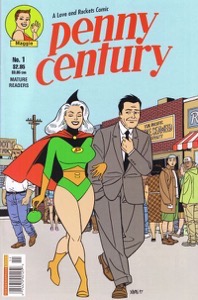
I had to go back and check old Love and Rockets to see if I’d somehow forgotten Ray (Maggie’s most serious boyfriend) had a subplot about mad-crushing on Penny Century. Nope, doesn’t look like it. First, I wasn’t expecting Penny Century to open with a story about someone knowing Penny Century, not Penny herself. Second, I wasn’t expecting creator Jaime Hernandez to do a retcon.
I’m pretty sure it’s a retcon.
Pretty sure.
Also, wasn’t expecting Penny Century to be an anthology. It’s basically a Locas comic, checking in not just on Maggie and Hopey but also featuring a Daffy cameo and an Izzy mention. Ray, of course, at his peak, was in a Locos strip.
The first story has Ray living a lonely life in Los Angeles (or, at least, Hollywood). The first three pages are single-panel sketches of his life there, things he’s overheard, things he’s doing, things he’s not doing. Then, on page four, he mentions Penny, and his story’s now all about her.
It turns out Ray went to junior high with Penny. She never noticed him, but years later (in Love and Rockets #30), Maggie and Ray went to stay at Penny’s mansion, and Ray told Maggie about it. Penny started teasing him—I checked the back issue; she’s mainly parading around naked trying to seduce him but to get Maggie and Hopey back together, not because of a backstory. Like, the retcon’s fine (it makes Ray into an oblivious dickhead in a lot of ways, but I think it’s in character); I just wanted to make sure I wasn’t missing context.
So then it’s a recounting of their relationship, which has Penny booty-calling Ray occasionally and having earth-shattering sex. The only way for him to guarantee a visit is to meet a new girl; Penny magically arrives whenever he starts getting over her. He moved to L.A. (or, again, at least, Hollywood) for her, but after she’d dumped him, seemingly for good.
It’s a good story. Quick and effective, with Jaime starting slow with Ray’s observations, then speeding up once he begins recounting the relationship.
The following story is a two-page strip about a couple cowboys and the devil. It’s cute. Jaime’s not trying very hard, and it provides a nice break between the opener and the rest of the comic, which is Locos.
Maggie and Hopey are still in L.A., still not living together (as seen in the Color Special). Maggie’s started working for Norma Costigan, which includes helping out with her teenage daughter, Negra.
There are three stories: Maggie’s, Negra’s, then a postscript with Hopey talking to Maggie on the phone. It’s three different perspectives on the same afternoon’s events, and they’re good ones. The Negra story introduces her friends back home (mom Norma just got the mansion and payday from her divorce from Negra’s dad, H.R. Costigan, who was also at one point married to Penny). Negra first appeared in Color Special too.
She’s a teen with complex issues, while Maggie and Hopey are twenty-somethings with complex issues. Maggie’s feeling inert as Norma’s assistant; Hopey’s just suffering through her latest job, a toy store. Jaime focuses on Maggie’s inertia more than Hopey. It’ll be interesting to see how it plays out going forward.
I didn’t know what to expect from Penny Century….
Well, more like, Penny Century is nothing like what I expected. I mean, I expected it to be great, and it’s great, but everything else is a surprise.
Including Jaime using the back cover for another strip (in color). Li’l Ray makes an amazing discovery. It’s a charming finish for the book. Or start, depending on whether you notice the back before you start reading.
-
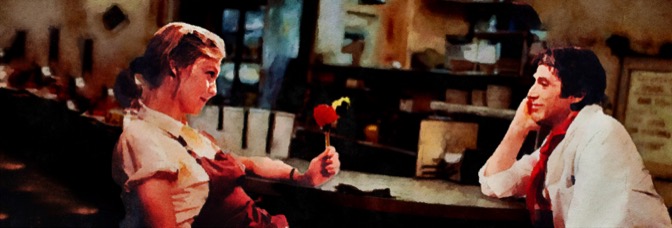
Besides the sex scene, set to Rickie Lee Jones singing, “It Must Be Love” (which means Al Pacino sings it later as he gleefully reminisces), Frankie and Johnny avoids revealing too much about the private tenderness between Pacino and romantic interest Michelle Pfeiffer. At one point, he says something to her as their first date is wrapping up, and it convinces her to invite him back to her apartment. We don’t get to hear it; we just watch Pacino gesticulate exuberantly as the music swells, and Pfeiffer just can’t resist him any longer.
Pfeiffer is a New York City waitress who’s had only bad relationships, some very, very bad and others still pretty bad. Pacino’s the new grill cook who focuses on her after discovering she’s Frankie to his Johnny, finding more and more coincidences to suggest they should be together. Pfeiffer remains unconvinced. The film covers their courtship—with detours—before examining whether or not they can actually function as a couple, what with Pacino being obnoxiously extroverted at times and Pfeiffer being guarded.
The film’s got its share of problems. First and foremost, the film presents anything but married with children as abnormal. To some degree, it works as an exaggeration of the societal expectations on Pfeiffer, who starts the film back home visiting and standing up as godmother at a christening, with mom K Callan passive-aggressively whining about not having grandchildren. But it’s still reductive, especially for unmarried, ostensibly lonely waitress Jane Morris. Though that characterization also indicates another problem—director Marshall only knows how to direct so much of the film. When it comes time for Pfeiffer and Pacino to capital A act in close-ups and have hard talks, Marshall gets uncomfortable and either hurries away to montage or throws in a joke.
The jokes aren’t bad—they often involve Nathan Lane, who’s fantastic as Pfeiffer’s neighbor and best friend. He’s gay and has just started dating Sean O’Bryan, something Pfeiffer finds out when she gets back from her visit home, meaning we never get to see Pfeiffer and Lane as friends without him in her life less. Another thing Marshall could’ve leaned in on more.
But for the third act, the only time the stage adaptation (Terrence McNally wrote the screenplay from his play) gets to be stagy, as Pacino and Pfeiffer hash it all out, Marshall runs away from both actors. After opening with Pfeiffer (and a quick clip of Pacino getting out), the film’s heavy on him for the first two acts. After all, Pacino’s got the additional getting-out-of-prison story arc and Pfeiffer’s entirely reactive to him. But in the third act, Pfeiffer’s got to shut down his bravado and charm and stake out the space for her performance. McNally’s script makes the room for Pfeiffer, Pacino arguably makes the room for Pfeiffer, but Marshall doesn’t know how to do it. He doesn’t force more Pacino into the scenes, and avoiding him too makes it weirder.
There’s also the odd issue the only thing cinematographer Dante Spinotti doesn’t shoot brilliantly is sunrise in the city. Spinotti’s exterior street scenes, day and night, are fantastic. His interior restaurant scenes are extraordinary; the talking heads scenes between Pfeiffer and Pacino are gorgeously lighted. But he’s too saccharine in the finish. It’s a disconnect, with Marshall’s unsureness compounding the problem.
But the film’s problems don’t surmount the careful, deliberate, marvelous performances. While Pacino’s bombastic and naturally draws attention, Pfeiffer’s observation of the world around her is even more transfixing. Pacino gets to showboat; Pfeiffer just gets to watch and process that showboating for herself (and the film). It’s an incredible narrative device: even though Pacino’s new to the restaurant and the cast, making him the natural perspective, the film actually uses Pfeiffer’s experience of his arrival. We get to know the cast not through Pacino meeting them (well, except Kate Nelligan, sort of), but in Pfeiffer watching it.
It’s a really nice move, and Marshall does pull it off well. Outside the finale, Marshall mostly knows how to direct to showcase his stars, and, given their excellent performances, it works out.
Nelligan’s another waitress at the restaurant who decides she’s going to hook up with Pacino if Pfeiffer doesn’t get her dibs in soon. Nelligan’s also part of the problematic “married or die” aspect (I mean, so’s Lane), but she gets the time and space to act through it. The supporting cast at the restaurant is all good and often lovable. Besides Morris, there’s restaurant owner Hector Elizondo, Glenn Plummer, and Fernando López. In addition, there are some charming regular customers, like Phil Leeds—another layer of the film is how Pfeiffer, Nelligan, and Morris act as de facto part-time caretakers for their aging customer base.
Frankie and Johnny takes place in a nicer than not world, but it’s all very textured thanks to McNally’s script and Marshall’s enthusiasm for supporting actors.
Pfeiffer and Pacino are the show, though. The film’s about them, specifically their performances; everything else is just there to support them. Well, except in the third act when Marshall needs to step up and doesn’t. They’re great. Problems, potholes, and hiccups aside, it’s a wonderful job from them both (Pfeiffer’s better, just saying).
Lovely Marvin Hamlisch score too.
-

There are a lot of stories you can only tell in sci-fi. For instance, only with time travel can you have young mom Kacey Rohl wake up after two thousand years of cryo-sleep and be paired off with her unknowing son, Tom Stevens, now grown up.
Yuck.
It’s unclear why you’d want to tell this story (something “Wayward Pines” only decided to do last episode as a final shocker since no one cares if Nimrat Kaur leaves Jason Patric for Josh Helman), but it’s also unclear why you’d do it just to be cruel to Rohl. Patric will ditch the Hippocratic oath this episode because it’s the finale, and things need resolving. However, he also ditches it to include taunting Rohl with the information he knows about her unintentional Oedipus subplot. Later on, Amitai Marmorstein will give Rohl a similarly knowing look.e
It craps out Rohl having a character arc, even with such a bunk storyline. It’s too bad because she was one of the season’s stronger performances overall. Unfortunately, the show didn’t know what to do with Stevens, and Patric went way too quickly from season protagonist to sturdy town doctor supporting cast, so Rohl was its last hope. Well, I guess maybe Kaur, but they took her arc away to give her to charisma and acting vacuum Helman.
Towards the end of the episode, Djimon Hounsou gets a moment where it’s obvious he should’ve been the protagonist, but of course, they wouldn’t. “Wayward Pines,” outside the casting this season, never made actual good decisions. And when it’s vaguely exploitative, it’s okay. But, when they embrace the exploitative, they can’t figure it out.
The episode’s stakes are simple—there aren’t enough pods, some of our favorite cast members might not be going because Stevens made a list, and he’s closing out the grudges. Plus the gay and Asian kids. They don’t get saved either.
Anyone not in a pod is going to get murdered by the creatures. Or, if Patric can come up with a way to fend them off, they’re going to starve to death. Or be killed by the left-behind shitty white guys. Stevens at least didn’t take the shitty white men (at least not the ones out of their teens).
It’s familiar, sympathetic cast members in danger, and mildly effective. Certainly more effective than the creatures’ preparing their assault, which is just queen Rochelle Okoye yelling at them while they amass in the same locations again and again. “Wayward Pines” clearly didn’t have the budget for a big action sequence, so someone decided to tread water for the entire final episode.
Not a great choice.
Script credit to Mark Friedman. It’s not good. Outside Siobhan Fallon Hogan’s part. She again is the butt of the joke, but her performance is, as usual, superb enough the writing doesn’t matter.
“Wayward Pines: Season One” started more embarrassing than it ended; season two started less embarrassing than it ends. Director Ti West has some lousy composition, which may be a nod to executive producer M. Night Shyamalan, but it’s also just indicative of the exhaustion. The show never explored its better plot threads, never actually developed its characters; it just sustained on usually minimal competency and a few good performances.
Jason Patric ought to be a TV lead. Djimon Hounsou is a great TV series sturdy wingman. It’d be interesting to see if Tom Stevens can do anything but Mirror Universe Wesley Crusher. Kacey Rohl’s got some range and skills. Hope Davis is a good creep (it’s too bad she didn’t find out Rohl was Stevens’s mom; that scene would’ve been something). It’s too bad they weren’t working together in a better project.
Instead, they were trapped in “Wayward Pines.”
-

Wayward Pines, the town, is in dire straits. The creatures outside the wall have destroyed their food supply, and they’re out of MREs. They’ll only survive another thirty days (or, more precisely, two episodes). So teen dictator Tom Stevens decides everyone’s going back in cryo-sleep for fifty-seven years or whatever. Only Djimon Hounsou then discovers no one kept the cryo-pods charged since season one ended and the teenage Nazis took over. As a result, they can only take half the populace.
Jason Patric’s still hoping he can come up with some kind of medical solution and won’t help Stevens evaluate the breeding stock. Patric says they should do a lottery; Stevens says it’s got to be based on white bloodline or whatever. Like most scenes for Stevens, there’s potentially a good character thread, but then they immediately drop it. In this case, it’s in favor of a personal quandary—Stevens doesn’t want defects, love of his life Kacey Rohl can’t have babies and is, therefore, defective. Joss Whedon ghostwrote “Wayward Pines?”
Patric is also actively plotting against Stevens this episode, though we don’t get to see any of his plans other than when he checks in with Josh Helman to ensure Helman won’t support Stevens in a coup. It’s a pointless scene, only there for Helman to taunt Patric about how Nimrat Kaur’s preggers with Helman’s baby. Kaur’s around for useless scene with Stevens—encouraging more, different character development–because it turns out this episode’s all about a huge secret.
Toby Jones stars in a flashback story about how he got baby Tom Stevens for the town. First, he tried buying a pregnant blue blood’s unwanted baby, but then he had to resort to more traditional means (bribing a public hospital).
The secret is the identity of Stevens’s mother. Sadly, not an Emperor Palpatine clone. Instead, it’s someone whose identity is going to knock every character arc for Stevens out from under him. There’s also some retconning involved with Hope Davis and Melissa Leo’s characters in particular, though they’re long gone and out of the guest star budget, so who cares. As PG-13 exploitative as “Wayward Pines” got with this season, I really did not expect them to embrace it to this episode’s degree. Worse, it doesn’t do anything to inform characters’ behaviors in previous episodes. Mom’s secret identity doesn’t explain why Stevens is king little shit.
It all comes to a fateful conclusion, including the not ineffective shot of blood running through the streets of the Wayward Pines model in Jones’s office. They probably should’ve used that visual last season with Jones’s death and not here when they’re trying to make a contrived plotline have more of an oomph.
On the other hand, faced with an inevitably disappointing conclusion—season two switched over to building to the finish just as there was character development—a large-scale cop-out and shrug do kind of make sense. Why bother doing anything else?
-

Scarface is a film with a lot of problems. Most consequentially, there’s no character development for Al Pacino; any time there’s ostensibly character development, the film cuts ahead a month or three, or there’s a montage sequence. But the film is incredibly hands-off with Pacino’s character and arc. It leaves Pacino to vamp throughout to keep the energy up. He’s always doing something in the performance, which is simultaneously transfixing and tedious. He’s just making up for director De Palma and screenwriter Oliver Stone’s shortcomings.
It also means he never builds character relationships with the costars, like literal trophy wife, Michelle Pfeiffer (Pacino gets her as a reward for leveling up as a Miami drug kingpin), sister Mary Elizabeth Mastrantonio, or “best friend” Steve Bauer. Quotation marks because Pacino and Bauer have something like two scenes where Bauer’s not just an accessory. The film tries to bring it all together at the end when Pacino’s being performative about his relationship with Pfeiffer and then later feels regret for not supporting Bauer and Mastrantonio’s star-crossed romance. It’s already too little, too late, but De Palma ignores it so he can do a lackluster action finale. However, ignoring it means ignoring Pacino, whose performance is the only thing keeping Scarface afloat by the finale, so it dings the finish even more than the bad action does on its own.
But the other big problem with the film is De Palma runs out of ideas during the first act. He and cinematographer John A. Alonzo shoot some great crane shots. And then they repeat the same shots. They come up with a transition device. Then they use it over and over again. Except the first time they use the transition device and the crane shots, it’s during Scarface’s infamous chainsaw sequence and nothing else ever as intense. Though the chainsaw sequence isn’t particularly intense either, De Palma gets distracted by a girl in a bikini. Actually, wait, during the first act–when Bauer’s cruising for every girl in a bikini–De Palma’s far more interested in the film (albeit the girls in bikinis). Once the women are more or less dressed, De Palma checks out.
Though some of the problem is lousy cutting from Gerald B. Greenberg and David Ray. Outside the careful and through establishing shots—and De Palma and Alonzo do several great, long tracking shots—the editing is middling at best and sometimes much worse. Pacino’s got a scene where he’s bullshitting his way up the ladder with Bolivian cocaine playboy Paul Shenar and none of the cuts match. Pacino’s shoulders, hands, and body jump between every shot in a single conversation. It’s distractingly inept.
The film’s got three sections: Pacino and Bauer arriving from Cuba and getting established, Pacino working his way up the ladder (at boss Robert Loggia’s expense), then Pacino screwing everything up once he’s made it. The one time Pacino does something good, that single moment sets off his immediate downfall. There are three moments he shows any humanity, and one of them is something they kept in after De Palma called cut, and Pacino and Pfeiffer just had fun for a moment. Otherwise, they never have any fun.
No one has any fun, which the film might be able to do something with if it were willing to close that narrative distance on Pacino, but it never will. De Palma and Stone are incredibly noncommittal and superficial.
Something needs to be said about the soundtrack, particularly the terrible disco songs playing during the club sequences. Giorgio Moroder does the score and produced the songs. The score’s thin, but it’s got its moments, and it’s often at least adequate. If a single one of the disco songs isn’t the dregs of white disco… I must’ve missed it. The songs are really, really bad. So bad they seem like a judgment against the Miami club scene, which—like no one having fun—is definitely something the film could’ve done something with had there been a better screenplay.
Pacino’s acting’s technically superb. It’s all for naught, but he works his ass off. Ditto Bauer. Pfeiffer, Mastrantonio, and Miriam Colon are all fine in the lousy women’s roles. Mastrantonio gets the worst one. Loggia’s a little much but not bad. Shenar’s solid, but it’s a nothing part. Similarly, Harris Yulin and F. Murray Abraham have decent exaggerated cameos.
Excellent art direction and set design, Edward Richardson and Bruce Weintraub, respectively, though it never once seems like anything Pacino’s character would buy, covet, or install. By the final part of the film, when Pacino’s got his mansion—we don’t see his living situation when he’s on the way up because it’d be way too much insight into the character—De Palma’s just showcasing the interior decorating anyway (and showing off how well crane shots can work in mansions). Scarface at least embraces its excesses, for better and worse; it does commit. Just not as much or enough for Pacino’s performance to make the movie succeed.
-

So, with “Wayward Pines” entering the season’s final act—there are only two more episodes after this one–it’s unclear where they’re going, but it’s clear they aren’t going to get there gracefully. This episode’s all about female creature Rochelle Okoye escaping and wreaking havoc around town, including leaping between the buildings on Main Street. There’s also lots of running through the woods, which are right behind the houses, and all of a sudden, it’s obvious what a lousy job the show’s done—in the eighteen episodes so far—at establishing the basic geography.
For example, Emma Tremblay and Michael Garza are back this episode (nothing said about her period or him maybe being gay or ace), and they walk downtown from school. Through a forest. Not an inherently terrible idea and certainly better than anything else town architect Nimrat Kaur “designed,” but also a little weird. All of a sudden, they’re in danger from forest-hunting Okoye, but there’s going to be an alley somewhere taking them to Kaur’s shop.
Kaur and Josh Helman are also back this episode—unfortunately—and now they’re both trying to beat the creatures. Kaur is trying to figure out how Okoye got into the town; Helman’s going to take his guns and form a citizen’s militia, which will lead to a trigger-happy Christian shooting the only Black guy in the episode. “Wayward Pines: Season Two” ’s big problem is none of the adults deserve to survive, and most of the teens also do not deserve to survive, and we don’t meet many kids because they need to be in puberty for the show (and town) to care about them.
But, basically, there’s militia versus military on the residential streets, and it’s bad. It’s not as silly as it could be, but it’s not well done. Jennifer Lynch directs the episode and does comparably better with the talking heads stuff than the action or suspense, but only in comparison. Unfortunately, this season hasn’t had many distinct or good directors (only one of the latter, I think) and is heading into the finale with, at best, tepid direction….
Bad sign.
Also, an ominous sign is a big reveal for Kaur and Helman, which manages to make his performance even worse in hindsight. Besides her busy work finding town blueprints, Kaur’s just around for Helman and Patric to glare at each other over. Even when Tremblay shows up and Kaur gets her to safety, they don’t have any real scenes together. Tremblay’s just an accessory for Kaur, who’s just an accessory for Helman or Patric.
Though Kaur does have a good “girl power” scene with Kacey Rohl, who found that she can’t have babies at the beginning of the episode, and now everyone is assuming boyfriend and teen führer Tom Stevens will have her killed for it. That development turns into an almost interesting plot point until the episode screws it up.
Seamus Kevin Fahey gets the writing credit. The most inventive stuff in the script are the details about Siobhan Fallon Hogan’s weird life. Fallon Hogan manages to be excellent despite being the butt of the show’s jokes.
And maybe if Patric’s complaint no one takes any responsibility in “Wayward Pines” is a meta-comment on the show itself, which is an accurate dig. The whole show is what happens when you compound cop-outs.
Anyway. Two left, and it’s not in very good shape.
-


Halloween: Resurrection – 709 Meridian
This episode, D and Andrew struggle to stay awake and interested enough to survive 2002's HALLOWEEN: RESURRECTION, directed by Rick Rosenthal, and starring Brad Loree as Michael Myers. Also starring a very embarrassed Jamie Lee Curtis, Busta Rhymes, Tyra Banks, and a cast of forgettable early aughts actors. But also Katee Sackhoff. Enjoy?WHERE TO LISTEN
Apple Podcasts Spotify Stitcher RSS YouTube -
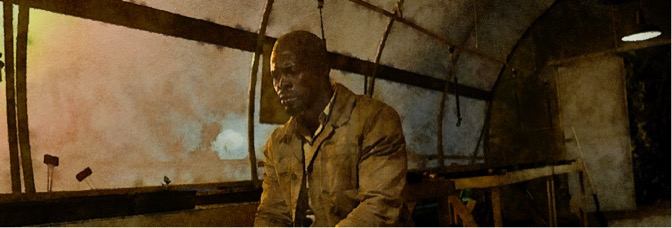
After an inglorious character arc in the regular story, Djimon Hounsou finally gets his own episode, albeit a flashback one. Turns out Hounsou’s job—before “Wayward Pines: Season Two”—was to wake up every twenty years and take care of the people sleeping in cryo-pods for two thousand years. He also tested the soil, played chess with himself, and did some cardio.
The flashbacks also reveal Hounsou met the creatures (Homo sapiens superior?) early on before they’d turned into Gollum-looking things when they still just looked like Paul Bettany. One time out of the cryo-pods, Hounsou goes hiking and runs into Dakota Daulby. They hang out, but Daulby lives in a post-apocalypse and is miserable and suffering, and Hounsou’s just observing, so it’s very uncool for him.
It does, however, lead into Hounsou’s character motivation after he wakes Toby Jones. They discover a settlement, complete with huts, on the land where they want to build the town. Hounsou says, let’s sleep until they’re gone; Jones says let’s kill them because we’re white men. Well, he’s a white man, and Hounsou gets to work for a white man.
There’s also some ret-conning to explain why he wasn’t in the first season (other than they only let one Black person on the show for ten episodes). Hounsou thought it was gross to wipe out the creatures and isn’t cool with the human settlement, so he was antisocial all first season.
Sure.
There’s an okay Simone Missick cameo. She’s Hounsou’s wife, who he hallucinates depending on how lonely he’s gotten.
The present-day action has Jason Patric and Hope Davis trying to communicate with the female creature (Rochelle Okoye, who glares well, the only role requirement). They have some success until they have to tell Tom Stevens, and he loses his shit. Kacey Rohl tries to reason with him (a weird flex since last episode she told him to white man his way through everything), and it just pisses him off more.
Stevens’s character arc has pretty much stalled out at this point.
There’s also no update on Nimrat Kaur, Josh Helman, and Patric’s love triangle, with Kaur and Helman not appearing in the episode. Tim Griffin’s around a bit to assist Patric (broadly speaking). He makes little impression, which is a compliment for Griffin.
The end twist is really good—Jeff T. Thomas’s direction is competent throughout the episode without ever being exciting. The Hounsou flashbacks all seem to be done on the cheap, and the present-day action takes place in one or two locations. But when it comes time for the twist, Thomas does a phenomenal job with it.
This episode also lets Patric and Davis really act opposite each other and not just for exposition’s sake. Credited to Anna Fricke, the script breaks through Davis’s caricature a bit and lets her show some personality. Davis’s a good villain; this episode’s the first time we’ve seen more to her. The way she’s startled when Patric’s nice to her is very cool.
Patric’s really good too. He should’ve done a doctor show.
It’s a good, affecting episode. Lots of tension in the present-day plot, and the flashbacks are interesting to a point, especially with Hounsou doing it.
-

Since the nineties, I’ve been a big fan of movie recommendation engines; my video store had a system called “Clair V.” It was a touchscreen interface; I think you logged in with your phone number. They got the initial data set from customers; I remember filling out worksheets with movie ratings.
Lots of semi-colons in that paragraph.
Since the early aughts, I’ve been using Movielens, a non-commercial engine run out of the University of Minnesota. Despite my lava-hot takes, it’s always been very solid for me. Unfortunately, my dataset isn’t the movie log I kept from 1998 to 2004, which is lost to time. I emailed it to someone once, but it’s not in the Gmail sent folder, so I’m out of luck.
Movielens has an “unusual likes” and “unusual dislikes” section. My unusual dislikes include some Christopher Nolan, District 9 (no shit), and X2; amongst others, not worth listing. However, my unusual likes list contains all fantastic films. On these hills, I stand: Critical Care, Bright Victory, The Funhouse, One Night Stand, August, The Faculty, Purple Violets, and Interrupted Melody.
But Movielens isn’t great for discovery. My top picks haven’t changed much for years. I just haven’t gotten around to watching The 400 Blows again or Ran. I wish I could, but the problem with watch and read lists is they just keep growing.
Starting last year, I’ve also been using Criticker. It’s a little bit different, assigning you cohorts based on your ratings, so while Movielens says I’ll give Licorice Pizza ★½ because Movielens knows The Master sucks, Criticker says I’ll give it ★★★★. Because I’m a cishet white guy who loves Magnolia so I’m in that cohort.
A long time ago, I had a friend who thought the machine learning movie recommendation engines were a fundamentally flawed concept because tastes are too individualized. The last twenty years have proven that sentiment wholly inaccurate, of course, thanks to the Internet and various communities building up around x, y, or z. We’re all basic in one group or another; it’s just a matter of finding that group.
Though there are still times I’ll throw Movielens for a spin. Not as often as Criticker, which didn’t think I’d like The Rider.
One of my very back burner projects is developing a methodology for watch lists based on initial success, critical responses, critical re-evaluation, and legacy. I’m not sure why; I’ll obviously never have time to watch everything, but it seems fun as a project. Though, even in the earliest planning stages, it’d be absurdly United States-centric, just because of available data.
I suppose this post could be an immediate precursor to a Licorice Pizza post.
It isn’t. The next items on the watch list are a Pacino and Pfeiffer duet of Scarface and Frankie and Johnny. Movielens and Criticker are sure I’ll like one of them.
-

Vincenzo Natali directs this episode. I’ve never seen any of his movies, but he’s far and away the best director of the season so far. He even knows how to do a Toby Jones cameo—as few lines as possible, as short of a scene as possible.
Jones shows up at the beginning for a flashback to before the construction of “Wayward Pines.” He’s in a helicopter gunship, shooting at the monsters in the forest as they frolic and tend to their young. They’re in the way of the wall, and so he has them shot dead.
Can’t imagine why they don’t like the humans.
Natali does a great job with the primordial bliss sequence, but where he really shows off is during the action sequence in the present. The monsters have gotten fire, and they’re burning down the town’s cornfields, so all the able-bodied civilians have to firefight while the soldiers provide cover. There’s a startling thirty-five killed, which ends up just showing how disposable the humans are in the show. Though they don’t even bother to track any of the casualties’ stories.
Well, not if they’re not special guest stars.
This episode has Tim Griffin’s flashbacks pre-season one, when he’s setting up Matt Dillon (and possibly Carla Gugino), so he can get together with Shannyn Sossamon. Sossamon returns for a really lousy final appearance; “Wayward Pines: Season One” had an absolutely disastrous plot outline. In season two, Sossamon ends up with the poopiest end of that stick.
Even worse, Griffin’s got scenes without his glue-on beard, which means it can’t do his acting for him. Instead, he’s got to try to keep up with… well, Hope Davis, sure, but Griffin can’t even successfully stalk Sossamon when he’s inserted into scenes from season one. Real lazy.
However, it’s another “Wayward Pines” where someone on the writing staff heard my dismay from the future and had someone comment on the Nazi uniforms all the bros wear. Unfortunately, it’s Josh Helman making the observation to Christopher Meyer. Helman’s white, Meyer’s Black, and the scene has Meyer defending Nazi uniforms (ignorantly because they wouldn’t have been taught world history or the Nazis being bad). Since “Wayward Pines” is a Fox show… makes you wonder if the News department made some requests.
Also, it turns out Helman is supposed to be playing a scoundrel a la Han Solo, which just makes the whole thing worse. Helman is better than Griffin in this episode. Griffin without his fake beard is worse than Helman; a surprise, but also maybe not. What they really needed was a glue-on beard for Helman.
There are a lot of scenes at the hospital—Hassler and Sossamon are both injured—and Amitai Marmorstein gets some great scenes with Jason Patric. Marmorstein’s such a good twerp, and Patric finally fully engages, leading to some great moments.
Other plot points include Kacey Rohl going a little Lady Macbeth with Tom Stevens, who’s doubting his chosen one status as the world literally burns thanks to his policies (making him more self-aware than, what, ninety-five percent of politicians), and then Davis and Patric doing some tests on the captured female creature. Turns out their brains are big in all the right places.
There’s a soft cliffhanger, but it’s also clear “Pines” is gearing up for the final arc. Everything is very dramatic, very consequential. We’ll see if they do better than last time. Regardless, I hope Natali’s back for more episodes.
 The Stop Button