A critical episode guide discussing the both ten episode seasons of the Fox mystery science fiction television series, Wayward Pines, based on the novels by Blake Crouch. The show stars Matt Dillon, Jason Patric, Toby Jones, Carla Gugino, Nimrat Kaur, Shannyn Sossamon, Reed Diamond, Charlie Tahan, Juliette Lewis, Melissa Leo, Terrence Howard, Tom Stevens, Kacey Rohl, Hope Davis, and Djimon Hounsou.
-

-

There are no Marvel Cinematic Universe references in the first episode of “Moon Knight.” No mention of the Snap, no Steve Rogers musicals, no explanation why the Eternals wouldn’t have mentioned the Egyptian Gods being real, actually, and it’s kind of okay. Except there are so many good comics-related jabs to take, I’ve got to get them out of my system. First and foremost, it turns out “Moon Knight: The TV Show” is even less compelling than a Moon Knight comic book, which is incredible. Despite often having great artists, Moon Knight comics are infamously stinkers.
Second… well, second isn’t bad. On the show, one of Moon Knight’s alter egos is named Steven Grant. The main one. So, “Moon Knight” is a multiple personality black action-comedy. The character’s from the seventies and eighties when multiple personality disorder was still a thing, so whether or not it’s actually ableist is a whole other question and not the point of the Steven Grant thing. Steven Grant is the name of a comic writer. Not sure if he did Moon Knight, not sure if the name’s coincidental, but it’s potentially neat.
Third comics-related thing… the passive misogyny. There are no positive female characters in the episode; there is either dismissive like love interest gone wrong, Saffron Hocking, or winged harpy boss, Lucy Thackeray. It’s a big swing from a Marvel show like they’re promising to hit that audience who really hates having strong female characters or even female characters around. I don’t just bet “Moon Knight” never passes Bechdel; I’ll bet they never even have two women together onscreen talking. One of the bits involves lead Oscar Isaac leaving voice messages for never seen Mom, who also never answers his calls. It’s a cruel joke since it turns out Isaac’s just the dope who the Egyptian god lets drive the body when they don’t need it. But it’s also possible Mom’s head’s in a fridge somewhere.
Finally, the Egyptian god. Apparently, it’s F. Murray Abraham, who’s not very distinctive. He incorporeally speaks to Isaac, which makes it feel like a desperate Venom riff.
So is there anything good about it?
I mean, Isaac’s okay. Outside the setup—he’s a chronic sleepwalker who has to tie himself up at night (only he’s not, he just doesn’t remember he’s also a super anti-hero or whatever), and so he’s late to work where people are all shitty to him—and the one action sequence, which is a James Bond car chase thing but with lousy CGI, most of Isaac’s scenes are with himself. And Isaac’s compelling. He does panic and fear well. The sequence where a monster mummy dog is chasing him through a museum and Isaac gets more and more scared is… better than a lot of the episode.
But the more impressive performance is Ethan Hawke as the bad guy. He’s trying to bring back some Egyptian goddess, and Isaac’s fouled up the plan. Only he doesn’t remember because it’s his other selves who did it.
Hawke’s really good with a nothing villain part. He oddly makes the show seem more legit than Isaac.
Mohamed Diab’s direction is middling, even for a middling Marvel outing. Credited to Jeremy Slater, the script seems like it was written either for Ryan Reynolds or, I don’t know, Dana Carvey back in the nineties as a pure comedy vehicle.
Nice cinematography from Gregory Middleton is the only technical standout.
If there’s a way to crack Moon Knight, the show indeed hasn’t found it. Thank goodness it’s only six episodes. Though, based on this first one, it’s going to be a slog.
-

A critical episode guide discussing the all seven season two episodes of the Amazon Prime science fiction comedy-drama television show, Upload, created by Greg Daniels. The series stars Robbie Amell, Andy Allo, Allegra Edwards, Zainab Johnson, Kevin Bigley, Owen Daniels, and Andrea Rosen. -

This episode takes place over a single day—it’s town fair day—and has a whole bunch of plots. I’m not sure if it’s the best episode of the show so far, but All’s Fair is certainly the most logistically ambitious and successful.
The day starts with Nicholas Ralph on his way to play “Attending Vet” at the fair; he’s going to inspect ponies, judge a pet show, and just be around for whatever veterinary question an attendee might have. Steven Blakeley plays the annoying event coordinator, who hounds Ralph throughout the day, occasionally resorting to calling for him through a megaphone. It’s not an enviable position (before you even get to the shitty people who want Ralph to help their animals cheat to win), and everyone at the veterinary practice except Ralph knows it.
In fact, they bet on it. As Ralph heads out, Callum Woodhouse and Samuel West gleefully wager on when Ralph will break down. Even Anna Madeley, who tells them she disapproves of gambling, places a bet.
But Ralph’s arc isn’t just going to be contending with angry pony and dog owners; he’s also going to get himself into a moral quandary regarding potential love interest Rachel Shenton’s prize bull. Specifically, whether or not the bull’s much of a prize anymore, Shenton and her family are trying to sell it, needing the money. So, in addition to staying ahead of Blakely and not trying to offend Shenton, Ralph’s scurrying around the fair trying to track down Jon Furlong, another farmer who should know whether or not the bull’s got what it takes.
Studding wise.
It’s a direct follow-up to last episode, including Tony Pitts as Shenton’s dad. Her actual beau, Matthew Lewis, is also around, putting his fingers on the scale as needed. While not a high-stakes arc, it’s a good one for Ralph in terms of character development and performance. He gets to do a varied lot amid the rest of his busy episode.
Meanwhile, both Woodhouse and West have romantic arcs. Woodhouse is trying to figure out the next steps in his relationship with bartender Mollie Winnard and doing what he can to avoid talking with her about it. West tries to provide brotherly counsel but soon needs some of his own when Madeley’s friend, Maimie McCoy, pops in for a visit. McCoy’s from a few episodes back, where she and West’s genial flirtations quickly gave way to automotive discussions. Here, they stick to the genial flirtation.
Madeley’s arc proper kicks off thanks to McCoy’s visit and some discussions of the past, which affect Madeley in the present. Also, correction from earlier because I looked it up finally—Madeley was not in a nursing corps in the First World War; she was in the Women’s Royal Naval Service. They do not appear to have done any nursing. My bad.
Her arc eventually involves Imogen Clawson, calling back to their bond from a few episodes ago.
The episode doesn’t culminate any outstanding story threads; it just brings some background elements in those threads to the fore, getting “All Creatures” ready to move forward.
It’s a packed episode—script credited to Debbie O’Malley—and director Metin Hüseyin does a great job keeping everything coherent.
Ralph’s got the best arc, probably followed by Madeley, who’s got the least of the three supporting arcs, but definitely the most intense. Though this episode does reveal some critical backstory on West, who it reveals to be a widower. That history also informs on Woodhouse. So, again, not a big wrap-up, rather a big unwrapping.
It’s impressive.
-

A critical episode guide discussing the all ten first season episodes of the 2021 CBS crime drama television series, The Equalizer, and is a reboot of the 1980s series with the same name. The series stars Queen Latifah, Tory Kittles, Adam Goldberg, Liza Lapira, Laya DeLeon Hayes, Lorraine Toussaint, and Chris Noth. -

No causes for concern or alarm this episode, and not just because Diana Rigg’s back. Even with the village still talking about how Nicholas Ralph handled the sick horse last episode, he seems cemented in the community. Though there is one significant eyebrow raise with Callum Woodhouse. Turns out he might not be a regular cast member after all; his arc in this episode is all about getting money for university out of big brother Samuel West. West’s determined to make Woodhouse prove he’s worth the investment this time, which leads to Woodhouse volunteering to monitor Rigg’s adorable Pekingese.
Once again, everyone in the veterinary practice gets an arc, though Ralph and Woodhouse get the big ones. For instance, pretty much everything West does this episode is support on someone else’s arc. There’s a major subplot about Rigg sending over a box of (human food) treats for her dog when Ralph takes the dog back for observation. And to keep Rigg from overfeeding, obviously. Both West and Woodhouse find it difficult not to help themselves to the treats, which messes up housekeeper Anna Madeley’s plans for an elaborate dinner. At the start of the episode, she gets some concerning personal news and keeps it to herself (from both the boys and the audience). West figures out something’s going on and offers to help.
Woodhouse also has a little arc with bartender girlfriend, Mollie Winnard, who accidentally sleeps over, and there’s an elaborate comedy sequence getting her out of the house.
Speaking of romance, Ralph’s main medical case involves Rachel Shenton’s bull, who’s supposed to be studding at farmer Jon Furlong’s. Only the bull’s disinterested in the lovely cow lasses, so Ralph’s got to get him functional again, or Shenton’s family won’t get the payday. Shenton’s relationship with local landed gentry Matthew Lewis comes back into play, as it turns out they’re a lot more involved than she made Ralph think last episode. Not giving a timeline for Woodhouse’s immediate future last episode is one thing, but Shenton letting Ralph think she and Lewis weren’t quite romantic is another. Lewis’s stopped on the bridge with a flat and is too rich to have ever learned to change a tire; when Ralph and Shenton happen across him, Lewis’s first or second move is to caress Shenton’s posterior as Ralph’s heart breaks a little.
It’s a surprise but shouldn’t be.
Anyway.
We finally get to meet Shenton’s dad later on, played by Tony Pitts. Shenton finds out some of the patients’ owners cook meals and treats for the vets and wants to try her hand at it for Ralph. It’s a funny sequence, starting with Pitts not knowing why Ralph’s loitering around his farm.
However, the main plot—outside Ralph being the show’s protagonist—is Woodhouse dog-sitting the Pekingese. It’s hilarious. Rigg’s got a handful of scenes, which start comedic and then get a little more dramatic as the episode carries on. Even though she absurdly pampers this absurdly adorable dog, the show goes out of its way to acknowledge she’s going through a lack of companionship arc. It’s a really good episode for Rigg.
Also, for Woodhouse, who’s got to stay active even though it’s all about his lack of agency.
The finale’s particularly affecting; West’s only medical case this episode is Sean Carlsen’s giant, ferocious dog (contrasting Rigg’s adorable little one). It eventually ties in with Woodhouse’s arc and echoes the companionship theme.
While there are some intense emotions throughout, the episode works its way to a very nice resolution. The amount of positive sentiment the show gets from everyone being empathetic to animals is immeasurable.
~
-

A critical episode guide discussing the all eight season two episodes of the TNT period drama television show, The Alienist. Subtitled The Angel of Darkness, the season is based on the novel of the same name by Caleb Carr. The series stars Daniel Brühl, Luke Evans, Dakota Fanning, Robert Wisdom, Douglas Smith, Matthew Shear, Rosy McEwen, Melanie Field, and Ted Levine. -

This episode very nicely alleviates most of my (limited) concerns about “All Creatures,” even without bringing back Diana Ring for another guest spot.
As with the previous two episodes (so, all the previous episodes), new veterinary assistant Nicholas Ralph again has an arc where he needs to be worried about losing his position. However, it’s the plot here, not just a quick resolution or foil to move things along. The episode’s third act is just Ralph—and new pal Callum Woodhouse (they need to team up to cope with the boss, Samuel West) and housekeeper slash den mother Anna Madeley—freaking out about him losing his job. It’s even worse this time because everyone in town knows about it, so they’re either congratulating Ralph (because his latest potential mistake affected a bet) or mocking him.
It could all go wrong, and every episode going forward could have this same beat, but they finally seem to have it addressed here. West’s got a whole lot more agency this time around; he’s not just the overbearing boss, he’s the sympathetic colleague.
The other outstanding concerns—can Woodhouse be a non-competitive, not twerp effectively, and can Madeley get a real arc–also get answered. Both in the affirmative. Woodhouse gets a very amusing turn about trying to collect payment from the local farmers, and discovering the best way to do it involves getting them drunk before hitting them up. He even makes a new friend: bartender Mollie Winnard, who seems like his imminent love interest.
Meanwhile, Madeley’s arc involves babysitting Imogen Clawson so older sister Rachel Shenton can… do things. Clawson’s nearing her terrible teens and no longer minding Shenton, who’s had to play mom in addition to sister, and Madeley brings a new perspective to the entire situation. It also gives Madeley and West’s relationship some depth because they can bond over parenting, though West’s just older brother parenting Woodhouse. It’s an amusing arc, too; Clawson’s impetuous and overconfident, so Madeley’s got to contend with attitude.
Then West’s got an arc where he’s interviewing to be the vet at the local racetrack. Initially, he’s only able to get his foot in the door because of local rich guy Matthew Lewis (who we met last episode as Ralph’s rival for Shenton’s affections), but then he and stuck-up track owner Nigel Havers have a great bonding scene. It’s West’s best-acted episode of the series so far; it’s also the most significant real arc he’s gotten.
Ralph gets the veterinary procedural cases—a horse with colic and then a cow showing signs of heat exhaustion. Lots of terrific acting from Ralph on both cases, where his expertise is questioned repeatedly. Susan Jameson’s great as the nasty cow owner, who delights in mocking Ralph.
After the taut third act, there’s a nice resolution with West and Madeley. They’re quickly becoming the show’s most tangible, developed, and rewarding relationship. It’s particularly nice since they both have a strong episode apart, then bring it together throughout and at the end.
Hopefully, this episode will be the last time Ralph has an “am I fired” arc for a while. It certainly seems like they’re comfortable being done with it. Fingers crossed.
-

A critical episode guide discussing the all thirteen series four episodes of the BBC television show, Doctor Who, plus the Christmas special. The series stars David Tennant as the Tenth Doctor, and Catherine Tate as his companion. Costarring Bernard Cribbins, Jacqueline King, and Penelope Wilton. -

This episode’s got a couple concerning elements. Slightly concerning. It’s also got Diana Rigg in a fantastic guest spot as the BBC period piece equivalent of a “Best in Show” dog mom, which could probably let the show get away with anything.
The first concerning bit is the episode using the same dramatic beat as the last episode. New rural veterinary assistant Nicholas Ralph has screwed something up, and he’s worried boss Samuel West is going to fire him. The big difference between the two incidents (besides the animals involved and the setting) is new seeming regular Callum Woodhouse. Woodhouse is West’s younger brother, who arrives at the beginning of the episode like they forgot to introduce him in the pilot. West apparently not telling anyone is even a plot point.
Woodhouse arrives by train—meaning there’s a closer station than wherever Ralph went last episode (because Ralph then had to take what appeared to be a long bus ride to town)—in his evening wear. This episode establishes the landed gentry around town, something the previous episode wholly ignored. Again, Rigg’s one of the landed gentry, so it’s all fine. But still.
Woodhouse quickly becomes Ralph’s rival after a reckless ride back to the village (with some car damage, no less). Woodhouse has just finished his examinations at veterinary school, and older brother West is as prideful as he seems capable of expressing. For instance, he brags to rival vet Kriss Dosanjh about having two assistants now, and Woodhouse keeps trying to one-up Ralph without actually being particularly helpful.
Especially not once Ralph and Woodhouse start going on calls together.
In addition to Rigg’s adorable Pekingese, this episode also has a cow patient. It’s actually a jam-packed human episode: in addition to introducing Woodhouse, Ralph’s got a developing filtration with farmer’s daughter, Rachel Shenton, and then housekeeper and sage Anna Madeley gets her backstory developed. She was in the war (First World War) and ran a nurses unit; one of her friends from there, Maimie McCoy, visits. At first, it seems like McCoy’s going to flirt with West, but they’re just going to talk cars.
Again, toot toot.
West will turn out to be a very eligible bachelor—at least in Rigg’s eyes—while Ralph will discover he’s got competition for Shenton’s attention. And not Woodhouse, apparently, though the episode constantly establishes Woodhouse’s existing relationships in the village give him a leg up on Ralph.
An indeterminate time has passed since the first episode, but apparently, long enough Ralph’s not immediately worried about losing his job just for annoying West… though maybe he ought to be.
The second concerning bit is Madeley as sage. The show gets away with it. It’s able to launder Woodhouse through Madeley’s sympathetic gaze to make him into far less of a twerp by the end of the episode, which is good if he’s sticking around.
All the performances are fine or better, even Woodhouse at his twerpiest, with Ralph managing to stay in focus even as the frame’s more crowded. Madeley doesn’t end up with as much to do as the episode initially suggests she will; her character development’s like a second C-plot here. West’s better this episode than last; his character’s got a little more depth now, especially with the Woodhouse subplot.
The ending’s a little light, too, given the various plot reveals and West’s explosions, but it’s still rather charming.
-

A critical episode guide discussing the all thirteen season one episodes of the 2019 CBS television show, Evil, a supernatural drama series created by Robert and Michelle King. The show stars Katja Herbers, Mike Colter, Aasif Mandvi, Kurt Fuller, Christine Lahti, and Michael Emerson. -
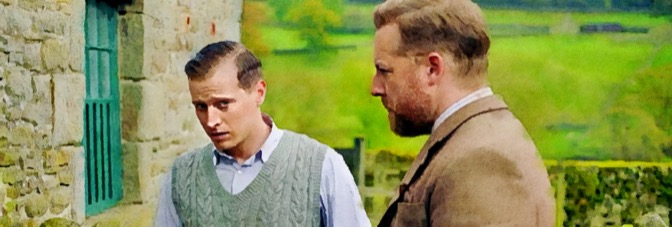
“All Creatures Great and Small” is pastoral to the point of pastures. The show—based on a show, based on a movie, based on a series of memoirs—tells the story of young veterinarian Nicholas Ralph. He moves from urban Glasgow to rural Darrowby, Yorkshire, for an assistant job to country vet Samuel West.
Except Ralph thinks he’s just going for an interview. And he doesn’t know West didn’t actually want to interview him or hire him at all. West’s stubborn, mercurial, and big-hearted, trying to manage the expectations of his patients’ owners. The practice is mostly farm animals, though they see house pets.
Anna Madeley plays Ralph’s housekeeper, and since the house is also the practice, she is his de facto office manager. Sending for Ralph was her doing.
After a quick but thorough setup, West takes Ralph out on rounds. At this point, “Creatures” becomes a veterinary procedural and doesn’t look back. The show’s set in 1937, so there’s still a lot of excitement about various technologies, whether automobiles or medical discoveries. There’s quite a bit of driving, actually, because the scenery’s so pretty and Ralph and West both enjoy motoring around it so much, one of them yelling out “toot toot” wouldn’t be inappropriate.
The episode’s got a fairly standard structure. After initially proving himself, Ralph then runs afoul of West through questionable fault of his own. The show’s too genial to dwell on whether or not West’s trying to set Ralph up for failure. Will Ralph be able to prove himself in time or have to go back home to Glasgow, where the show’s already established he’s no veterinary prospects. All he’s got in his future there is working on the docks, like dad Drew Cain had to do (before giving up his dreams, like Ralph will have to abandon his own).
It’s a little different—Ralph’s a trained veterinarian, whereas Cain was a musician. Also, mom Gabriel Quigley being gleeful at Ralph’s imminent failure’s an odd way to start. While it may be based on fact, the episode rushes through it way too quickly. Luckily, Madeley quickly offsets everything; while she’s arguably got the least to do in this episode—fetching farmer’s daughter Rachel Shenton is the one who gives Ralph the necessary insight to breakthrough to West—Madeley makes the whole thing seem reasonable. Only through her capableness can West function at such a high level.
The show is Ralph’s first work as an actor (complete with an “introducing” credit, I think), and he’s got great timing for the fish out of water humor. In addition to being a city boy, he’s never professionally worked with farm animals, which leads to some funny moments.
And also the serious ones. While Ralph’s got the book-learning, he doesn’t have the practical experience with the animals or the professional experience with their owners. Professionalism is a very big deal to West, which the episode contextualizes beautifully. Ralph does a fine job toggling between comedy and drama.
The resolution’s appropriately suspenseful. It balances the inherently sympathetic animals in distress with Ralph’s experiences trying to relieve that distress.
It’s a really good first episode. Toot toot indeed.
-
A critical episode guide discussing the all nine episodes of part two of the 2018 Netflix streaming show, Chilling Adventures of Sabrina, based on the Archie comic book series of the same name. The series is centered on the Archie Comics character Sabrina Spellman, portrayed by Kiernan Shipka, and also stars Ross Lynch, Lucy Davis, Chance Perdomo, Michelle Gomez, Jaz Sinclair, Tati Gabrielle, Adeline Rudolph, Lachlan Watson, Richard Coyle, and Miranda Otto. -
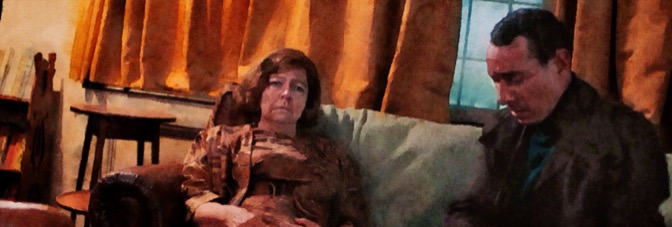
Since Tom Brittney directs this episode, I sort of expected him not to be in it very much. And he’s not; instead, it’s an Al Weaver plays detective episode, which is more delightful than the last time he had such an episode (he was in prison investigating). This time the case is weighty—someone is murdering unhoused men—but Weaver at least gets to be enthusiastic in the investigatory pursuit for a while.
Plus, he’s teamed up with Robson Green, which is fun.
Because otherwise, Green’s just getting drunk and sad about his marital problems. Brittney’s also drunk and sad about his relationship problems. Neither of their respective partners show up in the episode (it’s a minimal cast)—though Brittney’s smaller arc is all about bonding with potential love interest Charlotte Ritchie. Ritchie’s Green’s niece (his wife’s niece) and is in town to help out with his kids. However, in this episode, she’s around because son Isaac Highams carves his initials in the church pews, and Tessa Peake-Jones loses her shit about it.
Of course, Peake-Jones is particularly touchy because she just got a cancer diagnosis (in 1960), and the only person she’s told about it is Weaver.
The A-plot’s the mystery, the B-plot’s Weaver and Peake-Jones, the C-plot’s Brittney, Highams, and Ritchie.
There’s some great stuff in the B-plot. There are crowd-pleasing moments—like Peake-Jones telling off a hoity-toity waiter—but it’s a rough, excellent arc for Peake-Jones and Weaver, who’ve always had “Grantchester”’s most sincere relationship, with lots of ups and downs. The episode also examines how Weaver’s coping with losing the church from his life after last season, something his café owner-arc has obscured this season.
The mystery has Green and Weaver investigating at a local university, where Green gets into it over universities as “places for debate” with professor Rowena King. She proudly drove a student to mental collapse. It’s a very current issue for the show (especially “Grantchester,” which is usually historical), and they do a fine job with it.
There’s also a young instructor at the university, Tom Glenister, who figures in. He and the main suspect used to do outreach to a nearby unhoused community. Some of that arc—mainly how the good samaritans in town can’t run soup kitchens because homeowners complain about property values—is still too relevant.
Green’s got a mini-arc with initial suspect Steven Blake, who Green knows from somewhere but lost track of him, and now Blake’s lost everything. It’s nice to see Green get to character develop without Brittney (and his representative religiosity) around.
Though this episode does finally have Brittney back giving services in the church. Although the episode starts with Weaver explaining it’s wedding season, which probably gives Brittney the sads (since his girlfriend is engaged to someone else), it doesn’t end up being important. When they finally do get back to church, it’s for something else entirely, and it’s a great “Grantchester” service sequence. Very limited—it’s Brittney and three other cast members, not the town—but excellent.
It’s a good, way too relevant mystery, the Peake-Jones, and Weaver arc is outstanding and beautifully acted, and Brittney and Ritchie are charming together. Are they too lovely together? We’ll see. It helps Ritchie’s also really funny.
This very quiet, very limited episode is the best of the season so far.
-

A critical episode guide discussing the all eleven episodes of part one of the 2018 Netflix streaming show, Chilling Adventures of Sabrina, based on the Archie comic book series of the same name. The series is centered on the Archie Comics character Sabrina Spellman, portrayed by Kiernan Shipka, and also stars Ross Lynch, Lucy Davis, Chance Perdomo, Michelle Gomez, Jaz Sinclair, Tati Gabrielle, Adeline Rudolph, Lachlan Watson, Richard Coyle, and Miranda Otto. -

Halloween (1978) – 709 Meridian
The Season One finale–Halloween "ends" here for 709 Meridian as D and Andrew talk through the original 1978 Halloween, directed by John Carpenter, starring Jamie Lee Curtis as Laurie Strode and Brian Andrews as Tommy Doyle. Stick around after the commentary as they wrap up the movie (learning why Laurie's hair changes so much), make the definite "Worst to Best" list of the saga, and preview 709 Meridian Season Two. Sorry about the long post-movie discussion, but when you're talking good John Carpenter, you've got to talk good John Carpenter.WHERE TO LISTEN

Apple Podcasts 
Spotify 
Stitcher 
RSS 
YouTube -

A critical episode guide discussing the all ten season one episodes of the Amazon Prime science fiction comedy-drama television show, Upload, created by Greg Daniels. The series stars Robbie Amell, Andy Allo, Allegra Edwards, Zainab Johnson, and Kevin Bigley. -
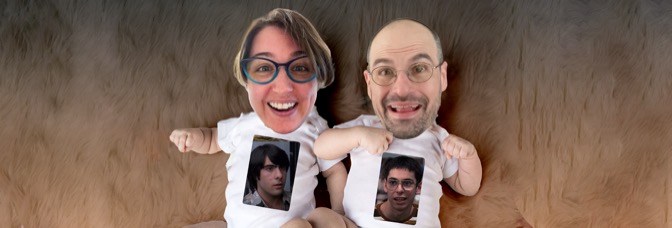

2×3: Freaks and Geeks (1999), Part 3: Episodes 5-6 – Onesies
Emily and Andrew talk some more FREAKS AND GEEKS, the 1999 NBC comedy-drama about early eighties high school created by Paul Feig and executive produced by Judd Apatow. Listen as they discuss getting fed up with bad female protagonists (agency, what's that), have no notes for Martin Starr or Dave (Gruber) Allen (just fawning admiration), and "Canada" Joe Flaherty is finally starting to appeal to Andrew.WHERE TO LISTEN
Apple Podcasts Spotify Stitcher RSS YouTube -

A collection of film responses discussing the first eight FAST AND THE FURIOUS movies, starting with the 2001 original, directed by Rob Cohen, and concluding with 2017's THE FATE OF THE FURIOUS, directed by F. Gary Gray. The franchise is largely concerned with illegal street racing, heists, spies and family. Also includes a response to the 2019 spin-off, HOBBS & SHAW, directed by David Leitch. -
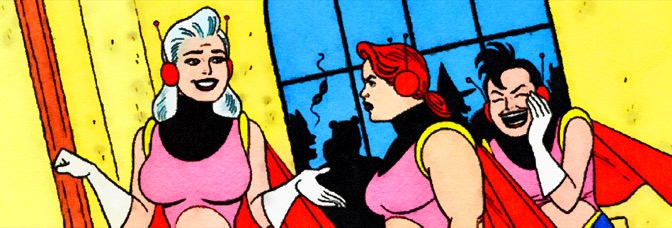
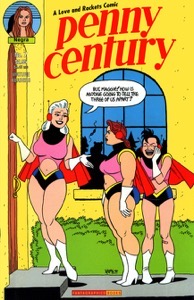
Part of me wants to know how creator Jaime Hernandez came up with Penny Century’s arc. The series began with the return of Ray Dominguez, revealing he had a previously unrevealed history with Penny Century, going halfway through Love and Rockets: Volume One. Throughout the series, which mainly dealt with the death of H.R. Costigan, Jaime kept threatening to reunite Ray with Maggie.
Only then Ray disappeared, and Jaime revealed Maggie’s been married and is now getting a divorce. Over the next issue or two, Jaime turned that surprise reveal into a plot point, as one character or another was surprised Maggie had been married at all.
This issue has a single story—Maggie and now ex-husband Tony’s divorce party, which Hopey’s throwing at the bar where she works. Hopey’s hanging out with Maggie Christmas (the first cameo of many), who wants to know the story of Maggie and Tony’s marriage since no one knew she was married. And no one can figure out why Hopey’s so okay with it.
Maybe because it turns out Hopey’s had a girlfriend for Penny Century too. Rosie. Jaime introduced Rosie a couple issues ago; she and Hopey went over to Maggie’s to comfort her after finding out about the divorce. Rosie just seemed like a mutual friend in the supporting cast. Nope, she’s Hopey’s girl. At least enough of one, she gets jealous of Hopey.
There are some other big questions (and also not because it’s Maggie and Hopey), like them hooking up a few issues ago before the divorce and marriage reveals. And then there’s how any of it fits into Love and Rockets: Volume One. Maggie met husband-to-be, Tony, way back when, before Love and Rockets #1. The issue’s got a bunch of background music with citations, and based on the earliest flashback, they met in the late seventies (back before Maggie cut her hair—for Rockets #1). I promised myself I wasn’t going to do all the googling. Just the one song. No God by the Germs.
Anyway.
Hopey tells the story of Maggie having a punk rock meet-cute with Tony. Maggie and Hopey lived in Hoppers, Tony in L.A. They’d see each other at concerts and parties. Tony mad crushed on Maggie, Maggie at least liked him, but much of the flashback is his perspective. I just now realized it doesn’t work with Hopey playing narrator, but it also doesn’t matter. Tony’s very sympathetic from go.
Eventually, their romance peters out, and Maggie goes off to have her adventures as a mechanic and so on.
Oh, I forgot—Terry’s also in one of the flashbacks. Another cameo. Daffy’s the third, closer to the present, because Jaime finally reveals something about what happens immediately after Love and Rockets: Volume One ends. Maggie and Hopey are living in L.A., and Maggie’s been in a funk for three months. So Hopey drags her to a pool party, introducing her to Norma and Negra (who don’t exactly count as cameos). But there, Maggie sees Tony again, and they almost immediately get horizontal.
Maggie’s worried Hopey’s not going to be okay with it, but Hopey’s fine (and already shagging if not dating Rosie). Daffy’s cameo is telling Hopey about the wedding.
The story’s a rush of retcon reveals, but Jaime keeps it very tight, getting everything in place for this touching finish with Hopey and Tony. Penny shows up for an epilogue, setting Maggie up for the next chapter in her life, even though this last chapter happened almost entirely off-page.
There’s a color one-pager on the back cover; it’s a quick, surprisingly emotive “Space Queen,” which fits the main story.
Jaime uses thinner lines than usual with a lot of the art. It doesn’t feel as inky as it could. Though he’s also doing a bunch of panels. Most of the pages have eight panels; if they don’t, it’s six. And he’s covering days, weeks, and decades between panels sometimes. It’s a vast but meticulously constrained story. It’s exquisite and probably the most ambitious character development move Jaime’s ever made for both Maggie and Hopey.
There’s also the implication Maggie reading a Beto comic–Beto Mess—causes an emotional breakdown directly resulting in the marriage.
The story’s not the comic’s biggest surprise. Jaime’s had so many of them. But it definitely showcases his ability to work the surprise throughout, not just stunt reveal it. It’s also really fun to see him age the characters all in one story, how he maintains the energy (and humor) regardless of era.
I’m already missing this comic.
-

A critical episode guide discussing the all thirteen series three episodes of the BBC television show, Doctor Who, plus the Christmas special. The series stars David Tennant as the Tenth Doctor, and Freema Agyeman as his companion. Costarring Adjoa Andoh, Trevor Laird, Gugu Mbatha-Raw, Reggie Yates, John Barrowman, John Simm, and Derek Jacobi. -
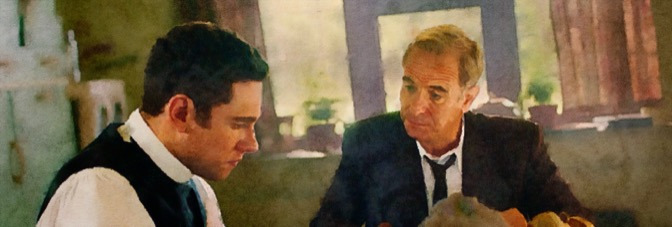
The episode begins with Tom Brittney drunk, talking to God about his engaged-to-another-man girlfriend (Ellora Torchia), and Brittney has finally become the vicar of “Grantchester.” Even if there still aren’t any scenes with him doing any services. Brittney’s also running low on consoling excuses to explain his presence at the police station to new boss copper Michael D. Xavier.
Xavier’s a stickler for the rules.
And apparently, a wet noodle with the ladies because Torchia’s his fiancée, and she’s trying to get Brittney to keep their affair going indefinitely. Brittney’s trying to get her to leave Xavier, then the episode’s murder investigation gets him reconsidering the liaison. Well, the murder investigation and their inability to keep their hands off one another even in inopportune locations.
Like I said, he’s finally a real Grantchester vicar.
The episode establishes its other big subplot—Robson Green (still living with Brittney in the vicarage and listening to the bedposts bumping in the next room) is again failing to show estranged wife, Kacey Ainsworth, he can take care of the kids. Ainsworth has gotten so busy at work she’s brought in her niece, Charlotte Ritchie, to help out. Ritchie’s a widow with an adorable tyke of her own and a far more appropriate love interest for Brittney; they become fast friends in the episode, both being fans of Green (on his better days), but it’s unclear if there’s any actual chemistry.
Ainsworth’s work subplot—which involves an attentive male coworker (Ryan Early) who Green can’t stand—introduces the murder A-plot. Local cleaning supply maven Kirsty Besterman is telling the salesgirls at Ainsworth’s department store how to best promote the product and then has to leave suddenly. Something’s happened to her husband, Rob Pomfret.
Pomfret soon is calling the police—Green takes the call, even though it’s his day with the kids, and Brittney tags along. Turns out Pomfret got hurt while over at the local madam’s establishment, which introduces said madam, Rebecca Lacey, and one of her girls, Boadicea Ricketts, as suspects.
In addition to wife Besterman.
There’s a lot of back and forth about marriage from the female perspective, which gets both Brittney and Green thinking about their current romantic troubles. Lots of good acting from the guest stars. Besterman and Lacey in particular.
Meanwhile, the C plot involves Nick Brimble being convinced wife Tessa Peake-Jones is having an affair. He confides in Al Weaver, who takes it upon himself to investigate, discovering a far different but still profoundly consequential truth. Lots of good acting on that plot; Weaver and Peake-Jones get some fantastic scenes together.
And then Ainsworth, despite getting to start the A-plot, has a good arc of her own, including making a new friend in capable police secretary Melissa Johns.
It’s a very full episode; Daisy Coulam gets the script credit, and she packs in a whole bunch, including introducing presumably recurring Early and Ritchie. In addition, Ricketts has her own son, adorable tyke Ace Gill, who helps make her an analog to the other mothers on the show.
So very full, very affecting episode. Lots of deep feels and not just on the soapier subplot.
-

A collection of film responses discussing the five original PLANET OF THE APES movies, starting with the 1968 original, directed by Franklin J. Schaffner, and concluding with 1973's BATTLE FOR THE PLANET OF THE APES, directed by J. Lee Thompson. The franchise is about a world in which humans and intelligent apes clash for control. Also includes a response to the 1998 documentary, BEHIND THE PLANET OF THE APES. -

There are some significant changes in “Grantchester” at the start of this season; some are continuations of last season’s subplots, others are not. New curate Ahmed Elhaj is gone already, getting a brief mention from Tessa Peake-Jones somewhere in the first five minutes, then nothing. Actually, vicar Tom Brittney doesn’t do any Church of England work this episode, though he does come into his own as the Grantchester vicar. He’s done with flirtations with comely reporters and odd relationships with his stepsister; he’s moving into pure Sidney Chambers territory and picking up ladies at jazz clubs.
Ladies who turn out to be engaged.
It’s kind of amazing Robson Green doesn’t comment on the behavior. Maybe Peake-Jones will someday. It’s like they gave Brittney a James Norton script.
The episode starts with Green and Brittney hitting a new jazz club and Brittney dancing with mystery woman Ellora Torchia. Green goes to work instead, where overqualified secretary Melissa Johns mentions a commotion for Green to remember later on once the murder investigation kicks off. Green’s living in the vicarage with Brittney, still separated from his wife, Kacey Ainsworth.
The most entertaining character development is Al Weaver, the former curate who got outed and jailed last season; thanks to Nick Brimble (Peake-Jones’s well-enough-to-do husband), Weaver’s now got a cafe. And he’s a beat poet. After a season of Weaver suffering trauma after trauma, the episode opens with the promise of beat shenanigans and then delivers them later on, and it’s delightful.
Weaver’s subplot about the cafe opening has Peake-Jones helping him decorate; she’s not thrilled with his interior decorating, and the feeling’s mutual. It’s the nicest subplot, whereas Green and Brittney’s personal life subplots have no easy resolutions. Not an episode in any way.
Green wants to make grand gestures to win Ainsworth back, while Ainsworth just wants him to help out with the kids a little. Since their separation, it appears Brittney’s doing some heavy lifting on Green’s Saturdays with the brood, which he appreciates but doesn’t learn from. And then the inevitably complicated identity of Brittney’s mystery woman complicates things for both him and Green.
Plus, Green’s got a new boss, Michael D. Xavier, who’s convinced Green’s been holding back dipshit copper Bradley Hall and wants to give Hall more to do. Also, Xavier doesn’t want Brittney hanging around the station doing copper work.
The mystery this episode involves a dead drifter (Philip Buck) who turns up on the estate of two spinster sisters (Anna Wilson-Jones and Emma Cunniffe). Even though Brittney doesn’t do any work at the church, he uses Wilson-Jones and Cunniffe’s parishioner status to stay involved in the case.
Outside Green being a little too obtuse about his marital problems (maybe not for 1960 or whatever, but definitely given Green’s character development over the series), it’s a rock solid opener for the season. The mystery’s good—very British—the guest cast’s good (Wilson-Jones bonds nicely with Brittney, while Cunniffe and Green are green thumbs), and it’s really nice to not see Weaver traumatized every other scene, historically accurate or not.
-

A collection of film responses discussing the five feature JURASSIC PARK movies, starting with the 1993 original, directed by Steven Spielberg, and concluding with 2018's JURASSIC WORLD: FALLEN KINGDOM, directed by J.A. Bayona. The franchise centers on a disastrous attempt to create a theme park of cloned dinosaurs and is one of the highest-grossing media franchises of all time. -
Halloween II (1980) – 709 Meridian
In the penultimate episode of Season One, D and Andrew return to the original original Halloween sequel continuity and watch Rick Rosenthal (and John Carpenter)'s Halloween II (1981). Listen as they muse on Jamie Lee Curtis's "Scream Queen" finale, Donald Pleasence's (relative) sobriety, the Universal backlot, and the wondrousness of Dean Cundey's photography.WHERE TO LISTEN
Apple Podcasts Spotify Stitcher RSS YouTube -

A collection of film responses discussing the six Millennium Era GODZILLA movies, starting with the 1999 GODZILLA 2000, directed by Okawara Takao, and concluding with 2004's GODZILLA: FINAL WARS, directed by Kitamura Ryuhei. -
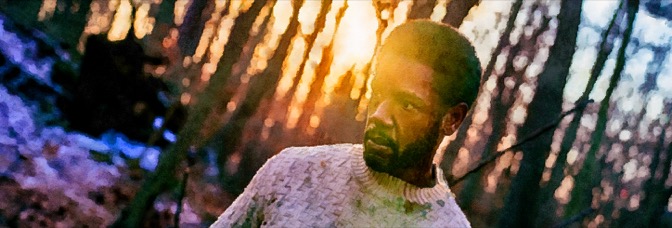
Tory Kittles gets his most significant episode of the season (if not the show), but with several caveats. First, it’s a Black trauma episode. Kittles—with his two sons—is somewhere in not-New York City New York, and a couple sheriffs’ deputies assume he’s a suspect. When he asserts his rights, the senior officer (Lee Tergesen, leaning into his typecasting as a racist piece of shit) attacks him, knocking him unconscious. Once the other, less overtly shitty cop (Brandon Espinoza) confirms Kittles is a cop… they put him in the back of their car and drive him out somewhere to kill him instead of calling an ambulance.
Because all of a sudden, “The Equalizer” really wants to be realistic.
The other big caveat for it being a Kittles-centric episode is it being, one way or another, a major change for the character and potentially the show. We finally meet his ex-wife, Tawny Cypress, who’s initially confused why her sons called Queen Latifah for help before her, and then we get some backstory on Kittles. Including how Cypress always wanted to tell her kids about racist white cops, but cop Kittles wouldn’t let her. The episode speeds through that aspect of the story, letting the detail inform Kittles’s arc but not Cypress’s or the kids’.
The last caveat has to do with Kittles and Latifah’s chemistry. The show leans into it more than ever, but also without there being much weight behind it. Kittles has multiple flashback hallucinations in the episode, including returning guest star dad Danny Johnson either getting CGI de-aged (or de-aging make-up just looks like CGI now) and Kittles occasionally playing himself as a child. It’s kind of an acting showcase for Kittles, really. Just a horrific Black trauma one.
Because even though the show couches the racism a little bit, it’s only a little bit. The small-town cops are sympathetic to being murderers; the only non-overt racist the show introduces in the small-town is Dennis Boutsikaris, who plays a judge. Boutsikaris knows New York D.A. Jennifer Ferrin, who helps Latifah look for Kittles. The New York City cops can’t act because small-town racist sheriff Michael Pemberton tells them everything’s fine, so Ferrin and Latifah have to independently investigate.
While keeping the investigation limited makes it easier for the episode plotting—Adam Goldberg and Liza Lapira don’t get much to do here, and Laya DeLeon Hayes and Lorraine Toussaint don’t even appear–it also comes across like Kittles’s brothers and sisters in blue do not give a shit if Black cops are murdered by white ones.
Again, “Equalizer”’s picking one heck of a story to go for realism on.
Tergesen shows up before the opening titles, but then Boutsikaris and Ron Canada’s names show up, so it’s obviously going to be a big guest star episode. Canada has a great scene; sadly, all Black trauma stuff.
The show’s been having a rough time this season with Kittles as a Black cop and somehow decided the best way to resolve it was an exploitation picture from the seventies. Kittles does a great job. The main racist white cops are good too—Tergesen, Pemberton; a weird compliment.
Latifah simultaneously gets a lot to do but also not very much.
It’s a harrowing episode, start to finish.
-

A critical episode guide discussing the all thirteen seventh season episodes of the CW Arrowverse show, Legends of Tomorrow. The show stars Caity Lotz, Tala Ashe, Jes Macallan, Olivia Swann, Adam Tsekhman, Shayan Sobhian, Lisseth Chavez, Amy Louise Pemberton, Nick Zano, and Matt Ryan and is based on characters from DC Comics and Magazines. -
2-2: Freaks and Geeks (1999), Part 2: Episodes 3-4 – Onesies
Emily and Andrew continue their discussion of FREAKS AND GEEKS, Paul Feig and Judd Apatow's 1999 NBC comedy-drama about high school in the very early eighties. Amid their episode recaps (going in airdate order), the hosts also focus on such topics as The Bionic Woman, Mary Sues (and the weight of using such a phrase), and the joys of sight gags.WHERE TO LISTEN
Apple Podcasts Spotify Stitcher RSS YouTube
 The Stop Button