• 709 Meridian – 2×2 – Poltergeist II: The Other Side (1986)

    2×2 – Poltergeist II: The Other Side (1986) 709 Meridian

    D and Andrew hunker down and try to get to the OTHER SIDE (all two and a half minutes of it). Listen as they wonder where Craig T. Nelson's mullet goes, what Will Sampson actually does in this movie, how Carol Anne's learned so many new words in just a year, and muse if this one's actually much worse than POLTERGEIST III.

    WHERE TO LISTEN

    Apple Podcasts
    Spotify
    Stitcher
    RSS
    YouTube
  • Batman ’89 (2021) #5

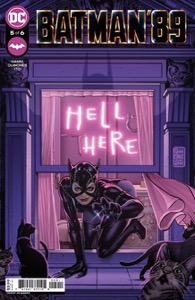
    Batman 895

    Until this issue, Batman ’89 has been so light on Commissioner Gordon you’d think Pat Hingle’s estate wasn’t letting them use likeness. But he’s got a big part this issue, only for him to come off like a complete asshole. Potentially one who doesn’t like daughter Barbara dating a Black guy but lies to her face about it. There’s only an issue left, so presumably, they’ll be able to rush through it.

    In addition to Catwoman’s new costume with the exposed thighs, the most unfilmable part of the comic is Gordon. There are multiple reasons Pat Hingle couldn’t do this part, including the acting required.

    Anyway.

    This issue has Billy Dee Williams in full “Harvey Two-Face” mode now, flipping the coin to decide various fates. Writer Sam Hamm does a nice job of introducing and executing his first Bat-villain heist—though it does seem very second act and not penultimate issue stuff. Hamm and artist Joe Quinones have a lot of fun with the planning stages, which has Two-Face bringing back the Joker gang and talking through how a supervillain’s goon gang works. In addition, there are some excellent visual nods to Batman 1989 and a fun Dark Knight Returns “cameo.”

    The comic’s main plot is Two-Face’s heist planning, with Batman training Robin as one subplot and Barbara Gordon pursuing Harvey as another. Catwoman’s just thrown in—not sure how they would’ve convinced Michelle Pfeiffer to show up for such a small part, but she’s got the most personality in just a couple panels. Hamm’s Selina Kyle is gloriously peculiar. Silly exposed thigh costume or not.

    The Robin-in-training sequences are good, with solid banter. You can hear Michael Keaton delivering the lines. Outside Commissioner Gordon’s dialogue, which also has him being drunk and fun at one point, Hamm does a fine job writing for the “cast.”

    With only one issue to go, this one’s a little “too late, too much,” with Hamm and Quinones racing and packing, but it’s much better than expected. There’s some nice art from Quinones throughout, and the Batman and Robin banter is a delight, even though there’s not enough of it.

    I’m assuming the next issue won’t bungle things too badly, and I hope they get another outing. Though maybe more than six issues; Hamm’s plotting obviously doesn’t work for six.

  • Onesies – 2×5 – Freaks and Geeks (1999)

    2×5: Freaks and Geeks (1999), Part 5: Episodes 9-10 Onesies

    Emily and Andrew celebrate season two's halfway point as they talk about episodes 9 and 10 of FREAKS AND GEEKS (1999). They discuss prank phone calls, character actors, female agency, and timeless fashion styles.

    WHERE TO LISTEN

    Apple Podcasts
    Spotify
    Stitcher
    RSS
    YouTube
  • The Equalizer (2021) s02e14 – Pulse

    The opening recap features Chris Noth, which had me hoping they’d finally resolve his character on the show. They do. In some ways, it’s the biggest episode of “Equalizer” so far; Queen Latifah takes on a Bond villain, Chris Vance, who’s got a Bond weapon of mass destruction to unleash on unsuspecting New York City.

    As Latifah’s much-ballyhooed nemesis, Vance is a disappointment. He’s fine in that vague eighties and nineties Euro-trash way, but he’s a Bond henchman at best. And, you know, a James Bond TV show henchman. So it’s concerning if they auditioned him opposite Latifah and picked him, though maybe even more concerning if they didn’t. There’s no pay-off to him.

    And since Noth doesn’t come back—even though there are a couple flexes like he might at the last minute—there’s no real pay-off there either. Instead, the pay-off will be Tory Kittles, apparently not leaving the show. It’s entirely unclear what he’s going to be doing on the show going forward, but he’s still around. He gets two scenes. As his ex-wife (even Latifah’s surprised to see guest starring again), Tawny Cypress also gets two scenes. Presumably, the show will reveal what’s going on with Kittles. The team may have room to grow.

    Though they’re also auditioning a Noth replacement with Brett Dalton. Dalton’s a CIA guy who proves reliable by the end of the episode; well, trustworthy, but maybe not reliable. Either Dalton tested with Latifah, or he’s better at procedural banter than Vance is at Bond villaining.

    The episode’s fairly solid, given the constraints. Noth put the show into a bind with his character, and they’re doing the best they can. It’s an overly complicated plot involving the United Nations, Russian scientists, and Chinese interpreters—plus Latifah’s former CIA protege, Maria Rivera, getting in touch and a bewilderingly pointless subplot for Adam Goldberg. But they get through it. It’s good Kittles is still around. Dalton is fine. Vance seems like a seasonal appearance recurring villain.

    The most compelling moments come at the beginning of the episode with Lorraine Toussaint informing Latifah her subplot about rekindling an old relationship is still going on, just not on screen, and Laya DeLeon Hayes curious about Latifah and Kittles’s relationship status. Except then, Toussaint and Hayes leave and don’t have anything else in the episode; those subplots are left for next time (or even later).

    Maybe if Paul Holahan’s direction were better… there’s a big action sequence at an oil refinery, and it feels like a generic action show from the eighties. Kind of appropriate because Vance is there, but still. Holahan’s action direction is bad in general, actually; he messes up a fairly standard fight scene at one point.

    Anyway. We’ll see what they do really post-Noth. They’ve got four episodes left this season to re-establish the ground situation. After all, it’s not like they’ve got a high bar to clear.

  • Grantchester (2014) s07e05

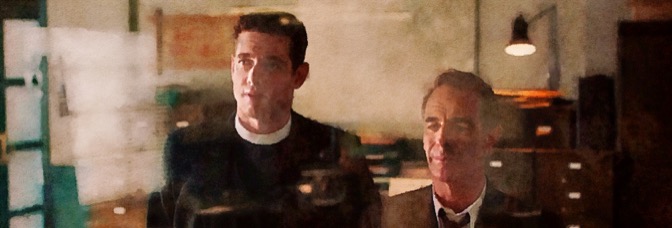
    “Grantchester” is rarely as subtle when focused on character development than in this episode. Credited to Richard Cookson, the script weaves leads Robson Green and Tom Brittney’s romantic woes underneath the mystery A-plot, which isn’t a surprise. The surprise is just what the episode will do with the result; the episode goes from being a relatively traditional outing to Brittney’s most significant episode of the season in terms of character development.

    Since there’s been no mention of his family—specifically his inappropriately amorous step-sister—this season at all, and with this episode resolving Green and Kacey Ainsworth’s two seasons-long troubled marriage arc, it feels like “Grantchester” has settled all business from before this season.

    After an amusing introduction to the eventual murder scene, the episode begins with Green and Brittney getting together a picnic for Green and his kids. Charlotte Ritchie brings the kids over, and she and Brittney have a little talk about their encounter last episode. He’s after friendship, she’s after romance, they’re going to go with the former.

    Only then his latest ex-girlfriend, the very engaged Ellora Torchia, appears and tells him she’s left fiancé Michael D. Xavier (who’s also Green’s new boss). Does Brittney want to run away with her?

    Before Brittney can process this new information—Torchia and Xavier have been missing from “Grantchester” the last couple episodes, with Green usually just missing Xavier at the office—there is, of course, a murder. And the suspects are Brittney’s pals from the old folks’ home, Bruce Alexander and Anna Calder-Marshall. They’ve done a runner, making them the (very unlikely) prime suspects.

    The episode juxtaposes Alexander and Calder-Marshall’s almost entirely offscreen adventuring with Green and Ainsworth, and Brittney and Torchia. There are some comparisons so obvious even the characters remark on them, but it’s usually understated. Green and Brittney have a friendship arc—Torchia’s return makes things awkward for Green at work—but they’ve also got a class one separate from any romantic partner quibbles. Green and Ainsworth’s plot will have some of those class issues running under it as well; it’s an incredibly well-thought-out plot.

    No wonder there’s no time for Tessa Peake-Jones and Al Weaver. Weaver doesn’t even appear in the episode, and Peake-Jones only gets a couple short scenes, including a fantastic one opposite Green. They rarely get enough time together, so it’s very nice when they do. There’s a quick check-in on her ongoing season plot, which at least comments on Brittney’s character development arc (if not directly affecting it). Weaver’s presumably just off at the cafe. “Grantchester” seems to have forgotten how to do six-episode seasons after getting eight last time. They’re out of room here.

    This season started with Brittney maybe prematurely acting like a “real Grantchester vicar” (meaning jazz, booze, and man-slutting), and it turns out he might not actually know how to lead that life. But thanks to the major changes to the characters’ situations in the last season or three, his inadequacies might run even deeper.

    There’s one episode to go, and the show’s operating with a mostly clean slate now, so it’ll be fascinating to see where they go. Especially since they’ll be setting up the prospective eighth season.

    Some outstanding acting this episode from Green, Ainsworth, and Ritchie. Great guest spots from Alexander and Calder-Marshall. And Torchia and Xavier, who presumably won’t be in town much longer, both have their best episode here.

    It’s such a good episode the omissions don’t matter. Well, as long as they don’t bungle the finale, I suppose. But they’re going into it far stronger than I’d have expected.

  • All Creatures Great and Small (2020) s02e07 – Christmas Special

    This Christmas special, “All Creatures,” goes for the jugular: the main veterinary case is a very sick Tricki Woo, whose illness panics pretty much everyone who’s ever met him. When Patricia Hodge calls for assistance, Samuel West heads out, but he, Callum Woodhouse, and Nicholas Ralph all have significant involvement in the A-plot as the episode progresses.

    There are a lot of subplots going on—with the threat of imminent war (it’s Christmas 1938, after all) undergirding the whole episode. The subplots (not in order of importance): Woodhouse waiting for his exam results, which echoes back to last season’s Christmas special, Woodhouse and bartender love interest Mollie Winnard sort of reuniting for a rendezvous, housekeeper Anna Madeley’s proto-romance with now pal Will Thorp, West’s romance with Dorothy Atkinson (who’s barely in the episode but excellent as always), Ralph and Rachel Shenton talking about married practicalities, Ralph tending jerky farmer James Burrows’s cow, and, finally, Ralph and Shenton having two Christmas Day commitments. He promised Madeley they’d be having Christmas lunch with the practice; Shenton thought they were having lunch with her family; her little sister, Imogen Clawson, has been going all out putting it together.

    Plus, Ralph waiting to talk to his parents on the phone, not having heard from mom Gabriel Quigley since he told her he wasn’t coming home to Glasgow in the last episode.

    And it’s not even a particularly long Christmas special. It’s a few minutes longer than a regular episode, and half that time is the sentimental (albeit well-executed) Christmas tracking shots.

    The practice is also throwing their annual Christmas party, which throws various characters together and helps their plots along, but it’s mostly background to the veterinary case with Tricki.

    It’s a great episode for Hodge, who’s now entirely out of Diana Rigg’s shadow (it helps the character’s quite different), including her friendship with Ralph. Oh, and, of course, Ralph is terrorizing Woodhouse to find out about his exam results. I’m not sure there’s a wasted moment in the episode; they’ve got so much to get through.

    A number of the plots just get stirred, so they don’t stick to the sides, arranging things for further development next season. As a result, the episode’s not exactly done in summary; it’s just in a hurry, starting with Ralph’s unkempt appearance when he goes out to Burrows’s farm on an emergency.

    There’s lots of good acting from the cast, not just Hodge. Ralph, Woodhouse, Madeley, and Shenton all get some excellent scenes. Shenton once again is floundering between plot points, but they seem to have gotten it squared for next season. Unfortunately, there’s a little less development on Madeley’s romance—and the “should be a bombshell” revelation she’s still married; unless I’m forgetting something, the show always made it seem like she was a widow.

    It’s a particularly good veterinary case, too, and not just because it’s the show’s most adorable regular animal. There are twists and turns, with West having to consult the other boys on medical treatment and best bedside practices. The show never gets saccharine about the plot either, which is impressive. Though it might seem like they could easily go that route because the patient’s obnoxiously cute.

    As Christmas specials go—in general—it’s a good one, and as “All Creatures”’s actual season two finale, it’s a splendid capstone to the season. They did have that one stumble (well, two stumbles in one episode) without further unsteadiness. Next season’s going to be a lot—based on how they’ve paced the first two seasons, World War II’s breaking out in the last couple episodes of the regular season (September 1939)—but I’m expecting them to ably handle it.

  • All Creatures Great and Small (2020) s02e06 – Home Truths

    This episode takes place in late September 1938. The episode opens with Nicholas Ralph and Rachel Shenton going to the movies and watching a newsreel about Chamberlain going to meet with Hitler. Shenton keeps telling Ralph not to worry about world events, which isn’t a great recommendation for taking Shenton’s advice.

    The date’s not all doom and gloom, with a client, Mike Harding, amusingly hassling Ralph.

    However, back home, Anna Madeley is similarly concerned with the possibility of war. She gets a bigger arc than usual, including going on what ought to be a romantic walk with love interest Will Thorp, except they instead talk about the looming conflict. Madeley’s worried her son will enlist for king and country. It’s a nice plot for Madeley, who rarely gets to talk to the veterinary boys about anything except them.

    The main plot this episode is Ralph’s parents visiting. He hasn’t told mom Gabriel Quigley he won’t be going back to Glasgow, which the show also hasn’t expressly stated until this episode either. And it’ll turn out Ralph also didn’t tell some other folks he should’ve told about it. Waiting for him to break the news to his parents—which comes after another big announcement—is rather suspenseful, just because Ralph’s so bad at confrontation.

    And decisiveness. Ralph’s other personal plot in this episode is the fallout from Samuel West telling him to hurry up and propose to Shenton, something Ralph hadn’t been planning on doing, what with Shenton leaving her last groom-to-be at the altar last season. It turns out to be a pretty good subplot for Shenton, who doesn’t get to talk through all of her feelings, but she does get to experience them on screen.

    The veterinary case this episode is widow Amy Nuttall’s cows again. The episode breezes through her grazing land being infested with a parasite, and now they’re just worried about the cows having salmonella. The first scene with Nuttall and Ralph has a very brief recap of her last appearance and some catching up—the script, credited to Ben Vanstone, rushes through the specifics. Then it’s all fine, with the Nuttall plot working nicely into Ralph’s parents’ visit. It’s a nice redemption of Nuttall, who I dreaded after her last appearance, but that episode seems to be “All Creatures”’s season two (and series, actually) low point.

    The main “house” subplot is whether or not Callum Woodhouse is going back to college to try for professional certification. Third time’s the charm, perhaps. West is pressuring him, Madeley’s telling West to leave him be, while Woodhouse is more concerned with finding a good home for a local stray. The stray story involves a local nomad, Frances Tomelty, who doesn’t see much point in veterinarians, and she and Woodhouse have a genially tense relationship. The story’s the most agency Woodhouse’s gotten on his own as a vet, which makes West’s ill-informed character attacks even more grating than usual. Intentionally and to good effect. There’s a lot of drama in the episode, even if the stakes are reasonably low.

    Especially since they’re all set against the Munich Conference.

    Quigley and Drew Cain (as Ralph’s dad) do particularly well in the episode, getting far better character material than ever before. Madeley, Shenton, Woodhouse, and Tony Pitts are the other acting highlights.

    It’s a foreboding but reassuring—the great British resolve and all—close to the season. Well, save the Christmas special.

  • Moon Knight (2022) s01e02 – Summon the Suit

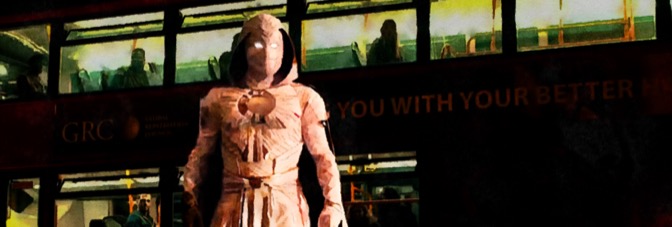
    For what felt like an eternity–Summon the Suit is forty-five boring but not poorly paced minutes—it seemed like someone making “Moon Knight” was doing it as a satire. A satire would cover Oscar Isaac’s silly (but not bad) lead performance; it would cover F. Murray Abraham’s comically obnoxious Egyptian god ghost, who Isaac finds out is basically possessing him. Villain Ethan Hawke, who’s stunningly good, is playing the part like it’s a satire; maybe it just seems like if they were trying for it, they could keep up with Hawke.

    They don’t, obviously, because it’s not a satire. Directors Justin Benson and Aaron Moorhead aren’t thoughtful enough to even hint at it. Eventually, the script, credited to Michael Kastelein, clarifies we’re supposed to be taking it seriously.

    Too bad.

    This episode has Isaac finding out about his other personality. They talk to each other through mirrors. Isaac also meets his alter ego’s estranged wife, May Calamawy, who is not a girlfriend’s head in a refrigerator (yet). However, I still doubt she will have a conversation with another woman, much less pass Bechdel. Calamawy is okay. As an actress, she’s sympathetic because she’s got a terrible part. It doesn’t make her performance any better, but she’s not a glaring misfire like Abraham.

    Seriously, they should’ve just gotten Tom Hardy to Venom voice him. It’d be funnier (and Abraham’s played for jokes anyway). The CGI on the Egyptian god ghost is also wanting. This episode has him talking to Isaac, and it looks underdeveloped. They needed another pitch.

    So Isaac Prime is the hapless British museum employee who thinks he has a mom who loves him. Mirror Isaac is an American mercenary turned costumed adventurer. Very much not Egyptian Abraham can grant them superpowers and the neat suit. There’s an action scene with Moon Knight fighting a demonic jackal (and he’s the only one who can see it), and it basically looks like a white-suited Batman movie, which was always the point. Bully for them.

    Unfortunately, outside the middling Moon Knight action sequence, Benson and Moorhead’s action direction is less exciting than watching someone else watch someone else play a video game. Hapless Isaac doesn’t get to do action, so he just watches Calamawy do it. And since the show really doesn’t care at all about Calamawy’s experience of events, it’s all dramatically inert.

    The way they contrive her into the episode isn’t even sixteenth-assed.

    There are also zero Marvel Cinematic Universe connections, with Hapless Isaac seemingly unaware of superheroes. When he talks about something being exciting, he says it’s like MI-6 or Area 51, not, you know, a Marvel Earth where a bunch of space aliens invaded and temporarily zapped half the population. Or maybe it’s set in the past. Who cares.

    Hawke nearly makes the show worth watching, and Isaac does have some fine acting moments (often opposite Hawke, which helps things). But “Moon Knight” is an exceptionally pointless, entirely pedestrian vehicle.

  • The Decoy Bride (2011, Sheree Folkson)

    According to the IMDb trivia page, The Decoy Bride only had thirty-five percent the budget it needed for the original version of the screenplay, which—percentage-wise—is a default fail. Of course, it doesn't have to be; there are many examples of constrained budgets leading to ingenious filmmaking. Unfortunately, The Decoy Bride is not one of those examples.

    The film's budgetary constraints are clear from the start when the opening titles repeat the scene just before them. Famous Hollywood movie star Alice Eve wants to get married, but since she's the most famous person in the world, the paparazzi are after her, and she can't get married if they take a picture. So she sends out decoy brides on her way to the chapel.

    Later in the film, when they actually say "decoy bride," there's no acknowledgment of this opening gambit, which is either a gaffe or bad writing. It's one of the few times one can ask that question; usually, it's just bad writing.

    The "Decoy Bride" is Kelly Macdonald. She's just returned home to her remote Scottish island of Hegg with her tail between her legs, yet another relationship failed. Her mom (Maureen Beattie) runs the only bed and breakfast on the island, so at least Macdonald's got somewhere to stay. The Hegg connection to Eve's character is fiancé David Tennant's plodding, way too long debut novel, which takes place on the island. Eve loves Tennant for the book (which no one else has ever liked, including Tennant). There are discarded subplots about Tennant not knowing what he's talking about with the island and even implying he may not have written all of it. There's no budget for a supporting cast, so it's not like he's got a Gordon Lish behind the curtain.

    Macdonald immediately goes back to work for slightly creepy James Fleet, who keeps suggesting to her they need to marry (no one else on Hegg is unmarried), and Macdonald never picks up on the hints. Because bad writing. But he's important because he convinces Macdonald to write a travel guide for the island. A "marketing" conference is coming to town, and he's sure they'll buy the guide. So she writes and publishes it in less than a week or something. The travel guide gets discarded. The movie didn't have the budget for photocopies.

    The guide's only necessary because after Macdonald and Tennant meet, she tells him she's an author too, and they trade barbs because it's a rom-com, and they can't like each other at the start. Especially since he's about to marry Eve, the most desirable woman in the world.

    Most of the movie is set over a day when Macdonald's got to play decoy. It should be a comedy of errors, but they don't have the budget. Eve disappears for most of the second and third acts, only popping in to comedically threaten to murder someone in a wheelchair. To be fair, that part's the worst gag and worst acting in the movie. Well, wait, there are a lot of sexist jokes for a while, but for unnamed supporting players, the attempted murder is the worst for the main cast.

    Speaking of unnamed… the film's got numerous characters who don't get proper names, including Sally Phillips, who plays Michael Urie's assistant. Urie is Eve's assistant, though I don't think they have any scenes together. Urie's actually an American playing an American, which is too bad; a Brit doing a bad American performance makes up for a lot of his performance. Being American, he's got a lot fewer excuses.

    Except, of course, that bad writing. And director Folkson doesn't do her cast any favors.

    The movie somehow manages to waste Tennant's charm (for large stretches, anyway), and then Macdonald is one of those female protagonists who are also the butt of the jokes (can't get a husband, can she). Eve's woefully miscast. The most damaging performance is probably Beattie.

    In addition to the severely wanting script, Folkson's direction is barely middling. The quaint, remote island has no personality. The recurring gag is there's a relatively ancient public toilet. So if it's not funny the third time, what about the fourth. Wokka wokka.

    The third act seems like it might rally and surprise, then hits all the predicted beats instead, which is the film's final disappointment.

    There's also the soundtrack, which frequently features cloying, overbearing bland folk-rock, set to unrelated scenes for the entire song. Then the score's main theme references "Just Like Heaven" so much you'd think someone told them the Cure would definitely let them use the song for free. And then when they did not, the movie just left the theme because it's not like anyone associated with the Cure would watch the film?

    It could be worse, obviously. But almost anything would've made it better. Just trusting Tennant and Macdonald to act instead of blaring crappy music over their scenes would've done a lot. The film doesn't trust its leads, which is the entire point of a rom-com, so why bother.

  • All Creatures Great and Small (2020) s02e05 – The Last Man In

    There’s not much veterinary procedural this episode. The most significant medical case involves Samuel West attending Patricia Hodges’s Pekingese on a sensitive matter. The only other animal is a pedigree bull, which Matthew Lewis offers to ex-fiancée Rachel Shenton and her family as penance for trying to get them to do bull fraud last season. Lewis is finally back from France; the episode starts with Nicholas Ralph heading out to his estate to attend the bull… and avoid Lewis’s questions about Shenton.

    Instead of animals—or even romance, though Ralph’s frequently jealous of the returned Lewis—the episode’s about cricket. It’s time for the annual match between the farmers and Lewis’s wealthy friends. Every year, Hodges hosts the match on her private cricket pitch. She’s a cricket fanatic, it turns out, which I suppose her previous appearance this season did suggest, but it still all feels like a retcon. Especially the revelation Callum Woodhouse was the star player for the farmers in last year’s match; Ralph must’ve arrived in the village at the only time Woodhouse wasn’t home visiting from university.

    Speaking of university, Woodhouse and West are still on the outs because West lied to Woodhouse about passing his exams and letting him think he was a qualified vet. The annual match is for farmers and vets, and Woodhouse is eager to remind him he’s not a vet, leaving the team a man down. No explanation why he was playing last year… it must be vets and those enrolled in veterinary studies, not unlicensed but practicing vets.

    Woodhouse isn’t the only one mad at West about the deception; Anna Madeley is more frustrated than usual with West’s obstinance.

    She gets a very sweet, very gentle romance arc with returning Will Thorp, who doesn’t know anything about cricket but goes to the match because Madeley will be there (scoring the game, in fact). Their courtship this episode repeats a couple beats from Thorp’s last appearance but does them better this time. Debbie O’Malley gets the writer credit this episode, and the script’s very thorough in finishing its character arcs. Ralph’s jealousy, Shenton’s apprehension, Lewis’s return, the episode works through all of them, and some outstanding arcs (not just Madeley and Thorp). It also introduces some new ones; Lewis observes Ralph’s got to impress Shenton’s father, Tony Pitts, now, as he’s no longer just a prospective suitor, he’s her fellow.

    The arc with Hodges and West involving the dog—ever adorable and newly rambunctious Tricki Woo (the only animal on the show to get an acting credit; he’s played by Derek)—is pure comedy and pure delight. Since the matter’s so delicate, the rest of the cast doesn’t even know about it. It’s a good showcase for Hodges, who gets more of her own character this episode out of Diana Rigg’s formidable shadow.

    It’s also O’Malley’s script. I really wish she’d written Hodges’s first appearance.

    The show’s lack of continuity perplexes instead of vexes: it’s got source material. Non-fiction source material. Whenever there’s a seeming retcon, I wonder if it’s from the book. However, those moments pass quickly as the show’s charm—especially when it’s got a good script—is overwhelming.

    Standout performance this episode from Lewis. It’s also another good one for Shenton, who’s got both farmer and love interest arcs here.

    And, obviously, Derek is indispensable.

  • All Creatures Great and Small (2020) s02e04 – Many Happy Returns

    “All Creatures” bounces back this episode, which isn’t a surprise, but this episode has the same director as last episode (Sasha Ransome). At some point between filming the last one and this one, Ransome figured out how to direct Nicholas Ralph and Rachel Shenton’s chemistry. The last episode took a dive because of the episode’s butterfingers handling of their first kiss, and this episode more than makes up for it. I was really expecting a different director; maybe it’s all the writers’ faults (and successes).

    Anyway.

    The A plot this episode is Callum Woodhouse out on his own. It’s his birthday, with brother Samuel West giving him the medical bag present (from the first episode this season) and then a day of assignments. Ralph’s going to be accompanying him, but not only to observe; Ralph’s got to go check in on Shenton’s farm—they’ve got a very important horse no one’s ever mentioned until now, so he’s got a full day.

    Meanwhile, Anna Madeley is putting together a last-minute dinner party for Woodhouse—everyone assumed he’d want to go to the bar, but instead, he wants to be classy—and West is hanging around the house, trying to think of excuses to go out and check on Woodhouse.

    Woodhouse has two veterinary cases, though the first is multiple patients. He’s doing maintenance work on numerous horses at an afore unmentioned estate, where he knows the fetching daughter, Jessica Clark, and wants to invite her to his dinner party. Since Ralph’s now coupled with Shenton, he’s got lots of advice to give—though their subplot is him not having told her about his Glasgow job offer even as he tells Madeley he’s going to talk to her about it immediately.

    Steven Hartley plays the stablehand who’d prefer experienced West to take care of the horses and very drolly observes Woodhouse on his first solo assignment. It’s a fun outing for Woodhouse and Ralph, with lots of charm from Woodhouse. And Hartley’s a delight.

    The second patient is one of Jon Furlong’s cows. She’s having a difficult labor (presumably knocked up by some bull other than Shenton’s, which was a season one plot thread). Again, it’s a charming outing for Woodhouse, who seems to be having trouble but refuses to give up. The episode never points it out, but Ralph had a similar first day when he started at the practice.

    There’s some cute stuff for Shenton’s family—little sister Imogen Clawson is waiting for the horse to give birth to her very own pony, with dad Tony Pitts hanging around for the scene. He seems to be there just so Clawson can amusingly tease him. Ralph invites Shenton to the dinner party instead of telling her about the Glasgow job.

    The dinner party will have some society drama and a lot of gentle doting for West and now officially returning girlfriend Dorothy Atkinson. It’s the most Atkinson’s had to do on the show so far; she’s delightful. Clark and Shenton have a history separate from their hosts, which proves tense, but the focus is on brothers West and Woodhouse. West’s finally proud of his little brother, and nothing can go wrong now.

    Except, of course, this season’s all about the secrets, and all of them get aired here. Well, most of them. Any outstanding secrets are now qualified.

    The episode does a great job working through it all. Debbie O’Malley gets the script credit. Shame she wasn’t around last episode.

    The episode also gives Shenton some of her first real acting all season, and she ably handles it. But the stars are Woodhouse and West. They both get a wide range of emotions to essay, and they’re outstanding.

    It’s not the most ambitious “All Creatures,” but I think it’s the most successful. Even if it weren’t rebounding from last episode’s pratfalls, this one does exceedingly well.

  • 709 Meridian – 2×1 – Poltergeist III (1988)

    2×1 – Poltergeist III (1988) 709 Meridian

    Season two kicks off with POLTERGEIST III, which had really better be the worst in the franchise because it's an exceptionally boring stinker. As the "action" unfolds, D and Andrew talk Chicago movies, angry Nancy Allen, good dad Tom Skerritt, and ghosts driving cars.

    WHERE TO LISTEN

    Apple Podcasts
    Spotify
    Stitcher
    RSS
    YouTube
  • All Creatures Great and Small (2020) s02e03 – We Can But Hope

    “All Creatures Great and Small” gets away with a certain amount of sentimentality and near saccharinity because it’s about people caring about their animals’ suffering. The show’s about folks at their most empathetic (right or wrong), and that emotionality can cover a whole bunch. However, this episode veers away from that comfort zone as Nicholas Ralph finds himself losing the Kobayashi Maru. New widow Amy Nuttall has a herd of sick cows, and there’s nothing to be done about it. So Ralph decides to advise Nuttall to sell her farm (to one of the other men in the village, who don’t think a woman can cut it) and spends the episode distressed over how to do so. He keeps hoping Nuttall will realize the seriousness of her predicament, and he won’t have to mention it.

    Except Ralph does mention it to other people, specifically Rachel Shenton, which leads to an argument on their first dress-up date. They go to the very fancy restaurant (where Shenton used to go with her rich ex-fiancé), and the whole thing goes so wrong the episode skips the presumably terrible second half of the date. It’s peculiar since there’s an entire comic subplot about Ralph’s muddy shoes leading up to the dinner, with Shenton’s little sister, Imogen Clawson, and dad, Tony Pitts, getting involved. It’s a particularly nice scene for Clawson and Pitts, who haven’t had a lot of just family time, not in service of a plotline.

    Skipping the second half of the date makes sense by the end of the episode, when Hope gins together a happy ending. The episode’s got a first-time scripter, Chloë Mi Lin Ewart, who’s charged with resolving a plot thread the show started in the first episode. Ewart’s also got the task of introducing Diana Rigg’s replacement, Patricia Hodge. Rigg passed away between seasons. The whole episode feels like it’s buried its lede, Hodge. Hodge’s part is far more verbose than Rigg’s; she plays it with an overabundance of personality. Of course, she’s suddenly got to compensate for the character having a comedic lack of decorum. It’s an unfair comparison—there’s only one Diana Rigg—but it’s also not a good recasting, which the show tries disguising with comedy.

    Hodge might play better if the other ending weren’t so trite and vice versa. The show can get away with these lackluster moments, but two missteps in a row—at the end of the episode—are unfortunate. It’s the first unsuccessful “All Creatures Great and Small.” It’s also easily the most ambitious episode so far, both pragmatically and intentionally. If the show’s going to be about Ralph’s character development, giving him rushed, thin character development will be a problem.

    In addition to the farm veterinary arc, there’s a house one. Anna Madeley is still prodding Samuel West to give little brother Callum Woodhouse more responsibility in the veterinary practice (even though Woodhouse didn’t pass his exam, which means he’s not licensed or whatever). West gets Woodhouse some hens to tend; also, so West can have eggs whenever he wants them. It’s a primarily comedic arc, with the hens going over to the neighbors, with the hens bullying Hodge’s adorable Pekingese, but also with the brother character relationship thing going on. It’s the much better arc this episode. Again, a problem since the A plot isn’t just crucial for the episode or season; it’s a defining development for the series itself.

    Madeley doesn’t get a lot to do. I was expecting her almost beau to return from last time; instead, she just gets to feel lonely because she doesn’t have a subplot. Her game night’s canceled because the boys either have dates or professional obligations. Speaking of dates, West has an offscreen date with his new love interest, so she does seem to be sticking around.

    Even after the unsteady conclusion, the series has more than enough stockpiled goodwill. It’d just have been nice for a real pay-off for one of the show’s only big swings.

  • All Creatures Great and Small (2020) s02e02 – Semper Progrediens

    This episode’s a sequel to the Christmas special, with guest star Cleo Sylvestre conveniently returning to remind star Nicholas Ralph he’s actually going to have to tell his love interest, Rachel Shenton, he likes her for anything to happen. But we also get to see the dog from the Christmas special, so it’s all good. And having Shenton sit around the home veterinary office with Sylvestre and Anna Madeley is nice. “All Creatures Great and Small” seems to know its got strength in its homeyness, but it uses that strength sparingly.

    Shenton’s hanging out because she’s waiting for Ralph to take her to the Daffodil Ball. In addition to following up on Christmas special story threads—it’s not just Sylvestre’s return—the episode also does some retconning. For example, the Daffodil Ball. If Ralph wasn’t in town for the Daffodil Ball the year before, he just missed it, so his utter unfamiliarity plays a wee contrived. Though the episode opens with him jogging through the countryside like they suddenly remembered they’d established him as a jogger in the first episode then forgot about it.

    The other Christmas special followups aren’t guest stars but lack thereof. In this episode, we find out Samuel West’s love interest is off playing grandma on an island, never to return. Then Callum Woodhouse also needs a new one because his regular love interest, the local bartender, has apparently given up on him. Or something. It’s left a lot more unclear than West’s, which is decidedly over, so he can pursue fetching divorcée Dorothy Atkinson. Woodhouse’s love interest for the Ball—Ella Bruccoleri—seems more temporary. She’s a farmer’s daughter; Woodhouse and West were there earlier on a case, one Woodhouse determinedly finishes to ensure there’d be time to go to the Ball.

    While Woodhouse’s romance arc is mostly comedic, West’s works to set him up as a more determined business owner. One of his most annoying clients, James Fleet, keeps threatening to take his business to the competition Kriss Dosanjh (who’s been absent from the series since maybe the second or third of last season), and West shows off for Atkinson. The show appears to be setting Atkinson up as a more constant love interest for West, which is fine. They’re charming together, and he’s not constantly unsure like with the last one.

    The big romance plot is obviously Ralph and Shenton, who go on their first date together to the Ball (though they don’t call it a date), but the cutest is Anna Madeley’s entirely unexpected one. One of the veterinary cases is an injured dog in need of emergency surgery; as the owner, played by Will Thorp, waits around the house, he and Madeley work up a rapport. It’s the first time Madeley’s ever had the slightest bit of a romantic plot, and it’s very nice to see her get something else to do besides fret over the boys.

    The main veterinary case is Fleet’s, which the episode ends up playing for some very good, very gross laughs. Besides Thorp’s injured dog, the cases all have a big humor component.

    Also, there’s some unexpected progress on Ralph’s “moving back to Glasgow” subplot. He tells Madeley about it early in the episode and how his romantic interest in Shenton will be a deciding factor, so she’s concerned about it now.

    It’s a very nice episode and seems to be setting up the season going forward. But who knows; someone else might move to an island never to return too. Can’t take “All Creatures” guest stars for granted.

  • All Creatures Great and Small (2020) s02e01 – Where the Heart Is

    The season two premiere opens very similarly to the first episode, with Nicholas Ralph back in Glasgow. He’s visiting his parents (for Easter), so four and a half months after the Christmas special, and mom Gabriel Quigley wants him to move back home. There’s a job at the local vet office. The practice has the latest technology, serves household pets (a growing industry), and prospective boss Euan Macnaughton values Ralph’s opinion.

    And dad Drew Cain is getting a little old for working on the docks.

    So Ralph tentatively agrees to return home permanently for the job, which will be open in approximately six months. Potentially the present action of the season.

    When he gets back to Yorkshire, he keeps this job offer a secret from everyone there. This episode’s all about secrets, big and small. The other big one is Callum Woodhouse not passing his veterinary boards and, therefore, not being board-certified. It’s unclear how much this exam result matters—can Woodhouse practice without the results—but brother Samuel West is noticeably uncomfortable when housekeeper Anna Madeley wants to get Woodhouse a gift recognizing the achievement.

    So West’s lying to Madeley quite badly, and she suspects something’s going on.

    Then Woodhouse—who’s mostly just stocking the dispensary at the practice—has his own secret. Thanks to a busy schedule, he gets to attend guest star June Watson’s parakeet. Except it drops dead, so Woodhouse gets the idea to just replace it with another, as Watson’s blind. It’s the comic subplot in the episode, also involving West and Madeley to fine result.

    The other veterinary case involves Philip Hill-Pearson’s sheep and the neighbors’ dog. Unfortunately, the dog’s terrorizing the sheep, leading to some severe consequences. Complicating things is the dog’s owner—it’s Imogen Clawson, little sister to Ralph’s love interest, Rachel Shenton; both Clawson and Shenton are pals to the practice in general, so when Ralph finds out the dog’s in danger of being put down, he and Clawson cook up a scheme to save the pup.

    Also, under the surface is whatever’s gone on with Ralph and Shenton since Christmas, when she canceled her wedding (at her wedding), leaving Ralph open to pursue her.

    The arc’s got some humor thanks to Woodhouse and Clawson gently teasing Ralph about his crush on Shenton, but it soon gives way to a conflict between city slicker Ralph (who doesn’t think you should kill a dog for barking at sheep) and the country folk. West, Pitts, and even Shenton don’t take kindly to Ralph’s input on the matter.

    Amid all the contemporary drama is Madeley wanting to make Ralph feel at home again on his return—he was away visiting a couple of weeks—and seeing how West’s aggressive attitude is affecting Ralph, without knowing Ralph’s contemplating that job offer.

    Lots of quiet drama, genial humor, and fine acting. Ralph does particularly well with the personal conflicts, guest star Hill-Pearson’s great, and Clawson and Woodhouse are both excellent.

    “All Creatures” is off to a somewhat strange start for the season—not sure there were any secrets in the first season—but it’s a good start.

  • Grantchester (2014) s07e04

    The mystery plot is particularly good in this episode. And it's all about the vicarage. Maybe the location was busy for the first two episodes of this season; they're very much back to services, with Tom Brittney giving a couple sermons. He's also potentially hiring a new curate (Tom Glenister, briefly returning from last episode). Brittney takes Glenister to visit Al Weaver, which is just set up for Tessa Peake-Jones's subplot. She still hasn't told anyone but Weaver about her cancer diagnosis.

    "Grantchester"'s got alternating C plots this season: there's Peake-Jones and cancer, then Robson Green and Kacey Ainsworth's marital woes. This episode starts with Peake-Jones as the main subplot, switches over to Green and Ainsworth, then is back to Peake-Jones for the finish.

    It balances out nicely—with some great acting from Peake-Jones and Nick Brimble (as her husband)—because the Green and Ainsworth subplot echoes in the main mystery plot.

    The victim this episode is the husband of one of the church ladies, who Brittney thought he knew well, only to discover they've all got secrets from him. Except for Oliver Dimsdale (Weaver's beau), the lone dude in the group. Louiza Patikas plays the controlling leader of the group, with Lauren Douglin and Sophie Fletcher as her chief sidekicks; Alaïs Lawson is the youngest, a French girl who Patikas micromanages the most.

    Brittney thinks he knows all of them, only for the murder to reveal he's completely unaware of what's going on with his parish. Green's even surprised at how out of touch Brittney is with the goings-on amongst his most needful "customers." Though at this point, there's no longer mention of Brittney not hanging around the station to help Green with investigations; Green's new boss doesn't put in an appearance this episode (or last), and junior officer Bradley Hall is back to hanging on Green's every potential compliment.

    The mystery reveals things about the victim, the victim's wife, and the three other women in the church group; lots to unravel, lots of well-acted drama. Patikas proves a deeper character than implied initially, and she's terrific. The murder arc ends up far more haunting than it originally seems like it'll turn out.

    It also ties into the Green and Ainsworth subplot. Brittney and Charlotte Ritchie are convinced all Green and Ainsworth need is a nice night out and set them up, unknowingly, on a double date. Ritchie realizes Brittney sometimes defaults to vicar behavior when things go wrong and right for certain attendees, making him less than sincere when he needs to be. Unfortunately, the episode leaves that development hanging for next time, instead toggling back over to Peake-Jones's. It's an okay move (the Peake-Jones subplot does take precedent), but they seem to be dragging out Brittney and Ritchie's flirty friendship.

    Even with the frayed subplots, it's another good episode. Though it's only a six-episode season this time, so they're nearing the finish, and almost everything outstanding is very outstanding.

  • The Stop Button Guide 100

    A collection of film responses discussing the career of Classic Hollywood movie star Eleanor Parker. Now best known for her supporting role in THE SOUND OF MUSIC, Parker was a lead in DETECTIVE STORY, THE NAKED JUNGLE, CAGED, HOME FROM THE HILL, SCARAMOUCHE, and many other films. Covers all of Parker's forty plus feature film credits (minus cameos), and most of her television movie credits. Also includes a four part essay summarizing her career, and two additional essays.

  • Spiritwalker (2020, Yoon Jae-geun)

    I was expecting Spiritwalker’s MacGuffin to disappoint, but I wasn’t expecting it to completely derail the film. Spiritwalker is a high-concept action thriller about an amnesiac, Yoon Kye-sang, who discovers he is quantum leaping from person-to-person every twelve hours. He also has a very particular set of skills. Those skills come in handy because everyone he jumps into is some kind of underworld figure. Yoon’s got vague memories of his life before—something about a woman, Lim Ji-Yeon, of course—and his only friend is Park Ji-hwan.

    Park’s character is an unhoused person who happens upon Yoon in a car accident and calls it in (while searching the car for loose items). He’s also the most uncomplicated fun Spiritwalker ever gets to have, with lots of comic reactions to discovering Yoon in a new body. Yoon mostly plays the part every time, with reflections and camera footage showing the actual person he’s possessed. After the MacGuffin reveal, Spiritwalker makes several bad moves, but the worst is Park mostly disappearing from the movie, followed by director Yoon Jae-geun not using Yoon enough. It wouldn’t end up mattering—the third act is a CGI composited action ballet bloodbath–but after a whole movie creating his character, director Yoon shafts actor Yoon.

    There are some other big problems in the post-MacGuffin film, as well, like Spiritwalker deciding the criminal underworld also needs a covert espionage agency subplot tacked on and then final boss Park Yong-woo having a pointless drug addiction bit. The movie runs an hour and fifty-ish minutes and could easily lose ten from the third act. There’s lots of needless activity just to drag it out, which makes sense since the MacGuffin’s so bad.

    Approximately the first half of Spiritwalker is a sort of neo-noir. Yoon is working his way through this criminal organization, jumping from crook to crook and trying to remember what’s going on. Sidekick Park can only help so much, and since all of the people Yoon’s inhabiting are dangerous criminals, no one really wants to exposition dump with him. Especially not Lim, who thinks he’s a bad guy (obviously).

    The amnesia and identity crisis mix works, especially since director Yoon never tries too hard with the action. All of actor Yoon’s “particular skill” scenes surprise him, which makes the scenes more entertaining and sympathetic. The reveal on the quantum leaping will be both bad and insipid, but—again—what happens after is even worse. As a thriller director, Yoon’s solid. As an action director? Not so much. His composition for the third act is always off and always predictable. He goes through the same setups over and over. All of Spiritwalker’s technical pay-off comes in the early second act; the rest is a visual bore.

    Until the script literally abandons him, actor Yoon’s a good lead. He does the confused quantum leaper thing well, though it might not be a compliment. He’s best at being bewildered without character development. Lim’s fine as the not femme fatale who inexplicably has a similar particular set of skills. That late second act reveal of the espionage agency’s involvement pays zero dividends and trades ostensible coherence for personality. Suddenly, director Yoon wants to be making a John Wick or something, complete with level bosses; Lim gets lost in it all.

    Park Ji-hwan is good and fun as the sidekick. Park Yong-woo is fantastic as the big boss; it’s an exceptionally thin part, but Park devours enough scenery to plump it up.

    The rest of the supporting cast is solid without being distinct.

    Spiritwalker’s only ever going to be able to go so far on its concept, but it should’ve been able to go farther than it gets. It’s never bad and is rather compelling until the loud, yawner of a third act, but it’s a definite bummer.

  • The Stop Button Guide 99

    A critical episode guide discussing the all twenty-four season five episodes of the 1990s NBC hit, Frasier. The show, starring Kelsey Grammer, David Hyde Pierce, Jane Leeves, John Mahoney, and Peri Gilpin, currently streams at Paramount+

  • Onesies – 2×4 – Freaks and Geeks (1999)

    2×4: Freaks and Geeks (1999), Part 3: Episodes 7-8 Onesies

    This episode, Emily and Andrew remember how cool it'd be if the show let its protagonist siblings ever have any scenes together, try to decide what's cringey for when they made the show in 1999 and what's just cringey because it's set in 1980, and once again have no notes for the wonderful Martin Starr. Also SLC Punk is a great movie and people should see it.

    WHERE TO LISTEN

    Apple Podcasts
    Spotify
    Stitcher
    RSS
    YouTube
  • The Stop Button Guide 98

    A critical episode guide discussing the all twenty-four season five episodes of the 1990s NBC hit, Frasier. The show, starring Kelsey Grammer, David Hyde Pierce, Jane Leeves, John Mahoney, and Peri Gilpin, currently streams at Paramount+

  • Poltergeist III (1988, Gary Sherman)

    Poltergeist III is about as thrilling as watching someone wash a window. Literally. Outside ostensible protagonist Heather O’Rourke and special guest star Zelda Rubinstein, no one from the previous films returns. The film opens with O’Rourke living in Chicago with aunt Nancy Allen, a yuppie recently married to Tom Skerritt, presumably a widower with a teenage daughter (Lara Flynn Boyle). There’s a lot of setup with the family, and it goes absolutely nowhere. It’s probably better it doesn’t, as the writing’s so bad. Allen’s whole arc for the movie—which takes place over a single day—involves her not loving her family enough. Except the first act shows the opposite. She, Boyle, and O’Rourke are downright pals, turning getting to the morning carpool into a veritable action set piece.

    The family lives in a combination skyscraper shopping mall; the exteriors are the John Hancock Building, some interiors there, some interiors elsewhere. It’s not a bad idea for a setting (it’s a Judge Dredd tower block), except every time the characters go somewhere interesting, the scenes are either super-short or off-screen. Skeritt works for the building, so he’s got passkeys, which will be necessary for teenage shenanigans, and Allen’s got an unlikely art gallery in the high-class shopping mall.

    Except Allen makes her assistant, E.J. Murray, do all her work, which is where Allen starts getting unlikable. She never gets much more unlikable because her performance becomes weird about halfway through, as she seems incredibly resentful she’s appearing in Poltergeist III. It should work with the plot as her character eventually wants to run away from the haunted skyscraper. Still, neither Allen nor director Sherman can make Allen’s disgust in the project carry through into the performance.

    However, Allen is a trooper. She gets through Poltergeist III and all its absurdities and inanities. Just when the movie seems like it’s going to focus on O’Rourke and surrogate big sister Boyle (who low-key resents having a tween charge), it instead becomes Skerritt and Allen running around the skyscraper. Sometimes they’re on their own; sometimes, they’ve got asshole child psychologist Richard Fire with them. Fire is O’Rourke’s doctor, and he hates her and hates her ghost stories. Like much of Poltergeist III it ought to be campy bad; instead, it’s boring, inept bad.

    The best thing in the movie, objectively, is Alex Nepomniaschy’s photography. He shoots the building interiors beautifully. And doesn’t do too bad with the competently executed but terribly designed supernatural sequences, which are sometimes too silly to work and sometimes just too poorly directed. Even though director Sherman designed all the physical effects himself, he didn’t know how to shoot them. Bummer.

    But the most amusing thing about Poltergeist III is Skerritt’s performance. Allen, Boyle, and some other cast members survive the film and never let it defeat them, but Skerritt is enthusiastic and eager in this terrible movie. Allen occasionally looks mad he’s putting so much effort into it. It never ever pays off, but it’s an exceptionally professional turn from Skerritt. The movie doesn’t deserve most of its cast members—I mean, only Fire is so godawful he deserves it—but Skerritt’s a champ for getting through it.

    Poltergeist III is one of those “must be seen to be believed” pictures, but it’s also one of those “there’s truly no reason to see this movie” movies. It’s insufferably dull too. Editor Ross Albert holds shots too long (presumably because otherwise, the film wouldn’t run more than ninety minutes), and there are numerous action sequences where Sherman confuses tension and boredom.

    Don’t see Poltergeist III. Watch paint dry or window washing instead.

  • The Stop Button Guide 97

    A critical episode guide discussing the all thirteen season two episodes of the Paramount+ television show, Evil, a supernatural drama series created by Robert and Michelle King. The show stars Katja Herbers, Mike Colter, Aasif Mandvi, Kurt Fuller, Christine Lahti, and Michael Emerson.

  • All Creatures Great and Small (2020) s01e07 – The Night Before Christmas

    “All Creatures” goes into its Christmas special with it being, well, a special Christmas even before the events of the episode. It’s going to be the (presumably) first time lead Nicholas Ralph goes home to Scotland to see his folks since he left in the first episode. Veterinary practice favorite patient’s owner Rachel Shenton is marrying her longtime beau, Matthew Lewis, on Christmas Day. Callum Woodhouse is expecting the results of his latest attempt at his exams. Anna Madeley has invited her estranged son to their Christmas party, and he seems like he’s going to make the trip. And finally, Samuel West is excited to see Madeley’s friend, Maimie McCoy, at the party and continue his romantic pursuit.

    There are two veterinary cases in the episode. First, Ralph’s got a pregnant dog whose having some troubles, and then Woodhouse tends to a donkey with (life-threatening) indigestion. West briefly consults on Woodhouse’s case, but he’s so preoccupied with McCoy (and Woodhouse’s unknown exam results), he exits early. Also, West is just too much of an ass to the donkey’s owner, Jake Hayes. No pun intended.

    Well, not initially.

    Hayes is hesitant to trust Woodhouse because Hayes is Mollie Winnard’s little brother. She and Woodhouse had a summer fling, followed by her dumping him but mostly—apparently—because she thought he was going to dump her. All three men have a romantic arc in this episode, and all three of those arcs adjust where the series had left things. At the end of the season proper, McCoy did not share West’s level of romantic enthusiasm. Woodhouse had seemingly given up rekindling with Winnard. Only Ralph—who was very mopey about Shenton’s engagement and is still just as mopey—has a congruent arc.

    I’m also curious how long it had been between shooting the regular season and this Christmas special. Presumably long enough for someone to decide they needed a more diverse quaint British village, even if it is 1937. Ralph’s mother-to-be dog’s owners are an adorable old interracial couple, Cleo Sylvestre and Dave Hill, whose backstory eventually becomes a plot point. Ralph’s got to go back out and check on the dog, with nervous bride-to-be Shenton tagging along to take her mind off the wedding. Sylvestre sees Ralph’s crush and shares her own story; if she and Hill could get over rural Yorkshire racism in the 1920s, surely Ralph can handle the social awkwardness of stealing Shenton away from Lewis.

    The episode doesn’t get too saccharine or dramatic about the potential for scandalous behavior. Other than it being a short arc for Madeley, who apparently didn’t notice Ralph was mad-crushing on Shenton either, not until Woodhouse tells her, and it’s then entirely inappropriate Shenton accompanied him on a call. Woodhouse alternates between gossiping and teasing on the subject, depending on who’s in the scene with him.

    The special runs about ten minutes longer than a regular episode, which is fine since the finale has a couple endings. There’s the initial resolution (and set up for next season), then there’s a Christmas Day finish, complete with the king’s speech on the radio. It’s like a regular episode, but they kept going for a couple more dramatic beats.

    In addition to the more diverse village—West holds the big Christmas party partially as advertising for the veterinary practice, and there’s a Black guest—the special also makes Woodhouse and West a lot cuter. West’s whole nervous thing with courting McCoy, Woodhouse bonding with Hayes, they’re both more generally agreeable than ever before.

    Maybe it’s the Christmas spirit.

    Madeley, unfortunately, gets the worst arc. She ends up supporting everyone else’s arc at one point or another, including McCoy, before doing a backstory reveal close to the end of the episode. Unfortunately, there’s not time to do anything more with it because it’s Christmas Day, and almost none of the episode’s initial problems have been solved. The show handles the dramatics beautifully, though director Andy Hay gives it away when there’s a country driving sequence without the “toot toot” enthusiasm the show’s always had before.

    It’s a lovely Christmas special. I’m very curious how far away from these events—most will have significant repercussions—next season will pick up.

  • The Stop Button Guide 96

    A critical episode guide discussing the all eleven season four episodes of the FX black comedy-crime drama television show, Fargo, created by Noah Hawley. The show is inspired by the 1996 film of the same name, which was written and directed by the Coen brothers, and takes place within the same universe. The series stars Chris Rock, Jessie Buckley, Jason Schwartzman, Ben Whishaw, Jack Huston, Salvatore Esposito, E'myri Crutchfield, Timothy Olyphant, and Glynn Turman.

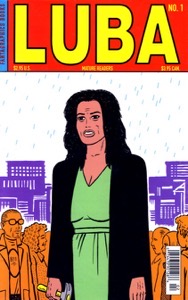
  • Luba (1998) #1

    Luba 1

    If the first issue is any indication, Luba is going to be an anthology series. Now, obviously, the first issue may not be any indication. I think creator Gilbert Hernandez stuck to the anthology format for all of New Love, the first Love and Rockets sequel, and a Luba prequel. Venus, who Beto focused on for lots of New Love (she even got her own strip), has more to do in this issue of Luba than any of Luba’s kids or grandkids. And Beto’s continuing the arc from that series for Venus; she’s still recovering from mom Petra’s divorce from her stepdad.

    Luba takes place sometime after that series, with Luba in the United States with guardian Gorgo (“The Old Man”) trying to make sure her family’s safe to come over. Specifically, husband Khamo, who doesn’t actually appear in this issue. Luba talks about a recurring dream she’s got with Khamo, and he’s constantly on her mind, but otherwise, he doesn’t appear.

    The first story is a very Beto piece with Luba—stark nude, with hammer, in her dream sequence to start—having an uncanny experience, then telling Gorgo about it. Gorgo has called in a favor with the mob to get Luba’s family out of danger. When Luba goes to meet with a contact, it’s at the location of the recurring dream. Beto winds past and present threads together (Gorgo and Khamo) while it’s all building to the future. It’s a great opening, haunting but not in a bad way.

    The next story catches up with Luba’s family while she’s away. She hasn’t told anyone what she’s doing (exactly), just broad strokes. It’s a big cast, with Fritzi and Venus getting the most to do (with some great Ofelia asides) before Guadalupe arrives on the last page and sort of takes protagonist.

    Now, obviously, this comic’s entirely incomprehensible to anyone who’s not a Love and Rockets (and probably New Love) reader. Beto packs in the dialogue; it’s only a four-page strip, and there’s a complete arc for Venus and partial ones for Fritzi and Casimira. There have got to be at least a dozen lead characters in this issue. My only “complaint,” which the Internet completely alleviates (and wouldn’t have on Luba #1’s publication in 1998), is there’s no family tree. Beto does not care about new readers; it’s an awesome, actually justified flex, but it’s also a lot.

    Casimira’s arc is just this issue; she’s worried about her mom, Luba, and Beto’s established why. It’s just this semi-arc is in the middle of a New Love sequel for Venus. And then Guadalupe’s story is a callback to Love and Rockets: Volume One, but maybe tying in New Love details. I’ll bet these read so good in trade.

    Anyway.

    The next strip is a one-pager where Gorgo reflects on his life protecting Luba and her family (starting with Luba’s mom). It’s a short mood piece and more tightly constrained work from Beto.

    The following strip is four pages about Guadalupe introducing her friend Pipo to an ex-boyfriend, Igor, who Pipo then seduces. It’s a comedy strip—Igor’s in a sort of band with best pal, Steve, who’s musically inept and entirely unaware of it. The strip’s from Igor’s perspective, with a single aside for Guadalupe—it’s a great one, too; Beto observes literary snobs aren’t better people than non-literary snobs; it’s the loosest comic in the issue, all for fun.

    The next strip is another very measured one, two pages about Doralis, one of Luba’s daughters, who’s got a popular television variety show and uses it to tell the story of younger sister Casimira losing her arm. It’s basically a check-in strip for Luba’s daughters, Doralis and older sister Maricela; they’re both queer and closeted. The Casimira bit is full of personality and less internal conflict. This comic is full of short strips you can’t believe are only a couple of a few pages. This one’s the most impressive in that regard. Beto’s a master at compact comics narrative.

    The final story is a three-pager with Guadalupe narrating. It’s about Fritzi and Petra visiting Luba, who’s still working on getting the family safely into the States. This story’s the closest Beto gets to giving the reader relevant backstory (Guadalupe recounts Ofelia’s injuries, which Love and Rockets readers remember, knowing more than the characters). About a page and a half are Luba and her sisters visiting, then the full last page is Guadalupe’s narration getting the spotlight. With appropriately corresponding visuals. It all ties into Luba being away from her family too long, which is the issue’s not at all opaque theme.

    It’s a simultaneously sublime and jam-packed story in a sublime and jam-packed issue. It’s an excellent start to the series; sincere and thoughtful.

    There’s a one-page color strip on the back cover. No dialogue, just Ofelia and Fritzi playing with some of the kids. It’s charming. And slightly uncanny to see Beto’s characters in color.

  • The Stop Button Guide 95

    A critical episode guide discussing the all ten season two episodes of the New Zealand murder mystery, crime comedy-drama television series, My Life Is Murder. The series stars Lucy Lawless, Ebony Vagulans, Rawiri Jobe, Joe Naufahu, and Martin Henderson.

  • Young Man with a Horn (1950, Michael Curtiz)

    Young Man with a Horn has a third act problem. It’s got too many of them as it tries to find a way not to end on a down note. As a result, each third act gets more depressing, more dire, and correspondingly adjusts the expected bounce-back. But Horn’s got a bookending device with co-star Hoagy Carmichael; he’s narrating the film, telling everyone about this great jazz trumpet player he knows… played by Kirk Douglas.

    At its worst, Horn’s aggressively misogynistic. At its second-worst, it’s passively misogynistic. At its third, it’s just Oscar bait for Douglas; it’s basically fine at that level. Douglas eats through the performance, bringing just as much intensity to his trumpet solos as when he’s listening to love interest Lauren Bacall talk all book smart around him. It’s an intense, measured performance. There’s just too much of it because there’s too much movie.

    The film takes fifteen minutes for Douglas to show up, instead opening with Orley Lindgren playing the character as a kid. He’s an orphan, living with a disinterested (but seemingly okay) older sister, Mary Beth Hughes (who’s got maybe a scene and a half); one day, walking around L.A., he happens into a mission where he hears the good word but more importantly… a pianist is accompanying the hymns. Once the needy are sufficiently contrite, they get to eat, leaving the piano open, and Lindgren just starts playing. It turns into the trumpet because the trumpet’s cheapest in the pawnshop, then Lindgren soon happens upon Black jazz trumpeter Juano Hernandez and his band. Hernandez will take Lindgren under his wing and teach him to play, becoming a surrogate father, but the film can’t say it.

    Once Lindgren ages up into Douglas, it’s conveniently time for Hernandez to amscray so Douglas can make some white friends. The closest Horn ever comes to talking about race is when big-time band leader Jerome Cowan gives Douglas crap for playing music with “those…” but then Douglas interrupts him, and it’s over. Not doing more with it means Hernandez has got a whole lot less to do once he and Douglas reunite when Douglas ditches him in a time of need for awful lady friend Bacall.

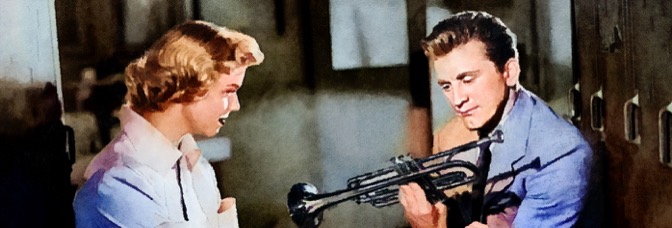
    Before then, however, Horn introduces its love interest, Doris Day. She’s the singer in his first real band, where he also meets Hoagy Carmichael (who’ll pretty much be white Hernandez, which means he gets to be around a lot more and, you know, narrate the movie). Day thinks Douglas’s brash, talented, and captivating. He likes having a girl share the excitement about music. That section of the film is where director Curtiz and cinematographer Ted D. McCord establish the style and quality it’ll hold for the rest of it. Horn’s gorgeously directed, gorgeously shot. Once Douglas is onscreen, there’s a single tepid-looking sequence—Day and Douglas’s first date on a pier, which is way too obviously soundstage. Otherwise, the film’s phenomenal looking. There are eventually these great location New York City exteriors. Other than the passersby getting too interested in the film cameras, they’re superb. Luckily, the studio stuff is well done; even though it’s unfortunate they didn’t make it all on location, it satisfactorily syncs up. Alan Crosland Jr.’s editing is vital in that department too.

    The plot has Douglas meeting, losing, then reuniting with most supporting cast members. Day will go from Los Angeles dance halls to New York theaters, for example. The film uses the career progression to perturb Douglas’s arc—at one point, Carmichael mentions all you need is friends in high places to give you jobs at the right time—and he’ll eventually meet bored rich girl Bacall.

    And once they met, he’s smitten and on the road to ruin.

    Though the film’s never particularly good about the timeline of their relationship. Given how little the film does with Bacall, most of the time spent on their courtship is a waste. Her arc’s where the film’s aggressively misogynistic. Also, Bacall’s supposed to be playing a lesbian (which she didn’t realize at the time, apparently), which would just make it homophobic too. It’s a really lousy arc, and Bacall seems checked out fairly early.

    The passive misogyny is Day, who’s literally just around to talk about Douglas and dote on him. Day does as much as she can with it, but some of her best scenes are the singing numbers, including the one where Curtiz has to force himself to direct a boring singing number. Day gets a thankless part, even if she’s the most interesting character for much of the film.

    Carmichael’s fine. He’s really likable, but his part’s pointless. He’s just there because Hernandez can’t be.

    Similarly, Hernandez is fine but doesn’t have enough.

    Cowan, Nestor Paiva, and Walter Reed are okay as Douglas’s various bosses. Reed’s got the most to work with (Douglas’s stealing Day away from him), but all three are basically cameos.

    The film rallies a little bit between the second and third third acts, where they lay into the New City location shooting, and for a minute, it seems like they might bring it all around with the end. They don’t—studio-enforced finale—but they sustain the uptick for a good while.

    Young Man with a Horn’s got a great lead performance in search of a great lead role, a solid and underused supporting cast, and some fantastic filmmaking. It’s also got a troubled script and finish.

  • The Stop Button Guide 94

    A critical episode guide discussing the all eight episodes of part four of the 2018 Netflix streaming show, Chilling Adventures of Sabrina, based on the Archie comic book series of the same name. The series is centered on the Archie Comics character Sabrina Spellman, portrayed by Kiernan Shipka, and also stars Ross Lynch, Gavin Leatherwood, Lucy Davis, Chance Perdomo, Michelle Gomez, Jaz Sinclair, Tati Gabrielle, Adeline Rudolph, Lachlan Watson, Richard Coyle, and Miranda Otto.

  • All Creatures Great and Small (2020) s01e06 – A Cure for All Ills

    “All Creatures” has a very nice close for season one proper, which isn’t really a surprise; the show’s always nice. What’s so impressive about that quality is the show never gets saccharine about it. It’s full of British derring-do, just in a setting where that derring-do doesn’t, you know, go a-colonizing. Also, Samuel West. This episode, in particular, shows how important West is to maintaining the tone. He’s a sympathetic, good-hearted ass; West does a phenomenal job with that part. He spends most of the episode with a man cold, only refusing to acknowledge it until he can’t stay upright.

    The episode begins following up the previous, with Nicholas Ralph heading out to less and less likely love interest Rachel Shenton’s farm as they send off their once prize bull for the slaughterhouse. Last episode, Ralph had to go back on vouching for the animal; he failed Shenton for principled reasons. The visit—and the vouching—will play into the main plot later on as Ralph finds himself in a not dissimilar predicament.

    The visit also forces Ralph to see Shenton’s more enthusiastic romance with Matthew Lewis. It upsets Ralph so much he’s willing to let Callum Woodhouse set up a double date with some nurses (Harriet Slater and Charlie May-Clark). The setup’s actually a welcome development; at the beginning of the episode, it seems like Ralph’s just going to mope over Shenton the whole time.

    Unfortunately, some of the reason he’s not moping over a broken heart is because of the main plot. Another animal he inspected at the fair last episode—a cow—has developed a breathing problem, and there might not be anything to be done about it. It’s the only significant medical case this episode and the most involved one on the show so far, eventually involving the entire regular cast. Anna Madeley steps in with a very simple gesture at one point, and it’s incredibly affecting. There are no stakes to the case but empathetic ones, to the suffering cow, to the potentially suffering owner (widower Alexis Platt, who spent his entire savings on the animal).

    But Ralph’s veterinary procedural plot is somewhat secondary to the house-based stuff. The show’s balance between Ralph, the undeniable protagonist, and the rest of the cast is sublime. Though this episode’s a little different because the house-based story is often focused on him, even when he’s not there. Especially when he’s not there. Madeley and Woodhouse find out it’s Ralph’s birthday coming up and plan a celebration. Unfortunately, Woodhouse is ignoring his exams, which sends sick West on numerous tirades.

    While the episode’s set up for Ralph to have the big arc, Woodhouse’s plot is the more effective. Ralph’s contending with reality, Woodhouse acknowledges and overcomes his own failings. And doing so under fire—West’s incredibly nasty when sick. It’s also the least showy part in the episode. Woodhouse does very well here.

    There’s a little more with Shenton in the second half of the episode. While the episode doesn’t try to wrap up too much in the season finale, it’s definitely aware some elements need to get settled. Thanks to the plotting, the episode gets to do a couple resolution scenes, with the second one putting the cast and show nicely (of course) to bed for the season.