• Sheltered 9 (May 2014)

    Sheltered #9My only hesitation with this issue is how Brisson ends it. For almost six issues, it seems like the comic has been on a frantic pace with the dissenting girl–who started out as the protagonist but she’s really not anymore (the series doesn’t have one–on the run from the other kids.

    And this issue ends with the promise of a calm. It’s impossible to determine if Brisson is sincere. At the same time, he’s introducing another element into the mix and it’s not calm. There’s been so much intense focus on the infighting–with the exception of the done-in-one setting up that other element–who knows where Sheltered is going.

    Regardless, it’s a great issue. There’s some fantastic art from Christmas. He and Brisson pace out the issue beautifully.

    There’s a lengthy action sequence in the middle and it’s just fantastic.

    Brisson and Christmas excel here.

    B+ 

    CREDITS

    Writer and letterer, Ed Brisson; artist, Johnnie Christmas; colorist, Shari Chankhamma; editor, Paul Allor; publisher, Image Comics.

  • Stray Bullets 34 (June 2004)

    Stray Bullets #34And here we have the issue where a couple drunk male friends fool around and it doesn’t just ruin their friendship, one of them goes insane and kills the other one.

    Guess Lapham liked American Beauty too. The trope wasn’t original in that movie either.

    There’s no context for the story. The guys are a couple jerks, so it’s not like Lapham creates much sympathy for their psychological distress. In some ways, Bullets is at its best with the done-in-ones, even the terrible ones like this issue. Because then Lapham’s failings are disposable. It’s a bad issue, not a bad arc.

    The art is a little bit better than it has been lately. A little. Lapham is still dragging out his action scenes and his attempt at a haunting finale is a joke. But the art’s a little better.

    The comic reads fast. At least it reads fast.

    D 

    CREDITS

    Higily-Pigily; writer, artist, and letterer, David Lapham; editor, Renee Miller; publisher, El Capitán Books.

  • Southern Bastards 2 (May 2014)

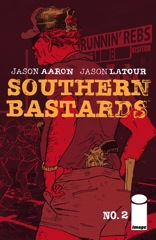
    Southern Bastards #2One of these months, there’s going to be a kick ass issue of Southern Bastards. Maybe next month, maybe the issue after. Because Aaron shows his hand a little here–Bastards is kind of like Rambo V, only in the South. It’s a little like Frank Castle goes country, it’s a little like Gran Torino only an action movie.

    This genre–the old badass who just has to stand up and kick ass–is a fun one. Ornery old white guys (these guys always tend to be white guys) kicking ignorant ass is a fun story.

    But is there anything original about Bastards? Well, LaTour’s art is pretty original. It doesn’t exactly match Aaron’s traditional comic plotting. But LaTour doesn’t waste time. His style could give way to plodding artistic compositions but he keeps it reined in.

    Aaron’s not reinventing the wheel–probably just hoping Tommy Lee Jones’s manager calls–but he rolls it well.

    B 

    CREDITS

    Here Was a Man, Part Two; writer, Jason Aaron; artist, Jason Latour; colorists, Latour and Rico Renzi; letterer, Jared K. Fletcher; editor, Sebastian Girner; publisher, Image Comics.

  • The League (2008, Kyle Higgins)

    A lot about The League is impressive. The filmmakers do a good job creating a stylized 1960s Chicago on a very low budget–director Higgins has some great overhead shots where they change the light saturation to hide it being modern cars on the streets below–and there's a definite attention to detail for most of the scenes.

    The short concerns teenage superhero sidekick grown up and investigating a series of murders. Higgins and co-writer Alec Siegel do a decent job plotting out the first half of the short, with Paul Papadakis's masked protagonist playing gumshoe, but everything falls apart once the mystery's solved.

    Higgins has problems directing actors (and fight scenes). Papadakis and Reginald James are all right, but Rick Cramer has some really weak moments and lots of screen time.

    The League's often impressively produced, but those production values can't overcome Higgins's inability to create tension and the narrative deficiencies.

  • Russian Rhapsody (1944, Robert Clampett)

    Russian Rhapsody is a strange–and very funny–cartoon. First, as a historical document, it's a Hollywood cartoon mocking Hitler (before the end of the war and the extent of his atrocities became clear). In Rhapsody, he's an obnoxious windbag and there are a bunch of good jokes at his expense.

    But once the first act is done–Hitler is going to fly a bomber himself to Moscow–Rhapsody takes a different turn. It's about the gremlins attacking the bomber. They're funny little creatures, destroying the plane in creative ways (though director Clampett never actually shows the specific effects of their sabotage) and they have a great song.

    There are a lot of contemporary pop culture references; some still work, some don't. The Stalin one probably didn't work even back then if you knew anything about foreign affairs.

    Until the final gag flops (it's another pop culture reference), Rhapsody is a very funny cartoon.

    2/3Recommended

    CREDITS

    Directed by Robert Clampett; written by Lou Lilly; animated by Rod Scribner, Arthur Davis, Manny Gould and Robert McKimson; edited by Treg Brown; music by Carl W. Stalling; produced by Leon Schlesinger; released by Warner Bros.

    Starring Mel Blanc (Adolf Hitler / Gremlin from the Kremlin).


    RELATED

  • Troops (1997, Kevin Rubio)

    Troops is an awesome "Cops" parody set in the Star Wars universe, specifically during the events of the original movie on Tatooine.

    The feel of short makes it work, with writer-director Rubio hitting all the right "Cops" moments while still making sure to fit the roles of the stormtroopers in the film. There's also some really great static CGI shots for a short film.

    While one assumes the filmmakers and the many costumed individuals are big Star Wars fans–Troops would have been back when stormtroopers were practically the only cosplay–it's a very accessible outing. The two incidents Rubio shows call back to memorable moments of the film.

    There's some excellent voice work from Cam Clarke, who plays his stormtrooper like a guy out of Fargo. The second one, voiced by Jess Harnell, isn't quite as good but it's because Rubio's setting up a lengthy (but successful) gag.

    Troops is hilarious.

  • The Punisher 9 (December 2000)

    The Punisher #9Enter the Russian and Ennis bringing in another weak villain, but one he can try to use for humor. Why use him for humor? Apparently there’s not enough comedy with the Punisher caring about his neighbors. The scenes with the neighbors are all soft, sensitive scenes. I thought Frank was going to tell the overweight guy to eat healthy.

    The villain gives the mob story some freshness and then the detectives get some freshness and it feels like something might be happening. But it’s not really happening, it’s just Soap and Molly talking and Ennis trying to figure out the most rewarding moments. Rewarding to the reader, not to the story, which is the big problem.

    Even the good scenes don’t hold up. Ennis has Frank too jaded, given though he’s clear about the series not being too jaded. They’re probably supposed to be black humor moments but they flop.

    C 

    CREDITS

    From Russia with Love; writer, Garth Ennis; penciller, Steve Dillon; inker, Jimmy Palmiotti; colorist, Chris Sotomayor; letterers, Richard Starkings and Wes Abbott; editors, Kelly Lamy and Nanci Dakesian; publisher, Marvel Comics.

  • Furious 5 (May 2014)

    Furious #5I don't know where to start. I'm not sure about the epilogue. It's a very cute and nice epilogue, but Glass has just got done dragging the reader through a very rough opening action sequence and then an extremely taut issue. With Furious, Glass has always made sure to keep the series's reality very dangerous. So anything can happen.

    He sets up two, maybe three, dangerous anything can happen moments this issue. These moments come during this phenomenal action sequence. The whole issue is an action sequence, but it's not one without content–Glass and Santos get a lot out of every panel, every page. Santos's artwork is just fantastic.

    Glass takes a less is more approach with the revelations in the issue too. The emphasis isn't on the origin pay-off, it's on what's happening next. And that emphasis is why the epilogue can still work.

    Furious is a fantastic comic.

    A 

    CREDITS

    Fallen Star, Part Five, Catch a Falling Star; writer, Bryan J.L. Glass; artist, Victor Santos; letterer, Nate Piekos; editors, Spencer Cushing and Jim Gibbons; publisher, Dark Horse Comics.

  • Stray Bullets 33 (May 2004)

    Stray Bullets #33Here’s another example of Lapham slacking off. And it’s on a Virginia issue too, which is upsetting because he usually treats her better.

    It’s in high school, with Virginia setting off the jocks against the greasers. Because Grease, right? I don’t know what else to say about it, actually. I mean, aside from the fighting, there are a lot of lengthy action montages–who knew throwing rocks at a window was worth a page–and not much else. Lapham is back to treating the comic like a parody of itself. Virginia is the superhero.

    The most annoying part has to be the appearance from her mother. Lapham’s totally ignored Virginia’s home life. At this point it seems like he’s too cowardly to do it. Instead he just has the high school where kids are allowed to castrate each other.

    But seriously, his lame handling of Virginia post-kidnapping is unforgivable.

    D 

    CREDITS

    Donnybrook; writer, artist, and letterer, David Lapham; editor, Renee Miller; publisher, El Capitán Books.

  • The Star Wars 8 (May 2014)

    The Star Wars #8If the letters pages didn’t swear Rinzler was sticking to the original rough draft, I don’t think I’d believe it. Because this issue–adapted from a script written in the early seventies–has the standard modern action movie third act thing going on. When they attack the Death Star (it’s called something else, I think), Annikin and Leia are still on the station. They’re fighting to get away.

    The original movie doesn’t try to overdo the dramatic tension–though Return of the Jedi basically does the aforementioned tension boosting. It reads more like what came later, in the genre created by Star Wars, than Star Wars itself.

    There are some interesting twists and turns this issue too. The problem is more the length–Rinzler could have used two more issues for all the stuff he works out in this one–but The Star Wars concludes a somewhat successful curiosity.

    Even with all the terrible names.

    B- 

    CREDITS

    Writer, J.W. Rinzler; artist, Mike Mayhew; colorist, Rain Beredo; letterer, Michael Heisler; editors, Freddye Lins and Randy Stradley; publisher, Dark Horse Comics.

  • The Punisher 8 (November 2000)

    The Punisher #8It’s kind of a talking heads issue. There’s some action with Frank having to save Dave and he bonds a little with Joan. Ennis has problems working Frank into the humor. He’s the Punisher is the punch line to too many of Ennis’s jokes.

    There’s also a lot with Soap and Molly. They don’t serve a purpose in the story at all, so Ennis just fills out with them. They’re another enjoyable part of Ennis’s big Punisher story, which ostensibly should have been about him getting Ma Gnucci.

    She’s not a good villain though. So Ennis has to do really awful things around her to make her seem like a good villain. The secret of this series is its shallow depth. Ennis is just doing enough character work to make it seem substantial, but he’s really just trying to get done with his twelve issues.

    And he’s doing relatively fine.

    B- 

    CREDITS

    Desperate Measures; writer, Garth Ennis; penciller, Steve Dillon; inker, Jimmy Palmiotti; colorist, Chris Sotomayor; letterers, Richard Starkings and Wes Abbott; editors, Kelly Lamy and Nanci Dakesian; publisher, Marvel Comics.

  • Red Team 7 (March 2014)

    Red Team #7I think they must have wanted to sell it to cable. Ennis does a great season one finish. Not, you know, like a good narrative finish or something. But a good commercial one. You can just see it on the TV screen.

    But Ennis has lost his characters. They’re secondary to his big action sequence and it’s not a good one. It doesn’t play well in a comic. Ennis goes with short lines of dialogue and they don’t resonate when being read in a row. There’s not enough content. It’s all flash.

    Cermak does a little better with the action. Except his art seems much slicker than before. There’s not as much energy to the comic and it needs a bunch for this last issue.

    Ennis peaked early on this book but the conclusion is far worse than one would have thought. The ending feels tacked on and wholly artificial.

    C- 

    CREDITS

    The Rules (Reprise); writer, Garth Ennis; artist, Craig Cermak; colorist, Adriano Honorato Lucas; letterer, Rob Steen; editors, Hannah Gorfinkel, Molly Mahan and Joe Rybandt; publisher, Dynamite Entertainment.

  • Stray Bullets 32 (May 2003)

    Stray Bullets #32Lapham hasn’t just run out of ideas, he’s now doing reruns. This issue of Stray Bullets reminds of a few others, but in bits and pieces. So less a rerun, I guess, and more a remix.

    Some classmates of Virginia–who also remember her before she ran away (in a school district with so much assault going on, wouldn’t there be a lot of runaways and not just one)–are goofing off while waiting in a parking lot and they piss off the wrong guy.

    This wrong guy works for the unseen criminal boss Harry.

    The guy spends the rest of the issue torturing the kid who heckled him from the car window. There’s actually a chance for Lapham to do something with it at the end and he doesn’t. He goes the safe route, the Stray Bullets route. The comic’s practically a parody of itself.

    Loose art too.

    D 

    CREDITS

    Shenanigans; writer, artist, and letterer, David Lapham; editor, Karen Hoyt; publisher, El Capitán Books.

  • Star Trek 33 (May 2014)

    Star Trek #33I read this entire issue without paying attention to the story arc title on the cover. I'm glad I ignored it.

    Here's the problem–the art. I wonder how Joe Corroney's art would be if he didn't have to mess around with all the actors' faces. He doesn't do them well, either, so there's no real point to it. The expressions are just terrible because the mouths can't move too much or it won't look like whatever photo he was referencing.

    Bad, bad choice. On IDW's part, not on Corroney's.

    Still, it's a fun issue. Johnson just writes a little episode where the crew is excited to get off the ship. It's got elements of "This Side of Paradise," some actual personality from Kirk, an ill-advised Return of the Jedi nod. In short, it's exactly what a Star Trek comic should be.

    Except for the art, which is just unforgivably misguided.

    B- 

    CREDITS

    Lost Apollo, Part One; writer, Mike Johnson; penciller, Joe Corroney; inkers, Corroney, Victor Moya and Rob Doan; colorist, John Rauch; letterer, Neil Uyetake; editor, Sarah Gaydos; publisher, IDW Publishing.

  • Sabotage (1936, Alfred Hitchcock)

    Sabotage demands the viewer's attention. It opens with a dictionary definition of Sabotage, forcing the viewer to read something and then immediately relate it to the rapidly edited sabotage of a power station. This sequence, which sets off the first act of the film, takes place in maybe a minute, maybe less. Charles Frend's editing is rapid and fluid; it's ever moving, ever graceful.

    This first act almost seems like a stage play, establishing the principal cast members. There's suspicious husband Oskar Homolka, his young wife Sylvia Sidney, her younger brother (the reason why she's married to a troll, even if he's nice) Desmond Tester and, finally, the too friendly shop keep from next door John Loder.

    Over the film's first sixteen or so minutes, Hitchcock creates an odd domestic short. Sidney doesn't question Homolka, who maybe is just suspicious generally and not explicitly.

    But then everything changes–the film follows Homolka and Loder on their separate paths, with Sidney and Tester sort of the spheres they're exerting gravity on. Hitchcock is very expressionistic during the first half of the film; the odd domestic situation, while apparently tolerable, is a little off.

    Later on is when Hitchcock opens up, when Sabotage has its first amazing sequence. Then there's a lull and then the second amazing sequence. The second one is nearly silent. The finale, which is intricate, is just gravy.

    Sidney and Homolka are both fantastic. Loder's strong. Excellent supporting cast.

    Great script, great direction, great Bernard Knowles photography–Sabotage's entirely phenomenal.

  • The Punisher 7 (October 2000)

    The Punisher #7Should I call this a bridging issue or maybe I should call it a highway interchange issue because Ennis is bringing so much together. This subplot meets this other subplot and leads into the connection to the next subplot. It goes on and on.

    It’s amusing. Ennis writes it well. The stupid priest thing has the detectives in it and they’re still funny. Whenever Ennis writes loser guys and their female partners who don’t want them romantically, it’s good. He should really do a series of just them.

    Oh, yeah, Frank’s neighbors–who he mocks in his first person narration–once again get the kid glove treatment from Ennis. Dave and Joan are protected characters. Ennis coddles them; it’s a strange thing, since they’re the most obvious characters for him to coddle.

    Still, it’s pretty good. Mr. Payback and the Elite are both funny. Ennis’s clearly exercising entertainment over ambition.

    B 

    CREDITS

    Bring out Your Dead; writer, Garth Ennis; penciller, Steve Dillon; inker, Jimmy Palmiotti; colorist, Chris Sotomayor; letterers, Richard Starkings and Wes Abbott; editor, Joe Quesada; publisher, Marvel Comics.

  • Red Team 6 (November 2013)

    Red Team #6It’s a bad issue. Ennis rushes through the entire thing, only gets in a single moment of personality. I guess he tries to open with personality, with the female cop apparently doing a mock eulogy for a terrible cop. But it’s way too forced. It’s Ennis on a soapbox and one he doesn’t care about. Red Team is not a deep rumination on the NYPD or police officers. Not sure why Ennis feels the need to pretend here.

    Then it’s immediately into a contrived hurrying up of the resolution to the big plot twist. It’s like Ennis thought the series would go on longer and then found out, this issue, he had two more to go and then he was cancelled.

    But it’s a limited series so Ennis should have paced it better. All of the personality is gone from the characters, even the supporting ones act rather differently.

    Boo.

    C- 

    CREDITS

    The Fallen; writer, Garth Ennis; artist, Craig Cermak; colorist, Adriano Honorato Lucas; letterer, Rob Steen; editors, Molly Mahan and Joe Rybandt; publisher, Dynamite Entertainment.

  • Stray Bullets 31 (April 2003)

    Stray Bullets #31Lapham does some really tight art this issue. I don’t think his figures have ever been so precise. It’s a shame the story’s not there.

    This issue has Virginia returning home and, once home, she runs into some kid she had a conversation with during her first issue. Is it too much synergy? Yes, it is too much synergy. But given the comic also has her at a high school where the kids attempt murder on two or three times a day and there’s no accountability–these are incidents where police reports would definitely be filed–too much synergy is the least of the problems.

    It’s like Lapham is trying to do a high school story with that “Stray Bullets flavor” and it comes off like a cheap imitation.

    As usual, he doesn’t cheap out on Virginia the character and she can hold the comic, regardless of its problems. Not ideal, but….

    B- 

    CREDITS

    Derring-Do; writer, artist, and letterer, David Lapham; editor, Karen Hoyt; publisher, El Capitán Books.

  • Nightbreed 1 (May 2014)

    Nightbreed #1What just happened here? In this comic book running approximately twenty-two pages? Nothing, not a dang thing. Unless a couple unsubstantial characters are actually going to be the protagonists of the comic, which seems difficult since they seem to be living in different time periods.

    There's an escaped slave who gets turned into one of the Nightbreed–oh, I forgot, Nightbreed is another Boom! Clive Barker licensed title. It's got the built-in <u>Fangoria</u> audience, which may explain the art. Piotr Kowalski does a good job. He doesn't have a lot of interesting things to draw, but he excels at them.

    Anyway, this girl gets turned into an evolved monster before her part of the issue wraps up. Meanwhile, a senator who frequents a Nightbreed prostitute.

    How are these two things connected? Who cares.

    Writer Marc Andreyko actually does bring some tone, just no gravitas.

    Who needs another licensed comic anyway….

    C 

    CREDITS

    Writer, Marc Andreyko; artist, Piotr Kowalski; publisher, Boom! Studios.

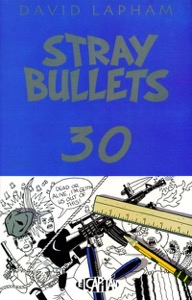
  • Stray Bullets (1995) #30

    Stray Bullets  30

    Here’s the thing I love about Stray Bullets–and it’s been kind of hard to love the comic lately, due to Lapham’s scurry into exploitation (intentionally or not)–even when he’s being cheap, Lapham has created a number of such excellent characters the cheapness can’t hurt the comic.

    For instance, this issue is a prequel to the pointless (and exploitative) “kidnapped by a pedophile” arc Lapham is wrapping up. So his last chapter to the arc is a prequel to the arc. It’s a cheap move, because he’s showing the reader who wonderful Bobby and Virginia’s lives were before the bad choices she made to get Bobby kidnapped and abused.

    But it doesn’t matter because Bobby and Virginia are both fantastic characters. There’s a whole subplot to the issue involving Bobby working on Amy Racecar comic spin-offs. The issue’s got a fantastic pace, then an amazing, touching finish.

    Even if it’s cheap.

  • The Punisher 6 (September 2000)

    The Punisher #6The issue starts so much better than it ends. It opens with everyone but the Punisher and the serial killer priest. There’s a little with Frank thinking about how he needs to move and some comedy with his neighbors, but not a lot. Ennis almost makes it seem like he’s switching over during that comedy and then pulls away again. The two cops are getting a lot more important.

    Then comes the big action scene and Dillon doesn’t do great with it. He does okay, but not great. All the first person Frank stuff is comparing his current life to Vietnam and it doesn’t work. Ennis is making fun of the character at this point. The whole issue has had a wink about Frank. But no one else. Everyone else Ennis takes seriously.

    The result is less rewarding than it should be… but it’s still amazing how hard Ennis works.

    B 

    CREDITS

    Spit out of Luck; writer, Garth Ennis; penciller, Steve Dillon; inker, Jimmy Palmiotti; colorist, Chris Sotomayor; letterers, Richard Starkings and Wes Abbott; editor, Joe Quesada; publisher, Marvel Comics.

  • Daredevil 3 (July 2014)

    Daredevil #3It’s so bland. Why am I reading it? It’s so bland. Even the ending is bland. It’s sort of an all-ages Daredevil comic written for adults. And Samnee is the perfect artist for that tone. But it doesn’t have to be so bland–Waid doesn’t have anything going under the surface here. Foggy popping in from witness protection is just Foggy being so darned lovable again.

    Even the Owl–after all this foreshadowing about his appearance, there’s zero pay-off. Maybe Waid is pacing it out for next issue, like he transforms or something, but the damage is already done. There’s already been a boring showdown with the Owl. Who cares if he Larry Talbots?

    Once again, the only thing special about Daredevil is the Samnee art. It’s beautiful stuff–I wish there had been more exterior scenes–but it’s just not enough to keep the comic going.

    Waid’s Daredevil’s like eating stale junk food.

    B- 

    CREDITS

    Writer, Mark Waid; artist, Chris Samnee; colorist, Javier Rodriguez; letterer, Joe Caramagna; editor, Ellie Pyle; publisher, Marvel Comics.

  • Stray Bullets #30Here’s the thing I love about Stray Bullets–and it’s been kind of hard to love the comic lately, due to Lapham’s scurry into exploitation (intentionally or not)–even when he’s being cheap, Lapham has created a number of such excellent characters the cheapness can’t hurt the comic.

    For instance, this issue is a prequel to the pointless (and exploitative) “kidnapped by a pedophile” arc Lapham is wrapping up. So his last chapter to the arc is a prequel to the arc. It’s a cheap move, because he’s showing the reader who wonderful Bobby and Virginia’s lives were before the bad choices she made to get Bobby kidnapped and abused.

    But it doesn’t matter because Bobby and Virginia are both fantastic characters. There’s a whole subplot to the issue involving Bobby working on Amy Racecar comic spin-offs. The issue’s got a fantastic pace, then an amazing, touching finish.

    Even if it’s cheap.

    B+ 

    CREDITS

    Happy Ending; writer, artist, and letterer, David Lapham; editor, Deborah Purcell; publisher, El Capitán Books.

  • Ghosted 10 (May 2014)

    Ghosted #10Busy, busy issue. Very busy. So busy Williamson can kill people off without it resonating just because there’s so much other stuff going on. And a lot of it goes on at the end; this issue has two cliffhangers, one hard, one soft. Very busy.

    But the rest of the issue is awesome as usual. And the busyness is just overkill, it’s not bad. Williamson does a whole lot of callbacks in the last few pages, even for the resolution to the story arc.

    What remains to be seen–since Williamson hasn’t exactly established a cast outside Jackson and his ghost–is where Ghosted will go next. This arc certainly shows it can go unexpected places, but with the flashbacks shining light into Jackson’s unrevealed backstory, I hope Williamson doesn’t choose to dwell too much. Constantly looking backward is boring.

    The series continues to be a lot of harsh fun.

    CREDITS

    Writer, Joshua Williamson; artist, Davide Gianfelice; colorist, Miroslav Mrva; letterer, Rus Wooton; editor, Sean Mackiewicz; publisher, Image Comics.

  • The Punisher 5 (August 2000)

    The Punisher #5Ennis develops Frank this issue and it’s unexpected. He’s fully aware of his mental state. He knows he kills criminals to feel a little better, a little more in control, whatever. He’s even mad at Giuliani for lowering crime in New York.

    It’s an odd line. Even with all the odd stuff with Frank walking around the city bemoaning his situation, the Giuliani thing is still odder. Maybe it’s because all these other murderous vigilantes, each attacking different segments on the community. The priest hits the sinners, the Payback guy hits Wall Street crooks, the Elite guy gentrifies with a vengeance. I feel like there’s another one.

    Maybe not. It doesn’t matter. Ennis is playing up the comedy, even though he still stays respectful of certain things. His principal supporting cast for Frank–the lovable apartment dwellers–Ennis doesn’t quite sell them out. Soap and Molly are seemingly safe too.

    B 

    CREDITS

    Even Worse Things; writer, Garth Ennis; penciller, Steve Dillon; inker, Jimmy Palmiotti; colorist, Chris Sotomayor; letterers, Richard Starkings and Wes Abbott; editor, Joe Quesada; publisher, Marvel Comics.

  • Ghosted 9 (April 2014)

    Ghosted #9Williamson gets away with a lot of exposition. Jackson and the kidnapped, possessed girl are on the run through the jungle of ghost animals–which turns out to be somewhat cute, in an amusing turn–and the girl just talks and talks. But the way Williamson paces out the conversation, it works great. There’s danger and tension and the dialogue fits between. Very nicely done.

    Also cool is the finish, when things are looking bad for the heroes. The first person narration is sparing and Williamson usually uses it for humor. Why overuse the acerbic wit, especially when the characters are in great danger. It’d be too jokey. There’s a lot of control with the script.

    The ending–and the jungle–wouldn’t work without Gianfelice’s art. He’s got the expressions down, which is important, because so much of the characters’ motivations are unsaid.

    The comic’s sturdy, reliably and very entertaining.

    CREDITS

    Writer, Joshua Williamson; artist, Davide Gianfelice; colorist, Miroslav Mrva; letterer, Rus Wooton; editor, Sean Mackiewicz; publisher, Image Comics.

  • Stray Bullets 29 (January 2003)

    Stray Bullets #29Ugh. Really, there’s no other word for it. Ugh. Lapham’s colliding of all his story lines and characters continues with Roger the detective–the one who had such a cool dating issue–hunting down Monster to find Virginia. Only Lapham has always used Monster as a force of nature, so having him go up against very real cops is kind of like a horror movie.

    There’s also a bunch of lengthy jail interviews between Roger and Beth. Not to mention all the journals from Virginia while she was being held captive.

    Lapham is bad with all of it. Why read Stray Bullets for a cop story? Lapham established the series as startling stories about people who experience violence. Roger’s just doing his job.

    Worst is how Lapham just apes his plotting for the Beth investigation comic. It’s painfully uninspired. While not as bad as it could be, it’s still terrible.

    D 

    CREDITS

    The Notebook; writer, artist, and letterer, David Lapham; editor, Deborah Purcell; publisher, El Capitán Books.

  • A Voice in the Dark 7 (May 2014)

    A Voice in the Dark #7Taylor finishes up the arc and he doesn’t shy away from the murders. He’s still working in the severely layered timeline–going back and rereading the arc and understanding how the past and present move through would probably be an interesting experience. I’m sure it reads a little different.

    The issue is mostly methodical, with the protagonist going through her plans and then the actual murders she commits. Taylor’s again great at keeping judgment out of the tone, even when the protagonist questions herself. She’s a likable serial killer (and these are bad people).

    Only Taylor never goes into the future. The entire five part arc, the contemporary stuff, it ends with the protagonist’s success. There’s a hard cliffhanger to build anticipation but it’s on the boring “other serial killers” subplot. There’s nothing with Zoey’s life outside being an avenging angel serial killer.

    Still, it’s a satisfactory finish to the arc.

    B 

    CREDITS

    Killing Game, Part Five; writer, artist and letterer, Larime Taylor; editor, Duncan Eagleson; publisher, Image Comics.

  • Better Living Through Chemistry (2014, Geoff Moore and David Posamentier)

    Given its ninety minute length and having Jane Fonda perform the comically explicit narration, it might be easy to dismiss–or just describe–Better Living Through Chemistry as a genial amusement. Certainly lead Sam Rockwell can do this role in his sleep. He's a small town pharmacist in a bad marriage (Michelle Monaghan is great as the controlling wife); his father-in-law runs his life, his teenage son is starting the awkward years, no one takes him seriously.

    Except unhappily married trophy wife Olivia Wilde.

    What actually makes Chemistry so different is how writers-directors Moore and Posamentier seem to have no idea what they're doing. There are all sorts of tangents the film goes on, all sorts of great little moments between Rockwell and Monaghan then later Rockwell and Harrison Holzer (as his son). It's all over the place, with the affair between Rockwell and Wilde ostensibly the foundation of the narrative.

    Only it's not. It's a device to go into a series of rapid comic set pieces–as Rockwell tumbles out of control, only everything turns out to be regimented. All of these set pieces go well, thanks to Rockwell and his abilities in both physical comedy and just lovably obnoxious. There's no heavy lifting for the actors in Chemistry, except maybe Holzer, but strong, assured performances in a well-written, if unambitious picture, isn't a bad thing at all.

    Nice supporting work from Norbert Leo Butz and Ken Howard rounds things off.

    Chemistry is controlled and it's calculated and it pays off well.

    2.5/4★★½

    CREDITS

    Written and directed by Geoff Moore and David Posamentier; director of photography, Tim Suhrstedt; edited by Jonathan Alberts; music by John Nau and Andrew Feltenstein; production designer, Heidi Adams; produced by Joe Neurauter and Felipe Marino; released by Samuel Goldwyn Films.

    Starring Sam Rockwell (Doug Varney), Olivia Wilde (Elizabeth Roberts), Michelle Monaghan (Kara Varney), Norbert Leo Butz (Agent Andrew Carp), Ben Schwartz (Noah), Ken Howard (Walter Bishop), Jenn Harris (Janet), Peter Jacobson (Dr. Roth), Harrison Holzer (Ethan Varney), Ray Liotta (Jack Roberts) and Jane Fonda (Jane Fonda).


    RELATED

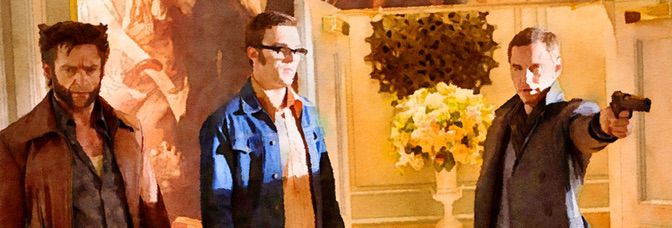
  • X-Men: Days of Future Past (2014, Bryan Singer)

    There's a fair amount of mess in X-Men: Days of Future Past, but it’s often good mess. It’s also intentional mess because it’s a time travel picture. If you remember any of the previous X-Men movies, lots doesn't make any sense. But it also doesn't matter–director Singer and screenwriter Simon Kinberg rely heavily on a viewer's shaky memory of the franchise.

    Future has a good pace and some good sequences. Not a lot of them, unfortunately; the big finale is a disappointment, for example, with Singer trying to emphasize a personal story there. Only that personal story hasn't really been important to the rest of the movie because it's all been about the end of the world.

    All of the stuff in the apocalyptic future is goofy. There's a lot of murky CG and unmemorable supporting cast in busy fight scenes. Ian McKellen and Patrick Stewart look somewhat lost in the confusion.

    The acting quality varies. Hugh Jackman has fun, before the script demotes him. James McAvoy and Nicholas Hoult are both good. Evan Peters gets the best sequence, Michael Fassbender gets the worst. Fassbender gets the shortchanged throughout the picture. While he’s really underused, he does get a couple excellent scenes. Big villain Peter Dinklage is awesome. Jennifer Lawrence is mediocre. Everyone in the future except Elliot Page is bad. Like I said, it's just too goofy.

    Good photography from Newton Thomas Sigel, bad music from John Ottman.

    Though any ambition beyond franchise revitalization is disingenuous, the film definitely entertains. Sometimes distinctively.