• Rebels 1 (April 2015)

    Rebels #1I’m not sure a Revolutionary War epic is a thing. Not anymore, anyway. Certainly not in comics. But no one told Brian Wood because he’s trying to make a Revolutionary War epic with Rebels.

    And there’s only one odd “tea party” reference. Otherwise, there’s nary a wink to be found in the comic. Given artist Andrea Mutti’s occasionally static figures, Rebels almost feels like one has found him or herself back in a Classics Illustrated.

    As for the story, it’s okay. Wood labels the time transitions but doesn’t really make them matter to the reader until it’s too late. He’s in good company (“Downton Abbey” did the same thing). There are some father-son issues, some really strange future tense narration (Wood’s giving historical fiction texture but he’s also making his narrator weepy without context).

    The comic goes out too tepidly. But it’s still successful. For a Revolutionary War epic.

    CREDITS

    A Well-Regulated Militia, Part One; writer, Brian Wood; artist, Andrea Mutti; colorist, Jordie Bellaire; letterer, Jared K. Fletcher; editors, Spencer Cushing and Sierra Hahn; publisher, Dark Horse Comics.

  • Shallow Grave (1994, Danny Boyle)

    Shallow Grave has bold colors. The production design–by Kave Quinn–isn’t particularly good. Over ninety percent of the film takes place in a rather boring apartment. But that boring apartment has a lot of bold colors. Sure, photographer Brian Tufano doesn’t know how to shoot those bold colors to make them effective, but he doesn’t know how to light any of the other scenes either. Grave is slick and economical, but no one–not the actors, not director Boyle, certainly not writer John Hodge–ever makes it feel particularly creative. It’s got a low budget so they shoot it like a play. With occasionally interesting, but inert, visuals.

    As far as the actors, of the three principals–Ewan McGregor, Kerry Fox, Christopher Eccleston–only McGregor shows any life. None of them have much character depth to work with, which obviously doesn’t help. Eccleston eventually gets the biggest part of the film, but he’s so poorly handled through the first act, he doesn’t do anything interesting. It’s not his fault, there’s just nothing interesting in that script of Hodges’s.

    The film, ostensibly a thriller, is often tedious. The script has some funny dialogue exchanges–the trio live in that boldly color apartment and mock prospective tenants they do not like–but not enough to even temporarily disguise the logic holes.

    Boyle’s composition is often excellent and Masahiro Hirakubo’s editing is outstanding. But there’s just not enough to the film. It’s trite, cynical, forcibly amusing. Grave’s one controlled misstep after another.

    1/4

    CREDITS

    Directed by Danny Boyle; written by John Hodge; director of photography, Brian Tufano; edited by Masahiro Hirakubo; music by Simon Boswell; production designer, Kave Quinn; produced by Andrew Macdonald; released by Polygram Filmed Entertainment.

    Starring Kerry Fox (Juliet Miller), Christopher Eccleston (David Stephens), Ewan McGregor (Alex Law), Ken Stott (Detective Inspector McCall), Keith Allen (Hugo), Peter Mullan (Andy), Leonard O’Malley (Tim) and Colin McCredie (Cameron).


    RELATED

  • Captain Victory and the Galactic Rangers 5 (February 2015)

    Captain Victory and the Galactic Rangers #5Connor Willumsen contributes maybe four pages to this issue of Captain Victory and, wow, it really doesn’t help the comic. The comic’s all right–it starts sci-fi heavy (something about Fox’s art doesn’t match the Kirby designs in the denser areas)–and the main action in New York City is great. Except when it’s Willumsen’s pages. He draws cute.

    The issue has the young Victory clone and his vigilante mentor fighting an evil pig monster. Willumsen draws the pig monster cute. He also draws young Captain Victory cute. Well, more than cute. Pretty. Willumsen draws Victory as a pretty teenage girl with a short hair cut. It’s really, really weird.

    But Fox is back soon enough and he and Casey do all right. The issue ends with a lot of alien tech art and not a lot of story. It’s not a good cliffhanger. But the rest works out.

    CREDITS

    Writer, Joe Casey; artists, Nathan Fox and Connor Willumsen; colorist, Brad Simpson; letterer, Simon Bowland; editors, Molly Mahan, Hannah Elder and Joseph Rybandt; publisher, Dynamite Entertainment.

  • Satellite Sam 12 (March 2015)

    Satellite Sam #12It’s a good issue of Satellite Sam. Chaykin’s art is definitely stronger this time around. And the issue’s packed once again.
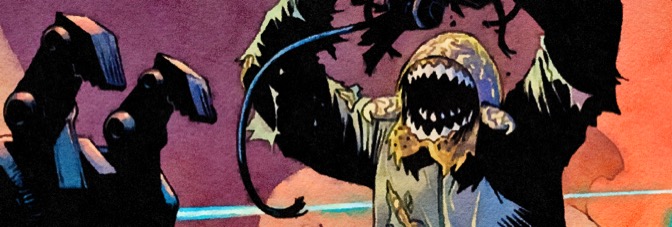
    Fraction checks in on various characters and their still active subplots–some are small (like the guy with the Italian wife for a beard), some are much bigger (the black guy passing on TV now getting death threats). But the main plot for the issue deals with the overall story and Mike’s investigation.

    In some ways, Fraction’s just cooking Sam. He’s got six burners on the stove and he’s tending all of the pots, but only really concentrating one one. And it’s an accompaniment subplot concerning Mike’s love life.

    The conclusion of the issue gets back to some of the toughness the series imparted way back at the beginning, when the shock value was still part of the comic. Fraction and Chaykin do tough well. Even with Chaykin’s supermen.

    CREDITS

    Four Keys, Two Reels; writer, Matt Fraction; artist, Howard Chaykin; letterer, Ken Bruzenak; editor, Thomas K.; publisher, Image Comics.

  • Cluster (2015) #3

    Cluster  3

    This issue of Cluster has a few successes. Most prominently, the cliffhanger revelation is pretty neat. Brisson successfully leads the reader down a garden path before the twist, which is a significant one. Maybe not overall for the series, but definitely for the issue.
    And Cluster still operates on a “by issue” basis. Brisson hasn’t, three issues in, implied how long or where the story might be going. It’s moving fast, but recklessly. One hopes Brisson has replacements for the things he gives up in this story; there are quite a few.

    Similarly, Couceiro gives up a lot of detail (people’s faces in long shots are consistently left undone) to make time for the detail on the alien settlement. But the alien settlement stuff isn’t important. Couceiro doesn’t even get enough space for the issue’s action scenes.

    The issue ends well, but it’s a rocky trip to the last page.

  • Evening Classes (1967, Nicolas Ribowski)

    Evening Classes is a bit of a surprise; without Jacques Tati’s involvement, the short would almost work more as an examination of his films. With his involvement, Classes certainly has some outstanding moments, but director Ribowski and Tati (who also wrote the short) don’t really have a point.

    The film opens with Tati as M. Hulot seemingly bumbling into a classroom, but no–he’s actually the instructor and a good one. He’s teaching an improv or mime class, except in the context of Tati’s films, it’s more like a look inside his process on those other films.

    Without a familiarity with Tati’s work (Classes, shot on the same sets as Playtime, ends with a big reference to that film), the short goes on a little too long. Tati’s examples of smoking, tennis and fishing are all phenomenal. The horseback riding and postal worker stuff? Too much.

    It’s successful, if problematic.

  • Cluster #3This issue of Cluster has a few successes. Most prominently, the cliffhanger revelation is pretty neat. Brisson successfully leads the reader down a garden path before the twist, which is a significant one. Maybe not overall for the series, but definitely for the issue.

    And Cluster still operates on a “by issue” basis. Brisson hasn’t, three issues in, implied how long or where the story might be going. It’s moving fast, but recklessly. One hopes Brisson has replacements for the things he gives up in this story; there are quite a few.

    Similarly, Couceiro gives up a lot of detail (people’s faces in long shots are consistently left undone) to make time for the detail on the alien settlement. But the alien settlement stuff isn’t important. Couceiro doesn’t even get enough space for the issue’s action scenes.

    The issue ends well, but it’s a rocky trip to the last page.

    CREDITS

    Writer and letterer, Ed Brisson; artist, Damian Couceiro; colorist, Michael Garland; editors, Cameron Chittock and Eric Harburn; publisher, Boom! Studios.

  • Enough Said (2013, Nicole Holofcener)

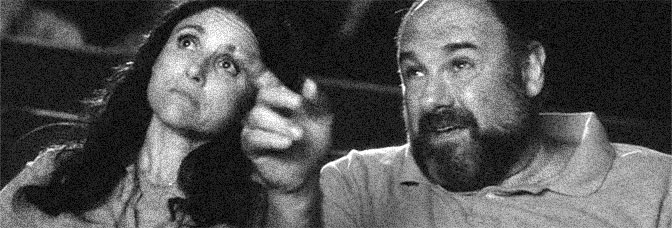
    For most of Enough Said, I marveled at how director Holofcener–apparently in an act entirely lacking irony–created the perfect film to fail the Bechdel test. The Bechdel test, which is all the rage, requires two female characters talk about something besides men.

    Well, besides talking about men, the characters in Said do not do much. Lead Julia Louis-Dreyfus otherwise makes acerbic observations about those around her or the minutiae of her life; I wish I could know how the film played if one is unfamiliar with a certain show about nothing starring Louis-Dreyfus, but I cannot. It probably wouldn’t be much better, because Holofcener isn’t just lazy at the plotting, she’s lazy with the characters.

    Here’s the idea (straight out of a “Seinfeld”). Louis-Dreyfus starts seeing James Gandolfini (even though he’s fat–she’s supposed to be out of shape too, in one of Enough Said’s more absurd requests for the viewer to suspend their disbelief). She’s a masseuse. Her new client–an exceptionally wasted Catherine Keener–turns out to be really cool and they become friends. Oh, and Keener’s Gandolfini’s ex-wife. Which Elaine–sorry, sorry–which Louis-Dreyfus figures out and keeps to herself.

    The film wastes the more interesting empty nest subplot involving Louis-Dreyfus bonding with her daughter’s friend, Tavi Gevinson. Sure, they fail the Bechdel test too, but not as bad as the rest of the film.

    Bad editing from Robert Frazen. Great performance from Gandolfini.

    Enough’s pointless and slight.

    1.5/4★½

    CREDITS

    Written and directed by Nicole Holofcener; director of photography, Xavier Grobet; edited by Robert Frazen; music by Marcelo Zarvos; production designer, Keith P. Cunningham; produced by Stefanie Azpiazu and Anthony Bregman; released by Fox Searchlight Pictures.

    Starring Julia Louis-Dreyfus (Eva), James Gandolfini (Albert), Tracey Fairaway (Ellen), Toni Collette (Sarah), Ben Falcone (Will), Catherine Keener (Marianne), Eve Hewson (Tess), Tavi Gevinson (Chloe), Amy Landecker (Debbie), Toby Huss (Peter) and Kathleen Rose Perkins (Fran).


    RELATED

  • Frankenstein Underground 1 (March 2015)

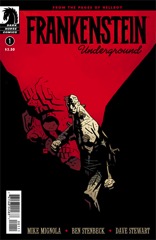
    Frankenstein Underground #1With the first issue of Frankenstein Underground, writer Mike Mignola signals something special about the comic. He gets how to write the Creature. He understands how he needs the Creature to function in the story. For comics, it might not be a huge development, but for the Frankenstein Monster as a iconic figure? Well, his icon’s always getting tarnished.
    The art, from Ben Stenbeck, helps a lot. There’s an enthusiasm in the quirks of Mignola’s script–whether the flashbacks or the setting–and it comes across to the reader. Underground feels special, even in the scenes with the plotting villain, just because he’s plotting against the Creature.

    There are occasional–subtle–nods to other Frankenstein adaptations, but Mignola’s setup for his Creature’s story is an excellent one. The issue ends on an “end of act one” cliffhanger so what he and Stenbeck come up with next remains to be seen.

    CREDITS

    Writer, Mike Mignola; artist, Ben Stenbeck; colorist, Dave Stewart; letterer, Clem Robins; editors, Shantel LaRocque and Scott Allie; publisher, Dark Horse Comics.

  • Bob Hope Presents the Chrysler Theatre (1963) s01e03 – Seven Miles of Bad Road

    Once you get past Jeffrey Hunter (at thirty-seven) playing a character about fifteen years younger–and some other significant bumps, Seven Miles of Bad Road isn’t entirely bad. It shouldn’t be entirely bad, even with those bumps, but it’s an episode of “The Chrysler Theatre,” shot on limited sets with limited imagination from director Douglas Heyes.

    Heyes also wrote the teleplay, which tries real hard. Heyes is talking about big issues–he’s talking about men, women, post-war, youth, age, responsibility, regret. There’s subtext about race and class and all sorts of things. Heyes doesn’t know how to direct any of it. He doesn’t know how to direct his actors. Neville Brand–as Eleanor Parker’s abusive husband–is simultaneously good and bad in the part.

    The overbearing Jerry Goldsmith music doesn’t help.

    Parker and Hunter have their problems due to Heyes’s direction, but they’re effective. Parker’s got a couple fantastic scenes.

  • The Comics Fondle Podcast – 1×23
    It’s the Comics Fondle Podcast Episode #23 for 4 April 2015. Comics: Abigail and the Snowman, Chrononauts, Curb Stomp, Dave, Eight, Fly, Frankenstein, Princess Ugg, Sons of Anarchy, Surface, War Stories, We Can Never Go Home. Other stuff: Star Wars Convergeance Multiversity: Ultra Comics

    WHERE TO LISTEN

    Apple Podcasts
    Spotify
    Stitcher
    RSS
  • All Quiet on the Western Front (1930, Lewis Milestone)

    For the first act or so of All Quiet on the Western Front, director Milestone very gently puts the viewer amid the naïveté of the film’s protagonists, a group of students who drop out to enlist (in the first World War). He opens with this gorgeously complicated shot–brilliantly edited by Edgar Adams and shot by Arthur Edeson–coming into the classroom from a parade of soldiers on the street. There’s a fantastical grand element to Milestone’s composition in that first act, just like the new recruits think they are beginning a grand adventure.

    All Quiet on the Western Front moves very quickly. It runs around 130 minutes, but Milestone fades between vignettes. Lew Ayres is the protagonist, but he’s the protagonist because the war removes other potential protagonists. It only really becomes his film in the last quarter of the picture. But it’s not Ayres’s character’s story. Milestone and the screenwriters–Maxwell Anderson, George Abbott, Del Andrews–do a brilliant job of positioning all the characters in relation to one another. They understand the story better than the viewer does. The viewer is simply watching.

    This approach–and excellent direction from Milestone and fantastic acting all around (Louis Wolheim, William Bakewell and John Wray stand out)–leads to Quiet being able to be utterly devastating but never exhausting; never exciting but always riveting. Milestone matches his attention to the battle scenes, often singularly good, with his attention to the character scenes.

    All Quiet is a particularly amazing motion picture.

    4/4★★★★

    CREDITS

    Directed by Lewis Milestone; screenplay by Maxwell Anderson, George Abbott and Del Andrews, based on the novel by Erich Maria Remarque; director of photography, Arthur Edeson; edited by Edgar Adams; produced by Carl Laemmle Jr.; released by Universal Pictures.

    Starring Louis Wolheim (Kat), Lew Ayres (Paul), John Wray (Himmelstoss), Arnold Lucy (Kantorek), Ben Alexander (Kemmerich), Scott Kolk (Leer), Owen Davis Jr. (Peter), Walter Rogers (Behn), William Bakewell (Albert), Russell Gleason (Mueller), Richard Alexander (Westhus), Harold Goodwin (Detering), Slim Summerville (Tjaden), G. Pat Collins (Bertinck), Beryl Mercer (Paul’s Mother) and Edmund Breese (Herr Meyer).


    precodebanneridea8

    THIS POST IS PART OF THE PRE-CODE BLOGATHON HOSTED BY DANNY OF PRE-CODE.COM


    RELATED

  • Furious 7 (2015, James Wan)

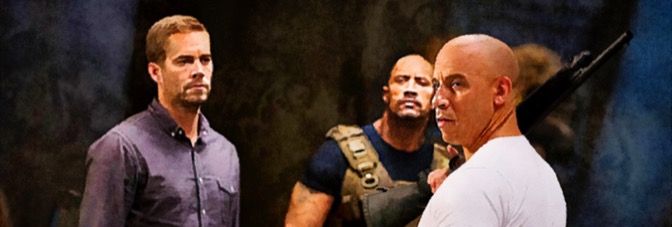
    Furious 7 has some really bad CGI. And I’m not talking about the creepy Paul Walker head at the end (during the utterly out of place and terribly integrated memorial sequence). It’s everything. Director Wan doesn’t know how to shoot a single scene in Furious, not the action scenes, definitely not the car scenes, even more not the fight scenes. No one–not Wan, not his four editors, not his two photographers–cares about making the action work in Furious. The CGI doesn’t improve it or solve a physically impractical problem. It’s just the easiest way to do it. Cheap CGI.

    Of course, cheap is the keyword for Furious. Screenwriter Chris Morgan has only a handful of scenes not directly related to Kurt Russell (cashing a paycheck as a CIA agent) hiring Vin Diesel and company; those scenes are desperately melodramatic, either involving Michelle Rodriguez’s memory loss, Jordana Brewster not wanting to henpeck Paul Walker too much or… no, I think those two subplots are it.

    Even Jason Statham hunting down Diesel, Walker and everyone else is underused. Once Morgan and Wan establish Statham, he just shows up in every action sequence to wreck havoc. What could have been anarchy working through the movie is instead a painfully bad performance from Statham.

    Really terrible supporting performances from John Brotherton, Tony Jaa and Djimon Hounsou.

    Wan’s a bad director; he sinks Furious. The movie is absurdly mercenary. No imagination went into anything. Except maybe the cars and Wan can’t shoot those.

  • Dekalog (1989) s01e03 – Three

    How much one likes Three might be related to how much manipulation one is willing to put up with from a filmmaker. Kieslowski is masterful with manipulation this episode, so much so he doesn’t even pause when visibly guiding the viewer through. He isn’t ashamed, he isn’t proud, it’s just how he does things. It’s too inept to be pretentious.

    The best example from Three is the idiotic car chase. Kieslowski and photographer Piotr Sobocinski don’t stage it competently. For all Kieslowski’s flourishes, moving ones escape him. He rarely attempts them (which makes the car chase particularly jarring).

    The story has a reformed if unapologetic adulterer (Daniel Olbrychski) out for a Christmas Eve overnight with his former lover, Maria Pakulnis, looking for her husband. Is she mentally sound? Will he discover some dark secret?

    After teasing some depth, Kieslowski goes a really simple route. Three moves fine, just goes nowhere.

  • Judge Dredd 35 (September 1986)

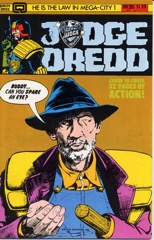
    Judge Dredd #35This issue has two stories–a long feature (or a combination of at least three 2000 A.D. chapters) and a backup. Wagner and Grant write both, Ron Smith does the art on both. Smith’s an interesting artist for Dredd because he doesn’t take any time with the judges. Both stories require judges to be distinguished, Smith doesn’t care. But he does care about the rest of the story.

    The rest of the story–for the feature–has to do with a town of refugees and what happens when Dredd brings the law. Lots of big action and small future post-apocalyptic stuff. Wagner and Grant do a whole exile thing with the criminals; it’s fairly awesome Dredd. Once one gets over Smith’s inability to draw Dredd.

    The backup has judge impersonators (while the feature just has lots of judges). The scheming criminals distinguish it (in their silliness) most of all.

    CREDITS

    Writers, John Wagner and Alan Grant; artist, Ron Smith; letterer, Tom Frame; editor, Dave Elliot; publisher, Quality Periodicals.

  • The Fly: Outbreak 1 (March 2015)

    The Fly: Outbreak #1Dear IDW, NOW Comics is calling from 1990; they want their Fly comic back.
    The Fly: Outbreak is a quizzical sequel absolutely no one was asking for, but apparently there are some long-term likeness contracts in place through 20th Century Fox (so the comic “stars” Eric Stoltz and Daphne Zuniga in their parts) so it feels like a desperate cash grab from when someone thought The Fly II might warrant a comic book license.

    Of course, it didn’t in 1989 (or 1990). Does it in 2015? Is Outbreak the sequel people have been waiting twenty-six years for? Did we really need to see Zuniga’s character as an S&M goddess, tying up Stoltz’s half-man-fly 50 Shades of Grey-style?

    No.

    No, we did not. No one did. Well, unless someone gets Stoltz and Zuniga to read this thing for a YouTube video.

    It’s heinous, licensed crap.

    CREDITS

    Writer, Brandon Seifert; artist, menton3; letterer, Tom B. Long; editor, Denton J. Tipton; publisher, IDW Publishing.

  • Dawn of the Dead (2004, Zack Snyder)

    There are good things about Dawn of the Dead. Maybe not many and certainly not enough to make the film at all a rewarding experience, but there are good things about it. They usually come with caveats.

    For example, Jake Weber is really good. Of course, his part is terribly written (all of the parts in James Gunn’s screenplay are terribly written; calling them caricatures would be too gracious) and director Snyder and editor Niven Howie aren’t really interested in telling the characters’ story so Weber doesn’t have much to do. But you can tell, it’s a fine performance. Just a poorly written one and a poorly edited one.

    Ditto Michael Kelly, who shows up as a jerk, disappears for a bit, then comes back and with him some liveliness to the film so it clearly needed him more. Because instead of Kelly, Snyder and Gunn sort of focus on Ving Rhames’s reluctant hero cop character. Rhames gets some of the film’s worse dialogue; he’s able to remain sympathetic, while never exactly turning in a good performance.

    In the top-billed role (presumably because she got the prologue), Sarah Polley eventually has less to do than the dog.

    Snyder’s not interested in his characters, he’s not even interested in the zombies they’re trying to survive. He’s interested in the final product. So the film’s calculated, manipulative, reductive and tiring. Snyder isn’t trying to tell a good story, just a sensational film.

    Doesn’t amount to much. Certainly not a good movie.

    0/4ⓏⒺⓇⓄ

    CREDITS

    Directed by Zack Snyder; screenplay by James Gunn, based on a screenplay by George A. Romero; director of photography, Matthew F. Leonetti; edited by Niven Howie; music by Tyler Bates; production designer, Andrew Neskoromny; produced by Eric Newman, Marc Abraham and Richard P. Rubinstein; released by Universal Pictures.

    Starring Sarah Polley (Ana), Ving Rhames (Kenneth), Jake Weber (Michael), Ty Burrell (Steve), Mekhi Phifer (Andre), Michael Kelly (CJ), Inna Korobkina (Luda), Kevin Zegers (Terry), Lindy Booth (Nicole), Jayne Eastwood (Norma), Michael Barry (Bart) and Matt Frewer (Frank).


    RELATED

  • Fast & Furious 6 (2013, Justin Lin), the extended version

    For the most part, Fast & Furious 6 is a delightfully absurd action concoction from director Lin. The film drops the Fast and the Furious “family” into a James Bond movie; thank goodness, because it’s hard to imagine Roger Moore able to outdrive the bad guys here. And it’s even set in London (and later Spain). It’s not original, but screenwriter Chris Morgan does fold familiar action movie plot lines into a new situation. Lin’s making a non-fantasy (just absurd), non-realistic action extravaganza. It has to be seen to be believed.

    But then there’s how much time is spent on Vin Diesel courting Michelle Rodriguez (she’s back from the dead, with amnesia–apparently Morgan doesn’t just like to lift from Empire Strikes Back, he likes to lift from “Days of Our Lives” too) and Lin handles it pretty well. Some of it. One spinning conversation is terrible, but the car race immediately proceeding it is fantastic work.

    The thing about Furious 6 is Lin and photographer Stephen F. Windon do create breathtaking car race and car chase shots; they’re in the quickly edited sequences, but clearly done with deliberate, careful intent. And the car race between Diesel and Rodriguez is phenomenal stuff.

    Some good acting from Evans, some bad acting from Gina Carano (though one of her fight scenes with Rodriguez is awesome). Everyone else is fine. Lin manages to get better performance from Dwayne Johnson here too.

    Furious 6 is mechanical and superficial, but beautifully made and likable enough.

  • The Multiversity: Ultra Comics 1 (May 2015)

    The Multiversity: Ultra Comics #1What’s Grant Morrison doing with Ultra Comics, a Multiversity tie-in issue? Well, he’s giving Doug Mahnke a lot of great stuff to draw. If you ignore all of Morrison’s breaking the fourth wall (but not really–it’s not like it’s a “Choose Your Own Adventure”), the comic just gives Mahnke a chance to realize this quick superhero story in the apocalypse.
    What’s caused the apocalypse? A Cthulhu-like monster. It might not come across as a big Alan Moore knock if Ultra–he’s the protagonist of Ultra Comics–if Ultra didn’t look like Miracleman. The issue has a credit to Siegel and Shuster and there’s a Shazam reference; but what isn’t clear is if Morrison likes Miracleman or not.

    There’s lame stuff about the reader interacting and generating the life of the comic (and protagonist) and Internet whining. But it’s thoughtless.

    Except the Mahnke art makes it all worthwhile.

    CREDITS

    Ultra Comics Lives!; writer, Grant Morrison; penciller, Doug Mahnke; inkers, Christian Alamy, Mark Irwin, Keith Champagne and Jaime Mendoza; colorists, Gabe Eltaeb and David Baron; letterer, Steve Wands; editor, Rickey Purdin; publisher, DC Comics.

  • The Twilight Zone (1959) s05e03 – Nightmare at 20,000 Feet

    Nightmare at 20,000 Feet races. Director Donner and writer Richard Matheson pace out the episode perfectly–though it being a “Twilight Zone” episode means they can also utilize some of the series’s credit formula to great effect.

    The episode has a few phases. Introducing William Shatner and Christine White (they’re married, he’s just recovering from his mental breakdown while on an airplane), putting Shatner in the window seat, him seeing the gremlin. Those events all happen in the first phase. Second is him trying to get help with the gremlin, third is him taking it into his own hands. These phases take place inside a three act structure. It’s an intense story, made more intense through the direction and then Shatner’s performance.

    Shatner does fantastic work, as the viewer has to believe they’re going crazy with him. There’s a hesitation; Shatner, Matheson and Donner make sure the viewer gets past.


  • Curb Stomp 2 (March 2015)

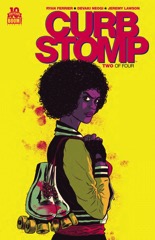
    Curb Stomp #2The second half of the issue works out a lot better than the first. It’s strange but the first half feels like a different comic; it’s a little too soon for writer Ferrier to have defined the Curb Stomp reading experience but it’s also not. It’s a limited series. Readers want to feel a connection to the previous issue.

    This issue has Ferrier doing a lot of political intrigue. It’s all excruciatingly boring. The comic does not seem to have any hook this issue, which isn’t good for Ferrier. The ending sort of delivers on one promise from the issue, but that promise was just a red herring.

    And Ferrier’s off with the dialogue this time around too. The previous issue had an urgency around the usually somewhat inane document.

    Artist Neogi runs hot and cold. Decent composition can’t outweigh the static faces on the characters.

    It needs more oomph.

    CREDITS

    Writer, Ryan Ferrier; artist, Devaki Neogi; colorist, Jeremy Lawson; letterer, Colin Bell; editors, Jasmine Amiri and Eric Harburn; publisher, Boom! Studios.

  • Diary of a Country Priest (1951, Robert Bresson)

    Diary of a Country Priest is a somewhat trying experience, as so much of the viewer’s experience watching the film requires him or her to empathize with the titular protagonist, something that character is apparently incapable of doing.

    Much in the film is made of the protagonist’s inexperience–something Claude Laydu plays perfectly–and director Bresson does little to suggest otherwise to the viewer. Most of Laydu’s scenes are on his own, writing his account of his day in his diary. It quickly becomes clear Laydu might not be the most reliable narrator of his experiences, which just forces the viewer to have to do more work.

    Bresson leaves the viewer to ask all of the questions Laydu does not. Conversations matter more in where they go and what isn’t said than what Laydu discusses with people. Though not many people. Country Priest is a small film, set in a small church in a small parish with a small cast. If it weren’t for Laydu getting involved with the concerns of the local noble, there wouldn’t be enough story for a film.

    That tight focus keeps the film distant. Bresson never visibly manipulates the story, just the lens through which the viewer experiences it. Only on a handful of occasions does it ever get truly annoying (like when teenager Nicole Ladmiral confides in Laydu and Bresson defers revealing that confidence).

    The third act manages to be sensational and anticlimactic. Bresson, Laydu and photographer Léonce-Henri Burel pull it off though.

    3/4★★★

    CREDITS

    Directed by Robert Bresson; screenplay by Bresson, based on the novel by Georges Bernanos; director of photography, Léonce-Henri Burel; edited by Paulette Robert; music by Jean-Jacques Grünenwald; released by L’Alliance Générale de Distribution Cinématographique.

    Starring Claude Laydu (Priest of Ambricourt), Jean Riveyre (Count), Adrien Borel (Priest of Torcy), Rachel Bérendt (Countess), Nicole Maurey (Miss Louise), Nicole Ladmiral (Chantal), Martine Lemaire (Séraphita Dumontel) and Antoine Balpêtré (Dr. Delbende).


    RELATED

  • OTHER FRENCH FILMS
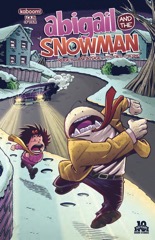
  • Abigail and the Snowman 4 (March 2015)

    Abigail and the Snowman #4Langridge, no surprise, concludes Abigail and the Snowman beautifully. It’s a double-sized issue, which is good since the first half of it is mostly Abigail and Claude hanging out as they walk him to the boat to take him back to the Himalayas.
    While they have that awesome hangout time–one of the most masterful things Langridge does in Abigail is control the characters and how they interact in front of the reader. The issue has six characters in it–but mostly five (along with two small speak parts). It’s very deliberately told and very impressive how Langridge is able to make that walk with Abigail and Claude so rewarding.

    But Langridge still has to finish the series (the extra space lets him spend that hangout time, not necessarily just do all action) and he does it well. With some nice quiet surprises.

    It’s a confident, delightful, rewarding conclusion.

    CREDITS

    Writer, artist, letterer, Roger Langridge; colorist, Fred Stresing; editors, Cameron Chittock and Rebecca Taylor; publisher, KaBOOM!.

  • Dekalog (1989) s01e02 – Two

    This episode of “Dekalog” is a quiet, thoughtful story about a doctor and the wife of one of his patients. They’re neighbors, which puts them in an uncomfortable proximity as the wife has a secret from her husband and forces the doctor into her confidence.

    The scenes between these characters–the doctor played by Aleksander Bardini, the wife by Krystyna Janda–amount for probably fifteen minutes of Two. The film runs almost an hour; most of the time, Kieslowski is examining Bardini and Janda. He applies a different level of focus throughout; Janda isn’t clear until the end, but Bardini’s character’s most telling scene is his first. There’s more exposition later, further exploration into his life to explain him, but it’s not telling, just interesting.

    And beautifully acted. Kieslowski never goes overboard with symbolism, but Two wouldn’t work near as well without the fantastic performances from Bardini and Janda.

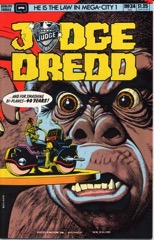
  • Judge Dredd 34 (August 1986)

    Judge Dredd #34It’s an excellent issue about a vigilante hitting various organized crime guys in Mega-City One. Does it make any sense for there to be mobsters above the Judges? No. It’s sort of weird and has something of a retro vibe–like it doesn’t really star Judge Dredd but his training officer.
    Nice art from Ezquerra and Ian Gibson. There’s a lot of precise action in the story–Dredd is sure the vigilante has been trained as a Judge and the vigilante has a couple intricate plans to execute. The art on those sequences is real strong and would be surprisingly ambitious if Ezquerra and Gibson didn’t also take a very grand approach to Dredd himself this story.

    It’s big and awesome.

    The backup has Dredd fighting a giant ape robot. Ezquerra’s art is inventive, Malcolm Shaw’s script is short and goofy.

    That lead story is rather good Judge Dredd.

    CREDITS

    Writers, John Wagner, Alan Grant and Malcolm Shaw; artists, Ian Gibson and Carlos Ezquerra; letterers, Tom Frame and Stan Richardson; editor, Nick Landau; publisher, Quality Periodicals.

  • Guardians of the Galaxy (2014, James Gunn)

    Guardians of the Galaxy does something splendid and director Gunn never really acknowledges it, which just makes it more splendid. The Rocket Raccoon character–beautifully voice acted by Bradley Cooper–is easily the most successful CG film creation to date. And Cooper gives the film’s best performance; whoever directed Cooper in the sound booth, be it Gunn, Cooper himself, someone else, does a great job.

    Gunn directing the actual actors? Not a great job. Not great enough to notice Chris Pratt’s vanishing accent, Pratt and Zoe Saldana’s shocking lack of chemistry, Saldana’s more shocking lack of presence or the not even soap opera nefarious villainy of Lee Pace. So not a good job.

    The less said about Glenn Close, Djimon Hounsou, Karen Gillan, John C. Reilly and Benicio Del Toro the better.

    Tyler Bates’s musical score combines plagiarism and ineptness (like much of the film’s visual design, actually).

    Guardians is mean-spirited “fun,” with the audience always asked to laugh at someone or other’s suffering. The scenes where Gunn and co-writer Nicole Perlman try to confront it–usually between Pratt and Saldana–stop the film cold. Then the raccoon or his walking tree (who gets all the wonderment, which is silly) come along and save things.

    Or even Dave Bautista, who’s not exactly good, but he’s sincere. And sincerity goes a long way in Guardians because there’s so little of it.

    Gunn exhibits apathy, cruelty and an utter lack of imagination. Guardians is far better than it should be.

  • Where’s Marlowe? (1998, Daniel Pyne)

    Where’s Marlowe? is a pseudo-documentary about a pseudo-documentary about private investigators. Miguel Ferrer is the private investigator and he seems like a good fit for the role, only director Pyne and co-writer John Mankiewicz don’t actually need him for anything. The point of the film, as things move along, is getting the documentary makers (played by John Livingston and Mos Def) more involved with the private investigating.

    When the film centers on Ferrer, who’s a good-natured rube who cares too much about his clients and their problems to be fiscally solvent, Marlowe at least has some charm. And as appealing as Mos Def gets in his performance, he and Livingston are still unlikable. Once Allison Dean–as Ferrer’s suffering secretary and Def’s love interest–gives up on Def (and the documentary), it’s hard to stay onboard.

    The film has some good supporting performances, particularly from John Slattery as Ferrer’s partner, and also Clayton Rohner as a client. Miguel Sandoval has a nice cameo. Livingston is bad, so’s Barbara Howard in a smaller, but important role. Howard’s real bad, Livingston it might be the script’s fault.

    Speaking of the script, the writers don’t pay much attention to keeping their characters consistent. It really hurts Ferrer, though nowhere near as much as his unexplainable absence during some of the second act hurts the film. It’s a messy script, which Slattery overcomes because he’s not the lead. Poor Ferrer stops getting character development after twenty minutes.

    Marlowe’s a misfire.

    1/4

    CREDITS

    Directed by Daniel Pyne; written by John Mankiewicz and Pyne; director of photography, Greg Gardiner; edited by Les Butler; music by Michael Convertino; production designer, Garreth Stover; produced by Clayton Townsend; released by Paramount Classics.

    Starring Miguel Ferrer (Joe Boone), John Livingston (A.J. Edison), Yasiin Bey (Wilt Crawley), John Slattery (Kevin Murphy), Allison Dean (Angela), Clayton Rohner (Sonny ‘Beep’ Collins), Elizabeth Schofield (Monica Collins), Barbara Howard (Emma Huffington), Kirk Baltz (Rivers), Miguel Sandoval (Skip Pfeiffer) and Wendy Crewson (Dr. Ninki Bregman).


    RELATED

  • Fast Five (2011, Justin Lin), the extended version

    It’s almost embarrassing how well Fast Five is made. Director Lin can’t do two things–which might be important for the film if the story mattered at all–he can’t direct heist sequences and he can’t direct car races. He doesn’t care how the heist works or how the car race works, he cares about the scene looking good. And he and cinematographer Stephen F. Windon make Five look really good.

    Is there any depth to that appearance? Not much, but it’s smooth and keeps the film moving at a good pace between action sequences. And there are lots of action sequences. Whether it’s car chases or fight scenes or gun fights, Lin puts together some amazing stuff. There’s no depth to it, but who cares… there’s pretend depth.

    Chris Morgan’s script goes overboard acknowledging all the Fast and the Furious movies and their characters. Only there’s no depth to any of the characters. Gal Gadot and Sung Kang flirt. Is it cute? Sure, she’s an affable supermodel and he’s likable without much acting talent. Is it good? Not really. But it passes the time.

    Until an action sequence. Or the promise of one (both Lin and Morgan very carefully build expectation for a fight between Vin Diesel and Dwayne Johnson).

    Speaking of Dwayne Johnson. He’s terrible. Laughable. But it’s actually immaterial to the film.

    There’s some male bonding between Diesel and Paul Walker, but not much.

    And Lin again gets a decent Walker performance.

    In between amazing action scenes.

  • Stop Button Favorites – 1×2 – The Razor’s Edge (1946)

    Episode 2 | The Razor’s Edge Stop Button Favorites

    An audio commentary of Edmund Goulding's 1946 film, "The Razor's Edge," produced by Darryl F. Zanuck for 20th Century Fox. Synced to the 2005 Fox Studio Classics R1 DVD release.

    WHERE TO LISTEN

    Apple Podcasts
    Breaker
    Google Podcasts
    Overcast
    Pocket Casts
    Radio Public
    Spotify
    RSS
  • Templeton Bradley