Category: 1986
-
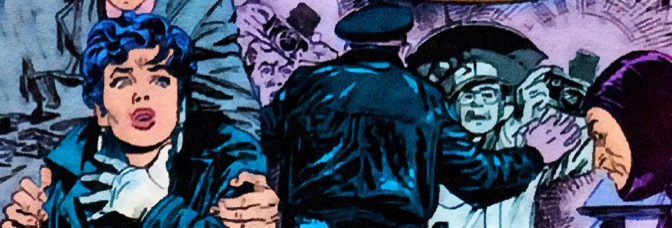
Writer Mindy Newell gives Lois Lane a serious story to cover–a murdered child–which sends her into an obsessive panic. Newell shows not just Lois’s investigative work, but also how the pursuit affects her and those around her. The Gray Morrow art is elegant and disturbing. It’s a perfect combination; he’s able to handle the talking…
-
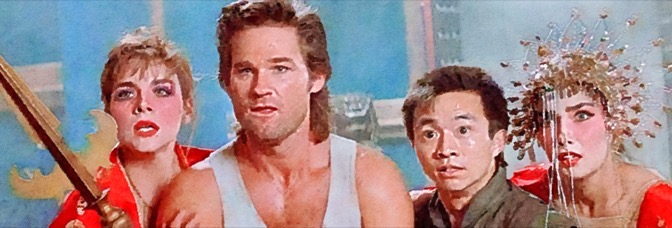
Although Big Trouble in Little China takes place in modern day San Francisco and has a whole bunch of awesome special effects, it’s really just John Carpenter doing another Western. This time he’s doing a light comedy Western and he’s got the perfect script for it. W.D. Richter (credited with an adaptation no less) has…
-

I wish they had done a recap issue back when Colan was at the top of his game. This issue sets up the big anniversary special over in Batman, with he and Robin going over the villain files in the Batcave. Gordon got an ominous note. One might think Batman should do that work during…
-

John Ridgway returns to ink Veitch and it works out nicely. Veitch has fine composition, with the Ridgway inks the panels all have a lot of personality. I love how Mike looks so ancient and tired. Most of the issue is spent with two aliens who have come to Earth to check on the miracle-people.…
-
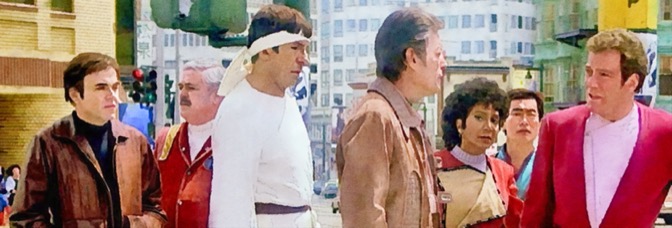
In Star Trek IV: The Voyage Home, director Leonard Nimoy establishes a light-hearted, but very high stakes, action-packed environment. Voyage Home is in no way an action movie–the action sequences mostly consist of chases and comedic subterfuges–but there’s a new one every few minutes. The screenwriters came up with a scenario where there’s always danger,…
-

Invaders from Mars, while it’s occasionally obvious it’s a comedy, can’t seem to decide. For a while, Hooper directs it absolutely straight–which doesn’t do the film any favors. Hooper’s composition is excellent (he and cinematographer Daniel Pearl have some great Panavision shots) but there’s no menace. Hunter Carson plays a kid convinced aliens have landed…
-

Save lead Michael Keaton, the Chicago location shooting and the technical competence, Touch and Go plays like an overlong sitcom pilot. Keaton’s a star hockey player who gets mugged by a gang of young “toughs,” including Ajay Naidu. Because he’s a nice guy, Keaton doesn’t turn Naidu into the cops, instead getting involved with him…
-
Without any subplots–and a running time, sans end credits, less than ninety minutes–it seems likely The Money Pit had some post-production issues. There are a bunch of recognizable character actors–Josh Mostel, Yakov Smirnoff, Joe Mantegna–who show up for a scene or two then disappear. Still, Money Pit is a great example of a (possibly) problematic…
-

When Crocodile Dundee starts, it’s deceptively bold. For roughly the first half of the picture, Linda Kozlowski–without any previous theatrical credits on her filmography–is the protagonist. She’s not really believable as a tenacious newspaper reporter, but she works as Jane to Paul Hogan’s Tarzan. Sorry, Mick Dundee. During that first half, when Dundee is the…
-

Technically, Coffee and Cigarettes is most impressive at the beginning. The short’s simple–Steven Wright meets Roberto Benigni for coffee. When Benigni makes room for Wright, Jarmusch’s handling of the process is amazing. It’s a quick series of shots; beautifully composed and edited together. As for the rest of the short, it’s a fine diversion but……
-

There’s not much to recommend Poltergeist II: The Other Side, but it does promote family “values” while quite literally demonizing Christianity. That juxtaposing alone, however, does not make it worthwhile. The film is the perfect example of a bad sequel. There are budget issues, plotting issues (the death of villain Julian Beck during filming couldn’t…
-

Three Amigos is beautifully made. Whether it’s the silent era Hollywood scenes at the opening, the silent movie in the movie, or the Western the film quickly becomes… it all looks fantastic. Landis even brings in the singing cowboy genre–the scene with the animals accompanying the song is wonderful. The locations desire some credit, but…
-
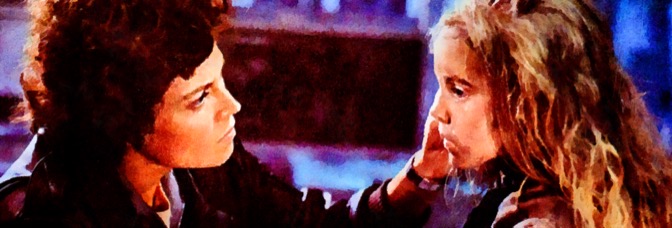
I always think of Aliens as a precisely choreographed ballet. Director Cameron moves his large cast–though it does winnow over time–around in these cramped sets and everyone has something to do; Cameron draws the viewer’s attention to one character, but the rest are in motion setting up the next moment in the scene. Watching the…
-

I found another issue with rereading Watchmen after knowing so much about Moore’s writing process on the series. I keep thinking about the structure, particularly this issue, since it has flashbacks and Moore added those later. Rorschach’s investigation closes the issue, but lots of flashbacks open it. Laurie goes to visit her mother, giving Gibbons…
-
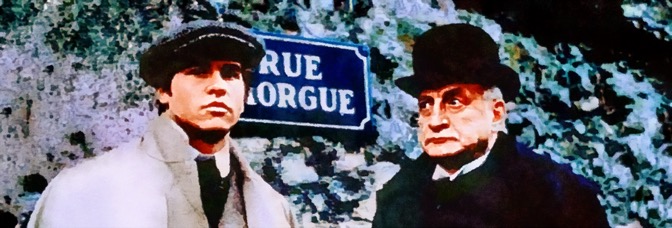
Trying TV movie adaptation of the Edgar Allan Poe short story stars George C. Scott as famous detective Auguste Dupin. Bad teleplay, lifeless direction, and a lifeless, grumpy old man performance from Scott do it in. Val Kilmer and Rebecca De Mornay are at least earnest support but they’re still not any good. Ian McShane…
-

The issue’s not in the pay-off. The pay-off is great, sure, but the issue is often disconnected from it. Moore’s writing Swamp Thing’s memorial–complete with guest spots from the Phantom Stranger and Constantine and, especially, a slightly mischievous and pervy Boston Brand. But it’s not a recap of the series to date, even though most…
-

I never thought I’d be making this statement–but I can’t tell Randall from Totleben. Randall does some of the inks here and two inkers are seamless at first read. Maybe if I had been concentrating more on the art…. Instead, this issue of Swamp Thing is a big mishmash and, against the odds, it works.…
-

At some point during Clockwise, I realized it plays like a TV movie. The direction is fine–Morahan doesn’t have any sweeping vistas, but it’s not because he’s framing it like a TV movie. The script is very funny (though I guess the language is pretty clean–not sure if it’s TV clean). No, it’s John Cleese.…
-

When Demi Moore gives a film’s best performance, it’s obviously not a good film. One Crazy Summer is apparently Holland’s attempt at doing a zany teen vacation picture. It’s the kind of movie “USA Up All Night” wouldn’t have bothered playing because it’s too boring. But the real problem isn’t the lack of cheap explotation,…
-

Yay, Warner’s back with Black Cross–featuring a bunch of expository dialogue recapping the first story. With all that useless exposition, one might think Warner would explain the ground situation to the reader. But he doesn’t. It’s confusing and a lot of work thinking about something so dumb sounding. Stradley and Emberlin’s Mindwalk has its weakest…
-

Wow, does Chadwick ever try hard to be cute. His Concrete story this issue is a completely useless, inconsequential diversion… Maybe I’m missing the point. Maybe it’s supposed to be charming, but it just seems like he wastes a lot of energy. The art’s okay, Concrete being a really boring looking character but the desert…
-

You know, I really didn’t expect Dark Horse Presents to open its first issue with a male overcompensation piece like Black Cross. Warner’s art’s amateurish and I guess it shows movie optioning is a comic book tradition (the character looks like Sylvester Stallone). It’s a dismal story. Chadwick’s two contributions are all right. The Concrete…
-

Is calling a redneck hateful redundant? All other problems (acting, script), the biggest problem with King Kong Lives is how unpleasant the film is to watch. With the exception of the good guys (there are three of them), everyone else is a really bad person… it’s incredibly simplistic in its portrayal of cruelty (I doubt…
-

I’m a little upset. Anthony Perkins only directed two pictures and one of them–this one–was written by Charles Edward Pogue. Pogue’s a bit of punchline, but at least most of Psycho III is well-plotted. His dialogue, especially at the beginning, is iffy, but it might also have been Perkins getting used to directing actors. Psycho…
-

So, in this Secret Wars II epilogue, the Molecule Man finally gets a happy ending. And since Shooter isn’t writing it, Volcana’s just a dim bulb, instead of being the target of endless misogyny. There’s also an (early?) example of She-Hulk tramping around, picking up Hercules in the conclusion of the issue. But the Silver…
-

Yay, it’s finally over. I have no idea what happens in this issue except a bunch of superheroes hang out in the Rocky Mountains, fight the Beyonder, talk a lot, and look sad at the end. Shooter appears–he doesn’t even reveal what the Beyonder’s final plan was going to be–to be aping 2010 (the movie)…
-
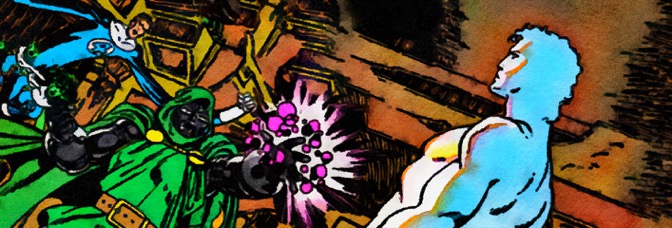
Strangely, the John Byrne Beyonder does not look like the standard John Byrne male. No idea why he chose to do something different. Maybe it’s just the eyeshadow. Maybe he started with the Byrne male and then the eyeshadow ruined it. It’s an utterly goofy story, however, featuring some mind boggling continuity turns–the Dr. Doom…
-

I’m banging my head against the wall trying to figure out this question–how the heck did Uncanny X-Men sell? I mean, Claremont’s writing is the wordiest drivel I think I’ve ever read in a mainstream comic book, possibly because he refuses to shut up. He writes on and on in his exposition, on and on…
-

Wait, hillbillies don’t know who the Avengers are? The things I learn reading Secret Wars II crossovers…. This issue features–finally–the scene where the Beyonder reveals his body is just a modified copy of Steve Rogers’s body. Well worth reading thirty issues for that non-moment in comic history. Otherwise, Stern seems to be doing his best…
-

The Beyonder and Mephisto place a bet on Spider-Man’s ability to sacrifice his personal wellbeing for others. How stupid a storyline is that one? It’s Spider-Man. The character’s entire premise is based on his personal misery. It’s a mess of an issue, as the Secret Wars II crossovers are clearly straining the entire Marvel line…
 The Stop Button