The Stop Button
blogging by Andrew Wickliffe
Category: 1962
-
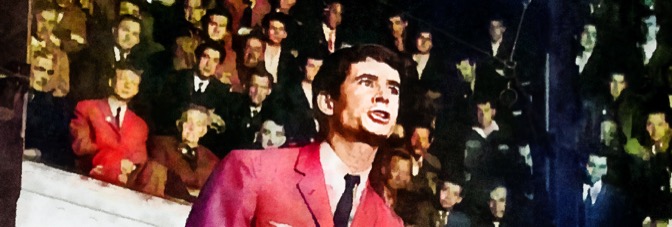
Given how much writer, director, and special guest star Welles cares about performances—not only does he dub over one of the other actors, he steals a juicy monologue from Michael Lonsdale—one would think he’d have seen the problem with star Anthony Perkins. Because everyone’s looping their dialogue in The Trial, Perkins gave this performance at…
-
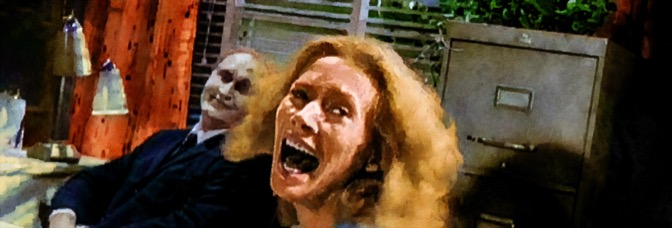
Carnival of Souls is another film in the “way too literal ending” genre. After seventy-five minutes (of seventy-eight) recounting its protagonist’s bewildering, terrifying experiences, the finish is a big wink and shrug. Though there’s a seemingly unintentional casting gaffe to tie the disparate narratives together. Unfortunately, that low-budget coincidence doesn’t add anything to the ending.…
-

The Intruder has third act problems of the deus ex machina nature, and they’re actually welcome. If the film figured out how to finish better, it’d be more challenging to talk about. It’s already an exceptionally unpleasant experience. William Shatner gets top-billing as the title character. He’s a slick, charming, clean-cut Northern (well, Western—he’s originally…
-

The Longest Day picks up when the Normandy beach invasion starts. It happens maybe ninety minutes into the three-hour film. There are the overnight paratrooper drops, which have such dull action scenes it seems like the film will never improve, but then it turns out the large-scale battle choreography is exceptional and could potentially make…
-

During To Kill a Mockingbird’s exceptional opening titles, I wondered how it was possible the film was going to look so amazing yet had no reputation for being some exquisitely, precisely directed piece of cinema. Then up came Stephen Frankfurt’s credit for title design, which kind of dulled my excitement for a moment. Could Mulligan…
-

Low budget oddity from director Hall (Sr.) promoting his son (Hall Jr.) as a blond Elvis-type, only Hall Jr. doesn’t have any discernible talent. Good hair volume though? Hall Jr. and girlfriend Marilyn Manning discover a caveman (Richard Kiel) living in the wilds of Southern California and Hall Sr., intrepid explorer, heads off to get…
-

Oddly engaging Roger Corman/Vincent Price take on 15th century British monarch Richard III, who goes mad as he kills his way to the throne. Price’s overwrought monologues–Shakespeare through the less talented screenwriters–would be a glorious disaster if only the rest of the cast weren’t taking their jobs seriously. At the same time, it’s awesome to…
-

In An Autumn Afternoon, director Ozu has a peculiar approach to how he presents his cast delivering dialogue. They stare just off camera and speak calmly, gently, no matter what. Ozu and photographer Atsuta Yûharu are incredibly precise with the composition; while Hamamura Yoshiyasu’s editing needs that precision, it also creates a distance. And Autumn…
-
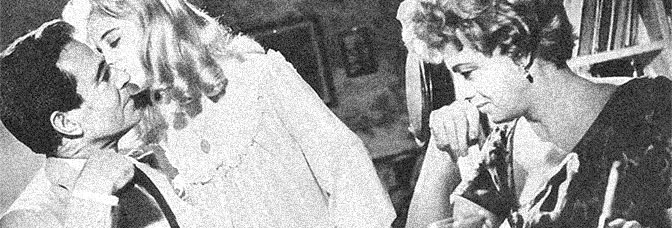
The first half of Lolita is a wonderful mix of acting styles. There’s James Mason’s very measured, very British acting. There’s Shirley Winters’s histrionics; she’s doing Hollywood melodrama on overdrive but director Kubrick (and Winters) have it all under perfect control. And then there’s Sue Lyons as the titular character. She’s far more naturalistic than…
-

Ride the High Country is a fine attempt. It’s not a successful attempt, but it’s a fine one. Director Peckinpah seems to know what he wants to do, but he’s too trapped in Western genre tradition. Having icons Joel McCrea and Randolph Scott as his leads (they’re both great), George Bassman’s intrusive score and Lucien…
-

Madison Avenue somehow manages to be anorexic but packed. It only runs ninety minutes and takes place over a few years. There’s no makeup–which is probably good since Dana Andrews, Eleanor Parker and Jeanne Crain are all playing at least ten years younger than their ages. Director Humberstone doesn’t do much in the way of…
-
While Tor, King of Beasts is a remake of King Kong, director Glut comes up with a few new twists for the retelling. The two most obvious are the futuristic plane Glut (he also stars) and his companions use to the get the island. At first I wondered if it was time travel. Second, there’s…
-

I wonder how Something’s Got to Give plays if you haven’t seen My Favorite Wife (Give was a remake). This thirty-seven minute edit of footage of Marilyn Monroe’s last–unfinished–film is a disjointed suggestion of what might have been. Monroe’s good in her part, though she doesn’t have a lot to do in the footage. There’s…
-

The title sort of gives away Jean Cocteau addresses… the year 2000, but not really. The short, conceptually, is meant to be preserved in a time capsule and projected to young people in the year 2000. Cocteau is very specific about the audience; he ostensibly hopes they will be less materialistic. If one takes Cocteau’s…
-

Martian Through Georgia has three directors and no ending. It also has nothing to do with Georgia. It opens fairly well, with very expressionist mainstream cartooning showing life on Mars. A bored Martian then travels to Earth, which kicks off the majority of the run time. Even though the Martian’s only on Earth for a…
-

La jetée is better in its parts than the whole. But the whole is still a rather significant success. Marker shows all a film needs to be successful is great photography (Marker and Jean Chiabaut) and music (Trevor Duncan). It does need, it turns out, motion. Jetée does, of course, have motion. In between the…
-

Now Hear This is a fairly amazing cartoon. It’s even more amazing when one considers it’s a Warner Bros. cartoon under the “Looney Tunes” banner. Jones and co-director Noble play with the idea of sound as it relates to movies. I suppose cartoons specifically, but it’s really just moving images. They strip away the background,…
-

I’ve probably read the Spider-Man story from Amazing Fantasy #15 ten or fifteen times, but nothing else. It’s such a famous story, I’ll bet one could recount it panel-by-panel with some effort. I did manage to find something new this time, something I hadn’t thought about before. Lee doesn’t do anything to make Peter Parker…
-

Despite its title, The Loneliness of the Long Distance Runner doesn’t really concern itself with loneliness and the only long distance running is secondary in the narrative. The film’s really something of a social piece, made rather conspicuous in the third act, with the comparison between the public school and the reform school. That moment,…
-
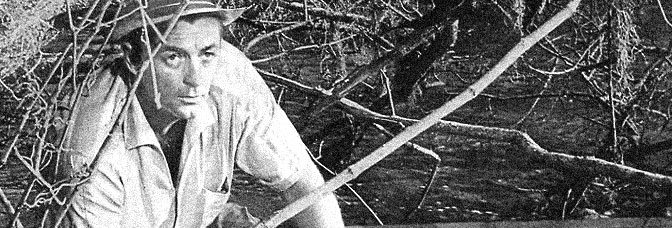
Maybe half of J. Lee Thompson’s shots in Cape Fear are good. Unfortunately, the other half aren’t mediocre, they’re bad. He’s given to iconic shots of Robert Mitchum, some of which make Cape Fear look like stills from an old Universal horror picture, with Mitchum as Frankenstein’s Monster. As a horror film–Mitchum’s Max Cady is…
-

I thought movies about giant monsters fighting were supposed to be exciting, but apparently not. I haven’t seen King Kong vs. Godzilla in maybe fifteen years and now, this time, I watched the original Japanese version. Frighteningly, it’s only seven minutes longer, so I imagine the Americanized version is boring too. The main problem with…
-

Mildly amusing and often sexist 1960s sex comedy with James Garner and his pals trying to set up a “bachelor” pad (only most of them are married) complete with in-house blonde (Kim Novak). Novak’s good, Garner’s okay (playing the bachelor and Novak’s de facto love interest); William Bendix has a great cameo as the boys’…
 The Stop Button