Category: Captain America
-

Captain America is almost loveably dumb. It’s never good, it doesn’t even have a good performance–at least, any good performances have caveats attached–but it’s so painfully obvious it ought to be lovable. It even has a lovable oaf of a lead–Reb Brown–who just happens to be really smart. Brown’s ability to recite all his dumb…
-

It's not a complicated story–writer Roger Langridge sends Captain America (from World War II) and Thor (from the present day) back to Camelot. They discover Loki has wormed his way into King Arthur's court and there's some trouble. Good thing there are a couple superheroes to deal with it. Langridge doesn't worry about establishing the…
-
It’s another all action issue–there’s some talking heads for the planning and the various plot twists, but it’s an action issue. A bunch of slightly different superheroes–the Black Knight has a magical chainsaw and Venom can pilot a spaceship and Ghost Rider’s techy–attack some slightly different other superheroes who are now bad. Human Torch is…
-
Apparently, in some realities, Captain America is a dick. Bunn gets how to write Steve’s honesty and morality. It helps here, but doesn’t fit with Bunn’s style otherwise. I also didn’t get the guy in the Doc Ock arms was the Lizard. My bad. I just thought it was some creature. But no, it’s Curt…
-
You can tell the Black Widows apart by their belts. I hadn’t realized that detail. My bad. Once again the Francavilla art is good. He’s stronger on the distance shots than he is during the close ups. Not to knock him–he’s good all the time but there are a couple fantastic long shot panels this…
-
Clearly I haven’t been reading Marvel comics for a while. Since when do they talk about a multiverse like it’s early eighties DC and what’s the deal with the big tripod monsters? Confusion aside, it’s a fairly good issue. Bunn’s plot twist is somewhat unexpected–supervillain arms dealer only employs her multiverse selves; there’s none of…
-
I like Francesco Francavilla. He’s a little awkward with Captain America out on a mission and the superhero stuff, but he makes the talking heads interesting and he’s got a great rendering of Central Park at the open. As for Cullen Bunn? He has a similar problem. The issue’s perfectly well-written, somewhat confounding stuff about…
-
I can’t believe I forgot about the Brubaker fake arc. It’s when he identifies something as an arc, but it leads directly into the next issue, which starts another arc. He usually uses a hard cliffhanger (and does so here too). It’s always vaguely frustrating because Brubaker uses the expectations to fool the reader. It’s…
-
Once again, I’ve got to question Brubaker’s approach. He splits this issue of Winter Soldier between Bucky and the bad guy. The bad guy has kidnapped Natasha and he’s going to brainwash her. It’s unclear why he hates Bucky so much–Brubaker plays fast and loose with that logic a lot. He tries to “realistically” update…
-
Brubaker uses Bucky as narrator here, but mostly Bucky just waxes on about Natasha. It’s filler. I wanted to make a joke about it seeming almost as romantic as Jeph Loeb’s Superman/Batman narration but it’s insincere. Brubaker has no reason to try to convince the reader of Natasha’s skills as a super-spy. He’s just filling…
-
Tom Palmer is a very strange inker for Guice. Gaudiano shows up for a bit, at the beginning and end most noticeably, but Palmer handles the big action scene. It’s Bucky, Natasha and Doctor Doom versus the Super-Apes and some other bad guys. With the Palmer inks, it looks like something out of a seventies…
-
Wait a second… at no time during Marvel’s attempts to “toughen up” the line did anyone ever stop to consider Doctor Doom having nuclear weapons is a lot more dangerous than the Hulk? Sorry, I just gave away Brubaker’s big reveal for the issue. Sadly, it’s a lame one. Otherwise, the issue’s okay. The pacing…
-
So, if the good guys are going to figure out the identity of the bad guy–bad girl, actually–before the issue starts, why bother making it a mystery? In addition to that silly plotting, this issue is the first where Brubaker’s pacing is too hurried. There’s a mission briefing, there’s the mission, then there’s the surprise…
-
While Winter Soldier remains exceptionally entertaining, Brubaker runs into some genre problems. He runs the book like it’s action espionage with supervillains–though it’s unclear why Bucky isn’t familiar with the Red Ghost (to be fair, I got companies confused and thought the machine gunning gorilla was Monsieur Mallah)–but he still keeps the mystery investigation angle.…
-
So Black Widow is ageless, right? I’m not missing something. Brubaker uses her to interesting effect in Winter Soldier. While she’s technically the sidekick, she’s more a supporting girlfriend character. The comic is so much in Bucky’s head, there’s not really room to share it with a sidekick. The story’s good Marvel Brubaker; a modern…
-

Captain America actually has a few interesting ideas. First is how Carla Cassola’s scientist (she creates the villain, Scott Paulin’s Red Skull, and Captain America—played by Matt Salinger) almost serves as a surrogate mother to the two boys. Well, they’re supposed to be boys when they change. Cassola probably gives the film’s best performance; she…
-
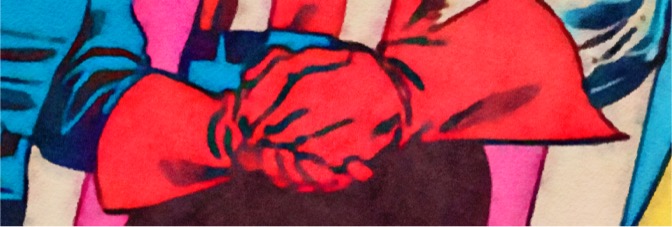
Wow, what a truly awful comic book. Bryne inks himself here (I guess Joe Rubinstein) was busy and the results are unfortunate. The action lacks any punch and the bland faces have started, years earlier than I thought they would. It doesn’t help his rendition of the first Cap costume is silly. As for the…
-

What a bunch of trouble to launch a new Union Jack. I guess Stern gets to kill the original Union Jack (and Baron Blood) but the whole thing is just a setup for Marvel UK. Whatever. I’m being really harsh and I shouldn’t be. The issue’s not bad—except Cap running around in his outfit, shield…
-
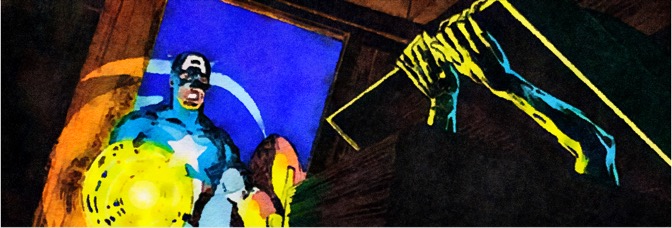
When Stern isn’t writing too much exposition, he really does a good job. I always forget during those exposition heavy issues. Cap heads off to the UK to help out the aged former Captain Britain with a vampire problem. Byrne gets to draw the English countryside. The selling point of the issue is really Byrne’s…
-

Oh, is Stern’s exposition bad. I mean, it’s real bad. What I can’t figure out is why he bothers with it. It seems the only reason for the endlessly wordy narration is he has to fill space… but he doesn’t. This narration goes in boxes at the tops of panels. Byrne’s art is more than…
-
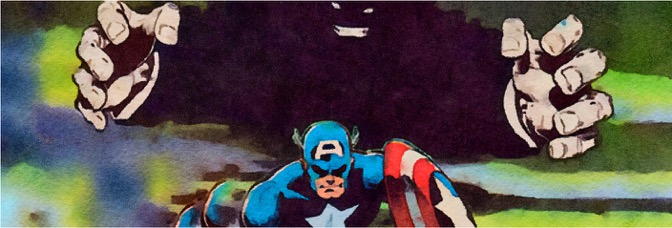
Besides Stern inexplicably wasting four or five pages recapping Cap’s origin, it’s a good issue. The origin recap made me wonder if Byrne wanted to get to redo the iconic panels, but they’re really small. Byrne does a great job this issue, especially once the fight scene gets started at the end between Cap and…
-
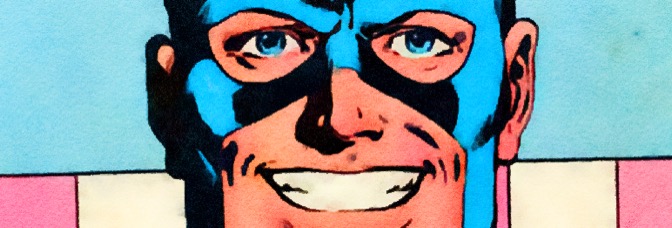
After some hiccups, Stern finally gets the whole “Captain America for President” idea working. The problem scenes are the establishing ones. It’s Cap talking to the third party guys who want him to run on their ticket. The issue gets good once it’s Steve Rogers trying to figure out if he should run or not.…
-

The Dragon Man cliffhanger really does not resolve well. All Stern can think of to get it over with promptly is for Cap to throw his glove in Dragon Man’s eye. Then Dragon Man heads off to confront Machinesmith and Cap tags along. This sequence, from the cliffhanger resolution to Machinesmith’s hide-out, is visually fantastic.…
-
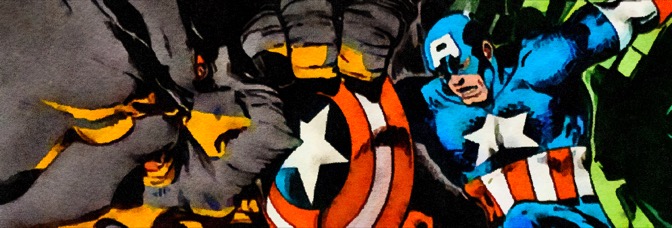
Steve Rogers as mild-mannered commercial artist is a little off at first, but once he settles in with his friends—and a girl, I sort of remember him dating Bernie Rosenthal when I was a kid—it gets a lot more comfortable. Stern starts with more about him being wowed by the era, but it quickly dissipates…
-

Byrne does a great job with everything this issue except Cap. He draws him a little like a big dope. There’s just something bland and dully affable about him. And he’s always in costume, so clearly Byrne is doing a good job of drawing him that way since he never gets to fully illustrate an…
-
Oh, those young toughs, how dare they break up a date between Peter Parker and… Jack Monroe (Nomad). Seriously, they’re on a date. They meet in an alley, beat up some threatening toughs, then head to see Rio Bravo together. All while Nomad is supposed to be delivering art to Steve Rogers. Unfortunately, it’s a…
-
Well, thanks for the heads up guys, I thought you were being artsy with the hologram shield, a little Googling reveals it’s an energy shield… which makes no sense, since if it’s implanted in Steve’s hand, unless it’s grafted to the bone, getting de-powered last issue would probably have effected his physiology. But whatever. The…
-
One issue? Brubaker has Steve Rogers be “puny” for one issue? He reveals even a “puny” Steve Rogers can still kick ass and he only lets him be in that condition for one issue? What a cop-out. Oh, and before I get to Eaglesham, what’s up with the holographic shield? Is it one of Steve…
-
Brubaker’s very good at making his Captain America familiar. It’s amazing how he manages to be writing an issue set after a huge media event (the death of Captain America), with a noir approach (Steve Rogers, private investigator–it works well, but Eaglesham is way too clean for it) and still make me think of seventies…
-
I’m creating a new word. A Brubaker is when a writer introduces something previously unknown from an established character’s history (the farther back the better) solely to generate a new story for the character. Almost all of Brubaker’s Marvel stories, using this term, have been Brubakers. I don’t think many of his DC comics were…
 The Stop Button