Category: Action-Adventure
-

Doom may very well be the worst inoffensive film I’ve ever seen. Director Bartkowiak and his crew redefine ineptness in production values. No one does a good job, everyone does something benignly terrible, whether it’s photographer Tony Pierce-Roberts’s blue hue for everything or composer Clint Mansell’s inability to create tension. It’s all bad. Bartkowiak has…
-

Should Into the Grizzly Maze be any good? It’s the story of two bickering brothers who have to hunt a giant killer bear. In Alaska. With the deaf wife of one brother–the cop–and the ex-girlfriend of the other brother. And the other brother is an ex-con. Their father’s former bear hunting protege also figures into…
-

Mad Max: Fury Road opens with a voiceover from “star” Tom Hardy (who’s billed before Charlize Theron, but below her; very Towering Inferno) explaining how he’s Mad Max and he’s crazy haunted with all the people he never saved. In many ways, it’s Hardy’s biggest moment in the film and he’s not even on screen…
-

Furious 7 has some really bad CGI. And I’m not talking about the creepy Paul Walker head at the end (during the utterly out of place and terribly integrated memorial sequence). It’s everything. Director Wan doesn’t know how to shoot a single scene in Furious, not the action scenes, definitely not the car scenes, even…
-
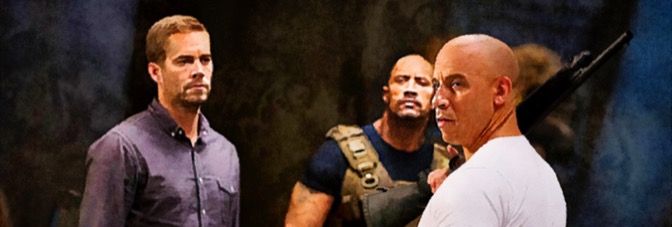
For the most part, Fast & Furious 6 is a delightfully absurd action concoction from director Lin. The film drops the Fast and the Furious “family” into a James Bond movie; thank goodness, because it’s hard to imagine Roger Moore able to outdrive the bad guys here. And it’s even set in London (and later…
-

Guardians of the Galaxy does something splendid and director Gunn never really acknowledges it, which just makes it more splendid. The Rocket Raccoon character–beautifully voice acted by Bradley Cooper–is easily the most successful CG film creation to date. And Cooper gives the film’s best performance; whoever directed Cooper in the sound booth, be it Gunn,…
-

It’s almost embarrassing how well Fast Five is made. Director Lin can’t do two things–which might be important for the film if the story mattered at all–he can’t direct heist sequences and he can’t direct car races. He doesn’t care how the heist works or how the car race works, he cares about the scene…
-

With Fast & Furious, director Lin and screenwriter Chris Morgan do something incredible. They take what, a decade before would have been at best a video game spin-off (maybe featuring the original, now down in their career cast's voices), and make an energetically mercenary movie out of it. The film's ludicrous at almost every turn,…
-
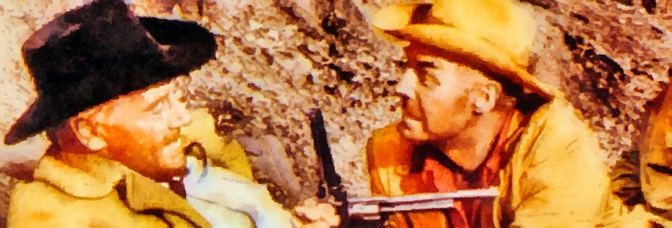
Ride the High Country is a fine attempt. It’s not a successful attempt, but it’s a fine one. Director Peckinpah seems to know what he wants to do, but he’s too trapped in Western genre tradition. Having icons Joel McCrea and Randolph Scott as his leads (they’re both great), George Bassman’s intrusive score and Lucien…
-

Identifying the most interesting thing about The Fast and the Furious: Tokyo Drift isn’t difficult. There’s so very little interesting about the film at all, anything slightly interesting becomes rather vibrant and engaging. Unfortunately, it’s the really weird treatment of girls in the film. Not women, but high school-aged girls. They are either mercenary or…
-

At some early point during 2 Fast 2 Furious–probably soon after the first car race, it becomes clear the film has two major influences for director Singleton. First, Star Wars. The car races often feel like Singleton is shooting an X-Wing sequence. Second, dumb white cop/black cop eighties movies. In this one, Paul Walker is…
-

An undercover cop (Paul Walker) finds himself drawn into a criminal underworld with a charismatic leader (Vin Diesel)! There’s not much original about The Fast and the Furious. What the screenwriters don’t lift out of Point Break, there’s director Cohen grabbing car chase related moments out of Lethal Weapon 3 and so on. Well, Cohen…
-
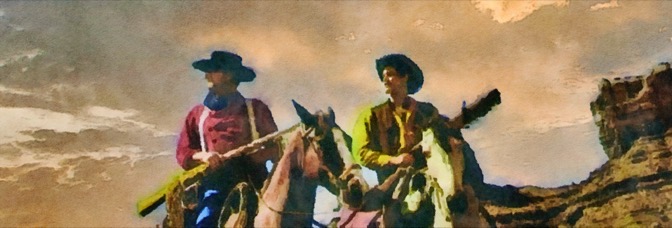
John Ford is never trying to be discreet with The Searchers, he’s just not willing to talk down to the audience. In the first ten minutes of the film, he and screenwriter Frank S. Nugent quickly establish John Wayne’s character and his relationship with his family. Ford, Nugent, Wayne and the rest of the cast…
-
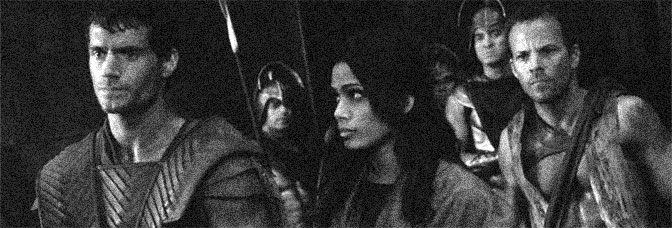
The best thing about Immortals is probably Stephen Dorff. He gives the most consistent performance and has something akin to a reasonable character arc. No one else in the film has that courtesy. The film, which has the Greek gods reluctantly influencing the life of mortals, makes a big deal out of freewill and the…
-

One of the particularly amazing parts of The Last of the Mohicans is how quietly director Mann lays out big pieces of the film. The relationship between Daniel Day-Lewis, Russell Means and Eric Schweig–Day-Lewis as adopted son to Means and adopted brother to Schweig–is complex and moving and Mann spends almost no time establishing it…
-

Besides a truly excellent real time (or very close to it) sequence where Maggie Grace avoids being kidnapped in order to help already kidnapped parents Liam Neeson and Famke Janssen, there's not much to Taken 2. Even the action-packed finale is a disappointment. I had been hoping it'd match that long sequence–which goes from a…
-

Patriot Games has a mess of a plot. After introducing Harrison Ford as the lead, it veers into this period where not only does Sean Bean–as Ford's nemesis–get more screen time, but also everyone in Bean's IRA off-shoot plot. It might work if fellow group members Patrick Bergin and Polly Walker had better written roles…
-

While The Great Escape runs nearly three hours, director Sturges and screenwriters James Clavell and W.R. Burnett never let it feel too long. Part of the quick pace comes from the first half hour being told in something like real time and another big part of it is the aftermath of the escape taking up…
-

From the lengthy opening credits to the big action finale, it's always clear sound is important in The Getaway. Editor Robert L. Wolfe does some wonderful transitions with sound foreshadowing the cut and the next scene, but there's something more to it. That something more is the isolation theme running through the film–Steve McQueen starts…
-
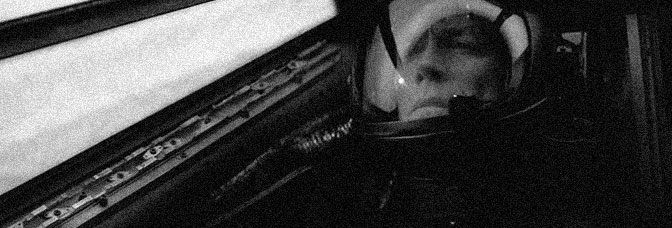
Firefox has three distinct phases. First, there's retired Air Force pilot Clint Eastwood getting recruited into an espionage mission. This part of the film barely takes any time at all–there's three missing months–Eastwood, as the director, does not like montage sequences. Even the opening exposition setting up the movie is cut together quickly; Ron Spang…
-
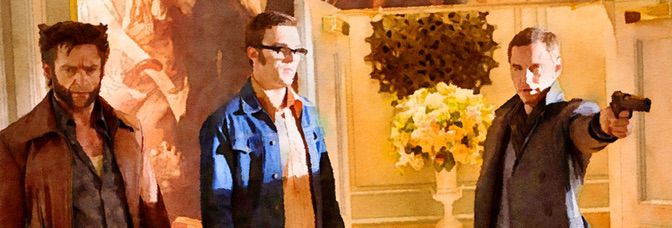
There's a fair amount of mess in X-Men: Days of Future Past, but it’s often good mess. It’s also intentional mess because it’s a time travel picture. If you remember any of the previous X-Men movies, lots doesn't make any sense. But it also doesn't matter–director Singer and screenwriter Simon Kinberg rely heavily on a…
-

Instead of focusing on the giant monsters fighting, Gareth Edwards tells his Godzilla from the human perspective. It's too bad because Edwards occasionally will set up an action shot well–he's inept at following through with these setups and actually doing a good action scene, but he's always terrible with the actors. The most interesting question…
-

It’s incredible how much concern director William Friedkin is able to get for his characters in Sorcerer. Now, the film’s really kind of like four or five movies in one–there are four prologues, with very full ones for Bruno Cremer and Roy Scheider, then there’s the story of Cremer, Scheider and Amidou (who also gets…
-

Captain America: The Winter Soldier has a bunch of great, thoughtful scenes and many excellent–and some just better than normal–performances but it doesn’t add up to much. Those fine scenes don’t have enough separation from the very hurried plot to resonate on their own. What should be subplots turn out to be nothing but texture…
-
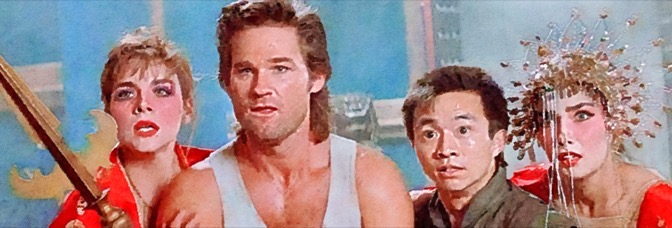
Although Big Trouble in Little China takes place in modern day San Francisco and has a whole bunch of awesome special effects, it’s really just John Carpenter doing another Western. This time he’s doing a light comedy Western and he’s got the perfect script for it. W.D. Richter (credited with an adaptation no less) has…
-

The extended version of The Wolverine adds some twelve minutes to the theatrical version. I can’t quite remember the differences, but mostly it just makes the film seem longer. Mangold hasn’t got a good pace for it; the fault for that problem, however, lies with the screenwriters. The film opens with a flashback, moves on…
-

Mad Max 2 might be the perfect example of pure action. Besides a couple extended dialogue moments–maybe the only times Mel Gibson’s protagonist gets to talk without Brian May’s music over him or just the fantastic sound effects drowning him out–it’s all action. It’s kind of incredible how far director Miller pushes the idea of…
-

Dredd is a good time. Sure, it features exceptional ultraviolence, but director Travis finds a gimmick–the drug “Slo-Mo” slows time for its user–to make the violence appear almost academic. One wonders how they did the special effects for the sequence. Travis also never glorifies the bad guys, which is interesting for what’s sort of a…
-

Thor: The Dark World toggles between cloying and disinterested. Between Alan Taylor’s limp direction and the tepid script, it never really has a chance. Either the world will end or it won’t. The film doesn’t waste any time getting the viewer (or even the characters) invested in caring about it. The lack of danger is…
-

Given how much fun the actors have in Escape Plan, there are a couple big unfortunates. First is director Håfström; he isn’t able to direct the actors through the poorly scripted parts and he also can’t direct the one-liners. Plan is the first time Sylvester Stallone and Arnold Schwarzenegger have ever done a buddy picture…
 The Stop Button