 It’s a decent enough issue–with Reis doing a lengthy Sienkiewicz-inspired action sequence–but it’s a little light.
C.O.W.L. is a hard-sell, which makes writers Higgins and Siegel’s accomplishments more significant, because it’s a comic book about a labor union and union politics and union negotiating. The superhero aspect of the comic doesn’t come into play much throughout the issue, with Higgins and Siegel saving it for the finale.
But even then it has a lot to do with the union and its problems.
Most of the art is highly stylized, but Reis never gets in the way of the story. He keeps the talking heads scenes visually interesting. Even with its problems, the issue is impressive. Higgins and Siegel find time for character scenes, they find time for conspiracies, they just don’t have enough A plot for the issue.
Slightness aside, it’s still perfectly good stuff.
CREDITS
Principles of Power, Chapter Five: Sacrifice; writers, Kyle Higgins and Alec Siegel; artist, Rod Reis; letterer, Troy Peteri; editor, Andy Schmidt; publisher, Image Comics.

 The issue’s a little drawn out as far as the script goes, but Reis’s art more than carries it along. And there’s some decent detective investigation exposition slash narration, with the detective recording his notes. But the soft cliffhanger’s weak. The writers take advantage of the medium.
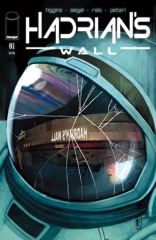 Hadrian’s Wall opens with a paragraph explaining the setting–it’s set in an alternate future because it has an alternate past (the U.S. and U.S.S.R. nuked each other in 1985 so the future’s different)–but then it’s just a traditional future cop sci-fi thing. And it’s pretty good at it too. Writers Kyle Higgins and Alec Siegel just have one major mystery for the cop to solve–who killed his ex-wife’s new husband? Who she initially had an affair with, who got him fired, who shot him four times.
 I guess C.O.W.L. is over. I really should be reading back matter, apparently, as I went through the issue with no idea it was wrapping up after just two arcs. Especially since the story’s weighted with an emphasis on the supporting cast and not the big plot. It seems like it’s a setup for whatever comes next.
 It’s an okay issue of C.O.W.L.. Higgins and Siegel are doing a bridging issue. Most of the issue is either one person being threatened or another person threatening and so on. There’s some nice art from Reis on it, but it all feels very by the numbers.
 This issue of C.O.W.L. is an excellent bit of work from creators Higgins, Siegel and Reis. First off, Reis’s art really makes the issue. He gets to do talking heads and action, but he has a bunch of variety when it comes to the talking heads. The style fits the conversation and the players beautifully.
 There are some definite issues with Reis’s art here. The people don’t look right; he’s maybe trying a new style and it doesn’t take. Or maybe there are just too many people to draw. The issue is a lot of talking heads scenes, no real action besides the introduction of staged supervillains.
 The issue starts off a little rocky. Reis gets a big action sequence and it’s all style and no substance. Then Higgins and Siegel gradually ease the substance out of that scene as the rest of the comic progresses. Because they’re now introducing the supervillains, or what goes for a supervillain in C.O.W.L. and things are getting very interesting.