Hellblazer 4 (April 1988)

8198.jpg
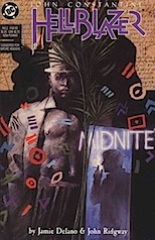
Delano’s way too tricky a writer for a monthly comic. He introduces a new character–the guest star who’s apparently the subject of the issue. Hellblazer, at least so far, has a supernatural gimmick of the week.

Then Delano moves over to Constantine. He’s having a night on the town, which doesn’t exactly play into the issue’s story. He meets a girl, who also doesn’t exactly play in. She’s superfluous, unless Constantine just desperately needs a girlfriend or a sidekick.

He doesn’t.

Anyway, it turns out the story’s only a story because of how the guest star relates to Constantine. Otherwise, none of it would have any impact on Constantine’s life.

The issue ends with Constantine realizing something’s been going on and he’s been too distracted to notice. Except he hasn’t been distracted, Delano has just been writing him dumb.

It’s not a bad horror comic, but it’s nothing special.

CREDITS

Waiting for the Man; writer, Jamie Delano; artist, John Ridgway; colorist, Lovern Kindzierski; letterer, Annie Halfacree; editor, Karen Berger; publisher, DC Comics.

Hellblazer 3 (March 1988)

8197.jpg
Well, Delano certainly can write a lame comic. The writing itself isn’t so bad, it’s Delano’s plot and most of the characterizations. He also requires Constantine to be stupid for a while.

The issue ties into British politics, specifically Margaret Thatcher being about as bad as the demon of flatulence. Actually, wait, I think she’s supposed to be worse. The demon of flatulence is kind of funny and he’s not as evil.

Constantine stumbles across a bunch of demons running an investment firm and grabbing the souls of their human customers. Since he’s basically a good guy–especially this issue–he stops them. There’s very little drama to the comic, since Constantine isn’t going to die in his third issue and there’s pretty much no one else human in the comic.

A waiter, maybe.

Delano does write a good scene about Constantine’s contacts.

Ridgway’s art is occasionally weak, but passable.

CREDITS

Going For It; writer, Jamie Delano; artist, John Ridgway; colorist, Lovern Kindzierski; letterer, Annie Halfacree; editor, Karen Berger; publisher, DC Comics.

Hellblazer 2 (February 1988)

8196.jpg
This issue’s rather surprising. There’s no conflict to it. And when I say no conflict, I mean none.

It finishes up the story from the first issue, has Constantine encounter some more ghosts–all of whom are from Swamp Thing and Delano doesn’t write Constantine at all the same as Alan Moore did so there’s a disconnect–but it’s just a closer.

I feel like I should be disappointed, but I’m really not. Delano finishes the first story. It’s not his fault there’s no drama in it. I suppose if it weren’t all so predictable there might be drama. It is his fault it’s predictable, but to make it unpredictable, he would have either needed a third issue or a shorter first.

Ridgway’s a bit of a disappointment though. I get he’s being frantic with all the lines to increase intensity, but the scenes’re intense enough.

Hellblazer‘s fine, just disaffected.

CREDITS

A Feast of Friends; writer, Jamie Delano; artist, John Ridgway; colorist, Lovern Kindzierski; letterer, Annie Halfacree; editor, Karen Berger; publisher, DC Comics.

Hellblazer 1 (January 1988)

8195.jpg
I’m not sure how seriously Jamie Delano takes Hellblazer. Well, maybe he takes the story seriously, but not John Constantine. The issue opens with a demonic incident–bugs, since it’s a Swamp Thing spin-off, but to be bugs–and it takes a while for Constantine to show up.

When he does, Delano’s writing style changes. He intentionally gets very purple with adjectives, he’s got Constantine talks very British to himself. Maybe the humor is to offset the grossness.

But the plot is also a little goofy. Constantine’s a globe-trotter. He starts in London, heads to Africa for some investigating, then to New York. While Delano ties the New York setting into the character’s history well enough, it’s hard not to think the stateside setting is for the U.S. comic market.

John Ridgway’s art is good. He gives the various settings a lot of personality while maintaining general uneasiness.

CREDITS

Hunger; writer, Jamie Delano; artist, John Ridgway; colorist, Lovern Kindzierski; letterer, Annie Halfacree; editor, Karen Berger; publisher, DC Comics.