A Walk Through Hell (2018) #2

Wth2

It’s a better issue. There’s character work, not development because it’s flashback, but now MacGregor is a white gay man FBI agent who doesn’t understand he works with a bunch of bigots and, in flashback, is worried about the 2016 election. In the present, election’s already happened. We find out the white lady partner, Shaw, doesn’t vote, knows white guys are bigots and doesn’t complain about anything. They have these conversations while investigating missing children cases, which are taking place around the Southwest, but centered in L.A.

The investigation figures into the present day, starting with MacGregor and Shaw waking up in a warehouse without any pulses. They then discover one of their fellow agents is similarly without a pulse but has had a different experience—and reaction—than they’ve had. The entire present action takes place in the warehouse, lights out, mysterious figures and noises down the aisles, the partners finding themselves without pulses, then finding their colleague. At the end of the issue, there are some crossovers between the two storylines, which writer Garth Ennis toggles between.

As a comic, manipulative content concerns aside, it’s a technical success. Ennis and artist Goran Sudžuka do a good job with it. The flashbacks are visually without dread, but there’s foreboding on a couple fronts. First, the looming election, second, the criminal investigation. Even without knowing it might figure into the present, the investigation in the past is slightly uncanny. It’s not supernatural, but it’s discomforting as the agents expound on it, and the incongruities stick out. Again, good writing from Ennis. Like, he does the work to get the right effect.

To what end? We’ll have to wait until next time because Ennis finishes the issue ends with a revelation cliffhanger, one the agents know about, but the reader doesn’t. Yet, presumably.

I’d be really impressed if Ennis doesn’t address it.

While I’m still not enthusiastic about A Walk Through Hell, it does appear Ennis knows how to do what he’s doing. And Sudžuka’s art is excellent. Wish he was doing a different book—heck, wish he and Ennis were doing a better book together. The plotting with the reveals is a little off; the series runs twelve, and I’m guessing I’ll be griping it didn’t just run eight by the finale. This issue is stretched out to delay the plot from fully starting, which means there will be at least three issues before Ennis establishes the ground situation. Trade-write much?

But whatever. It’s an improvement I wasn’t expecting.

A Walk Through Hell (2018) #1

Wth1

I was geared up for a Garth Ennis war comic, but A Walk Through Hell is a supernatural horror police procedural; FBI agents are the leads (so far), but still. And it’s very modern; it opens with an active shooter situation at a mall at Christmastime, there are tweets, one of the characters bitches about Trump. It’s very interested in acknowledging as many zeitgeists as possible, which, again, I wasn’t expecting.

It’s okay supernatural horror police (FBI) procedural. Feels a lot like it’s an Avatar comic, not an AfterShock. Specifically, it feels a lot like Alan Moore’s The Courtyard and I’m really hoping that feeling goes away; I don’t want to see Ennis aping Moore.

Goran Sudžuka does the art, which is good. He paces it well, has a good amount of detail; the issue opens with foreboding narration from one of the leads, which repeats and expands at the end, as we find out something’s going very wrong.

But there’s not much to it so far. It’s sensational and exploitative, but there’s no meat yet. All of Ennis’s devices work to engage the reader in things besides the story, because the story’s going to start next issue. This issue’s the prologue, though also not a great one on those terms because the characters aren’t established yet. It’s not the traditional Ennis male and female cop team though; those usually involve the guy being incompetent and the lady being badass. He’s not going that route. There’s also not a lot of humor, just impending doom.

We’ll see. It’s a terrible time to be reading this comic for numerous reasons but… there’s never going to be a good time to read a comic with this content.

I vaguely remember the characters’ names—the narrator mentions them in the opening narration, but since it’s set against someone else’s horrific experiences, they don’t click. Though at least one of them is hard to spell, I remember. Lots of Zs. I don’t know. I was expecting some WWII comic, not a ripped from the bloody headlines.

Ghosted 20 (May 2015)

Ghosted #20Ghosted ends. Rather abruptly. While Williamson does discuss ending the series in the back matter–and he pretty much brings back every slightly sympathetic character for a farewell of sorts–the pacing doesn’t feel right. Even if he meant to work towards a reveal and then go another route… it’s not a successful destination.

Some of the problem is Goran Sudzuka trying a different style for his brief return to the comic. And then Laci and Williamson pretending they’re doing a desperately romantic Vertigo comic from the nineties. The tone is just off.

Still, even if it’s not a compelling read, the final issue of Ghosted is a pleasing one. Williamson doesn’t take enough time with the characters but he gives them all fine farewells. The ties back to the series’s first arc just show how constrained Williamson envisioned the comic, which is too bad.

Ghosted finishes acceptably, nothing more.

CREDITS

Writer, Joshua Williamson; artists, Goran Sudžuka and Vladimir Krstic Laci; colorist, Miroslav Mrva; letterer, Rus Wooten; editors, Michael Williamson and Sean Mackiewicz; publisher, Image Comics.

Ghosted 12 (August 2014)

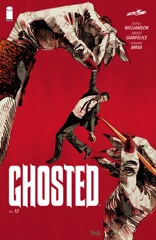
Ghosted #12I’m having a little trouble counting the reveals in this issue. It’s either three or four. Two of the biggest ones come before the end of the issue and then the cliffhanger reveal doesn’t even have the inkling of context. Williamson is having some fun.

This issue is setup for the next arc–with Goran Sudzuka continuing on art–and Williamson goes all out. There isn’t just a little setup, it’s the entire issue. He opens with a ghost event out in the world and follows up on it, ties it into the discussion, for the end of the issue. It’s not cliffhanger material, just interesting material.

But while he’s doing all this setup, Williamson is moving his protagonists forward. It calls back to previous issues, but the comic is essentially a soft boot. It works out rather well.

Even the most hackneyed character comes off as charming and vibrant.

CREDITS

Writer, Joshua Williamson; artist, Goran Sudzuka; colorist, Miroslav Mrva; letterer, Rus Wooten; editors, Helen Leigh and Sean Mackiewicz; publisher, Image Comics.

Ghosted 11 (July 2014)

Ghosted #11It’s kind of a fill-in issue, with Williamson doing the origin of Agent Anderson (I think her name’s Anderson), only it has original artist Goran Sudzuka. So it’s not exactly a fill-in. It’s definitely filler, with Williamson spending most of the issue telling the story of an utterly unlikable character.

There are also some problems with Williamson’s first person female point of view. They might not stand out if the story itself were okay. But it isn’t. The series isn’t oriented well for this kind of issue; Williamson writes big, this issue is small and contrived–bikers who are human traffickers? How original.

Then the comic changes gear to reveal the context of Anderson’s monologue and I just realized it would have worked had Williamson really written it as a conversation. There’s something missing–the banter between her and the protagonist.

It’s a bad issue, but the series’s fine.

CREDITS

Writer, Joshua Williamson; artist, Goran Sudžuka; colorist, Miroslav Mrva; letterer, Rus Wooton; editors, Helen Leigh and Sean Mackiewicz; publisher, Image Comics.

Ghosted 5 (November 2013)

Ghosted 005Williamson does the heist movie thing where he reveals all the double crosses and hidden machinations to allow the good guys to beat the mark. Because he’s doing it in a comic, it doesn’t work. There’s no way for him to do a smooth montage. Instead he’s got a lot of forced, awkward exposition.

Other than the big reveal, he paces the issue rather well. He gets through the cliffhanger resolution, gets through some plans of attack, makes one minor reveal, makes the major one, deals with fallout on scene, moves on to the next location–he really does get a lot done here. He never lets the issue slow down until the last scene,

Sadly, Sudzuka has some really weak panels in this issue. Something about the expressions escaped him. They’re so bad they can slow the reading.

Ghosted has its share of problems, but it’s a decent comic.

CREDITS

Writer, Joshua Williamson; artist, Goran Sudžuka; colorist, Miroslav Mrva; letterer, Rus Wooton; editor, Sean Mackiewicz; publisher, Image Comics.

Ghosted 4 (October 2013)

285878 20131009111559 largeAnd now we get to the double-crosses; sort of. Williamson tries to make a big deal out of one character’s “out of character” actions, but she then proceeds to explain to the stunned cast why her actions make total sense.

So not much of a double-cross.

There are some surprises, however, and a handful of interesting implications about characters’ motives. All while there are finally ghosts in Ghosted, lots of them. While Williamson isn’t treading water as far as the story goes, he’s definitely dragging scenes out. He uses the ghosts as candy at the end of one long scene or another. It’s all buildup for the big reveals next issue; Williamson really could have done this story in three issues….

Especially since he reduces his characters to caricatures this issue.

Still, the series still has some leftover good will going.

And very nice art from Sudzžuka too.

CREDITS

Writer, Joshua Williamson; artist, Goran Sudžuka; colorist, Miroslav Mrva; letterer, Rus Wooton; editor, Sean Mackiewicz; publisher, Image Comics.

Ghosted 3 (September 2013)

283152 20130911114150 largeGhosted is back, which is nice, they only had a bad second issue. This one is a lot better.

There’s a great back and forth between the George Clooney guy (I’m not going to remember names, so I’ll just call him the George Clooney guy because he’s the lead–or should I call him Danny Ocean?) and the guy who sets up the project. There’s some very nice hints at the back story while the rest of the team steals some magical totem.

Then the issue moves to the haunted house and there are actual ghosts. Williamson figures out a very good reveal or two for introducing the ghosts. He and Sudžuka handle it very well.

Not to mention there’s actually a great cliffhanger. Very good issue, very good–even though Williamson has some problems keeping track of all the characters at the end.

Very glad the series’s working again.

CREDITS

Writer, Joshua Williamson; artist, Goran Sudžuka; colorist, Miroslav Mrva; letterer, Rus Wooton; editor, Sean Mackiewicz; publisher, Image Comics.

Ghosted 2 (August 2013)

Ghosted02 coverWhat the heck is this thing? I suppose the original material is good, but there’s not very much of it. Most of the issue reads like a recap of the last one. Williamson goes over all his characters and their particular skills, which is beyond redundant.

He’s got a great built in structure for the issue–the ghost hunters have to be out of the haunted house by sundown–and he doesn’t use it. He only has one scene with any character development. Then he throws little road blocks in the protagonist’s way and deals with them immediately afterwards. Little might not even be the right description. Minute.

The Sudzuka art keeps Ghosted worth a look, but Williamson doesn’t give him much to do. The haunted house stuff, the flashbacks, it’s all implied. Sudzuka can clearly draw people walking around. Don’t need to see it over and over.

It’s middling.

CREDITS

Writer, Joshua Williamson; artist, Goran Sudžuka; colorist, Miroslav Mrva; letterer, Rus Wooton; editor, Sean Mackiewicz; publisher, Image Comics.

Ghosted 1 (July 2013)

277519 20130712154425 largeJoshua Williamson is one of those odd writers who are better with summary than are with actual scenes. It really shows when he’s doing a montage of his protagonist getting together a team of ghost hunters and thieves. They’re these little scenes, with just the right amount of information and personality.

He also does well with the protagonist narrating. The lead is a master thief. A rich guy breaks the lead out of prison to capture a ghost. The scenes where the rich guy lays out this scheme is painful. Williamson opens making Ghosted as real as possible–the unpleasantness of prison life–then brings in some supernatural ludicrousness.

The dialogue’s weak too, which doesn’t help the scenes.

Luckily, Goran Sudzuka’s strong art makes the whole thing pass. Even during the worst dialogue, Sudzuka’s doing something cool with the conversation.

Hopefully the writing gets better, but Sudzuka’s the essential here.

CREDITS

Writer, Joshua Williamson; artist, Goran Sudžuka; colorist, Miroslav Mrva; letterer, Rus Wooton; editor, Sean Mackiewicz; publisher, Image Comics.