Robocop: Last Stand (2013) #8

Rcls8

Robocop: Last Stand #8 screams behind-the-scenes story. It’s got a new writer, on issue eight of an eight issue limited, but it’s also got no mention of Frank Miller. Besides the narrative—which loosely follows the previous seven issues but could also be seen entirely as a follow-up to Robocop 3—and Oztekin’s art, it’s a very different handling than what Steven Grant had done. Ed Brisson’s Robocop Detroit feels very much Judge Dredd-inspired with its gang of marauders. They’ve come to town, which—following the events in issues one to seven and also Robocop 3—has no functioning city government or government services.

Brisson does a rather good job addressing that situation without a lot of exposition, which wouldn’t be appropriate because it’s a shortcoming of issues one to seven and Robocop 3. Even if the enemy gang is a little bit too cartoonish. There’s just not enough time spent developing them. It seems like an editorial issue—Oztekin’s only got so much space and there’s a lot of action; character development—even caricature-y character development—takes a third seat. Back seat is already taken (by humor). There are some decent smiles thanks to Oztekin’s visual pacing.

By the end of the issue, it’s clear Brisson isn’t just end-capping Boom!’s pseudo-Frank Miller Robocop comic, he’s also end-capping the Robocop franchise. But subtly. He’s getting around to answering narrative questions you didn’t bother answering in eighties-born movie franchises. Robocop: Last Stand #8 sets up a fine sequel possibility for Boom!, a good starting point for an ongoing series.

Though none of the subsequent Robocop ongoings have used the Last Stand continuity (or the Last Stand #8 continuity).

As a franchise, film or comic, Robocop is a disaster zone. Brisson at least makes some attempt to put order to it here. As an epilogue to the previous seven issues, I guess it works fine? It does work fine, but it does some extra credit too and the extra credit is where it’s interesting. Brisson’s got some franchise enthusiasm not seen in the previous issues. There’s an actual surprise cameo.

Robocop: Last Stand is a singular success. It’s a good Robocop comic and a good Robocop sequel. Brisson at least seems to understand its possibilities (and responsibilities) and turns in the right finish. Even if it is too short.

Robocop: Last Stand #8 (of 8)

Robocop: Last Stand #8 screams behind-the-scenes story. It’s got a new writer, on issue eight of an eight issue limited, but it’s also got no mention of Frank Miller. Besides the narrative—which loosely follows the previous seven issues but could also be seen entirely as a follow-up to Robocop 3—and Oztekin’s art, it’s a very different handling than what Steven Grant had done. Ed Brisson’s Robocop Detroit feels very much Judge Dredd-inspired with its gang of marauders. They’ve come to town, which—following the events in issues one to seven and also Robocop 3—has no functioning city government or government services.

Brisson does a rather good job addressing that situation without a lot of exposition, which wouldn’t be appropriate because it’s a shortcoming of issues one to seven and Robocop 3. Even if the enemy gang is a little bit too cartoonish. There’s just not enough time spent developing them. It seems like an editorial issue—Oztekin’s only got so much space and there’s a lot of action; character development—even caricature-y character development—takes a third seat. Back seat is already taken (by humor). There are some decent smiles thanks to Oztekin’s visual pacing.

By the end of the issue, it’s clear Brisson isn’t just end-capping Boom!’s pseudo-Frank Miller Robocop comic, he’s also end-capping the Robocop franchise. But subtly. He’s getting around to answering narrative questions you didn’t bother answering in eighties-born movie franchises. Robocop: Last Stand #8 sets up a fine sequel possibility for Boom!, a good starting point for an ongoing series.

Though none of the subsequent Robocop ongoings have used the Last Stand continuity (or the Last Stand #8 continuity).

As a franchise, film or comic, Robocop is a disaster zone. Brisson at least makes some attempt to put order to it here. As an epilogue to the previous seven issues, I guess it works fine? It does work fine, but it does some extra credit too and the extra credit is where it’s interesting. Brisson’s got some franchise enthusiasm not seen in the previous issues. There’s an actual surprise cameo.

Robocop: Last Stand is a singular success. It’s a good Robocop comic and a good Robocop sequel. Brisson at least seems to understand its possibilities (and responsibilities) and turns in the right finish. Even if it is too short.

Cluster (2015) #6

Cluster  6

I wish I enjoyed Cluster.

I like Couceiro’s art. But his sci-fi setting for Cluster is the same generic sci-fi setting with space troopers as Aliens or Starship Troopers. There’s nothing interesting about it. Some of the stuff with the aliens is good, but Brisson spends his time on the humans, so it’s background.

And I like Brisson’s writing. It’s all very competent, but it’s nothing special. The protagonist has gotten lost so Brisson could get to the space revolutionaries and so on. But he doesn’t spend much time on the revolution or anything else. Cluster is too fragmented, Brisson has too many subplots fueling the main plot. There isn’t enough time to care about anything.

Except the characters he’s already killed. They were more memorable than any of the new ones he’s introducing.

Brisson and Couceiro can keep Cluster running in competence, but they’re getting bad mileage.

Cluster 6 (August 2015)

Cluster #6I wish I enjoyed Cluster.

I like Couceiro’s art. But his sci-fi setting for Cluster is the same generic sci-fi setting with space troopers as Aliens or Starship Troopers. There’s nothing interesting about it. Some of the stuff with the aliens is good, but Brisson spends his time on the humans, so it’s background.

And I like Brisson’s writing. It’s all very competent, but it’s nothing special. The protagonist has gotten lost so Brisson could get to the space revolutionaries and so on. But he doesn’t spend much time on the revolution or anything else. Cluster is too fragmented, Brisson has too many subplots fueling the main plot. There isn’t enough time to care about anything.

Except the characters he’s already killed. They were more memorable than any of the new ones he’s introducing.

Brisson and Couceiro can keep Cluster running in competence, but they’re getting bad mileage.

CREDITS

Writer and letterer, Ed Brisson; artist, Damian Couceiro; colorist, Cassie Kelly; editors, Cameron Chittock and Eric Harburn; publisher, Boom! Studios.

The Mantle 2 (June 2015)

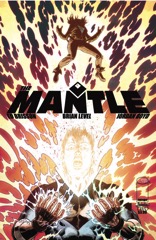
The Mantle #2Okay, Brisson takes the route I guess I was hoping he’d take and he immediately goes unexpected places with it. Maybe not entirely unexpected–the idea of the new Mantle meeting up with the old Mantles, if possible, for inspiration, isn’t unexpected. But how Brisson gets there is a complicated and crazy. And it’s what gives the comic some energy.

Because the villain? The Plague guy whose very touch makes people’s arms fall off? He’s an awful villain. Brisson gives him a bit of personality, which doesn’t help because it gets the reader curious about answers to questions Brisson isn’t even raising yet.

There aren’t a lot of questions in The Mantle. Brisson does a good job staying on track, so when he loses control of a scene, it stands out.

The art is, once again, decent. Level has personality if not the detail (or time) for all of it.

CREDITS

Writer and letterer, Ed Brisson; artist, Brian Level; colorist, Jordan Boyd; editor, Laura Tavishati; publisher, Image Comics.

The Mantle 1 (May 2015)

The Mantle #1I want to know where The Mantle is going more than I want to read where it’s going. The way writer Ed Brisson sets up the end of this first issue, it could either go in two paths. One where the series is very episodic, one where it isn’t. Would I not continue reading depending on the former or the latter… No.

But I want to know. I want to know how to digest the material.

Simple setup. Superheroes are real. They just hide and fight their enemies in the middle of nowhere. It’s unclear how long they’ve been around, but at least a decade because the titular Mantle is like the Green Lantern rings.

Only the villain is hunting down the Mantle holder before they can get comfortable.

Brian Level’s composition is better than his detail, which gives it all a certain distinct personality.

Mantle’s okay. I think.

CREDITS

Writer and letterer, Ed Brisson; artist, Brian Level; colorist, Jordan Boyd; editor, Laura Tavishati; publisher, Image Comics.

Cluster (2015) #5

Cluster  5

I’m trying to figure out what’s wrong with Cluster. There’s definitely something off about it because I should be gleefully anticipating a monthly dose of Brisson and Couceiro.

I think I’ve got it too–Cluster isn’t good as an episodic, serialized read. It might do better in trade, but Brisson’s got too many characters without enough history for them to be interesting in a monthly. I don’t even care the protagonist has been turned into a cyborg. She’s just not compelling enough. And poor Couceiro doesn’t get enough cool things to illustrate. This issue it’s mostly the jail.

Who cares. A future prison planet. Unless Cluster’s future prison planet is made out of plants, which it isn’t, there’s not much to do with that setting.

I like the idea of Cluster and I like some of Brisson’s writing, some of Couceiro’s art, but I’m forcing myself to read it.

Cluster 5 (July 2015)

Cluster #5I’m trying to figure out what’s wrong with Cluster. There’s definitely something off about it because I should be gleefully anticipating a monthly dose of Brisson and Couceiro.

I think I’ve got it too–Cluster isn’t good as an episodic, serialized read. It might do better in trade, but Brisson’s got too many characters without enough history for them to be interesting in a monthly. I don’t even care the protagonist has been turned into a cyborg. She’s just not compelling enough. And poor Couceiro doesn’t get enough cool things to illustrate. This issue it’s mostly the jail.

Who cares. A future prison planet. Unless Cluster’s future prison planet is made out of plants, which it isn’t, there’s not much to do with that setting.

I like the idea of Cluster and I like some of Brisson’s writing, some of Couceiro’s art, but I’m forcing myself to read it.

CREDITS

Writer and letterer, Ed Brisson; artist, Damian Couceiro; colorist, Cassie Kelly; editors, Cameron Chittock and Eric Harburn; publisher, Boom! Studios.

Cluster (2015) #4

Cluster  4

Brisson picks a really weird place to do a cliffhanger this issue. It’s the most predictable spot–so predictable, it doesn’t even constitute an actual cliffhanger anymore. He spends the entire issue counting down to a plot point and then ends with that plot point. Literally counting down.

Other than that big, awkward finish–maybe it’s not even a fail, it’s like Brisson forgot to assemble the issue’s flashback framing correctly because the alien prison planet stuff is so much more interesting. But other than it, the issue’s pretty strong. There’s some useless (i.e. too supporting) character stuff and some of the tone doesn’t match Couceiro’s very sci-fi art, but it’s a good issue.

Couceiro has some problems with the battling spaceships and all, but he’s not really a machines versus machines kind of artist. The human stuff works, even when it’s too predictable.

It’s a good mixed bag.

Cluster 4 (May 2015)

Cluster #4Brisson picks a really weird place to do a cliffhanger this issue. It’s the most predictable spot–so predictable, it doesn’t even constitute an actual cliffhanger anymore. He spends the entire issue counting down to a plot point and then ends with that plot point. Literally counting down.

Other than that big, awkward finish–maybe it’s not even a fail, it’s like Brisson forgot to assemble the issue’s flashback framing correctly because the alien prison planet stuff is so much more interesting. But other than it, the issue’s pretty strong. There’s some useless (i.e. too supporting) character stuff and some of the tone doesn’t match Couceiro’s very sci-fi art, but it’s a good issue.

Couceiro has some problems with the battling spaceships and all, but he’s not really a machines versus machines kind of artist. The human stuff works, even when it’s too predictable.

It’s a good mixed bag.

CREDITS

Writer and letterer, Ed Brisson; artist, Damian Couceiro; colorist, Michael Garland; editors, Cameron Chittock and Eric Harburn; publisher, Boom! Studios.