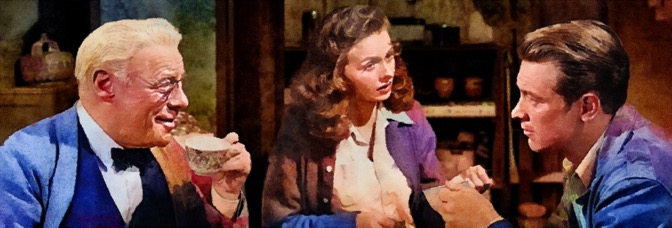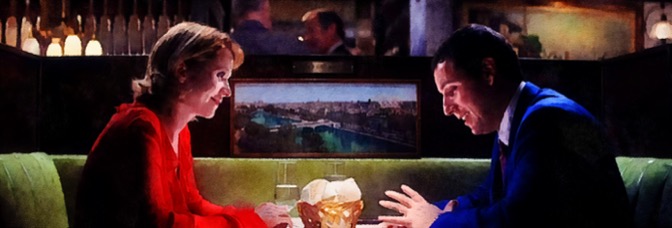
• Punch-Drunk Love (2002, Paul Thomas Anderson)

    There are probably better movies with seven-minute end credits than Punch-Drunk Love but I doubt there are any where those seven-minute end credits are padded to give the film a more respectable run time. Punch-Drunk Love is an approximately eighty-eight-minute marathon where writer and director Anderson hones in on his protagonist, played by Adam Sandler, and relates the chaos of his life.

    Sandler’s a plumbing supply manufacturer in business with Luis Guzmán, his only friend. As close as Sandler has to a friend. Guzmán’s performance is profoundly, beautifully dry. He doesn’t have much to do, but when he gets something, he nails it. Guzmán is also the human side of Sandler. The film opens with Sandler alone at a desk in a corner—he has an office in the rest of the movie; it’s unclear why he’s using that phone—calling to confirm he’s read the fine print correctly on a Healthy Choice and American Airlines promotional deal; you get a five hundred mile credit for every ten items, but you can double it with a coupon, and there are no limits.

    After that phone call, Sandler wanders out into his industrial park, looking at the early morning sky, and witnesses a bewildering car accident. Soon after, he meets a lady dropping off her car for a nearby mechanic; Emily Watson plays the lady. She’s the love interest. Sandler will change his entire life for Watson as the film progresses, conquering known and unknown fears.

    The character definitely has OCD as well as some kind of anxiety disorder. He’s got seven sisters who call him at work to pester and berate him. They tell stories about how they bullied him to outbursts as a kid, joking about it as adults, all of them entirely indifferent to the turmoil it causes Sandler. Even when he acts out because of the teasing. All the sisters but one are only in the film’s first act. Mary Lynn Rajskub sticks around to antagonize Sander throughout.

    So it’s never clear how the lifelong bullying has affected Sandler’s social behaviors, but the family’s not just indifferent to the effect of the teasing; they also don’t acknowledge the OCD. Sandler wants therapy but knows his sisters would mock him for seeking it, so it seems like he’s never been to see anyone for the OCD either. The party scene with the sisters is emotionally exhausting, both for the film and Sandler.

    Home alone with no one to talk to–having been shut down by a brother-in-law Sandler mistakenly thought would be sympathetic—Sandler calls a phone sex line. Anderson shoots the scene continuous—lots of Punch-Drunk is long, complicated, moving scenes, sometimes with a single shot, often with multiple shots; great editing makes it seems like a single shot when it’s a dozen–and it’s exceptionally discomforting. Especially listening to the operator manipulate Sandler.

    The next day, the operator calls back, demanding money. Sandler told her he had his own business, and she took it to mean he was wealthy; the phone sex operation is part of Philip Seymour Hoffman’s mattress and furniture sales store (important details later on), and Hoffman doesn’t take kindly to someone not wanting to be shook down.

    Once Sandler starts getting the extortion calls, Punch-Drunk accelerates for the rest of the film. Jon Brion’s music initially ramps it up, seemingly the constant, relentless soundtrack in Sandler’s head. The music does slow down, but it’s set the pace, and Sandler soon finds reaching out for human connection is full of pitfalls. Particularly when his sisters, even off-screen, continue to mess with him.

    But then there’s Watson, a calm amid all the chaos, even as it rages around her, even as she surprises Sandler. The plot with Hoffman and the extortion is tough, mean, absurd black comedy, and the romance with Watson, happening simultaneously, is a Technicolor romance. Albeit not in Technicolor. Sandler’s aloof but meticulous performance holds the two plots together, his intensity shared between them.

    Also, obviously, Anderson doing a bunch of work to keep things synced, with lots of help from composer Brion, cinematographer Robert Elswit, and editor Leslie Jones. Punch-Drunk Love is fastidious to the extremis. So it stands out when they use some transition animation to get the third act done. It’s a jarring, wanting device, but Anderson manages to make up for it almost immediately. It’s probably the film’s most impressive accomplishment; to build off of literally nothing, rebounding from what ought to be a debilitating low. It’s exceptional.

    And it’s not even over. As Sandler finally gets to the last stretch of his sprint, the last few minutes just get better and better, with a postscript lifting it even more.

    Punch-Drunk Love is a singular success. Sandler grows his performance to greatness, and Watson’s a true enigma. The film marvels at her performance as it unfolds. Anderson directs the heck of it.

    So incredibly, so unimaginably good.
  • Charlie/Bowie: Changes
  • The Batman (2022, Matt Reeves)

    The first rule of the The Batman is the most interesting thing about Batman is Batman, so new Batman Robert Pattinson spends his time in the costume, with only a handful of scenes moping around as Bruce Wayne. The second rule of The Batman is “show, don’t tell,” which is strange since the third is “tell, don’t show.” But it works out; because Pattinson’s spellbinding in the costume. Pattinson’s biggest scene opposite supervillain Paul Dano—who’s also great, though not in his costume, a DIY number made out of green garbage bags apparently—is just eyes.

    Heck, Pattinson doesn’t even do the Batman lip work. Back in the Forever days, some interviewer asked Nicole Kidman about Michael Keaton (who she wasn’t in a Batman with) and Val Kilmer (who she was in a Batman with), and she said the important thing is the lips.

    Pattison and Reeves don’t worry about the lips. Pattinson does more with his jaw than the lips. Whatever else, The Batman’s an exemplar of person-in-mask acting.

    For the story and tone, director Reeves and co-screenwriter Peter Craig pick and choose from the decades of comics, movies, video games, and seemingly Darren Aronofsky’s old Batman: Year One proposal. The ground situation is where the show, don’t tell, comes in; Pattinson’s been masked vigilanting for a couple years, long enough to become best friends with police lieutenant James Gordon (Jeffrey Wright). Wright brings Pattinson, in costume, to official crime scenes where a bunch of dude cops make fun of Pattinson, and then Pattinson finds some clue they’d all missed.

    The Batman’s got a boy problem. None of the cops are women, and they’re all at least jerks, though we’ll find out a vast majority of them are murderously corrupt (Reeves and Craig rush through that story arc). But Pattinson’s Batman is another “this is my father’s house” Batman. Not only doesn’t he care about Martha, but she’s also a de facto Eve, whose personal failings led Papa Wayne to dishonor. Despite being a subplot, the parents aren’t significant, especially not after fellow orphan Dano’s soapboxing about what it must be like to be a billionaire orphan.

    The movie’s A-plot is Riddler Dano, a TikTok serial killer terrorizing Gotham’s elite. Batman’s been on the job a couple of years and hasn’t done anything about them eating Gotham’s wealth and spirit, so Dano will have to do it. Reeves and Craig make some excellent observations about Batman and his resulting rogues, leaning in on the idea of anonymous power. They don’t end up amounting to anything because The Batman needs a disaster movie finale, but the groundwork’s solid, and Dano’s monologuing is fantastic.

    There’s lots of great acting in The Batman. Dano and Wright without masks, Pattinson with, and then the unrecognizable Colin Farrell in prosthetics, showing off the potential for actors acting as someone else. The rest of the acting’s at least good. John Turturro as a mob boss, Andy Serkis as an utterly pointless Alfred, and, of course, Zoë Kravitz as Catwoman.

    Kravitz figures into the A-plot through Farrell and Turturro; Farrell owns a club where the mob and the corrupt politicians play, Kravitz works there. When Pattinson goes to interrogate Farrell, he sees Kravitz and follows her for investigatory purposes. Pretty soon, they’re fighting bad guys together and getting horizontal under the proverbial mistletoe. They gaze at each other with common sympathy and bridled lust, which always comes with composer Michael Giacchino’s gentle but passionate love theme. Even with their finale sequence’s oddly bland visuals and Kravitz disappearing too long so Pattinson and Dano can play, The Batman does an excellent job with the romance.

    When Kravitz isn’t runaway strutting past gross white guys at Farrell’s club, she’s mooning at Pattinson for one reason or another. She doesn’t get much of a story to herself. She’s got a missing friend, but it soon becomes part of Pattinson’s investigation, and her relationship with the mob bosses also ends up being for the big arcs. It’s okay; no one else gets much to themselves either. Mask-off, Pattinson’s a teensy-weensy arc about being ungrateful to Serkis. It won’t matter because Serkis is either shoehorned in or edited out. Not like a three-hour Batman needed more.

    But the film also doesn’t explain Pattinson and Wright’s relationship; for the most part, Wright’s a true blue copper, only he knows most of his fellow officers are on the take, so he can only trust Batman. Does it matter? Yes and no. Or, yes, but Reeves, Pattinson, and Wright make you forget about it.

    The big mystery’s okay. Dano leaves riddles at each scene, which Pattison usually figures out immediately until suddenly, he doesn’t, so there can be the disaster movie finish. It’s about the performances, the interactions, the mood. Pattison, Reeves, composer Giacchino, cinematographer Greig Fraser, and production designer James Chinlund create a mesmerizing film. Reeves cracks how to do a grim and gritty Batman in broad daylight, in crowds, and so on. The filmmaking’s never remarkable, but it’s never not consistent, confident, compelling. However, William Hoy and Tyler Nelson’s editing is closer to exceptional than not. Chinlund’s Gotham City is modern, Gothic, and humid, a dream turned nightmare.

    If only Reeves and Craig hadn’t strung together two movies’ worth of A-plot (cutting the character development for time) to get it done.

    But The Batman—thanks to Reeves and Pattinson (with help from Kravitz, Wright, Dano, Farrell, and the crew)—is the most special and successful this franchise has felt in numerous decades.

  • Snoopy, Come Home (1972, Bill Melendez)

    Snoopy, Come Home’s parts are better than their sum. The film’s a number of vignettes, usually set to music, sometimes with songs. Sometimes there’s connective material between the vignettes, sometimes the circus shows up, and it’s time for a new scene. Also, sometimes, the vignettes have a rough cut between them. Not too rough, there’s a fade-out and a fade-in, but there’s no attempt to transition between them. Usually when the action cuts between Snoopy and Charlie Brown. As the title indicates, Snoopy has left home, and Charlie Brown wants him to come home. So the action cuts between Snoopy and Woodstock on adventures and Charlie Brown whining.

    I guess it would be hard to find the right transition music for whining.

    Though Charlie Brown does get a song to himself late in the movie, which is effective, but also entirely changes what the movie’s about. Sort of. The third act has a couple surprise turns, narratively speaking, and the Charlie Brown song fits one of those turns but because the film’s pushing hard to make it work. It’s a stretch, though it comes right after (and refers to) an absolutely fantastic, out-of-nowhere scene. About halfway through Come Home, director Melendez starts doing these phenomenal sequences occasionally—a hallucinogenic astral dream, for example—and they’re outstanding. The second big sequence, that third act one, it’s completely different than the dream sequence, instead relying on the characters. Though, specifically, the visuals they can all create. Come Home’s always very visual, for better or worse.

    The worse is how often Charlie Brown and Snoopy use their comic strip expressions, which the film uses more in the first half than the second. The expressions are deadpan, reminding the viewer it’s an adaptation of the comic strip, which kills the momentum a little. At least until the expressions change. It’s a strange device, especially since Come Home shows off a bunch of expressions on Snoopy from multiple, not-comic-strip angles too. Come Home’s got innumerable visual flexes; they just sometimes come with distracting music.

    The film runs eighty minutes, with the first twenty building to the inciting incident. Snoopy’s fed up with “No Dogs Allowed” places getting in the way of his good time. Every time Snoopy comes across such a location, there’s an accompanying song sung by Thurl Ravenscroft. It’s not a great song; it does pay off in the end, but it’s not great.

    The film’s best song is easily Linda Ercoli’s one, which accompanies Ercole’s character tormenting her new pets, Snoopy and Woodstock. They went to her for help, and she just couldn’t wait to hug them and squeeze them. The duo’s just passing through; Snoopy gets a letter from his former owner, a little girl named Lila (voiced by Johanna Baer); she’s sick and in the hospital and would love a visit. So, peeved at the no dog zones as well as Charlie Brown being a jerk lately, Snoopy goes to visit her, Woodstock in tow. The incident at Ercoli’s is just one of their adventures along the way.

    Performance-wise, Come Home’s got a couple significant problems. Chad Webber’s rarely good as Charlie Brown, and Baer’s usually bad as Lila. They do the most talking—both pleading their cases with Snoopy. The resulting turmoil gets the film into the third act with a firm footing and enables Melendez to mix style and narrative better. Though it gets rocky because the third act goes on way too long. Also, it’s rushed. Never a good combination.

    Oddly, the charming end credits help pull Snoopy, Come Home around at the last minute; they last-minute find some humor they lost in the first act.

    Besides Webber and Baer, the voice acting’s good; Robin Kohn and Stephen Shea, as Lucy and Linus, respectively, are really good. Kohn gets more range, including some good laughs.

    Lovely animation, good music (Ron Ralke); it’s technically solid. Snoopy, Come Home’s fine. It’s got the chops to be better but just makes some hampering choices along the way and leans into them way too hard.

    But when Melendez hits, he hits hard.

  • Ball of Fire (1941, Howard Hawks)

    Ball of Fire is a rare delight. It’s got an enormous cast of scene-stealers who all work in unison, thanks to Hawks’s direction but also Charles Brackett and Billy Wilder’s screenplay being so well-balanced.

    For most of the picture. The third act has two choices, and it chooses poorly but still successfully; I’ll get to it later. First the rundown.

    Fire is the story of eight encyclopedia authors who have been living in seclusion for nine years (in New York City). They’ve got three more years (at least) on the encyclopedia, but they’ve found their rhythm. Right up until garbage man Allen Jenkins lets himself into their house—they’re right off Central Park on 83rd, with a ginormous work area on the first floor and their living quarters on the second floor; Jenkins has some questions about a trivia sweepstakes and figured, based on the books he’s seen through the windows, they’d have answers.

    However, Jenkins’s slang makes English content expert Gary Cooper realize he’s using twenty-year-old books and nine-years removed personal experience. If he doesn’t go out into the world and listen to some slang, the encyclopedia’s entry will be at best dated, at worst incorrect.

    Cooper’s the youngest of the eight authors. The rest are mostly familiar character actors of a certain age: (in alphabetical order) Richard Haydn, Oskar Homolka, Leonid Kinskey, Tully Marshall, Aubrey Mather, S.Z. Sakall, and Henry Travers. All of them are splendid; Homolka and Haydn are probably the best. They’re also the two with the most to do, though Travers gets a bit. Or his smaller part just stands out more because it’s Clarence. Mather, Kinskey, and Marshall probably get the least to do, meaning they deliver punchlines. Haydn gets the most to do because he’s the only one of the men who’s ever been married. They’re all bachelors, all utterly perplexed to do around the ladies, including Cooper, who we discover Doogie Howsered instead of chasing girls.

    However, the older men do know Cooper’s at least potentially a hit with the ladies; he’s in charge of flirting with their reluctant benefactor, Mary Field, whose dead father had the encyclopedia project in his will. Field’s only got a little to do, but like everyone else, she’s great. Charles Lane plays her attorney because Ball’s a who’s who of recognizable Classic Hollywood supporting players.

    Anyway.

    On his expedition to find the newest slang, Cooper finds his way into a nightclub, where Barbara Stanwyck is performing. He finds her vocabulary fascinating and even more enthralling than revealing outfits. Turns out Stanwyck’s a gangster’s moll; in this case, the gangster’s Dana Andrews, who probably gives the film’s most energetic performance. Andrews can’t quite steal the scenes, not opposite such strong actors, but he makes sure to stand out. He’s a hoot, especially once he starts mixing charm with menace.

    The D.A. has got the goods on Andrews, but only if Stanwyck can give evidence against him. The case they’ve got Andrews dead to rights on is slightly absurdist, with various sight gags and one-liners, and no one ever just gets the idea to have Stanwyck lie. Though maybe they’ve got a witness placing her somewhere. It’s a very thoughtful, intentionally convoluted setup, with Brackett and Wilder enjoying the excuse to spin great expository yarns.

    Andrews’s solution is to have Stanwyck temporarily go on the lamb, with a fantastic Dan Duryea as her bodyguard. Ralph Peters is also there to help, but the movie knows to give Duryea more material. He’s so good.

    Luckily, Cooper’s arranging a slang symposium and gives Stanwyck an invite; she figures he won’t mind if she shows up early and needs to crash there for the night. While it turns out Cooper does mind, his seven roommates are ecstatic at the idea of Stanwyck bunking with them for the evening.

    An evening turns into a few days, during which Stanwyck teaches the old boys the latest dances while helping Cooper pick up—and study—the latest lingo. Stanwyck’s presence annoys housekeeper Kathleen Howard to no end, and when Howard finally puts her foot down, Stanwyck’s got to take drastic measures. In doing so, she discovers Cooper’s got a crush on her and, unlike his colleagues, still wants to do something about it. So Stanwyck makes it work in her favor while starting to get dreamy-eyed when looking at Cooper.

    While Cooper’s got some excellent comedy moments in Ball and he’s earnest in his romantic scenes, he’s still playing an elevated rube. Sure, his character’s in charge of supervising the project, but he’s only the protagonist of the bunch because he’s Gary Cooper. Stanwyck, however, gets to take this trope-ready part and turn it into something incredible. The romance subplot comes from her performance; otherwise, it’s just a cruel joke at Cooper’s expense. The nasty subterfuge thing also never works too much against her character being sympathetic because Stanwyck’s tortured with regret about the plan.

    Things perturb to get all the parties together for the finish; only comedic happenstance throws things off course so the second act can end where you’d think they’d be ending the third.

    Now for that third act.

    It’s longer than it needs to be, especially since they never get the film entirely back on track—they spent too much time at the station to keep the unrelated metaphor going (there’s a lot of car and truck humor, actually). The actual pacing issues aside, the material’s all well-written because it’s Brackett and Wilder, and the cast is, as usual, delightful; it just isn’t where the film had been headed. It’s hectic, with lots of great moments for the actors, but it’s reductive.

    The filmmakers seem to know it too. Whenever the distraction starts dragging, one of the cast will have some great moment and reset the timer. The movie’s frittering and knows it. Once they’ve gotten it all together (again), adding four more characters to the mix (at least sixteen characters in play), the ending’s strong and fun. It can’t entirely make up for the lost time but knowingly wasted it well.

    Ball of Fire’s mostly a phenomenal comedy. Stanwyck’s great, Cooper’s real good, Andrews, Duryea, Homolka, they’re all real good. Haydn gets a particularly devastating scene all to himself. The only character who doesn’t get a good arc is Howard as the justifiably judgey housekeeper, which hurts the performance.

    In addition to all the character actors in major supporting roles, there’s also a young Elisha Cook. It’s just packed with great performances, big and small.

    Like I said before, a rare delight.


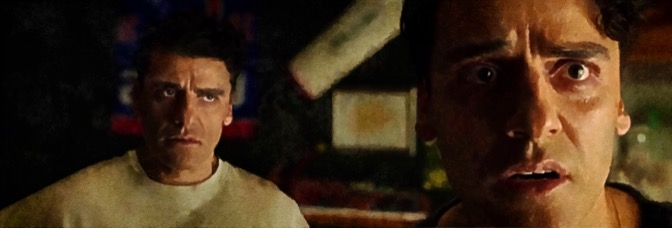
  • Moon Knight (2022) s01e06 – Gods and Monsters

    So, “Moon Knight” finishes considerably worse than expected. It’s got a bad ending, but the ending isn’t anywhere near the biggest problem. It’s got some—well, a—a missed opportunity. They underuse Antonia Salib’s character, who only appears in a couple scenes, one in long shot, but talks to May Calamawy through corpses and then her body, never appearing. It’d have been cool if Salib’s hippo goddess had appeared and Calamawy had gotten to interact with her.

    Instead, Calamawy mugs her way through a superhero origin scene, and, wow, is she terrible. Calamawy’s superhero arc in this episode is easily the most successful thing, even though it’s absolutely pointless because director Mohamed Diab is even worse at directing two good guys fighting a bad guy than he is one-to-one. He’s so bad. So, so bad.

    And if Diab’s direction weren’t terrible, the episode might squeak by, even with the execrable writing (credited to Jeremy Slater, Peter Cameron, and Sabir Pirzada). Diab manages to make a kaiju fight boring, which is never a good sign. Admittedly, he’s got talking kaiju—F. Murray Abraham’s bird god and his nemesis, a crocodile god, voiced by Saba Mubarak—and the performances are ghastly. Abraham’s not good in “Moon Knight,” he’s particularly bad in this episode, but he’s at least got some personality. Mubarak’s just as bad, with absolutely none. She does get some of the worst writing I’ve sat through in a while; I do need to be fair on that point. It would take one hell of a performance to get through that dialogue. Not even Ethan Hawke can rise above the material like usual this time. He ends up covered in Slater, Cameron, and Pirzada’s excrement, too, dripping off of him, line by line.

    But he’s not atrocious. Abraham and Mubarak are atrocious, and, frankly, whoever directed their performances is incompetent. Diab or whoever. They’re voice performances. Have them do it again until it’s not terrible. Hell, hire a random person off the street. Hell, use Siri. Like, anything would be better.

    Actually, given Mubarak implies she at least likes Abraham enough for them to be co-rulers of the world, do it funny. Get a couple to do it. Make it a bit. Something. Anything. Anything with some personality. But no. Because it’s “Moon Knight,” and the only personality they want is Oscar Isaac talking to himself in different voices. And even then, not too much, in case he’s accidentally good, and someone wakes up long enough to realize what they’re watching.

    The writing’s also incredibly lazy. It’s like they heard the “Indiana Jones doesn’t matter to Raiders’s plot” thing and thought they should ape it. How does the episode resolve the Gordian cliffhanger from last time? It’s fine; Calamawy hangs around Harrow, who takes her through the level.

    In a different superhero show or movie, Calamawy might work out with her new superhero thing. She goes from zero to hero immediately; there’s no onboarding process. Less bad writing, mildly competent direction, she might work out. Not here. No, not here.

    Isaac and Hawke, who have spent the series posturing like they’re developing characters, eschew such ambitions for the finale. Maybe passively; the writing eschews any acting ambitions for them. It’s worse for Hawke; Isaac’s in the franchise now, so there are limits; Hawke could’ve done something, and instead, he gets a terrible fight scene—there’s no superhero fight like Moon Knight, Hawkgirl (oops, sorry, Isis, oops, sorry, Wing Lady), and Cane Guy. It doesn’t have to be terrible because the characters are silly-looking together. Diab’s just maladroit at directing action scenes.

    There are a lot of experienced actors in this show—Abraham, Hawke, Isaac; lots of years, lots of nominations (only one Oscar, but still), lots of experience. Salib acts circles them, and everyone else. With a voice performance, with maybe twenty lines. Hopefully, Hawke got a new swimming pool or something. And Isaac will get to be in New Avengers: Endgame Part II or whatever (not the A-tier, but the backup plan). But, wow, “Moon Knight” sucked.

    It’s a shitty show. Like , Moon Knight’s a dull, pointless comic. But it’s a shitty TV show.

    Egads, it’s a shitty TV show.

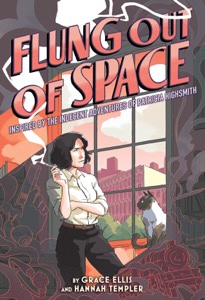
  • Flung Out of Space (2022)

    Flung

    There’s an unfortunate yikes factor to Flung Out of Space. The graphic novel recounts author Patricia Highsmith’s early 1950s experiences as comic book writer turned famous mystery author who just happens to be gay at a time, as dudes love reminding her, it’s a crime. Unfortunately, Highsmith was also a bigot. And the way Flung shows it is to have her make Jewish jokes about people all the time, including Stan Lee. If there’s a way to do a rousing biography about bigot… writer Grace Ellis sure didn’t find it here. There are fewer bigot one-liners from Highsmith in the second half, which helps, but I can’t believe this way of dealing with it was the best anyone could’ve come up with.

    Especially since the author’s note talks at length about the decision to include the one-liners. And, more problematically, says the comic’s not going to treat Highsmith as a hero.

    I mean, maybe not as a hero hero, but definitely an anti-hero.

    Anyway.

    It’s a mostly exceptionally well-done comic. Artist Hannah Templer does outstanding work. There are numerous excellent sequences with great visual pacing. Ellis wraps the whole thing up with a nice echoing device—Highsmith’s character motivation until she publishes Strangers on a Train is to therapy herself out of being gay, so the comic’s about her arc towards not trying to pretend to be straight. Along the way, she has a great romance, talks shit about comics a lot, and becomes a renowned American author (who apparently didn’t like Hitchcock very much for some reason).

    Ellis skips over whatever Highsmith’s problem was with Hitchcock—it’s a one-liner—along with various other seemingly pertinent events (or at least dramatic ones) to do a star-crossed romance montage. Highsmith’s second novel is a lesbian love story inspired by her experiences with a woman from her group therapy, and the whole experience is profoundly affecting.

    Especially since there aren’t any more bigot one-liners. It’s unclear why they stop too. More pleasant, but not more factual (the author’s note alludes to Highsmith’s racism, but there aren’t any Black people in the story, so… again, whatever the way to do a bigot bio, Flung ain’t it).

    Flung does take a lot of shortcuts. There are no real examples of Highsmith’s writing—we’re just supposed to take conventional wisdom’s word for it. Whenever she’s writing Train, Templer inserts these visual asides, splitting the page between the real world and her imagination. It comes back later with daydreams and actual dream sequences. The daydreams tend to be effective, the actual dream sequences not so much.

    There is good dialogue from Ellis, some great cat jokes, and excellent art from Templer. Flung ought to be a no-brainer to recommend, but it comes with a bunch of caveats. First, the bigotry lesson: if you just ignore someone’s bigotry enough, it’s Jim-dandy. And then, the whole “comics suck, and people who read them are losers” message of this… comic book. It’s a tricky proposition, and Flung’s technically outstanding.

    But.

  • The Karate Kid Part III (1989, John G. Avildsen)

    There’s no way to talk about Karate Kid Part III without, pardon the expression, kicking it while it’s down. There are no good performances, no good technical aspects, no interesting writing, nothing. Pat Morita doesn’t humiliate himself, mostly because he seems disgusted at the whole thing, which is at least understandable.

    The film takes place sometime after Part II, with Morita and Ralph Macchio returning from Okinawa in time for Macchio to start college. However, Macchio doesn’t start college; instead, he takes his tuition and starts a bonsai shop for Morita. The bonsai shop is ostensibly Morita’s life’s dream, forgetting the last movie when he was going to bring his long-lost love back to the States with him. They don’t address that change—nor how his old rival was going to rebuild their village, something Morita apparently paid for somehow—but they do mention Tamlyn Tomita had something better to do than show up for Part III. Another Macchio love interest who leaves him hanging just when the next movie’s about to start.

    It opens Macchio up for a not-romance with Robyn Lively, who’s somehow exceptionally bad but nowhere near as bad as most of the performances. There’s no romance because Lively’s too young in real life to have almost thirty Macchio groping her, even though she’s seemingly playing older than him on screen. Also younger than Macchio but playing older than him is main villain Thomas Ian Griffith. Griffith’s an old Vietnam buddy of Martin Kove, who’s only occasionally in the movie because he had a real job at the time.

    Kove’s better than anyone besides Morita in the movie, including Macchio, but he’s still far from good. He’s just not cartoonishly absurd like Griffith and the other bad guys. Those other bad guys are the bad karate kids; well, Sean Kanan (holy cow, he got another job after this movie; don’t let anyone tell you white guys don’t fail upward) is a karate kid. Jonathan Avildsen (director Avildsen gave his son a part, and Avildsen fils is one of the worst actors to appear in a studio theatrical release ever) and William Christopher Ford are apparently the teenage boys wealthy industrialist Griffith keeps around his house for beating up during his karate practice.

    The movie’s first hour is all about Macchio and Morita trying to get the bonsai shop off the ground, but Kanan keeps beating up Macchio to get him to sign up for a karate tournament. It’s part of Griffith’s revenge plan. Then, after the bad karate kids tell Macchio—amongst other things—they’re going to rape Lively, Macchio relents and agrees to the tournament fight. He ends up training with Griffith because Morita doesn’t think you should do karate just for a tournament. It’s unclear what Morita thinks they should do about Kanan terrorizing them, but since the whole bonsai shop seems like something Macchio forces Morita into… maybe it’s just no big loss.

    Again, Morita’s not engaging with this movie. In a film with occasionally phoned-in performances (they couldn’t bring Randee Heller back for actual scenes, so she cameos during a phone call), it’s not a surprise.

    Macchio and Lively talk a whole lot, jabbering their way through scenes; Part III has a risible script, but Avildsen’s direction’s even worse than Robert Mark Kamen’s writing, which is a feat. Avildsen’s composition is uninspired, tedious, and rarely even middling, but his direction of the actors is a film crime. Maybe Morita’s supposed to be mirroring Avildsen’s attitude.

    Whatever.

    Terrible Bill Conti score.

    Karate Kid Part III’s the pits. It’s mostly just Macchio convincing everyone the first movie was a fluke, and franchising it was a terrible, terrible mistake.

  • The Karate Kid Part II (1986, John G. Avildsen)

    Towards the end of the first act, Ralph Macchio and Pat Morita have a potentially great scene. The best friends have traveled to Okinawa so Morita can see his dying father (Charlie Tanimoto, in a less than nothing part). Morita’s sad, pensively looking out at the ocean, and Macchio’s got some perspective to share. Macchio’s father died (at some point before the first movie), so now he’s the wiser one in the pair.

    While it’s a big swing in a film of big swings, it’s also a good, unique big swing. And then Robert Mark Kamen can’t actually write the scene because he’s got nothing to say in it or any other part of The Karate Kid Part II. It’s a singularly floundering motion picture.

    The first nine minutes of Part II recap and conclude the previous film, bringing back Martin Kove as the bad karate teacher. He’s abusing his loser students, and Morita has to intercede to save the day. Would it have worked better last time? It’d have had a point; there’s only so much they can do with it here because, since the first movie, Kid’s lost the female presence. Neither Elisabeth Shue (as Macchio’s girlfriend) nor Randee Heller (as Macchio’s mom) appears. Outside first movie footage. It’s okay, though, because Macchio will meet a new girl in Okinawa and the first movie barely had Heller, so a sequel would need her less. Especially since Macchio and Morita are globetrotting.

    After the first movie wrap-up, Part II spends another ten minutes setting up Morita’s ground situation back in Okinawa. This film dumps Morita, the widower, which the previous film established and used to set up Macchio as a surrogate son. It doesn’t retcon it, just ignores it. Because Morita’s spent his entire life mooning over his girlfriend from teenage years, played by Nobu McCarthy. He had to run away from Okinawa and leave her because her arranged marriage husband-to-be Danny Kamekona wanted to fight Morita to the death. Oh, also, Kamekona was Morita’s best friend. And Tanimoto taught them both karate as kids because Morita insisted. It’s a bunch of setups with very little pay-off because Morita never actually gets anything to do. He gets to observe action sequences and do some terribly choreographed and shot karate, but his “returning home” arc happens primarily off-screen. Macchio sometimes sees it from afar, which just draws attention to it not being part of the movie.

    Though if they did make it more part of the movie, Part II would probably bungle it, like Macchio’s romance with Tamlyn Tomita. Tomita and Macchio get several outing and date scenes, but their romance arc is wanting. Tomita’s got a lot to do—including play damsel in distress a couple times—she just doesn’t get a character to do it with. She does get some scenes with Macchio explaining the way the world works. Karate Kid Part II’s got a weird American jingoism going on. It’s like someone wanted to make negative commentary, but then none of the other creatives understood what was happening. It’s an embarrassing oversight.

    The Tomita thing is a waste of time, at least as character development goes. Instead, it does its job as a walking tour forecasting the rest of the movie.

    Yuji Okumoto plays the villain. He’s Kamekona’s best karate student and so starts picking fights with Macchio, with Macchio not understanding Okumoto’s not a rich kid bully, he’s a potential murderer. Okumoto puts up with a lot of silly with his character, and it’s impressive he can keep it together by the end.

    Much of Karate Kid Part II plays like a TV show; the characters are thin, and the events are frequent.

    There aren’t really any standout acting performances. Morita’s okay with what he’s got, but it’s not enough. Macchio’s a kid on an unexpected vacation, and sometimes it does feel like his movie, not often. Even the fight scene finish complicates things to take it away from Macchio and Morita’s relationship. It takes a back seat to Morita’s rekindling with McCarthy, which (again) is seen through Macchio from afar.

    Not a good script, but even worse: lousy plotting.

    Better anything technical would help. Avildsen’s direction is barely competent, with he and cinematographer James Crabe (who was so good on the first one) zooming in on all the action. Maybe wider shots would reveal the “Welcome to Hawaii” billboards giving away they’re not in Okinawa. Avildsen’s particularly bad with the fight scenes. Also, he appears to have told villain Kamekona to talk like Cookie Monster.

    Bill Conti’s music is terrible, repetitive, and annoying. The omnipresent flute is near intolerable, and the only good bit of music sounds like leftovers from Conti’s F/X score.

    The good guys are all sympathetic—Morita, Macchio, Tomita, McCarthy—but it’s a long movie with nothing going for it but sympathetic characters.

  • The Karate Kid (1984, John G. Avildsen)

    The Karate Kid runs out of movie before it runs out of story. The film’s been steadily improving on its way to the third act, culminating in a showdown between Jersey transplant (to L.A.) Ralph Macchio and his bully, William Zabka. There’s a lot of angst to the rivalry; they first tussled when “alpha” Zabka caught Macchio flirting with his ex-girlfriend, Elisabeth Shue, but then it also turns out Zabka’s a rich kid, and Macchio’s not. The film’s first act is Zabka and his goons escalating their bullying—it’s assault real quick—before Macchio enlists the aid of his own karate expert, Pat Morita.

    Actually, Morita saves Macchio when Zabka and his pals are trying to beat him to a pulp. Morita tries to handle it maturely, going with Macchio to confront Zabka’s teacher, only to discover he’s getting all the violence and aggression from that teacher, played by Martin Kove.

    Zabka, Kove, and the rest of the goons are phantasmic villains in the second act (Morita says they’ll have a showdown at the local karate tournament, so no one can beat on Macchio until then), giving Macchio time to learn karate. And also have a rich girl, poor boy romance with Shue, which has its own foils before working just in time. It’s all right, though; Macchio and Shue—neither teenagers, both playing teenagers—are cute together, and Shue manages to imply a lot more character than Kid provides her.

    Kid doesn’t provide anyone much character, really. Morita gets the most backstory. After spending the first half of the movie sometimes dispensing comic wisdom to Macchio, the film reveals his tragic history. However, it does mean Morita pretty much sat around for forty years waiting to play mentor to a random kid. It’s effective, however, because Macchio and Morita have great chemistry. It’s kind of the only good thing director Avildsen does in the film, which starts in a hurry and somehow manages to finish even faster, but the Macchio and Morita friendship is outstanding. Thanks to their on-screen rapport, not the writing of it. Robert Mark Kamen’s script doesn’t do character development. For the majority of the cast, they don’t even get character.

    For instance, Macchio’s mother, Randee Heller, moved the two out to California so she could get a job at a computer start-up. Apparently, she ends up managing a restaurant without ever starting the computer job, but it doesn’t matter because she stops being in the movie for the second act. She shows up three-quarters of the way through the tournament in the third act, seemingly just so Macchio can act tough to her when injured. I’m pretty sure she doesn’t even watch him compete.

    Similarly, Macchio doesn’t have much of a character arc either, despite making an “only in the movies” best friend, learning karate, and dating Shue. The film takes place over three months; the first act speeds through that first month, then the next two comprise the second and third acts (there’s an inexplicable opening title card telling us it’s September, a device the film never employs again). Even though the film’s got its editing problems, it’s reasonably impressive how quickly they move things along at the beginning. When Macchio and Morita finally start their karate training plot, it feels like an entirely different movie (their friendship starts before the karate).

    Acting-wise, Shue’s the easy best and only because she occasionally does something subtle. Macchio and Morita are likable, both flexing in broad roles, but they’re never really good. The script gives Macchio way too many mugging for the camera bits. Kove and Zabka are hiss-ready villains with no real depth, though at least they try a little with Zabka. But more because he’s a rich kid like Shue.

    Good photography from James Crabe; it carries a lot of water for Avildsen’s bland direction. A competent but uninspired score from Bill Conti doesn’t help things, but it’s better than the pop soundtrack, which provides only one good montage backing (Young Hearts by Commuter). The rest of the songs are very trite eighties stuff.

    The last finale’s a hurried, truncated mess, but Karate Kid could be a whole lot worse. Macchio and Morita more than make up for the rest of the film’s bumps, but they can’t help with the finish. Mainly because they’re not in it enough.

  • Moon Knight (2022) s01e05 – Asylum

    Some of this episode of “Moon Knight” is the best written the series has been. There’s also an all CGI Egyptian goddess of childbirth and fertility who’s an anthropomorphic hippopotamus and is absolutely adorable and should have her own show. Voiced by Antonia Salib, the character should’ve narrated “Moon Knight” or something. It’d have made the show a lot more entertaining.

    So, even though there’s the adorable CGI hippo lady and some compelling writing, it’s also definitionally the least exciting episode of the show so far. As Ethan Hawke brings about the end of the world in the real world, Oscar Isaac—both versions, the angry mercenary, and the hapless Brit—are on Salib’s sail barge in the Egyptian underworld. They’re dead and on their way to the afterlife, which will be Hell if angry Isaac doesn’t tell hapless Isaac all their life secrets via interactive flashbacks. At some point in the episode, everyone decides it’d be better if Salib helps resurrect Isaac so he can save the world—“Moon Knight”’s best punchline at this point would be Isaac being too late but Thanos’s snap foiling Hawke’s plan.

    How will Isaac get back to life? Unclear because he’s still got to go through his flashbacks. Instead, hippo goddess Salib is going to get a message to May Calamawy (who does not appear in this episode) in the real world and tell her to free F. Murray Abraham from his statue prison, which would require her to break into the Great Pyramid of Giza and defeat the Egyptian gods in doing so. Abraham will then be able to resurrect Isaac or something. This part of the episode is not the better-written part of the episode. Quite the opposite. Especially since they rush through it because they know it’s hurried nonsense.

    “Moon Knight”’s also only got one episode left, which means… whatever happens when Isaac saves the Marvel Cinematic Universe next time isn’t going to be elaborate. There’s just not time for it. The only thing it’s guaranteed to be is disappointing. Because even the hippo lady ends up being disappointing. She’s not in the episode anywhere near enough, and the opening suggests she’s a bait and switch, something to get you back for yet another tedious entry. Because while Isaac and Isaac are journeying through flashbacks to reveal the truth, one or the other Isaac is also “leaping” to the delusion where Hawke’s a psychiatrist trying to help Isaac with his problems and not a C-tier Marvel villain.

    Now, Hawke’s still great, and his getup this episode, which hapless Isaac describes as “Ned Flanders,” also reminds of Stan Lee. Hawke should do a Stan Lee biopic. And Isaac’s also great. At times. That “series best” writing is just giving Isaac enough to act off, especially since he Parent Traps it through most of the episode; sometimes, there are two great Isaac performances at once. Not often; usually, it’s one or the other (for some reason, hapless Isaac’s a little taller than angry Isaac), but sometimes.

    The flashbacks focus on Isaac’s abusive mother, Fernanda Andrade (sort of), and she’s a one-note movie harpy mom. Dad Rey Lucas makes more of an impression, but only because he’s costumed to look like Rick Moranis, which would’ve been an excellent casting get. Pointless, but at least amusing.

    Abraham, who sat out last episode, has one scene this time, and he’s terrible as always. His casting is another one of “Moon Knight”’s bewildering questions, along with how’d such a boring show get greenlighted and why’d they hire Mohamed Diab to direct any of it. At least there aren’t any fight scenes for Diab to screw up, but still. It’s a profoundly pointless production.

  • 709 Meridian – 3×1 – Jaws: The Revenge (1987)

    3×1 – Jaws: The Revenge (1987) 709 Meridian

    Season three begins here! As may be the norm for men of a certain age, D and Andrew once again find themselves watching Joseph Sargent's 1987, JAWS: THE REVENGE, and, once again, find themselves asking the same question… why are they watching this damn movie.

    WHERE TO LISTEN

    Apple Podcasts
    Spotify
    Stitcher
    RSS
    YouTube
  • The Equalizer (2021) s02e16 – Vox Populi

    Right up until the ending, which resolves Tory Kittles’s recent professional turmoil story arc–two racist white cops kidnapped him and tortured him because they thought he was just a mouthy Black guy, not a Black cop—this episode’s one of the best “Equalizer” episodes.

    It’s also something of a “gimme” episode, just because of the structure. Lorraine Toussaint is on a jury where the evidence doesn’t make sense, and it certainly seems like the cops are railroading a Black defendant (RJ Brown). Brown’s accused of raping and murdering a white woman. The episode comes real close to talking about systematic racism (especially for CBS), and there are numerous “gotcha” moments where the white jurors catch themselves being a little racist. It’s always unintentional and without actual malice, but the moments are there. Toussaint’s great and rarely gets enough to do on the show, so having her be the de facto client this episode is excellent.

    Of course, Toussaint doesn’t know Queen Latifah’s investigating the case. Latifah knows Toussaint’s not happy with the evidence or the prosecutor’s case; Latifah tells sidekicks Adam Goldberg and Liza Lapira (neither of whom gets much to do) Toussaint wouldn’t have complained if she didn’t want Latifah to do something. Still, it’s never actually made clear Toussaint had that motive. So while Latifah’s trying to figure out if Brown did it, Toussaint’s playing 12 Angry Men with the other jurors.

    Sam Pearson, James Adam Lim, Rosa Arredondo, and John Bedford Lloyd are prominent other jurors. Pearson and Lim are more sympathetic to Toussaint; Arredondo and Lloyd are the most antithetic. Lloyd’s better playing the whole jerk than the conflicted one, but Toussaint keeps their exchanges rolling even when his resolve starts slipping.

    Kittles helps Latifah out with the investigation, seemingly setting him up for one future plot arc only to flush it for another incredibly problematic one. At least he’s not leaving the show. And hopefully, he and Latifah get to keep being cute together going forward. But it’s a letdown, especially after all the time the episode spends setting him up for something else.

    Laya DeLeon Hayes has a mostly offscreen subplot about Latifah feeling bad Hayes has to lie about her mom being “The Equalizer” (to her dad, Latifah’s ex-husband). Unfortunately, given the show seemed to be setting the ex up as a permanent foil, the arc plays reductive. Similar to Kittles’s whole thing.

    Nitpicking about future plotlines and multi-episode arcs aside, it’s a strong episode. It’s a Toussaint one. How could it not be?

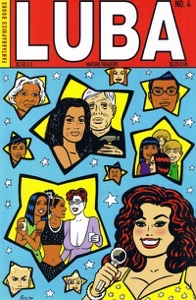
  • Luba (1998) #4

    Luba4

    I was initially lukewarm about this issue—well, as lukewarm as one can get about an expertly executed, inspiredly plotted comic—but I’ve come around. Sort of. The issue’s got two big features, with the Luba one coming in at fourteen pages (give or take a splash page), which is the most space creator Beto Hernandez has given anything in the series so far. It also does a whole bunch, as Beto looses Luba on her family. They’ve been apart for most of the series, and the reuniting last issue was about seeing the little ones and husband Khamo.

    In her story this issue, Luba discovers all the soap opera drama the adults have gotten themselves into while she’s been away.

    Beto uses Luba’s daughter Doralis’s variety show for structure. Doralis is showing her mom the rough cut of a very special episode, all about Luba and her history. The story then slips into Luba’s daily experiences, like meeting up with Khamo for a quickie after he gets done informing on drug connections (a requirement of getting him into the U.S.). Luba also hangs out with her sisters, Petra and Fritz, and comes away exasperated at their lives. Next, she’s got a lovely scene with daughter Guadalupe, who’s very sweet but also bores Luba. Finally, Beto gets in a scene for estranged daughter Maricela; she’s on the phone with Ofelia (Luba’s cousin and life guardian). Their conversation rattles the fourth wall while the entire story fuzzies the narrative distances.

    It’s an outstanding fourteen (or thirteen minus the splash) pages. Beto plays with history, memory, relationships, all of it. After letting the supporting cast run rampant, he firmly re-establishes Luba as the protagonist. Except it’s also the story where Doralis comes out to her mom, something the comic’s been plotting all of this Luba series and way back to Love and Rockets. Lots of culminating; Beto does a fantastic job with it.

    So for the first couple of pages of the following story, there’s a lull. There’s no filler between the stories; it’s the end of this long chapter in Luba and her family’s life; immediately, it’s the fallout from Pipo’s perspective. Pipo produces Doralis’s show, and the gossip columns already know she’s coming out before the episode’s aired.

    The story doesn’t have a protagonist; it floats (with intention) between Pipo and her supporting cast. Her son Sergio says he’s in love with Guadalupe but is dating Guadalupe’s aunt, Fritz. Pipo confesses a crush on Fritz to her new accountant, Boots (who’s kind of the protagonist, but also not). Pipo used to be married to Guadalupe’s husband, Gato, who’s also Pipo’s former accountant and hangs around to give Boots advice on things. Boots has taken it upon herself to find out who’s leaking the information to the gossip rags, which it turns out calls back to the New Love series.

    It’s another very complicated story, with exceptional plotting from Beto, both visually and narratively. Even better than Luba’s feature, which doesn’t seem possible. Beto creates a singular comics montage system in the first story, with the second story then expanding on its potential. Breathtaking work.

    So when the last interior comic is a one-pager about Guadalupe and Luba, a daughter and mom piece, it has a deflating effect. Beto got over the lull between features through masterful comics. Unfortunately, there’s no time to get over the second story in the one-pager. There’s just not room. Even though it’s a lovely strip for Guadalupe, who narrates.

    The back cover color comic is Fritz and Sergio playing in the snow with her nieces, which leans into the color format more than Beto’s done with the color strips before. It’s delightful and charming, which is pretty much the reaction from the characters too.

    The features are exceptional. There just isn’t any way to compliment them with one-page strips.

    Beto’s also very prescient about digital backdrops in live-action media, albeit ten or fifteen years early. For the special, Doralis keeps explaining they’re using CGI to create the settings, which was magic through technology at the time—though, Star Wars: Episode One—but it’s now standard.

    Anyway.

    Truly great comic. Even if it sits awkwardly in the end.

  • Onesies – 2×7 – Freaks and Geeks

    2×7 – Freaks and Geeks (1999), Part 7: Episodes 13-14 Onesies

    Emily and Andrew discuss Freaks and Geeks's most ambitious story to date, along with the culmination of the first crush arc, the most political the show's gotten, the sad realities of bad writing and bad acting, along with the continued "no notes" glory of Martin Starr.

    WHERE TO LISTEN

    Apple Podcasts
    Spotify
    Stitcher
    RSS
    YouTube
  • Tangerines (2013, Zaza Urushadze)

    Tangerines has such a profoundly straightforward plot and limited cast I expected it to be a stage adaptation. It’s not; writer and director Urushadze just knows how to perturb character development without theatrics. The film’s about the War in Abkhazia, but its protagonist isn’t Georgian or Abkhaz, rather an Estonian. The film itself does a fine job laying out the complicated particulars of the ground situation (with one lingual exception); I’m going to try getting straight to the film proper without recapping Wikipedia here.

    The protagonist is carpenter Lembit Ulfsak. He makes crates for neighbor Elmo Nüganen, who is a tangerine farmer. They live in a now otherwise empty village; they’re both from Estonia; the village was mostly or entirely Estonian immigrants; everyone else has gone back to Estonia since the war broke out. The only time the film leaves the road where Ulfsak and Nüganen live is to go around the bend to the other side of Nüganen’s plantation. So it’s very finite, very focused. Urushadze keeps the film incredibly constrained, though it also shows how big the men’s worlds can feel.

    The film starts with Chechen mercenaries, led by Giorgi Nakashidze, hitting Ulfsak up for food. The Chechens are just passing through. Nakashidze interrogates Ulfsak about his allegiances and history, but it’s not a bad encounter. It could’ve gone much worse, which Urushadze never describes in dialogue; instead just permeates through the mood. In fact, the Chechens are so satisfied with Ulfsak and his food donation they don’t even bother neighbor Nüganen.

    Except when there’s finally fighting, it’s in front of Nüganen’s. The Chechens, in a jeep, have a firefight with some Georgians in a van. There are two survivors; one is Nakashidze, and the other is Georgian Misha Meskhi. Ulfsak’s going to help both of them, with Nüganen somewhat reluctantly assisting. Nüganen’s got to get the tangerine crop picked before the war reaches them and makes it impossible, so he’s busy. Ulfsak’s got to make him crates in time for the helpers Nüganen’s arranged; the timing provides Tangerines a built-in structure, which is a nice move. And one of the reasons the film feels like a stage adaptation. Even though the film’s cagey about the ground situation, it’s incredibly robust.

    Ulfsak and Nüganen enlist local doctor Raivo Trass—another Estonian heading home any day now—who manages to get both soldiers stable enough to recover. Nakashidze wakes up first and is very unhappy to hear Ulfsak’s housing enemy Meskhi, though once Meskhi joins the action, he’s not much happier. In fact, he’ll prove more actively hostile.

    The first act sets up the impromptu recovery ward, including some specifics about how Ulfsak keeps house and the relationship between Ulfsak and Nüganen. The second act starts with Nakashidze and Ulfsak continuing their arc from the first scene, the two men learning more about one another, though each has hard limits on how much they’re going to share. However, once Meskhi’s well enough to join everyone in the kitchen, Nakashidze’s hostility towards him puts he and Ulfsak’s quasi-friendship in immediate jeopardy.

    Because Nüganen’s got nowhere else to go (and no one else to see), he hangs out with them too, which doesn’t aggravate the situation as much as emphasize its tensions. Nüganen’s the impartial observer. He’ll eventually get a character development arc of his own; the film starts the work on it early. Of course, Urushadze always starts work early, deliberately laying the foundation for where the film be headed later on. A lot is going on with Tangerines, obviously. The film addresses stoicism, toxic masculinity, jingoism, religiosity, and bigotry, but never outside the context of its characters. The men are also incredibly private. Nüganen knows Ulfsak’s backstory, but there’s no reason for him to exposition dump to get ahead of Ulfsak wanting to share it. Nakashidze and Meshki are both tangled clumps of unasked questions and refused answers. The film doesn’t unravel them; it reaches in and pulls out one or two strands to examine before returning them to the mess.

    As a director, Urushadze’s got a remarkable, fervent confidence in his actors. He asks a lot of them for the film’s runtime, only escalating as it progresses—at the start, he’s only really worrying about Ulfsak and Nakashidze, but then adds Meskhi and Nüganen’s performances to the mix. The actors have to do the exact right amount of character development—usually in how their expressions change throughout a scene; even when they get to do something (relatively) theatrical, Tangerines brings it back down to the character observing how the other characters are experiencing that behavior. The hardest part is Ulfsak’s, especially since he’s got the most mystery to him. The best performance is probably Nakashidze, but it’s also the showiest. Meshki, who starts the film silent, is then the most impressive because his recovery’s often onscreen and dramatic.

    It’s excellent direction from Urushadze, especially since the first half of Tangerines is deliberately understated. His composition is usually about helping the performances along, only occasionally zooming out to give a physical context. Actually, after the first act—when they’re still dealing with the firefight’s literal damage—Urushadze might not use any expositional long shots at all. It’s all about the characters and their experiences of the events.

    Great photography from Rein Kotov and production design from Tea Telia. Alexander Kuranov’s editing is notable in its unassuming naturalness. Similarly, whenever the film needs Niaz Diasamidze’s music, it’s right on, but it doesn’t need it often.

    Tangerines starts pretty good and keeps getting better. The third act is phenomenal and elevates the film even more. Urushadze doesn’t really bring everything together so much as reveal the two everythings going on—the four men stuck in a challenging but not inherently dangerous situation, the war around them—and how those two threads are tragically inseparable.

    It’s a great film. Urushadze, Nakashidze, Ulfsak, and Meshki all do outstanding work.

  • Moon Knight (2022) s01e04 – The Tomb

    The Tomb opens with a surprisingly well-directed suspense sequence as May Calamawy tries to escape the bad guys. It’s even more surprising because Justin Benson and Aaron Moorhead are directing this episode, and they were terrible on the last one they did. Eventually, the direction becomes a lot more middling—eventually being about five minutes—but for a while, at least “Moon Knight”’s disappointing in one fewer quadrant.

    And this episode might be the best. There aren’t any lousy fight sequences, mainly because Oscar Isaac no longer has F. Murray Abraham possessing him, so he can’t do costume stuff. The moments where Calamawy and Isaac moon at each other (no pun) are more effective than I was expecting, especially since Calamawy’s got the hots for hapless Isaac’s personality, even though she married badass Isaac. We get some backstory on their courtship and badass Isaac’s motivations for seeking her out. It’s pat, forced material, whereas hapless Isaac infatuated with his literal alter ego’s wife is at least quirky.

    Albeit boring, because it’s still “Moon Knight,” after all.

    The episode’s about Isaac and Calamawy getting to the—you guessed it–Tomb level in this video game of a television show. There are actually not a lot of video game action sequences, except the one where Calamawy’s got to hop across ledges. There’s actually a lot of great Egyptian tomb production detail. The NPCs in this episode are zombies? We don’t get to see them, but they’re zombie Egyptian priests set to turn anyone living into a mummy, except Ethan Hawke and his mercenaries. It’s unclear if Hawke knows about the zombies and why they don’t bother him and his gang.

    Hawke’s got a great villain monologue. The performance anyway. The content’s not good at all and leads to a pointless (“Moon Knight”’s keyword) scene between Calamawy and Isaac. But at the very least, Hawke’s reliable. Is he enough to make “Moon Knight” worth watching? Heck, no. But he’s excellent.

    However, the show finally figures out a way to connect with the audience. It just has to pretend it’s something it hasn’t been in four and a half episodes, shucking everything it’s done until now to do a Twelve Monkeys rip-off. Even if the episode didn’t end on two strong points, one because of Parent Trap-like twins’ banter, one because of a sight gag, the Twelve Monkeys stuff would be the best the show’s ever been.

    When the best you’ve ever been is the least you’ve ever been like yourself….

    Also, there’s a really brief sequence of F. Murray Abraham’s statue being put in the prison with the other Egyptian gods turned into statues, and there are a whole lot of them. The Marvel Cinematic Universe version of Ancient Egypt looks very packed. Maybe they can do a Thor crossover, after all.

    At this point, I’m guessing the only actual MCU connection will come in the last episode’s end credits, some giant shoehorn.

    The next episode should at least be more engaging than usual. Unless they don’t deliver on their promises, which seems more likely the more I think about it, so I’ll stop.

  • Luba (1998) #3

    Luba  03

    Creator Beto Hernandez again opens the issue with a roll call, separating out Luba’s kids, her extended family, and, finally, Pipo and her assorted boys. The roll call’s important primarily for Socorro, who last issue’s cast list didn’t identify by name. Socorro’s going to have a reasonably big story this issue.

    But, first, there’s the Luba feature. She’s still trying to get husband Khamo into the U.S., but she just happens across a beautiful dude on the beach, and he’s more than happy to temporarily bump uglies. Beto combines a moody piece about Luba’s desires with the pragmatic; she meets up with Doralis and Pipo (who are the ones who got Khamo in, it turns out), goes home to her kids, waits for Khamo to arrive. It’s an excellent, dreamy mix.

    Beto keeps Doralis’s coming-out subplot going, with she and Pipo briefly discussing it, and there’s a perfect single panel of Ofelia and Luba back together. The issue’s got a lot of deep cuts to old Love and Rockets throughout, but in this story, it’s very much about the tone. Again, Beto does a great job with it, especially how the family reuniting works out; his narrative distance to Luba is sublime.

    The second story is a flashback to Khamo’s life before Luba and his disfigurement. It’s equal parts comedic, horrifying, and dramatic. His problems started as a kid, with a profoundly abusive mother, and then his teens are this often amusing montage of a fake revolutionary. The story is titled Poseur, after all.

    The most startling scene is when Beto brings back Tonantzin in one of the flashbacks. Tonantzin’s death is one of Palomar’s breakpoints; there’s before, there’s after. So seeing her just having a chill conversation is jarring, especially knowing what’s coming immediately after. But in a good way.

    Beto also does a good job playing with never showing Khamo talking; it’s one of the character hallmarks, and Beto figures out something nice to do with it. A little emotionally rending, sure, but nicely done.

    There’s a lot of great art on the story, which covers decades and various locations. Just phenomenal pacing.

    The following story is a one-page Ofelia strip where she talks to some admirer about media criticism. It’s a great, mostly monologue piece, with a lot of Ofelia personality. Beto’s also got some excellent observations about how and why criticism works (and doesn’t). It’s lovely mood relief from the Khamo story’s intensity, plus there’s a nice Luba-involved punchline.

    Outside Guadalupe, the next story is Luba-family-free. It’s about Gato, Pipo, Guadalupe, Igor, and Sergio. Gato used to be married to Pipo and was Sergio’s step-father. Sergio’s convinced he and Guadalupe were tween first loves, but she doesn’t remember it that way. She’s now married to Gato. Before she married him, she dated Igor, who’s now with Pipo. That tangled mess is backdrop to Pipo needing a new accountant because Gato’s quitting to become a writer. So Pipo flies in Boots from Palomar; I can’t remember if Boots was around in Love and Rockets but she’s a perfect, strange, lovable Beto character.

    I’m low-key shipping her and Gato now, actually.

    It’s a soap opera story (Guadalupe even calls it one) and an excellent one.

    The last story in the issue’s a three-pager with Socorro. To some degree, it’s a Luba’s kids’ strip, opening with Casimira leaving the house (where Luba’s mad at Khamo about something already) and finding her younger siblings playing with fire. However, it quickly becomes a conversation about Socorro’s outstanding memory, which she thinks is because her real father is a serial killer.

    The other kids try to convince her otherwise with no success, but then mom Luba inadvertently fixes the situation by just being a good mom. It’s a very sweet finish to the issue, which has been a rollercoaster of unresolved past issues.

    The color strip on the back cover is Petra and Fritz at the beach meeting studs while the kids play. It’s the sisters’ only appearance in this issue. It’s a nice little strip, with Beto getting in some gentle humor and delightful color art.

  • 709 Meridian – 2×3 – Poltergeist (1982)

    2×3 – Poltergeist (1982) 709 Meridian

    Season Two Finale! D and Andrew finally get to 1982's POLTERGEIST (a.k.a. the only good one; not just good, great!). As they watch the film, they talk about pot-smoking parents, good eighties dads, Tobé or Stevé, great special effects, and the importance of whispering. Stayed tuned after the commentary to hear what's coming next season!

    WHERE TO LISTEN

    Apple Podcasts
    Spotify
    Stitcher
    RSS
    YouTube
  • Shazam! (2019, David F. Sandberg)

    At its very best, for a few minutes Shazam! seems like a Wes Anderson-esque superhero movie gone wrong. Like they lost the music they wanted at the last minute but had still cut the sequence together. Specifically, it’s Zachary Levi’s superhero training YouTubes, set to Queen’s Don’t Stop Me Now. The song has no meaning to Levi or the sequence. It’s just familiar in the right way. It’s desperate but competent, which describes most of the movie.

    The sequence is long enough to grok how they could’ve done the picture as an Anderson riff, specifically Rushmore, but then it’s more like they saw the MTV Music Awards Rushmore bits and didn’t realize there was a context. It’s a weird fail because it’s not exactly disappointing. Until the superhero finale, it’s the most effort director Sandberg puts into anything in the movie, and it shows. There’s thoughtfulness, just not successful thoughtfulness.

    Anyway.

    Shazam! is an inoffensively lackluster superhero origin story. The first act gets its personality from a John Glover cameo (hey, it’s better than his last DC movie) and then the unsuccessful but not bad Djimon Hounsou cameo. The film’s problem is little the actors actually interact with one another except to move the plot forward; deliver your lines, and get out. Sandberg doesn’t spend any time on the actors responding or reacting. It hurts the cameos just because there’s no weight when the actors return later on. No one’s got any chemistry; they’re just doing schtick.

    So it’s never a surprise when Sandberg doesn’t make it happen. When he does, however, it stands out. Like a Big reference in a toy store, but it comes after there’s no acknowledgment of the rest of the scene, which is superhero Levi basically throwing random children in front of supervillain Mark Strong. The most impressive thing about Shazam! is how many subplots they can avoid. There are at least three, probably more, with one presumably left over for the sequel. The others, however, just get dropped once they get to the third act.

    And Shazam! does have a good third act. Not the story, but the superhero action. It’s got an excellent superhero action finish, with plenty of cute Superman II nods. It’s shocking how well Sandberg can direct the sequences after the previous, bland hundred minutes. There are also some good, not specific to Levi’s superhero observations about the genre, like supervillains talking from far away and everyone recording on smartphones. Shazam!’s sadly more thoughtful in its background than its foreground, which is trite. Much like Sandberg’s direction, Henry Gayden’s script is perfunctory. There’s no such thing as character development in the script, with the film instead relying on the actors. Unfortunately, Sandberg’s got no time for the actors’ performances, so it’s just a bunch of rote deliveries of rote lines.

    So it’s impressive when actors stand out, like Faithe Herman and Grace Fulton. Okay, a quick explanation of the plot. Levi is the adult superhero version of teenager Asher Angel, who has just moved into a new foster home. Herman, Fulton, Jack Dylan Grazer, Ian Chen, and Jovan Armand play his foster siblings. Herman’s the adorable one, Chen’s the gamer, Armand’s the silent one, Grazer’s the superhero fanboy, and Angel’s pal. Grazer ought to have much better material, as he’s Levi’s sidekick in addition to Angel’s. But no. The only one to get a subplot is Fulton, who’s the oldest and going to college soon. Of course, the going-to-college thing is her subplot, but it’s something. There’s zip for the rest of the kids. Angel’s subplot is searching for his mom, Caroline Palmer, who lost him in the prologue.

    Angel and Levi don’t resemble much physically—white guys with brown hair, I guess—which would be fine if there was any effort in syncing their performances. There’s not. Levi’s playing a totally different teenager turned superhero adult. All they needed to do was establish a link between the performances, and it’d be fine. Instead, it’s where you can just give up on Shazam!. If the movie’s not going to take its central conceit seriously, why bother with any of it.

    Also, they talk about family so much they should’ve gotten a Vin Diesel cameo. Or at least had them watching Fast and the Furious. The villains are the Seven Deadly Sins, which makes very little sense because—even though the foster family says grace—it’s an ambiguous higher power grace. But if they’d had a bit about the kids watching Se7en….

    Shazam! just needed a competent rewrite.

    Levi’s amusing without being particularly likable. He’s a little desperate for approval, which should work better for the movie. Maybe if they’d have gotten the one cameo they really needed at the end. None of it ties to Angel or his performance; Angel’s never better than mediocre, but he never got the chance to be anything but mediocre.

    Strong’s terrible, but in a killjoy, unambitious sort of way. The film aims to keep him as unremarkable (literally) as possible. He’s dressed like a nineties Eurotrash villain, and the special effects on his supervillain sequences are good. It actually just plays into the Superman II riffs.

    The film’s technically proficient, just without any distinction. Thanks to the third act, I suppose Maxime Alexandre’s photography is the best technical.

    Shazam!’s tedious without being boring. It could be worse and seems to be the peak of the production’s capabilities. But it’s desperate, neglectful, and indecisive. So I suppose with all those caveats, it’s better than expected. And then, obviously, that third act’s great.

  • The Equalizer (2021) s02e15 – Hard Money

    With Chris Noth now dead and presumably buried, “The Equalizer” can move on to whatever’s next, which apparently involves introducing Queen Latifah’s ex-husband, Stephen Bishop. Latifah has to take a gunshot victim to Bishop for help—he’s one of the best surgeons in the city, and Latifah’s client can’t go to the hospital because the bad guys are after her—and Bishop’s very unhappy to hear about Latifah’s new gig as a… good guy. Especially as it relates to her parenting their daughter, Laya DeLeon Hayes.

    Hayes and Lorraine Toussaint get a beginning and end of the episode arc about being worried for Latifah’s well-being. Since she’s told them she can take care of herself, but then her mentor Noth got killed, maybe her equalizing isn’t as safe as she’s led on.

    Now, what’s really unclear about this arc is how much Latifah’s told Hayes about Noth’s death. Did Latifah tell her they were fighting a Bond villain who used a Bond weapon to shoot down an airplane? It might make Hayes feel a little better to know her mom’s usually just helping Dollar General employees who know too much about an inside counterfeit laundering job, not fighting Ernst Stavro Blofeld. It also doesn’t really matter because the episode resolves Hayes’s concerns, but only because dad Bishop’s going to get more involved.

    The A-plot—there’s really no B-plot other than Bishop caring for the injured client (played by Bianca Horn)—has Latifah and Tory Kittles trying to figure out how counterfeit money relates to Horn and co-worker Catherine Combs seeing something they shouldn’t have at their work. They can’t just go to the police because the episode opens with Combs and Horn pulling a heist, only to have second thoughts, but then they interrupt another heist already in progress.

    Since he’s now an ex-cop with nothing to do all day, Kittles tags along with Latifah (whether she likes it or not) on her investigation, turning “Equalizer” into a buddy not-cop show with some romantic underpinnings. It works out. At one point, someone tells Kittles to stop playing private investigator and rejoin law enforcement; I hope it’s an empty threat.

    Much of the episode is Combs at work, trying not to raise suspicion, while her asshole boss (a way too good RJ Vaillancourt) makes her life hell.

    The guest stars are all good enough, with Combs and bad guy Evan Hall standouts. Bishop’s a just okay foil; it doesn’t help he and Latifah’s scenes are just exposition dumps about their troubled history.

    Not a lot for Adam Goldberg and Liza Lapira to do this episode, notably Goldberg, which is fine. Kittles and Latifah playing together all episode beats anything the sidekicks would be doing. Hopefully, the show keeps this new dynamic going.

  • Onesies – 2×6 – Freaks and Geeks (1999)

    2×6 : Freaks and Geeks (1999), Part 6: Episodes 11-12 (fixed audio) Onesies

    FIXED AUDIO. Emily and Andrew tackle the next pair of FREAKS AND GEEKS episodes, which include stand-out episodes for Seth Rogen and Martin Starr. In addition to those highlights, there are some great guest stars, but they also have to again discuss the show's very bad gender politics opinions, not to mention its new anti-drug and pro-God messaging.
  • Doctor Who (2005) s13e08 – Legend of the Sea Devils

    Legend of the Sea Devils is incredibly genial. As Jodie Whittaker's penultimate "Doctor Who" outing, it's terribly disappointing, but Whittaker's entire run has been disappointing. It's far from her fault; rather, it's showrunner Chris Chibnall (who also co-wrote this special) being exceptionally milquetoast. But this special is a look at how blandly acceptable Whittaker's recent season could've been; they did a six-part series instead of individual episodes, meaning new companion John Bishop never could get situated.

    He's situated here and fine. Bishop tries very hard in his scenes with Whittaker and other companion, Mandip Gill. But he also seems to know they're the regulars, and he's still the new guy. They've got a plot together, though, whereas Bishop's just their pal. This episode addresses Gill's recently revealed romantic interest in Whittaker, which is a "Who" no-no. No time for love. Though two of the five Doctors in this revival series have had significant romance or ostensible romance arcs, and now they're shoehorning it in for Whittaker at the very end.

    It's a middling resolution; sincere enough it'd be nice to see Whittaker and Gill in something else together, breezy enough it doesn't slow things down. There are no other subplots in the episode which has the TARDIS going off course and landing in 1807 China, where the Sea Devils are attacking humans. The episode doesn't give the full details, but Whittaker has had dealings with them in the past. Well, the future, sort of. The Sea Devils are from the early seventies "Doctor Who," making the lousy costumes a little better. Obviously, it doesn't make the outfits look any better; it just means there's an excuse for them looking like… lousy seventies alien costumes.

    Whittaker and Gill have to go the past to find a treasure while Bishop befriends a recent orphan (Marlowe Chan-Reeves) as they get in trouble with pirate Crystal Yu. It's fine. It'd be a completely solid, albeit uninspired regular episode. As a special—as Whittaker's penultimate "Who"—it's maybe wanting, but only because it's too little too late for the new team.

    The special effects are sometimes wonky; the CGI background skies are terrible for whatever reason. Maybe it's intentional, like the alien costumes. There's also seemingly a Goonies visual reference, which is cute, and the other special effects aren't bad. Though the swashbuckling sword-fighting is wanting. Director Wang does much better with the emotional stuff than the action while not doing particularly well with any of it. Not bad, though. Just… not good.
    Sea Devils feels like a contractual obligation, which just makes it remind how Whittaker never really had a chance with Chibnall driving the boat.

  • Girl on a Chain Gang (1966, Jerry Gross)

    The actual chain gang sequence of Girl on a Chain Gang is in the third act. There are no actual chain gang sequences; all of that action happens off-screen, almost as though producer, screenwriter, and director Gross couldn’t afford enough chain to make it happen. But getting there is quite the ordeal for characters and audience alike.

    Chain Gang tells the tale of three Northern college folks, one white man, one Black man, and one white woman, who’ve traveled to the South to help get people registered to vote. Unfortunately, they draw the attention of a couple drunken sheriff’s deputies who’re thrilled to harass some Yankees. The film doesn’t identify the location of the film’s action outside the fictional town (it was filmed on Long Island). Still, with the constant gator references and the sheriff being terrified of the state police finding out he’s running illegal work farms, regularly raping women, and murdering men… it seems like Florida.

    Julie Ange plays the woman who the sheriff (William Watson) and his deputies accuse of being a prostitute so they can arrest her and her friends without much incident. Ron Charles and Peter Nevard play the deputies. The film introduces them getting drunk with a local sex worker, Arlene Farber, who’s all right because she helps sheriff Watson frame folks. Chain Gang’s never subtle, but the closest would be its characterization of Watson’s religiosity. He’s a Bible-thumping, drunken murderer and rapist; the film only ever quietly acknowledges the ostensible hypocrisy (but he is, actually, just reading his Bible), like Gross knows he can’t be too nasty about the Christianity.

    In the first act of the film seems like Ange and her friends will be the leads. Ron Segal plays the white guy, the most accomplished in the group (he’s going to Yale); he’s also the one who talks back to Watson and his goons, though it’s never clear if he makes those initial situations worse. The actor who plays the Black guy is uncredited, and his name seems entirely lost to history. Considering he’s the third lead for most of the movie—despite Ange being the Girl in the title, she disappears for most of the second act—one might assume the actor didn’t want his name associated with the film.

    The protagonist for most of the film is the sheriff, who’s cobbling together a way to frame the trio and contending with his drunken moron staff and yokels to get the job done. There’s no one sympathetic in the small town outside Phillip Vanyon’s doctor, and he’s only sympathetic to a certain point. Gross is relentless in showcasing Watson’s villainy, with Watson perfectly marrying the mundane and obscene. Chain Gang’s got mostly bad performances and paper-thin writing, but it’s also entirely realistic. Gross unintentionally makes his exploitation picture documentary-esque just because the bad guys are so human and so conventional.

    Watson’s captivating. He’s always revolting, always horrifying, always transfixing. He disappears at the end of the second act, after the film following him for probably an hour. Chain Gang runs a very long ninety-six minutes. The first hour zooms along, but it conks out as it moves through the second act. It’s already been puttering when Watson vanishes.

    Ange’s sympathetic but not good. She suffers misogyny not just from the bad guys, but even the not bad guys, even her friends. Well, Segal. Segal being a selfish asshole is another one of Chain Gang’s seemingly unintentional truths. He’s also bad, acting-wise. The uncredited Black actor doesn’t do well in his big scene, but it’s terrible, so it’s hard to hold it against him. He otherwise is fine. Or at least, in the better lot of the film’s performances.

    The film’s reasonably good looking for its low budget. The photography declines in the third act, but so does the direction.

    There’s also a strange, upbeat jazzy score by Steve Karmen, which works in the film’s favor most of the time.

    Outside the terrifyingly good performance by Watson, Girl on a Chain Gang has the most to offer as a historical object. It could be worse, it probably couldn’t be better, but it definitely could be shorter. Shorter would help.

  • Gonna Fly Now
  • Moon Knight (2022) s01e03 – The Friendly Type

    For about five minutes, this episode’s the best episode of “Moon Knight.” It immediately goes downhill and even when it’s the best “Moon Knight,” it’s still rocky, but for a moment it clicks. The episode with May Calamawy getting a fake passport so she can go to Egypt—Oscar Isaac went without her last episode—and Calamawy's got a huge exposition dump with the forger, a “how did you not stunt cast this part” Barbara Rosenblat. Turns out Calamawy's dad was an Indiana Jones-type and now she steals artifacts away from European thieves and returns them to their original owners.

    Maybe. It gets shockingly more specific about Western museums robbing other countries of their physical heritage than I thought the Disney Channel would allow. Though there’s also a dead kid joke in the episode so maybe no one’s paying attention, which also would explain how this series got put into production. Clearly no one cares, otherwise they wouldn’t have hired F. Murray Abraham (who, this episode reveals, isn’t miscast, just giving a lousy performance), and they would’ve gotten directors who didn’t make Calamawy and Isaac such a charisma vacuum.

    Also someone might have noticed this episode’s entirely pointless. In a show about a pointless character—unless you want some cool art, which doesn’t even translate to live action—doing pointless things, they somehow managed to waste an entire hour. The episode’s all about Isaac not being able to find Ethan Hawke’s dig site. He tries interrogating local toughs, which gets problematic whenever he sees himself in a mirror and the hapless, nice guy version of Isaac tells the mean guy, mercenary version to stop.

    Director Mohamed Diab did the first episode of the series, which had Isaac entirely in hapless mode, so he’s had some experience directing it but apparently he forgot and now it’s just terrible. Hapless Isaac is simultaneously suicidally naive, unintentionally irresistible (to Calamawy, at least), and an expert movie Egyptologist. Movie Egyptologist meaning whenever they get to one of the puzzles in the level, hapless Isaac knows exactly how to solve it, while hard-living professional mercenary mean Isaac can’t do a single thing right.

    The episode’s got three writers—Beau DeMayo, Peter Cameron, Sabir Pirzada (all new to the series)—and somehow none of them are any good. At least not on “Moon Knight,” because no one writes good Moon Knight. Well-written Moon Knight is not a thing in comics and now, obviously, not in TV either.

    The episode also reveals the Egyptian gods are hanging around Earth watching human events unfold without interfering—kind of Eternal of them–and have world-wide teleportation powers. They do not, however, have access to satellites or drones. The whole episode’s about trying to find Hawke’s hundred person dig site, remember. And there’s no way to find it without someone sharing the pin in Google Maps.

    It’s insipid.

    There’s finally mention of the MCU, but not about Thanos, superheroes, Thor (do the Asgardian alien gods hang out with the presumably alien Egyptian gods). No, instead they mention a location from “Falcon and the Winter Soldier,” giving Calamawy a bunch of incongruous backstory.
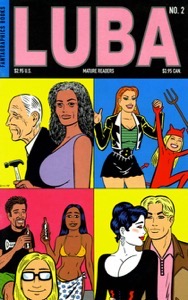
    The episode also introduces Gaspard Ulliel as a Egypto-phile Bond villain who doesn’t know Ancient Egypt stuff is magic, actually, but finally finds out. Ulliel does as well as can be expected with bad writing and bad direction.

    Sadly, this episode doesn’t have any great Hawke “rising above the material” scenes. It has him not drowning in it, but nothing more.

    At least it’s only six episodes.

  • Grantchester (2014) s07e06

    Something’s obviously going on when this season finale’s murder mystery is about halfway through the episode. The mystery’s sequel to a previous episode this season; a copycat killing has happened, only Robson Green didn’t give out some of the details, so it can’t be a copycat. The plotting is trope-y but not the details. There’s still some real personality to it.

    There’s also a Christian fundamentalist psycho killer (run, run, run away) on a show about a vicarage. It works better than the last time the show dealt with problematic godliness (a homophobic Black curate from a British colony). It’s also exceptionally terrifying because there’s one of the Grantchester flock out to off the unsuspecting vicar. I don’t think. Considering Tom Brittney’s once again a failed Grantchester vicar this episode—he gets blotto, smokes cigarettes, but doesn’t listen to jazz because he knows he can’t handle that life—it’s nice he gets to do something for the first time in the series.

    While the entire second half of the episode, which includes a fast-forward epilogue, is about closing “Grantchester” down enough if it doesn’t get another season, there are also some shoehorned-in threads while the murder mystery’s still happening. Tessa Peake-Jones gets her season-long cancer plot resolved, with, unfortunately, some very middling writing for her. The show skipped important parts of her story since the last time she got a subplot, and they don’t make up for it here. It’s the season finale, and it’s outstanding business, so let’s get it resolved, however abruptly.

    It’s a particular bummer for Peake-Jones and Al Weaver’s relationship, one of the season’s early focuses. During this episode’s first act, he’s oddly disconnected from her plot, which makes sense pragmatically—he’s got an entirely new subplot this episode to finish off his season and, potentially, his character—but not in terms of narrative.

    Weaver’s new plot is caring for the unhoused people in town, an arc he kind of started a few episodes ago, but they never did anything with until now. Thanks to Weaver, an amusingly overwhelmed Oliver Dimsdale, and a lovely Nick Brimble, it works out okay, but it’s still a rush job.

    Green’s got the truncated mystery plot, little bit of action, little bit of family comedy. It’s not a lot (though he gets some good material in the epilogue), especially if it ends up being the last episode.

    Brittney’s non-murder mystery-related plot involves apologizing to Charlotte Ritchie for being a shitty suitor as she prepares to leave forever. Ritchie gets a couple adorable scenes with son Isaac Highams, who’s appropriately wiser than the adults when needed. Ritchie has a good half episode, though the resolution’s a little contrived before the epilogue.

    The epilogue does bring back Brittney’s family, who went unmentioned this season even though last season had set step-sister Emily Patrick as some kind of recurring character. Maybe they just couldn’t get the whole supporting cast together because of Covid-19.

    It’s a nice finish to the season, with some very sturdy acting from Green throughout. Thanks to Christian serial killers and fast-forward epilogues, Brittney gets an easier character development arc than the last episode implied. Still, he’s definitely come into his own as a new kind of Grantchester vicar.

    Especially if they get another season. It’ll be too bad if they don’t, but it’s also a very nice conclusion and setup. No playing chicken here.

    Oh, and besides an actual “Sidney” name-drop at one point, there’s also a lovely, old school Grantchester river montage (to help the fast forward along). It’s a very “Grantchester” finish.

  • Luba (1998) #2

    Luba2

    It's a little strange for a twenty-four-year-old comic to hear your requests from the future, but creator Beto Hernandez opens Luba #2 with a cast introduction, just like I wanted. Though it sort of just points out how much I actually remembered and the two things I forgot—whether Pipo was related to Luba (she's not) and what Gato's around for (he's Guadalupe's husband, formerly Pipo's, from Palomar days… I think).

    Anyway.

    The issue's another generally contemporaneous anthology, starting with Luba and the old man, Gorgo, in the United States, still working on getting her family across safely. Luba's still scared there's a hit out on the family because of something from the past. So she's finally going to meet with people to guarantee it's okay now. But even though she's going alone, she's got to care for the old man a little, including getting help from a fetching young man on the hotel block.

    He doesn't speak Spanish, and Luba doesn't speak English, so they have amusing back-and-forths as Luba gets the old man settled and heads to the meeting. Luba's isolation echoes back to the last issue; Beto does an excellent job. There's also a deep cut visual reference to a Love and Rockets arc (the source of the family's potential danger); the visual's familiar, I can't remember the details. In case Beto wants to hear me in the past and include them next issue.

    The story ends with a new arc for the old man, which Beto picks up towards the end of the issue.

    First, there's the Petra and Fritz story. It starts with the two sisters bicker-bantering about Petra's bungling of her marriage (daughter Venus wants to go live with her step-dad, directly following up Beto's Venus stories in New Love), but then it turns into a Fritz story. Specifically about her being a therapist whose male patients obsess over her and her having multiple lovers. Including some married ones, who are also obsessed, and some asshole ones. They're obsessed too. It's a good story, with a surprising finale and punchline.

    It's a "Nights and Days in the Life" type story. Real good.

    Though it's nothing compared to the next story, an absolutely phenomenal all-action one for Petra and Venus. Venus is late for an appointment, and Petra keeps screwing up trying to get her there. First, Petra swam too long, which screwed up their leave time but also got her a little pool-loopy. So she takes the wrong pills and maybe puts in the wrong contacts and eats the wrong food, and on and on. Venus has to mother her mom all the while, culminating in Beto doing this phenomenal flash forward.

    It's also the funniest story in the comic, though Petra is being a really crappy parent. No wonder Venus wants to go live with her step-dad, which Beto brings up in this story, tying it to the previous one. It's probably his best art in the issue. The expressions (mostly glares) are absolutely fantastic.

    The next story is an incredibly packed three pages; it's a Guadalupe story, but it starts with Doralis and her semi-plans to come out on her kids' show. Various cast members talk about the potential repercussions (including Gato being a dick about it because Gato's a dick about everything), while Guadalupe realizes she's the only one of her mom's kids who isn't queer. Seemingly out of seven kids.

    It's an incredibly fluid story, as Beto moves Guadalupe from scene to scene, conversation to conversation. What's so impressive is how much personality and how many characters Beto fits into each scene. The supporting cast all gets something to do, sometimes just sight gags, sometimes full jokes—Casimira's bit is awesome–before a comedic but empathic conclusion. Beto's plotting is superb.

    The last interior comic is a one-pager catching up with Gorgo after the first story. He's getting ready to do a piece of work and ruminates on Fritz's relationship with Pipo's son, Sergio. It's a nice, short strip with the right amount of sentimentality and bite.

    Then there's a color strip on the back cover. Sight gags and absurdist comedy for Fritz and Casimira.

    It's another excellent issue. The way Beto breaks up and layers the various concurrent arcs is sublime.

  • Lenny (1974, Bob Fosse)

    If Lenny has a single highlight scene, it’s at the end of the second act, when comedian Lenny Bruce (played by Dustin Hoffman) does a set on dope. The film’s got a fractured narrative, simultaneously showing posthumous interview clips with the people in his life—ex-wife Valerie Perrine, mom Jan Miner, and agent Stanley Beck—recounting Bruce’s life story, but then also footage from nearer his death, after he’d made it. With Hoffman in nothing but a bathrobe and a single sock, losing track of his routine as he roams the stage, that scene is the first time we’ve gotten to see what everyone’s been talking about. It’s a seven-minute, uninterrupted take, and it’s absolutely devastating. Stellar work from Hoffman, director Fosse, screenwriter Julian Barry, and the sound department (led by Dennis Maitland). In a singular film, it’s a singular scene.

    Despite the fracturing, the film’s got a straightforward narrative. Someone’s recording interviews about Bruce, starting with Perrine, then Beck and Miner join in. It’s mostly Perrine, whose story is juxtaposed against Hoffman’s. Flashbacks reveal and inform what the interviewees are talking about, then there are flashforwards to some of Bruce’s final sets. The film intersperses bits from those final sets, showing the matured comic throughout the film. Lenny’s never easy, but Fosse and Barry don’t make the narrative plotting difficult.

    The film’s first act is hacky young comedian Hoffman meeting stripper Perrine. He immediately falls in love, and she thinks he’s cute. They’re married pretty soon after. Fosse introduces Perrine in the present-day interview, then through her dance routines, with he, Perrine, cinematographer Bruce Surtees, and editor Alan Heim creating a transfixing sequence. It’s an entirely objectifying one, but then the rest of the film is just realizing that object as a person; Perrine’s the protagonist of the film, while Hoffman’s the literal subject. And also, for reasons, when Lenny gets to the biopic summary montages, they work differently for Hoffman and Perrine. Hoffman wouldn’t be able to stay protagonist with them, while the devices don’t affect Perrine.

    The film and Hoffman are wholly entranced with Perrine, and their salad days are fun, sympathetic, and exuberant. And then tragedy strikes, and their whole lives change. They end up in L.A. and get hooked on heroin. They clean up long enough to have a kid to save the marriage, only it doesn’t work, with Hoffman staying off but Perrine getting back on and worse.

    Hoffman doesn’t have to account for any of that period outside flashback moments and intercut references in his routine, but Perrine goes through it in the interview. It’s harrowing, with Perrine getting two distinct arcs, one in flashback and one in the interviews. It’s an exceptional performance; maybe not better than Hoffman’s, but far more complex. Perrine builds her performance one way, winding through the narrative and its fractures, while Hoffman gets to build from scratch. And to a goal. In the later comedy routine, the film shows where Hoffman’s going to end. It’s just a matter of getting him there.

    The thing about Hoffman (and Bruce) is there’s no early moment in his failures to foretell future greatness. At the film’s start, he’s usually bad and rarely middling. He’s affable and cute, but it’s Perrine who gets him out of the proverbial Catskills comedy circuit (whether she wants to or not). His social commentary routines start as filler between introducing dancers at one strip club or another. He initially gets those gigs because Perrine’s dancing there.

    Hoffman grows his performance along the same trajectory; it’s all a coincidence of person and time. The film’s got a lengthy Bruce routine about racial slurs (which dates poorly as social commentary but provides exceptional historical insight); it’s post-integration, and people are figuring things out. It’s the time and place, not the person. There are numerous bits about men and women, husbands and wives, and even some (albeit slurry) anti-homophobia commentary. For a brief, shining moment (in the second act), Hoffman sees the world better than anyone else with a microphone. Then the third act is revealing he’s still profoundly naive about the whole thing. Initially, the film bakes that revelation and resulting tragedy into a pseudo-comedic courtroom scene. Lenny’s got great courtroom scenes. The last one kills and in the wrong way.

    The finale ought to be a lot more abrupt than it plays; in the present, night has fallen after the days of interviews; there are a handful of flashbacks, shorter, with the interviewees directing attention to specific details instead of setting up. But, thanks to some pointed questions and answers, the film can stay firmly on its path, Fosse bringing it to the unavoidable but not inevitable finish. The film pulls in all the threads of the previous almost two hours, jumbles them up, then elegantly lays them out, lucidly but not obviously. Fosse’s got one last incredible move in a film of spectacular moves.

    All the acting is excellent. Obviously, Hoffman and Perrine are the stars, with Miner and Beck both getting some fine moments. None of the other supporting players get more than a few short scenes, with Rashel Novikoff and Gary Morton standouts. But also pretty much the only other two actors with significant scenes. Novikoff is Hoffman’s unintentionally hilarious aunt, and Morton’s a Catskills comic gone Hollywood, so basically Hoffman’s best-case future.

    Technically, it’s superlative. Fosse’s direction, composition and of performances, is great. Heim’s editing, Surtees’s black and white photography, Joel Schiller’s production design, the occasional but actually perfect Ralph Burns music.

    Lenny’s remarkable.

  • Apartment for Peggy (1948, George Seaton)

    Apartment for Peggy has a protagonist problem. It’s also got what seems to be a Production Code problem, but more on that one later (especially since it gets tangled with the protagonist problem). The film opens with retired university philosophy professor Edmund Gwenn dispassionately deciding he’s going to kill himself. He’s been working on his post-retirement book for eight years, and it’s almost done, his wife has passed away, and his son died in World War II. So he’s just taking up space.

    Gwenn makes this decision no secret to his friends, who are all still teaching; the university’s dealing with the influx of G.I. Bill students and their wives (and sometimes families), so everything’s hopping. The friends are mortified, but what can they do. This plotline and character arc seem entirely problematic with the Code, so, right off, Peggy is making big swings.

    Then Gwenn meets Jeanne Crain (Peggy). She’s a G.I. bride with a bun in the oven, and she’s about to lose her place to live. Her husband, William Holden, wants to be a school teacher and try to help make sure the next generation doesn’t end up in a war, too–Peggy will, at different times, be about generational clashes, classism, capitalism, and gender expectations; Seaton’s all over the place and gloriously so. Except Holden also wants to be able to put a roof over his family’s head, so he’s thinking about dropping out and going to Chicago to sell used cars.

    The film never identifies its location, but it’s not far from Chicago, not even in 1948. A couple hours tops.

    It turns out Gwenn’s got an empty attic—where he roomed soldiers during the war—and even though it’s a dirty disaster, Crain’s willing to clean it up to keep Holden in school and their dreams intact.

    The film will go from being Gwenn’s story to—very, very briefly—Crain’s story, then back to Gwenn’s story, then, finally, Holden’s story. The finale is a narrative shrug where Seaton just relies on goodwill and humor, though the film’s punchline didn’t make it past the censors. You’ve just got to assume from body language and vague implications. Unless they were referencing some kind of contemporary advertising campaign for a product. But there are a few times scenes end early, like fading out mid-sentence; someone hacked at Apartment.

    In addition to his surrogate family arc, Gwenn also gets a renewed professional interest one as the “Lost Generation” discovers the G.I. Brides are just as smart—if not smarter—than their husbands. It’s an excellent informed versus intelligent bit, and it’s probably the most successful plot in the film. Maybe because, even though it’s somewhat truncated too, it’s the most complete.

    Crain’s turn as protagonist usually involves her doing something to help someone else. The film’s very big on altruism and how it clashes with post-war malaise and despondence. It’s fascinating, especially as Gwenn gives the impression of austere academic scholarship, and Crain’s back at him with big ideas and lots of slang. Seaton’s direction of Crain is to turn it up to eleven. Then he just lets the energy ricochet around the frame (which, obviously, is noticeably absent when Crain’s got her mostly offscreen character arc).

    When Holden finally gets to play the lead, he too does most of his character developing offscreen, but since he’s the focus of Crain’s attention—no matter what’s happening in her life—and she and Gwenn are surrogate family now, Holden’s everyone’s attention. As a result, the movie goes from being about an old white guy realizing white guys shouldn’t be the focus only to focus on the young white guy. It’s unfortunate and very noticeably reductive.

    It might just be the second act being too short. The film only runs ninety-six minutes. They could’ve done a bit more with Crain and Gwenn’s bonding, Gwenn and Holden’s bonding (they’ve got a great, long comedy scene assembling furniture together), and Gwenn’s professional pursuit. Not to mention Crain and Holden rarely get to be a couple when they’re not moving the plot along.

    While some footage is clearly missing, the plotting’s occasionally jerky, and there are a handful of awkwardly composed one-shots (director Seaton and cinematographer Harry Jackson keep doing these bad higher angle shots), the first two acts of Peggy are entirely solid. By the increasingly troubled third act, the film’s got more than enough goodwill to carry it. And the performances aren’t all of a sudden bad; the parts just fail the actors. The changes affect everyone, from Crain being demoted when her story’s the most compelling, to a rash change in personality for Gwenn (though, arguably, the most reasonable change), to Holden finally having to confront his chemistry class problems.

    They appear to be a lack of eye-hand coordination, an unlikely memory issue, and a complete inability to read his professor (an uncredited and very good Charles Lane).

    The finish only works because the cast works so well. And worked so well for the previous ninety-five minutes.

    The three leads are outstanding, with occasional hiccups, and it takes Seaton a while to reveal enough about Crain to explain her exuberant, boisterous personality. The main supporting cast is Gwenn’s pals, mainly Gene Lockhart and Griff Barnett; they’re good. And survive Seaton making them carry a bunch of the third act so he can avoid certain Code-unfriendly scenes with the main cast.

    Apartment for Peggy could have been great, a singular mix of comedy and contemporary social issues affecting a wide demographical array. But, instead, it’s just good. It’s a success; it’s just not the success it seems like Seaton wanted it to be.