• Scene of the Crime (1999) #1

    Soc1

    In the twenty years since Scene of the Crime came out (and I last read it), a couple things have become more clear. First, protagonist and narrator Jack is a bit of a narcissist, and the reason he’s loveless is because he was a lousy, possessive boyfriend. The way he talks about the female characters is a lot, especially since writer Ed Brubaker is doing a Raymond Chandler twice removed. I don’t remember Chandler being shitty when describing women. But it’s also okay because Jack’s a white guy private investigator from a cop family in 1999 San Francisco, so it’s not like he’s necessarily going to be a good guy. Not all the way.

    The second item relates to Raymond Chandler and San Francisco. Jack’s case involves a missing little sister and San Francisco hippies. Scene’s a Chandler-esque P.I., but it involves late nineties hippies and the children of sixties hippies. So twice removed. It’s a fascinating San Francisco gem, partially if not primarily because of the gorgeous Michael Lark architecture art. Even without landmarks, Scene feels like a San Francisco detective story, a sub-genre of its own.

    And just because Brubaker doesn’t recognize his narrator’s passive misogyny doesn’t mean it’s not well-written. It gets a little long towards the end when Jack finds the sister, and they go out to a Denny’s for a meet-cute. I remember really liking that scene when I was in my early twenties, which tracks. But the stuff where Jack’s explaining his backstory, which Brubaker and Lark set against an urban travelogue—it’s great. Very efficient writing from Brubaker, who seems to be trying to adapt the detective novel genre to the comic medium. Two, maybe three-page chapters, lots of exposition, lots of corresponding art, little bit of dialogue.

    It works.

    The talking heads is where Scene stumbles, though every time it involves a female supporting character, including Jack’s uncle’s girlfriend. Jack’s dad was a cop, killed by heroin gangs—they blew up his car, which partially blinded young Jack—and the uncle, Knut (adorable old man), raised him. Knut’s girlfriend refuses to marry him, despite having been with him for thirty years, because reasons. It’s not Brubaker’s fault, exactly. Not sure he’d have been able to make a comic at that time without these mistakes.

    Anyway.

    Awesome, moody art from Lark, compelling enough, engaging enough narration from Brubaker. The case is just getting started as this one wraps up.

  • My Life Is Murder (2019) s03e02 – Nothing Concrete

    This episode’s a mad-libs of murder mysteries; the victim’s found in a statue, one of the suspects is a billionaire tech jackass, and there’s an environmental angle in addition to a jealousy one. None of those items listed actually have anything to do with the actual motive. I forgot why the killer did the deed. I had to go back and look it up. And even then, I had to go over it another time because the motive’s slimmer than any of the red herrings.

    And even though there’s a lot of guest star Craig Hall—as the dipshit billionaire—who thinks Lucy Lawless finds him irresistible, which gives Lawless plenty of opportunities to talk smack to her pals about him, the real story is Tatum Warren-Ngata. She’s a gamer and hacker friend of Ebony Vagulans, who went to Paris on mysterious business between last episode and this one. Vagulans has a couple of scenes, FaceTiming with Lawless from her very much not in Paris, France flat, albeit with an Eiffel Tower establishing shot. Warren-Ngata’s good and annoying in the right way to be a techy sidekick to Lawless, but….

    I really hope Vagulans isn’t leaving the show.

    “Murder”’s got another seven episodes, plenty of time to do a subplot for Vagulans, but also plenty of time to exit Vagulans. Maybe have her back for the finish. The show changed some regular cast between seasons one and two when the action moved from Australia to New Zealand, but it wasn’t like the first cop was anything too special. He’s no Rawiri Jobe, but Vagulans has been with the show since the start, and she and Lawless’s chemistry is a significant portion of the film’s charm. Like twenty-five to thirty-five percent. A lot.

    So, concerning.

    That worrying aside, like I said, Warren-Ngata’s good. It’s too soon to tell how she and Lawless will vibe, though.

    The other suspects include Nisha Madhan as a sculptor who disagreed with the victim about environmental stuff, then Anna Jullienne as the victim’s assistant. They’re both solid, selling a lot in their exposition this episode. There’s not a lot of action, just a lot of Lawless going to different places and talking to the suspects.

    The ending’s a mess, and Vagulans’s “vacation” is concerning, but it’s a solid episode otherwise. Lawless makes it enough fun.

  • Kevin Can F**k Himself (2021) s02e03 – Ghost

    I didn’t understand what Eric Petersen was saying when he says, “Pal-o-ween;” I thought he meant Halloween, and then the dialogue implied he thought every month with a thirty-first meant that day was Halloween.

    I figured out what had happened quickly, but it was strange because it wouldn’t not fit the show.

    Petersen’s regular but not monthly Pal-o-ween events involve him and Alex Bonifer watching scary movies while Annie Murphy dotes on them. They probably make fun of her too. She’s not interested this month (I mean, is it set in August, it could be) because she and Mary Hollis Inboden have to go look at dead bodies. Murphy’s faking-her-death plan involves finding an identity to assume from a recent, unclaimed corpse. Her P.I., Tommy Buck, knows a guy who likes to claim unclaimed corpses. Inboden and Murphy have a hilarious discussion on that subject as they walk through the creepy, empty funeral home.

    Murphy doesn’t tell Inboden going in, but sixteen years before or whatever, her father’s funeral was in the same funeral home, and that night was when she met Petersen (and Inboden) for the first time. “Kevin” makes a big swing with the flashbacks, which have the actors playing themselves with different hair and clothes, obviously, but no big make-up things. No CGI de-aging or youth casting. It works once Peri Gilpin shows up; she’s got a scene as Murphy’s mom, who berates Murphy after the funeral. And Murphy goes from the funeral home in reality—in the flashback, obviously—into the sitcom universe for that scene with Gilpin, which raises all sorts of questions.

    It also makes the flashback hair and make-up approach “TV,” meaning just focus on the content and the performances. They’re memories, after all, almost entirely from Murphy’s perspective because Inboden doesn’t want to think about it. In the flashback, we see Inboden’s spirits fall, watching Murphy surrender to Petersen’s amiable influence. In the present, Bonifer’s having a breakdown about the whole thing—the whole thing being him assaulting Murphy, then Murphy and Inboden smacking him into reality from the sitcom universe—and forgets to go to Pal-o-ween.

    There’s a subplot for Inboden and girlfriend Candice Coke, with Coke trying to involve Inboden in her life, but Inboden is still hanging with Murphy instead. Corpse-hunting beats game night. There’s some good material for Coke in this episode; she gets to interact with different people, not just whine about Inboden being friends with Murphy.

    I still feel like the season’s a little unbalanced, with this episode the first to deal entirely with season two issues.

    It’ll be fine. I’m just obsessing because I think “Kevin” might wrap up super.

  • Dracula Lives (1973) #11

    Dl11

    I had planned on opening bemoaning Dracula Lives only having two issues left just when the series has found itself again, but then I did some research and discovered it’s worse than the series just canceling. They’re not going to finish the Bram Stoker’s Dracula adaptation here; there’s no more Lilith (more on her adventures in a bit). I wish I hadn’t looked ahead. However, if I hadn’t, I wouldn’t have known where to go for the next (and temporarily final) Stoker adaptation entry.

    There’s a reason reading monthly comics is a pain in the ass, even fifty years later.

    Anyway.

    This issue’s great, and I’m super duper sad there are only two more issues.

    The magazine aspects of Lives are gone this issue; letters column, but no features—lots of ads. But the stories are all good. The art on the Lilith story’s a disaster, but if Lilith had been well-executed back in the day (writer Steve Gerber’s finding his legs fast), we’d remember it.

    We’ll go in reverse order, starting with the Lilith story. It’s a long story, and Bob Brown’s pencils are terrible. They’ve got Frank Chiaramonte inking him, which is a choice, but then Pablo Marcos also has a credit, and even though I’m lukewarm on Marcos (or do I like him, it’s been so long since Lives had top-shelf artists), I was expecting the art to not be terrible.

    But it’s terrible. Oddly, Brown’s pencils look like they were meant for digest size, not a magazine page, like seeing them smaller would improve things. Like the frequent lack of faces. Though the story’s all about there not being a face. Lilith’s human half runs afoul of some incel planning to do a mass shooting—no shit, in 1975–and Lilith takes over to stop him. Except there’s only so much she can do. It’s intense.

    There’s some character development for Lilith and her human half. It’s good. The art’s an incredible problem, but the story’s good. I had wondered what was wrong with Gerber on the previous story, but he’s got it here.

    The middle story is the Bram Stoker adaptation, and it’s a good argument Dick Giordano’s career should’ve been spent illustrating journals with accurate scenery. This portion of the adaptation is Mina and Lucy still at Lucy’s mom’s house, no suitors around, just Lucy sleepwalking around the English countryside. In Bram Stoker’s Dracula, it’s when werewolf Dracula assaults Lucy. Only there’s a whole thing about there being a stone chair and gravestone, and it’s the girls’ favorite spot, and it’s lovely. Gorgeous art from Giordano eighty-five percent of the time. It’s a delight.

    It’s also where writer Roy Thomas (and, obviously, Giordano) get to do some adapting. Because they’re not doing werewolf Dracula, they’re doing (close to) Tomb of Dracula Dracula, and it adds some very interesting layers to the adaptation. Presumably. Dracula is just around this issue in the background.

    I’m positive I read this adaptation (Marvel finished it in the aughts), but I don’t remember it being so impressive. Probably my bad (or it falls apart).

    Then there’s a two-pager from Doug Moench and Win Mortimer, done sort of in a fifties horror style. Some European city’s problems with vampires over the years. It’s solid, with Moench finding a good tone for the exposition.

    The first story is also Moench; he and artist Tony DeZuniga finish their “husbands vs. Dracula” story, which started in the last issue. Dracula has just thrown some widower into a pit—possibly the pit from Tomb, but also possibly not—and the guy quickly discovers it’s where Drac’s been keeping his latest vampire brides.

    Including the hero’s wife.

    What follows is horror action, with the hero coming up with a scheme to avenge himself while also saving the town or something. He also has a plan to save his wife’s eternal soul, which seems to be entirely in his head and the dialogue because Moench goes nowhere with that aspect (souls). The exposition’s a little overwritten, but who cares, the DeZuniga art is gorgeous. Great Gothic good girl art, fantastic horror trappings.

    The finale’s a little bit of a miss, especially given the build-up, but it all works out. Especially since the comic goes uphill as it continues, with the Lilith finish graded on a different, Bob Brown-related scale, of course.

  • Resident Alien (2021) s02e13 – Harry, a Parent

    If “Resident Alien” keeps bringing Sarah Podemski back as a regular recurring, she needs to have some kind of name credit. Podemski plays Kayla, one of Sara Tommy’s cousins (or not); regardless, they’re both Native and interested in historical and cultural preservation, which is why Podemski’s important to Meredith Garretson’s new subplot. She and husband Levi Fiehler are at odds over the new resort, and he’s putting his foot down in a macho display, impressing no one.

    Podemski figures in late in the episode, after the action moves to Alice Wetterlund’s skiing qualifier. She’s been getting antsy since last episode, taking too many painkillers, and being crappy to new boyfriend Justin Rain. She’s running low on painkillers and wants Alan Tudyk to give her injections at the race. Tudyk doesn’t want to help her, but she threatens not to give him churros, so he agrees.

    But before Tudyk can juice Wetterlund before a competition, he and Sara Tomko have to go track down her mother, whose address appears in a first act deus ex machina for that very back-burnered subplot.

    Then Elizabeth Bowen’s trying to get Corey Reynolds to stay in small mountain town Colorado and not move back to Washington D.C., even though he hasn’t asked dad Alvin Sanders for permission.

    The main plot is Wetterlund’s competition, with Tomko’s parenting arc the main subplot. It ties into Tudyk’s newly revealed backstory subplot, which the episode otherwise ignores—intentionally, Tudyk’s not interested in it, not when he still doesn’t know the identity of the invading aliens. Garretson’s continuing problems with Fiehler (who’s more amusing when he’s unsympathetic, which I’d forgotten) and Reynolds’s moving plans pack the rest of the episode. It’s very full. There are at least two subplots the show’s ignoring this episode.

    There’s also a big-name guest star in the opening titles. If you miss the credit, it’s a fantastic surprise; the scene’s set up on at least two layers, to be a surprise, so foreshadowing with the credit’s too bad. But even if you see the credit and are waiting for someone to arrive… it’s still awesome.

    Some great acting from Tudyk, Reynolds, and Tomko. Gary Farmer’s got a devastating moment or two. Wetterlund does okay; it’s not an easy part this episode because she’s being self-destructive. Garretson’s better when Fiehler’s being a twerp too.

    It’s not what I was expecting—“Alien” introduced a bombshell at the end of the last episode, didn’t do anything with it, and dropped another one here. They’ve got three episodes left, which might be enough to resolve some things, but they’ll have to get moving.

    Thank goodness they’ve got the third season renewal already.

  • X Isle (2006) #4

    X Isle does not astound and get good this issue.

    But, there were a few times I was actually impressed. The comic’s got terrible dialogue and middling plotting, but artist Greg Scott’s occasionally able to transcend the dialogue and make the action work. There’s a dinosaur versus human fight this issue, and some of it’s played for laughs.

    It doesn’t end played for laughs; it ends played for cruelty because the ship crew—Dwayne “The Rock” Johnson as the sidekick, maybe Michael Biehn as the captain (or whoever would’ve been a Biehn-type in 2006 when they tried selling this as a movie)–are assholes and the bad guys.

    But it’s a good dinosaur fight scene. Scott does an excellent job breaking out the action. Unfortunately, he does a hilariously bad job just a few pages later. See, last issue, the good guys (who are looking for the annoying college coed daughter) found a spaceship, and this issue explains the spacecraft and the island and the monsters and so on. But the bad guys aren’t with the good guys, so the bad guys don’t know about the spaceship.

    Sam Jackson, Tim Allen, and the coed’s love interest are exploring the spaceship, and they think they’ve got it figured. It’s like a zoo spaceship, and it crashed, freeing alien creatures from across the galaxy on one island on planet Earth. No sign of Christopher Pike and Vina yet.

    There’s a terrible gory action sequence in the ship. Someone covered in blood, someone gasping a last noise. Even if it weren’t for the script, Scott’s art would still be accidentally hilarious. It’s a comedy beat with a gore death.

    If the rest of the comic followed suit, great. Sadly, it doesn’t.

    Then at the end, the coed returns to whine, and I’d forgotten how badly Michael A. Nelson writes her dialogue.

    Frankly, not much hope for the next and final issue with her back. But, whatever, almost done.

  • Park Row (1952, Samuel Fuller)

    Writer, director, and producer Fuller is very committed to the bit with Park Row. He almost pulls the film out of its spiraling third act with an audacious epilogue, which ties back into the opening, with its (uncredited) narration setting the scene. The year is 1886, the place is New York City, and there live the finest men in the world—the American Newspaperman. Emphasis on man. Row’s going to have some very interesting misogyny, but it always comes with enough to qualify it down to class commentary. Fuller never lets the film be too mean to leading lady Mary Welch because she’s the love interest too.

    Plus, imagine if a dynamic, self-made man competed with Welch in business and ideology and eventually won her over to his side. Fuller gets away with a lot in Park Row and it’s always because he’s got the right lead—Gene Evans. Fuller takes almost twenty minutes to give Evans his first close-up, even though the movie’s narration hands the action over to him. He’s just a newspaperman, after all, he’s not the one making the story, just the one telling it. Except he disagrees with his paper swaying a murder trial against the defendant, putting Evans in paper owner Welch’s sights. The film doesn’t precisely explain Welch’s backstory, but it plays like she’s inherited the paper from a dead father and has been smartly trying to make money with the paper instead of reporting the news like an American Newspaperman.

    There’s one scene where kindly old reporter Herbert Heyes gives Welch a startling dressing down, weaponizing the cultural misogyny against her. It’s intense and, like one of the love scenes, impressive what Fuller can accomplish given the constraints. He’s doing a costume drama about a newspaper, only he’s doing it as an action buddy picture. It’s not a Western; it’s a North-Eastern. Or something.

    At one point, Evans drags a guy through the streets and beats the shit out of him against a Ben Franklin statue because Evans is righteous. He’s surrounded by an entourage who eagerly acknowledge he’s the next great American Newspaperman. But Fuller never lets Evans grandstand; instead, he focuses on Evans’s quiet idealism. Given Evans spends the first ten minutes of the film mostly just mulling over the chatter around him, the quiet bit works. Much better than when Evans starts talking to his newspaper.

    The film would actually have been able to get away with some of that nonsense if the third act weren’t such a mess. Fuller douses all his goodwill in gasoline and lights a match in a few seconds. It’s an impressive capitulation; turns out Park Row didn’t have a third act, after all. The first act had Evans setting up the paper with his gang of newspaper and journalism enthusiasts, second act is the rivalry between Evans and Welch (with a great, Statue of Liberty-related subplot), third act is the rushed wrap-up then the film’s Brobdingnagian flexing finale.

    Row’s obviously on a budget. They didn’t even have matte painters; instead, the backgrounds down the blocks are barely three-dimensional models. Beautifully made, not particularly realistic. The block and a half set is otherwise exceptional. Fuller and cinematographer John L. Russell frequently weave around the set, into buildings, out of buildings, and they’re having a ball with it. Initially, it plays to the costume picture angle, showcasing the sets and costumes (production design by Theobold Holsopple), then it distinguishes Row from that genre, then it goes all out action when Evans starts kicking ass.

    Evans has some incredible dialogue to pass, and he manages it successfully; his performance is spectacular. Shame the part doesn’t keep up. Welch is uneven but rather good at playing sincere and thoughtful, which works to make up for it. She and Evans also have chemistry, even though they really shouldn’t.

    In addition to Heyes, Evans’s gang includes Forrest Taylor as his financier, Neyle Morrow as his cartoonist, Dick Elliot as the newsroom editor, Don Orlando as the Italian typesetter who doesn’t read or write English, and Dee Pollock as the swell kid who wants to be an American Newspaperman. They’re delightful together. Oh, and Bela Kovacs. Kovacs is an inventor. Park Row isn’t about a newspaperman striking out on his own and struggling to find the right idea; it’s about the messiah of American Journalism just needing a blank check. The movie and Fuller are rabidly optimistic.

    Park Row comes crashing down at the end, but Fuller builds something really impressive right up until then.

  • Joe Versus the Volcano (1990, John Patrick Shanley)

    Joe Versus the Volcano’s final punchline comes during the end credits when it turns out Industrial Light and Magic did the special effects. Volcano’s got terrible special effects, especially for an Amblin production, but for ILM to have done them? Yikes.

    Now, the film’s an absurdist riff on sixties comedies, so the obvious artifice could work if director Shanley weren’t quite bad at both his jobs on the film (writing and directing) or if cinematographer Stephen Goldblatt were in on the gag. Goldblatt spends the entire film competently lighting it—even when Shanley’s misunderstanding of headroom becomes a near-universal eyesore—but he never does anything more. Goldblatt ably executes all Shanley’s bad ideas. It’s an incredibly qualified situation.

    Volcano’s got several unsuccessful bits running throughout the entire film, starting with a recurring lightning visual. It’s the logo for lead Tom Hanks’s terrible job, it’s the path the workers take up to the door (see, thirties), and it comes back at least three more times. Shanley does a lousy job emphasizing it, but it’s also a weak sauce logo. While Bo Welch’s production design isn’t bad—Volcano’s a cross between Coen Brothers and Tim Burton—that lightning strike is awful.

    The film starts with Hanks as an office drone at a medical supply company. Dan Hedaya’s his boss. Volcano’s one of those movies with a bad Dan Hedaya performance, entirely because Shanley’s really bad. And, at this point in the film, desperate to be John Patrick Shanley Coen.

    The medical supply company makes anal probes and petroleum jelly. The movie makes fun of the idea of someone having something wrong with their butthole, so not zero chance Joe Versus the Volcano meant someone didn’t get the medical intervention they needed.

    Fingers crossed some proctologist got revenge.

    Meg Ryan, with a jaw-droppingly bad Noo Yawk accent, plays Hanks’s coworker, who he’s always crushed on but never asked out because he’s an office drone. He’s also got one hell of a mullet. Hanks gets a haircut later, and it’s like he’s playing two different people; Shanley’s not good at character establishing or development (Hanks actually just says he doesn’t have a personality, so don’t hope for one). Ryan does play different people, three of them. She’s the office mouse, a high-strung L.A. girl with substance abuse issues and another bad accent, then she’s the L.A. girl’s half-sister, a free spirit who wants to travel the seas.

    Ryan’s usually likable, even when she’s bad. The third role, the free spirit, ought to be the best, but it ends up being the worst. At least the first two have impressive hair and makeup; the third one looks like she’s wearing a bad wig, and then she’s unconscious most of the time, waking up to fall for Hanks at just the wrong moment.

    Because Hanks is dying. His new doctor, Robert Stack, gives him the bad news. So Hanks heads back to work, causes a scene, peaces out. The next day, weird industrialist Lloyd Bridges shows up with an offer—throw himself in a volcano on a remote island so Bridges can get mineral rights and Hanks can live like a movie millionaire until then.

    The most successful part of the film is when chauffeur Ossie Davis shows Hanks how to live it up on Bridges’s AMEX card in Manhattan. And only because it’s Davis. Davis gives the film’s only actual good performance because not even Shanley can write so bad Davis can’t make it work.

    After a day in Manhattan, Hanks heads to L.A. to meet Ryan #2; then, it’s off for an ocean voyage with Ryan #3. Amanda Plummer shows up for a scene and a half on the boat. She’s probably the second-best performance.

    On the boat, Hanks and Ryan will be cute and weird as Hanks realizes the real way to live life is as a millionaire, and having to work for a living on Staten Island sucked.

    The volcano stuff waits until the third act. Abe Vigoda shows up as a Polynesian-Jewish-Celtic chieftain. It’s worse than it sounds because Vigoda’s entirely hacky without being charming, and the island is a bunch of big, poorly shot sets.

    It’s godawful.

    Hanks is likable about thirty-five percent of the time, good five percent of the time, bad ten percent, lost the rest. Ryan’s often quite bad; whatever Shanley thought he was doing with “many women, one face” doesn’t work. Especially since Ryan never gets a part, just a caricature.

    Besides Davis (and Plummer), Stack’s probably the most successful. Then Bridges. Shanley ought to be ashamed of himself for what he made Hedaya essay.

    Joe Versus the Volcano undoubtedly has some bewildering behind-the-scenes stories, but who cares. Despite being desperately eccentric, it’s never an interesting failure.

  • Thor: Love and Thunder (2022, Taika Waititi)

    Thor: Love and Thunder ends like all Thor movies, promising the next one will—finally—deliver on the promise. The first movie follow-up fumbled when co-star Natalie Portman didn’t rate an Avengers 1 gig, the second movie when Portman didn’t rate an Avengers 2 gig, the third movie had Avengers 3 entirely upend it (with Portman not bothering coming back). Well, she’s back for Love and Thunder and given how she’s got such a lousy arc, it won’t be a surprise if she’s gone for good this time.

    Of course, they didn’t stop messing with Chris Hemsworth’s character arc—which now apparently wraps back around to the first movie, only not really—with the latest Avengers. The most recent one sent Hemsworth off with The Guardians of the Galaxy, who barely show up in Love and Thunder. Chris Pratt gets the most lines, but the others seem like they showed up for a couple hours, plus and minus the makeup chair. They’re just around long enough for Hemsworth to head back to Earth, having found himself between Avengers 4 and this one.

    Only not really, because when he gets back to Earth, he discovers Portman has the power of Thor. She’s been superheroing it up on Earth; only we don’t see any of it. Once Hemsworth’s back in the movie, Portman’s downgraded to a girlfriend part. Worse, she’s demoted to an ex-girlfriend whose emotional experience isn’t part of the story. And their reuniting arc is all about them getting back together.

    Shame she’s only Thor because Hemsworth made his old hammer promise to look after her, which includes after it got broken in Thor 3 and Portman ingloriously got cancer at the beginning of this movie. It’s got to be really hard on the character, whose single bit of character development—besides Kat Dennings coming back for a cameo—is flashbacks to the character’s mom dying of cancer. It doesn’t even rise to middling soap opera; Love and Thunder could give a shit about Portman.

    To be entirely fair, it’s unclear what Love and Thunder does give a shit about. Special guest star villain Christian Bale, who starts the movie in an apparent homage to the beginning of Star Trek V, which is a flex, is potentially compelling, but once the film spends any time with him, it’s clear he’s… just as dangerous as Josh Brolin in the Avengers movies. So, why doesn’t Bale get a fourteen-movie arc or whatever.

    The film’s very wishy-washy on the Marvel movies’ gods—with Russell Crowe showing up for a Zeus cameo (leading to the film’s most successful moment, as long as you stick around long enough)—but they don’t do jack shit for their worshippers. They like it that way just fine, thank you very much. Bale’s mad his daughter died in a desert while his god had an oasis nearby and didn’t intercede.

    Conveniently, Bale then finds the power to kill all the gods in the universe, pretty quickly going after Tessa Thompson and the Asgardians living on Earth. Specifically their children. He kidnaps their children and puts them in a spider cage on an asteroid in a black and white universe.

    Kieron L. Dyer plays the lead kid, son of now-dead Idris Elba, who can communicate across the universe with Hemsworth. Given where Love and Thunder ends up, there ought to be an arc for Dyer and Hemsworth. There’s not. There’s barely an arc for Hemsworth and Portman.

    Actually, given the end of the movie, it seems like Dyer could’ve been the film’s protagonist or at least jockeying for the spot. He doesn’t. Despite Love and Thunder having a Guns N’ Roses-heavy soundtrack and Dyer being a new, enthusiastic Guns N’ Roses fan, the two things are unconnected.

    Director Waititi narrates the film in his role as Hemsworth’s CGI sidekick. The film’s more successful in summary than in scene, which isn’t great.

    There are some iffy effects throughout—Waititi’s got these vaguely boring intergalactic settings (not sure who thought black and white universe was the way to go with an outer space fight)—but the finale’s got some fantastic visualizing of a tough Marvel Comics character to visualize realistically.

    They get away with it, on Portman and Bale’s professional competency and Hemsworth’s easy charm. And the setup for next time is beyond cloying and trendy; they’ll finally do a great one. Promise.

  • Kevin Can F**k Himself (2021) s02e02 – The Way We Were

    First things first, “Kevin”’s not grungy, it’s bitchin’, and I’m a dirty bird for worrying otherwise. Secondly, it really feels like they had these first two episodes of the season and picked the wrong place to cut between them. This episode addresses and resolves most of the problems with the first episode. It also gives guest star Jamie Denbo a full arc. One of the show’s first completed arcs; well, arcs not achieved with a fatality.

    But this episode’s got the season one follow-up to Annie Murphy and lover Brian Howe. It’s got more with Candice Coke and Mary Hollis Inboden’s relationship. It lets Alex Bonifer be a person separate from Eric Petersen’s sitcom existence. All the things. Including Murphy and Denbo having a subplot involving a shady private investigator played by Tommy Buck. It’s the episode setting up season two.

    Murphy’s got a plan—faking her own death to escape now famous Petersen—but can’t tell anyone but Inboden about it. Meanwhile, Bonifer wants to tell Petersen about Murphy trying to kill him, but he’s having flashbacks to his breakthrough to reality, and we have no idea how he’s experiencing those memories, which is one of the show’s nicest flexes this season so far.

    Petersen’s plot this episode involves a TV interview about his new “Wild Dude” persona. He needs his cool Red Sox cap so he makes Bonifer his assistant and sends him off to the storage unit.

    Murphy’s just found out about the same storage unit, where Petersen’s hidden their valuables after surviving last season’s break-in (and, you know, attempted murder).

    The Petersen plot comes into the episode late—which also makes it seem like they just split the first two episodes in the wrong place—and is fairly self-contained, though it does give Murphy some character development away from her regular costars.

    There’s some particularly strong acting this episode from Inboden, but also Coke, with their new relationship already navigating some rough patches. It doesn’t help Bonifer’s loitering around the house, plotting against Murphy, but only when he’s not wandering around incoherently.

    And, Murphy, of course, is fantastic.

    Lots of stressors on everyone. Lots of complicated drama and performances. A fair amount of sitcom observations in how Petersen abuses “best friend” Bonifer, who’s now able to start recognizing it. So good.

    I think I just forgot I didn’t have to worry about this show.

  • My Life Is Murder (2019) s03e01 – It Takes Two

    Between “My Life Is Murder” season one and season two, lead Lucy Lawless moved the production from Australia to New Zealand, which meant significant life changes for her character. Her sidekick, Ebony Vagulans, came over to help her out, and the show’s second season had a gentle plot about Lawless moving back home.

    And then the overarching mystery became whether Lawless was knocking boots with police department contact Rawiri Jobe, something last season’s finale seemed to answer in the affirmative. But it might be possible they have slumber parties when Vagulans is out of town (she and Lawless are still living together). This episode makes their status no clearer, though they do get some charming sequences together.

    Without a hook, “Murder”’s new season feels like another episode of the procedural, same as it ever was. No discernable time has passed; “Murder”’s one of those shows of the early twenties set in an alternate universe without Covid-19.

    Or is New Zealand just over it because they took it seriously.

    The mystery this episode—besides whether or not Jobe and Lawless are canoodling—involves murdered dance instructor Mikaela Rüegg. Jobe’s supposed to arrest local computer programmer and weird nerd Daniel Musgrove, but he thinks there’s something up with the dance school. Lawless, bringing hunky but also seemingly platonic pal Joseph Naufahu along as her dance partner, discovers the dance students are a high drama lot.

    There’s sexy instructor Adam Fiorentino, his star student, Kimberley Crossman, a skeevy married guy, Mike Mongue, and then Fiorentino’s mysterious mom, Jennifer Ward-Lealand. The episode neatly lays out the suspects and paces Lawless’s various discoveries quite well. It’s a tidy mystery, script credit to Malinna Liang.

    There are some excellent dance sequences, whether the stars or their doubles and the eventual solution’s both a stretch and not. The episode lays the foundation; it just does it subtly as opposed to everything else.

    Lawless is still an excellent lead, Vagulans a fine Watson (who gets very little to do other than hack every computer in Auckland). Musgrove ends up being good, and it’s nice having more Naufahu.

    “Murder” might be familiar, but it’s a very sturdy familiar.

  • She-Hulk: Attorney at Law (2022) s01e02 – Superhuman Law

    This episode runs an incredibly (no pun) brief twenty-two minutes. There are end credits and a mid-credits sequence (which belongs in the episode proper) but also a long re-cap, so twenty-two minutes. Sitcom-length. Only “She-Hulk: Attorney at Law” doesn’t feel like a sitcom. It does at times, and it’s definitely a comedy, but it needs space to stretch.

    There’s also the on-release versus binging viewing experience. Waiting week after week for truncated episodes—this episode finishes up the pilot responsibilities of last episode and then sets up next episode; if “She-Hulk” was always supposed to be sitcom-length, it’s concerning. But, binging, it’ll probably run great. Depending on how the second half of the season goes.

    The pilot wrap-up involves Tatiana Maslany losing her job for saving the jury’s lives as She-Hulk and not being able to find another lawyer gig. She has to put up with shit from her loser cousin Nicholas Cirillo at a family dinner where Mark Linn-Baker plays Maslany’s dad.

    Linn-Baker’s a muted stunt cast, with mom Tess Malis Kincaid then not a stunt cast, which is… peculiar. They should’ve done Paul Reiser and Helen Hunt.

    Anyway, pretty soon, the rest of the pilot’s over, and Steve Coulter offers Maslany a job so the show can fulfill its title.

    Coulter doesn’t want human Maslany working for him; he wants She-Hulk Maslany working for him. While Maslany does get to bring sidekick Ginger Gonzaga along (who has zero character so far, another side effect of the sitcom-length), the other deal-breaker is her first case: she needs to defend Tim Roth. Roth’s been in prison since the first Incredible Hulk movie (the only Incredible Hulk movie) fourteen years ago. It’s nice to see Roth get to have fun in the role since he didn’t in the movie so much.

    Maslany doesn’t want to represent Roth because he tried to kill her cousin in that movie, back when he was Edward Norton. Mark Ruffalo has a brief scene explaining he doesn’t care about the Incredible Hulk movie, it’s Universal, anyway, and he was a different person back then—the first time the MCU has acknowledged the recasting. Though wouldn’t Ed Norton just be a variant? #BringBackEdwardNortonYouCowards

    Anyway.

    It’s a good episode, Maslany continues to be great and just what the MCU needed in 2012, but damn, it’s too short.

  • Red Room (2021) #3

    Rr3

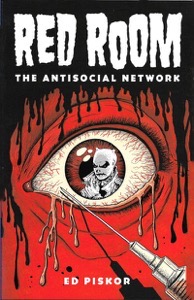
    Creator Ed Piskor once again surprises and (with qualifications) delights with Red Room. He’s on the third issue, and it’s an entirely different angle on the story, focusing on the FBI investigating the Red Room.

    There are some backstory details in the issue as well, like the Red Room being around since the mid-nineties in some form or another. The FBI interrogates a serial killer who tells them about it in a very Piskor meets “Mindhunter” scene; given the grotesque nature of the comic, it’s weird to hope Piskor figures out a way to do a Windows 95 flashback to show what the heck they could’ve been doing with dial-up.

    The issue introduces the first “good guy” in Red Room, hacker Levee Turks. He’s got a life sentence in federal prison until the FBI shows up pleading for help. He designed the anonymous web-hosting software used for the Red Room (not for that purpose), and they want him to crack the code. He’ll have help, too, even if they don’t realize it, because his significant other, Rita, is also a programmer. She just makes comics collecting software.

    After a lengthy, mostly comedic but also beautifully drawn homecoming sequence, Rita realizes the Red Room is far worse than they thought, and they really do need to help the Feds bring it down.

    There’s a big twist at the end—and it might get even twistier—but since it’s Red Room, who knows if Piskor will be back to these specific characters to unravel it. Instead, they might fade into the background for a while. Even when you know what to expect from the comic in terms of gore, Piskor can still surprise with the plotting.

    Excellent characterizations and dialogue sequences (the interrogation sequence is particularly fantastic). Piskor is doing some great work here.

  • Infinity 8: Volume Two: Back to the Führer (2017)

    b

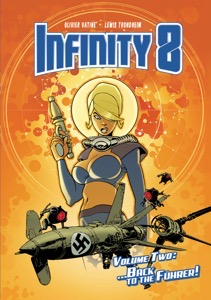
    Back to the Führer is an intense read. It starts genially, introducing this iteration’s agent, Stella Moonkicker, who has just been reprimanded by her partner, robot Bobbie. Bobbie’s a buzzkill, a narc, and committed to preserving all human life, particularly Stella’s.

    She doesn’t appreciate it.

    Unlike the agent last time, Stella’s got daily assignments while aboard the Infinity 8. The volume starts with her headed to the library to provide security for some kind of convention. It’s going to be a very dull day. But then it turns out the convention is the Future Nazis.

    Later in the volume, there’s a throwaway line about robots destroying planet Earth (we have it coming), and presumably, a bunch of history gets lost. Including some specifics of what the Nazis actually did. The Future Nazis think it’s a wellness and interior design movement.

    This volume’s got a lot of humor starting it off. The harmless dimwit Future Nazis, Stella wanting to be an Instagram influencer and taking selfies all the time, the robot. It’s disarming.

    Intentionally.

    Writer Lewis Trondheim is messing with the reader, putting them off-guard, so the second act packs a bigger, more frequent wallop.

    In addition to the Future Nazis, there’s a Hasidic Jewish space muppet who knows what the Nazis did and is confronting the conventioneers. The character’s a Jewish caricature, just a space muppet too. He’s a combination punching bag and comic relief. But he’s also not wrong.

    If the volume has a moral, it’s don’t bring back Adolf Hitler’s head, fill it full of future knowledge and wisdom, and not expect him to create a mechanical army.

    See, even though Stella’s busy with the Future Nazis, it’s still Infinity 8 and the bridge has to call her and send her out to check on the space graveyard. The problem is the Future Nazis also scan the debris for collectibles, and they find the motherlode. A V-2 rocket with Hitler’s frozen head in it.

    Some initially comedic plot perturbations later and Hitler’s back and slaughtering the spaceship’s passengers. Thanks to his future knowledge, he’s discovered the alien race who is controlling the media and whatnot. On his way to take them out, other groups try joining up with him because they think it’s a wellness and interior design movement, not genocidal fascism.

    And it appears Stella is going along for the ride. For most of the second act, she’s hook-line-and-sinker, even as the Future Nazis start realizing their new leader is shitty. Stella will end up with the volume’s deftest character arc; Trondheim demands a lot of the reader’s attention. It’s worth it, of course. It’s a masterful arc, with Trondheim able to bake the action into it from the start and then get it out of the oven at just the right moment.

    Thanks to his robotic upgrades, Robot Hitler also knows about the Infinity 8’s ability to time-shift, and it figures into his plans for conquest.

    Trondheim certainly starts the volume suggesting it’s going to be light-hearted, which then makes the Hitler bit increasingly inappropriate, only for Trondheim to almost directly question how and why anyone would think it’d be light-hearted. He can get away with some sarcasm, thanks to Bobbie the robot, who gets a snark upgrade at one point. It’s such good action comics too. There’s no time for Stella or the volume to slow down.

    Artist Olivier Vatine designed the overall series look, which means this volume’s Infinity 8 looks “correct.” It’s excellent art, whether the future detail, the aliens, Stella’s very important expressions, and then the action. Vatine’s action pacing is divine.

    The volume’s a hell of a ride—I mean, it’s about Hitler coming back and being able to take over the future because no one learned anything from the last time (oh, wait)—and it certainly opens Infinity 8 up. The next six volumes can (and will be) anything and everything.

    It’s such a great comic.

  • Beware the Creeper (2003) #1

    Btc1

    Beware the Creeper gets by immediately on charm, though it opens with a violent assault on a sex worker, so it takes a few pages. Writer Jason Hall begins with an “It was the best of times, it was the worst of times,” establishing the setting. It’s post-World War I, pre-Great Depression Paris. The comic’s a who’s who of guest stars (including Hemingway; Creeper precedes Midnight in Paris’s guest list by eight years). The protagonists are twin French sisters. The French is important because when Hall’s dialogue gets a little wonky, you can just pretend it’s a lousy translation and would sound better en français.

    Maddy’s the painter and the wild girl; she has dreams of demon sex. Judith’s the playwright and good sister; she has dreams of their parents dying in the war. The comic repeats their names over and over to try to differentiate the two, but since artist Cliff Chiang’s most distinct visual trait for them is hair cuts, which aren’t always necessary, it can’t quite hammer in the identifiers enough. It’s okay, the comic gets by, but it’d be nice if the characters weren’t just tragic and manic.

    They’re the A plot; introducing them, getting them topless because it’s a Vertigo book and they’re French, so it’s “fine,” sending them off to a party where they can interact with the B and C plot. B plot is copper Allain. He protects the local sex workers (best he can against his corrupt department), so he’s investigating the opening assault. He’s also in love with one of the sisters; I think Maddy; doesn’t matter this issue.

    Allain the copper is also where the real cracks start showing in the art. Chiang busts ass on Judith and Maddy’s scenes, but he rushes through the Inspector Allain stuff. His facial features change three times a page. As a whole, it’s still okay—Chiang’s 1925 Paris is gorgeous even when faces are inconsistent, and hairstyles and hats are not enough to distinguish the twins. But he’s clearly not working as hard on those scenes.

    The C plot is somewhere in between. The C plot is shitty rich kid Mathieu, who wants to be a painter and is jealous of Maddy and might be the serial rapist. He’s certainly the main suspect so far.

    The issue ends with another assault, this time someone socially valuable enough to kick off a comic series and a brief appearance of the Beware the Creeper Creeper. There’s been some foreshadowing in Maddy’s paintings, with the final splash page the pay-off.

    At the open, it seems like the art’s going to be outstanding, ends up being just okay (with lots of pluses). The writing’s all setup or literary figure cameo and history lesson. They combine to make Creeper compelling without being engaging. So far, anyway.

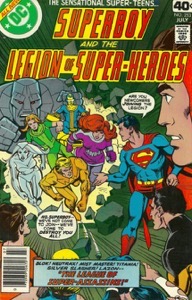
  • Superboy and the Legion of Super-Heroes (1977) #253

    Slsh253

    With the not insignificant caveat of art by Joe Staton and Frank Chiaramonte, which never fails to disappoint–even for that duet–it’s a fairly good issue of Superboy and the Legion. Gerry Conway scripts, and it’s a full enough, compelling enough issue.

    Even if it does start with the Legion being a bunch of little pricks.

    They’ve gone to the President of the Federation or Earth or whatever and pleaded for funds to rebuild their clubhouse. When the President tells them Earth has just survived an invasion and needs to focus on rebuilding infrastructure for the common people, the Legion tells him off. Why would they risk their lives if it weren’t for perks?

    Superboy tries to talk his teammates down—got to stay loyal to the state, no matter what, and all—but they’re pissed off. The Legion’s going to split up; some are going to ask RJ Brande for money, forgetting they were supposed to save him from a shit monster a few issues ago and never located him. Had they found him, of course, he would’ve told them he was bankrupt and couldn’t help them. It’s not much of a C plot, but it’s something.

    The Legionnaires staying on Earth are going to go out clubbing. There are six of them, including Superboy. He and Colossal Boy are the odd men out; the other four are romantic couples. Conway does a strangely good job with the mopey superheroes. They seem immature and impertinent, which probably isn’t intentional, but it’s inevitable, given the content.

    Of course, the Legionnaires don’t know it, but a group of intergalactic assassins is out to get them. The six who just happened to stay on Earth and go clubbing. Those six destroyed these assassins’ planet, and these six “cousins” got lethal Fantastic Four powers. They’ve been on their way to Earth the whole issue to take out their targets.

    Their thorough, vengeful attacks are pretty good when they get there, considering the art. Some of Staton’s compositions are fine, though Chiaramonte doesn’t improve the detail.

    Every time I think I’m ready to give up on the book, there’s a story capable of overcoming Staton and Chiaramonte, so I cannot. Not when the story keeps such horrors at bay.

  • Resident Alien (2021) s02e12 – The Alien Within

    “Resident Alien” takes a big turn this episode. No spoilers, but it will make some casting interesting down the line. I also don’t know if it’s original to the show or from the comic book; I never made it “this far” into the comic, though I got pretty far, so it’d be towards the end of the series.

    And there are only four more episodes left, so it would appear the initial “Resident Alien” arc is wrapping up. They’re renewed for a third season, but they didn’t have it when they plotted out this season. Or maybe even filmed it.

    In other words, we’re in an endgame.

    There are some context-free hints throughout the episode, preparing for the big finale reveal. They’re hints at something else, teases of something else. The big switcheroo at the end changes everything about the show for everyone, characters and viewers alike. It’s a big swing, one they can hopefully pull off.

    It also comes after a hilarious Alan Tudyk and Sara Tomko scene where he’s trying to explain his personal texting abbreviations to her, which gives a wonderful glimpse at their virtual friendship.

    The episode’s got a “hometown” theme for everyone but Tudyk as mayor Levi Fiehler unveils his proposed resort to the citizenry. There’s not much enthusiasm, particularly from Tomko and Alice Wetterlund, who heckle him during the presentation. It takes until the end of the episode to figure out why, when Tomko and Wetterlund organize a Halloween girl’s night out for the regular and regular guest-starring female cast.

    It’s a nice character development subplot.

    Tudyk spends the episode trying to find the alien baby, teaming up with nemesis Gracelyn Awad Rinke for a hilarious buddy action subplot. Rinke’s smarter than Tudyk in all the crucial ways; she knows it too and frequently reminds him of his failings.

    Meanwhile, Judah Prehn actually finds the missing alien baby. He has to reason with it while parents Fiehler and Meredith Garretson try to convince everyone their Sonny and Cher couples’ costumes are cool.

    Then “[People] in Black” Alex Barima and Linda Hamilton are up to no good. It’s a well-balanced, packed episode with lots of subplot and main plot development, with some character stuff filtered in.

    For example, Corey Reynolds is not in the main plot, but he’s got at least three great scenes in the episode, two of which have character work. One of them is just hilarious.

    It’s an outstanding episode, especially given the massive twist.

  • Lilting (2014, Hong Khaou)

    Lilting is not a character study. You’d think it’d be a character study since it’s studying two characters to the detriment of all else (including the actors’ performances), but it’s actually a flashback-filled attempt at lyricism. Except for Lilting and writer and director Khaou, lyricism just means flashbacks. And the same editing device where dialogue plays between cuts, so someone won’t be talking on-screen during a shot because the shot’s from after they got done talking, but the sound will be their dialogue over their unmoving lips in close-up. Khaou and editor Mark Towns must think this fracturing device adds something to the scene because they do it repeatedly.

    Lilting’s a series of unconsidered narrative devices; they’re not bad on their own, sometimes even good (or potentially good); strung together, they don’t add up.

    The film’s about an intensely dramatic situation. Cheng Pei-pei is a Chinese-Cambodian woman who’s been a British citizen for thirty years; she never learned any English. In old age, she relied on son Andrew Leung to negotiate the English-speaking world for her. He stuck her in an old folks’ home, decorated like the fifties and sixties, to try to confuse the residents into thinking they’re young, but it just makes them sadder.

    Then he died.

    It takes most of the movie to find out how and why he died.

    But he died, and she thinks about him a lot, hence the flashbacks. Sometimes the flashbacks transition into the present day through editing hijinks. Khaou knows the flashbacks will have an emotional intensity, but he doesn’t want to do anything with that intensity. Just create it and let it sit, which is fine when the film’s building to something.

    Only Lilting isn’t building to anything. Quite the opposite; it’s a denial of building to anything. But for most of the runtime, Khaou pretends it’s going somewhere to get some dramatic momentum.

    Leung’s boyfriend, Ben Whishaw, comes to the old folks’ home to visit Cheng, and she’s not happy to see him. Unfortunately, Leung never told mom Cheng he was gay, so instead, she thinks Whishaw is her dead son’s shitty, bossy white guy roommate.

    Whishaw hires an amateur translator, Naomi Yang, for Cheng and her old folks’ boyfriend, Peter Bowles. Most of the film will be Cheng and Yang talking in Mandarin without subtitles. There are some subtitles, but only when the movie wants the intended audience to know what’s going on. I wonder how it plays to native Mandarin speakers, especially moms over fifty who thought they’d be seeing a movie about Cheng. Instead, it’s mainly about Whishaw projecting on her. Sympathetically.

    Whishaw’s a well of hurt, which makes him somewhat sympathetic, but he’s got no character otherwise. The film holds off on various reveals—which it misuses—until the third act. Before then, we mostly see Whishaw being kind of shitty to Yang, whom he meets at the beginning of the movie. She decides, through thick or thin, she will sacrifice her dignity for whatever Whishaw’s paying her.

    Yang gets the least amount of character but puts in the work, acting-wise.

    After her, there’s Bowles. He’s middling. Some of it is the script, some is the part, and some is just Bowles not having pizzazz.

    Cheng’s good. She ought to be the way Khaou spotlights her unspoken grief and trauma. Shame it doesn’t inform a character or performance.

    Leung’s unimpressive as the dead son in flashbacks. He either scowls with his shirt on or off, buffly. It’s really not his fault; there’s nothing in the script except pouting and being buff.

    Lilting’s got some lovely photography from Urszula Pontikos, and the second act’s compelling, but Khaou bungles the conclusion. The first act’s awkward as Khaou tries to establish the narrative structure, but then he changes it for the superior second act. At least the first act builds to something. The third act’s all about throwing away the movie.

    It’s disappointing. Cheng, Whishaw, Yang, and even Bowles put in enough work they ought to get a movie out of it.

  • The Mad Doctor of Market Street (1942, Joseph H. Lewis)

    I spent the first fifteen minutes of The Mad Doctor of Market Street wondering why the movie didn’t have a better reputation. Yes, the title’s bad even before it was marginally ableist, but director Lewis has been rediscovered; why not Market Street. It starts as a traditional, albeit modern Universal horror picture with “pseudo” scientist Lionel Atwill killing some unwitting dope. Atwill wasn’t trying to kill the guy; instead, he used invermectin to put him in suspended animation, then revive him later. And it didn’t work.

    So Atwill shaves his sinister guy beard into a mustache, puts on a dinner jacket, and gets mildly debonair on a cruise ship. He’s sailing to New Zealand under a false name, with detective Byron Shores also onboard, trying to sniff him out. Except Atwill’s shaved, so he’s basically invisible.

    The movie then sets up its ensemble cast: leading lady Claire Dodd, leading man Richard Davies, Una Merkel as Dodd’s comic relief aunt, Nat Pendleton as comic relief lunkhead with a heart of gold, and John Eldredge as dipshit officer. Merkel’s going to New Zealand to finally get married, Pendleton’s going for a fight, Dodd’s accompanying Merkel, Davies is an M.D. working his way to an internship in Australia, and Eldredge doesn’t like Davies liking Dodd.

    Thanks to Merkel and Pendleton, it feels like some weird MGM comedy, and for a while seems like it’ll be about the passengers finding out Atwill’s not what he appears.

    Only, no, there’s a shipwreck, and they end up on a tropical island, and it turns out Market Street is a racist South Seas picture. Atwill saves Rosina Galli, one of the superstitious natives (who wear the latest swim trunks), and declares himself “the God of Life.”

    It’s real bad—everything with the natives. So the reason Market Street has never been rediscovered is it isn’t some early moody, low-budget suspense thriller from Lewis; it’s just a cringe-worthy mess of racism.

    Though there’s a surprisingly affecting scene later between Galli and Atwill when she thanks him for resurrecting her, something the film never quite explains.

    Anyway.

    After becoming the local deity, Atwill decides he will need to take a bride, and Dodd’s the lucky girl. It’s just as Dodd and Davies start getting cozy. So, lots of drama, fisticuffs, and bad wisecracks from Merkel.

    Market Street becomes a screwball thriller, at least in how Lewis and cinematographer Jerome Ash shoot it. Lots of characters in static, very long medium shots, bantering and reacting. The ship sequence is well-directed and inventive with budget. The island stuff is mind-numbingly middling. It’s the identical setups and stagings, over and over again.

    Atwill starts the movie as a caricature and then becomes its subject, not its lead, which works. He’s unpleasant to be around, in a good way. Also, in a bad way, when he’s running the island and bossing around chief Noble Johnson.

    The cast is almost entirely likable. Eldredge is too much of an asshat, but otherwise, even Merkel eventually becomes sympathetic. Some of her problem is lousy timing from director Lewis, who doesn’t know what to do with humor. There’s one moment where Pendleton delivers a witty retort to Merkel, and it ought to be great, but Lewis is entirely confused.

    Given it being a racist South Seas movie, however, it’s better there aren’t many pluses. There’s also something to be said about pre-World War II Hollywood racist characterizations being very similar to the mid-sixties mainstream sitcom ones.

    In other words, Market Street’s a messed up three-hour tour. Even without the racism, it’d be a mess, though it’s one of those stories you can’t do without the racism.

    Icky bad.

    But also not a terrible movie. Just a surprisingly disappointing and mortifying one.

  • Transatlantic (1931, William K. Howard)

    Transatlantic is a pre-code Modern Marvels Melodrama. Set in some fascinating technological, man-made invention or creation, a varied group of characters get together and have some drama. Sometimes there’s a murder, sometimes there’s not. Transatlantic has a murder. Unfortunately, it takes its sweet time getting there too, which gets frustrating; the film doesn’t even run eighty minutes, and it’s got at least fourteen minutes of artistically null montage padding.

    I need to specify that montage padding is artistically null because the film’s third act has artistically potent montage padding. Transatlantic’s editing is fascinating; for most of the film’s runtime, it seems like editor Jack Murray and director Howard are doing a lousy job filming the script. Howard can’t direct the script, and Murray can’t cut the dialogue. It’s real obvious; lead Edmund Lowe has a bunch of desperate one-liners to close scenes, and no one can get them right. They’re painful.

    Thankfully, even Transatlantic knows not to overuse (too much) a device.

    The film’s got exquisite Art Deco production design, and even when Murray’s cuts are obviously between location second unit footage and the sound stage, the film’s visually impressive. Howard never goes too wild with the action set on deck; Transatlantic takes advantage of it only looking like an ocean from the water. Set most of your action in dining halls and staterooms; it’s like you don’t have to be on an ocean liner at all.

    After an eight-minute opening boarding montage, the film quickly establishes its cast and their situations. First, there’s kindly old lens grinder Jean Hersholt. He’s European; he came to the United States, worked for years, saving his money, and now he’s taking daughter Lois Moran back to see the Old Countries. He invested his money with banker John Halliday, who’s also on board. Halliday’s traveling with his wife, Myrna Loy (who isn’t, it turns out, young enough to be his granddaughter), but wants to cat around with Swedish dancer Greta Nissen.

    Loy knows about Nissen, causing her distress, but she’s also the money in the marriage, so Halliday doesn’t want her going too far.

    Finally, there’s Lowe. He’s the Gentleman Thief skipping the States, so he doesn’t have to testify against a pal. He’s not working this trip—when fellow criminal-type Earle Foxe offers him in on a score, Lowe turns him down flat. Lowe takes an interest in Loy’s martial distress (they once knew each other, all very obscure) while also befriending Moran and Hersholt. Especially Moran.

    Lowe’s medium charming. If he could deliver his zingers, if Howard could shoot them, if Murray could cut them, he’d be high charming. A compelling performance in Lowe’s part would entirely change Transatlantic, which usually suffers from a lack of performance personality.

    Luckily, around the halfway point (in the film, not the voyage), Howard, Murray, and cinematographer James Wong Howe start showing off. There are two Nissen dance performances; the first isn’t any good, the second’s got dynamite shots and cuts. It’s a precursor to the superior third-act action sequence, which has Lowe tracking the bad guy through the ship’s bowels. Gunfights, fisticuffs, chases, all sorts of things. It’s a movie-saving finish.

    Lowe’s okay, Loy’s not good, but she’s sympathetic, and Halliday manages to be an effective creep while also not giving a good performance. It’s inconceivable he and Loy are married, but he also can’t sell his hard-partying grandpapa behavior. Moran’s middling, ditto Nissen. Though Moran’s at least got some moments. Nissen does get that good dance scene. Hersholt’s bad.

    Billy Bevan plays Lowe’s steward, who can’t stop repeating the same description of ocean liner life. The film hangs on to the bit so long, and through so many unfunny uses, it finally works in the end.

    Kind of like the movie.

  • Swamp Thing (2019) s01e10 – Loose Ends

    The saga of the 2019 “Swamp Thing” ends with a reasonably good season finale. It’s not a series finale; the episode’s oddly reductive by the end, low-key revealing they never really had the budget. It’s a “who will survive, and what will be left of them” type of finish, clearing out all the old business.

    Well, all the old business except Maria Sten’s disappearing live-in girlfriend and job at the town newspaper. Unfortunately, Sten lost character development after “Swamp Thing” finished its first act. Besides Derek Mears’s lengthy battle against intruders (led by Michael Beach and apparent stunt cast Jake Busey), the episode’s all about Kevin Durand’s zucchini sliding off its cracker as he races to save wife Selena Anduze.

    The episode opens with a resolution for Ian Ziering’s story arc (including an odd farewell with Sten, two characters with a scant relationship), then heads over to Virginia Madsen. Sonuvabitch husband Will Patton had her committed last episode, which seemed like a lousy finish for Madsen, given she’d just done a big character development arc.

    This episode doesn’t make it any better. It doesn’t make it any worse, just doesn’t make it any better.

    Plus, it gives Jeryl Prescott a scene in the last episode. Everyone comes back for the finale—well, okay, Prescott and Andy Bean. Bean’s got a tough scene, and it works better than I’d have thought. It’s a too little, too late bit, but pretty much everything’s too little, too late at this point.

    Being a streaming show and being a season finale, the episode works its way through the various cast members who definitely won’t be back and the ones who may. The only two who get any actual conclusion are Crystal Reed and Mears. Reed’s got shockingly little to do for a show where she’s top-billed, but she and Mears sell the premise going forward. It’s not perfect, it’s not the comics, but it’s okay. The show stabilized what it needed to stabilize.

    Good performances from Jennifer Beals, Patton, Durand, Anduze, Mears. The show cops out of Reed’s early freak-out about potentially crushing on a vegetable, which is bad, but director Deran Sarafian clearly couldn’t handle it.

    The rest of the direction’s fine, just the immediate follow-up to last episode’s cliffhanger reveal.

    Speaking of cliffhanger reveals, the episode ends with a tease for next season and another cast change or two. It’s a bad end for at least one character’s season arc, which is unfortunate. Even Mears and Reed get something of a lackluster finish (theirs is budgetary), so it fits. There’s only so much you can do with a cut season order.

    But as a proof of concept, “Swamp Thing” shows the special effects for a successful adaptation have arrived; it’s just being able to afford enough of them. Doing it on the cheaper “Swamp Thing” does surprisingly well.

  • She-Hulk: Attorney at Law (2022) s01e01 – A Normal Amount of Rage

    It’s too bad the special effects weren’t affordable in 2013 because “She-Hulk: Attorney at Law” seems like it could’ve changed the outcome of the early Marvel Studios TV offerings if they’d been able to make it happen. The show’s fun, easy, and accessible, with lead Tatiana Maslany providing just the right combination of snark and exasperation as she finds herself stuck in the Marvel Cinematic Universe.

    The show adopts the comic’s fourth wall breaking, which—it immediately shows—should’ve long been a standard in superhero movies and TV. The episode starts with Maslany doing boring lawyer stuff with her able assistant Ginger Gonzaga and the shitty white male second chair, Drew Matthews. Gonzaga comments about She-Hulk, leading to Maslany breaking the wall and giving us the flashback origin.

    Maslany is Mark Ruffalo’s cousin, which will explain why they share the strange genetic mutation (get it, mutation, get it) to allow them to turn gramma radiation overdoses into golly green giants and not disintegrate into flesh soup. It’s important because, after an unexpected alien spaceship crashes into them while they’re on a bonding car trip, Maslany gets exposed to Ruffalo’s blood and immediately hulks out.

    The comic origin involves mobsters. The show’s origin has Ruffalo trying to mansplain Hulking to Maslany in a tropical paradise and getting shown up, scene after scene, to comic effect. Sometimes with action-comedy, special effects set pieces.

    The special effects on Ruffalo Hulk are really impressive. Unfortunately, the special effects on Maslany She-Hulk aren’t. She-Hulk isn’t running any scenes yet, but hopefully, they get better. I’m assuming they won’t. At least, not for a few years until Disney+ updates them on the sly.

    There’s a lot of humor, including making Brodie Bruce jokes about a particularly well-butted superhero friend of Ruffalo. Ruffalo’s quite good this time out; he’s doing an Uncle Hulk thing, the latest Dad Avenger, but they give him post-Avengers: Endgame material. Timeline-wise, he’s finally getting his hand healed after his Snap.

    Good direction from Kat Coiro. Maslany’s a delightful lead. “She-Hulk” sure seems like it ought to be swell, though this episode doesn’t give away anything about the subsequent series. It’s very much an origin story pilot episode.

    But, again, sure seems like they’ve got this one figured out.

  • Kevin Can F**k Himself (2021) s02e01 – Mrs. McRoberts Is Dead

    “Kevin Can F’’k Himself” picks up right where the show played chicken with renewal at the end of last season. Dopey sitcom sidekick Alex Bonifer discovered his sister, Mary Hollis Inboden, and his best friend’s wife, Annie Murphy, were planning on killing his best bro. So he broke character and tried strangling Murphy; Inboden smacked him down, pulling Bonifer into the “real” world.

    This episode’s primarily about what to do with Bonifer, who at the very least plans on telling best pal Eric Petersen what he heard. Simultaneously, Petersen and his dad, Brian Howe, are planning Petersen’s political career. It starts with a city council appointment, but after Howe gets the idea for some public access commercials, who knows what could happen. Especially as Murphy gets involved, trying to keep Petersen from any chance at office.

    Having Bonifer tied up in the basement while plotting, Inboden slowly decides she can’t trust Murphy to consider her considerations enough, not with Bonifer a potential witness. Plus, Bonifer’s (sometimes unintentionally) working on his captors. He tries to convince Inboden she can’t trust Murphy, but then with Murphy, they have some frank discussions about Petersen’s character and behavior.

    Since they’re estranged—Murphy interfering with Petersen’s political plot, which is often way funnier with bad jokes than it ought to be—Murphy and Inboden have time for subplots with other people. Inboden’s got cop girlfriend Candice Coke hanging around, and Murphy falls back to hanging out with Jamie Denbo’s depressed, devastated housewife.

    As a season premiere, the episode’s okay but little more. Anne Dokoza’s direction’s excellent, and the acting’s great, but it’s muddled overall. It hints at season two plot lines—they’re done after this one, which means someday “Kevin” will be a sixteen-episode marathon without a significant break. But there’s nothing concrete. This episode’s plot lines get things set for later, without establishing later.

    The Bonifer resolution is incredibly underwhelming after all the build-up last season.

    Hopefully it’s just an uneasy restart and nothing significant; the acting’s fantastic from Murphy, Inboden, and Petersen, so it’s still fine. But I’d assumed they knew what they were doing with last season’s cliffhanger; it appears maybe not so much, which isn’t unconcerning, but also it’s just the first episode back, so uneasy restart. Hopefully. I love this show and don’t want to lose it.

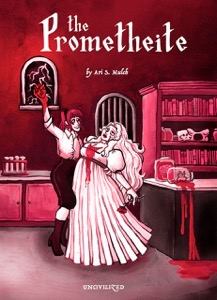
  • The Prometheite (2022)

    Prometheite

    The Prometheite is a spiritual remake of Mary Shelley’s Frankenstein. It’s not an adaptation or even a reimagining. Creator Ari S. Mulch breaks apart pieces of the novel and general Frankenstein pop culture lore, examines and considers them, then reconfigures some for use, some for discarding. So The Prometheite is entirely its own piece, albeit wholly dependent on Big Frank.

    Mulch also adapts the original novel’s narrative layers, duplicating most of Shelley’s original layer shifts. Violet to “The Creature” to Violet to “Creature” to Violet to “The Creature.” I mean, there’s no sea captain, but the moves are all very beautifully executed. Mulch figures out a new way to present them, mixing text and image to create visual pacing in the way only comics can.

    Violet is the Frankenstein (Victor to Violet, but not Frankenstein) analog. She’s an anatomy student surrounded by dumb, sexist men who escaped to university after convincing her parents trying to marry her off wasn’t worth the trouble. Not long after arriving, Violet’s pal, Henry Clerval, introduces Violet to his sister, Aveline. Aveline and Violet form a fast, deep friendship, while Violet immediately develops deeper, socially impossible feelings for Aveline.

    The courtship scenes, which include a very tense poetry reading from Aveline, are where Mulch immediately distinguishes Prometheite. Frankenstein is unromantic. When Victor resurrects Elizabeth, he’s not bringing back his love interest; he’s bringing back his possession. Regardless of mature devotion, Victor grew up thinking Elizabeth belonged to him.

    And we never see the Victor and Elizabeth courtship. Not even in the movies, really; because he’s marrying his little sister.

    Anyway.

    Violet is not interested in marrying her parents’ ward, she’s interested in Aveline, and just when it appears Aveline’s ready to act on her mutual feelings… she falls seriously ill. And her parents won’t let Violet visit her.

    Aveline’s death scene turns out to be Mulch’s next great sequence. Prometheite’s about a hundred pages, and sometimes Mulch will spend beau coup pages on a scene. Four to six pages, building tension, focusing on some character detail. It’s often exquisite.

    The tragic romance overshadows the next bit, where a grieving Violet discovers she has the means and will to attempt to resurrect Aveline. There are a lot of unanswered questions about Violet’s medical science, even for a Frankenstein. I think Frankenweenie gets more into the details.

    Suffice it to say, the experiment’s a success and Aveline’s resurrection. She just happens to have some stitches she can never have out, and she’s not allowed to leave the house. Ever.

    At this point in Prometheite, the comic entirely diverges from Frankenstein for a long while. Except in how Mulch tells the story, which quickly shifts to Aveline’s perspective, just like the Creature narrating in Big Frank. Everything’s such a change—it’s a macabre romance, with Aveline worrying about rotting and Violet getting madder about her science.

    The action builds to a major confrontation, probably the act two break, and then it’s back to Frankenstein for the finish. However, when it turns out Mulch is going to do a repeated Frankenstein nod for the ending, it’s a surprise. Prometheite had gotten out on its own so much it didn’t seem like Mulch would bring it back.

    The ending works. It’s a devastating, depressing love story.

    Mulch’s art is good. Lots of great work on expressions; Prometheite is lots of talking heads and reaction shots.

    The comic gets more impressive the more you think about it. It’s a good, engaging read, but backtracking through Mulch’s plotting and pacing, The Prometheite reveals itself quite superior.

  • Swamp Thing (2019) s01e09 – The Anatomy Lesson

    Asterisks about Writer’s Guild credit rules, I knew when Mark Verheiden’s name came up on this penultimate episode’s opening titles, The Anatomy Lesson was in trouble. It’s not a lot of trouble, but there are definite backslides. The script’s not interested in Crystal Reed’s experience at all; on the one hand, she’s the action hero rescuing her kidnapped love interest, so it’s not primed for character drama. On the other hand, Ian Ziering gets that action hero arc without any stakes whatsoever, just to not be a selfish white surfer bro.

    It’s a packed episode, with three main plots, then three subplots. Reed and Maria Sten team up like it’s seventh grade to track down kidnapped swamp monster Derek Mears. Kevin Durand and Will Patton are going to dissect Mears. Ziering gets a visit from still not Kevin Smith Macon Blair, who tells him to (blue) devil up and save the day. Subplots are Selena Anduze’s Alzheimer’s getting worse while Durand’s busy on his supervillain origin story and then Henderson Wade being mad at mom Jennifer Beals. Beals isn’t in the episode, though, and Wade doesn’t have anyone to talk with, so it’s not clear why he’s mad. Is he angry because she didn’t tell him Patton was his real dad, furious because she got mad when he killed someone to stop Patton from blackmailing her, and just sad he’s a murderer? Doesn’t really matter, it’s the second-to-last episode, and Wade’s got a comics-ordained arc to complete. Then Patton has to get his revenge on wife Virginia Madsen, who hopefully gets a better send-off next episode.

    Speaking of comics-ordained, this episode takes its title from Alan Moore’s famous (second) issue of Saga of the Swamp Thing. It’s not a direct adaptation (unfortunately), but it’s got the same basic reveals. The episode focuses on Durand, not Mears, which… might work out next episode or might be a missed opportunity. The episode’s got some big reveals and some reveals pretending to be big, but no reason they won’t be able to land it. Might be nice if Reed got something to do.

    One last thing: director Michael Goi. Not good. Gets Sten’s worst performance in like four or five episodes, which is back when Verheiden was getting credits too. Once the action oscillates away from Reed and Sten, Goi’s direction improves, but every time it returns to them, it flounders. It’s impressive the show’s got the momentum to get through it, but it does. Good work from Durand, Anduze, and Ziering. Mears and Reed are fine but barely get anything to do.

    Let’s see what happens next time.

  • The Steel Helmet (1951, Samuel Fuller)

    The Steel Helmet is an admirable effort from writer, director, and producer Fuller. However, from the start, it’s clear some of the film’s successes will come with qualifications. Fuller, for example, has a great shot a quarter of the time, a terrible shot a quarter of the time, and okay shots half the time. Lousy shots always come after the good ones to emphasize the downgrade.

    Fuller, cinematographer Ernest Miller, and editor Philip Cahn have a terrible time putting sequences together, especially when they’re going from set to location. For example, the climactic action finale looks like it’s reused footage from another war movie; it’s not; it’s Fuller; it just looks nothing like the rest of the film.

    It’s not just for the action sequences, either. The problem’s present in the first scene and every one after.

    There are unqualified successes, of course. Many performances are fantastic, even when Fuller’s script loses track of his protagonist. The film opens with tough sergeant Gene Evans surviving a North Korean ambush. The bullet went into his steel helmet and looped around, leaving only a minor cut. A South Korean orphan, played by William Chun (as “Short Round,” which is apparently where Spielberg got it from for Temple), finds Evans and frees him. They quickly become pals.

    On their trip through Oz, they soon meet medic James Edwards. Edwards is Black, Evans is white, and Chun is Korean. There are scenes between Evans and both new friends about race, with excellent character moments for each of them.

    Instead of finding the Cowardly Lion, the trio finds a lost squad. Led by officer Steve Brodie, they’re supposed to set up an observation post in a Buddhist temple nearby. Evans knows Brodie and hates him; Brodie’s a dipshit officer. Evans also knows Brodie’s sergeant, Richard Loo. Loo’s Japanese American; Brodie doesn’t listen to him because he’s not white. Fuller, with a lot of gruff and bravado, drags the racism out of its hold enough to look at it in the light before letting it scurry back in.

    He’ll spotlight it later when a North Korean officer (Harold Fong) tries to sway both Edwards and Loo away from the actively racist U.S.A. Both attempts are protracted, and neither comes to a substantial conclusion (outside an awkward scene for the actors); however, it was enough to get the FBI investigating Fuller.

    The second act is the squad hanging out at the temple, with Evans as the de facto lead, but the focus widened more towards an ensemble piece. Besides Brodie, whose inevitable “dipshit officer redeems himself at the end” arc doesn’t take up a lot of them, there’s also Robert Hutton, Sid Melton, Richard Monahan, and Neyle Morrow in the squad.

    Hutton gets the most to do, though Melton’s the most memorable.

    Everything’s generally fine until the third act when Fuller tries taking the focus away from Evans and spreading it out. Then, just when he seemingly manages to widen it, he tightens back in on Evans for a lackluster postscript.

    Great performances from Evans, Edwards, Brodie, and Loo. Fong’s a little much—Fuller’s script walks a fine line of anti-Communism, anti-officer, pro-infantry, pro-progressive but armed U.S.A.—and Fong gets the worst of it. The mumbo jumbo also screws up Evans’s performance a little, leaving him in limbo as far as his character development.

    Still, it’s impressive as all hell, with a great score from Paul Dunlap, and when Fuller hits, he hits. It’s even more impressive given the meager budget; Fuller knows what he’s doing, but there’s just not enough money to realize it.

  • Tomb of Dracula (1972) #21

    Tod21

    Writer Marv Wolfman has been working on his Doctor Sun subplot since he took over Tomb of Dracula, with the arc running at least ten issues. So, it’s too bad it’s got such an underwhelming finish. It’s a Bond movie conclusion, only with the “good guys” literally inert the entire issue instead of just being dramatically inert.

    The issue starts with Dracula, Frank Drake, and Rachel Van Helsing held in a stasis beam. Vampire Brand tells Dracula the origin story of Doctor Sun, presumably because it’s supposed to be interesting to someone—Doctor Sun was a Chinese scientist who lost the Party’s trust, so they took his brain out and put it in a computer. They even made his own son—Doctor Sun’s son—do the dirty work. There are a couple entirely pointless digs at “Red China” in the comic; strange how Wolfman wasn’t concerned about inequities in the West.

    Though it tracks given the now dead Harker daughter was straight-up racist about Blade.

    Speaking of Blade, he and Quincy Harker have another entirely pointless check-in scene to remind readers if they hang out long enough, the story might someday get back to hip, Black vampire hunter Blade or decidedly un-hip old rich white guy vampire hunter Quincy. Wolfman covering all the reader bases there.

    The rest of the issue is Dracula and Brand vampire-fighting in a Bond lair while Doctor Sun monologues about his master plan: create a vampire more powerful than Dracula and transfer Dracula’s memories to this new super-vampire. But, see, Doctor Sun’s computer circuits run on human blood (Wolfman never reveals why the Red Chinese designed the hardware to be blood-dependent, though, again, Occam’s razor), and the only way he can figure out how to get a steady supply is to get a vampire to bring him victims.

    Since Frank and Rachel are in stasis for most of the issue, it’s unclear if they understand they’re pawns in a living brain’s plans. They may not even hear Doctor Sun communicating; they give no indication they do, but, again, they’re in a stasis field, so who knows.

    In other words, no one comments on Doctor Sun’s plan being insipid and not the work of a genius human brain-powered supercomputer. The plan’s not even good enough for a seventies comic book.

    Gene Colan and Tom Palmer’s art continues to be magnificent and make the book more than worthy, but, wow, does Wolfman’s first big long arc fizzle.

  • Swamp Thing (2019) s01e08 – Long Walk Home

    All right, the show’s definitely intentionally traipsing into the endgame, which is a hopeful sign they’ll be able to wrap it in the remaining ninety minutes.

    Crystal Reed returns to Atlanta with the sample of “the rot” and finds best friend Leonardo Nam less supportive than expected. And Reed’s got a new boss, Adrienne Barbeau, who isn’t impressed to hear Reed’s been hanging out in the swamp instead of doing case studies or something. Suddenly, the show’s about CDC bureaucratic procedure and minutiae, but really just to set Reed up with some personal conflict.

    It’ll turn out that she doesn’t need the personal conflict, but it’s nice for her to get some character development on the professional arc. The show hasn’t been about Reed as a hotshot, globe-trotting scientist since episode two at the latest.

    Meanwhile, Will Patton is hallucinating his way through the swamp, including flashbacks to his origin with his dad. We find out why the swamp hates Patton and Patton hates the swamp. Despite that hostility, Swamp Thing Derek Mears isn’t willing to let Patton bleed out, so the two have a moment. Thanks to Mears’s field dressing, Patton doesn’t get so woozy he’s going to reveal any of his own secrets. It’s a surprisingly good scene. I’d thought Patton had run out of mandibles to chew at “Swamp Thing,” but he’s got another set.

    And Mears is successful in his first significant scene opposite anyone but Reed.

    The episode keeps another couple of subplots percolating. Henderson Wade’s not feeling great about his recent actions and discoveries; mom and boss Jennifer Beals’s constant reminders to buck up and get through are wearing thin. It’s treading water but not bad.

    Finally, there are more machinations with Michael Beach’s malevolent venture capitalist, including his continuing team-up with Kevin Durand. No Virginia Madsen at all this episode, which is a bummer. Hopefully, they’ll get that thread resolved okay.

    I already wish “Swamp Thing” had another episode to finish up. This episode’s mostly getting the pieces back into place; it does rather well, functionally, with the now separated leads in their own respective dangers, making for a compelling forty-five minutes.

    But this episode’s pacing being successful is contingent on next episode having enough time to get things done.

    Fingers crossed.

  • Scream Blacula Scream (1973, Bob Kelljan)

    Scream Blacula Scream has a dreadful moment during a crucial sequence, and even though the film takes the hit, it somehow can build up almost enough goodwill—in mere seconds—it could easily succeed. The ending’s a little too confused, though, with a very questionable end credits song and design. But the film’s excellent throughout, surviving a bold, misguided attempt at camp and then a wishy-washy seventies finish.

    The film’s got five spectacular elements. First, there’s lead William Marshall. He gets to play a tortured vampire, but without a subplot about reuniting with a reincarnated wife. He’s just trying to get by in 1973, and he’s willing to manipulate, maim, and murder to do it. Scream takes almost right until the third act becomes a cop concerned about his girlfriend hanging out with a vampire and decides to do something about it. Until then, it’s Marshall’s movie, with the deliberate script giving him a lot of space to just act his way through.

    Second spectacular element is director Kelljan. While Scream’s scary when it needs to be and generally disquieting when tasked, Kelljan also directs the heck out of the actors, starting with Marshall. After Marshall, Kelljan’s attention is mainly on leading lady Pam Grier, but Kelljan pays attention to everyone. He takes all the victims seriously, and there are so, so many victims in Scream. The first movie didn’t show Marshall building his army of the undead; this one does so in detail, with Marshall’s mistreatment of his “soldiers” being part of his character development.

    Third spectacular is Grier. She’s either playing brainwashed, naive, or infinitely altruistic. Grier’s a voodoo priestess, and Marshall wants her to exorcize him. She can’t say no to him, even as the body count around her starts rising. Marshall’s come across Grier through his first victim, her voodoo “cult” rival, Richard Lawson. Lawson’s fourth lead, though Grier’s usually alternating with her ex-cop boyfriend, Don Mitchell.

    Mitchell’s the only weak performance in the film. He’s not unlikable; he’s just not good.

    However, once the fourth spectacular shows up, Mitchell becomes a lot more welcome because it means more Michael Conrad. Conrad is the police lieutenant (credited as a sheriff in the end titles, like they forgot they weren’t taking place in L.A. again), and Mitchell was his star detective. The latter retired young to get into African cultural studies or something. It’s unclear why Mitchell’s incredibly wealthy.

    Conrad’s an absolute delight, and he enthusiastically lifts Mitchell in their scenes together. Conrad doesn’t believe in vampires, while Mitchell can’t think of any other explanation. Well, there’s a brief period they’re investigating Grier, Mitchell’s girlfriend, because of the voodoo, but it gets quickly forgotten thanks to vampire antics.

    The last spectacular is a shared one because caveats—Isidore Manofsky’s photography and Fabien D. Tordjmann’s editing. Manofsky’s photography is absolutely fantastic and wonderfully complements Kelljan’s direction. Except for the day-for-night shots. They’re terrible, and there are way too many of them. So, caveat.

    Tordjmann doesn’t have quite the same caveat because the editing’s never inadequate or inept like the day-for-night. It’s just okay. Then the third act has some breathlessly cut sequences.

    Add them together, and they’re spectacular.

    Good music from Bill Marx, nice supporting turn from Lynne Moody.

    Scream Blacula Scream’s good. It’s nearly really good, but it’s still damned impressive.

  • Resident Alien (2021) s02e11 – The Weight

    Besides one to two songs too many—seriously, “Resident Alien,” but your composer to work—the show’s entirely back on track after last episode. There are some considerable plot developments, but everything’s through a character development lens. The show does continue to adjust plot trajectories, however, as sheriff’s deputy Elizabeth Bowen takes it on herself to figure out what’s going on with the (now dead) hit men come to town.

    Her boss, Corey Reynolds, and the neighboring town’s detective, Nicola Correia-Damude, are also on the case, but they’re a little too busy making eyes at each other. Early in the episode, Bowen puts her foot down about her work not being recognized, which changes the dynamic from how last episode left things. It also helps making Correia-Damude and Reynolds’s flirting likable. Reynolds is occasionally played entirely for a boob, and while he’s great at it, it doesn’t seem to endear him to Correia-Damude. This episode works at making him endearing to her and vice versa.

    So it’s up to Bowen to actually get to the bottom of things, bringing in Sara Tomko to help. Tomko’s got extra time on her hands because she’s not hanging out with Alan Tudyk since discovering he tried to mind wipe her memory of killing a bad guy to save Tudyk. Tomko’s got a fantastic arc this episode, involving an old friend who knows nothing about her secrets, Bowen, an old friend who knows some of the secrets but not the alien one, Alice Wetterlund, and the dad who knows it all, Gary Farmer. It’s lovely, with some great work from Tomko and Farmer.

    Wetterlund then also gets her own character development arc. As she makes life changes for her (offscreen) boyfriend, it turns out she might not have gotten the skiing bug entirely out of her system.

    Meanwhile, Tudyk’s got a combination comedy and character development arc with kid Judah Prehn. Prehn and best friend Gracelyn Awad Rinke have a big secret: Rinke’s fostering the alien baby, now in human form, played by Kesler Talbot. Tudyk’s looking for the baby and enlists Prehn’s aid. It’s a funny arc, which also ties into Prehn’s parents, Levi Fiedler and Meredith Garretson, and their arc.

    Not a lot for Rinke to do this episode, but fantastic when she gets material. Also outstanding are Diana Bang and Jenna Lamia, who both get a spotlight scene.

    The script’s credited to Zach Cannon, his first writing credit on the show. It’s a really good script. Nice direction from Warren P. Sonoda. Some great Tudyk scenes, too, obviously. The episode’s exceptionally well-balanced.

    Just got two or three too many bland country pop songs in it.