-

-

The Big Sick is the true story of lead and co-writer Kumail Nanjiani and his wife, also co-writer Emily V. Gordon. Nanjiani plays himself in Sick because it’s a star vehicle explicitly for him. Gordon doesn’t appear. Zoe Kazan plays her. Gordon co-writing the film adds a couple of extra layers to the film; the most obvious is how much of a Nanjiani vehicle it’s supposed to be, and the second is how it portrays the couples’ parents.
While the actual events of Sick took place in 2007, the film came out ten years later with the latest in laptop and mobile phone technologies. The visual voicemail scene isn’t true! But it also makes the anti-Brown person racism Nanjiani experiences different than it would’ve been ten years earlier. The always hilarious (not kidding, every one is a winner) 9/11 gags would play so much differently earlier. Big Sick did not forecast the future very well with white male bigots either.
Anyway.
The film starts with Nanjiani as a burgeoning stand-up comic. The film’s never clear who’s supposed to be the funniest on stage, making it a little like a Godzilla movie where there’s no rhyme or reason to why the supporting kaiju can beat up the other supporting kaiju. He’s not supposed to be the funniest, but he’s definitely the funniest. And then some of the people who are supposed to be funny aren’t?
He regularly goes to dinner at his parents’ house, and they’re devout Pakistani Muslims. Well, devout, but there’s swearing. Anupam Kher plays the dad, Zenobia Shroff plays the mom. Shroff’s an overbearing Muslim mom who’s just trying to get Nanjiani to go to law school and marry a Pakistani girl. She brings them over to dinner to audition; Nanjiani keeps all their headshots in a cigar box. Kher’s bit is he thinks he’s cooler than his sons.
They’re not going to ever get anything. Kher at least doesn’t get a cold diss; Shroff gets a cold diss.
However, as the white parents, Holly Hunter and Ray Romano get best supporting bait. Hunter’s fantastic, especially as she and Nanjiani bond. Romano’s excellent, too; it’s simultaneously more impressive than Hunter (because of course she can do this part) while not technically being better. Good thing they wouldn’t be competing for the same nomination.
So, one night in the club, Kazan heckles Nanjiani, and when he sees her at the bar later, he picks her up. She’s a manic pixie dream girl who goes to the University of Chicago for a therapy master’s; she can keep up with Nanjiani’s constant comedian barbs, just like his pals (even better than his doofus roommate, Kurt Braunohler, who’s never as funny as the film thinks). After what she intended to be a one-night stand, they start dating.
Only Nanjiani doesn’t tell his family about her and doesn’t tell her about his family. He definitely doesn’t tell Kazan how mom Shroff wouldn’t stand for him dating a white girl and how he’s actively in the arranged marriage market.
Once Kazan finds out, she ends the relationship, leading to Nanjiani using what he’s learned picking her up to use on other comedy club patrons. Meanwhile, Kazan gets a mystery illness, and eventually, Nanjiani comes up on the phone list for potential support staff. When he gets to the hospital, Kazan crashes, and Nanjiani has to falsify a medical release to allow her intubation. It saves her life, so I guess there are no repercussions.
He calls Hunter and Romano to come into town from North Carolina (they’re apparently North Carolina liberals). After realizing they know how the relationship ended, Nanjiani eventually bonds with Hunter and Romano through a shared intense experience. Lots of great scenes for the three of them, easily the best written in the film.
Does Gordon wake up? Does Nanjiani’s “House M.D.” impression save the day? Oddly, it might, but the film entirely glosses over it.
The third act’s a mess, with Nanjiani making big life decisions and everything related to them playing out off-screen. The film’s got a problem with presenting time passing (odd, since Nanjiani has strict time-based dating rules to juggle white girls and disapproving family), and there’s not anywhere near enough character development on the supporting cast. Given the film’s got two extremely well-paced acts, first with Nanjiani and Kazan, second with Nanjiani, Hunter, and Romano, it’s even more disappointing when the third fumbles.
There’s a nothing subplot about Nanjiani’s one-person show about growing up Pakistani, which ought to be important but isn’t. Though, given Kazan’s not important either, nor are Shroff and Kher, so it going nowhere is par for the course.
Then the end credits post-script reveal the real story—for Kazan (and Gordon), anyway—came after the movie’s events. And then, when you see the actual timeline, it’s even worse.
As a vehicle for Nanjiani, The Big Sick’s perfect. Ditto as Oscar bait for Holly Hunter and Roy Romano. But it’s just a disaffected male redemption movie.
And Showalter’s direction is exceptionally pedestrian. The film’s technically competent and all, but it’s a good thing it’s got a well-written, talky script; otherwise, there’d be nothing doing.
-

It appears to be the end of act two for “Swamp Thing: The De Facto Mini-Series,” with one character presumed dead at the end, another three saying goodbye to Marais or at least seriously considering it, and a big twist revealed. Maybe multiple big twists. But it’s hard to keep track of the double-crosses when dealing with soap opera villains like Will Patton’s not-quite-successful industrialist.
Patton was about all they had for forceful performances when the show started. But, thanks to plot perturbations and the casting of Jennifer Beals (still wish she’d been around for the pilot), the performances have improved across the board. It’s still not great when Crystal Reed talks about her duty as a “CDC scientist,” but the better material outweighs it now.
Plus, Virginia Madsen gets an amazing episode arc as she realizes she can’t rely on Patton to negotiate her future—having recovered from her supernatural struggle against a malevolent spirit assuming the form of her dead daughter, Madsen apparently had to give up fostering the little kid who the spirit possessed. So she’s got more time on her hands.
What’s particularly great about Madsen’s arc is how it unfolds across the episode. Sure, Reed and Andy Bean have a whole adventure together, but they’re off in a lower-budget nature sci-fi Netflix series. Madsen’s got a character development arc. It’s awesome.
Especially once Michael Beach shows up.
He’s playing Nathan Ellery, who was a Bond villain in the comics. Most seventies comic book villains were Bond villains. The show characterizes him as a venture capitalist whose mysterious organization is funding black book projects. Or something. It doesn’t matter, Beach is fantastic. And he’s not chewing through it all like Patton.
Patton was great stunt casting for “Swamp Thing” as a nighttime horror soap. However, with the other characters showing agency around him and actors finding their performances, it doesn’t work as well. Particularly with Madsen and Beals.
And the show seems to know it, moving the chess pieces for the final act.
As for Reed and Bean… we’ll see. Swamp Thing Derek Mears—who almost calls himself a swamp thing—doesn’t get much screen time this episode because he grew Reed a hallucinogenic spore, so she sees him as Bean most of the episode.
It’s definitely Bean’s best performance. He’s mansplaining about things only he and the plants know, which kind of makes Swamp Thing the ultimate white male role. Or at least, Alec Holland in hallucinations post-transformation (Alan Moore actually wrote Alec Holland’s human soul as a dick, which is perfect).
So, Bean tells Reed all about his new understanding of life, the universe, and everything, including there’s a very dark place nearby they totally shouldn’t ever go and inspect.
Reed immediately zooms off to the nearby dark place where the “Rot” has taken over. The Rot is a newer Swamp Thing villain, so I’m not familiar with it. It’s gross, grey, and has tentacles.
It’s eventually an exciting adventure plot, with “Swamp Thing” finally using some of the budget to make the swamp look pretty. Right before showing it all rotty.
And then Kevin Durand and Selena Anduze have an excellent arc, full of muted conflict and quiet tragedy.
All in all, solid episode. Despite the lengthy, early slog, I’m both now on board and bummed it’s almost over.
I’m also pretty sure they’re doing the good stuff intentionally at this point.
-

So, “Swamp Thing” keeps the momentum. It’s not a breakout episode like last time, with a combination of action and reveals. This episode’s got the reveals and developments—the show’s not taking its time with subplots. Not sure if it’s because their order got cut or if they were just unsteady in the “pilot” episodes, but they’ve found very solid ground.
Apparently, they just needed to up the actual supernatural instead of the mysterious and probably supernatural. Swamp Thing and Blue Devil and the Phantom Stranger and Madame Xanadu—get all those gears working and the rest of the show being a Southern Gothic corruption soap opera shot muddy evens out. “Swamp Thing” needed to escape reality as soon as possible; now, free of it, the show’s character choices work all the better. Human heart in conflict with itself, others, and its (supernatural) environment: just ups the ante.
Potentially.
The show continues to make interesting choices, plotting-wise. This episode, it’s Selena Anduze (as Kevin Durand’s wife, fellow scientist, and moral compass), Jennifer Beals, and Henderson Wade. Wade in particular. He’s revealing a brooding side to the beefcake. And Beals is just great at this point. If the show had opened with her and then transitioned over to Andy Bean and Crystal Reed, it would’ve been awesome. Well, so long as they had the current few episodes’ writers on it. The first couple episodes got rough on the dialogue.
Will Patton and Kevin Durand are delightfully restrained bad guys. Reed confronts Patton about sending thugs to rough up Maria Sten (who’s not as good as last time but better than before), which led to Ian Ziering getting smacked on the head. He’s now comatose with low brain activity and little chance of recovery per Reed.
He does, however, have REM sleep visibly going on, but no one’s paying attention to him, which fits the characters a little better than it should. Everyone in “Swamp Thing” is operating under unimaginable pressures and would constantly be making sleepy, bad choices. The show’s not a lackadaisical anthology of supernatural incidents; traumas hammer. I may be making excuses, but there are a couple of really deft moves in the episode—Tania Lotta gets the writing credit—and I feel like there’s agency behind the show’s better decisions.
Also, Toa Fraser’s direction is good. Not showy, sturdy; funny how the big-time movie director couldn’t find a tone, but the TV directors can; you’ve got to direct for the soap.
And it’s not a particularly soapy episode. Patton and Durand’s machinations are sci-fi, and Ziering’s their guinea pig.
Good episode for Ziering. He’s been likable on the show, but he’s downright charming now. Guess burning him alive in blue flame adds sympathy.
Reed and Swamp Thing Derek Mears have a bit to do—the episode opens with an action scene, then there’s lots of talking before some suspense sequences and chase scenes, but no more Swampy action. There’s some Swampy magic—he’s talking about the Green a lot, and I’m very curious if the show’s going to be able to do it (either in terms of success or of four episodes left). It comes at the end, setting up a precarious next episode.
But the show’s definitely improved—a lot.
-
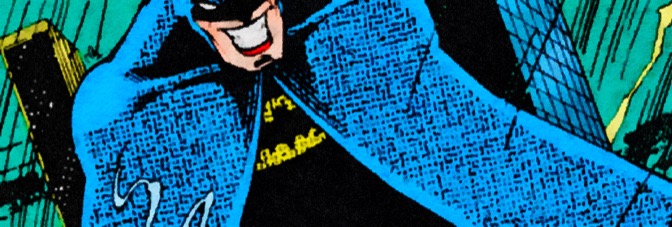
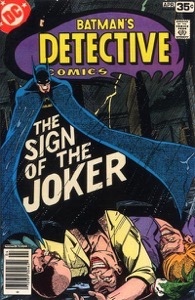
I either made a crack about Steve Englehart writing the narration for Detective Comics for the “Batman: The TV Show” announcer, or I thought about making the crack. This issue Englehart’s back at it, ad nauseam. Then Chief O’Hara shows up doing banter, and maybe it’s supposed to be a grim and gritty remake of “Batman: The TV Show.” It’d still be bad, but at least it’d make some sense.
This issue finishes Englehart’s run on the book, getting some resolution for the Rupert Thorne and Hugo Strange business and Batman’s romance with Silver St. Cloud.
It’s not very good. I mean, there’s some great art. Most of the comic takes place in the rain, and artists Marshall Rogers and Terry Austin do some beautiful work. The story’s not very good. It’s not exactly badly plotted… well, wait. Silver does charter a plane from Akron to Gotham to go back for the finale. But the split is good; it’s between Batman’s failed attempts to thwart the Joker, Silver hitchhiking with Rupert Thorne, and then a little Joker spotlight.
The Joker stuff in this issue—writing-wise—is nothing compared to the last issue. It’s not bad; some of it’s good; it’s just not startling. It’s pretty good, at least until Batman shows up and pontificates.
The Batman and Joker stuff this issue also has an amusing subtext: Batman can’t figure out how to stop the Joker on his own, and only because of magic can he do it. It’s silly.
But they also have a rooftop chase scene on skyscrapers in the rain, and Rogers and Austin draw the hell out of it. Great colors from Glynis Oliver.
Some of the issue reads like The Dark Knight ‘Returns’, down to how the panels work. Then other times, it reminds of Todd McFarlane. Englehart, Rogers, and Austin undeniably influenced. But unless you’re doing a Batman history report or studying Rogers and Austin’s art, you can skip the arc. Or just read Laughing Fish. Then you miss the worse writing and terrible, shallow, weird characterizations from early in the arc.
Anyway.
Gorgeous art. The rest can go.
-

Wait, did “Swamp Thing” just get good? I mean, this episode’s definitely good. It’s a combination of season arcs progressing and culminating, better than normal writing (credited to Franklin jin Rho), and better directing of the actors. Greg Beeman directs. I’m not sure I’ve seen anything he’s done since License to Drive in 1988.
But he gets Crystal Reed’s best performance of the show so far, a decent supporting one from Maria Sten (I knew calling her out would result in her getting better, three years retroactively), and a full-stop good one from Jennifer Beals. Will Patton chews a little less on the scenery as the show’s revealed more of his villainy. Virginia Madsen’s uneven but ultimately successful. It’s her season arc getting the culminating here.
This episode marks the halfway point in “Swamp Thing.” The show infamously got its season order cut, then got canceled before even airing, so it was unclear if the show would ever find direction. It does. And, regardless of the quality, their gradual buildup does pay off. Including Swamp Thing Derek Mears finding out about the Green, but not from John Constantine (a Matt Ryan cameo would’ve been difficult but extraordinary), but instead from a Phantom Stranger (Macon Blair, in a Silent Bob impression). It all starts tying together, including Reed realizing there’s something supernatural to the swamp.
Mears and Blair have a handful of scenes together—two or three, but if there are three, the second one’s entirely unmemorable—where Mears learns how to listen to the trees. They tell him (and the viewer) something about Reed’s history with Patton and Madsen’s daughter, played by Given Sharp. Melissa Collazo plays young Reed, and it’s kind of amazing how well they cast younger versions of people even on streaming these days.
Sharp is haunting Madsen, this episode possessing her new ward, Elle Graham. The possession stuff is just okay until Graham starts trying to manipulate Madsen, then it starts getting good and never slows down.
Then Beals has a subplot tying into the murder of Mears’s human self (Andy Bean shows up in flashback, which is starting to get annoying). Real good twists and reveals, with Beals raising the bar on “Swamp Thing”’s acting. Patton’s a delight, but he’s hamming it up. Beals is outdoing him sober, so to speak.
Plus, Ian Ziering’s getting downright sympathetic.
I’m hopeful “Swamp Thing”’s uptick will continue; either way, Drive All Night’s a fine forty-five minutes of television.
-

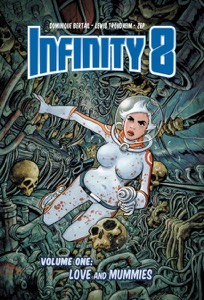
Infinity 8 is very high concept. It’s a series of eight stories, originally published in European volumes, published in the United States as eight, three-part limited series. It’s a combination of hard and soft sci-fi: a passenger ship has encountered a space graveyard and needs to investigate. They send a single agent. Agents are intergalactic super-cops, but good guys.
That agent will investigate, relaying findings back to the ship, whose captain can reset time in eight eight-hour-loops (so it should be Infinity 888). The next time out, the agent or crew will have that extra experience.
All that high concept comes through in roughly three pages. Writers Lewis Trondheim and Zep don’t spend much time on the concept. It’s a very interesting way to do a first chapter: intentionally delay establishing the ground situation. But then again, maybe the possible timelines only matter once you have comparable ones.
The agent this issue is named Yoko Keren. She’s just a passenger on the ship, enlisted to help out because she’s never off-duty exactly; she’s been trying to find a suitable mate from the 880,000 (88, get it?) other passengers. She scans all of them, checking their medical records.
She also breaks up bar fights as necessary. Otherwise, we don’t really get to know the character. She has one intense experience after another; Love and Mummies is mostly an action comic. Sci-fi action, lots of imaginative design, lots of humor, but it’s all action. Point A to B to C to D and back to A via C but not B. Once it’s done being an action story, it becomes a romantic comedy, which retroactively contextualizes the whole thing as a romantic comedy and makes it even more successful. Trondheim and Zep are dealing with alien species, an undefined future, and the mysterious space graveyard, and they weave a lovely, amusing romantic comedy through it. It’s like they finish weaving the story, and then you see what it’s been.
It’s an utterly charming approach, which is particularly effective since the story itself gets gross.
First, Yoko’s got to deal with an annoyingly horny second officer, who doesn’t just proposition her (without even knowing she’s on a mate hunt); he also pesters her via comlink while she’s out exploring. Then she’s got to navigate around the space graveyard, where most things are covered in maggots.
Unfortunately, the Infinity 8 is carrying many Kornaliens, a species who loves to eat dead things. The longer dead, the better. They crave it uncontrollably and riot until they can get off the ship and find corpses to munch on.
Initially, the Kornalien subplot is separate from Yoko’s exploration plot. She discovers artifacts from a wide range of sources, including the now destroyed planet Earth, but when she happens into a Buddha’s temple, her story collides with the Kornalien subplot. There she meets Sagoss, who’s just eaten a monk who died for love, and now Sagoss has those same emotions towards Yoko.
Unfortunately, his fellow Kornaliens have just decided the best way to get corpses to eat is to make them out of the Infinity 8’s passengers. They start attacking the ship, turning Yoko’s exploration mission into a combat one, against incredible odds.
Making things more difficult are the Kornaliens who maybe aren’t attacking the passenger ship, but have still eaten something to give them unhelpful emotions.
Plus, Sagoss is an electrician and Yoko needs an action sidekick.
There’s lots of suspense—including an exquisite chase sequence—there’s a lot of humor, there’s a lot of great art. Dominique Bertail does the art (with Olivier Vatine doing the design for the whole series). Bertail’s got a lovely sense of pacing in space; Yoko’s either on jet thrusters or a cosmic sled and the art conveys her velocity alongside the enormity of the space graveyard. It’s wonderfully well-paced.
The end’s a little too cute, a little too rushed, but it’s not actually Yoko’s story, after all; she’s just one chapter of Infinity 8.
-

Blacula gets by on novelty and hero Thalmus Rasulala’s effortless charm. Rasulala is a medical examiner with the LAPD; the movie’s got a hilariously silly name for the job and department; it just means he gets to go around and flash an ID card and get things done. He’s also the only Black cop in the movie; all the rest of them, including the numerous extras, are white.
While there’s a “romance” in Blacula, Rasulala’s investigation is the main plot. Even though Vonetta McGee, as Rasulala’s girlfriend’s sister, brings Rasulala into the story, she’s going to get less and less as the film goes on. Conversely, the sister—played by Denise Nicholas—will get to go along with Rasulala on most of his vampire hunting. Including when Nicholas has a panic attack upon her first vampiric encounter, something cop Gordon Pinsent will also suffer. Only Rasulala is cool enough not to have a panic attack. Oh, and McGee. She’s fine with vampires.
William Marshall plays the title character; in the eighteenth century, African prince Marshall goes to Europe to ask Count Dracula (a bad but effective Charles Macaulay) to pledge to ending the slave trade. Macaulay responds by turning Marshall into a vampire and locking him in a coffin (where’d Macaulay get African soil? Don’t ask; barely any vampire rules here). Then Macaulay locks Marshall’s wife, also played by McGee, in a room with the coffin so she can starve to death, listening to him starve in undeath. Really, really shitty thing to do. And even though the film’s got direction problems from the start, it also gets Marshall and McGee some fast, deep sympathy.
Only when Marshall wakes up in L.A. he’s an entirely different character. I mean, he’s still in love with McGee, but he doesn’t seem phased by the two-hundred-year time difference or the reincarnated wife or being a blood-sucking vampire, killing people left and right. Plus, one of Blacula’s few vampire rules has them changing immediately, so Marshall’s putting together an undead army.
So he’s not sympathetic. Maybe if he and McGee had some great chemistry, but she’s flat in all her scenes. When she’s vaguely brainwashed, it’s okay; when she’s trying to endear her character, not so much.
McGee is a trooper, though. Director Crain shoots the film in lengthy medium shots, where the actors have to move around the frame a couple times, keep up with the camera, and do foreground and background work. Blacula’s stagy, which seems to be the curse of the vampire movie.
Crain’s also not able to do horror. He can do a little supernatural action, but only a little. Editor Allan Jacobs has some almost okay sequences, but Crain’s footage is working against him. John M. Stephens’s photography is fine, and Gene Page’s music is pretty good a third of the time, which adds up since almost every scene has background music. The best technical is easily Sandy Dvore’s playful but ominous opening titles sequence.
Marshall’s an imposing villain without being a compelling one; it works out since Blacula’s a police procedural with monsters.
There are a handful of notable bit parts. Ji-Tu Cumbuka is a lot of fun as a random friend, Emily Yancy’s good as one of the eventual vampire brides, and Elisha Cook Jr. phones in a tepid but memorable cameo.
Blacula’s got the insurmountable problem of budget and director Crain, but it’s entirely watchable with an outstanding leading man performance from Rasulala.
-

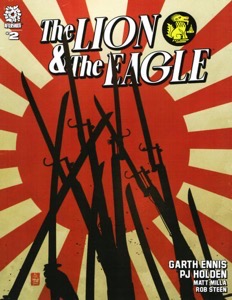
This issue’s one part history lesson, one part ground situation establishing, one part war action. The Chindit forces are moving into position now, airdropped behind Japanese lines to wreak havoc. Writer Garth Ennis tells most of their successes in summary, outside the opening battle sequence, where artist PJ Holden reveals how glorious and gory the art will get.
Though Holden does once again get a little confused with the shifts between time periods. It’s particularly noticeable this time because almost the entire story comes through in dialogue about the latest war developments, so the issue demands attention. Even then, the time shifts are wonky.
It’s a minor complaint, however, and the only one. Otherwise, Lion & the Eagle is fantastic comics storytelling. Ennis plays around with the layering, giving the reader the backstory on the Chindit operation as a postscript once their mission changes. He’s very deliberate about the narration from protagonist Crosby and where and when things get introduced. Unlike the first issue, there’s not much in the way of character development. When Crosby’s pal, Alistair, finally gets something to do and Crosby muses on the last issue’s revelations, it’s almost the end of the issue, and these aren’t the most essential musings of the day. There’s a war on, after all.
Ennis puts a lot of effort into the supporting cast, starting with Havildar-Major Singh and his professional relationship with Crosby. Ennis spends much of the issue introducing the Gurkhas, the fearsome, joyful Nepalese soldiers. Ennis (and Crosby) get to have some fun amid the horror.
The history also seems ripe for a story, just the way things happened. Not even the Japanese forces being more formidable than initially assumed, but how happenstance can change the course of an operation and history. Ennis and Holden take their time with the comic, never rushing a conversation or briefing. It’s precise and exquisite. As expected, but still incredibly impressive.
-
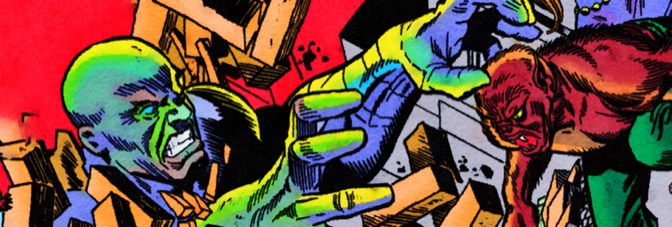
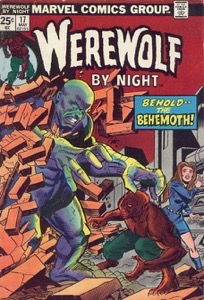
I’m already regretting this statement, but I’m glad to have hit the Don Perlin era of Werewolf by Night. No more wondering if Mike Ploog will get an okay inker this time (because he won’t); now it’s just Perlin enthusiastically hacking it out, page after page, including a kind of good double-page spread. Despite his wanting skills, Perlin’s visibly thrilled to be drawing this book.
At least on his first issue.
There’s some really bad art, though. You could make a drinking game out of how Perlin draws faces.
Mike Friedrich’s scripting again. The action picks up immediately following the previous issue’s finish, which had the werewolf unable to save a modern-day Hunchback of Notre Dame from falling. The Paris cops—all familiar with werewolf hunting—see Wolfman Jack in the cathedral and are out to get him.
There’s more about how Topaz can’t control him anymore, but she always manages just enough to get him to morning. Despite knowing how to hunt loup-garou, the Paris coppers don’t notice shirtless, barefoot, wearing the werewolf’s pants Jack Russell walking out with Topaz. Also, they abandon Topaz to the werewolf at one point (not knowing she’s the girlfriend).
Then they get back to L.A., where all is happy with the Russell family until sister Lissa explains it’s her half birthday and she’s only got six months (six issues?) until she turns into a werewolf too.
Until the action-packed conclusion, where the werewolf fights a giant monster, the comic’s a series of editors notes referring readers to previous issues. Not just Werewolf by Night,Tomb of Dracula, and Marvel Spotlight, you’ve also got to be reading Dracula Lives. Did Marvel sell back issues in the seventies?
Two things are missing from this section of the comic, as Jack pours over ancient texts trying to uncover a secret to save Lissa while having adventures with his neighbors. Friedrich does not write Jack as a low-key racist toward his Black neighbor, which is a nice change from before. But for the month between the opening resolution and the closing battle, Jack doesn’t seem to be spending any time with his girlfriend Topaz or panicking sister Lissa.
Even for a seventies Marvel comic, it doesn’t work. Probably because Jack’s narrating.
The finish promises even more changes to the book. I’m resigned to Werewolf by Night, but not in a bad way.
-

There are some fine performances this episode, but the whole thing seems strangely off, starting with the opening involving the kid who gets lost in the mines back in the thirties. It’s been a setting detail from the first season, but now we’re seeing it happen for some reason. By the time it’s relevant, the episode’s a third done, then it’s not clear why it’s more important for another third. In the meantime, there’s a lot of country music and sad regular cast members.
Except, of course, Sara Tomko, who Alan Tudyk brainwashed last episode to forget killing a bad guy to save him. He also wiped her memory of meeting estranged, given-up-for-adoption daughter Kaylayla Raine, who Tomko then stood up because she didn’t remember making plans. It ends up being an excellent episode for Tomko, as far as acting fodder, but the entire thing is a do-over of last episode.
They get away with it because it’s believable for Tudyk’s character, but… it’s not great plotting.
The script’s credited to Christian Taylor, their first credit. There’s some good stuff, and there’s some middling stuff. Good stuff is Tomko, Tudyk, hilarious deadpan nurse Diana Rang, and some of Alice Wetterlund’s romance arc. The middling stuff is Corey Reynolds getting excited to work with neighboring town’s detective Nicola Correia-Damude because they’re both from the East Coast. Last episode, Correia-Damude thought Reynolds was a loud-mouth doofus, this episode, she thinks he’s a loud-mouth from DC and full of good ideas.
Meanwhile, Elizabeth Bowen’s jealous Reynolds isn’t paying attention to her professionally again, which was a big—and seemingly resolved—story arc.
Then there’s mayor Levi Fiehler and his wife, Meredith Garretson, having marital problems. Fiehler makes the mistake of asking Reynolds for advice and taking it. Just like Wetterlund’s arc with beau Justin Rain, the episode rushes into the fire, then puts it out immediately. Big, easy-to-resolve stakes.
Wetterlund and Rain are at least cute. Fiehler and Garretson are annoying.
Cute, but annoyingly not in the episode enough are Gracelyn Awad Rinke and Judah Prehn. At first, it seems like Prehn’s going to be off-screen the whole episode because he doesn’t figure into parents Fiehler and Garretson’s lives this episode at all, but then he shows up to check in with Rinke and set up something for later.
The episode seems discombobulated. Director Kabir Akhtar doesn’t do a bad job—and does quite well with some of the performances—but he also doesn’t save the episode from the meandering script.
Or the grating country songs over all the heartache and sadness scenes, which are most of them this episode.
-

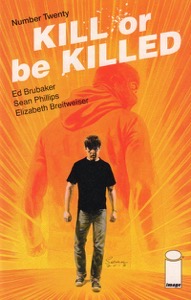
Oh, my.
So, Kill or Be Killed does not have a bad ending.
Nope, not bad.
You see where I’m going?
What’s a thousand times worse than bad? Horrendous? Is horrendous enough? Kill or Be Killed has a horrendous ending. Writer Ed Brubaker does a greatest hits of lousy writing choices, including protagonist Dylan telling the reader all about narration. Oh, wait. I forgot. How did I forget.
It opens with a 9/11 missive.
How does something open with a 9/11 missive and get worse? I mean, you could read this comic and find out, but I wouldn’t recommend it. I also won’t spoil it. There are numerous spoil points in the issue, with Brubaker doing multiple 180s to keep the issue going because he doesn’t—and never did have—a story. It’s been too long since I’ve read it, and I’m not going back, but there’s a not zero chance it’s a riff on a Mark Millar-type story, specifically Wanted. Again, not worth going back.
Artist Sean Phillips sadly never reveals why he does the oddly missized heads. There are lots in the issue, but then the story goes into summary mode, and most of the art is just Phillips doing a New York City travelogue or a mob movie montage, and he’s got enthusiasm for those sequences. It’s the rest he’s checked out on.
Kill or Be Killed would be a terrible comic from any creator, but for Phillips and Brubaker? It’s the pits, and, somehow, it keeps on digging.
-

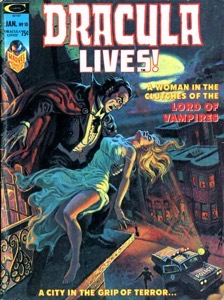
The secret to Doug Moench on Dracula Lives is the art. Tony DeZuñiga does a great, sometimes sketchy, always emotive style for their story this issue, and it’s fantastic. The art’s moody enough to sell Moench’s more turgid exposition.
They’re on the first story, which takes place in 1809 Transylvania, though the outfits and mannerisms make me wonder if DeZuñiga thought it was 1909, and they moved it back after the art was done. The vampire living in the big scary castle on the mountain keeps killing the town’s wives and daughters, but the mayor and police chief don’t want to hear about it.
One angry husband decides he will not let Dracula have his wife and fights back, with multiple terrible consequences and an excellent cliffhanger. Such good art. So, so good. I’d been impressed with DeZuñiga’s last work on Lives, but this one’s even better. Lots of range.
The magazine continues to suffer format adjustments—less funny text pieces, a letters page—but Gary Gerani’s Dracula A.D. 1972 review fits the Lives review pattern. Gerani gives a lengthy recap of the Hammer Dracula movies, mentioning the one or two he thinks are good, then does a very brief, disappointed review of the subject sequel. It’s a lot of filler for anyone reading Lives regularly.
Then comes the next part of the Bram Stoker adaptation by Roy Thomas and Dick Giordano. Giordano excels at drawing Victorian Good Girl art but can’t manage to draw a dog close-up. It’s an outlier panel in an otherwise gorgeous entry.
The action has moved to England, where Mina is writing in a new journal all about how much she misses her fiancé, Jonathan Harker, and why doesn’t he write more. She’s staying with her newly engaged friend Lucy, who’s taken to sleepwalking. It’s standard Dracula adaptation fare, but Giordano’s enthusiastic, and the chapter’s the first to really engage with the novel’s epistolary style. First Mina’s journal, then a newspaper report about the ship crashing. It’s one of the most successful entries, even if the source novel’s prose ain’t great.
The following story is a tedious sixteen-page story from Steve Gerber, Bob Brown, and “Crusty Bunkers.” It’s not a Dracula story; it’s a Lilith, Daughter of Dracula, story. My bad for reading things out of order, but at least this way, I know I don’t want to backtrack and read Vampire Tales for Gerber’s Lilith stories. Lilith is a Marvel attempt at a sexy female vampire who lusts for male blood. It’s very awkward wish fulfillment.
Lilith’s a good guy, though, beating up Mongols who interrupt Village hippies’ acoustic sets. This story has her getting involved in the problems of her human host’s boyfriend. He’s been framed; it’s up to Lilith to save the day. Or night, as it were.
Gerber writes a lot. A lot. Some of the action is good, but the endless exposition and Lilith’s tepid characterization are big minuses. Then there’s the art. Brown clearly needs a strong inker, and even though the Bunkers were Neal Adams, Bob McLeod, Terry Austin, and Russ Heath, apparently their Voltron combination was not what the art needed. As a result, it feels amateurish at times.
Not a strong finish to an outstanding issue—the best in a while, but also the most accomplished.
Though it does remind me to read Giant-Size Chillers in-line with my Tomb of Dracula read-through.
I also forgot the two-page finale: uncredited Moench script, uncredited Win Mortimer art. It’s in the style of a fifties horror quickie but way too overwritten by Moench. They obviously should’ve gotten DeZuñiga to even him out.
-

WordPress.com recently announced a return to their old hosting plans. They basically force upgraded everyone with a paid account a while ago; imagine Netflix introduced 4K and then made everyone pay a little more for it, whether they wanted it or not.
The WP.com upgrade “broke” a little bit of The Stop Button actually. The support experience wasn’t great, ending with “well, if you had a supported theme we could help.” There are something like eight supported themes now. There must be a million WordPress themes out there by now—at least hundreds of thousands.
But there were benefits. Plug-ins, mostly. And I suppose I could run Google Analytics but why. The plug-ins allowed for redirections, which meant I could finally retire superseded posts. The redirection plug-in I’m using is actually a 404 redirect plug-in, so I’m finally able to see all the old links still coming into the site. Going back to the Sandvox days. But also a bunch of old colloquial posts, long since gone. I don’t see the content, just the titles, back when I didn’t just number colloquial posts. I can’t even remember if they were on The Stop Button or if somehow I redirected a separate, just those posts blog. Nine years ago is a lot of time on the Internet; heck, I didn’t even remember I stopped blogging about comics and just talked about them on the Comics Fondle Podcast. I mean, I remembered real quick, but it’s not something I keep in active memory. Or even actively in passive memory.
One of my fears of colloquial blogging is repeating the same anecdote. I’ve got a lot of repeat gimmicks on here, starting with the “anyways,” but there are plenty more. Semi-colons and em-dashes galore could be the site’s subtitle. But telling the same bit about how a novel is a house and a short story is a room, or about how I was supposed to collect anything written for my MFA-era Word Count project, not write deliberately for it. One of the nicest things about media blogging is the endless stream of impetus.
Though I suppose if I did anecdotes in media responses, I’d be in danger of repeating them there. I do not, however, and have no plans to start.
But I have a bunch of plans for the rest of the year; scheduling plans. I’ve already started the new “Swamp Thing” show, and I’ve got the next rerun picked. I’ve decided on a movie emphasis, and I’ve got a big comic one picked out. They’ll alternate Mondays.
I’d thought about a new colloquial column on Mondays, and dreading the thought of it gave me an excellent idea for the movies. It’s still related to my constant attempts to recover the feel of “old-time blogging,” but it’s not as on-the-nose as a column would’ve been.
Thanks to running plug-ins, I’ve spent a handful of months rejiggering the site. The final significant change came in the last couple days. I’m not riding the stats, but I check them enough to balance exertion and outcome. The more automated processes, the better.
I don’t have any writing projects planned for the fall outside blogging. For a while, it seemed like I might. Instead, I’ve found the best modern portable typewriter setup—a Macally Bluetooth keyboard with a slot for devices; no trackpad for distractions; you can do a standing iPad setup the way Steve Jobs intended. All I’m using it for is blogging. It’s swell.
-

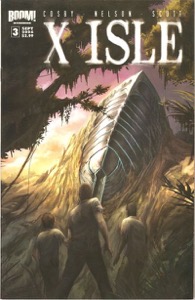
I was three-quarters of the way through the issue before I realized why it’s so much better—in addition to Greg Scott getting to do daylight jungle scenes and weird creatures—it’s better because the scientist’s daughter isn’t in it. She’s been kidnapped by parties unknown; her dad, her love interest, and Sam Jackson want to go get her; Dwayne “The Rock” Johnson, Jack Black, and Michael Biehn-type don’t want to go get her. They’re going to argue about it for at least two too many pages before they split up.
It’s a strange case of absence improving: writers Andrew Cosby and Michael A. Scott aren’t any better at the dialogue this issue; there’s just none of the horrible missing character. Kind of going to be a bummer when they rescue her because you can’t let Elisha Cuthbert die off in a summer movie.
(The comic’s from 2006).
A lot has to do with Scott’s art. He uses shadowy figures in long shots so he doesn’t have to draw them, and it’s an unsuccessful device, much like his photo-referencing. Scott should’ve just cast everyone like Sam Jackson and the Rock; at least then, he keeps the characters distinct. The bland white guy (Tim Allen?) dad and the bland white guy love interest look pretty much identical. So much so I think the colorist gets them confused at one point.
But the jungle backgrounds and the monsters are fantastic. The story might break out better to a comic this issue, though there’s at least one scene Scott can’t figure out how to do. He’s got problems with chase scenes as well, probably because of the shadowy figures in long shot business.
It’s a far better issue than I was expecting. I hope at least Scott’s upwards trajectory continues. No way the writing can hold once the obnoxious daughter’s back.
-

I’ve been trying really hard with Maria Sten, who plays Crystal Reed’s bestie. Sten’s just in the show to ask Reed what she’s going to do next or what she’s just done. Last episode, it seemed like Sten was going to have a reporter subplot, but it was just to set up Will Patton for later. In this episode, they don’t even pretend Sten will get anything to do for herself. She’s around for her dad, Al Mitchell, to get infected with a supernatural swamp bug, but just so she can call Reed into the subplot. It’s a bad part.
And Sten’s not good in it.
Maybe she’ll turn it around. But it’s four episodes in, and she’s worse with better dialogue. This episode’s got the least bad lines so far; writing credit to Erin Maher and Kay Reindl. It’s still lots of bad lines, but much fewer than before. And there’s character subtext for the first time ever: Patton wants to adopt little orphan Elle Graham, but is it because he misses having a daughter or because Graham proves a good control for intemperate wife Virginia Madsen? It’s a wild plot for Patton this episode. He starts burying a dead body and ends buying his wife a granddaughter.
But, in the context of dark soap opera, it’s a plus for the series. And Madsen’s fine. Jennifer Beals is still solid, Kevin Durand’s still out there in the right way, and other cast members are evening out. Jeryl Prescott and Ian Ziering only seem to exist during their scenes in episodes, but this time around, the show knows how to package the subplot.
Then there’s Swamp Thing Derek Mears and newly reunited pal Reed. The show provides no context for Mears’s journey of discovery with his new existence—the plants are talking to him, and he knows how to grow trees—but from a horror angle. The show never tries to give Mears’s perspective, including when he’s never on time to meet Reed in the swamp. She goes out three times, and despite saying he can feel her presence immediately, he always takes forever to get there. So what’s he off doing?
Swamp Thing started as sci-fi horror mixed with regular horror, but the show has a real hard time with it. Maybe because they aren’t doing the sci-fi. There are a couple times there’s atrocious dialogue, but the show can get away with it because there’s nothing else they can do at that moment. They’ve boxed themselves into this supernatural threat-of-the-week format, and the only way out is through.
There are some secret origin hints about Reed; she has a nightmare about her greatest fear, and it’s not killing Madsen’s daughter; it’s something else, meaning the Madsen and Patton dead daughter storyline gets pushed some more instead of just dealt with. Hidden secret soap operas are so lazy.
Anyway.
It’s the best Reed’s been, and Mears’s still all right.
-

They do bugs.
In the nearly fifty-year history of Swamp Thing, I don’t think there’s anything ickier than the bugs. Including when he fought like blood monsters who use intestines as tentacles or whatever. The bugs were worse. Just pages and pages of bugs sent from Hell to torment the living. Yuck.
And this episode does the bugs.
Only they’re not demonic; they’re… well, it’s unclear. But, so far, there’s not some entity controlling them, so they’re just bugs on their own—maybe juiced up on Kevin Durand’s magic plant serum—but they’ve got agency. Makes them kind of cute. Or at least their antics are cute when they’re not eating their way through human bodies.
This episode’s got the first talking Swamp Thing scene, presumably with Derek Mears doing the voice. It’s good. There’s no resolution to it because the writing (credited to Rob Fresco) is bad, but Mears makes it work. They also do a great job with the eyes. They’re inhuman but human. Mears saves Crystal Reed, and they have their meet again cute, albeit just after he’s fought a bug monster man. The scene immediately reveals the problem with Reed’s nighttime soap lead in a horror comic adaptation—she’s got no motivation beyond professional; Reed’s not great at the professional scenes.
Especially not the one where she whines to local doctor Tim Russ about her CDC boss coming to check on her because she’s made no progress other than being somehow involved with scientist Andy Bean’s death and not saving the dude from the end of last episode. Reed’s either got whiny scenes or ones where she exposition dumps to Maria Sten. I was hoping this script—not from the previous episodes’ writers—would be an improvement; mais no.
Still, Reed and Mears’s scene isn’t a fail, which is what’s presumably going to be important soon.
There’s also a lot brewing, mostly local industrialist Will Patton being a little more of a soap opera villain than initially implied. They implied a lot too. He’s got (unlikely) shady loans, ties to what may be an exciting criminal organization if they do any comics’ adapting, and an occasional affair with sheriff Jennifer Beals, which wife Virginia Madsen at least suspects.
So much soap.
Madsen’s good this episode. Good enough past sins can easily be forgotten if she just keeps it going. Beals is pretty good, too; not sure about the accent. They’re getting to the point where the boomer soap opera might play well on “Swamp Thing.”
They just need to give Reed something real to do. I’m not sure she will do well with it, but her whole part has been softballs. Despite being the lead on the show, and having Sten for her exposition dumps, the show profoundly fails Bechdel. All Reed and Sten have to talk about is dudes.
But Mears is good. The costume’s good. The movement’s good. “Swamp Thing” at least has got Swamp Thing.
-
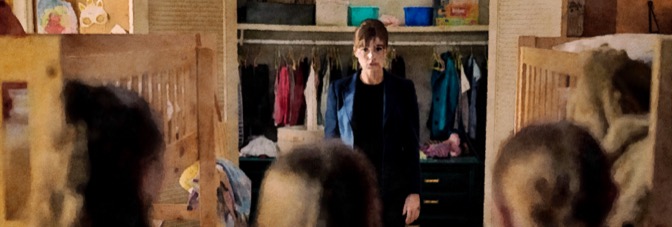
“Evil” leans heavily on this season finale being a transitory one, making efforts to close off some strangling story arcs. There’s some more complicated Katja Herbers and Mike Colter making eyes at each other; she, of course, doesn’t know his demon is just her in a schoolgirl outfit, which gets touched on this episode. Nun Andrea Martin shames Colter for not keeping his demons in check. She’s seemingly forgiven him from a few episodes ago, so now they can have awkward moments while Herbers’s husband, Patrick Brammall, is around for once.
Presumably. The show never seems to have Brammall available when they need him. He gets a significant arc in this episode, which ends with at least two threads going into season four. The only person without a future-facing plot line is Aasif Mandvi, actually. He’s just along for the ride.
The episode begins with a resolution to last episode’s shocking cliffhanger. Turns out Li Jun Li isn’t going to be a new regular; there are some “trust us, we’re the Catholic Church” shenanigans, with the episode further pressing the religiosity button. They try real hard to give Herbers a “questioning her agnosticism” story arc. She makes a deal with God and everything at one point. It’s not a great arc, but Herbers is lined up for an all-time big reaction scene at the beginning of next season, so the show makes it up to her. And it does give her and Colter more time together.
There’s a possibility Wallace Shawn is joining the show as a regular next episode. It seems like the job’s his if he wants it. He’s good. But the show’s also set up so it doesn’t need him to return regularly to keep things going; they’ve got the requisite cast down to an already unmanageable ten, but with fourteen or so familiar characters. It’s such a big show for so little.
The case involves Herbers’s previously off-screen only newish neighbor, Quincy Tyler Bernstine. Bernstine and Herbers share a duplex, an arrangement the show’s never made particularly clear before. The place next door is haunted and it seems to be because Brammall flushed a demon baby head down the toilet at the beginning of the season. The mystery keeps Herbers close to home for her family arc there; otherwise, it’s barely relevant. The big season finale stuff more involves Brammall, and then Herbers’s missing egg from her fertility clinic. They tack a scene on with it to get to the main cliffhanger.
It’s okay? Probably the smoothest John Dahl-directed episode I remember and, given my aversion to seeing Rockne S. O’Bannon’s name on the script credit, probably his smoothest episode too? It’s “Evil,” there’s only so much it can ever do.
Oh, there is some great stuff with Martin and Herbers’s oldest daughter, Brooklyn Shuck. It’s the first time in ages Shuck’s shown any character outside being part of the sister banter.
-

There is more “All Rise” coming. While the OWN website says it’s a ten-episode section season, IMDb has all the titles for next season, whether it’s a three and a half or a four. I’m fascinated by the show’s production timelines, going back to the end of first season when Covid-19 lockdown changed the show’s trajectory.
So, whether it’s the end of season three or season three, part one, Fire and Rain is a great episode. It’s probably “All Rise”’s best episode. Technically speaking, it’d be hard to beat, and they’ve never done anything like this one before.
Showrunner Denitria Harris-Lawrence directed last season’s finale too, which at the time was the show’s finale, but it was nothing like this episode. This episode’s an action suspense thriller, with TikTok terrorist Nick Fink threatening to loose his mob on the courthouse. His scumbag sidekick, a perfect Josh Gilmer, is loitering around the courthouse to intimidate witness Olivia Aguilar.
Now, Jessica Camacho is encouraging Aguilar to testify, sort of as a favor to Wilson Bethel, even though U.S. attorney Nitya Vidyasagar is offering a better deal. So Camacho has stuck her neck out. It’d be terrible if something went wrong, like Ronak Gandhi screwing up some paperwork and it causing a disastrous continuance.
Of course, Sean Blakemore is defending Fink, and it’s in Simone Missick’s courtroom. So even though the episode opened with some very sexy marital canoodling for Missick and Christian Keyes—another series first, man-buns—there’s a lot of tension later on. Especially after Blakemore reveals he’s using their chemistry to manipulate her; it’s easily Blakemore’s best episode on the show and arguably his only good performance of the role so far.
Then there are the relationship troubles for Wilson Bethel and Lindsey Gort. She’s not telling him the real reason she doesn’t want to get married, and every time it seems like they’re going to have it out, Bethel needs another scene where Ian Anthony Dale yells at him. Dale’s performance is a little shaky this episode; he’s not believable as a yelly boss anymore, not after his party bro dream version a couple episodes ago.
Lindsay Mendez helps Gandhi try to repair the damage to the case, while J. Alex Brinson mostly offers support for Camacho. As for Camacho, who isn’t one of the cast members primed for an exit even though she’s never gotten an office this season… I really hope she’s back. She’s gotten so good on this show.
There’s a minor but urgent subplot for Samantha Marie Ware too.
Plus, Paul McCrane and Roger Guenveur Smith sucking up to Missick for election support. It’s a full episode with multiple cliffhangers, including a much foreshadowed one.
If they managed to keep this momentum going into the season premiere or whatever the next episode’s called… it’d be awesome for the show. I had no idea they could do an episode this good.
-

“Resident Alien” returns with a lot of laughs but even more heart. There are some really, really good laughs, too, like when Alan Tudyk plays impromptu marriage counselor to Levi Fiehler and Meredith Garretson. Despite the outrageous events of last episode—an alien baby hatching, eating mammals, mind-melding with Tudyk, escaping after a bad guy shoots at it, then Sara Tomko shoots the bad guy to save Tudyk, which Alice Wetterlund witnesses without context—things are back to normal for most of the town the next day.
Only not Tomko, who’s plagued with guilt over killing the bad guy. Even with Wetterlund consoling her—Tudyk does as well, but he’s a murderous alien—Tomko can’t get over it, and it gives her an entirely new arc for the show, something borne of the show and not her backstory. There’s a backstory-related subplot, but it’s a lovely move—plenty of character development potential to go around, in fact.
In addition to Tomko, Wetterlund’s getting serious about dating, Garretson’s pregnant, Tudyk’s the town doctor again; “Resident Alien”’s primed for this season’s second half. The main plot seems like it’s going to be the murder investigation. Tudyk and Wetterlund dump the body somewhere they know they can get away with it—the motel where town ditz Jenna Lamia (who’s fantastic this episode) works. Except it’s close to the county line and Fiehler doesn’t want another murder on the town’s books, so he tries to sabotage Corey Reynolds.
Some great moments for Reynolds this episode, as usual, including when he meets the neighboring town’s detective, played by Nicola Correia-Damude. Meanwhile, Elizabeth Bowen’s still building her alien truther subplot, which may tie-in to all the other alien stuff, including Alex Barima and Linda Hamilton teaming up despite her trying to kill him all last season.
Tudyk’s plot this episode involves a newfound fear of death, but it’s the C plot after the investigation and Tomko’s guilt. It’s a nicely busy episode, punctuated with some very funny moments. Lamia keeps the bit going longer than she’s ever done before and it works out surprisingly well.
So then, standout performances would be her, Tomko, obviously, Tudyk, Reynolds. It’s a nice return, which will probably play entirely different when binged, but right now it feels like “Resident Alien”’s kicking off the next part of the arc and doing a good job of it.
-

“Swamp Thing” reveals one of the many superhero tv show caveats: an origin episode isn’t the same thing as a pilot episode. Yes, last episode introduced the various characters, but this episode—in addition to introducing more supporting characters (well, at least one)—sets up what they’re going to be doing on the show. For example, Virginia Madsen, who’s no better acting-wise, unfortunately, is going to be trying to resurrect her dead, apparently drown in the swamp daughter. It’s unclear if it’s intentional or not or if an evil spirit is manipulating things.
Or newly introduced sheriff Jennifer Beals (doing a Southern-ish but specific accent), who also happens to be dreamy deputy Henderson Wade’s mother. She’s worried Wade’s life-long puppy dog crush on Crystal Reed will get in the way of something. It’s unclear what. Beals gets mad when Wade and Reed go looking for a missing kid; it’s a strange, concerning professional flex from Beals.
Or still munching away at the scenery Will Patton. At first, I felt bad for Patton—it was his scene opposite Madsen—but later on, he picks things up, relishing in the shitty, good ol’ boy but wealthy industrialist, who may or may not have a human side. At one point, Reed has to ask Patton for a favor, and we find out however the daughter died in high school, it was in a way Patton can say he doesn’t blame Reed.
Of course, Reed’s local bestie Maria Sten has just told Reed not to trust Patton. Or reminded her not to trust Patton. It’s soap, but grim and gritty soap. They’re trying real hard to be Southern Gothic, and they’re able to pull off the visual trappings of the genre. Sort of. Ian Ziering shows up as a cheesy action hero who owns a retro video rental and vinyl store in town, a la Kevin Smith. It’s so weird it can’t not work. Oh, also basically Internet cafe because no one knows how to use their smartphones in “Swamp Thing.”
The show also establishes how Andy Bean will stay in the credits even though he’s become a giant swamp thing, played—in suit—by Derek Mears. The show’s doing something interesting with the Swamp Thing introduction. They’re dragging it out, for one thing, but they’re giving him a psychic connection to little kid Elle Graham. Not sure if she, Swampy, and the dog will fend off angry villagers in an homage to Saga of the Swamp Thing #1, but there’s a not zero chance.
Bean has video diaries, which he apparently records on his iPhone, then uploads to Ziering’s very not-Apple PC laptop but also not showing a brand. Bean loads them into iTunes on the PC. We find out from the diaries he’s not rich actually (meaning he was regularly breaking into his old lab last episode), and he thinks Reed is smart, driven, and lovely. Also, he’s a sandal enthusiast.
But the real surprise is Kevin Durand as Jason Woodrue. Woodrue—previously essayed by Mr. John Glover in Batman and Robin—is a Swamp Thing mainstay and, in the show, Durand’s working with Patton. Durand’s a hoot. He’s trying really hard to do something different and succeeding. Despite having a big cast, it’s the first spotlight performance, partially because everyone else is pretty constrained. Hence Patton having to devour armchairs.
Reed mostly gets to run the episode, with diversions, and it’s okay, but just. Thanks again to special effects and production values, the show can carry through the weaker moments but, again, only just.
-

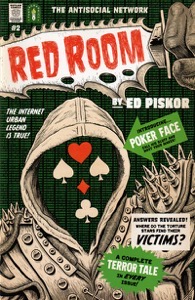
Okay, I didn’t realize Red Room was going to have real mythology (in the “X-Files” sense). I thought it was just going to be a series of horrifying vignettes about the world of online slasher snuff videos. This issue’s all about the doctor who prepares the victims for the videos. They get all sorts of work done, so they get mangled well onscreen. The network executives have faked the doctor’s death, and his family’s provided for while he works.
They’re even nice to him as an employee, albeit about some tough circumstances. Because, in revealing the mythological layer, creator Ed Piskor reveals at some level Red Room is just capitalism.
And there’s no end to the horrors capitalism can contextualize.
The issue hints at some of channel producers’ organizational structure; the producers, who may or may not be rich and famous; the famous part’s potentially significant. We shall see.
There’s a lot of great art. The issue tracks a victim from capture to murder, with a lengthy medical recovery period in between. The capture’s a little surprising, with Piskor going for an easy reveal right away, but makes sense once the issue focuses more on the doctor as the issue’s protagonist.
But he’s not a tight protagonist, there’s still a lot with the video stream pages, where executives talking about the business accompany the gory imagery, as well as the stream’s viewers chatting amongst themselves. Three levels of horror simultaneously.
Once again, Red Room is an unspeakably grotesque delight. It’ll be interesting to see where Piskor’s taking it going forward, since the first issue spun in bloodier circles.
-
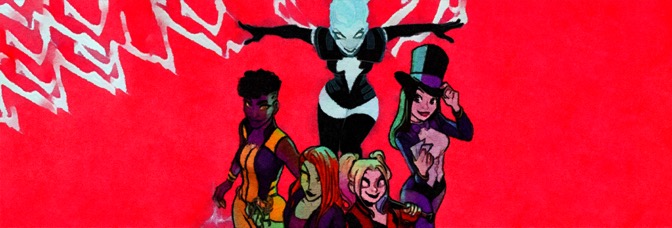
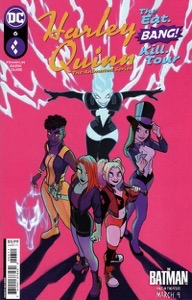
Eat. Bang! Kill. ends better than I was expecting. While the sludge monster, Mephitic, holds Harley prisoner and tries in vain to find a way past her poison immunity, Ivy teams up with Vixen for a rescue mission. Along the way—pretty early on—Ivy meets Vixen’s girlfriend and starts getting insight into how healthy relationships work.
It’s an excellent sequence, with the girlfriend, Elle, excited to be guest starring in the issue and Vixen utterly unamused at Elle and Ivy’s fast friendship. It’s delightful.
They have a team-up and mount-up routine to go through as Mephitic decides to start injecting Ivy with toxins versus airborne, so the stakes raise throughout. Writer Tee Franklin employs lots of narration snippets from the various cast members to significant effect this issue. Everyone gets to participate this time.
The finale has some prep for the show’s next season, including some cameos from show-only cast members. Franklin writes them perfectly.
The big fight sequence heavily relies on character relationships, with artist Max Sarin a little confused how to break everything out. There are some fight scene cameo surprises; Sarin does fine breaking those out; it’s the actual blow-by-blow of the fight.
Thank goodness what matters more is Ivy and Harley making lovey-talk, which Franklin and Sarin have got down. It’s viciously adorable.
I’m not sure this series had to be six issues—given the arc and the eventual resolution for Ivy (i.e., let’s wait for the show), it could’ve been three or four. Three would’ve been best or four but with backups to other characters.
Still, it’s a solid outing, quite good for being a comic spin-off to a streaming cartoon, in continuity but not required reading to follow the show. I wouldn’t be surprised if it reads better in one sitting too, though the finale tie-in is perfect for a monthly periodical.
-

I can’t get the “Swamp Thing” theme out of my head; a subtle but undeniable earworm courtesy composer Brian Tyler. It is not at all related to any of the previous themes—well, it could be from the 1990 show, I don’t remember; I did wonder how the Swamp Thing movie score would work over the new show, with its production values and its CGI. Despite having two movies and a three season TV show under the franchise belt, this “Swamp Thing” is the first one capable of getting close to the comic in terms of visuals.
The special effects are okay. They’re going for a 1982 Thing thing, only with plant vines, and it’s fine. The show initially presents as a sci-fi medical thriller but quickly veers into straight horror and conspiracy thriller terrority, with a lengthy break in premium but not transcendent soap opera. CDC troubleshooter Crystal Reed is back home since leaving in disgrace; she somehow killed her best friend (a bridge and a car are somehow involved, but no more details yet), and the friend’s mom, Virginia Madsen, ran her out of town.
So, despite taking place in Louisiana (fake with a good regional name Marais versus real place from the comics Houma), no one has an accent. It’s Southern California Gothic. Madsen’s married to industrialist Will Patton, who’s experimenting on all the yokels without anyone suspecting because he’s such a good old boy himself. It’s an easy performance for Patton, who has the most accent, whereas Madsen’s—so far—blank. With an outrageous accent, she might stand out. Without one, and without any visible emoting, it’s a disappointment. This episode’s extraordinarily well-paced, so the Reed and Madsen scene had goodwill going in. Like, it could’ve been something.
It was not. Combination Madsen and the script, but mostly the latter.
Anyway.
The medical sci-fi thriller involves rogue, disgraced scientist Andy Bean, who sneaks into the hospital where Reed and her team have set up base to investigate a mysterious outbreak. After hinting at potential supporting cast members in Reed’s homecoming arc (hottie sheriff Henderson Wade and cool newspaper reporter Maria Sten), the episode ends up being Bean and Reed, hanging out, doing science, blowing things up, running from plant monsters, and so on.
Bean’s scientist without mercy comes off like a twenty-first century Richard Dreyfuss from Jaws; he’s an entitled, privileged rich kid whose hobbies happen to coincide with the greater good. Is Bean charming in the part? He’s not unlikable, which is a success.
Reed’s okay. After being active in her first scene, her character’s been entirely passive since. Despite being the lead, she’s rarely got anything but potential agency. Someone else comes along and takes over. It’s a problem.
But “Swamp Thing” generates more than enough momentum through this first episode to warrant a return. Especially since this episode’s presumably more prequel than the pilot.
-
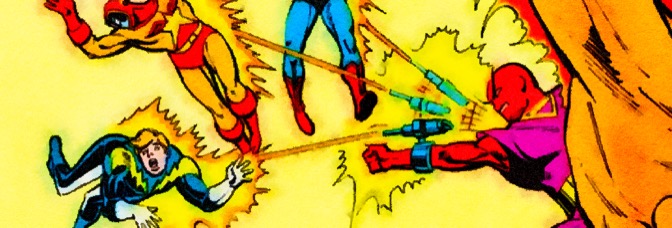
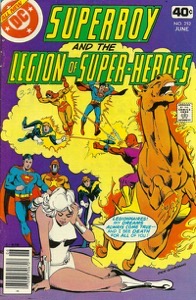
This issue’s the first in the first post-Levitz era. While they left it to Jim Starlin to screw up Levitz’s epilogue, wrapping up that epilogue falls on new writer Gerry Conway. The credits promise “a new beginning” for Superboy and the Legion, with Conway writing, Joe Staton penciling, and Dave Hunt inking.
They’re off to an inauspicious start.
When we left our heroes, Earth had been destroyed (again), betrayed by Brainiac 5, who the Legion told could be emperor of the universe if he stopped the monster he’d imagined into existence from destroying reality. This issue opens with the Legion consulting Brainiac 5 about Matter-Eater Lad, who sacrificed himself to save the world at the cost of his sanity.
It’s not a great opening. They try hypnosis to cure Matter-Eater Lad, which doesn’t work, then they gotcha Brainiac 5 about him still being a prisoner. They tricked him for his intellect, which can’t figure out they’re tricking him.
Matter-Eater Lad and Brainiac 5 are going to be one of the ongoing subplots, along with the Legion’s moneybags running out of money. They’ve been teasing the latter for ages, even making it part of the previous arc. I just realized there’s no follow-up on how it resolved (off-page).
The main plot is the Legion fighting these aliens who are trying to mine the sun. Unfortunately, their technology produces red sunbeams, which render Superboy powerless. In reverse from the usual Legion approach, the bad guys beat the heroes’ individual powers instead of those powers combining to defeat the enemy.
Obviously, they defeat the enemy, but not with their powers.
Conway’s got some okay sci-fi ideas, but not Superboy and the Legion ideas. His characterizations seem either off or limited; new Legion leaders Lightning Lad and Saturn Girl are standoffish with their teammates and cloying with each other. Former leader Wildfire is now the comic relief. Conway’s not trying very hard.
The art’s in the red even for Staton and Hunt.
I didn’t want to give up on these post-Levitz issues without giving them a chance, but I think I’m only committing to one more try.
-

Beans is an almost outstanding, always pretty good coming-of-age story with a historical event weaving its way through the narrative. The film tracks Indigenous Canadian tweenager Kiawentiio over summer 1990. The film starts with her interviewing to go into a prestigious (and very white) high school, setting up a contrast between her actual name (Tekehentahkhwa) and her nickname (Beans). It’s essential, but it quickly gets back-burnered for the historical events.
So, in addition to Kiawentiio dealing with wanting to go to this high school, which also pleases mom Rainbow Dickerson but causes tension with dad Joel Montgrand, she’s also got to deal with the exceptional trauma of a summer-long stand-off between her tribe and the white Quebecois government. A neighboring town wants to tear out an Indigenous graveyard to extend their golf course. Kiawentiio watches the situation rapidly escalate in person; the film has a gentle start, then an absolutely harrowing sequence where Kiawentiio and adorable little sister Violah Beauvais have to navigate armed police tear gassing and raiding an Indigenous protest camp.
The film uses mostly news footage from the time, which reveals many white Canadians to be racist pieces of shit (though it’s incredible to see so many guns around and no Brown people murdered). Though the whites also attack the Indigenous people with tacit police consent, it’s not so different from the United States.
Director Deer leans heavily on the period news footage, letting the clips edify the viewer on the situation. Unfortunately, the footage doesn’t necessarily correspond to Kiawentiio’s experiences over the summer. And the news footage isn’t a great way of telling the history. The third act is full of deus ex machinas (deuses ex machina?), including the stand-off resolving in the news clips without sufficient transition information. Deer takes the story from A to B to C to E. D seems very important.
Or, if it’s not important for Kiawentiio, why was it so important for the film? Beans only runs ninety-two minutes, and ten of it has to be the news clips. While Kiawentiio narrating through essay or journal or something would’ve leaned on tropes, they’re tropes for a good reason.
But until the third act, Beans is smooth sailing. The standoff aggravates Kiawentiio’s cultural crisis even before she discovers how racist white people get. Following dad Montgrand telling her to toughen up, Kiawentiio befriends local delinquent and bully Paulina Alexis so Alexis can give her toughness lessons. After some false starts, physical assault, and bribery, Alexis agrees and mentors Kiawentiio in breaking bad.
Some of the deus ex machina involves Alexis, who gets a last-minute character reveal to explain her behavior. The friendship’s a reasonably strong character relationship throughout (Kiawentiio and little sister Beauvais is better but gets less attention), so the ending resolutions come off incredibly rushed. Even amid “Beans”’s rushes, Alexis gets the briefest conclusion. It’s too bad.
Deer’s a fine director. Sometimes, cinematographer Marie Davignon can’t keep up, which is too bad. The film always looks okay, but sometimes that okay comes with asterisks. Good music from Mario Sévigny and editing by Sophie Farkas Bolla. If only for a more balanced third act, “Beans” would be a big success.
As is, it’s an almost great historical character study. Kiawentiio’s excellent; there aren’t any slouches, with mom Dickerson quite good despite an eventually underwritten part.
Just wish that third act worked.
-
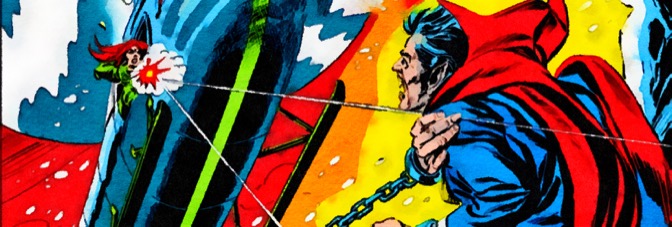
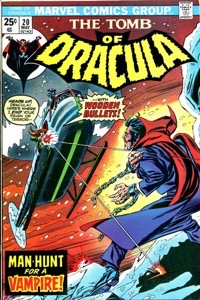
It’s another fantastic issue. Not quite as good as last time because there was so much more human drama (and fewer hapless white dudes), but fantastic. Writer Marv Wolfman starts the issue with a hunted Dracula and ends with a captured Dracula, but by entirely different foes. The story’s called The Coming of Doctor Sun and Wolfman’s been steadily building this subplot for at least eight issues, though then he reveals some elements go back even further, with Wolfman tying in elements from before Tom Palmer was inking Gene Colan on the steady. It’s a culmination.
And it’s also a ret-con. At one point, Frank Drake makes some glib remark to “good God, she’s too good for him, it could be a sitcom” Rachel Van Helsing, and so she has to school him on her origin facts. One would think she might’ve mentioned them in the second issue or some time between then and now, but Frank’s a dipstick. It also gives the comic a chance to plug the Bram Stoker’s Dracula adaptation running in Dracula Lives. Rachel is Abraham Van Helsing’s granddaughter, after all.
Wolfman again reveals details of the post-novel era for Dracula, coming back and hunting down all the Van Helsings in revenge. Then there’s Quincy Harker saving little Rachel with his missile darts in his wheelchair. It’s a combination effective and silly sequence, punctuated with Rachel talking about how Quincy then “raised her into womanhood.”
Frank and Rachel are in a helicopter shooting at Dracula with wooden bullets as he runs through a blizzard in the Transylvanian Alps. He can’t turn into mist because the winds would blow him apart; he can’t turn into a bat because the winds would toss him around. Has he ever turned into a wolf in Tomb? Maybe not.
The chase is excellent. Beautiful art from Colan and Palmer.
The kidnappers are Doctor Sun’s thugs. They’re tracking him through the storm and set a trap for him. No explanation on how they set the trap, but Doctor Sun’s presumably a genius. We get a big reveal on him, changing him from an evil Chinese Bond villain trope into something weird and wild. Wolfman’s fairly straight-edge as far as his plotting, never wanting to give Colan anything too silly to realistically render, but Doctor Sun appears to be Wolfman coloring outside the lines.
It’s cool. And silly. And fantastic.
There’s particularly great Dracula writing, especially after one of the surprises.
The book’s on a phenomenal roll right now.
-

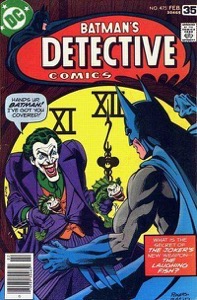
So, reading this issue—the first of the Joker Laughing Fish two-parter—it’s clear why the comic’s got such an excellent reputation. Even with the utterly banal, fascist narration and Batman talking like a tool, it’s a great comic.
Four things happen in the comic, all excellent for one reason or another.
First, Batman goes to confront Silver St. Cloud because he thinks she thinks she knows he’s Bruce Wayne. He’s got to steel himself up for the conversation; she’s in her little sister’s bathrobe, getting ready for her date with Bruce; it doesn’t go well for either of them. We get thought balloons from both, first Batman, then Silver. Thanks to Marshall Rogers’s design-heavy panels, even writer Steve Englehart’s most leaden lines work out. It’s a great start and just gets better: after leaving her apartment, calling her from a phone booth in Bruce voice, some fishermen hail Batman down to tell him their catch is all Joker-faced.
The Joker has poisoned all the fish in the sea to look like him. Presumably, they don’t die, and they’re still safe to eat because the next great scene is the Joker going to the copyright office to demand legal rights to all the fish. I’ve tried to be as honest as possible about my dated nostalgia for the comic and Englehart’s disappointing writing, but, holy shit, Batman, Englehart’s Joker is phenomenal. Rogers (and inker Terry Austin) obviously play a big part, but all the problems Englehart’s had writing the comic disappear when he’s writing the Joker. It’s magnificent.
Joker’s going to kill the copyright clerk at midnight unless he gets the paperwork through; Batman goes to help Gordon protect the clerk. It’s a speedy locked room mystery with a fantastic visual finale. I feel like the locked room mystery is an homage to an early Batman, possibly something reprinted in Greatest Batman Stories Ever Told. This issue showed up in Greatest Joker and, well, duh.
The other excellent bit is Rupert Thorne’s continued meltdown. He gets into a fight with the Joker in the men’s room (it happens) before running out on his pals and skipping town. On the way, he picks up a familiar hitchhiker to set up more of next issue’s peril.
I wonder if skipping the previous issues, regardless of their continuity value, is the best way to read Laughing Fish. Silver’s never had this much characterization, Englehart’s Batman-in-love has never been anywhere near this good, the Joker’s singular, and the Thorne subplot seems interesting. Plus, Rogers was stilted at the beginning.
Or is it confirmation bias because I’m describing how I first read it as a kid when it really hit.
Anyway.
Great comic. Finally.
-
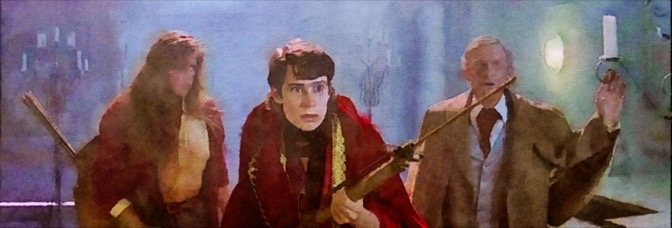
At first glance, it appears Fright Night Part 2 is the rare example of a film saved by a mullet. Lead William Ragsdale doesn’t have much more onscreen charisma than last time, but with his gloriously juvenile late eighties wavy mullet, his lack of appeal becomes charming. Or it may be another thing director Wallace fixed this time around; the horrific mullet, which would distract entirely in a lesser film, would still help a lot in that case.
The sequel picks up approximately three years after the first film; now twenty-seven-year-old Ragsdale (the mullet makes him look younger than in the first movie) is a nineteen-year-old college student. He’s been in therapy at the school, which appears to be provided. The film establishes, later on, they’re at a community college; Ragsdale’s got a single and a private bath, the student union has a bowling alley; it’s a very well-funded community college.
Ernie Sabella plays the psychiatrist, who convinces Ragsdale vampires aren’t real. The first movie was his brain protecting him from discovering a serial killer next door who kidnapped his girlfriend and apparently brainwashed his best friend into serial killing too. The sequel will end up being all about the first film in one way, but the continuity’s loose.
Sabella’s the only disappointing performance. It’s like they wanted Danny DeVito and got this guy instead but left the script for the disinterested DeVito. Sabella tries, and his scenes are sometimes really effective thanks to the other actors and Wallace’s direction… he’s just not very good.
Almost the entire rest of the cast is good. Leaving aside Ragsdale, Roddy McDowall’s good (he gets a full arc this time), and Traci Lind’s good (as Ragsdale’s new girlfriend but not the damsel in distress); the villains are all good, with one asterisk. But Jon Gries, Brian Thompson, and Russell Clark, all unqualified good turns as the new gang of creatures come to terrorize Ragsdale and McDowall. The asterisk is main villain Julie Carmen, who doesn’t just try to seduce Ragsdale away from Lind but also has her sights set on taking over McDowall’s horror movie hosting gig.
Since the fallout from the first movie (apparently, the film’s epilogue was a bad dream), Ragsdale has been avoiding McDowall. Sabella encouraging Ragsdale to get back in touch with McDowall is where the film’s main plot seems to start, except unrelatedly to Ragsdale’s therapy breakthrough, vampires are moving into the same building where McDowall lives. It’s a giant, gothic apartment building in L.A., even though the movie’s not set in L.A. (the street opposite the building, which is primarily a composite effects shot, is so L.A.). For a while, it seems like Part 2 is going to be a paint-by-the-numbers retread of the original, sticking to the home locations, but then Part 2 opens up, and then again, and then again. And it keeps opening up, only returning to the building for the excellent finale.
Wallace does a great job directing. His cinematographer, Mark Irwin, isn’t up to many of the shots, unfortunately, but there are still some great sequences in the film.
Now back to Carmen. When she’s a seductive vampire, she’s fantastic. With Brad Fiedel’s “wish I was Tangerine Dream” score and Ragsdale having to wear dark sunglasses for a long stretch of the film, Fright Night Part 2 feels like Risky Business with vampires, especially as it becomes a mystery for a while. Ragsdale and McDowall both investigate the vampires, sometimes to comedic results, usually to bloody.
Of course, Wallace is happy to use dream sequences—and it’s a vampire movie, so why not—which lets them get away with a bunch.
But when Carmen’s just got to drop exposition like a fanged Bond villain, she’s lacking. The first half of the movie, I wondered why she didn’t have a more successful career, then she started talking about something besides Ragsdale being yummy (if only she’d commented on the mullet), and her line reading’s so, so bad. She improves a little afterward, thanks to more seductive vamping, but it’s too bad she’s not better.
The script’s well-paced, the gore’s excellent (though it sometimes goes on just a little long), and Fiedel’s score’s… not without its own charms. The film definitely needs better cinematography, but even though the music’s too much, it might be just right.
Fright Night Part 2’s a surprising success; big kudos to Wallace, McDowall, Lind (who gets to play the real hero, without a jealousy subplot either), the effects people, and Ragsdale’s mullet.
-

The Lion & the Eagle is oversize; bigger, squarish pages. Artist PJ Holden doesn’t fill the larger canvas with more panels, instead increasing the panels’ sizes, filling those larger pages with bigger content, not more content. Holden also does a lot of top-third double-page spreads; he’s clearly thinking it through.
So it’s unfair when the issue’s only problem seems like an art problem. It’s not; it’s an editing problem. The issue has a running flashback, and the transition returning to the past doesn’t work because it’s entirely about writer Garth Ennis’s narration, with a disconnected visual.
It had me confused and reading the issue mistaking one resolution for another. However, it’s an excellent comic even with the stumble, with Holden’s expressive, character-based art and Ennis’s combination of reflective and informative writing.
Lion & the Eagle is a World War II story; the protagonist is a white Indian army officer. They’re loading up to mount an offensive against the Japanese, who’ve been kicking their asses the last few years without the British government really taking note. It wasn’t until the Americans showed up with vehicles and weapons they’ve been able to even consider an advance.
The issue opens with the officer, Crosby, having a conversation about the state of the war with a Chinese observer. Crosby then goes and hangs out with his doctor best friend, Leonard McCoy… wait, no, Alistair Whitamore. They go from war politics to race politics, thoughtfully bantering; it’s a war buddy story.
While talking, Crosby remembers the time they first met; cue tense flashback.
Lion & the Eagle doesn’t spare the gore, though all of it is in flashbacks so far. While we get some context for the flashback’s resolution, all the information about the current operation—the series’s main plot—comes during dialogue exchanges, and the characters often talk about the impending mission.
Holden does a fabulous job with the talking heads. There are a lot of talking heads, including in the flashback, during non-combat action scenes. The art’s the most impressive thing about this larger format; what could’ve been a gimmick is not; as usual, Holden and Ennis are making something special.
-
Subscribe
Subscribed
Already have a WordPress.com account? Log in now.
 The Stop Button