• The Dying and the Dead 1 (January 2015)

    The Dying and the Dead #1The Dying and the Dead sure seems like it’s got some good old fashioned zeitgeist elements to it, like the ancient protagonist who’s still an action movie badass. What would aging Hollywood actors do without mainstream “indie” comic book writers coming up with new projects for them to turn down?

    Writer Jonathan Hickman does change some stuff. He’s got a Bond villain organization but they’re secretly immortal and clones and the only person who can stop them is this old guy who has a dying wife and nothing to lose. Except the dying wife, presumably. Guess they didn’t have kids.

    Ryan Bodeheim’s art is really detailed and occasionally interesting to read–and the comic does go on forever (it’s a double-sized issue) so it feels very full. It’s just nothing original and nothing special. It’s decently executed, just empty.

    And that title’s not going to get Liam Neeson’s attention.

    CREDITS

    Writer, Jonathan Hickman; artist, Ryan Bodeheim; colorist, Michael Garland; letterer, Rus Wooton; publisher, Image Comics.

  • Big Trouble in Little China 8 (January 2015)

    Big Trouble in Little China #8Well, Big Trouble in Little China is definitely going places. This issue, which is mostly (amusing) exposition and (great) banter–with a lot big action set piece thrown in–moves the series to an unexpected cliffhanger. Powell is getting closer and closer to needing to establish a point for the series past the gimmick of its very existence. He seems to be almost there.

    The only problem with the issue is Churilla’s art. He’s hurried in places, not putting a lot of thought or time into his compositions. There’s the action set piece and it does work out, but it’s a small part of the issue. The build-up to that sequence has some wonky, disjointed moments.

    Powell’s script has a good amount of surprises alongside the humor. The conclusion’s unpredictable (unless I missed something in the previous issues); it probably shouldn’t be. Powell artfully uses the laughs for misdirection.

    CREDITS

    Writers, John Carpenter and Eric Powell; artist, Brian Churilla; colorist, Lisa Moore; letterer, Ed Dukeshire; editors, Alex Galer and Ian Brill; publisher, Boom! Studios.

  • Princess Ugg 7 (January 2015)

    Princess Ugg #7Naifeh seems like he’s forecasting quite a bit of what’s to come in Princess Ugg, which is fine. The comic has seemed somewhat listless and wandering, but this issue has Naifeh not just giving readers an idea of the situation beyond Ülga’s school, he also gives her a real supporting cast.

    Her fellow princesses finally stick up for Ülga against the evil princess, who’s revealed not just to be an evil in a Mean Girls way, but actually evil. Naifeh gets in all the information he hasn’t been giving the previous issues in a few sentences here. Combined with a transcendent surprise sequence, it’s probably the best issue of the comic, if not the most entertaining.

    The characters are getting far more complex, with Naifeh still able to fit in crowd-pleasing moments. Ugg has had its bumps, but Naifeh’s more successful turns more than make up for rough patches.

    CREDITS

    Writer and artist, Ted Naifeh; colorists, Warren Wucinich and Naifeh; letterer, Wucinich; editors, Robin Herrera and Jill Beaton; publisher, Oni Press.

  • Three Colors: Blue (1993, Krzysztof Kieslowski)

    From the first few minutes of Blue, the entire thing seems conventional. Not exactly predictable, though it’s often somewhat predictable, but definitely conventional. And when it veers away from being conventional, it soon returns to it. Director Kieslowski figures out punctuation marks to draw the viewer’s attention to lead Juliette Binoche’s conflict and reuses them over and over again.

    So maybe Blue is predictable. I guess conventional just sounded like less of a pejorative way of saying it.

    Because Kieslowski isn’t trying for conventional. A good portion of the film is really just Binoche suffering after the death of her husband and child and rejecting her need to grieve. She’s forcing herself to persevere and Binoche does a wonderful job showing the conflict. There’s a lot of symbolism for those conflicts too, but Kieslowski offsets them with some fantastic scenes. Binoche’s relationship with her neighbor, sex worker Charlotte Véry, is peculiar and seems like it might lead somewhere interesting.

    That lack of interesting destinations is Blue’s biggest problem at the end. Kieslowski wraps everything up rather neatly–shockingly neatly–by the last shot. Even though Binoche’s character tries hard not to lead a generative life anymore, she does. Only Kieslowski doesn’t want to deal with any of those threads for the conclusion.

    Blue could have run thirty minutes with the story Kieslowski and Krzysztof Piesiewicz go with. Of course, the story of Binoche’s listless wandering could have taken three hours.

    Beautiful photography from Slawomir Idziak. Great acting.

    Just… eh.

    2/4★★

    CREDITS

    Directed by Krzysztof Kieslowski; written by Kieslowski, Krzysztof Piesiewicz, Agnieszka Holland, Edward Zebrowski and Slawomir Idziak; director of photography, Slawomir Idziak; edited by Jacques Witta; music by Zbigniew Preisner; production designer, Claude Lenoir; produced by Marin Karmitz; released by MK2 Diffusion.

    Starring Juliette Binoche (Julie Vignon – de Courcy), Benoît Régent (Olivier), Florence Pernel (Sandrine), Charlotte Véry (Lucille), Hélène Vincent (La journaliste), Philippe Volter (L’agent immobilier), Claude Duneton (Le médecin) and Emmanuelle Riva (La mère).


    RELATED

  • Flash Gordon 8 (January 2015)

    Flash Gordon #8I’m really hoping there’s an explanation for Flash Gordon, like Dynamite’s licensing deal changed or something along those lines. Because it’s hard to believe Parker and Shaner put all their previous effort into a comic where the majority of pages went to advertisements for upcoming comics. And their amazing Flash Gordon adaptation only gets something like twelve pages to finish.

    Shaner gets to do some nice Alex Raymond nods and Parker gets in one to the movie, but there’s no enthusiasm anymore. They aren’t doing anything original (actually, I’m not sure if Parker did it intentionally, but he does rip off the ending of a recent British cult television series).

    Of course, if the explanation is a licensing deal, they are kind of stuck. Maybe Parker and Shaner will go on to something without such a disappointing finish. Best of luck on future projects and so on.

    It’s gorgeous, empty.

    CREDITS

    Writer, Jeff Parker; artist, Evan Shaner; colorist, Jordi Bellaire; letterer, Simon Bowland; editor, Nate Cosby; publisher, Dynamite Entertainment.

  • Gotham by Midnight #3On second thought, maybe seeing Templesmith fully realize the Spectre isn’t a good idea for Gotham by Midnight. He has to handle big supernatural action this issue and it doesn’t come off. It’s too constrained and his style is no good for discerning the action without narration.

    Templesmith’s regular action–in this issue, it’s a flashback to a hostage crisis of sorts–works out fine. The personality carries it, makes it worth figuring it all out. But the big stuff? Not so much.

    As for the story, it’s Fawkes still building the B plot. The A plot has Corrigan and Drake (the names are good enough to be memorable, which is no small compliment–though, of course, Corrigan doesn’t count) heading to a hospital for a possession or something. And Drake’s flashback.

    It all ties together in time for a haunting soft cliffhanger.

    It’s consistently entertaining, with mostly good art.

    CREDITS

    We Become What We Fight; writer, Ray Fawkes; artist, Ben Templesmith; letterer, Saida Temofonte; editors, Dave Wielgosz and Rachel Gluckstern; publisher, DC Comics.

  • Rust and Bone (2012, Jacques Audiard)

    Until about eighty minutes into Rust and Bone, the film resists predictability. Director Audiard has a couple moments of Marion Cotillard bouncing back after a tragedy to pop music, but they’re punctuated with fantastic postscripts. The postscripts make up for any melodramatic shorthand.

    Well, until the eighty minute mark. And then Rust and Bone becomes cloying. The film’s style doesn’t change–it’s still harsh and bright (with fantastic photography from Stéphane Fontaine)–but the storytelling changes. It stops being a character study of Cotillard, who has dominated the film, and slowly transitions back to Matthias Schoenaerts.

    Schoenaerts is an amiable, if numb-skulled, single dad who just can’t seem to do right. From the eighty minute mark until the film’s conclusion, instead of being a character study, Rust becomes a redemption melodrama. A well-directed, well-acted redemption melodrama, but still a redemption melodrama. The final couple predictable moments are shockingly forecasted. Audiard and co-screenwriter Thomas Bidegain inexplicably bring in narration at the end; had they used it throughout and in future tense, the film could not be more predictable.

    The worst part about the transition from Cotillard to Schoenaerts is there’s no attempt to share. Audiard and Bidegain had worked out a great balance between the two–Cotillard’s even top-billed–and then they flush it to manipulate the viewer.

    Truly great editing from Juliette Welfling. Not in the montages, but in the scenes.

    Cotillard and Schoenaerts’s beautiful acting make the film worthwhile. It’s just a narrative mess.

    2/4★★

    CREDITS

    Directed by Jacques Audiard; screenplay by Audiard and Thomas Bidegain, based on a story by Craig Davidson; director of photography, Stéphane Fontaine; edited by Juliette Welfling; music by Alexandre Desplat; production designer, Michel Barthélémy; produced by Audiard, Martine Cassinelli and Pascal Caucheteux; released by Lumière.

    Starring Marion Cotillard (Stéphanie), Matthias Schoenaerts (Alain van Versch), Armand Verdure (Sam), Céline Sallette (Louise), Corinne Masiero (Anna), Jean-Michel Correia (Richard) and Bouli Lanners (Martial).


    RELATED

  • Abigail and the Snowman 2 (January 2015)

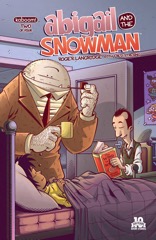
    Abigail and the Snowman #2Abigail and the Snowman continues with Langridge a little more focused than last time. The story takes place over a couple days, with Claude (the Yeti) going with Abigail to school on her birthday.

    Langridge actually fits in a bunch of information–both through dialogue, like Abigail talking briefly about her deceased mother, and through implication, Abigail’s father not letting her go to work. Meanwhile, there are the Men in Black trying to find Claude, who’s a big hit with all of Abigail’s new classmates (they can see Yeti, adults cannot).

    The issue’s pacing is phenomenal; Langridge gets in multiple set pieces, including elaborate ones like Abigail arriving at school with Claude and his later run-in with the Men in Black. It’s a full issue, but there’s also a nice density to the stuff around the scenes. Langridge even trusts the reader to remember a throwaway line.

    It’s superb.

    CREDITS

    Writer, artist, letterer, Roger Langridge; colorist, Fred Stresing; editor, Rebecca Taylor; publisher, KaBOOM!.

  • The Autumnlands: Tooth & Claw 3 (January 2015)

    The Autumnlands: Tooth & Claw #3Busiek finally seems to be going somewhere with The Autumnlands. It’s unfortunate he needed a human to get the story moving, but Busiek turns what appears to be a contrived new character into just the thing the series needs.

    The human savior from the past is a soldier with cybernetic implants or something. I’m sure Busiek will get around to explaining; he hints at a lot of stuff here, including have the guy use slang. And speak the language of the beast. It gives the reader better access to the world of the characters.

    Speaking of characters, there’s a lot of good character development this issue. Busiek concentrates, he doesn’t look around too much, he doesn’t try focusing on anyone too much. Not even the teenage dog kid who was apparently once protagonist but not anymore.

    Dewey’s art is still gorgeous, with one exception. He doesn’t draw humans particularly well.

    CREDITS

    Writer, Kurt Busiek; artist, Benjamin Dewey; colorist, Jordie Bellaire; letterers, John Roshell and Jimmy Betancourt; publisher, Image Comics.

  • BLT (2013, John Cunningham)

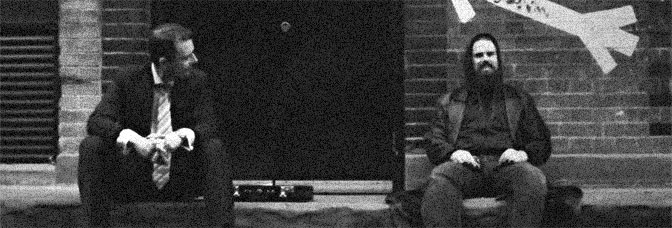
    BLT runs twelve minutes. It’s probably about four minutes too long to be effective, since most of the run time is spent with Stephen Molloy (as a successful businessman) lecturing a homeless man, played by Ross Owen Williams. Director Cunningham’s script makes too many value judgments in the dialogue–Molloy’s just too obviously a prat–for the back and forth to seem sincere.

    But Molloy and Williams are good and the short’s well-made (Cunningham also edits and photographs, doing well at each); if it were shorter, it might work out.

    Because BLT is all about the punchline and the punchline does pay off quite a bit (Cunningham sort of paces out the punchline into three stages).

    And Cunningham directs BLT well. He makes it feel real big; the problem’s not the directing. It’s the script–Cunningham’s not building to anything but that punchline. Everything else feels way too forced.

    1/3Not Recommended

    CREDITS

    Edited, photographed, written and directed by John Cunningham; produced by John Cunningham and Rhona Cunningham.

    Starring Stephen Molloy (Businessman) and Ross Owen Williams (Homeless Man).


    RELATED

  • Judge Dredd #30It’s a tough issue. Not in a bad way, but in a post-Apocalypse War, the future is a tough place, tough issue. Wagner, Grant and Ezquerra do both stories. The writing is better than the art, but Ezquerra does pretty well with it. There’s humor and humanity. Can’t ask for much more.

    The first story has Dredd dealing with a robot city’s tyrannical ruler. Wagner and Grant manage to make it silly and still rather affecting; maybe because Dredd seems to be in actual danger after a point. And the handling of the War’s aftermath is fantastic.

    The second story–the much longer one–has a fungus outbreak putting the struggling Mega-City One in danger and Dredd has to race to stop it. It’s a rather good story, with Wagner and Grant roaming with the focus for a while.

    The toughness never feels overdone or tongue in cheek.

    CREDITS

    Writers, John Wagner and Alan Grant; artist, Carlos Ezquerra; colorist, John Burns; letterer, Tom Frame; editor, Nick Landau; publisher, Eagle Comics.

  • The More the Merrier (1943, George Stevens)

    The More the Merrier is a wondrous mix of comedy (both slapstick and screwball) and dramatic, war-time romance. Director Stevens is expert at both–that war-time romance angle is as gentle as can be, with Stevens relying heavily on leads Jean Arthur and Joel McCrea to be able to toggle between both. And they do, ably. Arthur and McCrea have spellbinding chemistry in the film.

    But the film doesn’t open with either of them. It opens with–and stays with–Charles Coburn’s character. He’s in town on business (Merrier’s set in Washington DC during the WWII housing shortage) and his series of misadventures, fueled by that fantastic Coburn superiority, gets him a room with Arthur. And, subsequently, McCrea (bunking with Coburn).

    The beauty of Coburn’s character is how he too toggles, but between being a slightly absentminded buffoon (he and McCrea’s goof-off scenes together are great) and a really serious businessman.

    Meanwhile, Arthur’s got the distraction of McCrea while she deals with her politicking fiancé (and boss) Richard Gaines. Once the flirtation between McCrea and Arthur kicks in, which takes until the second half of the film, Merrier has this glorious new depth to it. Arthur and McCrea are just amazing, which I already said, but it needs to be said again.

    Great direction from Stevens–he’s got a number of sublime shots–and photography from Ted Tetzlaff.

    Stevens, Arthur, McCrea and Coburn make the film’s dramatic elements superior thanks to the absurdist comedy. It’s brilliant.

    4/4★★★★

    CREDITS

    Produced and directed by George Stevens; screenplay by Robert Russell, Frank Ross, Richard Flournoy and Lewis R. Foster, based on a story by Russell and Ross; director of photography, Ted Tetzlaff; edited by Otto Meyer; music by Leigh Harline; released by Columbia Pictures.

    Starring Jean Arthur (Connie Milligan), Joel McCrea (Joe Carter), Charles Coburn (Benjamin Dingle), Richard Gaines (Charles J. Pendergast), Bruce Bennett (FBI Agent Evans), Frank Sully (FBI Agent Pike), Donald Douglas (FBI Agent Harding), Clyde Fillmore (Senator Noonan) and Stanley Clements (Morton Rodakiewicz).


    RELATED

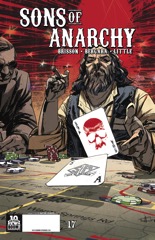
  • Sons of Anarchy #17Every third or fourth issue of Sons of Anarchy, I write something about how it’s amazing what Brisson is doing with this licensed title, especially one about bikers, which doesn’t seem the most natural fit for a comic.

    I need to change up that practice as of now.

    Sons of Anarchy is the best book people aren’t reading. What Brisson does this issue in terms of narrative plotting–executing a bunch of little twists to turn the book from a talking heads to a montage to an action story–is exceptional. And Bergara’s art is essential too. So much happens and he fits it all in.

    Brisson is committed to not let Anarchy be disposable. The issue he and Bergara create here is fun, tough, subtle. And Brisson plots it out as only a comic can be plotted out.

    He’s using a licensed comic to advertise the medium’s unique strengths.

    CREDITS

    Writer, Ed Brisson; artist, Matías Bergara; colorist, Paul Little; letterer, Ed Dukeshire; editors, Mary Gumport and Dafna Pleban; publisher, Boom! Studios.

  • The Last Days of Peter Bergmann (2013, Ciaran Cassidy)

    The Last Days of Peter Bergmann is something of a procedural documentary short. A man, using the alias Peter Bergmann, checks into a hotel in an Irish town. A few days later, he is found dead on a nearby beach. Unable to ascertain his identity, the police use CCTV footage from around town, from the hotel, to try to discover something about the person.

    Director Cassidy, a few years later, takes that footage, along with interviews of the people who interacted with the man, and cuts together this strange little film. Cassidy weighs it heavy at the end–there’s a reveal of sorts–but Cassidy keeps Last Days very flat.

    The police inspector talks about the haunting quality of the man on all the CCTV footage around town–something David Cantan and Jack Quilligan’s music helps emphasize–but Cassidy has no judgement. There’s no metaphor, no thesis, just the unexplainable.

    3/3Highly Recommended

    CREDITS

    Written and directed by Ciaran Cassidy; director of photography, Kate McCullough; edited by John Murphy; music by David Cantan and Jack Quilligan; produced by Morgan Bushe.


    RELATED

  • The Honest Date (2014, Jonah Feingold)

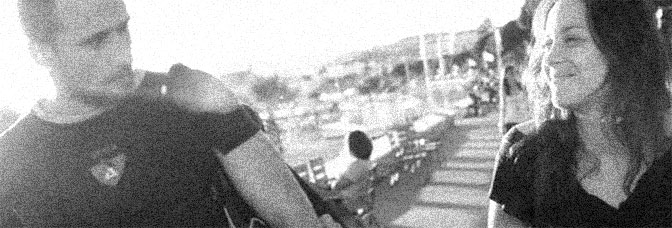
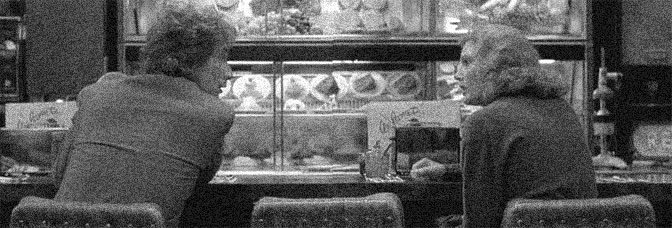
    The first seventy percent of The Honest Date is reasonably amusing. Director Feingold has his stars–Allyn Morse and David Lowe–bantering, rapid-fire, back and forth, usually about dating mores or pop culture and it works. Lowe is excellent, Morse has maybe one questionable delivery but she’s otherwise really good. They handle all the dialogue and make themselves distinct in body language.

    Mind you, it’s in a couple two shots and some close-ups. Feingold has a filter on the short, a very rich black and white, and it’s all effective. There’s old timey music playing. Date succeeds at trying just hard enough to look like it’s trying too hard.

    Then Feingold makes a very strange decision for the conclusion and he loses his hold on the film. Sure, it’s only three and a half minutes, but the last third of Date is a complete misfire.

    Nice acting though.

    1/3Not Recommended

    CREDITS

    Written and directed by Jonah Feingold; produced by Emily Wolfe.

    Starring Allyn Morse (Honest Girl) and David Lowe (Honest Boy).


    RELATED

  • Crossed + One Hundred 2 (December 2014)

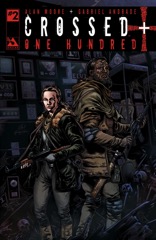
    Crossed + One Hundred #2Moore takes the comic to Graceland–sans Elvis cameo–because even though Moore has a lot of pop culture references in Crossed, they’re never cheap. They’re never too obvious, they’re never forced. A few of them had me wondering where Alan Moore would have heard about them, given I don’t picture him on Facebook reading memes.

    The comic continues to be fantastic. The language he’s using for the future apocalypse is still fantastic. He even paces out the comic to have a good finish. Even though he’s doing a limited series, the issue itself satisfies with its conclusion. Once again, shocking to see Moore putting so much thought and effort into work-for-hire. He even gets in some really nice character moments.

    As for Andrade’s art… it works out. It’s not the best it could be, but he gets how to break out the story for it to succeed.

    CREDITS

    Writer, Alan Moore; artist, Gabriel Andrade; colorist, Digikore Studios; letterer, Jaymes Reed; publisher, Avatar Press.

  • Cross My Heart (1987, Armyan Bernstein)

    Cross My Heart has a significant problem right off. Its gimmick work against the film. The opening scenes establish Annette O’Toole and Martin Short’s leads as they prepare for a date. Each has the help of a second (for exposition’s sake, though it doesn’t make the exposition particularly natural); both actors are appealing, both characters are appealing. The opening scenes set up the viewer knowing the truth about each character, which they plan on hiding from the other.

    Hence the title.

    Then the date starts. And O’Toole’s really good. She’s often doing these delicate movements while Short’s stuck in a lame romantic comedy. The more she does them, the worse Short gets. The middle of the film is mostly real time on their date and, while his character is believable, Short’s no longer likable. And the film’s gimmick of preparing the viewer in advance backfires. It makes O’Toole the protagonist, which the film isn’t set up to do.

    Oddly enough, even though the script’s used up all of its goodwill by three-quarters through, once the actors get to play the characters straight–particularly Short (like I said, O’Toole’s always good)–everything starts working out. The chemistry between the stars is so good, it’s too bad director Bernstein and co-writer Gail Parent wasted so much time on the insincerity (and using it for joke fodder).

    Real nice support from Paul Reiser in a small role and nice photography from Thomas Del Ruth.

    It’s fine, but the actors deserve more.

    2.5/4★★½

    CREDITS

    Directed by Armyan Bernstein; written by Bernstein and Gail Parent; director of photography, Thomas Del Ruth; edited by Mia Goldman; music by Bruce Broughton; production designer, Lawrence G. Paull; produced by Lawrence Kasdan; released by Universal Pictures.

    Starring Martin Short (David), Annette O’Toole (Kathy), Paul Reiser (Bruce), Joanna Kerns (Nancy), Jessica Puscas (Jessica), Corinne Bohrer (Susan) and Lee Arenberg (Parking Attendant).


    RELATED

  • ODY-C 2 (January 2015)

    ODY-C #2With the second issue of ODY-C, which is definitely easier to follow than the first, it’s still unclear why one should read the comic. Unless he or she is really, really interested in Homer and The Odyssey. Because Fraction and Ward moving the story to a matriarchal galactic adventure really isn’t enough.

    Not with Fraction relying on occasional curse words and breaking out of the “space classical” language of the regular exposition to wake up the reader.

    For people who love Ward’s art, it might be worth it. But Fraction isn’t doing anything new here. A distant Odysseus who comes off as unlikable? No, that one’s never been done before. Fraction doesn’t have a different take on the characters, he just puts them in different clothing. And it’s not like it’s Gone With the Wind or something subtly familiar.

    It’s The Odyssey. It’s been adapted for hundreds of years.

    CREDITS

    Writer, Matt Fraction; artist, Christian Ward; colorists, Ward and Dee Cunniffe; letterer, Chris Eliopoulos; publisher, Image Comics.

  • The Searchers (1956, John Ford)

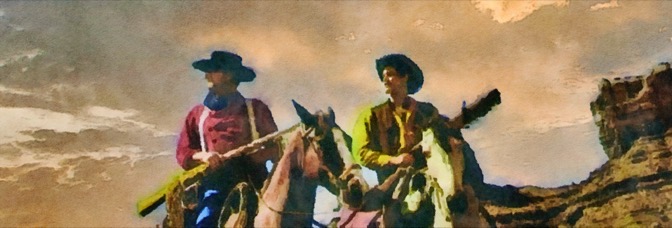
    John Ford is never trying to be discreet with The Searchers, he’s just not willing to talk down to the audience. In the first ten minutes of the film, he and screenwriter Frank S. Nugent quickly establish John Wayne’s character and his relationship with his family. Ford, Nugent, Wayne and the rest of the cast make it clear–one has to wonder what kind of direction Ford gave the actors (Ward Bond in particular)–but there’s no such thing as expository dialogue in The Searchers.

    There are a handful of moments where Wayne is talking to someone and he eschews the idea of going into exposition. The one time he does it–right at the end–is with co-star Jeffrey Hunter, whose character has needed some expository explanation the whole time. More than anything else, the film hinges on their relationship. The film positions Hunter and Wayne against one another while they search together for the same thing–kidnapped Natalie Wood. Their differing reasons, never fully explained, and how they collide with each other throughout the search drive the film.

    Almost every relationship in the film is complex–Ford gets magnificent performances out of the cast–just because Wayne’s character is so intentionally out of place amongst the settlers. Meanwhile, Hunter goes through a big, quiet character arc. He has some great courtship scenes with Vera Miles, who’s sort of the unspoken third lead.

    Beautiful direction, photography from Winton C. Hoch, editing from Jack Murray.

    The Searchers is remarkable.

  • In the Name of the Father (1993, Jim Sheridan)

    In the Name of the Father falls into most true story adaptation traps. It has a really long present action, which is unevenly distributed through the runtime. There’s a framing device introducing Emma Thompson’s appeals lawyer first thing–with her popping in from time to time to remind the viewer of the device. That device helps orient Daniel Day-Lewis as a teenager at the beginning (or just a little older), but it’s still a true story adaptation issue.

    And it wouldn’t work without Day-Lewis. Director Sheridan doesn’t seem to enjoy the courtroom moments in the film, making Thompson a side character. Not just a side character, but one without much depth. The role works thanks to Thompson’s sincerity and some effective writing from Sheridan and co-screenwriter Terry George.

    The framing device doesn’t cover the film’s entire runtime; eventually the turntable needle catches up in the present action. The flashback is Day-Lewis’s personal growth throughout the film, something Sheridan and Day-Lewis are subtle about. There’s a big moment for changing him, sure (it’s a true story adaptation after all), but the groundwork is already there. Responsibly handling the narrative fallout is where Father distinguishes itself.

    The film is always well-acted, whether good guys (Pete Postlethwaite is fantastic as Day-Lewis’s always upright father who ends up falsely imprisoned too) or bad guys (Don Baker and Corin Redgrave).

    But Day-Lewis, and the true story, are the whole show. Sheridan expertly facilitates them to their successes.

    3/4★★★

    CREDITS

    Produced and directed by Jim Sheridan; screenplay by Sheridan and Terry George, based on a book by Gerry Conlon; director of photography, Peter Biziou; edited by Gerry Hambling; music by Trevor Jones; production designer, Caroline Amies; released by Universal Pictures.

    Starring Daniel Day-Lewis (Gerry Conlon), Pete Postlethwaite (Giuseppe Conlon), Emma Thompson (Gareth Peirce), John Lynch (Paul Hill), Corin Redgrave (Robert Dixon), Beatie Edney (Carole Richardson), John Benfield (Chief PO Barker), Paterson Joseph (Benbay), Marie Jones (Sarah Conlon), Gerard McSorley (Detective Pavis), Frank Harper (Ronnie Smalls), Mark Sheppard (Paddy Armstrong) and Don Baker (Joe McAndrew).


    RELATED

  • The Comics Fondle Podcast – 1×20
    Good comics: Crossed +100, Birthright, Copperhead, ODY-C, The Fade Out, Lazarus, Manifest Destiny, War Stories, They’re Not Like Us, Gotham by Midnight, Trees, Cowl, Ghosted, Robocop, Nailbiter, Kingdom of the Wicked, Squirrel Girl, Antman, Multiversity (Pax Americana, Thunderworld), Jupiters Legacy Other stuff: Jeff Lester and Graham McMilian, whats up with that? New PDFs Bad comics: Lady Killer, Star Wars One last thing: Image V Convergence: Dawn of the New Mainstream

    WHERE TO LISTEN

    Apple Podcasts
    Spotify
    Stitcher
    RSS
  • Batgirl #38Something happens this issue of Batgirl. The gimmick starts to get a little old. Barbara using Batgirl to be popular on social media, Barbara going after a reality TV bad boy, Barbara dating a cop who thinks Batgirl is a menace. All of a sudden–and having Dinah point out all Barbara’s inconsistent behaviors doesn’t help–all of a sudden, Stewart and Fletcher seem like they’ve gone too far.

    They’ve lost Barbara Gordon. Their new Barbara isn’t so much a soft reboot as an entirely new character. One who isn’t very bright, who’s kind of shallow, who’s not a particularly good protagonist. The reader is supposed to be second guessing her throughout the entire issue. Why read a comic where you’re not supposed to worry about the protagonist but about her being dumb?

    There’s still some charm thanks to Tarr’s artwork, but the story apparently is stuck on loop play.

    CREDITS

    Likeable; writers, Cameron Stewart and Brenden Fletcher; pencillers, Stewart and Babs Tarr; inker, Tarr; colorist, Maris Wicks; letterer, Jared K. Fletcher; editors, Dave Wielgosz and Chris Conroy; publisher, DC Comics.

  • Ghosted 16 (January 2015)

    Ghosted #16It’s a done-in-one setting up the next story arc, with Williamson following the villain through his evil plans in a small German town. Juan Jose Ryp does the art, which leads to some crazy riot scenes, but the best moments of Ryp’s art are actually the kids playing. It’s a strange thing to see from Ryp (and in Ghosted) and it’s rather nice.

    Actually, Ryp now does a lot of points for shading on faces and it gets annoying fast. Like it’s a Photoshop filter or something.

    The story’s decent. Williamson has a lot of fun not just with the villain but setting up the situation in the town. When Jackson finally does appear towards the end of the comic to get the set up going, he’s out of place.

    Williamson doesn’t just have fun with the issue, he crafts it very well. It feels enthusiastic and finished.

    CREDITS

    Writer, Joshua Williamson; artist, Juan Jose Ryp; colorist, Miroslav Mrva; letterer, Rus Wooten; editors, Helen Leigh and Sean Mackiewicz; publisher, Image Comics.

  • Star Wars 1 (March 2015)

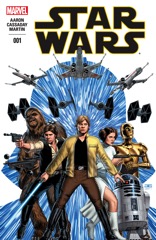
    Star Wars #1There’re a lot of politics in the first issue of Star Wars. Some of it is just Jason Aaron trying to make the Star Wars universe makes sense for thinking reader, which is always been a problem. Star Wars is not deep.

    And Aaron’s script for Star Wars turns out not to be very deep either. He has the obligatory Darth Vader appearance, some throwback references to the last movie. Marvel’s Star Wars series is set immediately following the original movie, just like that Marvel Star Wars series from the seventies. So why read another one? Is it supposed to be the John Cassaday art?

    Hopefully not, because the art is pretty lame. Cassaday doesn’t have a lot of enthusiasm for the spacecraft or the setting and he goes for photo reference on the main cast but gets lazy almost every third panel.

    Star Wars is lame, lazy and redundant.

    CREDITS

    Skywalker Strikes; writer, Jason Aaron; artist, John Cassaday; colorist, Laura Martin; letterer, Chris Eliopoulos; editors, Charles Beacham and Jordan D. White; publisher, Marvel Comics.

  • Breakfast on Pluto (2005, Neil Jordan)

    Breakfast on Pluto starts with talking robins. They’re subtitled, but talking. Robins can talk–or these two robins can talk (they show up from time to time), in which case they just live a long time. Before the talking robins, who director Jordan uses to keep the viewer off balance, the film opens with Cillian Murphy’s protagonist. During the rougher portions of the film, it’s hard not to think they opened with Murphy–playing a transgender woman in sixties and seventies UK–to give some hope the character isn’t going to have a bad end.

    For a while, the film seems to be a distant character study, set against the Irish troubles. While Murphy’s life is separate from the troubles, she keeps getting drug into them. Only when the two collide does the film begins to define itself. Before that moment, Pluto is a connected set of vignettes, as Murphy tries to navigate the world, having a series of adventures (some amusing, some devastating) with various people.

    The collision reveals–rather grandiosely–subtle insight into the protagonist. The film never shies away from insight as Murphy moves to London to search for her mother; the later revelation is about the film itself. Pluto is incredibly complex. And without talking robins, one might not digest it properly.

    Great supporting turns from Ruth Negga, Liam Neeson, Ian Hart and Steven Waddington. Gavin Friday, Brendan Gleeson and Stephen Rea each have extended, fantastic cameos.

    Murphy’s spellbinding.

    Jordan crafts a spectacular film with Pluto.

    4/4★★★★

    CREDITS

    Directed by Neil Jordan; screenplay by Jordan and Pat McCabe, based on the novel by McCabe; director of photography, Declan Quinn; edited by Tony Lawson; music by Anna Jordan; production designer, Tom Conroy; produced by Alan Moloney, Jordan and Stephen Woolley; released by Sony Pictures Classics.

    Starring Cillian Murphy (Patrick ‘Kitten’ Braden), Stephen Rea (Bertie), Brendan Gleeson (John Joe Kenny), Ruth Negga (Charlie), Laurence Kinlan (Irwin), Ruth McCabe (Ma Braden), Gavin Friday (Billy Hatchett), Steven Waddington (Inspector Routledge), Ian Hart (PC Wallis), Liam Cunningham (1st Biker), Bryan Ferry (Mr. Silky String), Eva Birthistle (Eily Bergin) and Liam Neeson (Father Liam).


    RELATED

  • Copperhead (2014) #5

    Ch05

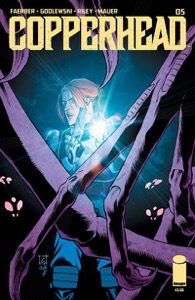
    Faerber wraps up the first arc–and the sheriff’s first case–in a rapid-fire issue of Copperhead. Most of the scenes only take three or four pages so there are a lot of them; they’re all fantastic, starting with the opening scene between the sheriff and the android.
    There are a number of surprises in the issue, but Faerber handles them all gradually. His characters are thinking and acting; it’s all incredibly active. It’s an interesting way to handle a procedural because the solution to the crime isn’t as interesting as how the characters go about reacting to it, both the police solving it and the survivors processing it.

    And Godlewski basically gets to recap all the settings of the previous issues–starting with some fast action in the desert–so the comic always looks great.

    Faerber ends the arc with his cast in place. Copperhead’s great stuff.

  • Copperhead 5 (January 2015)

    Copperhead #5Faerber wraps up the first arc–and the sheriff’s first case–in a rapid-fire issue of Copperhead. Most of the scenes only take three or four pages so there are a lot of them; they’re all fantastic, starting with the opening scene between the sheriff and the android.

    There are a number of surprises in the issue, but Faerber handles them all gradually. His characters are thinking and acting; it’s all incredibly active. It’s an interesting way to handle a procedural because the solution to the crime isn’t as interesting as how the characters go about reacting to it, both the police solving it and the survivors processing it.

    And Godlewski basically gets to recap all the settings of the previous issues–starting with some fast action in the desert–so the comic always looks great.

    Faerber ends the arc with his cast in place. Copperhead’s great stuff.

    CREDITS

    Writer, Jay Faerber; artist, Scott Godlewski; colorist, Ron Riley; letterer, Thomas Mauer; publisher, Image Comics.

  • Lazarus (2013) #14

    Lazarus  14

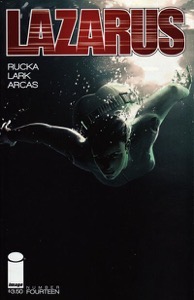
    Rucka deals with some really big issues in the front half of the issue–like finally making it clear where Forever comes from (or at least where her brother says she comes from), not to mention the resolution to the kidnapped brother arc.

    The second half of the issue has a little psychological fallout and then the big political fallout from the first half. Unfortunately, Rucka overplays the political fallout. It’s interesting stuff, but it’s not dramatic. Lark can do talking heads. Instead of doing talking heads, though, Rucka has him do… listening heads. It’s just not dramatic, it’s hard to keep interest.

    And then the cliffhanger, which could have been really dramatic, is quizzical. Rucka assumes readers are rather familiar with the supporting cast without giving them any reminders. It’s written for the trade–not in terms of not enough action, but that familiarity.

    But the first half’s awesome.

  • Lazarus #14Rucka deals with some really big issues in the front half of the issue–like finally making it clear where Forever comes from (or at least where her brother says she comes from), not to mention the resolution to the kidnapped brother arc.

    The second half of the issue has a little psychological fallout and then the big political fallout from the first half. Unfortunately, Rucka overplays the political fallout. It’s interesting stuff, but it’s not dramatic. Lark can do talking heads. Instead of doing talking heads, though, Rucka has him do… listening heads. It’s just not dramatic, it’s hard to keep interest.

    And then the cliffhanger, which could have been really dramatic, is quizzical. Rucka assumes readers are rather familiar with the supporting cast without giving them any reminders. It’s written for the trade–not in terms of not enough action, but that familiarity.

    But the first half’s awesome.

    CREDITS

    Conclave, Part Four; writer, Greg Rucka; artists, Michael Lark and Tyler Boss; colorist, Santiago Arcas; letterer, Jodi Wynne; editor, David Brothers; publisher, Image Comics.

  • Perfect Sense (2011, David Mackenzie)

    Perfect Sense goes out of its way to be an atypical disaster movie. Director Mackenzie and writer Kim Fupz Aakeson’s only significant acknowledgement of genre standards is having one of the protagonists pursue a solution. Except it’s never clear what epidemiologist Eva Green actually does–her job is clear, but what she does in pursuit of a solution is never clear.

    Because, instead, Perfect Sense focuses on her relationship with the guy who works at the restaurant near her apartment, Ewan McGregor. Aaekson’s script uses the restaurant as the metaphor for what’s going on in the world as everyone slow but surely loses their senses. Literally.

    Mackenzie and editor Jake Roberts do these montages, narrated by Green’s character (but not her), to show world events. They’re beautifully cut, precisely presented. Everything in Perfect Sense is precise. Its ninety minute run time is also essential–so much information is presented, but every small moment needs to carry weight. The viewer can’t be left to wander. Mackenzie controls the experience.

    The film simultaneously has to be a Green and Macgregor’s romantic drama while still taking into account these apocalyptic plot points. Only those plot points can’t be overdone because Perfect Sense can’t appear constrained. The meticulousness of the film starts long before Mackenzie’s avoiding action set pieces.

    The photography from Giles Nuttgens is fantastic–and Roberts’s editing on the other scenes is great as well. Max Richter’s music is spot on.

    And Green and Macgregor are wonderful.

    It’s deliberate, considered and successful.

    3/4★★★

    CREDITS

    Directed by David Mackenzie; written by Kim Fupz Aakeson; director of photography, Giles Nuttgens; edited by Jake Roberts; music by Max Richter; production designer, Tom Sayer; produced by Gillian Berrie, Tomas Eskilsson and Malte Grunert; released by IFC Films.

    Starring Ewan McGregor (Michael), Eva Green (Susan), Ewen Bremner (James), Stephen Dillane (Stephen), Denis Lawson (Boss), Anamaria Marinca (Street Performer), Alastair Mackenzie (Virologist), Katy Engels (Narrator) and Connie Nielsen (Jenny).


    RELATED