• All Creatures Great and Small (2020) s03e06 – For Whom the Bell Tolls

    In the way it has come for so many British television shows, movies, radio plays, and so on, war has come to “All Creatures Great and Small,” specifically the beginning of World War II. Or at least the King’s Speech beginning of World War II. The family gathers around the radio and everyone gets their demo reel clip. It’s exceptionally well-done. This episode is director Stewart Svaasand’s first “Creatures,” and it’s setting a high bar.

    While everyone’s been worrying about the European conflict since the end of last season—with Nicholas Ralph moping about not getting to sign up for a few episodes, forced deferred because he’s a vet—it becomes real for everyone here. Great scenes for Samuel West and Anna Madeley, who get this quietly devastating arc about an abandoned dog. Someone drops him off at the vet’s, presumably on his way to enlist, and, while West is sympathetic as all hell, he doesn’t want people overloading them with abandoned pets.

    Then Ralph and Rachel Shenton have a one-two gut-punch arc with the war coming, but also Shenton’s cattle coming in positive for tuberculosis. Not great, considering Shenton’s dad, Tony Pitts, was the one who vouched for the testing in the first place (and doesn’t have savings to get through a quarantine). Imogen Clawson’s around too, but entirely support for Pitts’s arc. Some excellent moments for Shenton throughout, especially an unexpectedly dramatic paperwork subplot.

    Callum Woodhouse has the two fun arcs, obviously with significant caveats. He goes to dinner at girlfriend Sophie Khan Levy’s house and finds her father, Kris’s Dosanjh, not the villainous vet he’s been led to believe. Charming family dinner scene, setting Woodhouse up for his big reaction to the war arc. But first, he’s got to visit Patricia Hodge, who’s getting her house ready for the county to utilize in wartime. Adorable cameo from Tricki Woo (wonderfully essayed, as ever, by Derek), but he’s not the focus.

    Adrian Rawlins (Ralph’s hard-nosed TB testing supervisor) and Will Thorp (Madeley’s not-romantic but romantic male friend) have great scenes.

    It’s all very British and very good–script credit to Jamie Crichton.

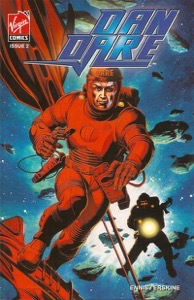
  • Dan Dare (2007) #3

    Dan Dare  3

    It’s an absurdly good issue, starting with Dan Dare having a showdown with the little shitheels currently calling themselves British officers. He and companion Digby are on a desert planet, trying to evacuate the civilians before they and the garrison have to shoot it out with literal monsters, and some officers are whining about their tours being over soon.

    Ace start from writer Garth Ennis. The issue is a mix of talking heads and action, with some history lessons in between. As Dan and Digby walk the remaining colonists (including some of the Venusian Treen aliens) through the desert in hopes of a more defendable position, Dan gives the Dan Dare: The Original Series recap in a page or two. There aren’t any scenes, just a pin-up and great writing from Ennis, who gets to a sad and sweet finish with the scene touching on Dan’s failed romance with previous companion Jocelyn.

    The action unexpectedly goes to Jocelyn back on Earth. Her boss, the Prime Minister, has sold out humanity to the enemy, only she doesn’t know it. She does find out, however, there’s something extraordinary going on, and she’s going to figure it out. Her scenes are entirely talking heads; giving an assignment, getting a report, making decisions, but it’s all incredibly tense because the reader knows she’s on the right track and she’s got to save the world–excellent, efficient plotting from Ennis. The series is so far along at this point; despite literally being a handful of conversations and an interrupted space voyage, I thought we were on issue four, not three.

    Ennis toggles the tone again when the sci-fi military action starts. Dan gets the soldiers into an infantry square to protect the civilians, and even though they’re doing better than they thought, they don’t have an infinite ammo cheat code.

    The cliffhanger’s nice and dry, nice and British—the first time I read Dan Dare, I’d never read any 2000 AD; now I have an Ennis and Gary Erskine’s format homage is cool. It’s good either way, but it’s cool to see what they’re doing and where they got it.

    Dan Dare delivers. Erskine’s art is his series best this issue; he’s got the pacing for the talking heads, which usually aren’t in close-up, so there are just lots of panels of people walking and talking, and it’s captivating.

    Damn good comics.

  • Werewolf by Night (1972) #22

    Werewolf by Night  22

    New writer Doug Moench continues to put his mark (of the Werewolf) on Night.

    By soft-booting the thing back to issue three or four. This issue starts with Jack going to see forty or fifty-something best friend Buck Cowan, who’s known Jack’s been a werewolf for a while now, but they never, ever talked about it on page, just went from not knowing to knowing. It’s the full moon, and the regular plan is for Jack to lock himself in Buck’s storage closet.

    Jack tried this method last issue, and it’d didn’t work. They think they’ve got it licked this month with iron bars, but the werewolf just… goes through the door. Bet the claws help with it. The werewolf then attacks Buck, meaning Buck’s not as special as the other people the werewolf hasn’t killed because he knows they’re special to Jack. Except then, Jack’s seventeen-year-old sister shows up to see Buck, and the werewolf runs off.

    I was getting my hopes up for Moench, and he’s really going back to Buck being a dirty old man.

    Cool.

    Moench does write excellent Wolfman Jack narration, though he finally breaks it at the end of the issue with Jack—who narrates the werewolf’s adventures in the past tense (meaning it’s already happened, keep that detail in mind)—thinking about how he doesn’t remember anything from the werewolf adventures. All that narrating he’s been doing for twenty issues? Doesn’t remember any of it. So how could he be narrating it during the Wolfman Jack adventures?

    It’s tenses. It’s not, I don’t know, Ibsen.

    Anyway, the actual story has the werewolf getting into a tussle with a ‘roided out movie star whose former producer got him into a disfiguring accident, so the guy, a former heartthrob, is killing a bunch of Hollywood types.

    Who don’t not have it coming.

    Moench also brings in a new cop—out for revenge for his missing partner, dirty, murdering cop Lou Hackett; but the new cop doesn’t know Lou was bad. Why get rid of one generic cop to bring in another?

    The less said about the Don Perlin and Vince Colletta art, the better. It’s really bad this issue, Perlin’s worst (so far).

    Once again, Werewolf’s a slog.

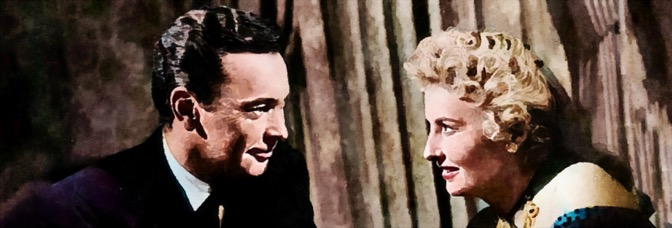
  • Forty Guns (1957, Samuel Fuller)

    Forty Guns occupies that rare position of simultaneously playing like a parody of itself without being any campy fun. It’s a perfect storm of budget, cast, story, era, technology, earnestness, and director Fuller.

    Oh, and it’s a singing cowboy Western. Well, singing bathhouse owner. Men’s only, which leads to a couple weird scenes where Fuller is palpably chomping at the bit to start a musical number and have everyone bust out. Sadly, the musical number never arrives, and instead it’s always just Jidge Carroll walking around and singing with some guy nearby playing a guitar.

    Carroll has one song about Barbara Stanwyck (High Ridin’ Woman (With a Whip)) and a funeral song (God Has His Arms Around Me, which is an exceptionally problematic hymn about God gaslighting you after abusing you). They’re awful songs. And they’re silly. And Carroll’s not good enough to make them worth it. During the funeral song, it’s clear Fuller doesn’t have a bad idea here; he just doesn’t have the time, money, or onscreen talent to figure it out.

    For the first act, Forty Guns feels a little like Fuller saw Seven Samurai and decided to American-it-up, meaning multiply the title by six and then do an entirely different movie.

    Guns takes place in Tombstone, Arizona, where a Wyatt Earp-type (Barry Sullivan) comes to town to serve a warrant only to fall for local battle baroness Barbara Stanwyck. Sullivan’s got his sidekick brother, Gene Barry, and his baby brother, Robert Dix, along, though Dix is supposed to be moving out to California to be an “agricultural cowboy.”

    The good guys are there on federal business, so when local marshal Hank Worden (a nice but not good cameo) begs Sullivan to help him stand up to Stanwyck, Sullivan gives him the “ain’t my wife, ain’t my life” and goes on his way. Only then Stanwyck’s shitty little brother (John Ericson) assaults Worden, burning out his eyes with coffee and shooting him; Sullivan decides he might have to do something about it.

    The film quickly becomes a battle of the “wits” between Sullivan and Stanwyck, who don’t seem to know when they’re supposed to be flirting or not. Like their first substantial encounter: Stanywck’s got a great flirt going, and neither Sullivan nor Fuller acknowledge it. Later on, she’ll be hurrying through, and he’ll be trying to slow it down. Very strange, though it has a few good moments, which is a surprise since Sullivan’s terrible and Stanwyck’s doing everything she can to be terrible. It’s the part, however.

    Stanwyck’s part is as follows. She’s a strong, self-made woman who went from cattle rancher’s daughter to most powerful land baroness in the state. She has forty riders with her at all times (her Dragoons). She dresses like the hostess at an extremely racist Mexican restaurant where only white people work. Her costumes will change, however, like when forty-nine-year-old Stanwyck—who does her amazing horse-dragging stunt in this movie—starts wearing around Southern belle outfits to show she’s in love with Sullivan.

    Only they never say anything about her character arc. It’s terrible, it’s problematic, but it’s entirely offscreen because Fuller’s not interested.

    I’m resisting looking up the trivia to see if he was stuck in some contract, hated the studio, and didn’t like Stanwyck, so Fuller made this movie.

    Most of the acting is bad. Sullivan’s a lousy lead. The script’s not there but, wow, does he not have any charisma. Or the ability to walk distinctively, which is apparently crucial in the singing cowboy universe of Forty Guns. Barry’s a little better, though he’s got a romance subplot with Eve Brent, and he’s older than the actor playing her father (Gerald Milton) by a few years, and it’s obvious. He’s still rather bad. But he and Brent do have a couple reasonably effective lusty scenes together.

    If it weren’t for the third act, Dean Jagger would break the movie. Jagger’s the corrupt numbskull sheriff who tries to save the day and makes things worse. He’s atrocious. Ditto Ericson.

    Wait, is anyone not terrible?

    Brent and Milton are okay, I guess.

    Fuller’s good direction ranges from okay to excellent, obviously less excellent stuff than okay, but he’s also got some silly moves and some bad ones. He’s indifferent to the performances and Joseph F. Biroc’s competent but flat black-and-white photography. Since it’s so bombastic, it ought to be in color.

    Fuller and editor Gene Fowler Jr. cover a lot in the cuts, but it’s still good cutting of bad scenes.

    Harry Sukman’s music is familiar, varied, and tedious.

    So, yeah, Forty Guns. Definitely could be in the “seen to be believed, but shouldn’t be seen” pile, but it’s so much comfier in the “what the hell was Sam Fuller thinking?” one.

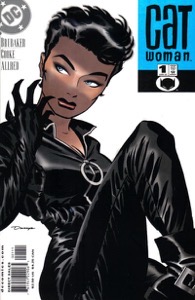
  • Catwoman (2002) #1

    Catwoman  1

    I’ve meant to go back and reread Brubaker’s Catwoman for literal decades now. The last time I tried, I started the post about Catwoman #1 pointing out it proves Ebert’s “no masks in noir” rule from his Batman Returns review wrong.

    I’ll never be able to top that one, though it’s impossible not to think of Catwoman in those terms. With Darwyn Cooke and Mike Allred’s brisk, expressive art, Matt Hollingsworth’s lush but dark palette, Catwoman’s a visual feast. Especially once Selina gets back in “the outfit” and goes for an evening constitutional, hanging out on giant heads from a Schumacher Batman only fit to the Gothic city. It’s dark but not depressed; there are moments of such sincere joy in the comic. Not just for the reader but for Selina. She’s been struggling to get her groove back, and she’s finally got the right idea.

    The comic’s got full narration from Selina, with Brubaker toggling between first and second person. When Selina’s feeling good about herself, it’s first person. When she’s tearing herself down, it’s second person. Batman ethics and morals have aged terribly, even in the last twenty years—I didn’t even realize I’m starting Catwoman again on its twentieth anniversary—so Selina feeling bad for thinking her friends—poor people, marginalized people—are actually worth it no matter what Batman says… yikes. Batman does show up, and Brubaker (and Cooke) give him the swashbuckler, Zorro feel, not the fascist Frank Miller one, which is good.

    But still. Yikes. Find a better role model, Selina.

    And she sort of does. She’s been seeing Leslie Thompkins for talk therapy. However, Selina’s been hiding her Catwoman side even though Batman already told Leslie, so she’s known the whole time, which seems professionally questionable. Be careful, Dr. Thompkins; it’s a slippery slope ending it faking the death of the first female Robin or whatever.

    The opening has a hook—someone’s killing sex workers and terrifying them before doing so—and the soft cliffhanger gets Selina into the know. She’s been hiding out in the Narrows or whatever it’s called, most people thinking she’s dead, fallen from high society, and not wanting to return to the Jim Balent days of Catwoman. It’s an earnest, speedy character development issue. Not too much backlog, but some panels showing off Cooke’s ability to mix Catwomen of all vintages and costumes; Selina’s trying to move forward and do some good.

    It’s such a great first issue. It’s nice. It’s never not tough, never not potentially rough, but it’s also so damn nice.

  • The Favourite (2018, Yorgos Lanthimos)

    Essentially, The Favourite gives each of its three stars an act to shine. Rachel Weisz gets the first act, Emma Stone the second, Olivia Colman the third. They all appear throughout, but the script’s surprisingly segmented with its narrative perspective. Surprisingly because it means the first-act protagonists (Weisz and Stone) are accessories in the third act. However, since the film is about the Queen of England (Queen Anne, reigned 1702-1714), Queen Colman taking over for the finish works.

    Though, not really.

    Colman is the miserable queen, and Weisz is her best friend and (obviously secret) lover. The act breaks come when Stone, Weisz’s fallen cousin, comes to the palace for a job and discovers their romantic relationship. Weisz doesn’t like Stone because Weisz is a rather mean person. It initially seems like a classist thing, but it runs deeper, especially after Colman realizes she can make Weisz jealous by hanging out with Stone. Stone at least likes Colman’s rabbits; Colman has one for each baby she lost as the royal broodmare (seventeen).

    Throughout the second act, as she feels threatened, Stone starts devising a plan to usurp her cousin and regain her good standing. Luckily, opposite politician leader Nicholas Hoult (shockingly good) wants Stone to spy on Weisz, and Stone likes Hoult’s bro, Joe Alwyn, so they can work something out.

    Of course, once Weisz feels threatened, she’s got to react. Weisz’s interests are far more vested than Stone’s; Weisz’s husband (Mark Gatiss) is a general off fighting the French, and Hoult doesn’t want any more money to fight the French. But Stone’s fighting for survival, something even after her life’s endangered, Weisz doesn’t seem to realize. And the film’s not very sympathetic about. The second act’s all for Stone, and it’s entirely a villain arc.

    Director Lanthimos shoots the first two acts with fish-eye lenses, forcing the audience to engage in the filmmaking artifice, making the period piece feel much more real. He also does long takes of his leads—mostly Stone and Colman, as both have realization arcs. In contrast, Weisz is never wrong about the personal relationship stuff, something the film also doesn’t acknowledge. There’s still fish-eye in the third act, but much less, and for visual effect rather than something to help the character development along. Favourite’s finely directed, but it’s clear in the second act, Lanthimos doesn’t have any more tricks up his sleeve. His style doesn’t build throughout.

    Excellent natural light photography from Robbie Ryan. The whole film looks great, but the outdoor scenes and the candle-lighted ones are particularly spectacular. Also excellent editing from Yorgos Mavropsaridis, who occasionally breaks into intricate montage sequences during scenes. Not many, but a few. Lovely work.

    The music’s booming classical (while Weisz described Favourite as an All About Eve-type picture, Lanthimos is very much doing Barry Lyndon avec femmes), and the sound design’s superb. The costumes and production design (Sandy Powell and Fiona Crombie, respectively) are fantastic. Favourite looks and sounds great.

    Best performance is Colman, then Stone, then Weisz, which is a surprise since Weisz is so good in the first act. She just loses the movie to Stone, who’s increasingly fantastic until the script infantilizes her. Then only Colman’s left without serious constraints, and she has a marvelous showcase. Still not as good as it ought to be (the third act pretends The Favourite has been a character study of Colman from the start, which it very much has not been).

    The script, by Deborah Davis and Tony McNamara, is clever with good dialogue, which is enough given the cast and crew, but lacking.

    Still, The Favourite’s one heck of a good picture, with some phenomenal acting and filmmaking.

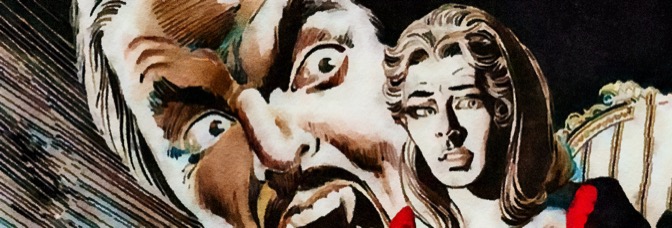
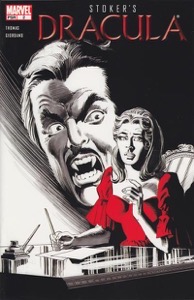
  • Stoker’s Dracula (2004) #2

    Stoker s Dracula  2

    Stoker’s Dracula collects and then continues Roy Thomas and Dick Giordano’s seventies novel adaptation, which ran in the black and white horror magazines, Dracula Lives! and Legion of Monsters. Thomas and Giordano only did six entries back then, and since they’ve only got one chapter of new material in this issue… they stopped before they were halfway done.

    Fast forward thirty years, and Marvel gets them to finish it.

    The cool part of this issue is it’s all the best material. The first issue would have Jonathan Harker getting to Castle Dracula and his discoveries there. This issue is all the England stuff, first from Mina’s perspective, then Seward’s, and now Lucy’s. Giordano excelled at the British Gothic material.

    This issue also introduces the mixed media aspect of the novel. There are newspaper accounts, multiple diarists, and Seward’s monologue to his phonograph. Thomas and Giordano’s best work on the adaptation—as was—is in this issue.

    So obviously, there are some differences thirty years on. The lettering is digital. Chris Eliopoulos. They lack the energy of the previous entries’ lettering. There are also some typeset newspaper reprints, which come off wrong, including a really bad “Lorem Ipsum” moment.

    But the lettering disconnect is nothing compared to the Giordano art disconnect. While Dracula does look quite different than pages (and decades) before—not for the better–Giordano’s overall work is good. He can still do the Gothic good girl art, which is crucial since it’s mostly a Lucy issue.

    There’s some hubbub with Seward, but he’s just a plot mechanism, just like all the characters. Thomas brings in Texan Quincy Morris, clean-shaven with sideburns like Giordano didn’t want to do too much work on him.

    Giordano did put a lot of work into Stoker’s, but there’s a difference. He’s older and slicker—just like the letters—but the energy’s different. Stoker’s Dracula isn’t adapting the novel to fit Tomb of Dracula; it’s just adapting the novel to match what’s come before.

    The new entry’s greatest success is giving Lucy—even temporarily—some agency. She doesn’t do much with it besides write in her diary, but her insight into her situation is very nice. Hopefully, Thomas will find someone else to have good instincts with going forward….

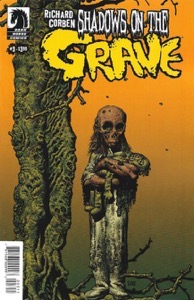
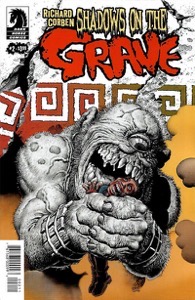
  • Shadows on the Grave (2016) #3

    Shadows on the Grave  3

    And now Shadows on the Grave is doing the very bizarre thing where the subsequent issue does what I said it should do; only it’s years later. In this case, creator Richard Corben does differing page lengths on the horror stories and lets the Greek story be the feature with the most pages. It’s twelve pages, which is enough time for Corben to do a prologue, feature, and epilogue setting up the next issue. I had been wondering if the Greek story was good enough, would it cover the rest—it could (the story’s great this issue), but it doesn’t have to do any covering. The other stories work out.

    The first story is a four-page quickie. A woman goes to a mansion where she used to know the owners but hasn’t been able to reach them. There she finds some odd brothers and has a tense encounter. Exquisite art. It’s dark, dangerous, and action-packed.

    It’s also only four pages, so Corben’s able to ride that momentum into the second story, about a group of grave robbers who get their just desserts. This one runs ten pages, which is a little long but successful. Again, lots of good art and design work with all these curious artifacts. It’s got the most story of the three horror tales, which Corben otherwise truncates.

    Like the third story, scripted by Jan Strnad, two hikers get lost in the woods and must stop at a cabin. There’s a hospitable host, maybe a little too enthusiastic about his many cryptid encounters, but it’s all good. The hikers start getting curious about what else is happening in the cabin, leading to a surprise finish.

    Or not. I mean, it’s a decent trope-full story, but it’s a little long for the punchline. They could’ve shaved a page, at least.

    Though I’m not sure I’d want it on the Greek story, Denaeus. When I started Shadows, I had hoped this one would be the standout and the last issue disappointed. This one does not, far from it.

    Corben splits the story between Denaeus on his mission, which seems doomed, but he’s too dense to realize it, and his would-be sidekick, Lustea. Despite clearly being a warrior, some sailors pick on Lustea, leading to a fantastic action sequence. Lots of fighting and hand-held weapons, unlike anything else in the issue for sure.

    The fight has a resolution to move things along, then there’s some convenient lightning—or is it because Lustea’s new friend, Malgia, can’t stop cursing Poesidion as they try to cross the sea? Then there’s an epilogue with Denaeus to prepare things for next time.

    It’s a fantastic entry. The art, the writing—Malgia’s hilarious and Lustea’s characterization is excellent—Corben’s delivering the goods.

    I just hope Grave doesn’t run hot and cold every other issue.

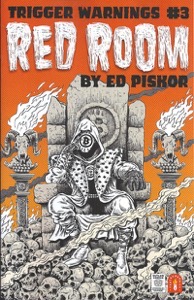
  • Red Room: Trigger Warnings (2022) #3

    Red Room Trigger Warnings  3

    Technically, this issue’s outstanding. Creator Ed Piskor takes Trigger Warnings somewhere unpredictable and incredibly thoroughly realizes it.

    But as a story, it’s all about the punchline, and it’s a long, long time to get to the punchline, going through an entirely unnecessary flashback to a supporting character. Now, the supporting character’s essential, the comic opens with him—specifically with the protagonist killing him. See, the supporting guy—Dustin—has a flash drive worth $400 million, and the protagonist, Rex, is ostensibly going to help him get it unlocked.

    It’s a BitCoin thing. Dustin was a pizza store clerk who comped a customer pies in exchange for the BitCoins back when it wasn’t worth anything. Then he lost the password and can’t be a hundred millionaire without it. Enter Rex, who says he’ll help Dustin decrypt it; they just need to go on his yacht to a tropical island where his former business partner lives.

    Piskor takes an engaging stroll through BitCoin culture (and its effects on the greater culture). Still, since the issue opens with Rex blowing Dustin away… it seems like Dustin-related flashbacks might not be too crucial to the overall story. Especially not once it turns out Rex’s friend, Satoshi, rules the tropical island as a man-god, like a late nineteenth-century British daydream. Satoshi and his followers don’t need BitCoins the way Rex thinks they do, especially not since they stream their human sacrifices to a Red Room.

    Where commenters are impressed with the production values of the ancient Polynesian temples.

    The story’s more “set in the Red Room universe” than a Red Room story (at least how Piskor’s defined them over the last six issues), and he makes lots of off-hand remarks about big things, but since they’re one-liners, he doesn’t take any responsibility for them. It’s the first time he’s tried to be buzzy with Red Room. Hard pass.

    It’s a solid issue, obviously. Piskor’s really good at his job. It’s just not the level he usually reaches. And the ending’s funny, just slight.

  • My Life Is Murder (2019) s03e07 – Breaking Bread

    Dollars to sourdough loaves (it’ll make sense), I think this episode of “My Life Is Murder” is the best-plotted mystery of the season. So far, obviously, but I think it’ll go the distance. It’s an outstanding whodunit, plus Lucy Lawless gets to be petty about her baking.

    The episode opens with Ebony Vagulans and Joseph Naufahu watching a YouTube food influencer review Naufahu’s cafe, including Lawless’s sourdough bread. The influencer, played by Mirabai Pease, gives it an okay but unenthusiastic rating, which does not make Lawless happy. Especially not when Rawiri Jobe’s next case involves two rival bread shops. Pease rated Lawless’s bread in seventh, and these two shops are one and two; Auckland’s apparently got a competitive, vindictive bread market.

    Star bakers Aidee Walker and Rick Donald were once a married team, but their legendary bickering eventually divorced them. Messily. They owned Donald’s family business together, and when they split, Walker got some of the intellectual property (the heirloom sourdough starter). So Donald opened a spite bakery a few doors down from the original, trying to confuse the customers (the businesses have the same name). It’s hilarious and petty, with Lawless immediately disliking Donald but then not warming to Walker, either.

    See, Walker got a new fiancé, and then he died. He drove into a lake while on an early morning delivery run, but something doesn’t add up.

    In order to solve the mystery, Lawless will have to buddy up with unlikely allies, bite her tongue about her bread baking, and put up with the unsophisticated bread palates of Jobe and Vagulans.

    Because, thank goodness, bread plays into the solution.

    Chris Hawkshaw gets the script credit; again, it’s phenomenal. Not just the mystery—but also the mystery. Lawless has great grating chemistry with all the guest stars; she’s got a fellow baker thing with Walker, but Walker’s kind of a dick, Donald condescends to her, she suspects pastry chef Greg Johnson, and then there’s the animosity with Pease. Donald can’t keep up with Lawless, which is the joke, but Walker and Pease return barbs. It’s fun. It’s a fun, good episode.

    Even if a recurring guest star only seems to be in the episode to give Lawless her eureka moment. It has to come from somewhere, but the guest star makes it seem shoehorned. But it again pays off.

    Nice direction from Kiel McNaughton, too; great timing for the cast, and the limited locations help. There are enough to keep Lawless busy, but they’re constrained enough to be familiar.

    It’s a strong episode for Lawless too. Not all that heart she’s been showing this season, just the acerbic capability.

    Good stuff.

  • American Gothic (1995) s01e06 – Potato Boy

    CBS didn’t air Potato Boy during “American Gothic”’s original run. It started the network shuffling the show order in earnest, presumably to make the show more accessible to new viewers. Since it’s television—network television—they somehow managed to skip a literal onboarding episode. Gary Cole narrates Potato Boy’s first act, clueing the viewers in on the ground situation. The episode deep dives into two and a half characters in addition to the youthful (“Gothic”) adventures of recently orphaned Lucas Black. It’s an awesome done-in-one.

    Of course, the network screwed it up.

    Michael Nankin gets the writing credit and directs; Nankin’s the best direction on a “Gothic” episode so far. He likes watching the actors, which is essential given the character examination aspect of the episode, but also as a contrast for Cole. Everyone else feels, and we see them feel; Cole’s like a lizard. He’s calm, motionless, then he acts. And he’s trying to pass those lessons on to Black.

    Their arc in this episode’s disturbing. Black seems closer to drinking the dark side Kool-Aid than ever; whenever he gets this close to Cole, Sarah Paulson usually shows up, but she’s got an offscreen subplot involving the title character.

    The Potato Boy is an urban legend amongst the youth of Trinity proper. Being raised in the country, Black isn’t informed—his pals, Christopher Fennell and Evan Rachel Wood, have to warn him about the mutant child who does nothing but sing hymns from his attic cell. Ghostly sister Paulson visits Black and becomes enchanted with the singing and disappointed in her apathetic brother. Paulson comes back a few times in the episode, but she’s off having the supernatural adventure of the episode, which they haven’t got the budget for.

    Black also bonds with reverend John Bennes after legal guardian Tina Lifford takes Black to church for the first time. Bennes figures into Black’s A-plot and Brenda Bakke’s B-plot. Bakke and Searcy alternate the B-plots. The episode does a complex examination of Bakke, subtly and not; it’s a fantastic episode for her, easily her best, but also the best female part on “Gothic” so far. Meanwhile, Searcy’s in therapy, except he can’t talk too much about the details of his working relationship with Cole. Searcy’s phenomenal.

    What with covering up Cole murdering Paulson and all.

    Then Jake Weber’s got a C-plot, which also ties into Black’s plot and Bennes’s church. Nankin gets some great acting out of Weber too.

    Heck of a lot of great performances this episode—Black, Bakke, Searcy, Paulson, Weber, and, of course, Cole (who’s so good narrating even though the narration’s too much and not enough you miss it once it’s gone). “American Gothic”’s a very special show and Potato Boy’s its most successful episode.

    Obviously, CBS bumped it.

  • A Fistful of Dollars (1964, Sergio Leone)

    A Fistful of Dollars opens with a long, primarily dialogue-free sequence introducing the star—Clint Eastwood—and the setting, the desolate near-border Mexican town of San Miguel. The sequence introduces the town to Eastwood and Eastwood to the viewer. He quietly watches the goings on, principally Marianne Koch’s family troubles. She’s living in a little house under guard; directly across the road is another house where her suffering son and husband live.

    It’s an efficient setup and an informative prologue. The film proper starts as Eastwood enters the town and immediately gets in an argument with some local toughs. Somewhat bruised following the altercation, Eastwood finds his way into the only bar in town, run by adorable old man, José Calvo. He lives next door to the coffin maker—another adorable old man, Joseph Egger—the only person in the town making an honest living.

    See, there are two bosses in this one town. On one side, there’s Wolfgang Lukschy and Margarita Lozano’s gang of liquor smugglers. Lukschy’s also the sheriff, which doesn’t matter, and Lozano’s the brains of the outfit, which does.

    On the other side are the three Rojas Brothers, played by Antonio Prieto, Sieghardt Rupp, and Gian Maria Volontè. Prieto’s the eldest and most business-minded, Rupp’s hot-headed but incompetent, and Volontè savage but calculating. Volonté kidnapped Koch, something we find out even before we meet Volonté. He’s got a fantastic introduction when he finally arrives.

    Eastwood spends the movie playing the two sides off one another, gravitating towards the brothers because… Well, Eastwood never explains his plan or when or if it changes. But he goes back and forth between the two outfits, sometimes to double his money, other times to start trouble. There are direct consequences to some of those troubles, so it’s possible Eastwood’s intentional in his meddling. Since he never says anything, it’s impossible to know.

    He could just be a bull knocking over the exact right pieces for the film to add up.

    Despite having nothing in the way of backstory, Eastwood’s got an entirely different relationship with everyone in the film, whether it’s the brothers, pals Calvo and Egger, matriarch Lozano, or hostage Koch. Since Eastwood’s an exceptional gunslinger, no one ever threatens him, and unless they’ve got him disarmed, he’s never in any danger exactly. His stakes are ostensibly a payday, but—again—it’s unclear a pay-off is what he’s really after.

    After Volontè shows up, Dollars sets about putting him and Eastwood on a collision course, even though they’re usually on the same side. Eastwood’s schemes don’t involve him doing any shooting but rather putting the rival gangs in the position to take shots as desired. Calvo usually tags along, bickering, complaining and bringing a bunch of personality to the film. Eastwood’s glares, occasional smiles, and charm go a long way for his character, but the supporting cast—good guys and bad—provide Fistful’s grounding.

    It’s even more impressive when you realize the original actors aren’t dubbing their own performances. Calvo and Volontè are the two best syncs, but everyone’s pretty good. Not in terms of lip matching, of course, though director Leone sometimes will keep an actor (or their mouth) out of frame for their deliveries. Rather the vocal performance and the physical one so perfectly matching; Volontè’s bombastic performance, full of swagger and bravado, would play in a silent film. Calvo’s might too. Then the dubbing actors come in and add a whole new layer to the performance, particularly with how they interact with Eastwood.

    Even though they all would’ve recorded their audio separately, it works out.

    The film’s a technical marvel. Leone shows off with protracted, complicated action sequences, often shooting day for night. It’s okay day for night, but it distracts from how Leone and editors Roberto Cinquini and Alfonso Santacana cut the visuals to match Ennio Morricone’s spectacular score. Leone shows off the most in the third act, while the rest of the film has been spotlighting Morricone and Eastwood. From the first scene. There’s always the music; there’s always Eastwood.

    Fistful stumbles a bit in the third act, with Calvo being offscreen for way too long. It truncates his arc, leaving it in an unsatisfactory state.

    But it’s a damn fine Western. Leone, Eastwood, Morricone, and Volontè are all doing tremendous, genre-defining work.


  • Beware the Creeper (2003) #5

    Well, I remembered the twist ending of Beware the Creeper, but without the problematic, reductive, low-key, passive misogynist, ableist context.

    For a while, it’s a surprisingly good issue. Writer Jason Hall has finally gotten his bland white guy police detective narration down. Not for the resolution epilogue, of course; there’s nothing to be done with that section but the opening. Except when the death of the cop’s favorite—sincerely favorite, not in a creepy way—prostitute is an afterthought. There’s no room for it, since Creeper’s not a mystery.

    It’s not a mystery; it’s not a character study (Madeline is barely present, save a great scene with Hemingway); it’s not a history lesson. It’s a sometimes admirable effort, with excellent art from Cliff Chiang—though even he can’t make the conclusion work—and okay writing from Hall.

    It’s not successful, but it’s also not exactly a disappointment. Since I remembered the twist, it couldn’t disappoint me again. If I were going in cold… well, again, I’m surprised I’ve been remembering this series with such a fondness. Even leaving out the twist and how much it changes the previous three issues, there’s also the lack of character development. The willful, manipulative lack of it.

    And the French cop is too bland a narrator.

    Hall tries for a melancholy last moment, tied into the lost potential of “The Lost Generation,” but it’s a complete fail. Despite being on top of the Eiffel Tower, it’s one of Chiang’s least successful scenes in the issue.

    The book’s got such a weird finish. If it were a movie, you’d swear they’d reshot it. But Beware the Creeper was always five issues, and if they didn’t stop now, they’d have had to go much longer, and Hall doesn’t have the story for it.

    Ernest Hemingway cameos, amusing or not, aren’t something you do when you’ve got the story cracked.

    Anyway. Good art. Sometimes okay script.

  • A Fish Called Wanda (1988, Charles Crichton)

    A Fish Called Wanda introduces each of its main characters during the opening titles, cutting from one actor to another, starting with screenwriter John Cleese. He’s a barrister. Then it’s Jamie Lee Curtis; she’s a vivacious American. Then Kevin Kline is a deadly but dim-witted American. Finally, Michael Palin. He loves animals, including his fish (Wanda is named after a fish, but also Curtis’s character, who the fish is presumably named after).

    Curtis, Kline, and Palin are pulling a jewel heist. Tom Georgeson is the mastermind. Curtis is the brainy moll, Kline’s the muscle, and Palin’s the utility man. Curtis and Georgeson are shacked up, but she’s really with Kline; to cover in front of Georgeson and Palin, Curtis and Kline pretend to be siblings. It gets some raised eyebrows until Kline—in one of the only intelligent things he does in the movie, but since it’s being shitty, he can figure it out—diverts attention in a very funny subplot.

    Kline’s the breakout performance in the film. He’s got a mix of physical and verbal comedy, and he’s always better. It’s an exceptional, singular performance. Though, arguably, that description fits all four leads. But Kline gets the most laughs. He does dangerous and absurd in perfect balance.

    When someone turns on the crew after the heist, Georgeson gets arrested. He’s moved the jewels, so when everyone else goes looking, they come up empty-handed. Worse, the prosecutors are offering a deal, provided Georgeson turns over the jewels and maybe his partners.

    Curtis gets the idea to cozy up to his new barrister, Cleese, in hopes of getting some privileged information. Curtis flirting with Cleese drives Kline up a further wall, which just gets worse and worse for Cleese (and Curtis).

    While Curtis and Kline are working Cleese for their own benefit, Palin’s trying to keep on mission; he just needs to take out a witness against Georgeson. A mean little old lady (a delightful Patricia Hayes) with three mean dogs. Except Palin can’t seem to find a way to kill the old lady without taking out her dogs, causing him quite the moral quandary.

    It doesn’t help Kline’s annoying him most of the time. Palin’s character has a stutter, which Kline teases him about (first out of carelessness, then out of malice), and the assassination order just gives him more ammunition. Kline doesn’t think Palin can do it and tries to psych him out.

    Meanwhile, Cleese is a successful barrister in a disagreeable marriage to Maria Aitken. His success doesn’t impress her (he married into money, which comes up later), and he doesn’t have any interest in her society goings on. They’ve got a daughter (Cynthia Cleese), who’s often around the house, but doesn’t really play in. She’s funny and good; she’s just very supporting.

    Aitken’s awesome as Cleese’s wife, who’s got to be in the “unreasonable spouse” position, so Cleese’s flirtation with Curtis isn’t off-putting. Though Wanda initially plays Cleese as a rube, he ends up the protagonist, and he gets there through his infatuation with Curtis. He thinks she’s just an overeager American legal student who happens to be very sexy; she speaks his language and is interested in what he’s got to say.

    Wanda is a heist comedy, not a heist spoof or noir spoof. The film doesn’t play around with twists and reveals in the third act. Instead, it establishes the characters pretty quickly in the first and second acts—with Cleese’s protagonist role being the last bit of establishing—and then the second act is all about Kline screwing up Curtis’s plans, complicating things with Cleese, and consequently his home life. Often hilariously. Maybe always hilariously.

    Then Palin’s off mostly on his own, checking in with Curtis and Kline occasionally.

    It’s an incredibly well-constructed plot. However, there’s nothing not incredible about Wanda. The dialogue’s not just fast and funny; Cleese’s script ties the character development to it. Curtis gives away insight into the femme behind the fatale as she has to react to unexpected, complicated situations. It’s obvious what all the men see in Curtis and what she sees in most of them, but when she and Cleese’s chemistry starts driving their scenes—mutually—instead of the plot machinations, she’s got to make it believable.

    Phenomenal work from Curtis. She’s so good. The script gives her a Basil Fawlty rant at one point, and the way she channels it just informs her and Cleese’s chemistry; he’s almost entirely rant-free. Well, loud rant-free. Cleese isn’t just in an expired marriage; he’s also sick of being British. He’s done it all his life, and it sure looks like Americans have more fun.

    Cleese is great. As a writer, he knows how to share. He and Kline have some great scenes together, and then there’s a wonderful one with Palin.

    And Palin’s excellent, too, of course. For most of Wanda, he’s just in his own little movie amid the bigger story. When they bring him in it, it’s always great.

    The film’s technicals are outstanding too. Crichton’s direction is breezy but never hurried. He knows how to showcase the actors. Excellent photography from Alan Hume and a fun score from John Du Prez.

    And Hazel Pethig’s costumes are essential, particularly for Curtis and Kline.

    A Fish Called Wanda is a masterpiece of comedy. Peerless comedy acting from Kline, Curtis, Cleese, and Palin, and Cleese’s script is superlative. Wanda’s wonderful.

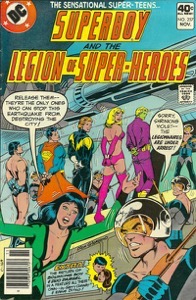
  • Superboy and the Legion of Super-Heroes (1977) #257

    Superboy  the Legion of Super Heroes  257

    If it weren’t for the backup, which pairs writer Gerry Conway with Steve Ditko (penciling, with Dan Adkins inking), this issue would give the impression Conway doesn’t like the Legion. Or, if he does, he thinks their positive traits are being smug asswipes.

    In addition to the charming, sexy (really) backup story about Bouncing Boy and Duo Damsel’s misadventures trying to be regular people colonists, Conway writes the feature. Joe Staton and Dave Hunt are on the art. Maybe if the story weren’t so lackluster, something about their lackluster art would’ve stood out more (I mean, there are some weird Cosmic Boy panels thanks to that outfit, but otherwise).

    The feature story is all about how important it is to lie.

    The Legion is in trouble with the science police for hijacking the amusement park hovering over the Grand Canyon last issue. They needed to holographic something something to make Brainiac 5 sane again. Except now, no one knows if it works, so they’re just supposed to trust Brainy as the cops and the amusement park owner yell at them.

    The issue basically takes place over fifteen minutes, with the morale of the story—for Superboy, no less—being sometimes it’s better to lie to escape accountability. Did the Superboy from Superboy and the Legion go on to be the bad guy in Final Crisis or whatever? It would make sense. They’re all a bunch of assholes.

    The subplot involves the rich guy who funds them being out of money—for like the sixth straight issue—but now the Legion knows about it, so Chameleon Boy’s going to get it resolved. At least there’s some momentum on that story, though it’s also a little obnoxious. Especially since it turns out the Legion does have most of their base left, just not the ostentatious part.

    This book’s a trip.

    The backup’s wonderful, though. Bouncing Boy and Duo Damsel are a cute couple; Ditko’s layouts and Conway’s script have a lovely retro but not condescending thing going on.

    I wish they’d take over the feature slot.

  • Halloween Ends (2022, David Gordon Green)

    While I had some expectations about Halloween Ends’s plot going in, based on the previous entry, the franchise, and behind-the-scenes scuttlebutt, nothing prepared me for a soft remake of Nightmare on Elm Street II.

    Halloween Ends is not about Jamie Lee Curtis getting out the butcher knife granddaughter Andi Matichak gave her in the last movie to kill Michael Myers (once again James Jude Courtney and Nick Castle) with Will Patton helping like they’re an adorable old couple hunting serial killers. It’s about local boy Rohan Campbell who accidentally killed a little kid he was babysitting a year after the last movie’s events. On Halloween, obviously. So, Ends’s opening kill is a child’s graphic, accidental death.

    It’s incredibly manipulative but also really compelling.

    The action then moves ahead three more years. Curtis has given up the prepper life (which seems entirely unlikely given Ends would then take place in 2022, post-Covid—but just like with its immortal septuagenarian spree killers, it doesn’t take place in the real world). She and granddaughter Matichak live together in a charming house where Curtis works on her true crime memoir. Matichak’s a nurse, so she didn’t slow down with college after her entire life was destroyed. Despite being Matichak’s best performance in the series, she and Curtis still don’t have a rewarding cinematic relationship. They’re just too slasher movie broken for it to work, and the movie doesn’t even try.

    Curtis happens across Campbell in the present—some high school seniors in the marching band are bullying him—and introduces him to Matichak, who’s apparently been dating a bunch of dudes since Courtney murdered her boyfriend last movie. Her most recent beau is a shitty cop—shitty even for cops—Jesse C. Boyd. Luckily for Matichak, thanks to the bullying, Campbell’s about to snap and has no qualms about picking fights with a cop. Not when he’s a bad boy who zooms around town real fast on the motorcycle he’s fixed up.

    Ends fearlessly rides a motorcycle over its shark tank, no qualms about all the eighties horror movie tropes it implements (in addition to Nightmare II, Boyd also does a Christine-esque transformation). It’s shameless, which works for it. Especially since Matichak finds her newest Bonnie in Campbell, and they have eighties teen movie montages riding around on his bike, trying to escape their respective traumas.

    The movie pays a lot of lip service to trauma and recovering from it. Curtis has a bunch of narration about it, including narrating clips from the other Halloween movies. It’s a little weird to have a forty-year-old franchise, but they’re only using the clips from the first one, H40, and Kills. They should’ve CGI’ed something else together for it. There’s not a lot of flash in Ends, all things considered. It’s a muted finale.

    Albeit one with some bizarre plot decisions. Like having everyone in town hate Curtis for the 2018 massacre—she spent her life bullying a man with brain damage, what did she think would happen—or Patton basically being a cameo. If it weren’t this Halloween series with its deceptive opening titles vise a vie cast importance, he’d be unbilled.

    Best music of the H40 trilogy from Cody Carpenter, John Carpenter, and Daniel A. Davies. Solid photography from Michael Simmonds and especially editing from Timothy Alverson. Green’s direction is fine. He’s not mimicking the original movie anymore, not with Campbell as the new protagonist, which helps.

    It’s not good or successful, but it’s also not terrible, and it’s definitely the most engaging of the H40 series.

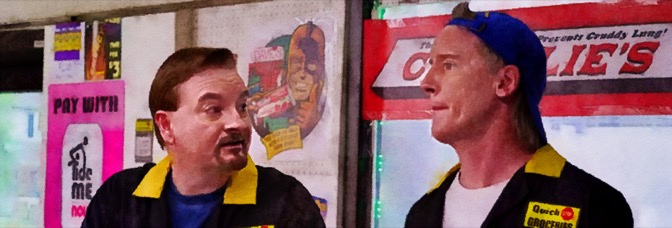
  • Clerks III (2022, Kevin Smith)

    Clerks III starts as a series of vignettes reintroducing the characters. It’s been fifteen years since the previous entry; since then, spoiler alert, one of them has become a widower, and neither has done anything with their lives. For the first time, Jeff Anderson gets a little more to do than Brian O’Halloran, though only in the third act.

    Until then, the movie’s a quick setup—Anderson has a heart attack and decides to make a movie about his life at the Quick Stop—with the actors doing their familiar banter routines, just updated a little more the times. Trevor Fehrman, also returning from II, now has his own sidekick, Austin Zajur. Director Smith reprises as Silent Bob, Jason Mewes is Jay. Everyone’s back, including ex-girlfriends Rosario Dawson, Marilyn Ghigliotti, and Jennifer Schwalbach Smith.

    Many of the actors—besides Dawson, obviously, whose performance is visibly effortless compared to her costars—haven’t been in a movie since a Clerks and it shows. Schwalbach Smith is so bad I was able to identify her as the director’s wife just by her performance. No other way she’d have gotten the gig. Ghigliotti gets back into the groove quickly, though.

    The funniest section of the film is while they’re making the movie. In addition to Anderson and O’Halloran, Mewes and Fehrman are around to cause hijinks, and III brings back all the actors from the first movie to play their “scenes.” It’s kind of lovely, actually, getting the same bit players back, thirty years on. The film doesn’t get sentimental about it, which is good because it goes off the rails with sentiment. The third act’s sincere, almost successful—successful to the point it saves the movie—ultimately a fail. Smith doesn’t just fumble the ending; he intentionally smashes it.

    Besides that section, the second act is almost entirely scenes or montages set to modern folk rock. The first act is all nineties soundalikes (or nineties songs, I guess, I didn’t Shazam), which makes sense since the whole movie starts as an homage to that era. That soundtrack at least fits; the folk-rock? They should’ve just done a musical. Especially since there are great cameos from Melissa Benoist and Chris Wood auditioning for the movie-in-the-movie, and they both want to do it musical theater.

    The other cameos are hot and cold. Amy Sedaris has a lengthy cameo where Anderson can’t shut up about “The Mandalorian,” a show she stars in, but the bits aren’t funny because Anderson’s not a nineties Star Wars nerd anymore; he’s just a regular white guy fifty-year-old. And Sedaris is bad. Justin Long’s also bad. Luckily they’re only in it for a bit.

    Anderson’s good until he’s got to “come to Buddy Christ,” and then it’s not his fault. Smith can’t figure out how to write it, so it’s another montage, not even a sensical one. O’Halloran seems nervous, disinterested, and miserable to be making another Clerks for two-thirds of the movie, then has a breakout scene, but then the movie’s over.

    Clerks III is, of course, a very long shot, but even as a miss, it showcases why it could’ve been a hit.

    Maybe Smith’ll figure it out by IV.

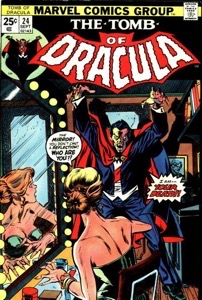
  • Tomb of Dracula (1972) #24

    Tomb of Dracula  24

    The issue opens with original series protagonist Frank Drake whining about being an unexceptional white man to his extraordinary vampire-hunting girlfriend, Rachel Van Helsing. The only thing the scene is missing is Rachel telling Frank she needs him because no one else will love her with her Dracula-inflicted face scars.

    It’s a beautiful scene—art-wise—with penciller Gene Colan and inker Tom Palmer heading back to the London bridge where Frank met the vampire hunters back in issue two or whatever. From Big Ben, Dracula watches the tender moment, amused the vampire hunters still don’t know he’s alive. They thought he died a few issues ago, though they do know Lilith is back. Nothing about her in this issue.

    Instead, it’s actually a Blade issue. Almost entirely, because Dracula doesn’t want Blade to know he’s back yet either, so Drac stays in bat form for their fight.

    After the introduction with Frank and Rachel—which comes back at the end for some emotionally inert closure—writer Marv Wolfman moves the action to Blade’s apartment, where a random vampire attacks Blade’s “woman,” Saffron. There’s a brief fight scene, then some padding, then Saffron’s fellow “showgirl” Trudy running into the apartment. She’s just had a terrifying experience, and since Saffron mentioned her man’s a vampire hunter, Trudy thought Blade could help.

    We then get a flashback with terrible narration from Trudy. Wolfman’s really bad at writing it. And it’s interminable. You know Tomb’s masterfully paced because Wolfman can have a sixty-two-page flashback in a nineteen-page story and have it be immediately forgotten and forgiven when the action gets going again. There’s a magnificent running fight sequence between Blade and Dracula (in bat form) through the streets of London, with Dracula’s wonderfully petty and spiteful narration accompanying.

    There are a couple other diversions, both problematic as hellfire. First, Taj goes home to India to visit his wife and smack her around a bit because, you know, wives. Then Shiela Whittier, Dracula’s new familiar, moons over him while he’s out eating, making excuses for his professed evil plans.

    I mean, great art on those scenes—Colan’s so good at the visual pacing, which is essential with the moody style—but it’s clear why Wolfman doesn’t understand he’s writing Frank Drake as a dipshit white guy.

    And, yet, Tomb succeeds. Despite its definite failings, Tomb succeeds. Wolfman’s Dracula writing and Colan and Palmer’s art, how can it not?

  • She-Hulk: Attorney at Law (2022) s01e09 – Whose Show Is This?

    “She-Hulk” does not end with a second season announcement, which is—possibly reasonably, possibly not—heartbreaking. Especially since the mid-credit sequence erases one of the episode’s “wins.”

    Because even though “She-Hulk” is a Marvel show in an MCU, the show and its star—Tatiana Maslany (She-Hulk gets significantly less to do this episode)—would rather be a superhero legal comedy than set up Planet Hulk for 2033 or whenever. And Maslany tells the head honcho at Marvel Studios as much after she does a major wall break to plead the show’s case.

    There are a handful of surprise guest stars, several twists, and another good subplot for Ginger Gonzaga and Josh Segarra. The show does a rapid-fire cliffhanger resolution, with Maslany ending up back at home with parents Mark Linn-Baker and Tess Malis Kincaid. Kincaid’s finally distinct, opposite Gonzaga; there’s potential there. There’s potential all over the place for “She-Hulk,” including a move to New York City or at least a guest appearance in a sequel to a particular Netflix Marvel show. Not to mention the big MCU reveal, stealing Maslany’s last scene from her like it’s a Robert Downey Jr. cameo.

    The episode starts with some inspired franchise homage, then destroys the fourth wall to save Maslany from having to do just another Marvel movie resolution, only to leave her in limbo. The episode wraps things up, including some solidly acerbic observations about the Marvel Studios creative process, but it doesn’t take the show anywhere new. It just doesn’t take it anywhere old.

    And if “She-Hulk” doesn’t continue, if Maslany just gets wrapped into the occasional guest spot, it won’t get to go anywhere. The second season tag would at least acknowledge they know what they’ve got here. The show’s incredibly aware of what it’s done, what it’s accomplished, and what it’s whiffed on, but it also says those things might not matter.

    The finale’s not disappointing or even underwhelming. It’s also not the home run I’d been hoping for.

    If they don’t do a season two, I hope they’ve better plans for Maslany than costarring in Fantastic Four and guesting on “Daredevil” as the love interest. I feel like “She-Hulk” knows better, but does Marvel?

    The season’s an incredible success for Maslany, who took the show over from big-name guest stars and CGI twerking, and there have been some excellent scripts throughout the season.

    I want more “She-Hulk.” I’m glad we got any at all. I hope we get some more.

  • Dan Dare (2007) #2

    Dan Dare  2

    Writer Garth Ennis starts distinguishing what makes Dan Dare different this issue as Dan and Digby get underway with their mission to save the galaxy. Or at least the human colonists. Though the humans and some of the alien race, the Treens, live together on some planets.

    The issue opens with Dan and Digby reunited, on their way to meet up with the fleet. They’re onboard the ship from last issue, commanded by Sub-Lieutenant Christian, who gave the order to retreat, meaning hers was the only ship (and only crew) to survive. Apparently, the boys have been talking shit about lady Christian behind her back, which Digby tells Dan, so Dan reassures her she made the right call. Even if the boys are also wondering how old-school Dan Dare will be able to save today.

    Dan quickly gets the opportunity to show his style too. They intercept a distress signal, and while their orders say to ignore it and meet up with the fleet, Dan countermands; you never ignore a distress signal.

    They find a colony with missing colonists. The humans think it’s the aliens, the aliens say half the missing people are aliens, the local constabulary says they’re all a bunch of drunk miners who go missing all the time. Only, of course, it turns out to be something else, something tying into the main plot.

    It’s a good issue. Maybe Gary Erskine’s faces are occasionally rushed, like he did them last, but it adds to the very British charm. Ennis works his ass off on the dialogue; you can just hear Digby’s accent (without resorting to phonetic spelling). Dan Dare feels finished but not slick. There’s a personality to the creators’ collaboration.

    We also get to check in with the Prime Minister and former Dan Dare sidekick Jocelyn. Is it sidekick or companion? Anyway, it initially seems like Jocelyn’s the focus of the subplot, but it turns out to be the Prime Minister. Or at least they’re halfsies at this point; we’ll see going forward.

    Dan Dare’s ramping up real quick. Ennis is full speed ahead.

  • All Creatures Great and Small (2020) s03e05 – Edward

    It’s a great episode; easily the best of season three. The show takes a big bite into a challenging, oft-avoided subject—Anna Madeley’s character’s estranged son (Edward)—she called the cops on him when he robbed her previous employer. I think these are season one details, then in season two or maybe a Christmas special, the son was supposedly going to visit but never showed up.

    This episode opens with Madeley taking the train down to meet him—Conor Deane’s voice accompanies her, reading his letter inviting her to hang out at a station. He’s in the navy now, so he’s making a connection. Madeley’s left instructions for the boys—just Callum Woodhouse and Samuel West because Nicholas Ralph and Rachel Shenton are up at her family farm—baked the son’s favorite cookies, and set off.

    Once she arrives at the station, she meets a young woman, Lara Steward, working at a volunteer tea stand. Steward’s friendly and considerate, drawing Madeley into a more revealing conversation about herself and her relationship with Deane than we’ve ever gotten before. “Creatures” decided to give Madeley an episode on this subplot, and it’s a rousing success. Madeley’s fantastic.

    But it’s not just a Madeley character development episode; there’s also loads for Woodhouse and West. Starting their day, West decides Woodhouse will handle all of Madeley’s duties. Woodhouse isn’t happy about it, but when schoolboy Austin Haynes shows up with a ticket for a day in the vet’s office (presumably a prize at the Christmas party), he changes his mind. Watching West be miserable showing some kid around the practice will be great.

    However, it turns out Haynes is knowledgeable about animals and keen to learn more; he really wants to be a vet, and West loves finding this unexpected kindred spirit.

    It’s a touching arc, which gets more complicated as Woodhouse goes from amused to indifferent to jealous.

    Then out at Shenton’s family farm, she and Ralph check in to see what little sister Imogen Clawson’s been doing since the season premiere. Dropping out of school, it turns out, which upsets Shenton. It’s unclear why because Shenton never gets a scene not supporting Clawson and Clawson barely gets any scenes. Shenton and Ralph share some knowing looks, but he’s in the episode even less; it’s Madeley’s episode, and even the stuff with Woodhouse and West is a relief valve for her plot’s intensity.

    Excellent script, credited to Karim Khan (his first credit on the series).

    The show (and Madeley) have been building this episode since the first season; well worth the wait.

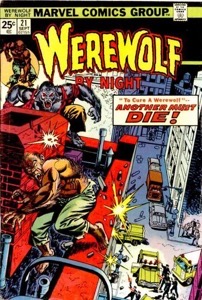
  • Werewolf by Night (1972) #21

    Werewolf by Night  21

    Initially, this issue feels like newish writer Doug Moench taking Werewolf out and kicking its tires. He brings back Buck Cowan—who hasn’t been around since he was low-key living with seventeen-year-old Lissa Russell—as Jack’s best friend but only for a couple panels. There’s a lengthy flashback to the destruction of the Darkhold, sadly without the Russell family werewolf curse being Satanic in nature. There’s retconning about Joshua Kane; there’s the neighbor werewolf, Raymond Coker.

    Moench—just like previous writer Gary Friedrich—doesn’t write Jack as racist to Black guy Coker, which just draws attention to how much writer-before-Friedrich Marv Wolfman did write Jack as a shitty racist bro.

    This issue also finally resolves recurring supporting cast member Lou Hackett’s story arc. Hackett’s the cop investigating the werewolf sightings going on since Marvel started publishing Werewolf by Night, and he’s getting close to figuring out Jack’s deal. Jack living next door to another werewolf has complicated things a little, but not too much.

    Then it turns out Hackett’s got some secrets of his own, but before Jack and Raymond can discover them, it’s a full moon.

    Only this month, the two brother wolves have a third out to get them. The comic then becomes a fighting chase sequence across the Los Angeles rooftops. Or what penciller Don Perlin thinks are the Los Angeles rooftops; Perlin draws the city like it’s a movie backlot, so there’s no personality to the skyline.

    But Moench’s good at writing Wolfman Jack’s narration, and the story’s compelling. Jack and Raymond found out last issue in order to cure lycanthropy, a werewolf needs to kill another werewolf. Good thing there’s a third werewolf out to get them.

    Hopefully, their team-up is powerful enough (and fast enough to keep ahead of the cops).

    It’s an action issue with a lumpy start and better than I thought possible for Werewolf these days. Perlin and inker Vince Colletta eventually are just drawing three werewolves fighting; one’s brown, one’s blue (supposed to be black), one’s blond. If you can deal with Perlin werewolf, you can deal with three.

    Based on where he leaves things, Moench seems to get Werewolf better than previously implied.

    I’m finally curious about how this book develops again.

  • Little Woods (2018, Nia DaCosta)

    It’s impossible to say how Little Woods would play if Lily James weren’t terrible. As is, the film’s a waiting game to see if James will ever have a good scene. Spoiler alert: she doesn’t. She’s so bad I was expecting the production company to be “Lily James Productions.” She lets down writer and director DaCosta and lead Tessa Thompson’s ambitious, searching work every moment, but she also never seems to be trying. It’s a bewilderingly bad performance in a non-vanity project.

    Woods is one third character study of Thompson, one-third examination of her and James’s relationship, one-third rural America drug thriller. That second third, the one involving James, ought to be a character study too, but James is so flat it can’t happen. Sometimes it seems like she’s just terrible opposite Thompson, who tries to hold scenes up and sometimes succeeds. Sometimes not, of course.

    But James is also bad opposite baby daddy James Badge Dale (who’s fantastic as a mediocre white guy) and baby Charlie Ray Reid. James and Dale have weird scenes together where it’s like James doesn’t know she’s supposed to know Dale even though they’ve got one kid, Reid, and another on the way. Then her scenes with Reid come off as bored babysitter, not a struggling, loving mama bear.

    There are a bunch of unresolved plot threads, and they could either be just unresolved plot threads or more James scenes removed because they bring the movie down even more. She can’t handle anything. Not even pouring coffee (she’s a diner waitress).

    Meanwhile, Thompson can handle all of it. Even when Woods’s plot details get a little absurd, which James’s acting make worse, Thompson can handle it. She’s fantastic.

    The movie opens with Thompson finishing her probation for drug smuggling from Canada. She was bringing over cheap meds for those in need and oxy to sell to the local working addicts. Since probation started, her adopted mom (presumably James’s birth mom, but dead mom doesn’t mean anything in the movie) died, and the bank is foreclosing on the house. All the timeline stuff is unclear; all the ground situation stuff is unclear. DaCosta sometimes goes for moody, but not in the first act, so it’s uneven.

    Lance Reddick plays Thompson’s probation officer. He’s very supportive and encouraging; if there’s a story to him and Thompson being the only Black people in the movie, it too got cut. He’s there primarily for tension and exposition dumps. It’s a fine stunt cast.

    Just as Thompson’s about to get out of the life for good, rival dealer Luke Kirby asks her to team up—she’s just so much better at dealing than anyone else. But she’s out. Unless James does something silly like get pregnant again because James can’t handle anything by herself.

    Things go from bad to worse for Thompson, and everyone has to make some drastic, life-changing decisions. Except Dale, because he disappears sometime during the second act like they cut him dying, but—again—it was probably just another atrocious scene with James.

    Really strong direction from DaCosta, who can’t do anything with James’s performance but works great with everyone else. If James’s performance were good, who knows? If it were great—on par with Thompson—it’d be exceptional just to get those two performances together. Except not with James.

    Solid, but sometimes too DV photography from Matt Mitchell. Nice editing from Catrin Hedström and music from Brian McOmber and Malcolm Parson.

    Little Woods has a fantastic Thompson lead performance and some fine directing, but James lets all the air out of the tires.

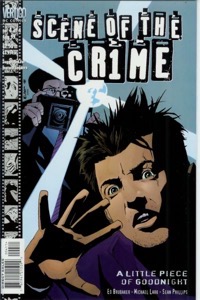
  • Scene of the Crime (1999) #4

    Scene of the Crime  4

    The whole issue doesn’t rest on the action sequences, but it’d still have been nice if penciller Michael Lark had broken them out differently. There’s this very anti-climatic car chase, foot chase, car chase, shoot-out sequence, and it should have been better. Though it also doesn’t matter because it’s just the red herring ending. Scene of the Crime has like six endings. Half of them are also epilogues.

    One of them has hero Jack telling his ex-girlfriend all his deep, dark secrets so she’ll give him another chance. I mean, I assume writer Ed Brubaker thought it’d be a good exposition dump scene, but it’s not. Crime is from before talking heads were a comics trope, so there’s this bewildering diner conversation scene. At one point, Lark’s angling from the adjoining booth’s napkin dispenser or something. The comic’s usually so precise in its composition, but not when it’s the big emotional pay-off.

    Or it would be an emotional pay-off if Jack and the ex-girlfriend had any chemistry. Brubaker gives Jack five sidekicks in this issue. They all validate Jack, which makes functional sense in one way or another, but it’s tedious. There’s no reason for so many different people to hang around; well, not any logical reasons. A couple of times, it’s just so Brubaker can gin up drama or a reveal.

    It’s an okay last issue. It’s disappointing; Brubaker’s big reveal scene’s got terrible dialogue, not to mention his attempts at going more extreme than Chinatown. There’s also some lousy characterization once the mystery’s done, real lack of continuity stuff. Okay… but disappointing.

    I remember desperately wanting a sequel to this comic back when it first came out. Probably better they didn’t do one. That second issue was excellent, though.

    The rest is take and leave, with way too much leave.

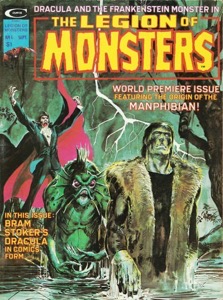
  • The Legion of Monsters (1975) #1

    Legion of Monsters  1

    Legion of Monsters opens with a defensive letter from editor Tony Isabella, responding to the Marvel faithful who were mad at the inglorious cancellation of the other black and white magazines. Isabella explains the books weren’t ever losing money; it’s just not in Marvel’s best interest not to make money. If readers really want black-and-white monster magazines, they better buy Legion.

    They did not.

    Although there’s a subscription form in the issue, Monsters only had this one issue.

    And kind of for good reason.

    There are four features. One Monster of Frankenstein, one continuation from Dracula Lives, and two original horror stories. All of them are uneven, starting with Doug Moench, Val Mayerik, Pablo Marcos, and Dan Adkins’s Frankenstein story. It’s after the Monster has woken up in the modern age, and he’s wandering around. He sees a princess, and even though he knows it always ends with villagers and pitchforks, he follows her.

    Now, if it were just about the Monster following some girl, it’d be tired fast. But the Monster finds himself amid intrigue; it’s a costume party, and the jester tells him someone’s out to kill the princess, will the Monster help? Of course, he will. But will it be helpful help or disastrous?

    The art’s sometimes excellent. Mayerik inking himself, Marcos inking Mayerik, it works out. The Adkins inks are wanting. And the story’s really dang long.

    But at least it’s not the Secret Origin of Manphibian, the following story. Tony Isabella scripts from a Marv Wolfman plot. Dave Cockrum pencils, Sam Grainger inks. It’s about a Creature from the Black Lagoon type coming up through an oil well and getting in a fight with another monster from the same species, as well as some husband out to kill his wealthy wife. Or something.

    It’s tedious. Maybe if the art were more distinct.

    Ditto the next story, about kids picking on a former circus “freak” whose only friends are flies. It bleeds empathy, but the story’s way too long, and the art lacks Paul Kitchener pencils, Ralph Reese inks. They also share story credit with scripter Gerry Conway.

    Maybe if Marvel wanted more people to be excited about Legion, they should’ve gotten together a better first issue.

    The next chapter in Roy Thomas and Dick Giordano’s adaptation of Bram Stoker’s Dracula wraps up the issue. After a lengthy (and welcome) recap of events to date, this installment covers Mina going off to marry Jonathan in Europe while Lucy’s condition worsens in England. There are multiple diary and journal keepers: Mina, Steward, and eventually Lucy.

    It sure seems like Lucy has no idea she’s been Dracula’s steady blood bag for months, and, to this point, Mina hasn’t read Jonathan’s diary, even though he wants her to do so. But what Thomas doesn’t fix—and Giordano doesn’t help with—is Dr. Van Helsing, who arrives this issue to commit medical malpractice.

    With the timeline visually broken out so nicely, it’s even more apparent than usual Van Helsing messes up with Lucy’s initial diagnosis and then waits too long to tell everyone what they’re dealing with.

    Giordano draws Van Helsing like a combination of Santa Claus and a leprechaun.

    Otherwise, lots of good art, but Lucy’s the only sympathetic character, with Seward whining almost nonstop about her marrying someone else and Van Helsing blandly kind and incompetent.

    There’s one page of single-panel strips from Stuart Schwartzberg. They’re a highlight and shouldn’t be. There’s also another text article recapping monsters in other media, like it’s a real magazine again. Too little, too late.

    Is it a bummer Legion didn’t continue? Sure?

    But it makes sense why it didn’t.

  • My Life Is Murder (2019) s03e06 – Bride to Bee

    Last episode, we found out Lucy Lawless’s fashionable curmudgeon (her costumes are phenomenal this season) hated Christmas. This episode, we open with her hating on summer. To cheer her up—after a muted flirtation about being on an ice cream date—copper Rawiri Jobe gives her a case: a bride dying at her own wedding, allergic to bees, and stung.

    Rich kid groom Reef Ireland is convinced his dad, Stephen Lovatt, killed his fiancée. She’s the only one who made it to the aisle; all his other girlfriends took a payoff. In addition to Lovatt, who screams guilty, there’s Shavaughn Ruakere as the suspicious wedding planner and Jaime McDermott as one of Ireland’s exes, who appears to still be in the picture. Olivia Tennet plays the victim’s business partner, who’s tried to save her but someone tampered with the EpiPen. It’s a tight mystery—script by Jodie Malloy and Paul Jenner—with some amusing investigation scenes, particularly for Ebony Vagulans and Tatum Warren-Ngata.

    Warren-Ngata still isn’t much of a character with Vagulans around, but—once again—no one’s much of a character this season, no one except Lawless. The two sidekicks go off and have an adventure, leaving Lawless to interview Lovatt and Ruakere multiple times, and it works out… it’s just different. It’s not really an ensemble, but since Lawless doesn’t hang out with the sidekicks outside the occasional coffee or apartment-based scene, it feels a lot more like one.

    We also get a lot more character development for Lawless, who bonds with groom Ireland, talking about her own wedding and giving some long-delayed backstory. But to an absolute stranger and non-recurring guest star; in other words, while the audience is getting to know Lawless’s character better, the other characters are not. It’s a shift.

    So while everyone does get good material, they rarely get it in the same scene as one another. It almost feels more like a Covid season than the previous one. This season’s only got four more episodes, and even though there’s been Vagulans’s mystery trip and some other threads, it doesn’t seem like there’s going to be a season arc. With more character moments for Lawless than usual.

    We’ll see.

  • Shadows on the Grave (2016) #2

    Shadows on the Grave  2

    Shadows on the Grave #2 is not a bad comic, but it does show how far down I’ll follow creator Richard Corben without batting an eye.

    Once again, Corbin’s got multiple done-in-ones, then a chapter in his Greek epic. If it weren’t for the Greek epic featuring a cyclops eating a bunch of soldiers, it’d be a talking heads story. But, damn, can Corben draw a rampaging cyclops. It’s also incredibly confusing since there’s no real recap of the previous entry; I’d forgotten it was all about some Greek hero who needed to get out of town. I thought it was all about the cyclops.

    I’d be very curious to read the story on its own, not the fourth entry in every issue in an anthology. Especially if there aren’t any recaps.

    The first three stories are all fifties or sixties-era stories set in the very rural South. Not connected, of course, but fertile ground for horror comics. They just go on a little long. Every story runs eight pages; for the three horror stories, it feels like Corben’s trying the vamp a couple of pages away. The Greek chapter? He needs at least another couple pages, if not all six he’d get from cutting down the horror stories.

    The first and third stories are the most successful, with both having a nephew robbing a rich aunt. The first, the aunt’s alive, and the would-be robber is bringing along his girlfriend to do the deed, his brother presumably around trying to do the same thing. They go out to the aunt’s house in the woods, and strange, horrible things happen with little explanation. Corben races to get to the murderous intent section but then drags the rest of the story.

    Beautiful art, though.

    The second story’s the least successful. Some kid follows his uncle into the swamp, where the uncle has a strange, horrible experience, then the nephew has a strange, horrible experience, and nothing gets explained at the end. Corben goes for haunting and doesn’t pull it off, making it one of his least successful stories… ever. Corben always pulls it off.
    The third story’s the best, just because the setting’s excellent. This time the robber nephew–a different one, obviously; the first story’s robber nephew was a beatnik or at least adjacent, this robber nephew’s a greaser—this time, he’s robbing a corpse. He just can’t find his way around the graves, so he asks an old mourner lady for help and, damn, if he doesn’t want to rob her too. The graveyard’s phenomenal.

    Then there’s the Greek epic chapter, with the hero starting his quest with some ominous foreshadowing. Or possibly a cliffhanger tragedy; it’s unfortunately hard to tell because Corben does a montage on the last page without establishing what’s changing. Other than the lighting.

    So also not successful. But Corben does have the cyclops kicking ass, so it more than covers.

    Corben was seventy-seven when this book originally came out, so he gets all sorts of passes, but still. I was expecting Grave to be great start to finish; I hope he gets his groove back next issue.
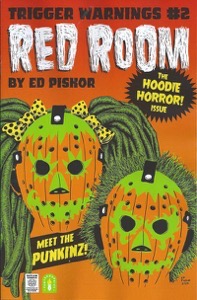
  • Red Room: Trigger Warnings (2022) #2

    Red RoomTrigger Warnings  2

    I don’t think I’ve cringed as much during a Red Room since the first issue. Maybe it should’ve come with a Trigger Warning–wokka wokka.

    But, no, it’s more just the relentlessness of the Red Room footage. Creator Ed Piskor once again splits up the pages; in the top left, he’s got a suicide note from a couple late teens Red Roomers; it’s all text on a smartphone. The issue opens with the cops finding their hanging bodies. They’ve killed themselves, unable to keep running from the police.

    So top left, there’s the Notes.app suicide note and manifesto, then the rest of the page is the teenagers’ story. It’s a classic boy meets girl story; they’re high school seniors, he’s already dealing for someone tangentially Red Room-related, and she’s always been curious about snuff movies. When they happen to see some guy murdered for stealing his girlfriend’s husband’s comic books (Piskor geeks out this issue, including a great-looking Spidey head), the boy realizes the girl’s a kindred psychopath.

    They don’t go straight to YouTube snuff movies; they escalate as they try to escape a bad situation. Until that point, the “philosophy” of the note matches the action close enough, but then Piskor starts to explore the cracks. There are disconnects between the two narratives, and they keep growing.

    The reveal isn’t unpredictable; Piskor goes out of his way to forecast it, as he makes his protagonists more sympathetic than usual. They’re just psychopaths in a bad situation. Better luck of parentage, and they’d be cops or lawyers.

    Now, once their Red Room careers start, Piskor does their videos in the center of the page, and it’s the most intense the comic’s been in ages. What’s so good about it is how Piskor’s controlling that intensity. He’s using it to jiggle the narrative impact, page after page. It’s excellent comics.

    Red Room’s something else.

  • Infinity 8: Volume Four: Symbolic Guerilla (2018)

    I8sg

    Symbolic Guerilla is my favorite Infinity 8 so far. I’ve read this one before, but not while going through the series, so I couldn’t really compare. Now, I can. It’s for two obvious reasons: protagonist Patty Stardust is the best agent so far, and Martin Trystram’s art is fascinating.

    Unlike the previous stories, there are significant flashback sequences, contrasting Trystram’s Infinity 8 setting and his general sci-fi vibes. But also with very delicate line work. Trystram’s imaginative and enthusiastic but very precise with the lines. His style clashes with the content to encourage the reader to spend more time on the panels, which means experiencing the excellent art more.

    And then there’s Patty. She’s living as a Black woman in the far-flung future after the destruction of planet Earth. However, everyone still wants to touch her hair, including the Muppet-like alien influencer she’s babysitting at the beginning of the volume. What also makes Patty unique is it’s not her first appearance in the book; she showed up in the Hitler book. She’s a stage manager for some hippy-dippy performance artist cultists, and they went to join up with Hitler because no one in the future remembers what Hitler did, but then he kills Patty for being Black, revealing the reality of the situation. So Patty’s singular in the series.

    Though there is another agent cameo at the end of this volume, so more she’s been singular to this point. And she’s got a whole, real arc because she’s got a supporting cast and a relevant backstory. She’s undercover trying to bust the cult’s business connect; in addition to the state manager gig, she’s dating the cult leader’s son, Peter. It’s not romantic for Patty, just a way to dodge leader Ron’s sexual advances.

    When the ship captain and the first officer (who again is flirting, meaning he did sit out the fundamentalist lady) call on her to investigate the space graveyard, she’s busy with the Muppet-y influencer who wants to vlog all about the cult’s next art event. The boyfriend’s tripping and needy, so it’s a terrible time for her to have to go off ship.

    Especially when it turns out the cult leader has chipped his entourage so he can track them at all times. Patty’s worried about getting busted for being an undercover agent—going to the space graveyard is the first time she’s broken cover in five years—but it turns out to be much, much worse because Ron realizes they’re stopped and in a bitching space graveyard. It’s the perfect location for their next show.

    Writers Lewis Trondheim and Kris do a great job with Patty, the first agent with this kind of stakes and agency. Of the three previous, two have been keeping secrets and unreliable, and one was just living an action-adventure. Since the cult’s all very sixties retro, it’s a suspense comedy sci-fi action story. It’s wild. And the writing’s not just good on Patty; Ron goes from being a petty annoyance to profoundly dangerous.

    Patty’s also got the flashbacks thing going on. She’s haunted by her past as an agent, the aforementioned trip away from the ship, and that character development gets wrapped into this time-bending mission to explore a space graveyard. While Trondheim and Kris don’t offer any more tidbits about Earth’s destruction, they get into the bigger ground situation. Building off the last arc’s history lesson, Patty makes an otherwise unknowable historical discovery while exploring; the script weaves it into her character arc. It’s so cool.

    Symbolic Guerilla ends the first half of Infinity 8 on its highest point. I imagine there will be better stories, but I’m not sure I’ll ever dig anyone’s art as much as Trystram’s. Looking at it is just so much fun.

    But it also occurs to me, having now read the first half in sequence, Trondheim and Kris haven’t revealed anything about where Infinity 8 is going, not in terms of plot details or narrative. There are going to be four more volumes, four more agents, and four more timelines, but the possibilities are….

  • Werewolf by Night (2022, Michael Giacchino)

    It’s not going to seem like it in a few paragraphs, but I am a fan of director Giacchino. Or, more accurately, I am a fan of Giacchino’s directing. Werewolf by Night is easily the most interesting MCU project in the brand’s fourteen years. Most of the credit goes to director Giacchino, who does a phenomenal job directing and… a better-than-expected job scoring.

    The music’s good enough I didn’t think it was Giacchino, until I realized it was just lifting from Bram Stoker’s Dracula. Still, impressive. Most impressive when adjusted for Giacchino’s scale.

    As a composer, Giacchino does forgettable variations on John Williams themes, the immediately forgettable, entirely perfunctory MCU scores, and bad Star Trek music. Is he the most prolific of his similar blockbuster bland colleagues? Not worth looking up. He’s not even one of the better ones.

    But, damn, does he love movies and know how to make them. Or at least one. Technically, of course, it’s a “Marvel Studios Special Presentation.” Think a longer “Charlie Brown” special. It runs approximately forty-five minutes, plus minus all the translating credits (sadly, no credits scenes, either), so they’re not calling it the first Disney+ movie. It’s not even the longest Marvel episode. It’s just… a special. And very special.

    Night opens with narration explaining we’ve veered into the dark side of the Marvel Universe—the Dark Universe, as it were, or Avengers Dark. In forty-five minutes, the MCU loops Universal’s monsters movie reboot dreams and the Warner Bros. JLA Dark dreams, which they gave up on, more times than it takes Superman to go around the Earth to turn back time.

    A group of monster hunters is getting together; see, thanks to “Witcher,” they can just say monster hunters. The monster-hunting patriarch has died, and the anonymous hunters are vying for the mantle; if they win, they get the Bloodstone and possibly an appearance in a Captain America movie. Bloodstone was a Captain America thing in the eighties.

    There are six hunters, all unknown to one another. Laura Donnelly plays the only one not anonymous. She’s the patriarch’s estranged daughter. Harriet Sansom Harris is the widowed evil stepmother.

    Harris makes the first act of Werewolf. She’s hilarious and scary, especially once the corpse puppet gimmicks get started, which must be seen versus described.

    Gael García Bernal plays the lead, one of the monster hunters, but he’s got a different reason for being there and a secret all his own. He and Donnelly become allies as the other monster hunters hunt one another and their prize, a mysterious beast in a labyrinth-type hunting ground. They also get a couple great character moments together.

    In addition to Giacchino’s direction, all the technicals are outstanding, particularly Maya Shimoguchi’s Art Deco production design. Zoë White’s (mostly) black and white photography captures it beautifully, especially the blacks and whites.

    The special’s got numerous secret weapons, starting with the monster they’re hunting, but Donnelly quickly becomes invaluable. Since Bernal’s hiding things from the audience and everyone else, Donnelly gets to be de facto protagonist for a bit. It works out.

    Werewolf by Night’s a great first outing for the MCU’s “Special Presentations,” but it’s exceptional work from Giacchino. Maybe he should give up his day job and focus on his strengths.