• Catwoman (2002) #4

    Catwoman  4

    And here’s how you do a comic book. I was wondering when Catwoman was going to click and level up, and it’s this issue. It’s not just Darwyn Cooke’s pencils, though he’s got dozens of great panels in the issue. Pretty much everything except Selina fighting Clayface Y2K’s muck is great. The muck stuff is fine, but it’s gross, and it’s just muck. Worse, it’s pink flesh muck. Icky bad.

    The issue starts with Selina confronting the killer and hearing some of his origin story. U.S. soldier, battlefield injury, weird experiment, dumped as a monster on the streets of Gotham by the U.S. Army. Tracks. She thinks she can talk him down and get him some help from that dickhead Batman (who does end up cameoing and is a complete piece of shit, gloriously rendered in a forties nod from Cooke and inker Mike Allred). She’s not entirely wrong, but she’s not right enough not to have a big supervillain fight. Except she’s Catwoman, and she’s not ready to fight fleshy muck monsters.

    Writer Ed Brubaker does an exceptional job writing the fight scene. It’s a character development micro-arc for Selina as she realizes the new responsibilities she’s taking on; there’s doubt, regret, turmoil, all in rapid-fire as the fight progresses. Brubaker captures these snapshots into Selina’s experience through the text, tied to the visuals, and it’s phenomenal stuff. I knew Catwoman was going to get good, but I didn’t think it would get this good this fast.

    Especially when the epilogue involves setting up the series proper, with Holly becoming a Kyle Investigations operative and Leslie Tompkins firmly established in the supporting cast. Except Brubaker writes it as a contrast to dickhead Batman, who doesn’t care about sex workers getting murdered and thinks writing Leslie a check fixes all the problems with the poors.

    Only then Cooke (and Allred and colorist Matt Hollingsworth) turn the final splash page into this Batman visual homage deep cut. It’s so good.

    This opening arc has got to be a killer trade.

  • Shadows on the Grave (2016) #6

    Shadows on the Grave  6

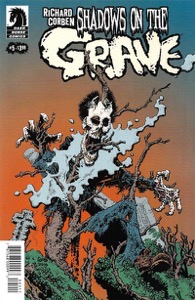
    Shadows has a nice rally this issue. It works out even when the stories are too long (or too slight). They’ve all got eight pages, but creator Richard Corben and (especially) first story writer Mike Shields pace them out beautifully. Also, there aren’t any stories on repeat this issue, which is nice.

    Although, that first story does open with a con man approaching a small, isolated town, ready to score off the yokels. It quickly becomes a comedy of errors, with the townspeople mistaking the con man for someone else, and he’s all too happy to pretend, so long as he can still get out ahead. The story feels like it’s at least twelve pages. Another page in the resolution would’ve probably made it feel like sixteen; Shields is writing a feature story and getting all the Corben art he can for his script.

    It’s a standard, not-unpredictable story, but it’s still awesome.

    Then the second story—Corben writes the rest in the issue—is this fantastic art piece about a trapper on a snowy mountain hunting the wrong kind of animal. Corben goes from whiteouts to blackouts, with lots of playing with the narrative distance as the trapper gets increasingly afraid. It’s a simple story, maybe three events, and Corben draws the heck out of it to fill the eight pages.

    The third story combines talking heads and a graveyard scare story. A guy’s in with his therapist, talking about his recurring nightmare of a zombie stalking him through a cemetery–lots of good scary art, excellent talking heads composition, and a familiar but solid twist ending. Again, Corben uses empty space to pace out the story but also takes the twists into account to change the reading pace. The trapper story’s better because the art’s got more places to go, but Corben’s story is tighter here.

    And then the Greek epic chapter is back on track. Corben does a slightly different style for one of the scenes, and it nicely turns it into a prologue, though the chapter benefits from a second read, thanks to the reveal. But the story gets back to the main characters, throwing them on an unexpected story arc. I’m still confused why the ninja isn’t around; I guess she’s not coming back, which is a shame.

    Corben gets to do an Ancient Greece subterfuge sequence followed by a hack-and-slash fight scene. Great pacing, plus a glorious two-page action spread.

    I’m not sure if this issue’s the best overall, but it’s a serious contender. It’s an awesome start to finish.

    Oh, the bookend one-pagers. There’s a creepy eating thing with Corben and co-writer Beth Corben Reed showing off how gross certain words can be to read; then there’s another food-related punchline color strip for the back page. Good stuff too, but the meat’s inside.

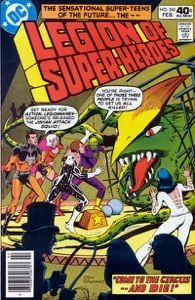
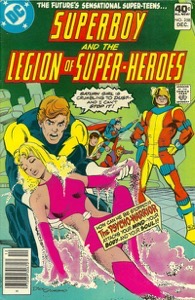
  • Legion of Super-Heroes (1980) #260

    The Legion of Super Heroes  260

    Writer Gerry Conway finds his tone for Legion of Super-Heroes and it’s Silver Age homage. The issue has Joe Staton and John Calnan on the art; it’s not great, but it doesn’t have to be for a Silver Age homage. Obviously, the costumes are different, and it’s hard to imagine Wildfire having his temper tantrum in an older book, but the story’s silly Silver Age.

    So, in the future, the only thing no one in the galaxy thought about doing except humanity is circuses. The circuses take up giant space stations, but their content is the same as always, which will be important when the Legion goes undercover. But first, there’s this very deliberate Legion action sequence where Conway showcases how the individual heroes’ powers come together to Voltron out and defeat the bad guy.

    Or, in this case, save the intergalactic circus barker from a crashing spaceship. It’s implied the spaceship is trying to kill him, but they never actually confirm it. It could’ve been a coincidence.

    The main action involves the Legionnaires pretending to be circus attractions to ferret out the assassin. Some of it is just regular circus stuff, only with the occasional alien around. For some reason, Conway draws attention to how circus “oddities” don’t make much sense in the future when people aren’t shitty to each other but then leverages them anyway.

    There’s also Staton’s best page in terms of composition, with annoying bro Timber Wolf—pretending to be an acrobat—recovering from a fall. Glorious splash page. It’s still weird looking because it’s a strange mix of Silver and Bronze Ages, but it’s the first time Staton has come through with movement.

    The story ends with a cliffhanger—the Legion (thanks to now fully reformed Brainiac 5’s intellect) has their prime suspects, but is there someone even more nefarious behind the circus-hating villainy? Sadly, yes, we’re going to have another circus issue.

    But it’s better than I was expecting. Maybe Conway really did just hate having Superboy around.

  • Hansan: Rising Dragon (2022, Kim Han-min)

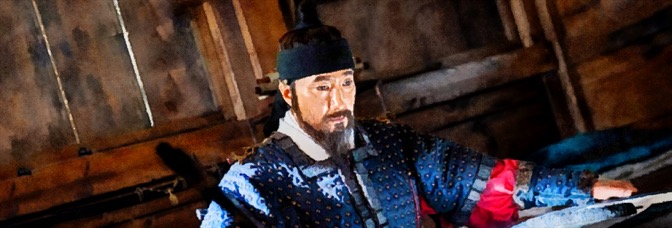
    About half of Hansan is a naval battle. The second half. The first half is a combination history lesson, period espionage and turgid war thriller, and naval warfare theory symposium. The film’s about Admiral Yi Sun-shin, who kicked the invading Japanese navy’s ass in the sixteenth century. Despite being in command, lots of folks questioned Yi, and then he also was trying new tactics and types of warships. Park Hae-il plays Yi. He’s almost indistinguishable from a wax sculpture; Yi was a pensive, reserved fellow, but Park plays him without any personality whatsoever. Not because Park’s bad, but because director and co-writer Kim Han-min doesn’t do character. Hansan’s utterly absent memorable characters, which is something else for a war movie.

    It’s also fine because Hansan is a history lesson. There’s a compelling but narratively problematic prologue with Japanese admiral and general dick Byun Yo-Han inspecting a destroyed warship. The Korean navy has some kind of “turtle ship” with a Dragon head on it, which terrified the ship’s crew as it destroyed the vessel. Now, there have been numerous movies about mystery vessels; at least three James Bonds and maybe a Godzilla. Except there’s no mystery. It’s just Park’s latest idea, though he doesn’t like the dragon head.

    Kim and co-writer Yun Hong-gi pull back on the narrative distance so incredibly far their characters lose all perspective. Despite Hansan’s first hour being about Byun wondering what Park’s going to do, while Byun’s allies give him shit and Park’s allies give him shit, and they both try to spy on one another, no one ever learns anything in the film. It’s a history movie with the cause and effect removed.

    It also doesn’t matter because the second half is a thrilling naval war movie about the application of firepower on sea-going vessels. Hansan shows its hand in the first half; Park drills the Korean navy with the tactics he’s going to use in the second half. The movie shows off the shark first thing (relatively) but still gets plenty of mileage out of it in the battle. There are some surprises, of course, which unfold the same way as the rest of the film’s reveals. A character is alone, remembering a plot twist a few scenes before, completely changing the nature of their subplot. The film does it at least three times, possibly four, saving a major—but not—reveal for the finale.

    But it all still works because Kim pulls off the sea battle. There are some land battles too, which he does okay with, but clearly, the thought went into the warships, and it shows.

    The best performance is easily Byun, who gets to relish in unrestrained villainy while almost everyone else has to show some decorum. Kim Sung-kyu is good as an enemy prisoner who coincidentally encountered Park in the flashback. Park Ji-Jean has a fun part as the shipbuilder. Park’s okay; the movie doesn’t ask him to do anything, just stand there. Admittedly, there aren’t many options when you’re just supposed to be watching some quiet thinking guy quietly think.

    The technicals are all solid. Han Hyun-gun and Lee Gang-here’s editing is a little impatient in parts—there’s a three or four-minute history lesson montage after the prologue, and it’s too hurried. After threatening dozens of characters, Hansan boils down to like six people before the sea battle. Kim and Yun get way too complicated. Once it settles into the espionage subplot, with actual players, it works much better.

    But, again, doesn’t matter so long as the sea battle pays off. The movie starts promising a great sea battle, then delivers it. Along the way, there’s some good filmmaking, decent acting, and compelling history, if not character drama.

    Hansan’s a qualified, impressive success.

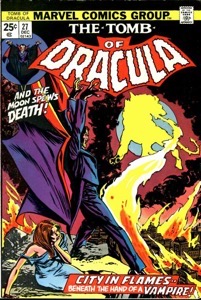
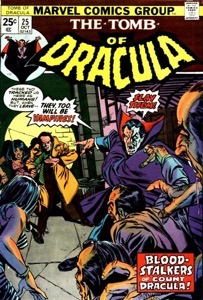
  • Tomb of Dracula (1972) #27

    Tod27

    Great art in this issue. Like, top five Gene Colan and Tom Palmer Tomb of Dracula so far. Not just the strange variety of things—seventies British romantic thriller, zombie vampire movie, Ray Harryhausen picture. It’s a lot, and it’s glorious.

    Unfortunately, writer Marv Wolfman goes overboard with his religiously-tinged script. He started it last issue because it was about a guy finding some magic statue from his Yeshiva student son’s perspective. This issue it makes sense if you remember last issue, but then it turns into this weird “Co-Exist” thing with Wolfman lecturing Dracula for being bad in the second person. It’s not You’re a Mean One, Mr. Grinch, obviously, but also because Dr. Seuss wasn’t chastising the Grinch for not being churchy. Or, in this case, synagoguey.

    But Dracula’s religious failings are the finale. First, we’ve got to resolve last issue’s cliffhanger, which had a still unseen new Bond villain dumping holy water on a caged Drac. Dracula escapes, of course, using two of his superpowers. Even with the nicely paced visuals from Colan, Wolfman plods through in the narration explaining how Dracula rolled a five so he could do the mist conversion.

    Except, he’s just like misting out of a room. It doesn’t need to sound so hard.

    I don’t think we actually find out how his escape resolves, either. It’s a mystery for next time and the Bond villain. Dracula comes to out by the highway just in time to intercept Yeshiva student David and his familiar, Shiela, who is low-key seducing David to get the magic stone tail away from him. Dracula assumed Shiela would tell David he was aiding in Dracula’s (actual) plan to conquer the universe with this Infinity Statue. Instead, they all bicker in the middle of the street, and Dracula sends a fire demon to scorch India.

    Why India?

    Dracula’s just a dick.

    But it hits Taj, who’s moping around about still being on his endless subplot about visiting his wife and kid. He beats his wife. Not sure what he does to the kid. I think I remember, but no spoilers.

    We also check in on Frank Drake, who’s down in Brazil, being a colonizing white guy. There’s a funny moment when Chastity the fixer gets off the plane and kisses Frank’s old rich pal hello, and the guy tells Frank he’s next. But no. They’re not going to be a throuple. Bummer.

    Meanwhile, back in England, Rachel’s moping over Frank leaving her (not thinking he’s banging his way to South America), and Quincy has a new gadget.

    It’s a packed issue; there are lots of varied scenes for Colan and Palmer to excel in rendering.

    Just not a great script.

  • Hereditary (2018, Ari Aster)

    For better or worse, once the film proper starts, Hereditary doesn’t have a single wasted moment. Every little thing is important in the end, whether it’s how dead grandma wanted favorite grandchild Milly Shapiro to be a boy or Toni Collette’s justified fears of hereditary schizophrenia. I mean, the title’s Hereditary and she’s got a first act monologue about her brother suffering when he was in high school. And, wait, isn’t Collette’s son, played by Alex Wolff, about the right age for a similar ailment?

    Maybe it’s Hereditary.

    There are three big plot “twists” in the film, but writer and director Aster wants everyone on the lookout for more. Colin Stetson’s music sets them up, scene after scene. When the film’s building through the first and second acts, it seems like it’s heading somewhere unexpected. By the third act, it’s clear the film’s heading exactly where it said it was heading and why would anyone get distracted by the red herrings, especially since they usually involve dad Gabriel Byrne being suspicious and Byrne’s a red herring himself.

    But the red herrings aren’t wasted moments. They’re in the film to confuse both the characters and the audience. It seems to work on the characters, though they have help from Aster intentionally casting doubt on them, but once Hereditary is on the horror movie rails it gets on, it never deviates. The third act’s rote, duplicating story beats from other films in the same sub-genre. It also upends the regular cast, meaning Hereditary doesn’t give Collette a great role. She gives a great performance, but it’s not a great role.

    The film opens with its only superfluous moment—an obituary for dead grandma, introducing the characters by name and some general ground situation stuff. Collette’s eulogy covers the same material, so it’s just for mood, only then not. It’s just there to be ominous, not figure into a late-second-act character thread, like everything else in the film. It also stands out because it’s not visual, and director Aster is all about the visuals. Collette’s an acclaimed miniaturist who makes scenes from her tragic, terrifying life as dioramas for wealthy New Yorkers. The film shot in Utah, but there’s no specific location mentioned (if there’s a Mormon subtext besides them being secret Satanists, it’s too subtle).

    Anyway.

    Aster does a great job transitioning between the doll house rooms and the actual rooms of the house, maintaining the same narrative distance and style throughout. Hereditary’s a great-looking film, with cinematographer Pawel Pogorzelski and Aster always gently implying the uncanny. While Stetson’s music hammers in the uncanny. Besides the music (and maybe Jennifer Lame and Lucian Johnstown’s cuts), the film’s pieces are all subtle. Brought together, they’re anvils.

    So while Collette’s trying to reconnect with daughter Shapiro, she’s also got this weird relationship with Wolff, which gets explained somewhere in the second act, but by then, it’s a little too late. The film obscures the ground situation for later impact; it ought to be able to cover for it, thanks to the quality of the filmmaking and then Collette and Wolff being terrific, but then they’re stuck with Byrne.

    Byrne’s fine. It’s the part. He’s got no chemistry with any of the family members. Aster writes him as detached and obtuse, but he’s actually doting. It’s a weird fail. Fixing Byrne’s part might fix the movie. It also might not.

    Shapiro’s good. It’s a slightly less thankless part than Byrne’s, but only slightly. Ditto Ann Dowd as Collette’s new friend from grief anonymous.

    Hereditary looks and sounds great, with seventy percent of a phenomenal Collette showcase, but it is very much what it is and not an iota more.

  • Elmer Gantry (1960, Richard Brooks)

    Elmer Gantry is all about possibilities. Possibilities for the plot, for the performances, for the film. Director (and screenwriter) Brooks watches the film along with the audience, specifically the performances. Everyone’s just waiting to see what Burt Lancaster, Jean Simmons, and Shirley Jones are going to do next. Sometimes, Brooks emphasizes the performance with quick cuts—the first act has some spectacular sequences, with editor Marjorie Fowler, Brooks, and composer André Previn in divine sync—sometimes, he lets the camera sit. Perfectly lighted scene (courtesy John Alton) and Lancaster or Simmons monologuing.

    Though it’s not all monologuing. Gantry’s got some wonderful banter sequences; the film’s practically designed for them.

    Set in the 1920s, the film opens with Lancaster amusing a bunch of traveling salesmen. They meet up for Christmas every year because Lancaster knows where to find the best booze (Prohibition-time) and the best women (bored housewives). Lancaster’s holding court, telling dirty jokes, and having a great time; only then the Sisters of Mercy come in asking for a donation, and the heathens are shitty to them. So Lancaster does a sermon, surprising the bar (and helping him seduce a lady) with his seemingly devout religiosity. The scene establishes the character, that duality, and Lancaster’s exceptional way of essaying it.

    The film will explore the contradictions in the appropriately lengthy second act, but first, it’s got to get Lancaster to church. Lancaster resists even as he sees posters for traveling tent revivalist Simmons alongside his own sales route. He ends up there one night out of boredom (and a busy housewife) and becomes immediately enraptured by Simmons. But Lancaster’s not her only admirer, though he’s the only one who’s planning to do anything about it. Both Arthur Kennedy and Dean Jagger revere Simmons. Jagger’s her business manager, a good Christian who thinks he’s enabling a prophet. Kennedy’s the atheist newspaperman tagging along with the tour.

    Lancaster can’t give Simmons to give him the time of day—he’s too much of a smooth talker—until he seduces her band leader (Patti Page) and weasels his way along with them. But he still can’t convince Simmons he’s godly, except she doesn’t care, it turns out. She’s more than willing to put a smooth-talking bible thumper on stage if it gets butts in seats and pledge cards signed. There’s a business angle to it; after all, local churches pay Simmons and Jagger in advance to bring the revival to town.

    We don’t find out about that side of things until around halfway through, when—thanks to Lancaster’s fire, brimstone, and sexy sermons—the local big city asks Simmons to bring her show to them. The film stays in the big city (Zenith, a recurring fictional city in novel author Sinclair Lewis’s work), which makes sense because it’s where Kennedy’s newspaper is based and Jones lives. Jones is an ex-lover of Lancaster’s with a very big, very sharp, very justified ax to grind. The film introduces her early, as Lancaster and Simmons start making news together, raising expectations for when she’ll figure into the main plot. Jones is exceptional.

    So’s Simmons. Somehow, Simmons manages to give just as showy a performance as Lancaster (or Jones), but they’re absurdly extroverted, and she’s reserved. It’s Simmons’s revival, no matter what Lancaster or Jagger thinks. However, Lancaster and Jagger’s prickly relationship turns out to be one of the film’s sharpest, subtlest subplots. So good.

    Kennedy’s good, too; he’s just not extraordinary. Lancaster, Simmons, and Jones all give these singular performances, while Jagger and Kennedy excel closer in character parts. Of course, Jagger and Kennedy’s characters are mostly reacting to the others, which also affects how they function and what they can do with the parts. The film’s practically overflowing with great performances; for instance, Page never gets enough.

    All the technicals are excellent. Brooks’s direction is patient, enthusiastic, and reserved. He never rushes a scene or a delivery. He gives Lancaster and Simmons time for their preaching; the film’s about these characters’ relationship with religion, internal and external, and Brooks wants to showcase it. Done wrong, it’d be anti-climactic; Gantry doesn’t do it wrong, quite the opposite.

    Alton’s photography, Fowler’s cuts, Previn’s music, all superb. Dorothy Jeakins’s costumes too. Lots of character development in the changing outfits, sometimes subtle, sometimes not.

    Lancaster and Simmons are the whole show. Brooks and his crew are just trying to create the optimal narrative distance on Lancaster, specifically on his experiences with Simmons. Even when she’s not around, when it’s Lancaster and Jagger, Kennedy, or Jones, Simmons’s presence is always felt. She’s the show; they’re all spectators, except Lancaster wants to be on stage too. Kennedy and Lancaster have a great friendship throughout, two cynics on different paths.

    As far as who’s better, Lancaster or Simmons, it depends on the scene. Though we get to know Lancaster better through the film, whereas Simmons gets to keep some secrets, which makes her performance inherently more complicated. They’re both so damn good. And then Jones. So damn good.

    The whole picture. So damn good.

  • Dan Dare (2007) #5

    Dan Dare  5

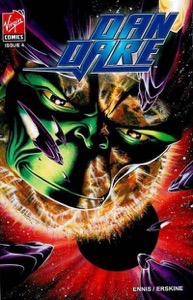
    Writer Garth Ennis has a good issue with this Dan Dare, but artist Gary Erskine seems to be struggling to keep up. The issue downshifts the series a bit, with Dan and newly appointed companion Ms. Christian butting heads with the Royal Space Navy or whatever they’re called. Back on Earth, Home Secretary and former companion Jocelyn is getting a briefing. Lots of talking heads, which Ennis and Erskine have been executing successfully to this point. But, here, Erskine just seems to fall apart. He’s got the composition but not the pacing, and something’s off with his eyes, but only on the ladies (the Home Secretary and Ms. Christian), which is bad since they’re the protagonists.

    There’s some awesome space stuff. Most of it’s too hurried, but Erskine does an excellent double-page spread of the Royal Space Navy. Cracking stuff. But even with Dan’s subplot, when he goes off on an ill-advised (by the stuffed shirt admirals, anyway) solo mission, Erskine gets in some okay (rushed) pages before he loses the thread again. The whole issue seems like it’s off-kilter like Erskine stumbled and never regained his footing. He cracks on with a confused but effective finish, but damn.

    Otherwise, it’s an excellent issue. Ennis works character development on Jocelyn, Ms. Christian, and Dan before doing a military operation, but a Silver Age comic book’s military operation. It’s a bridging issue for everyone, even the Mekon and his lackey Prime Minister when we check in on them. Bridging issues tend to be a little redundant; done well, it’s character development (as here) in addition to efficient plotting. Ennis has two issues to go; presumably, all the pieces are set after this one.

    I really hope Erskine turns it around on the art. I want Dare to be an unqualified success. Iffy art on a bridging issue is one thing; a flubbed finale is another.

  • My Life Is Murder (2019) s03e10 – Killer Fashion

    Killer Fashion is a peculiar episode. It’s a peculiar season finale, but it’s also just weird. It’s more about its guest stars than a season finale ought to be, and then there’s the whole fashion angle. Lucy Lawless and Ebony Vagulans are both obsessed with the fashion world, though Lawless won’t admit it. Other than “My Life Is Murder” having delightful costumes (the pastels are presumably because New Zealand loves life because they’re New Zealand), fashion hasn’t been a character trait. All they needed to do was have a scene with Lawless and Vagulans watching a fashion show and eating sourdough, but no, it’s just this previously unexplored, shared trait.

    And it’s often delightful. They’re investigating the unexplained death of a fashion model at world-famous designer Mark Mitchinson’s latest show. Lawless bonds with forty-something but still got it fashion model Simone Kessell, while Vagulans pals around with make-up artist Jodie Rimmer and model Bella Rakete. They’re on the case because Rakete is playing cop Rawiri Jobe’s sister, and he doesn’t want someone killing her too.

    Martin Henderson shows up because it’s the season finale, and there’s some slight resolution to his season-long character arc. But then they actually put off integrating Henderson into the main ensemble, which again includes Tatum Warren-Ngata, who does nothing this episode but hang out at Joseph Naufahu’s coffee shop. The episode’s all about Lawless and Kessell hanging out—the dead model was Kessell’s direct competition—and Lawless oscillating between suspecting Kessell and just having a wild time with a famous person.

    But there’s nothing for Lawless this episode other than showing the guest star a good time. There’s some season finale celebrating, but there’s no character development or even the hint at any. And the mystery’s complicated but straightforward; there are like four red herrings before they get to the end, with Lawless and Vagulans trading suspects like baseball cards.

    If the episode spotlights anyone, it’s Kessell, which is incredibly generous, but—again—so odd. It’s like they’re walking the season finale, which is too bad, given the outstanding mysteries they’ve had elsewhere in the season.

    Still, okay episode; pretty fun.

  • Werewolf by Night (1972) #24

    Werewolf by Night  24

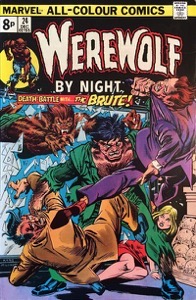
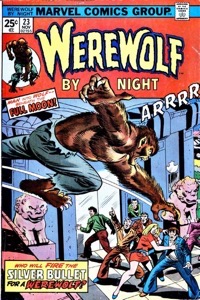
    I’m losing my resolve for Werewolf by Night. I was mostly prepared for Don Perlin—there aren’t any good panels this issue, but there are some where inker Vince Colletta adds so many lines they compensate for whatever was there before. It works with the villain, a Jekyll and Hyde-type scientist who maybe can cure Jack’s monthly visitor. It’s only a few months until sister Lissa turns eighteen and gets the curse, too, presumably.

    Lissa has been about to turn eighteen for a dozen issues; I think she was actually closer back around issue ten. Like it was imminent. But nothing’s guaranteed in Werewolf by Night except doing the same thing repeatedly, albeit with some whitewashing.

    This issue opens with Jack’s landlady kicking him out. He’s wrecked the apartment three times in superhero fights, and the building owner has had enough. The way the owner’s mysterious makes me wonder if there will be a reveal. Curious enough to stick with the book? To see if Moon Knight owns Jack’s building? No.

    But Jack then goes to live with Buck, who’s been up all night replacing the window Wolfman Jack jumped through last issue. Buck’s off the hook for killing the disfigured actor turned spree killer (with Jack whining in his monologue Buck killed him with the bullet meant to kill Wolfman Jack, but to save Jack’s life; no, he never hears himself). Jack lived with Buck in Werewolf by Night #1. Maybe even back in Marvel Spotlight. Three or four regular writers ago. And now we’re back, two dozen issues later.

    The problem isn’t even writer Doug Moench doing old arcs on repeat; it’s Moench’s writing itself. He’s exceptionally verbose, which wasn’t terrible when he was doing Jack as pulpy narrator, but he’s just doing Jack as whiny bro. He’s not racist, which is an improvement over a while ago, but it’s a very low bar.

    The series only goes another nineteen issues, plus or minus a Giant-Size, but nineteen bad comics is a lot of bad comics. Like, Moench’s worse at naming villains than Gerry Conway. He’s as bad as prequel trilogy George Lucas.

    There’s just no point.

  • Enola Holmes 2 (2022, Harry Bradbeer)

    Enola Holmes 2 runs a long two hours and nine minutes, but the movie actually leaves a bunch on the table. For example, antagonist David Thewlis has history with both Sherlock (Henry Cavill) and Mama Holmes (Helena Bonham Carter), seemingly separately, but the film never gets into it. Thewlis is phoning it in, gloriously biting off scenery in giant chunks; he can do this part—and well—effortlessly, which is good because director Bradbeer’s not great with actors.

    Everyone in Holmes 2 is solid, however. Millie Bobby Brown is a fine lead, except whenever Bradbeer doesn’t know what to do, he has her wink at the camera or break the fourth wall. It’s cute—but for the first and most of the second act, Brown could just be narrating the adventure straight. She opens the film narrating, and there’s always something; why not just go all the way?

    Cavill’s effortlessly charming and more than willing to make room for his younger costars, to the point he’s just taking up space. He’s constantly around in this one like they wanted to make him work for the sequel bucks, but they don’t give him anything to do. The film reveals a bunch about Enola Holmes universe versions of Sherlock Holmes mainstays, but mostly just as gags or Easter eggs. It’s awkward world-building.

    Louis Partridge is also back as Brown’s love interest, a young lord trying to fight the good fight against the blue blood stuffed shirts. Partridge never really gets anything to do in the movie. He takes a while to show up, then is sort of around, but also not. He’s perfectly good, and he and Brown get some fine teamwork moments, along with romantic ones, but he should’ve been in the movie more. Or less.

    Just like Bonham Carter and Susan Wokoma. Wokoma shows up out of nowhere in the late second act like she wasn’t going to be in the movie, but then they needed a combination action and heist sequence, so suddenly Cavill brings her in. Except when she shows up next, it’s with Bonham Carter, and Cavill’s detached from that whole sequence. It’s like the supporting cast is tagging in and out. Got to keep them around, even if they won’t have anything to do until—presumably—Enola Holmes 3D.

    The film kicks off with an affable but uninformative recap of the first film. Netflix is assuming you’re binging both pictures. Since the first movie, Brown has gone into business for herself but not seen Partridge, Cavill, or Bonham Carter much. She’s going it alone. And she’s going out of business, right up until adorable street urchin Serrana Su-Ling Bliss shows up at her door looking for her missing sister. Bliss and her friends are matchstick girls, and it certainly seems possible they’ve stumbled into the rich British people killing poor ones for profit.

    Ah, capitalism.

    It ends up being a semi-true story, which screenwriter Jack Thorne (with story co-credit to director Bradbeer) does an atrocious job integrating. Too many important things in Holmes seem shoe-horned in, with Bradbeer assuming Brown making a joke or Cavill grinning will cover. The film’s a case study in charm only getting you so far.

    Decent, thankless supporting turn from Adele Akhtar as Enola Universe Lestrade, and an excellent bit performance from Sharon Duncan-Brewster as another unappreciated Victorian woman. Hopefully, they’ll bring Duncan-Brewster back too.

    If Enola 2 had been twenty minutes shorter, it probably would be more successful. The mystery investigation goes on about ten minutes too long. But then it also needs another twenty minutes in the first act, probably. Thorne and Bradbeer don’t flop, but they need more substance for the cast. Not everyone can chaw sets like Thewlis.

  • Catwoman (2002) #3

    Catwoman  3

    There’s a lot of great Darwyn Cooke “good girl” art in this issue as Selina goes undercover to find the john who’s been killing all the girls, which I suppose could kick off an interesting discussion of how male gaze works in a non-realistic styles like Cooke’s. But it doesn’t make for a great issue. There’s a terrific opening with Selina visiting Leslie Thompkins, but after a dream sequence for Leslie.

    Like three pages. Beautiful art, with Cooke doing a Will Eisner Spirit nod. It has absolutely nothing to do with the comic itself. It’s just padding. Selina’s visiting Leslie to get Oracle’s digits; Batman doesn’t give Selina his white friends’ phone numbers. It’d be something if they wrote Batman—or even could imagine writing him—as more thoughtful than a sixteen-year-old rich kid.

    Oracle comes through—off-page—and Selina and Holly go undercover to interrogate the used car dealer who sold the killer his car. Selina gets to wear the costume; Holly gets to walk the Cooke “good girl” runway. Again, great art. But not a particularly good mystery development. It’s a fun, mischievous scene but has to basically hold up the comic because afterward, it’s just a chase scene.

    The bad guy gets past Selina, and to pass the level in the video game, she has to search three different warehouses before he kills again. Writer Ed Brubaker intercuts Selina’s mission with the killer and his date flirting and being sweet when really we know he’s going to disintegrate the girl.

    The art’s neat, and some of the dialogue’s excellent; plus, Leslie and Selina are cool pals, but it’s like half an issue with clutter to make up the rest. It’s Darwyn Cooke art, so the issue’s definitely worthwhile; it’s just not a great installment in the arc. Brubaker doesn’t have much narration from Selina this issue either. The whole thing’s a little off.

    But very pretty.

  • My Life Is Murder (2019) s03e09 – Staying Mum

    This season of “My Life Is Murder” has had several outstanding mysteries; with one episode to go, I’m pretty confident giving the prize to this episode, though. The script, credited to Kate McDermott, effortlessly keeps the show’s almost ensemble cast involved (except for Joe Naufahu, who’s occasionally around) while unfolding a windy murder investigation. The episode does make a feint at character development for lead Lucy Lawless, leading to maybe Ebony Vagulans best performance on the show outside a suspense sequence, but it doesn’t go anywhere.

    Maybe next episode.

    Probably not.

    Anyway.

    The mystery this episode is dead male nanny Alex Walker. Ostensibly beloved by all, he went out into a thunderstorm and got struck by lightning. Only copper Rawiri Jobe (who’s got to be upset he’s gone nowhere as a character this season) doesn’t think so. Lawless is in a great position to investigate because her newly revealed (to audience and characters alike) niece, Nell Fisher, goes to the same fancy private school as Walker’s charge.

    There’s the current set of parents, Melanie Vallejo and Jared Turner—both great—the jealous former boss, Tania Nolan, and the rival nanny, Sinead Fitzgerald. Some of the episode’s success in casting these supporting parts well. All of them are good, and most have a character arc playing out through their various reveals.

    But then having Fisher at the school lets the episode bring in Tatum Warren-Ngata as her fake nanny, while Vagulans can concentrate on computer hacking and that unexpected character development arc. Of course, because that arc doesn’t go anywhere with Lawless, Vagulans gets stalled out too, but it’s a lovely way of integrating the sidekicks.

    Playing up the ensemble aspect is Lawless, Fisher, and Fisher’s dad, Martin Henderson, having their family thing going on too.

    It’s just a supremely well-balanced episode with exceedingly solid direction from Mike Smith. I’ve been hopeful for at least another season just in general, but I wasn’t expecting to want it for the procedurals. The show’s stalled out on Lawless’s character development; while this episode acknowledges matters unresolved, it still doesn’t do anything about them. They can probably get away with it for one more ten episode season.

    Otherwise, they’ll have to address some things. Like what happened with Lawless and Jobe’s season two, “are they or aren’t they” becoming a season three “did they ever?”

    But they can easily get through another season with just these excellent mysteries and delightful ensemble. And Lawless, of course.

  • Legion of Super-Heroes (1980) #259

    The Legion of Super Heroes  259

    I actually did a quick Google, and nothing came up (despite the image results showing the very obvious covers side-by-side), so I’m going to assume this detail isn’t an undeniable fact: Legion of Super-Heroes #259 looks ridiculously like Whatever Happened to the Man on Tomorrow a couple of times.

    I didn’t even realize the covers until after reading it; I was thinking more about the last page, which has a sad Superboy flying away from his future pals. It’s time for him to go back to Smallville and stay. And his reasoning is so goofy I’m going to spoil it.

    Superboy is quitting the Legion of Super-Heroes because he came across Ma and Pa Kent’s gravesite in the future. He imagines they die from some weird tropical disease, and he’s not there to save them. He realizes it’s not real and doesn’t know how they died, which sets him straight enough to fight the bad guy, Psycho-Warrior.

    Psycho-Warrior is writer Gerry Conway bringing his late seventies laziness to Legion of Super-Heroes. Last issue, Conway established P-W is from the same mental hospital as Brainiac-5 but not the connection. The connection is P-W saw the Legion going and visiting Brainy and being nice to him, and P-W hates friendly people, so he decided to kill Legionaries. Or at least render them comatose.

    P-W’s got a surprisingly bad secret origin too, but he’s basically just a done-in-two super-villain who can move the story along.

    After the bad guy’s defeated, Superboy tells his Legion friends he’s going to the past to stay because he can’t forget death’s serious business, and he’s been having too much fun in the future. Or something. It makes no sense, and it’s poorly written, with Conway apparently trying to do a Silver Age homage—an even more gracious interpretation than when I opined he might be trying camp—and it’s more about the spectacle. They’re really doing this nothing-burger of a farewell.

    The Legion all waves, knowing they’ll never see Superboy again and whatnot, but none of them are particularly affected. “We all knew this day would come,” one says.

    None of the Legionnaires mention they’ve been doing body modification to appear young to Superboy before he leaves, so it’s more like he’s their pet. They’re secretly mentally abusive to him.

    Whatever. Conway never used Superboy enough for it to matter he’s leaving, and Conway’s been so disappointing it doesn’t matter if Conway’s not stuck with Superboy anymore.

    The Joe Staton and Dave Hunt art tries a little harder than usual. Fails but tries. Staton’s at least got the Silver Age composition down.

    Why the heck did they put Conway on this book he’s clearly not interested in doing.

    Anyway. Farewell, Boy of Tomorrow.

    I actually did a quick Google, and nothing came up (despite the image results showing the very obvious covers side-by-side), so I’m going to assume this detail isn’t an undeniable fact: Legion of Super-Heroes #259 looks ridiculously like Whatever Happened to the Man on Tomorrow a couple of times.

    I didn’t even realize the covers until after reading it; I was thinking more about the last page, which has a sad Superboy flying away from his future pals. It’s time for him to go back to Smallville and stay. And his reasoning is so goofy I’m going to spoil it.

    Superboy is quitting the Legion of Super-Heroes because he came across Ma and Pa Kent’s gravesite in the future. He imagines they die from some weird tropical disease, and he’s not there to save them. He realizes it’s not real and doesn’t know how they died, which sets him straight enough to fight the bad guy, Psycho-Warrior.

    Psycho-Warrior is writer Gerry Conway bringing his late seventies laziness to Legion of Super-Heroes. Last issue, Conway established P-W is from the same mental hospital as Brainiac-5 but not the connection. The connection is P-W saw the Legion going and visiting Brainy and being nice to him, and P-W hates friendly people, so he decided to kill Legionaries. Or at least render them comatose.

    P-W’s got a surprisingly bad secret origin too, but he’s basically just a done-in-two super-villain who can move the story along.

    After the bad guy’s defeated, Superboy tells his Legion friends he’s going to the past to stay because he can’t forget death’s serious business, and he’s been having too much fun in the future. Or something. It makes no sense, and it’s poorly written, with Conway apparently trying to do a Silver Age homage—an even more gracious interpretation than when I opined he might be trying camp—and it’s more about the spectacle. They’re really doing this nothing-burger of a farewell.

    The Legion all waves, knowing they’ll never see Superboy again and whatnot, but none of them are particularly affected. “We all knew this day would come,” one says.

    None of the Legionnaires mention they’ve been doing body modification to appear young to Superboy before he leaves, so it’s more like he’s their pet. They’re secretly mentally abusive to him.

    Whatever. Conway never used Superboy enough for it to matter he’s leaving, and Conway’s been so disappointing it doesn’t matter if Conway’s not stuck with Superboy anymore.

    The Joe Staton and Dave Hunt art tries a little harder than usual. Fails but tries. Staton’s at least got the Silver Age composition down.

    Why the heck did they put Conway on this book he’s clearly not interested in doing.

    Anyway. Farewell, Boy of Tomorrow.

  • Stoker’s Dracula (2004) #4

    The issue ends with an afterword from Dick Giordano talking about finishing the Dracula adaptation thirty years after he and writer Roy Thomas started it. He confirms my suspicions they didn’t actually have it plotted out; rather, they did that work thirty years later. Or twenty-eight or whatever. Plus, it sounds like artist Giordano did a lot of the scene breakouts—it’s a Marvel book, after all—but also, no wonder the story’s got no pacing.

    I can’t remember the last quarter of Dracula, the novel, but assuming the big events in this issue are correct, there’s not much Thomas is responsible for doing poorly. The fearless vampire hunters treating Mina as damaged, sinful goods? From the book. I do wonder if Van Helsing’s journal, written in awkward, stilted, but proper English, is from the novel or if Thomas paraphrased. When Van Helsing speaks, he jumbles his word order (a non-native speaker, he’s Dutch). It’s distracting.

    Also distracting is white-haired Jonathan Harker (his wife was unfaithful, regardless of being brainwashed and mind controlled, his hair was bound to change). He gets the narrator seat a bit, and even though I’m only a few months delayed, his diary doesn’t sound like his diary at the beginning of the series.

    I’d also forgotten how we were headed towards a terribly anti-climatic ending, which the comic does nothing to improve. Over-reliance on the narration, workman art from Giordano, stamp, done, move on to the next. The epilogue’s bewildering and, I suppose, where Thomas is most at fault. There must’ve been something better, maybe even something relevant.

    The art’s okay. This new material is about getting through, not showing off. Almost everything is a montage sequence of some kind or another (with the narration tying the panels together). It doesn’t let Giordano work up any moment with the characters.

    In the end, however, it’s not Thomas or Giordano’s fault Bram Stoker left the villain out of the last fifth of the story. It’s Giordano’s fault Van Helsing looks like a mischievous but not malevolent Keebler Elf, but whatever.

    And the weird “follow the money” investigation the boys conduct is boring. They found Dracula thanks to accountancy.

    Yawn.

    I really wish they’d gotten to finish this back in the seventies. It’s cool they got to finish it thirty years later. But cool isn’t enough to make it succeed. Thomas and Giordano are just being too rote, especially for the finish.

  • See How They Run (2022, Tom George)

    Sam Rockwell can do an English accent. See How They Run occasionally has him use it but mostly has him stone-face while sidekick Saoirse Ronan amiably chatters away. The movie only asks Rockwell to act once or twice; he can do it with the accent. He’s not really a stunt cast because the movie doesn’t have him do anything, so it doesn’t get anything from him. He and Ronan are fine together. She’s the one who acts, he reacts, so their scenes all work off her momentum. For a while, it seems like the film’s building towards them as a duo, which works.

    Sadly, it doesn’t end up going there, instead taking an ill-advised diversion involving a big-time Shining nod (though Amanda McArthur’s production design sets it up, lots of red carpets), where detective Rockwell talks to the murder victim at an art deco bar. It’s part of the second red herring suspect—as narrator Adrien Brody (an American film director in London adapting a stage play) would say, comes with the territory in a whodunit. See How They Run constantly reminds it’s a genre piece and shouldn’t be judged too harshly. Usually to modest but satisfactory effect. The problem with the second red herring suspect isn’t the red herring; it’s the lack of a third. They just go right into the finish, which involves bringing in the supporting cast and putting Rockwell and Ronan in a charming but pointless driving montage.

    Because once the film inexplicably gives up on Ronan and Rockwell as a duo, it becomes a relatively engaging Agatha Christie spoof. Ronan and Rockwell were just diversions. Though then, the movie ditches the suspect pool to a fantastic cameo and an elaborate in-joke involving Brody’s film director before finally settling on being an unofficial advertisement for the Mousetrap, the longest-running play in the world.

    See How They Run is set in 1953, during the first cast’s run, meaning someone is playing Richard Attenborough—Harris Dickinson. Dickinson is 6’1” and change. Attenborough was infamously shorter; pretty sure it was a plot point in at least one picture, if not more (he was 5’7”). The problem with Dickinson is he’s never a suspect. Neither he nor wife Pearl Chanda. It wouldn’t matter except the movie’s short murder suspects.

    The first prime suspect is screenwriter David Oyelowo, who doesn’t get along with the victim. He doesn’t get along with the victim, Brody, his boyfriend Jacob Fortune-Lloyd, or anyone else. Oyelowo gets the film’s “and” credit; he’s the closest thing to a stunt cast.

    And he’s not up for the task. He’s okay, but never anything more, once too often less. It’s an adequate performance, nothing more. Ruth Wilson and Brody are the other supporting cast members with the most to do. Brody’s amusing as the unlikable American, while Wilson’s only around to fill in backstory for other suspects.

    Director George often uses a split screen device to show different characters’ perspectives. It’s almost good once, but it’s a padding gimmick. Run’s artificially enthusiastic.

    Luckily, the cast and production are enough to get it through. It’s not a good star vehicle for Ronan, but she’s definitely the star in it. Until the third act, anyway. The third act’s a mess.

    See How They Run’s fine. Affable, likable, engaging, disposable, which puts it ahead of the Mousetrap play if the samples are any indication.

  • Shadows on the Grave (2016) #5

    Shadows on the Grave  5

    Creator Richard Corben’s got some co-writing help again on this issue of Shadows and it doesn’t work out. The whole issue just never quite works out, including the Greek epic, which bums me out.

    The issue starts okay, with a one-page romance comic gag. Nice art too. The issue’s got excellent art from Corben throughout—including some great art on one of the stories—but it’s not enough to compensate for the slight writing.

    The feature stories are all eight pages, which is a Shadows no-no. Corben does much better when he varies the length for what the story actually needs. None of the four features are balanced well this issue. It’s such a bummer.

    The first story is about a guy who gets lost in the rain in rural America, pulls up at a stranger’s house, demands the old lady put him up for the night. Now, elements of that narrative have already appeared in Shadows within the last couple of issues. What’s the house’s secret, will the rude dude survive, and so on. It’s a mad-libs Corben horror strip.

    The following story is the exact same situation. It feels very familiar—the protagonist is a shitty nephew gone to swindle a rich aunt (same setup as a story… in the last couple issues). When he gets there, his aunt’s got a secretary who makes him wait to see her, which gets the guy curious enough to snoop. Disaster ensues.

    Beth Reed co-writes both stories. The first one’s better than the second, but the second is where it’s clear what’s going on. The script’s trying too hard to fit the “formula,” which seems to be because of Reed. It doesn’t make sense for Corben to write “more Corben” but with a co-writer.

    I did just have the thought maybe a few writers used the same prompts from Corben. If so, those stories obviously should’ve been presented together and with context. This issue’s entries would still be lesser compared to whenever they appeared before, but the book wouldn’t seem repetitive, at least.

    The third feature is Corben solo writing. A blind woman is in Africa trying to find a cure from a remote, hostile tribe. If Corben establishes the time period, it wasn’t forcefully enough I remember, but hopefully, it’s sometime in the mid-twentieth century and not today.

    The art’s phenomenal, with Corben illustrating from the point of view of the blind woman, which is incredible stuff. The script’s just okay—the plot’s underwhelming, and the twist is creaky—but the art makes up for it. Though it’s still a bummer. The first story didn’t work out, the second story didn’t work out, the third story didn’t work out.

    Surely the Greek epic will come through.

    Incomplete. The Deneaus chapter gets an incomplete. It’s eight pages too, which is way too short. Corben rushes the opening hook, which brings the Greek gods into the story, but then the main action is about the shitty prince and his shitty king dad. Corben pads around it a little, but the whole story is just their villainous banquet.

    It doesn’t hurt the story, big picture-wise, but it does stall it out and bleed momentum all over the road. Some exquisite art on it too. Just not the story.

    I once worried Shadows would be a “one good issue, one bad” situation. Now I hope there aren’t any more of these troubled issues before this wraps up.

    Unsuccessful Shadows is still successful comics, of course, so the issue’s time reasonably well-spent.

  • Tomb of Dracula (1972) #26

    Tomb of Dracula  26

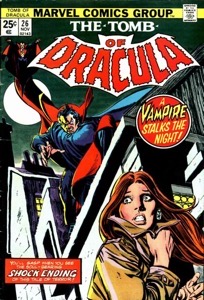
    I’m not sure if this issue’s Marv Wolfman’s best Tomb, but it’s his most ambitious. He weaves the story—which involves a missing magical statue, a dead shop owner, Frank Drake and Taj being shitty dudes, a Kull-related flashback, and Dracula’s familiar, Shiela, meeting a British witch—through Old Testament verses. The shop owner’s Jewish, and his son (David, who seems like he’s going to recur even after next issue) is visiting him from a yeshiva. Just as the old man is about to complete his life’s work, some bad guys break in and kill him.

    Dracula shows up a few minutes later at the active crime scene, wanting the statue and realizing the son’s got a piece of it. Dracula tasks Shiela with befriending David, and he takes her to see this old British witch who tells them about Kull. No editor’s notes with issue numbers, which was kind of disappointing. This statue can grant wishes—an Infinity Gauntlet you don’t need to snap—and Dracula wants it to… make himself immortal immortal, not vampire immortal. So he can still be evil but during the day.

    David and Shiela are a nice couple. Like, Tomb of Dracula’s humans are usually obnoxious. Look at Frank Drake, who’s laying about since abandoning Rachel Van Helsing and the vampire hunters. It’s been three days since he left her—I swear this book has three different timelines going at once—and a sexy troubleshooter named Chastity Jones has tracked him down. She wants to give him a job being rich and fabulous again, plus she wants to get busy. Does he want to call Rachel (who he luvs, he said), or does he want to get horizontal?

    So, immediately, David’s a bit more sympathetic a human character.

    Oh, wait, then there’s Taj. He only gets a page because he’s not white; he’s moping around India because beating up his wife last issue or whatever didn’t make him feel better. Some old friend comes to plead with him to see her. So he beats that guy up too. Taj is a dick.

    After spending the issue in the literal shadows, watching the humans do their things, Dracula gets into some trouble of his own while looking for the statue pieces, leading to a surprising cliffhanger. Though only because Dracula assumes he can’t possibly be in danger, but there wouldn’t be much of a comic without it.

    It’s a strange combination of character study, mystical adventure, and Dracula. There are some bumps, but Gene Colan and Tom Palmer’s art is exquisite, and Wolfman’s working his buns off.

  • Dan Dare (2007) #4

    Dan Dare  4

    I’ve never read any Dan Dare besides this series. I assume it’s some British Silver Age book about British derring-do in a sci-fi setting. So I don’t know if writer Garth Ennis is doing some homage with the pacing of this issue or just the plotting of the series in general.

    Here’s what the first issue promised: retired space adventurer Dan Dare coming back to save the galaxy (colonized by the British, natch) from the Mekon, his old enemy (and presumably the main villain in the original Dare comics).

    So far, the series has delivered: a traitor Prime Minister, Dare, and sidekick Digby stranded on a hostile alien world full of monsters. No galaxy saving from Dan, just people saving.

    In this issue, Ennis reveals that anti-whatever plotting is intentional and will continue. He leans heavily on using talking heads scenes to fill in the backstory. The issue opens with the Prime Minister and the Mekon, who’s a silly-looking fifties alien but terrifying in his brevity. He seems to have some psychic control over a sizeable percentage of the population (both aliens and humans, including the PM), but it’s unclear. You wouldn’t want to ask him.

    Ennis splits the issue between the Mekon, the Home Secretary on Earth, as she uncovers the plot to sell out humanity, and Dan on the alien planet with the monsters. Things are getting grim for Dan, which is precisely where they’re supposed to be but also not. The plan needs Dan to be somewhere else; no one could predict he’d try to save some dumbass colonists because they haven’t read the old Dan Dare either.

    It’s a fantastic mix of wild sci-fi, political thriller, and British colonial action, with one heck of a tense finale. Ennis and artist Gary Erskine deliver a dynamite (no pun) close to the first (informal) arc. Presumably, the series will reset itself going forward, though I also have no idea because Ennis is very unpredictable here. Delightfully so.

    Erskine seems rushed at times—though the incredibly boring alien ships don’t help; hopefully, it doesn’t trend. Dan’d survive it just fine (even rushed, Erskine’s solid), but still. He’s got some very enthusiastic panels; the more, the better.

    Dare’s a damn fine book.

  • Werewolf by Night (1972) #23

    Werewolf by Night  23

    Reading this issue, I kept having to remind myself writer Doug Moench doesn’t want Jack Russell to sound like a jackass, quite the opposite. Moench writes Jack’s narration as a combination of hard-boiled detective, beatnik, and, I don’t know, Charles Atlas advertisement text. It’s the purest obnoxious surfer bro Jack’s gotten in two dozen plus Werewolf comics, and, wow, does it get old fast.

    The last issue ended with Jack under arrest for murder; this issue opens with him fighting the return villain—Atlas (a disfigured movie star out to kill all those who contributed to his accident)—but then flashes back to the cliffhanger resolve. The series’s new useless cop character interrogates Jack, Jack calls Buck for five grand (in seventies Marvel-616, the cops set bail), and then Buck fills Jack in on the villain’s origin.

    After countless accessory or inappropriate appearances (with Jack’s seventeen-year-old sister), Buck finally becomes integral to the issue’s plot. He wrote the script for the movie where Atlas got hurt and can narrate the flashback-in-a-flashback to Jack, saving his involvement for the end. I’m not sure why Moench wanted to pace it that way, other than Atlas busting into the apartment like Kool-Aid Man would have an extra jolt.

    But it doesn’t.

    Neither does Jack’s background transformation to Wolfman Jack.

    The fight then catches up to the opening splash page, where the werewolf and Atlas are fighting in front of Grauman's Chinese Theatre. Atlas also kicks the werewolf’s ass, which raises questions about why Jack wants Buck to shoot him with a silver bullet if he can just be beaten to death.

    The Don Perlin and Vince Colletta art is just as bewildering as the werewolf rules, with Colletta inking a lot of busy little lines. He’s not adding detail, just noise, and killing any implied movement in the artwork. It’s an ugly comic.

    If Jack doesn’t get some humility soon, this book will be even more of a slog than I expected.

  • Catwoman (2002) #2

    Cw2

    Darwyn Cooke owns this issue. It begins with an action sequence: Catwoman breaking into Gotham PD to get a look at the autopsies on the dead streetwalkers. Cooke breaks each page into a dozen or two panels, sometimes splitting a horizontal frame, more often zooming in on one particular aspect of the action. All in his “cartoony” style. There’s never better movement in comic art than the first act of Catwoman #2. It’s a masterpiece.

    And he doesn’t let up the rest of the issue ambition-wise. There’s Selina and Holly’s girl talk, done in art deco—to contrast the noir—and then the finale reveal. While Selina (and the reader) have heard about what the killer’s doing to the women and then read the reports, the finale shows the immediate aftermath, complete with the cops robbing the corpse.

    Cooke’s superhero noir is a genre itself. Absolutely beautiful, superior work.

    Ed Brubaker’s script is mostly successful. The Selina narration’s solid (and appropriately sparse at times), but he runs into a couple hiccups. First, obviously, Selina’s characterization of Batman in her narration is one of a dick—he’d care the women were dying, but they chose that life, didn’t they? Second, when Selina does decide she’ll be the one to stop the killings, it appears to only be after the finale and seeing the latest victim. The narration comes too late in the visuals.

    Otherwise, the writing’s excellent. The issue has the lengthy action open, which slows down once Selina’s broken into the morgue, then the flashback to her and Holly’s conversation after last issue, then back to the present and the latest killing. Based on the initial pacing, they could’ve gotten away without having Selina arrive at the crime scene in time. The issue’d earned its two dollars and four bits by then, but Cooke and Brubaker somehow find time (and pages) to continue.

    Though had they not paced it so well, that final narration fumble might’ve been avoided. But Catwoman’s inordinately rare faults being side effects of its great successes seems on par for the book.

    It’s just too good for its own good.

  • Infinity 8: Volume Five: Apocalypse Day (2018)

    Apo

    Apocalypse Day’s agent, Ann Ninurta, is the most reliably badass agent since the first volume. There are other comparisons between Ninurta and the first volume’s lead, like being blonde, midriff-revealing, and obsessed with babies. The first volume’s lead wanted to have a baby, Ninurta’s got a baby. Well, a toddler. Ninurta’s taking her to daycare when the Protocol 8 order comes in, and she’s off to the bridge, where even the captain is sick of doing the setup spiel and leaves it to the icky dude lieutenant.

    Who, as per usual, does inappropriately come on to Ninurta (who’s already scored one hot boy’s phone number, a smuggler, and his crew riding the Infinity 8), but she shuts him down without a thought. The comic winks through Ninurta getting the assignment; while she’s never heard it before, the captain, the lieutenant, and the reader are on their fifth go-around.

    Ninurta’s also the first agent to have a good grasp on Protocol 8, which will be important later on. While the time reset has always been a factor of Infinity 8, it’s a lot more integral to Ninurta’s character arc. Not really a character development arc because it’s the fifth volume, so she doesn’t get to finish things up, but arc. She’s got a killer arc.

    Ninurta’s initial investigation of the space graveyard is no different than anyone else’s. Less exciting, in fact, they apparently gave all the good missions to the first four people. Ninurta’s just flying around, looking to see if she can stumble into anything before time’s up.

    Complicating things is an inventor on the Infinity 8 who’s just perfected a resurrection beam. Unfortunately, it makes the resurrected mindless zombies—down to bite transmissions; Infinity 8 is excellent for introducing other genres’ tropes into its sci-fi setting.

    Oh, and then something else goes wrong, and the beam gets amplified all over the ship, creating at least a few zombies, but more importantly, it travels across the solar system-sized space graveyard of dead things. So Ninurta doesn’t just have the zombie outbreak on the ship to worry about (her kid and ex-husband are still there, and she doesn’t trust the ex in a zombie outbreak), but also everything in space trying to kill her too.

    She’ll go back and forth from the ship and graveyard various times, eventually teaming up with her love interest and his band of misfits for some comedy relief and zombie fodder. Ninurta’s also got to make sure her kid’s okay, which isn’t easy on a ship overrun with zombies.

    The story’s always very sci-fi, but writers Lewis Trondheim and Davy Mourier heavily leverage the zombie story tropes. This person’s got it and is hiding it, and so on. The emotional weight of Ninurta’s story is heavier than any of the lead agents to date, though Patty Stardust was in a lot of danger last time.

    Patty returns this issue, making it her third appearance in Infinity 8 (so more than fifty percent). Ninurta and her sidekicks need a speedy starship, and damned if Patty isn’t part of the entourage, along with her dipshit guru boss, who doesn’t have a chance to be as much of a dipshit because Patty didn’t get the mission this volume.

    How the individual agents affect the outcomes of their missions will be an interesting thing to reflect on. While their mission is exploration and reacting to what they find, everyone’s got a lot of baggage complicating matters. Well, maybe not the agent in the first series, whose interest in having a baby was comedic, not character development.

    There are some other callbacks, whether it’s a one-panel cameo from a familiar robot or an alien species readers ought to remember who like to eat dead things. It’s a very full second half. There’s some breathing space in the first, but things go from bad to worse at the halfway point, and it’s pandemonium afterward.

    Surprisingly, Trondheim and Mourier have a significant reveal in the last act, so Infinity 8 isn’t going to wait until the final volume to spill. Another significant reveal from the previous volume (or was it the volume before) also comes back in a big way, so maybe they’ll pace out the reveals. Can’t wait.

    The only thing wrong with Apocalypse is just okay artist Lorenzo de Felici. From his aliens, he’d do a great Muppet comic. From his people, he’d do something where everyone has too big eyes. It’d be fine if he made up with it on the rest, but the visual pacing’s hurried and unsure. With the right artist, this volume would be the easy best. With de Felici, it’s a contender.

    But.

    Anyway. Can’t wait to see where Trondheim steers Infinity next.

  • Stoker’s Dracula (2004) #3

    Stoker s Dracula  3

    Like all faithful Bram Stoker’s Dracula adaptations, Stoker’s Dracula has hit the point where the source material’s bad writing is causing problems. Or, at least, lazy plotting. But it’s not writer Roy Thomas’s fault; it’s all on Stoker.

    The most obvious example is someone screwing with Van Helsing’s plan to save Lucy’s soul. Last time it was Lucy’s mom, who died almost immediately following as a comeuppance; this time, it’s a maid. Thomas leaves in Van Helsing’s being super classist about the maid.

    This issue is entirely “new” material. Artist Dick Giordano no longer draws Dracula exactly like he appeared in Tomb of Dracula, though sticks pretty close. He does not play up the Count’s gauntness, which makes it odd when multiple people comment on it. This issue’s got Jonathan and Mina seeing the Count in London and fairly soon getting involved with the vampire hunting plot.

    There are numerous plotting conveniences straight from the novel. The boys exclude Mina so she can go and have an offscreen arc with Dracula as his steady victim, Mina not reading Jonathan’s journal until after they see Dracula, not to mention Jonathan not being able to tell Mina about his experiences and instead demanding she read the journal. She also types it up when she reads it, which, fortunately, we don’t see. Stoker’s Dracula leverages the finest in cheap mid-aughts computer lettering, including the horrendous newspapers. There are some notes and telegrams; they also look terrible and anachronistic, not just for the nineteenth-century setting but also with Giordano’s artwork. The “new” Stoker’s isn’t as, well, slutty as seventies Marvel black-and-white magazines, but it’s pretty bloody. Slick, barely better than Comics Sans lettering doesn’t fit.

    Other weak sauce plotting includes Van Helsing’s trips back to Amsterdam to keep him away from the story, Jonathan’s boss dying off-page and leaving him the business, and numerous other recently deceased characters. The adaptation also draws attention to how little impact Dracula has on London, other than having turned Lucy into the “Bloofer Lady,” something Thomas rushes through. Unfortunately.

    Given the adaptation’s previous success with Mina and Lucy and not with the boys, one would’ve hoped Thomas might stick closer to her. He does not. She’s off doing her own thing; no girls allowed. Thomas also doesn’t fix frequent narrator Jack Seward’s weird obsession with Lucy. It’s nowhere near as bad as before, but it is concerning when it comes back to start off the comic. This issue covers Jonathan and Mina in England, Lucy’s resurrection and destruction, and Dracula’s (romance-less) pursuit of Mina.

    In a fun twist—I can’t remember if it’s from the novel—Dracula seems very aware he’s messing with his former victim’s new wife and taking delight in being that guy.

    Stoker’s is an admirable exercise, but the new material isn’t as good as the old material. It’s not just thirty years taking its toll on the creators; it’s the novel getting into its muddy parts. Back in the seventies, they got stopped at just the right point before the book got too busy and messy.

    I expect the last issue to be an entirely acceptable, entirely underwhelming read.

  • Shadows on the Grave (2016) #4

    Shadows on the Grave  4

    Okay, so this issue’s the best so far. In addition to the three strong stories (with guest writer Jan Strnad again contributing, this time a better tale), the issue’s got three one-pagers. Inside covers, back cover. Basically a pin-up punchline with a small panel setting it up, Mag the Hag narrating. They’re all good. The one-pagers are all good, the opening story’s awesome, the Strnad collaboration’s good, the Ancient Greek entry’s fan-flipping-tactic.

    The opening story is about a pickpocket at the circus. He’s trying to score, but there’s just not much visible cash floating around. Plus, he keeps seeing this particularly creepy clown decoration all around the place. The pickpocket’s industrious, though, and he’s not going to give it up, even if he has to get his hands bloody. Richard Corben’s art and his pulpy script set the tone for the whole issue. Lots of darks for people (and clowns) to get lost in, but also bright refuges in that dark.

    It’s a great little tale, eight pages. Two eight-page stories, double that count for the Ancient Greek story. It’s the right formula, especially since—in theory—Corben could connect the one-liners. But Shadows is definitely hearing me from the future as far as story lengths. This issue’s perfectly balanced.

    Strnad’s story involves a bodybuilder frustrated at repeatedly losing to an Arnold Schwarzenegger analog. The bodybuilder hears about some special steroid and is willing to do whatever it takes to get it, regardless of cost to his soul.

    It’s a more straightforward story than the opener, instead concentrating on some outstanding art from Corben. The story gives him some strange opportunities to (no pun, it just happens to be the story’s title, too) flex.

    Then the coup de grâce, chapter four of Deneaus. It hasn’t been collected by itself, which is a shame. I’m very interested in how it’d read in a sitting.

    This issue has Lustea, the Amazonian in love with dopey Deneaus, getting to the other side of the same island he’s questing on. She’s hanging out with her ninja friend, who takes her home to her village, where they talk ominously about things for later in the story. Not this issue matters, except magical weapons. They can’t miss. It’s important before the end of the chapter because Corben’s not wasting any time getting to the cyclops fight. Deneaus and his royal rube charge have their showdown with the great beast.

    Ancient Greek soldiers versus cyclops, with a bit of comedy but also ultra-violence, apparently perfectly fits Corben’s very particular set of skills. There are black nights and bright days in the story, both incredibly full (and contrasted in a way similar to the opening circus story). The action is fast and fierce, and the comedy is sardonic. Excellent writing from Corben. This entry fulfills and surpasses my hopes for the Greek epic.

    Shadows finishes its first half on a series high. It’s such a good issue.

  • Red Room: Trigger Warnings (2022) #4

    Trigger4

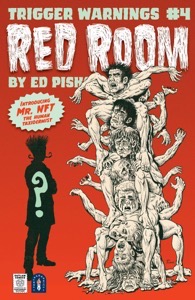
    Creator Ed Piskor ends Trigger Warnings with his most impressive writing on Red Room so far, and there’s been a lot of excellent writing. He does the issue as an anthology, skipping around an assortment of characters. Some are returnees, like Levee, the hacker from the first series. Before the narrator (the Cryptokeeper, who I’ve missed, it turns out) gets to the next story, setting up the anthology format, it seems like the whole issue will be about Levee’s coding difficulties. So like a procedural issue.

    Only Piskor’s not interested in the technical details. When Levee’s around, it’s mostly about him since last series. The most obvious change is in his marriage. Between Levee’s issue last series and this issue, he and his wife have broken up. Only since he kicked her out over her Red Room obsession, it’s not like he can tell the cops. She still wants to reconcile, but she also can’t stop watching.

    Then there are some surprise returning characters from Trigger Warnings, who Piskor uses for some contrast and tension, but also to establish (or maybe partially deny) Red Room’s timeline. We’re assuming when things are taking place, something Piskor hasn’t dissuaded, but now time definitely affects things.

    Two of the new characters are celebrity analogs; first, the wife of a prominent wealthy guy aerospace designer, but she plays like she’s married to Bill Gates. The husband’s name is even Billy. She’s an evil rich white lady who watches torture exhibits. The big streamer this issue is Mr. NFT, who poses corpses in grotesque ways.

    Then there’s a Mr. Rogers stand-in, which is maybe the only time I’ve ever felt like Piskor crossed a line with the commentary about the rich and powerful. Mr. Rogers being a snuff film enthusiast isn’t a good punchline. Piskor confuses the matter–seemingly intentionally—by naming the character “Mr. Gump” and instead bringing Tom Hanks to mind.

    Though Tom Hanks played Mr. Rogers too.

    It’s a masterful issue, just great, imaginative, horrifying work from Piskor page after page. The last story feels like a final issue for the whole series; only Piskor’s doing more, which is fantastic news.

  • American Gothic (1995) s01e07 – Meet the Beetles

    I’m not sure what iteration of “Make Bruce Campbell Happen” his guest appearance on “Gothic” fits in, but I was expecting more of a showcase. Campbell’s a state cop come to town at the behest of his sister (Derin Altay); her husband’s missing, and she’s convinced he’s been running around with Brenda Bakke. When sheriff Gary Cole doesn’t take Altay seriously, she calls in Campbell. Campbell immediately suspects Cole of being jealous over sort of girlfriend Bakke having other male attention and starts investigating him.

    The episode opens with Lucas Black and his best friend, Christopher Fennell, traipsing around Black’s old, now burned-down house. They find a skeleton (and Sarah Paulson’s old doll), with the skeleton turning out to be Altay’s missing husband. Except he’s only been gone a couple days, nowhere near enough time for the decomposition.

    Pretty quickly, both Turco and Cole realize the skeletal status of the deceased has to do with Beetles. The local, exceptionally creepy natural history museum is basically an excuse for boss Selene Smith and her staff to feed carcasses to the beetles and get shiny bones in return. Smith’s fascination comes off as obsessive, whereas Turco and Campbell both think bugs are gross. Cole doesn’t seem to mind them, though we also don’t get any scenes of him controlling them or anything demonic.

    We do more of a look into Cole and Bakke’s relationship. He’s nowhere near as in control of her as previous episodes have suggested; Bakke’s character arc is the show’s second most impressive at this point. Black gets the number one spot (his arc this episode weaves through the police procedural), then Bakke, then probably Nick Searcy (who’s not around this episode at all), then Sarah Paulson (who’s got very little here, but it’s all vital) then incompletes for everyone else so far. While there is an exposition dump between Jake Weber and Turco before the opening titles, Weber disappears at that point. What with a special guest star and an actual mystery, no reason to keep doctor Weber around. Wait, maybe Weber’s there for the autopsy, then disappears. He’s definitely gone once the bugs take off.

    Oddly, the episode calls back to that opening conversation between Weber and Turco at the end—she’d had an offer to cover a major story in Charleston, meaning she’d have to leave the show—when it turns out the offer’s somehow a Cole machination. Only there’s no explanation of how or why. Victor Bumbalo and David Chisholm get the writing credit for this episode, and there’s a big swing in quality. Not to mention the icky way dudes talk about Turco and Bakke, which is even worse when you think about how it’s probably sanitized what women would’ve gone through in the nineties South.

    Despite the terrible video montages, the episode’s fairly good-looking. Director Michael Nankin does a little better with Bakke’s falsely accused femme fatale arc than Turco’s amateur investigation. Black’s arc fits somewhere in the middle; despite the excellent acting, Black’s treading water this episode.

    It’s a real good episode. Probably Turco’s best performance so far, with great work from Cole, Bakke, and Black. And the forty seconds of Paulson.

    Real good.

  • Dracula (1979, John Badham)

    This Dracula adaptation takes place in 1913, which is only important so leading lady Kate Nelligan (battling and sometimes winning her English accent) can be a suffragette, and her beau, Trevor Eve, can drive a motorcar. So there can be a car chase. Or three.

    The film begins already in England. A ship is having trouble at sea; the crew is trying to get a wooden crate overboard, but they’re too late, and a wolf attacks them. On land, Nelligan lives with her father, Donald Pleasence, who runs a mental institution. Her sickly friend Jan Francis is staying with them. Nelligan helps out in the institution, where the patients aren’t so much violent as profoundly tragic.

    After the boat crashes, Francis goes down to the shore and discovers a lone survivor and apparently the ship’s only passenger, a Transylvanian count. We don’t get to see him for a while; Dracula, down to the John Williams score, is a late seventies studio blockbuster. The height of pre-ILM special effects, many smartly executed composite shots, exquisite matte paintings, and Superman: The Movie moments. Down to Laurence Olivier’s stunt cast as Van Helsing, who isn’t a vampire hunter, just a grieving father. Francis is his daughter, and she’s not long for the world. Or movie.

    The film’s first hour is moving the pieces around so Langella and Nelligan can have a romance. They need to overcome hurdles, like her presumed engagement to Eve (apparently, they both were just fooling around) and Langella’s desire to create a vampire army to destroy the humans. Starting with Francis.

    But since Nelligan disappears in the second half of the film—she’s the vampire’s victim, the fair maiden the men must protect—the film loses its romance angle. Langella hangs out to menace the good guys, but he also vanishes for a stretch. The third act misses them, particularly Nelligan, who never gets to sit with her burgeoning vampiric attributes.

    Instead, it’s all about Olivier, Pleasence, and Eve teaming up, though in stages. Olivier and Pleasence get one set piece, then Olivier gets another, then Eve finally gets to team up for the car chases. Despite the good guy plot being Olivier’s movie, he makes room for his costars. He and Pleasence have a delightful rapport; before Olivier arrives to check on Francis, Pleasence is an absent-minded dad-type. He relies on Nelligan for a lot of the institution work, and he’s settled into fine country living when he’s off the clock. He doesn’t even remember how to help someone choking; it’s been so long since he’s practiced real medicine.

    When Olivier arrives, Pleasence becomes his Watson. At least until the third act, when there’s not enough room for Pleasence anymore.

    Director Badham is often ostentatious; despite the English shooting locations, Dracula’s very American—just listen to Langella’s accent (or lack thereof). Or, really, Nelligan’s English one. Olivier does a heavy accent, which is fine; his performance just doesn’t have any nuance. He doesn’t need it, I suppose. Francis’s accent’s terrible, though. It always sounds like she’s mumbling.

    The film wraps up with a conflicted statement about Nelligan’s agency under the patriarchy—Langella’s offering her real power; she just has to eat people—but it’s a reasonably successful adaptation. Langella’s mesmerizing as a dashing Dracula, and he and Nelligan’s chemistry is good. Pleasence and Olivier are fun. Eve’s fine. Tony Haygarth’s a relatively harmless but still terrifying Renfield.

    Lovely photography from Gilbert Taylor and good editing from John Bloom. The Williams score is just okay; he doesn’t have a good “Dracula theme,” which he needs.

    Great costumes from Julie Harris and production design from Peter Murton. Dracula’s often sumptuous. It’s a little slow, but it’s all right.


  • Superboy and the Legion of Super-Heroes (1977) #258

    Superboy  the Legion of Super Heroes  258

    Is Legion supposed to be camp? I’m not sure what else makes sense, given writer Gerry Conway’s actually quite good plot and his reliably insipid exposition. Quite good plotting after tricking me in the opening—I thought the splash page said the issue was jumping away from R.J. Brande’s bankruptcy plot, but I just hadn’t reread the exposition enough to understand what Conway was saying.

    The Legion has finally met up with Brande, and finally discovered who took his fortune. Then these rogue science police officers attack them, and we get a reasonably good “Legionnaire’s powers are perfect for this situation” action sequence before cutting away to Brainiac 5’s prison island.

    Brainiac 5 is not in this issue. Not unless he turns out to have stayed evil and just gotten worse because now the comic’s about a mystery villain. The cover says his name is “The Psycho-Warrior,” but one of the Legionnaires refers to him that way. It’s not his villain name. I mean, it’ll be his villain name, but it doesn’t make any sense. I’m not sure there’s anyone worse at naming villains than late seventies, early eighties Gerry Conway. It’s like he saved all the okay ones for Firestorm and everything else is like… “Psycho-Warrior.”

    Conway toggles between the stories, the Legion and the missing fortune, and Psycho-Warrior breaking out of his and Brainy’s prison. Is he Brainy? Probably not; it’s too obviously logical and can’t be drug out.

    Because there’s barely a confrontation between the heroes and this new villain (who already hates the Legion, making him just like all their other villains, who hate them for being shitty white kids). He does his escape thing; they go to the Federation Council to have a showdown.

    The showdown’s bad but a good idea. If Conway had built to it over a few issues instead of just having a reason for the twist… might’ve been good.

    There’s a good narrative device setting up the cliffhanger and then some otherwise lousy writing.

    Maybe slightly better than usual art from Joe Staton and Dave Hunt.

    This issue’s the last Superboy and the Legion. I wonder if dropping the Boy of Steel’s going to help Conway at all.

  • Tomb of Dracula (1972) #25

    Tomb of Dracula  25

    Unfortunately, there’s much to talk about this issue, like writer Marv Wolfman’s use of a racial slur, which was indeed “Code approved.” It’s not clear if the speaker is supposed to be a bad guy for being a racist, which sadly tracks given Wolfman’s Werewolf by Night Black neighbor character.

    The issue’s all about private investigator Hannibal King, who narrates the issue like he grew up on pulp novels. It’s the point, but it also shows how banal hard-boiled comes off when not done well or when done for a gag. Wolfman doesn’t do it well, and he does it for a gag. King’s new client is a recent widow, and it’s her wedding day. As they were getting ready to consummate, Dracula came in and killed her husband. Dracula’s motive has something to do with shipping coffins from England to somewhere else, but it’s red herring nonsense. At one point, Drac makes it sound like he killed the guy as a warning to his boss.

    The widow comes to see King, who looks her over approvingly (she’s Black, so he’s not a racist if he wants to bang her). Now, he won’t exactly put the moves on her, but he’ll think about it, and he’ll be really shitty to her during their initial meeting. Especially after finding out her husband died. You have to yell at dames to make them talk sense, just ask Marv Wolfman.

    Especially since the widow doesn’t believe in vampires, King tells her a bunch of stories about his encounters with vampires, including one with the guy who looks like the dude who killed Blade’s mother.

    King investigates, roaming London (he’s originally from Milwaukee, which fits), getting into fights, narrating ad nauseam, and discovering how Dracula fits into this whole thing.

    There’s great art. Gene Colan and Tom Palmer are made for London private eye stories. Wolfman, not so much. Worse, he’s doing that strange thing where he writes Dracula from the perspective of the humans, and Dracula’s dialogue’s all of a sudden worse. He’s Fearless Leader, not Lord of the Undead.

    The end’s doubly problematic, but it’s such a gorgeous book… read the endless text fast, linger on the beautiful panels.

  • My Life Is Murder (2019) s03e08 – Gaslight Sonata

    This episode seems to be setting up “My Life Is Murder: Season Four,” with Lucy Lawless unexpectedly getting an adorable niece played by Nell Fisher, who is apparently not related to anyone in “Murder” but is appearing in the next Evil Dead movie.

    Lawless is married to one of the producers or executive producers or whatever. Rob Tapert. Is there a story? Maybe. Does it matter? No, because Fisher’s perfectly good. She’s ten years old and able to cyberstalk already, plus she’s sarcastic, so she’s just what Lawless needs in a protege. Fisher is Lawless’s brother Martin Henderson’s previously unknown little kid, whose mother wants to share custody now Henderson’s out of jail.

    Fisher and Lawless have a great scene talking about Henderson. The show’s such an interestingly balanced ensemble this season, though Tatum Warren-Ngata has to sit this one out (to make room for Fisher, perhaps), and Rawiri Jobe again gets very little. Though Fisher does ask for a relationship update on Jobe and Lawless, which is maybe the first time this season they’ve remembered it was a thing.

    While Lawless is hanging out with Fisher and doing acerbic but heartfelt bonding, Ebony Vagulans leads the field investigation. There’s a stretch of a camera brooch so Lawless can watch along, but the whole mystery feels stretched this episode. It’s too bad because Chris Hawkshaw, who wrote last episode, has a co-writer credit here with Stephen J. Campbell. The previous episode had a great mystery. This episode has similar trappings—all the suspects live in the same building, so Vagulans can quickly get from interview to interview—but the mystery’s not as good.

    I think the death even involves another car.

    Last episode, it was a car too. If Campbell wrote the Fisher stuff and they rushed Hawkshaw on a mystery… the episode makes a lot more sense.

    Fisher’s a fine addition to the recurring cast; everybody—Lawless, Jobe, Vagulans, Naufahu–will be cute with a kid around. And Henderson’s struggling to do better ex-con makes for a nice character arc.

    Really good direction from Kiel McNaughton, regardless of the pat procedural. However, the finale’s very tense, like Hawkshaw wanted to do a Rear Window homage, but there just wasn’t time. They couldn’t set it up and introduce Fisher.

    So. Ho hum mystery, engaging characters; it’s a good episode for Vagulans and, of course, Lawless.