Category: 2014
-

So much of The Babadook is so good, it almost doesn’t matter the film’s third act is a series of little disasters. Director (and writer) Kent does such an exquisite job with the film until then, she can basically coast to the end credits. The Babadook is a spectacularly made film; Kent’s direction, Simon Njoo’s…
-
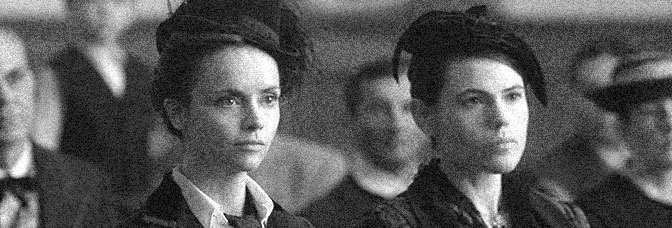
A horrific crime. An infamous suspect. An unrelenting prospector and his search for the truth. Or not. I mean, technically most of the above statements could be used to describe Lizzie Borden Took an Ax, but none of them accurately captures the ninety-one minute TV movie. There is some time spent on the crime. But…
-

The Amazing Spider-Man 2 is bereft of good ideas. It’s also bereft of good music–Hans Zimmmer’s bland “superhero” score rattles the brain, bowdlerizing what might be better scenes and effect sequences. It’s impossible to know, because there’s never a single moment of music without ludicrous bombast. Who knows how it’d have played if the superhero…
-

The Cosmopolitans opens with some visual sarcasm, but it quickly moves to verbal. Writer-director Stillman is somewhat merciless, introducing characters just to comment on the absurd pretentiousness of the principals. Of course, Stillman doesn’t let the observers off easy either. It just takes longer for them to become clear; maybe the American leads are just…
-
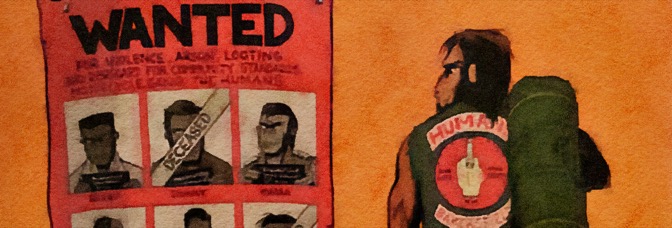
The Humans is something else. Keller does a lot with the script. I know last issue I was more impressed with Neely, but this issue is all Keller’s show. Even with it stumbles, it’s stumbling because Keller’s trying really hard to do something. He’s doing a “Twilight Zone” episode, basically, and a rather good one.…
-

The Humans revels in itself, in its gimmick. Keenan Marshall Keller and Tom Neely love the idea of their comic–a sixties biker gang on a “planet of the apes”-type situation–and their enthusiasm comes across. Better than coming across, it never comes across forced. This issue builds, with Keller and Neely introducing ideas–visual and narrative devices–as…
-

RoboCop is terrible. It’s long, it’s poorly directed, it’s badly acted. One almost doesn’t want to acknowledge it because then it has to be discussed. At least in how it does contain some subjects ripe for discussion. Like how a badly doctored script can create frustration at missed potential. Missed potential, however, being a euphemism…
-

According to William Shatner, in his capacity of host–in addition to hosting Chaos on the Bridge, he also conducts interviews, wrote and directed the documentary–he wants to know about the first few years of “Star Trek: The Next Generation,” because he’d always heard they were crazy. And they were. He brings out a bunch of…
-

The Road Within is a story about finding yourself. Every guy in the movie finds himself. The women don’t find themselves but they help the guys find themselves. How do you find yourself? By rebelling. Except Road is about people with mental disorders. Lead Robert Sheehan has Tourettes, his romantic interest (Zoë Kravitz) has anorexia…
-

For the Emperor is a combination of bloody and pointless. Director Park is sort of impersonal about the violence–even though it’s usually very personal (knife fights)–as though giving it some distance will make the characters seem less reprehensible. Lee Yong-soo’s screenplay barely shows any of the victims of the gangsters; it’s all just tough bad…
-

It’s impossible not to crack a smile at the end of LABEL, which dares the viewer not to laugh at it. Two women–Mary Krasnoperova and Kira Mathis–sit around and complain about the world and the amount of time it takes to drink coffee versus smoking a cigarette. At first, the acting from Krasnoperova and Mathis…
-

Should Into the Grizzly Maze be any good? It’s the story of two bickering brothers who have to hunt a giant killer bear. In Alaska. With the deaf wife of one brother–the cop–and the ex-girlfriend of the other brother. And the other brother is an ex-con. Their father’s former bear hunting protege also figures into…
-

The funniest thing in Birdman is, surprisingly, not when Michael Keaton and Edward Norton get into fisticuffs and Norton’s in nothing but speedos. The funniest thing in Birdman, which is about former superhero movie megastar Keaton staging a pseudo-intellectual comeback stage production of a Raymond Carver adaptation, is–after Norton makes fun of Keaton’s character’s overly…
-

Guardians of the Galaxy does something splendid and director Gunn never really acknowledges it, which just makes it more splendid. The Rocket Raccoon character–beautifully voice acted by Bradley Cooper–is easily the most successful CG film creation to date. And Cooper gives the film’s best performance; whoever directed Cooper in the sound booth, be it Gunn,…
-

Blue Dream runs just under five minutes. Until the end, I didn’t realize the protagonist isn’t a protagonist in a fictional story; rather Blue Dream is a very stylish documentary short. Elekes’s direction is fantastic; great Panavision-aspect composition. Great photography, great editing. And music. Elekes does almost all of it and the stuff he doesn’t…
-

Aftermath goes too far. Director Rzayev operates without taking the benefits of reduction and constraint into account. The short would work a lot better if he just cut out a couple money moments. It’s a short with one scene–Gizem Aybike Sahin argues with her brother, played by Berkan Uygun; most of that scene is exposition.…
-

To Be Takei is unexpected, even though everything it presents about its subject’s life is somewhere between common knowledge and readily accessible knowledge. Even though director Kroot opens the film on a jovial note–George Takei (the titular Takei) and his husband, Brad Takei (sort of also the titular Takei), taking their morning walk and bickering…
-

The first seventy percent of The Honest Date is reasonably amusing. Director Feingold has his stars–Allyn Morse and David Lowe–bantering, rapid-fire, back and forth, usually about dating mores or pop culture and it works. Lowe is excellent, Morse has maybe one questionable delivery but she’s otherwise really good. They handle all the dialogue and make…
-
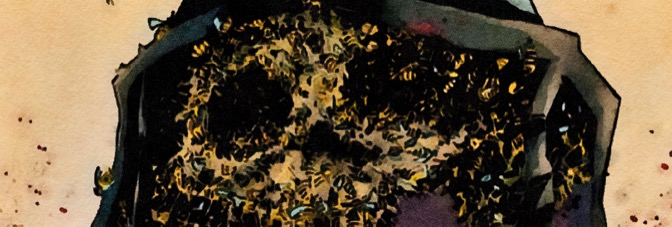
Williamson and Henderson deliver a lot more in the mood of the issue than anything else. Between Williamson’s eerie town history and Henderson’s eerier art, Nailbiter succeeds in creating a wondrous setting. It also ends up hurting the reading experience because Williamson’s writing often feels like it doesn’t take full advantage of that setting. This…
-

Garth Ennis goes somewhat modern with the latest War Stories arc, jumping to the late sixties and the story of an Israeli tank commander. He’s got a flashback to WWII, with the same tank commander getting a tour of a Panzer from a German tankie. There’s a lot of narration, all third person and really…
-

With Predestination, the Spierig Brothers take the narrative gimmick to the nth degree. It’s not just a real part of the story, it’s the story. Unlike most films where there’s some satisfaction for the viewer in discovering the gimmick, the Spierigs figure out a way to just push the viewer further down the rabbit hole.…
-
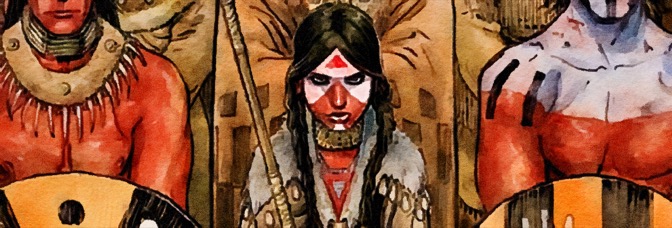
It’s a fantastic issue, maybe the best in the series so far. Manifest Destiny works best when Dingess is doing more than one thing at a time. This issue doesn’t have much in the way of action, unless one counts arguments and thrown soup, but it still moves at a nice, brisk pace, with the…
-

Soule frames the issue around a speech from the President, revealing the existence of the aliens. He’s also got some scenes in space–the majority of those scenes are useless by the end of the issue–and some earthbound political intrigue. He also has the United States and Germany going back to war and nothing happens from…
-

In some ways, this issue of Manifest Destiny is stronger than I thought Dingess and Roberts would ever actually do. It’s not high concept in the plot–Lewis is simply trying to free the ship of being stuck in the river and to get them away from the giant monster toad. But it’s high concept in…
-
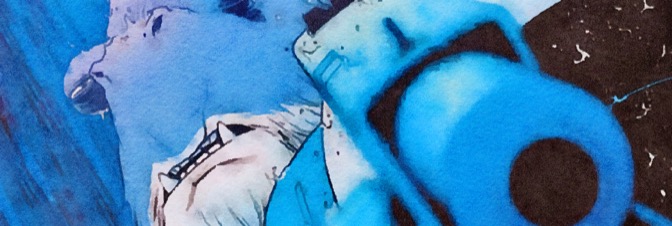
This issue of Copperhead returns the series to its previous level of quality, which is fantastic, because I really wanted to love this comic and it looks like I still can. It’s a very busy issue. Faerber wasn’t busy last issue (the weak one); he’s busy here, he keeps Clara busy, he keeps Boo busy,…
-

Director Tanaka starts out Marie in a hospital–after a flashy opening title card–and it’s impossible to know where the short is going. It’s a scary enough hospital and the titular protagonist (played by Kasia Koleczek) is already on the gurney. There’s no music, just the sounds of the operation getting ready. It’s creepy. And it’s…
-

If Ennis had just started out with the story he finishes telling in this issue, it would have been a much more satisfying story arc. He doesn’t want to seem too sentimental, I guess. But he starts narrating it in the past tense, directly referring to the war being over, so his protagonist clearly makes…
-

It’s a particularly interesting issue because Williamson never talks about the big secret–the big gimmick, the big deception, the big unknown. There’s stuff related to it, but he never identifies why he’s on these topics. It would be a bad jumping on issue. There’s some good stuff with the parents. Not together so much, because…
-

It’s a gimmick issue, with artist Elsa Charretier filling in. The comic is supposed to be a licensed biography of the Grey Raven from 1962. The best part of the gimmick–conceptually, not in execution–is the sixties advertisements for other modern Image Comics. The ads don’t come off, but the idea is cute. The big problem…
-

It’s a decent issue, but not one with much content. Most of the politicking takes place off page and Rucka even turns the cliffhanger resolution into an expository recap. He does it to show Forever’s burgeoning romance with one of the other Lazari, which is good from the character development standpoint… Only it’s all Rucka…
 The Stop Button