The Stop Button
blogging by Andrew Wickliffe
Category: 2011
-

Not to get too Roman DeBeers, but The Entire History of You takes place in a universe where they create a cyborg technology to record your memories but never figure out how to get text-to-speech engines to sound better than they did in 1997. You provides an interesting finale for the first season of “Black…
-
I’m understanding why the first episode of “Black Mirror” did a painful Lars von Trier namedrop… because the show’s just Lars von Trier-lite. This episode eventually involves a young woman being pressured into becoming a porn performer—don’t worry it’s just a terminal subplot and her experience is entirely besides the point—and it’s like, oh, what…
-

I spent all of The National Anthem waiting for someone—anyone—to turn to the camera and say, “David William Donald Cameron.” Hell, they could’ve done an animated Peppa Pig saying it. But "Black Mirror" started in 2011, when the world was a much different place. Not just Cameron, but in the intervening years, the whole British…
-

According to the IMDb trivia page, The Decoy Bride only had thirty-five percent the budget it needed for the original version of the screenplay, which—percentage-wise—is a default fail. Of course, it doesn't have to be; there are many examples of constrained budgets leading to ingenious filmmaking. Unfortunately, The Decoy Bride is not one of those…
-

Oh, no, Scream 4 is Wes Craven’s last movie. At multiple times throughout, I remember thinking, “at least this isn’t Wes Craven’s last movie.” Not sure what I thought his last movie would have been, but I didn’t really think it would be this mess of a too-late sequel. Though I guess I’m curious if…
-
The best thing about Much Ado About Nothing, except the dialogue, is Delamere’s direction. Not the stage direction, Rourke did that job, but Delamere’s direction of this recording. There’s some ho-hum headroom stuff going on to keep actors in the shot, but it’s a phenomenal showcase of the actors’ performances. They don’t credit the editor,…
-

Run Like Crazy, Run Like Hell is a divinely unromantic crime thriller. It’s got all sorts of romanticized parts and pieces, but creator Jacques Tardi (adapting a Jean-Patrick Manchette) always finds a different angle to present. There are four main characters and four supporting ones, then some supporting supporting ones, but the principals are Julie,…
-
I didn’t have much hope for Cabin in the Woods; though, I mean, director and co-writer Drew Goddard… he’s gone on to stuff. Good stuff. Right? But if I’d known it was written in three days—it shows—and cost $30 million—it actually looks pretty darn good for $30 million, saving the money shots until the final…
-

For the first forty-five minutes or so, The Raid is able to keep going on the idea lead Iko Uwais is going to be the most kick ass fighter in the movie. There a handful of short expository scenes throughout the film, plus a prologue, where Uwais prays, does some martial arts workouts (it’s all…
-

Save Me is the story of a kid (Jaheem Toombs) whose house burned down and the rest of his family died and he goes to ask the man who saved him (Sam Bologna) why he saved him and the man doesn’t tell him so the kid lies about it to his new best friend. There…
-

Source Code is very much MacGuffin as movie. Numerous plot details exist solely to justify (and qualify) certain creative decisions; the film takes a bunch of familiar and somewhat familiar—depending on the viewer’s preferences—sci-fi tropes, devices, and gimmicks, streamlines them, then combines them in those spared-down states. For example, a time traveller in the future…
-

Haywire’s plotting is meticulous and exquisite. And entirely a budgetary constraint. It’s a globe trotting, action-packed spy thriller with lots of name stars. The action in the globe trotted areas, for instance, is more chase scenes than explosions. Haywire doesn’t blow up Barcelona, lead Gina Carano chases someone down the streets. She doesn’t land a…
-

Sometimes special effects are just a little too much, especially with CGI composites letting director Abrams set so much of Super 8 in gigantic action sequences. The film’s about a bunch of tweens in 1979 Ohio making a Super 8 zombie movie when they witness a train crash. The train crash, with train cars flying…
-

Newlyweds is an exceptional disappointment. Not really because of the concept–upper upper middle class New Yorker whining–or the execution–Burns has his actors speak into the camera, the characters giving interviews–but because it’s always shaking and Burns, as writer and director, always takes the worse path. Newlyweds is a what happens, at least as far as…
-
Take Shelter is relentless; sort of an anti-Field of Dreams. Michael Shannon is a husband and father, respectable, employed member of a somewhat rural community. There’s not tons of money (wife Jessica Chastain pays for their summer vacations by selling her sewn goods) and daughter Tova Stewart has lost her hearing and needs expensive implants,…
-

It’s almost embarrassing how well Fast Five is made. Director Lin can’t do two things–which might be important for the film if the story mattered at all–he can’t direct heist sequences and he can’t direct car races. He doesn’t care how the heist works or how the car race works, he cares about the scene…
-

Perfect Sense goes out of its way to be an atypical disaster movie. Director Mackenzie and writer Kim Fupz Aakeson’s only significant acknowledgement of genre standards is having one of the protagonists pursue a solution. Except it’s never clear what epidemiologist Eva Green actually does–her job is clear, but what she does in pursuit of…
-
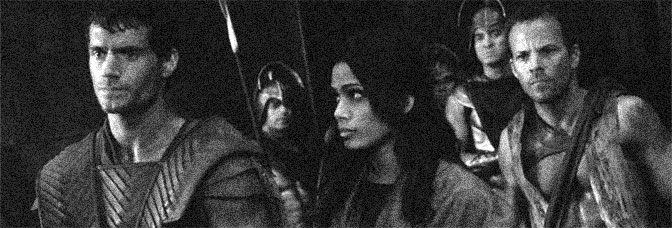
The best thing about Immortals is probably Stephen Dorff. He gives the most consistent performance and has something akin to a reasonable character arc. No one else in the film has that courtesy. The film, which has the Greek gods reluctantly influencing the life of mortals, makes a big deal out of freewill and the…
-

Moneyball is the traditional American sports movie with all the excitement sucked out of the accomplishment. The excitement isn’t gone because of the story–about how the Oakland A’s applied a statistical theory to how to win baseball games, but more because director Miller wants to make sure everyone is paying attention to the symbolism in…
-

Maybe Danny Boyle isn’t the right guy to direct a stage play of Frankenstein. When he goes to close-ups–this Frankenstein being a filmed performance, with a lot of overhead shots and close-ups to make it somewhat filmic (along with terrible music choices)–he doesn’t seem to recognize some of his actors aren’t really doing enough emoting…
-

Maybe the National Theatre Live just recorded a cruddy night for the Benedict Cumberbatch as the Creature performance of Frankenstein. Maybe there was some immediate reason that night to explain why Cumberbatch’s performance consists of little more than speaking when inhaling and occasionally giving an angry look. It’s not like Nick Dear’s play is good…
-

It would have been nice if one of the three credited screenwriter of Horrible Bosses thought enough to write characters for the protagonists. Instead, the script–and director Gordon–rely on the “charm” of the three leads. Only, Charlie Day (as a lovable buffoon) and Jason Sudeikis (as a somewhat absent-minded buffoon) and Jason Bateman (as the…
-

The Gathering Squall has two problems, one complicated, one simple. The first problem has to do with putting Joyce Carol Oates’s name up front. Storm is based on one of her stories and if a Joyce Carol Oates story starts with a young teenage girl walking alongside a rural road and an older boy pulling…
-

Gregg Bishop’s direction impresses in The Birds of Anger, so does George Feucht’s photography and Todd Jeffery’s production design… it’s just a shame Bishop never impresses as a writer. Anger is both a spoof of and an homage to Hitchock’s The Birds, only with wink wink nods to the pop culture game phenomenon “Angry Birds.”…
-

Tick Tock runs about five minutes–not quite though–and it does so backwards. For most of the short, lead Morgan Ayres is running backwards across campus and through time. Director Chi has some overly pretentious elements–doing named sections in a five minute short (not even) is way too much–but the film’s a technical marvel. In fact,…
-
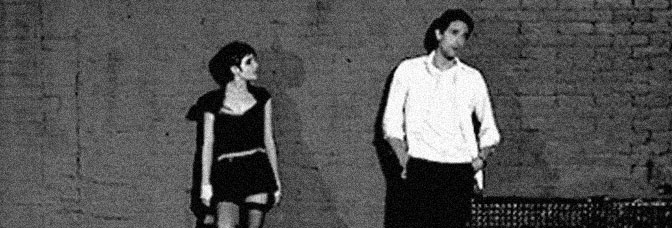
Detachment is not a message film. Kaye gives it a pseudo-documentary feel and does presents definite thesis about the public education in the United States. Except Detachment isn’t really about that message… it’s about how that setting specifically affects Adrien Brody’s protagonist. Until the final sequence anyway; it’s one sequence too many. Kaye flubs on…
-

Animal Love is a future story. Selma Blair and Jeremy Davies meet through an anonymous hookup service–writer-director Jones implies most of the ground situation, with ads standing in for an explanation of the service. He’s allergic to animals, she’s a pet owner. Complications ensue. The short runs about fifteen minutes without credits but feels much…
-

A self-reflective video essay can’t be rare these days, not with the Internet. Jesus Was a Commie is a little different though. It’s not an amateur recording on a cellphone, it’s Matthew Modine walking around New York City while his essay plays in voice over. Having the narrator walk around without any incidental noises is…
-

The title, Paul Williams Still Alive, might be considered a spoiler if anyone except writer-director Kessler was sure Paul Williams wasn’t alive. The film chronicles Kessler’s rediscovery of Paul Williams–more as a seventies entertainer than Paul Williams the songwriter or singer. There’s a lot about Kessler in the picture, including a lengthy section where he’s…
-

Final Deadball is a strange little thing. At first I thought it would be incomprehensible without seeing Deadball–Final is a short spin-off semi-sequel for one of the supporting cast in Deadball–but halfway through there’s a big expository scene so one might be able to understand it without seeing the feature. I wish I had some…
 The Stop Button