Category: 1988
-
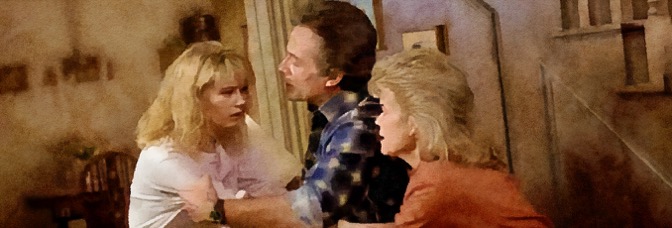
Let’s take Friday the 13th Part VII: The New Blood at face value and not assume it’s a soulless corporate production with no ambition other than to separate the 18–24 year old demographic from some cash on Friday night of pay day. With that consideration in mind, the film is about this evil psychiatrist (Terry…
-
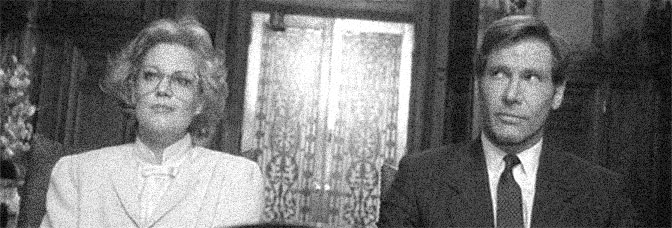
Towards the end of Working Girl, the film seems to jump around a bit with the timeline. It seems to jump ahead, but then it turns out it doesn’t. And it only seems to jump ahead because of how director Nichols and editor Sam O’Steen structure a couple transitions. It’s not a big thing, but…
-
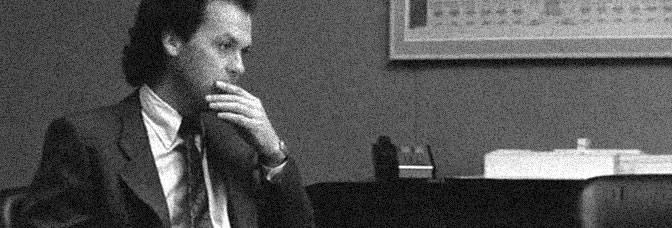
In hindsight, as the film settles during its final scene, it becomes clear a lot of Clean and Sober is obvious. Director Caron and writer Tod Carroll withhold a few pieces of information until that final scene, which do inform a little more, but the obviousness isn’t actually a problem. Protagonist Michael Keaton’s motivations do…
-
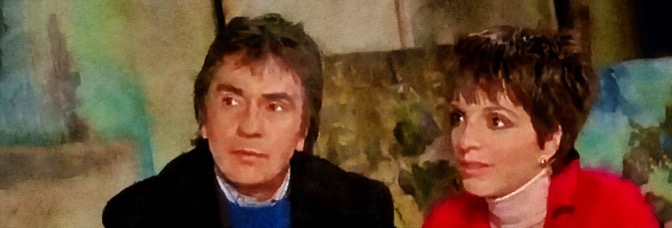
With the exception of Jill Eikenberry, all of the cast members from the original return for Arthur 2: On the Rocks. Cynthia Sikes replaces her. Eikenberry’s absence means she’s the only person who doesn’t embarrass herself. I’m sorry, did I say embarrass? I more meant humiliate. Worse, director Yorkin and screenwriter Andy Breckman don’t just…
-
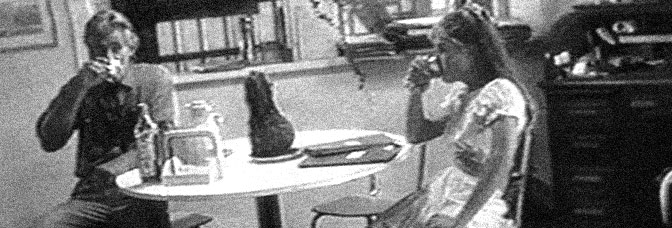
Tracers: City of Lost Angels was originally intended to be part of an anthology film but it doesn’t feel much like a short subject. With the obviously limited budget, director Band treats it like a television production more than a film. Most of the action plays out in one or two of the sets. It’s…
-
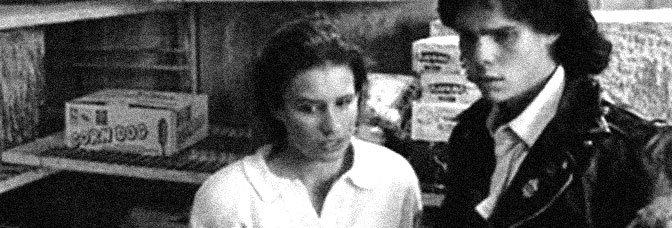
The Blob is a mixed bag. On one hand, director Russell does a good job throughout and he and Frank Darabont’s script is well-plotted. On the other hand, the script will occasionally have some idiotic dialogue and the actors just stumble and fall through it. Similarly the special effects. There’s a lot of good work…
-

What a very strange adaptation of The Terminator. It was originally published as single panels, one a day (as a promotion in Hungary), which makes a lot of sense. The panels do look a little like trading card snapshots of the film. Without all the text–or maybe with just less of it (adapter Attila Fazekas…
-

The Last Temptation of Christ opens with a passage presumably from the introduction to the novel, as it’s the novel’s writer talking about his own feelings. It’s an odd choice, since it somehow removes the drive for the picture from the filmmakers and puts it on someone else. It’s a very intentional move from Scorsese;…
-
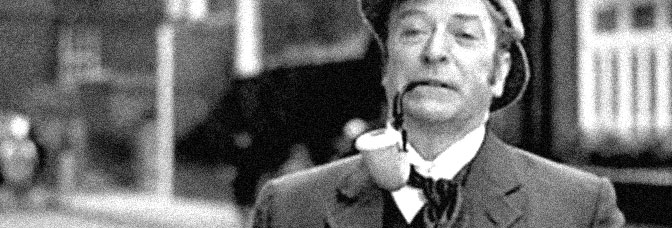
Without a Clue has an amusing premise–what if Sherlock Holmes is a buffoon and Dr. Watson is the genius–and generally succeeds in executing it. Director Eberhardt brings very little to the film (one wonders if his single goal was keeping Michael Caine in the center of each frame), but the production is handsomely enough mounted,…
-
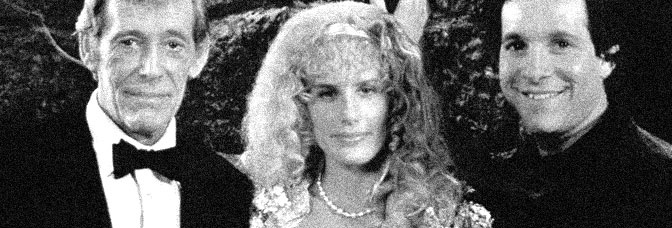
High Spirits is another fine example of how excellent production values, earnest performances and a genial air can make even the most problem riddled film enjoyable. The studio, infamously, took Spirits away from director Jordan in the editing and the resulting version isn’t his intention. The narrative is disjointed–characters get lost, their arcs collapse, in…
-

For lack of a better word, this issue is dippy. It’s not particularly bad–nowhere near Wasteland‘s worst–but it’s definitely dippy. As usual, the fault tends to lie with the writers. The first story is a Close autobiographical, again scripted by Ostrander. In it, Close goes to L. Ron Hubbard for therapy. The beautiful David Lloyd…
-

Who Framed Roger Rabbit, even with the absolute mess of a final act, would have really benefited from a better director. Oh, Zemeckis isn’t bad. With Dean Cundey shooting the film, it’d be hard for it to look bad and it doesn’t. But Zemeckis doesn’t–apparently–know how to bring all the elements together. The film opens…
-

Crocodile Dundee II isn’t really a comedy. It’s an action movie with a lot of comic moments, but it’s not a comedy. Figuring out how it’s going to not be a comedy–since it’s a sequel to a successful comedy after all–is one of its biggest problems. Director Cornell and writers Paul Hogan and Brett Hogan…
-
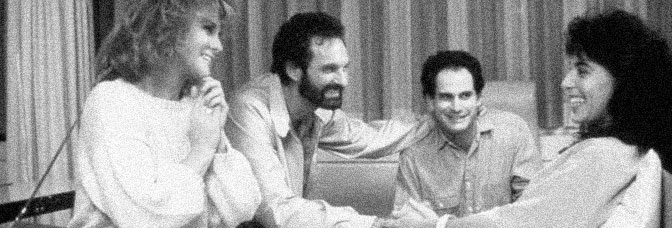
Alda opens A New Life likes it’s going to juxtapose he and Ann-Margret’s lives immediately follow their divorce. For a while, it does. Alda’s got Hal Linden as a sidekick, Ann-Margret’s got Mary Kay Place. It’s all very even. She’s going back to school, he’s trying to figure out how to date. The beginning might…
-

Dirty Rotten Scoundrels manages to have a full, three act plot–with all the twists necessary for a confidence picture–but it also is constantly funny. Oz juggles his two leads but mostly relies on Steve Martin for the more immediate humor. With Michael Caine, Oz and the screenwriters tend to be a lot quieter… letting the…
-

In Switching Channels, Kotcheff attempts two styles he’s inept at directing—madcap and slapstick. He’s got Ned Beatty, who can act in both those styles, and Beatty does okay. He’s not any good, but one can’t hold the film’s failings against him. But for his other buffoon, Kotcheff uses Christopher Reeve. The audience is supposed to…
-

While still bad, Halloween 4 is better than I ever expected. It’s barely ninety minutes and forty or so minutes are of people in crisis, which passes the time fairly well. It takes place in an interesting version of the original film’s town, where the moon (even when it isn’t full) is apparently so bright,…
-

Midnight Crossing is a terribly written piece of garbage, but there’s some definite potential to it. It takes forever for the potential to show. The movie opens with one of the worst directed, worst written action sequences I can think of. Then it flashes forward to modern day and it’s bad, but sometimes funny. At…
-
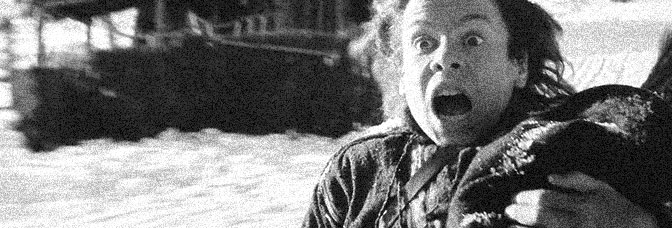
I wonder if Willow’s lack of popularity has anything to do with the protagonist not fitting the regular sci-fi and fantasy and magic standard. Not because Warwick Davis is a dwarf, but because his character is so non-traditional. He’s not an idealistic youth, or a hidden prince… he’s a farmer with a wife, two kids…
-

Oh, okay… it’s less than ninety minutes. I was wondering why The Naked Gun felt so fast. It’s because it’s short. That observation isn’t a negative one—the film is a constant delight, with Zucker, Abrahams, Zucker (and Pat Proft) coming up with a good laugh or gag every thirty to forty seconds. Someone should sit…
-
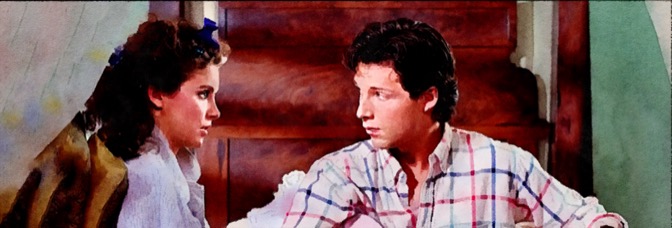
It Takes Two features a dream sequence set in protagonist George Newbern’s stomach. It looks cheaper than an antacid commercial. The movie’s filled with fake Southern accents–Newbern loses the accent after about fifteen minutes, right before he gets to the big city (Dallas) where he needs to buy an imitation Lamborghini from some seedy city…
-

How did Beetlejuice ever get past the studio suits? It really says something about eighties mainstream filmmaking and today’s. It’s not just the absence of a likable protagonist—Alec Baldwin and Geena Davis are the main characters for the first forty-five minutes, then hand the film off to Winona Ryder, who carries it until the last…
-
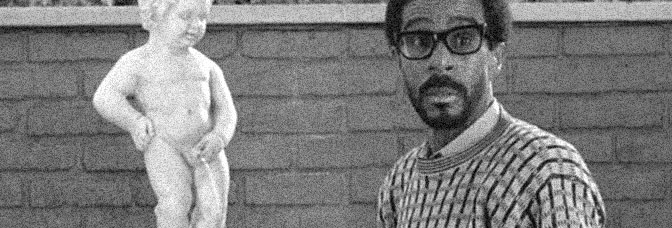
I really wish–even though the cameo is great–Morris Day wasn’t in Moving. If he weren’t, one could make the argument all the terrible people are white and all the good people (basically Richard Pryor and his family) are black. But Day shows up for a funny moment. Oh, and bad guy mover Ji-Tu Cumbuka is…
-

Conway partially succeeds at getting a good finish for the series. He tries really hard and some of that trying hurts the issue. He does these alternating first person narration boxes; they’re well-intentioned and I have no idea another way he could have played the scene, but they don’t work. Luckily, he’s got Garcia-Lopez on…
-

It’s the first issue where nothing incredibly awful happens. Or maybe Conway’s just numbed the reader at this point. It’s also the first where the dialect is presented as a language. There’s no more painful translating from French to English. Garcia-Lopez also gets in his best art of the series so far. He’s had the…
-

Conway and Garcia-Lopez definitely get an “A” for effort. They both are very deliberate on Cinder and Ashe but Conway tells the story in alternating first person narration and it just isn’t going to work with this kind of thing. As awful as the events in this issue—and there are two or three really rough…
-

Conway uses a lot of dialect in Cinder and Ashe for his Cajun character. I understand why he uses it—and for a Cajun accent, it makes more sense than for something else, I suppose—but it’s still… dialect. The issue starts off as an action book, not a private investigator book (the characters are troubleshooters, think…
-

Duranona has something like two action scenes this part of Race of Scorpions. Two completely incomprehensible action scenes. Did the editor see something different or did they really get this material in and think it’d look good? At least this installment doesn’t rip off Star Wars. Speaking of incomprehensible, Davis is back with a new…
-

And here debuts the licensed property… Aliens. Luckily, it’s a really decent eight pages. Nelson and Verheiden almost make it feel like it’s just a comic book, not a movie tie-in. What’s really interesting is the aliens. Nelson’s able to draw so much fluidity into his own creatures, when he’s got to draw the movie…
-

Here’s a somewhat strange issue… it opens with Stout’s history piece about Americans massacring Filipinos in the late 1800s and early 1900s. It’s even more relevant today (those massacred were Muslim and the whole thing has been brushed under the history carpet). It’s better as a history lesson than a comic. Race of Scorpions is…
 The Stop Button