Category: 1980
-

For a film with quite a bit of grounded violence, Atlantic City is pretty genial. Director Malle shoots in close medium shots; there’s not a lot of grandeur to his shots. Atlantic City has grandeur, as a setting, but Malle doesn’t go out of his way to stylize it. Cinematographer Richard Ciupka shoots the whole…
-

The most amazing aspect of The Empire Strikes Back is its effortlessness. The film is clearly exceptionally complex–the three story lines have different sets, different actors, different tones, not to mention entirely different special effects requirements–not to mention Frank Oz’s Yoda–but it all appears effortless. Director Kershner is infinitely confident, infinitely assured. He simultaneously manipulates…
-

Peerless tale of real person John Merrick, played by John Hurt, who suffered Proteus syndrome (which causes severe deformities), who went from English freak shows to London society thanks to a doctor. Anthony Hopkins plays the doctor. Simultaneously tragic and uplifting; real beauty of the human heart stuff here, sincerely and deliberately conveyed by director…
-
![[Stop Button Lists] Siskel’s Ten Best of 1980](https://thestopbutton.com/wp-content/uploads/2015/05/listsgs.jpg?w=800)
A discussion of Gene Siskel’s list of the ten best films of 1980, published in the Chicago Tribune.
-
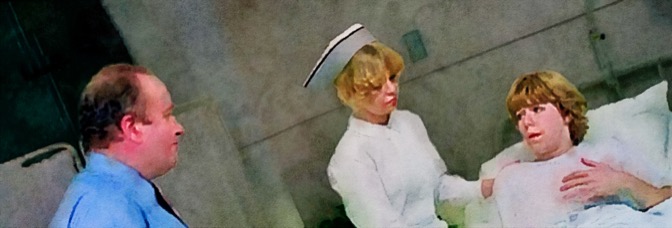
There’s nothing wonderfully terrible about Friday the 13th. It’s not like any of the cast are bad in funny ways, not even Betsy Palmer who’s doing inept histrionics. Are any of the cast members good? Not really. Some are better than others. Kevin Bacon’s probably the most useless (and annoying, due to an affected Southern…
-
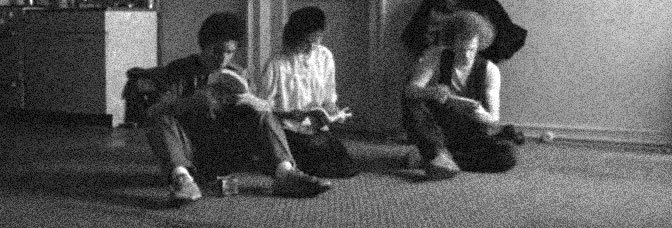
It’s sort of amusing how Fame, a film about high school, gets an incomplete. The film is rigidly structured–the four years of high school, plus the auditions at the beginning for the characters to get into said high school, a performing arts school in New York. The characters’ stories develop throughout the film in a…
-

Until the finale, which features a risible fight sequence, Black Angel at least looks and sounds good. The story is atrocious, but the production values make it tolerable. Based on that fight sequence, the short concerns a clumsy, vain and mostly incompetent knight–Tony Vogel in a terrible performance–who finds himself hunting a mystical evil in…
-
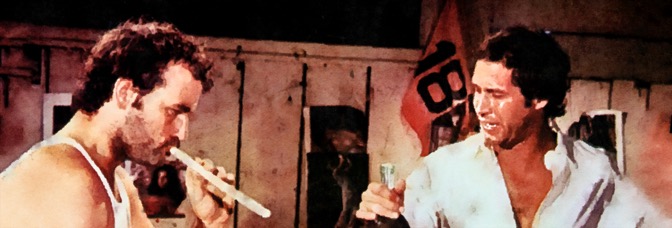
What’s the funniest thing in Caddyshack? Bill Murray is a good first choice, Rodney Dangerfield, even Ted Knight is hilarious, but Chevy Chase actually wins out. He doesn’t have as many awesome scenes as Murray, but Murray’s got a couple mundane ones. Chase–who opens the movie with lead Michael O’Keefe–is fantastic throughout all of his…
-

I wonder if Cab Calloway got upset he only got half a music video in The Blues Brothers while Ray Charles and Aretha Franklin both got full ones. While these interludes are completely out of place and break up the “flow” of the film, they’re at least somewhat competent. One can see what director Landis…
-
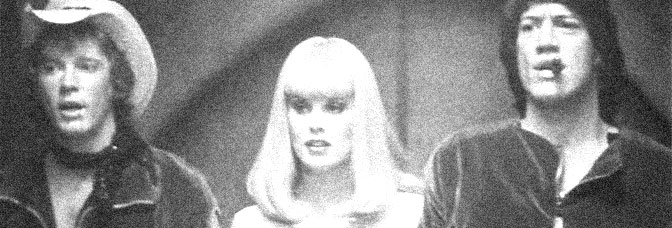
Galaxina answers a number of burning questions. Most immediately, it shows practical special effects and miniatures is sometimes not the best way to do special effects. Because auteur William Sachs had a great cinematographer–Dean Cundey–yet the effects work in Galaxina is awful. But it’s not like Cundey shot any of it well. Galaxina apparently had…
-

Besides being extremely funny and rather well-acted, Nine to Five has a lot of narrative problems. The story isn’t a mess exactly, because there’s not enough story for there to be a mess. Higgins and co-writer Patricia Resnick have an idea (Jane Fonda, Dolly Parton and Lily Tomlin are suffering secretaries) and not much else.…
-

Oh, is Stern’s exposition bad. I mean, it’s real bad. What I can’t figure out is why he bothers with it. It seems the only reason for the endlessly wordy narration is he has to fill space… but he doesn’t. This narration goes in boxes at the tops of panels. Byrne’s art is more than…
-

Besides Stern inexplicably wasting four or five pages recapping Cap’s origin, it’s a good issue. The origin recap made me wonder if Byrne wanted to get to redo the iconic panels, but they’re really small. Byrne does a great job this issue, especially once the fight scene gets started at the end between Cap and…
-

After some hiccups, Stern finally gets the whole “Captain America for President” idea working. The problem scenes are the establishing ones. It’s Cap talking to the third party guys who want him to run on their ticket. The issue gets good once it’s Steve Rogers trying to figure out if he should run or not.…
-

The Dragon Man cliffhanger really does not resolve well. All Stern can think of to get it over with promptly is for Cap to throw his glove in Dragon Man’s eye. Then Dragon Man heads off to confront Machinesmith and Cap tags along. This sequence, from the cliffhanger resolution to Machinesmith’s hide-out, is visually fantastic.…
-

Steve Rogers as mild-mannered commercial artist is a little off at first, but once he settles in with his friends—and a girl, I sort of remember him dating Bernie Rosenthal when I was a kid—it gets a lot more comfortable. Stern starts with more about him being wowed by the era, but it quickly dissipates…
-

Byrne does a great job with everything this issue except Cap. He draws him a little like a big dope. There’s just something bland and dully affable about him. And he’s always in costume, so clearly Byrne is doing a good job of drawing him that way since he never gets to fully illustrate an…
-
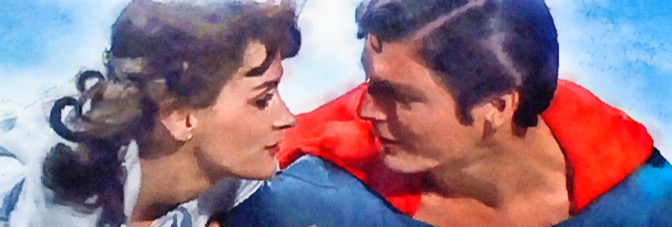
First SUPERMAN sequel (much of it filmed back-to-back with the original) has Terence Stamp leading a trio of supervillains on a worldwide takeover (aided by Lex Luthor Gene Hackman) while Superman and Lois Lane are busy having an ill-advised and ill-plotted (if singular) romance. Great performances from Margot Kidder and Christopher Reeve. Sometimes excellent, sometimes…
-
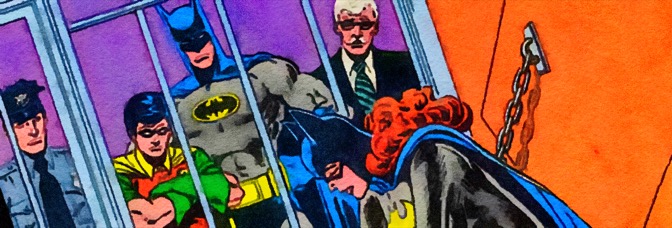
The main story is dedicated to Will Eisner, but besides some rather obvious Spirit references, I don’t get it. I mean, it’s not like Batman spends the issue getting beat up. That one thing aside–it’s not even a problem, it’s just a strange dedication–the issue’s pretty good. It’s Batman the adventurer, with some nice moments…
-

I read somewhere the Japanese started producing anime because there was no way to combat live action American imports. With its narration and lame plotting (it somehow isn’t epical–maybe because Tomb of Dracula was produced for television, complete with convenient commercial breaks), it’s an awful way spend ninety minutes. Unfortunately the entire cast isn’t credited,…
-
I read somewhere the Japanese started producing anime because there was no way to combat live action American imports. With its narration and lame plotting (it somehow isn’t epical–maybe because Tomb of Dracula was produced for television, complete with convenient commercial breaks), it’s an awful way spend ninety minutes. Unfortunately the entire cast isn’t credited,…
-

Maybe it’s James Horner’s score–which is solid, if a little too Jaws inspired–but if you squint your eyes and turn off your brain, Humanoids from the Deep almost seems like a real movie. It’s not, of course, it’s a New World picture. It’s got to be hard for a film to waste Doug McClure, but…
-
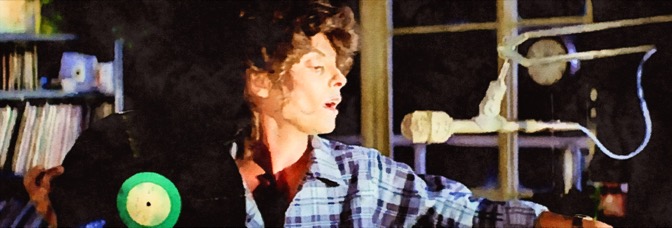
It’s not just Janet Leigh being in the film or all the trouble–visibly–starting when Jamie Lee Curtis arrives in town, it’s everything about The Fog–it’s an aware Hitchcock homage. The list can continue with the setting, the reference to The Birds, but it’s even more. There’s a definite feel to the film; Carpenter seemingly (he…
-

The Stunt Man opens with an exquisitely interconnected sequence, introducing all of the principals–Peter O’Toole, Barbara Hershey and Steve Railsback–while concentrating on Railsback. Hershey’s introduction, which turns out to be the first of director Rush’s muddling of reality, manages to be both blatant and muted. I wonder how it plays on someone’s first viewing of…
-

I think I made a mistake before watching Willie and Phil. I went looking for its running time and, in addition to that information, I also found some mention of the film satirizing the 1970s, referencing all sorts of little details in dialogue and such. They were really distracting–not just in dialogue, but also in…
-

Almost thirty years after producers Alexander and Ilya Salkind fired Richard Donner from the SUPERMAN sequel, Donner constructed his own cut from deleted scenes, screen tests, and even some newly shot footage. Besides offering some great Gene Hackman material, the new cut doesn’t have much to recommend it. For example, the highly touted Marlon Brando…
-

Good, if impersonal, Kurosawa epic about thief (Nakadai Tatsuya) getting recruited to impersonate a warlord (also Nakadai). Complications, obviously, ensue. Kurosawa seems beholden to historical accuracy at the expense of natural drama. The film’s so packed with information, it could even use some more run time (as is, it’s over two and a half hours).…
-

I read about the Superman II restored international cut (RIC)–a fan effort to compile all the extra Superman II footage from various television prints, mostly from foreign markets–in Entertainment Weekly. It said to head over to Superman Cinema to get a free copy, just so long as you provide free copies. By that time, however,…
 The Stop Button