Category: 1960
-
Tormented is the story of how the world’s greatest jazz pianist (Richard Carlson) lost it all because he wasn’t a forty-eight-year-old virgin. I mean, also because he let his former lover, played by Juli Reding, fall to her death without trying to help her. Good thing they’re on an island where any peculiar death results…
-
Devil’s Partner opens with an old man in his shack killing a goat to seal a deal with Old Scratch. The man’s arrangement is simple—his soul for two years. Wait, two years of what? Shh, watch the movie. We also never get to see any more of Old Scratch than his hand. It’s effective but…
-
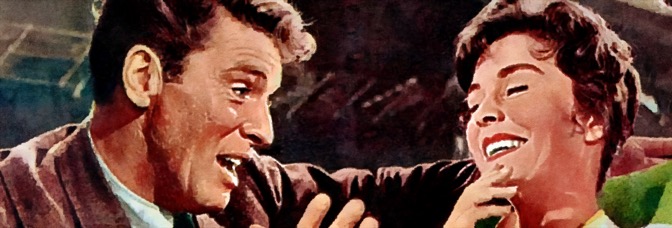
Elmer Gantry is all about possibilities. Possibilities for the plot, for the performances, for the film. Director (and screenwriter) Brooks watches the film along with the audience, specifically the performances. Everyone’s just waiting to see what Burt Lancaster, Jean Simmons, and Shirley Jones are going to do next. Sometimes, Brooks emphasizes the performance with quick…
-

Psycho is a masterpiece of color. After forty joyfully plodding minutes of Janet Leigh going from fetching spinster in a torrid lunch hour romance to grand larcenist in precise black and white (and then another few minute as she moves to close that character arc), director Hitchcock and Psycho put Leigh in the color of…
-

Tedious thirteen minute short has Jean-Paul Belmondo monologuing a misogynist rant against silent ex-lover Anne Collette all to get to a predictable twist ending. Director Godard (poorly) dubs in himself for Belmondo. Blah. DVD, Blu-ray.Continue reading →
-

Director Pialat’s “tour” of Parisian suburbia, with Jean-Loup Reynold voicing the first-person narration. Covers Pialat’s childhood, the socioeconomic realities of the present, and some other features as well. Beautifully shot in black and white by Gilbert Sarthre. Superior twenty minutes. None.Continue reading →
-
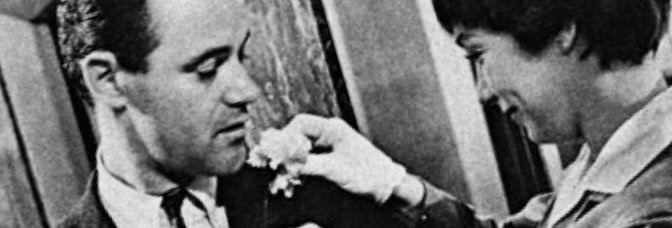
The Apartment does whatever it can to remain a dramatic comedy when it shouldn’t be anymore. And sort of isn’t. When the film shifts into real drama, there’s no going back. Director Wilder gets it too. The film has a good comedy opening, a breathtaking dramatic middle, and a decent comedy end. The comedy in…
-
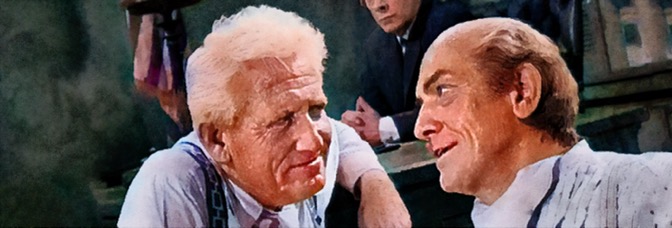
A lot of Inherit the Wind is about ideas and not small ones, but big ones. Director Kramer is careful with how big he lets the film get with these ideas, because even though Inherit the Wind is about Darwin vs. the Bible as its biggest idea, the smaller ideas are the more significant ones.…
-
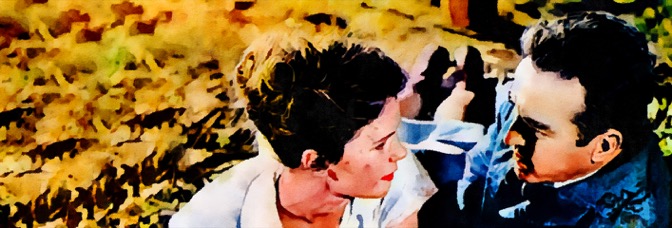
Director Kazan opens Wild River with newsreel footage of the Tennessee River at flood. The film is set in the 1930s, something else the newsreel footage establishes. Kazan and screenwriter Paul Osborn spend the least amount of time possible setting up the film. The newsreel takes care of setting, when lead Montgomery Clift starts his…
-

Third from the Sun suffers from a far too obvious ending. The episode forecasts it a few minutes early and then it all falls into line. However, it’s an obvious twist ending and it is a “Twilight Zone” after all, so who knows if it’s just predictable now because of the series having such an…
-

The filmmaking economy in The Little Shop of Horrors is astounding. Most of the film takes place in one set–the titular shop–and Charles B. Griffith’s script works hard to imply the world outside that set. My favorite bit in the script is probably when leading man Jonathan Haze is shocked to discover peanut butter and…
-
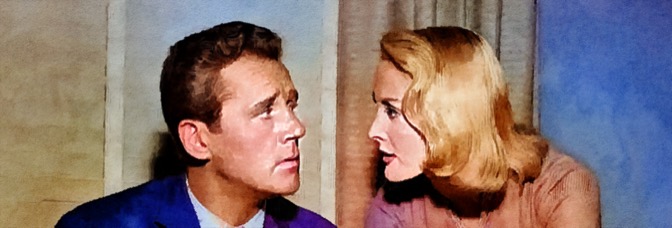
It’s another man in a weird world “Twilight Zone” from Richard Matheson. This time, Howard Duff is a regular American middle class guy who all of a sudden wakes up in a world where he’s an actor playing that regular guy. There’s a lot of great panic from Duff–he’s startlingly effective. Matheson and director Post…
-
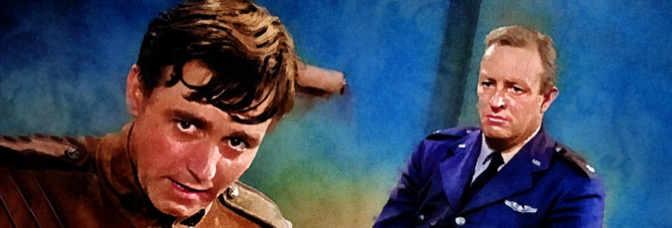
The Last Flight has some fantastic sound design. Especially at the beginning when Kenneth Haigh’s plane lands. He’s a World War I flier who journeys through time to the late fifties, landing on an American airbase. The sound for the base and the planes is just phenomenal. And the episode hasn’t even really started yet.…
-

The best thing in Ski Troop Attack is a forty or fifty second conversation between two characters about mortality. Writer Charles B. Griffith has a few other good observations in the dialogue, but they don’t resonate. Nothing in Ski resonates except that one conversation. And the acting isn’t even good. I guess Wally Campo isn’t…
-
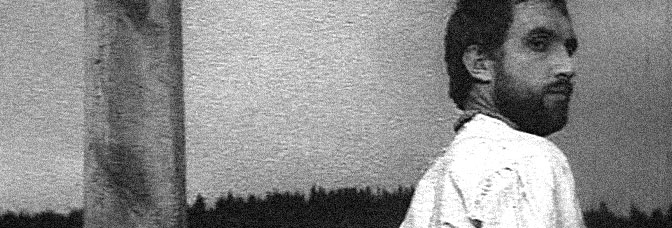
Adapting An Occurrence at Owl Creek Bridge into a short film, if Bridge is any indication, is a terrible idea. Director Majeweski–who also scripted–gives the doomed protagonist more to do before he’s on the noose than after. There’s no time in a short to make the viewer care, only to wonder if somehow this Owl…
-
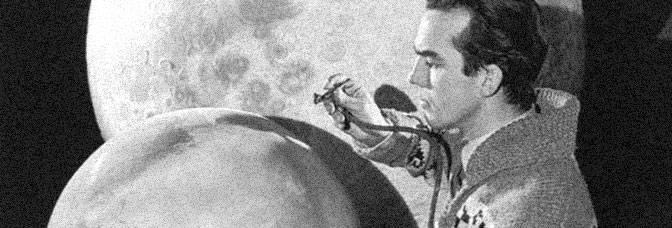
As a documentary short, Universe is undoubtedly interesting as a look at the history of astronomy. The expectation of life (or, at least, vegetation) on Mars, for example. However, as a film, it’s an obvious precursor it pretty much every science fiction film made after it. Its opening seems so much like something out of…
-

Instead of padding Goliath II out to an exhausting fifteen minutes, director Reitherman and writer Bill Peet should have concentrated on making it a good seven minute cartoon. Worse, there are animation problems every few frames in Goliath, like whoever photographed the cells didn’t know how to focus; at seven minutes, it might not look…
-

West of the Pesos is a hideous cartoon, with terrible animation and McKimson ripping off Wile E. Coyote and the Roadrunner. There’s not much to amuse oneself with during the insufferable six minute cartoon, but there are some places to try. First is the whole Speedy Gonsalez thing. I mean, Warner produced cartoons–not expensive, but…
-
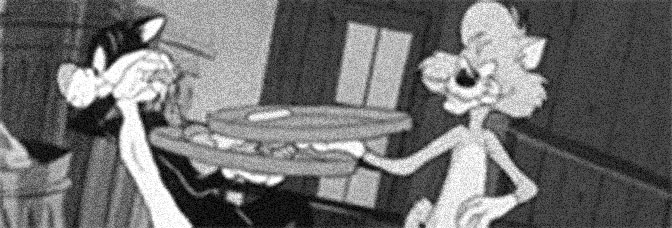
Mouse and Garden has some bad animation… shockingly bad. The cartoon’s about Sylvester and his sidekick, Sam, fighting over a mouse. The animation on Sam (an orange cat) and the mouse is awful. Freleng apparently didn’t care about appearing three dimensional. Actually, a lot of the gags work in two dimensions, as does most of…
-

Apparently, no director has ever needed a good script more than John Sturges. His work in The Magnificent Seven is static, the camera as disinterested in the film’s goings-on as the majority of the cast. He lets the camera sit and stare, cutting when it wakes up from its nap. He also appears not to…
-
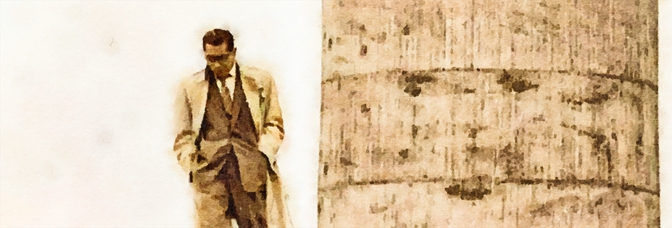
Great procedural about a police investigation into government corruption with a phenomenal lead performance by Mifune Toshirô in the lead. Intricate, complex screenplay–inspired by HAMLET no less–but tender and playful in a very un-HAMLET way. Kurosawa’s got a deliberate focus as the film follows multiple characters through the run time, with salient events often coming…
-

Outstanding not soapy soap opera about wealthy Texan Robert Mitchum, suffering wife Eleanor Parker, and his two sons–the legitimate one, George Hamilton, and the bastard, George Peppard. Once Hamilton comes of age and starts hanging out more with Peppard, away from Parker’s helicoptering, everyone gets in a lot of trouble. Fantastic performances from the entire…
-
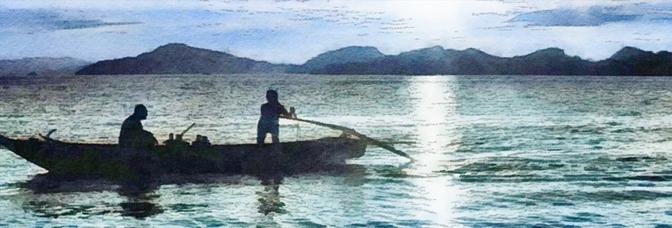
Beautiful, dialogue-free film about a family living on a desolate island without any potable water (the daily trips to the mainland for water figures in). Director Shindô zooms out the narrative distance so far the people are just living creatures as opposed to human beings. Lots of successful elements, both generally (wonderful score by Hayashi…
 The Stop Button