The Stop Button
blogging by Andrew Wickliffe
Category: Watchmen
-
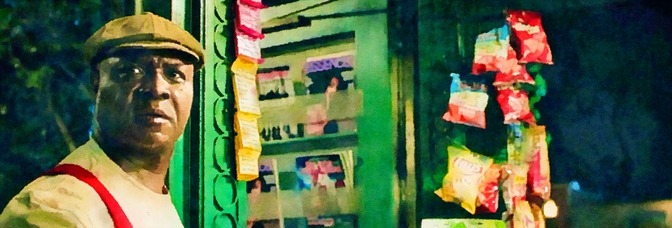
I’ve been trying to gin up enthusiasm to write about this “Watchmen” finale all day. Though, if I think hard enough, I’m sure I’ll be able to come up with a compliment. Something like… thanks to “Watchmen: The Series,” Robert Wisdom’s most… unappreciative recent casting is no longer “The Alienist.” Wisdom shows up in this…
-
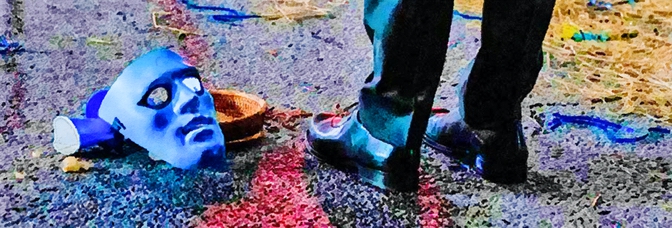
This episode of “Watchmen” gets, quite nicely, to the heart of the matter. As the episode goes through its meme-ification of Dr. Manhattan (albeit prestige HBO series starring recent Academy Award-winner Regina King memes), where King and Dr. Manhattan—who’s always visibly obscured when he’s not assuming the appearance of his surprise reveal identity—sit and talk…
-

Seriously, they couldn’t come up with anything better? This episode has a bunch of reveals and every time it’s… really, this reveal is the best thing presumably well-paid writers could come up with. Worse, it starts like it’s going to be a Regina King episode and therefore safe but… no. King doesn’t get her own…
-
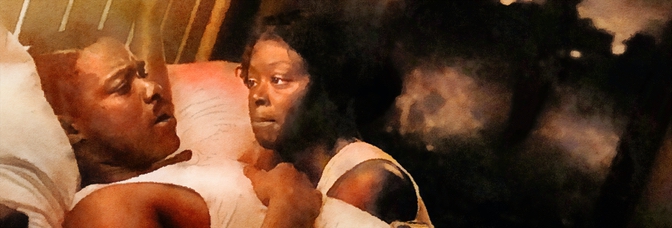
If it were my choice, I’d stop watching Watchmen: The HBO Event Series with this episode. Unfortunately I’m watching it as a social thing so I can’t get out of it. I suppose I could sleep through the rest, but then I wouldn’t be able to shit on it in a post. Because this episode…
-

Everyone gets everything they want. I wanted a Tim Blake Nelson “Watchmen” episode. And for my sins, they gave me one. Turns out Nelson was in New York for the giant squid attack; as a youth he looked like a cheaper, slightly nerdier Tom Holland and was a Jehovah’s Witness out to preach last minute…
-

I’m not sure what would be a more unpleasant way to spend an hour, listening to “Watchmen”… “creator” Damon Lindelof talk about Alan Moore or listening to him talk about way too influential screenwriting professor Robert McKee. McKee has some profoundly insipid advice on writing and the creative process in general, which Lindelof seems to…
-

So the first couple episodes of “Watchmen” have only hinted at having an actual Watchmen character in it; it took until this episode for the show to confirm, in fact, Jeremy Irons is playing architect of the end of the world and therefor its savior, Ozymandias. He even puts on the costume. And, you know…
-

As good as “Watchmen” gets at dissecting the comic book, learning from its anatomy, figuring out how to adapt it to live action—though this episode is nowhere near as uncanny as the previous one with composition—the show, pardon my French, fucks with the viewer. Alan Moore comics don’t fuck with the reader, they explore and…
-

The only times “Watchmen” doesn’t feel calculated are when you can’t imagine the shot as a David Gibbons comic panel. Every couple minutes you can feel how the sequence of shots would feel as a Watchmen comic, showing how just because DC Comics could never figure out how to do it without the original creators…
-
Upon reading this issue of Doomsday Clock, which is regular length instead of extended like the first, I’ve decided I’m done. I don’t care about the identity of the new Rorschach. I don’t care how Rorschach gets on with Batman. Don’t care how Veidt gets on with Lex Luthor. Or why the Comedian’s back? Or…
-
There’s one big problem with Doomsday Clock. It exists. And a lot of it is worse than one might expect. Apparently, in 1992, after the plan at the end of Watchmen didn’t work out, the United States elected Robert Redford president. Only he isn’t a hippie dippy Robert Redford, he’s President Trump. There’s even a…
-
Straczynski turns Moloch into the martyr of Watchmen. And he gets away with it. Moloch’s such a broken soul, it’s feasible he’d bend to Adrian’s will. As for Adrian, who practically gets more page time here than Moloch, Straczynski seems to recognize what he and Moloch have in common… they’re both illusionists. Adrian’s convincing Moloch…
-
Even though Moloch appears in the original Watchmen, there’s a lot more talk about him than show. J. Michael Straczynski turns the character into a quintessential sympathetic villain. He was born with deformed ears, leading to teasing in childhood and other tragedies later in life. Straczynski uses first person narration, making the reader identify with…
-
It’s Steve Rude doing forties superheroes, so Dollar Bill always looks phenomenal. But it’s Len Wein writing and apparently he had a bunch of homophobic statements he wanted to make so he gave them to this forties superhero so he could get away with them. Lots of anachronisms–oh, and some good, old fashioned Jewish banker…
-
I’ve got to give Azzarello credit. He doesn’t just let Comedian get a little loose. He runs it entirely off the rails; with integrity, though. Definitely with integrity. Even when Rorschach and Nite Owl show up, Azzarello never lets the comic become a cheap tie-in. Jones, on the other hand, probably never has a worse…
-
Azzarello finally pushes too hard with the political history lesson and loses control of the series. It’s not a bad issue, just mediocre. Jones can’t draw Nixon, which is a problem. Eddie barely figures into the comic at all. He’s trying to get through the jungle, fighting some Viet Cong–there are flashbacks to atrocities–but Azzarello…
-
And another good one. Azzarello likes doing war comics; he should stick to them. Even though there are some confusing parts to the narrative–Azzarello fractures it without establishing the bookends–and the song lyric excerpts don’t work, it’s a successful issue. Towards the end, Eddie and his gang drop acid before going on patrol. If Azzarello…
-
It’s another surprisingly good issue. Eddie’s on leave in Hawaii after he aggravated a riot while on leave in L.A. Azzarello structures the whole issue around him telling Bobby Kennedy (his strongest government supporter) about it. Going between race riots and war protests, Azzarello manages to look do a nice little history issue. There’s not…
-
Yeah, Azzarello definitely enjoys writing Comedian. There’s a lot of Vietnam War history here, a little American political history and almost no Watchmen connection. The Comedian could just be anyone. Azzarello never gives him anything superhero specific. So, as a comic, it’s good, but–and I can’t believe I’m saying it–it fails as a Before Watchmen…
-
I thought J.G. Jones was a better artist. I don’t know why exactly, but I did. His figures in Comedian are terrible. People change size, make no sense when standing next to one another. And his faces are even worse. It’s an ugly comic. I guess the editors didn’t think they could tell him to…
-
So Rorschach really became Rorschach after the serial killer went after his girlfriend. While this event occurs–which Bermejo shows from the serial killer’s perspective, because he’s apparently supposed to be someone recognizable–the other bad guys are torturing Rorschach. He gets away because of a coincidence. The one interesting thing Azzarello does is rip off “Kraven’s…
-
Travis Bickle guest stars in this issue. Azzarello’s deep, man, he’s really deep. He also sets up Rorschach’s girlfriend to get killed, which will undoubtedly explain why he loses himself completely in the mask. The Before Watchmen editors clearly didn’t coordinate or they just gave Azzarello free reign. He uses it to write a really…
-
Azzarello gives Rorschach a love interest. Maybe he didn’t read Watchmen after all. I was kind of kidding before, but now I’m not so sure. The series is a mix of bad ingredients. Azzarello and Bermejo go for visual realism, whether in the depictions of the city or its people, but then Azzarello writes a…
-
Wait, am I really supposed to take Rorschach seriously? Brian Azzarello’s writing of the narration suggests he’s never even seen the Watchmen movie, much less read the comic. It’s like he heard there was crazy narration and did a terrible job approximating it. The series is set in 1977, in New York City. Taxi Driver…
-
More 2001 visual references–heck, maybe even a 2010–and Hughes gets over his aversion to Jon’s big blue penis… but it’s a lackluster finale issue. Straczynski has to tie into the original series, which means bringing in Adrian, and the whole thing becomes a bore. He not only doesn’t do anything interesting with Jon–the monolith epilogue…
-
In a lot of ways, Straczynski has turned Dr. Manhattan into a neatly disguised rumination from a fictional character questioning his relationship with his environment. Jon wants to change his personal narrative to make it a happy one, which turns out to end the world. One has to wonder why he didn’t just try to…
-
Straczynski and Hughes aren’t satisfied with just playing with Watchmen here–Hughes does a lovely montage featuring imagery from the prequels and the original–they also feel the need for a 2001 reference. Dr. Manhattan is interesting because of that ambitiousness. For example, Straczynski’s writing is concerned with being smart and thoughtful. The series is an informed…
-
There’s something cool about Dr. Manhattan. Not just because Adam Hughes does the art–though the way he’s able to be stylized and still fluid is impressive; I wasn’t expecting him to do sequential so well. And it’s not cool because J. Michael Straczynski tries so hard to ape Alan Moore’s “voice” for Jon. It’s cool…
-
So Adrian has constant video surveillance of Dr. Manhattan but he gets important news from the newspaper? Shouldn’t he have agents or spies or… own a newspaper? I’m being too kind. I mean, if one assumes the finished scripts represent edited versions of Wein’s original draftings–assuming this situation might be a stretch, given the terrible…
-
A few issues ago, Wein did a bunch of foreshadowing of the eventual reveal in Watchmen–Adrian’s master plan. This issue he has Adrian trying to figure out that master plan, which means all the obvious details from before were just for the reader’s benefit. Wein never can figure out how or when to make Adrian…
 The Stop Button