Category: ★★
-

It’s almost embarrassing how well Fast Five is made. Director Lin can’t do two things–which might be important for the film if the story mattered at all–he can’t direct heist sequences and he can’t direct car races. He doesn’t care how the heist works or how the car race works, he cares about the scene…
-
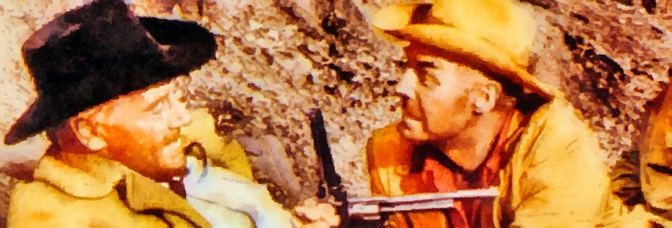
Ride the High Country is a fine attempt. It’s not a successful attempt, but it’s a fine one. Director Peckinpah seems to know what he wants to do, but he’s too trapped in Western genre tradition. Having icons Joel McCrea and Randolph Scott as his leads (they’re both great), George Bassman’s intrusive score and Lucien…
-

From the first few minutes of Blue, the entire thing seems conventional. Not exactly predictable, though it’s often somewhat predictable, but definitely conventional. And when it veers away from being conventional, it soon returns to it. Director Kieslowski figures out punctuation marks to draw the viewer’s attention to lead Juliette Binoche’s conflict and reuses them…
-

Until about eighty minutes into Rust and Bone, the film resists predictability. Director Audiard has a couple moments of Marion Cotillard bouncing back after a tragedy to pop music, but they’re punctuated with fantastic postscripts. The postscripts make up for any melodramatic shorthand. Well, until the eighty minute mark. And then Rust and Bone becomes…
-
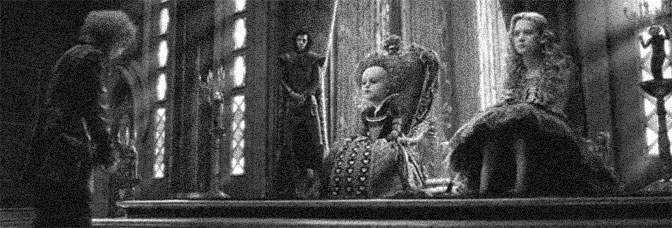
Alice in Wonderland has a number of balls in the air at once and director Burton–though he does show a good sense of them each while in focus–can’t seem to bring them together successfully. The potentially unifying elements–like Danny Elfman’s score or Mia Wasikowska in the lead–both fall short. For whatever reason, Burton doesn’t have…
-

The Thin Man Goes Home is very genial. It would be hard for it not to be genial given some of the supporting cast is around just to be genial–familiar character actors like Edward Brophy, Donald Meek and Harry Davenport are around to be likable. And why shouldn’t William Powell and Myrna Loy heading to…
-

Almost everyone interviewed in She Makes Comics does indeed make comics. The film never says what most of these interviewees made–I know what interviewee Heidi MacDonald edited because I remember (she’s identified for her current journalism), but I don’t remember what fellow Vertigo editor Shelly Bond edits. I know she edited things I read, but…
-

Moneyball is the traditional American sports movie with all the excitement sucked out of the accomplishment. The excitement isn’t gone because of the story–about how the Oakland A’s applied a statistical theory to how to win baseball games, but more because director Miller wants to make sure everyone is paying attention to the symbolism in…
-

It’s hard to imagine how Our RoboCop Remake would play for someone who doesn’t only love the original Robocop, but has seen it quite a few times. A lot of the humor in Remake is broad, but enough of the choices are subtle and incisive (while sometimes still maintaining a wink), one has to be…
-
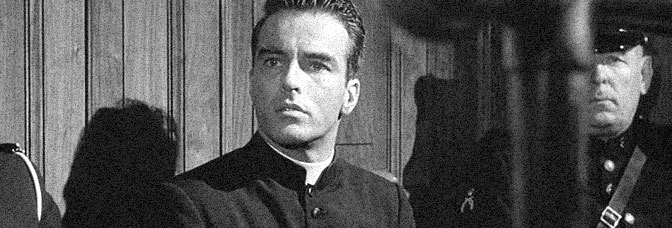
I Confess is unwieldy. Director Hitchcock is extremely precise in his composition, the same goes for Robert Burks' photography (especially the photography) and Rudi Fehr's editing (which changes in harshness based on the story's tone); sure, Dimitri Tiomkin's music is all over the place and intrusive, but it fits the script. George Tabori and William…
-

Nearly seventy percent of Captives is a fantastic romantic drama. Julia Ormond is a newly divorced dentist who starts working part-time at a minimum security prison, where she begins a liaison with inmate Tim Roth. Frank Deasy's script concentrates primarily on Ormond and her experiences–with occasions scenes for Roth amongst the inmates, but that first…
-

Patriot Games has a mess of a plot. After introducing Harrison Ford as the lead, it veers into this period where not only does Sean Bean–as Ford's nemesis–get more screen time, but also everyone in Bean's IRA off-shoot plot. It might work if fellow group members Patrick Bergin and Polly Walker had better written roles…
-

There are a handful of easily fixable problems with I’ll Follow You Down. Director Mehta shoots it in Panavision aspect ratio and doesn’t know what to do with all the width. Combined with Tico Poulakakis’s lens flare happy cinematography, Follow looks like a glossy television commercial. There’s never a sense of time or place, which…
-
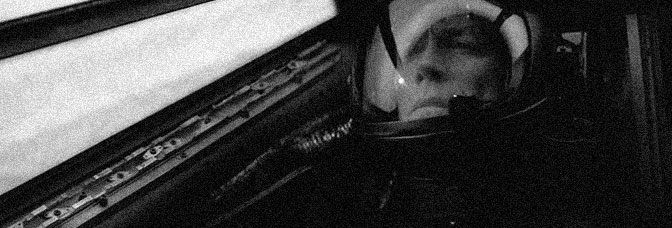
Firefox has three distinct phases. First, there's retired Air Force pilot Clint Eastwood getting recruited into an espionage mission. This part of the film barely takes any time at all–there's three missing months–Eastwood, as the director, does not like montage sequences. Even the opening exposition setting up the movie is cut together quickly; Ron Spang…
-

It’s hard to describe what’s wrong with Rally ’Round the Flag, Boys!; not because its ailments are mysterious but because the sentence is just a little problematic. Rally is a light handling of what should be a mature comedy. It deals with big issues–fifties suburban malaise and boredom, not to mention a strange post-war animosity…
-

I’m trying to imagine how Bean would play to someone unfamiliar with the television show. Depending on one’s tolerance for bland family comedy-dramas, it might actually play better. Because Bean, the movie, removes a lot of Bean, Rowan Atkinson’s character, and instead fills the time with Peter MacNicol and his problems. His job is on…
-

It’s incredible how much concern director William Friedkin is able to get for his characters in Sorcerer. Now, the film’s really kind of like four or five movies in one–there are four prologues, with very full ones for Bruno Cremer and Roy Scheider, then there’s the story of Cremer, Scheider and Amidou (who also gets…
-

Captain America: The Winter Soldier has a bunch of great, thoughtful scenes and many excellent–and some just better than normal–performances but it doesn’t add up to much. Those fine scenes don’t have enough separation from the very hurried plot to resonate on their own. What should be subplots turn out to be nothing but texture…
-

In some ways, Star Trek V: The Final Frontier is an ambitious movie pretending to be popcorn entertainment pretending to be an ambitious movie. There's a lot of nonsense about self-help, not to mention the whole God thing, and none of it works. Partially, it doesn't work because David Loughery's script is too thin, but…
-

Maybe Danny Boyle isn’t the right guy to direct a stage play of Frankenstein. When he goes to close-ups–this Frankenstein being a filmed performance, with a lot of overhead shots and close-ups to make it somewhat filmic (along with terrible music choices)–he doesn’t seem to recognize some of his actors aren’t really doing enough emoting…
-

For a while it seems like the third act of Garden of Evil will make up for the rest of the film’s problems. Or at least give it somewhere to excel. Sadly, director Hathaway and screenwriter Frank Fention inexplicably tack on a terrible coda–tying into the title no less–and effectively wash away any advances they’ve…
-
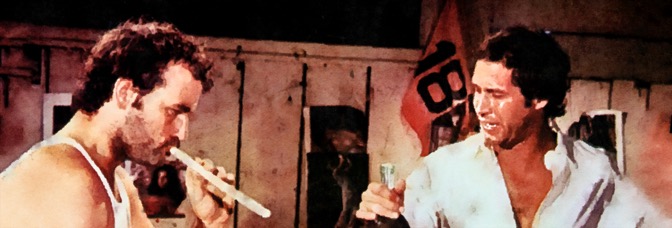
What’s the funniest thing in Caddyshack? Bill Murray is a good first choice, Rodney Dangerfield, even Ted Knight is hilarious, but Chevy Chase actually wins out. He doesn’t have as many awesome scenes as Murray, but Murray’s got a couple mundane ones. Chase–who opens the movie with lead Michael O’Keefe–is fantastic throughout all of his…
-

Boomerang! is a mess. The first half of the film is a misfired docudrama, the second half (or so) is a fantastic courtroom drama. Richard Murphy’s script is such a plotting disaster not even beautifully written scenes and wonderful performances can make up for its problems. And director Kazan doesn’t help. He embraces the docudrama…
-
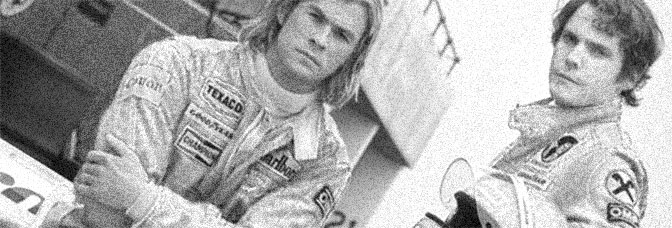
Rush ends with such a cop out, all it does is draw attention all the other cheap things Howard and writer Peter Morgan do to make the film exciting. Technically, it’s fine. Howard’s direction is good, Anthony Dod Mantle’s photography is great, Hans Zimmer’s music is fine, Morgan writes okay scenes… it’s just mundane. Howard…
-
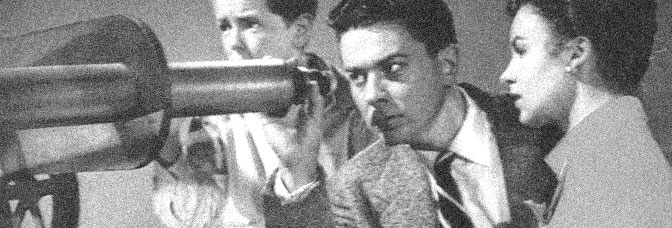
About halfway through Invaders from Mars, the army mobilizes to come to the aid of the protagonists (who have discovered an alien invasion). These mobilization scenes are all stock footage–later tank footage is stock too–but director Menzies uses it for a long time, like an actual scene. While dragging down the midsection of the picture,…
-

Besides J.B. Smoove, Clear History does not reunite Larry David with any of his “Curb Your Enthusiasm” costars. David and Smoove have their fantastic chemistry and it’s a little strange not to see them hanging out in the film. Instead, David hangs out with Danny McBride, who probably gives the film’s must mundane performance. He’s…
-

Lincoln is a political thriller. The vast majority of the film concerns the 13th Amendment and Lincoln’s attempts to get it through the House of Representatives. When Lincoln isn’t pursuing this story (or when director Spielberg and screenwriter Tony Kushner’s tangential subplots are too thin), the artifice starts showing. Not even Daniel Day-Lewis, in a…
-
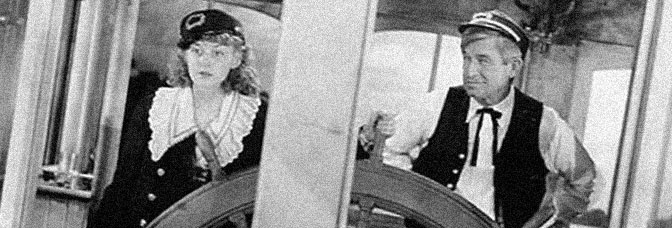
The best scene in Steambout Round the Bend is the wedding between Anne Shirley and John McGuire. Neither Shirley nor McGuire is particularly good in the film, but McGuire’s about to be hung and so they’re getting married. Steambout is often a comedy and Eugene Pallette–as the officiating sheriff–tells some really bad jokes at the…
-

Tai Chi Hero basks in its extravagance. Whether it’s the kung fu fighting, the battle scenes (these are different types of scenes) or just the imaginative steampunk gadgets, Hero always invites the viewer to enjoy what it’s creating. And when Fung has to come up with something different? He does. And he does a great…
-

The title, Paul Williams Still Alive, might be considered a spoiler if anyone except writer-director Kessler was sure Paul Williams wasn’t alive. The film chronicles Kessler’s rediscovery of Paul Williams–more as a seventies entertainer than Paul Williams the songwriter or singer. There’s a lot about Kessler in the picture, including a lengthy section where he’s…
 The Stop Button