Category: Japanese film
-
The One-Percent in One-Percent Warrior’s title does not refer to the super-rich, but rather when someone transcends in their film-related martial arts excellence. The majority of the film is just a forty-minute action sequence with star Sakaguchi Tak roaming around an abandoned zinc factory—on its own little CGI island—and kicking various butt. A lot of…
-
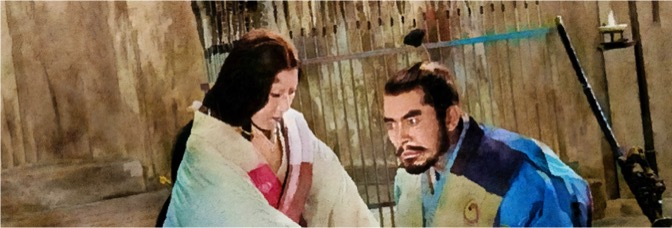
Co-producer, co-writer, director, and editor Kurosawa loves himself some Macbeth. Throne of Blood is Macbeth in feudal Japan, with Mifune Toshiro and Yamada Isuzu as the doomed couple. Kurosawa and his co-writers structure the film as a historical war epic, with modern-day bookends, and then fit Mifune and Yamada’s Macbeth into the war epic. But…
-

Miss Hokusai is the story of real person Katsushika Ōi. Well, stories of real person Katsushika Ōi. The anime is an episodic memoir mostly about Ōi (voiced by Anne Watanabe) and her younger sister, O-Nao (voiced by Shimizu Shion). The film doesn’t specify but they’re half-sisters, daughters to famous Japanese Edo period artist Katsushika Hokusai…
-
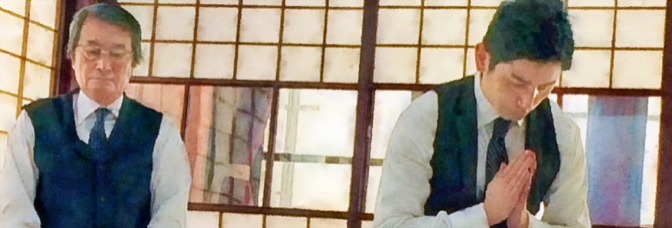
Departures suffers for its DV photography. Suffers. Hamada Takeshi cannot figure out how to light for the video and, as a result, the film never looks good. Maybe if director Takita were somehow taking it into account, but no, Takita just pretends it doesn’t look like an ornate Hi8 camcorder production. With some competent mise-en-scène,…
-

The Famous Sword Bijomaru is a tragedy. Well, at its best, it’s a tragedy. The film—which runs sixty-five minutes and has zero subplots, very few close-ups, and no establishing shots or sequences—opens with apprentice swordsmith Hanayagi Shôtarô presenting his benefactor, Oya Ichijirô, with a new sword. Hanayagi is an orphan, Oya took him in at…
-

Samurai Marathon has some strange epilogue problems; all of a sudden the movie’s about marathons, when it turns out the marathon isn’t a particularly big deal in the story. It’s central to the story, but as a narrative tool. It provides the right stage for these characters. Though, with a title like Samurai Marathon, you’re…
-
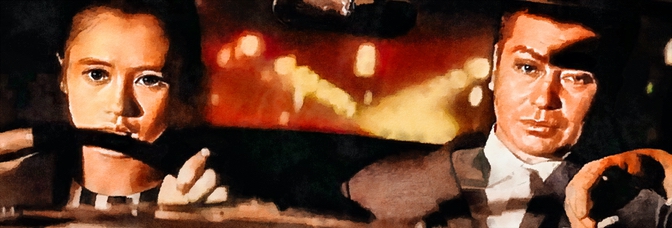
Pale Flower opens with lead Ikebe Ryô narrating his first day out of prison. Not what he does—we get to see what he does—but how he feels about being out, what he notices. He’s killed a man, been in prison for three years, and nothing has changed in Tokyo. The dead man’s absence doesn’t matter,…
-
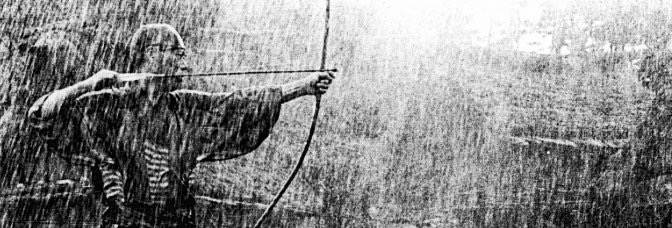
Seven Samurai is about a farming village, under imminent threat of bandits raiding and stealing their crop–and possibly doing much worse–who decides to hire samurai to defend them. They send four men–Fujiwara Kamatari, Kosugi Yoshio, Tsuchiya Yoshio, and Hidari Bokuzen–to town to hire the samurai. They can’t pay them, but they can feed them. The…
-
The only thing more tedious and lethargic than the first half of Varan is the second half of Varan. The first half has a motley crew of lepidopterologists awakening a giant monster. The second half has these lepidopterologists consulting with the military to destroy said monster. Not sure why the military thinks a bunch of…
-

The first half of Godzilla: Planet of the Monsters is surprisingly good. The film sets the scene during the opening titles–giant monsters attack in 1999, followed later by unstoppable Godzilla, two different space aliens show up to help in exchange for residency on the planet. Godzilla kicks everybody’s butt, driving the last 4,000 people from…
-
Tampopo is a cinematic appreciation of Japanese food culture. Writer and director Itami also has some love of cinema things, but it’s all about the food. Even when it’s played for humor. Or for nurturing. Or for sex. Sexy foodstuffs abound in Tampopo. But Tampopo is also this traditional narrative. It’s a Western’s narrative, but…
-
Sister Street Fighter should be campy. With the constant horns in Kikuchi Shunsuke’s score, lead Shiomi Etsuko’s colorful outfit, villain Amatsu Bin doing an Elvis impersonation, the countless and intentionally weird martial arts villains… it ought to be campy. But it’s not, because somehow Sister Street Fighter manages to keep its melodrama sincere. Lead Shiomi…
-

The title, The Street Fighter’s Last Revenge, doesn’t really refer to anything in the film itself. The Street Fighter is Sonny Chiba. He’s gone for psychotic killer karate man (from the first film, Last Revenge is the third) to suave, romantic ladies man. Complete with a secret room to put on his disguises. He also…
-

Return of the Street Fighter almost stages a third act rally. It comes so close, then it doesn’t. After a string of boring fight scenes, director Ozawa finally gets in a couple good ones. Lead Sonny Chiba against one adversary, instead of a half dozen, two dozen, or four dozen. The failure to do big…
-
Charming Toho (paired with Rankin-Bass) KING KONG features a lot of homage to the original, great villains, appealing romantic leads (albeit chaste ones because 1967 and interracial romance), and an excellent fight scenes. Drawbacks include bland white guy lead Rhodes Reason and the King Kong suit. Also Ifukube Akira’s self-derivative score (reusing classic GODZILLA themes)…
-
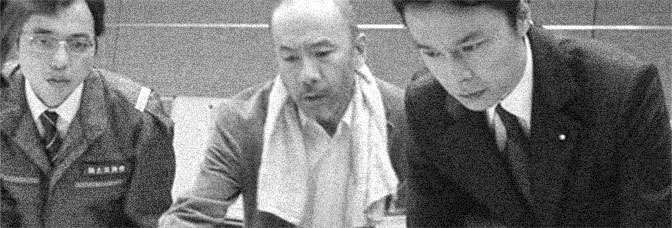
Shin Godzilla is the story of hard-working bureaucrats responding successfully to a national crisis. When the giant monsters invade, you can’t do better than the able public servants of Shin Godzilla. And for most of the film, directors Higuchi and Anno pull it off. The first act of the film, with the introduction of the…
-

Just over the first half of Neon Genesis Evangelion: Death & Rebirth is all right. It’s a compilation of episodes from the “Neon Genesis Evangelion” television show, expertly edited by Miki Sachiko. There’s very little exposition, with all the backstory on the giant monster fighting–but not really giant monsters, kind of giant cyborgs–coming in as…
-

Where to start with Rashomon? Starting at the beginning means talking about the bookends–three strangers stranded in the rain, two telling the third different versions of the same story, each ostensibly true. The rain pours down around them, drowning out their voices. Rashomon is a film without a protagonist; it eschews the very idea of…
-

Mothra 3: King Ghidorah Attacks is simultaneously accessible but also one for the Mothra fans, which is a bit of a weird thing to think about. The film presupposes there are going to be dedicated Mothra fans in the audience and gears a lot of references towards them–at the moment I was appreciating the imagination…
-

Mothra 2: The Undersea Battle is incredibly disappointing. It should be glorious in its stupidity–Mothra at one point turns into a giant fish-moth. Or is it moth-fish? There’s an underwater city raised up. There’s a furry E.T. or Gizmo-type creature and it’s got magical piss. Mothra 2 should be entertaining at the very least and…
-

Mothra has the arguably unlikely problem of having way too many good ideas at once. For over an hour, director Yoneda is able to keep all the balls in the air. Sure, things fall apart in the third act, but the pieces are still glorious and the first two acts are stupendous. It’s a kids…
-
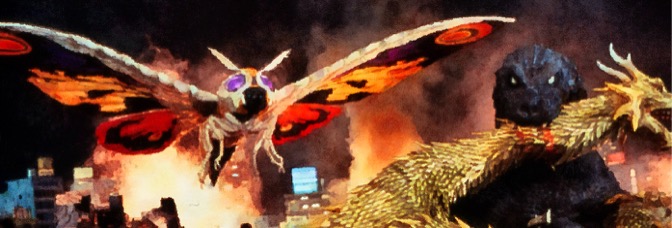
While watching Godzilla, Mothra and King Ghidorah: Giant Monsters All-Out Attack, I had a daydream. I day dreamt Craig Armstrong, composer of The Incredible Hulk score, had been brought in the redo the score of Attack for the U.S. home video market. He did not. Instead, Ôtani Kô actually did compose the score for the…
-
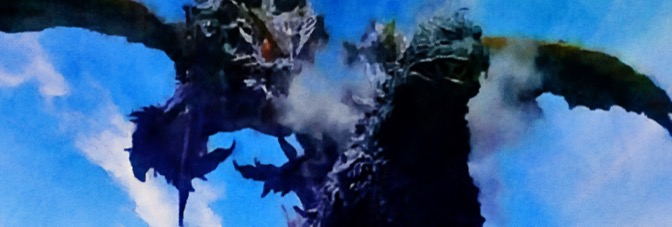
To say Godzilla vs. Megaguirus is good for a while might be a stretch, but it’s definitely okay for a while. It’s a Godzilla movie with a lot of CG, whether it’s the giant monster itself swimming or the millions of prehistoric dragonflies out to sting him. Director Masaaki tries hard to integrate various effects…
-
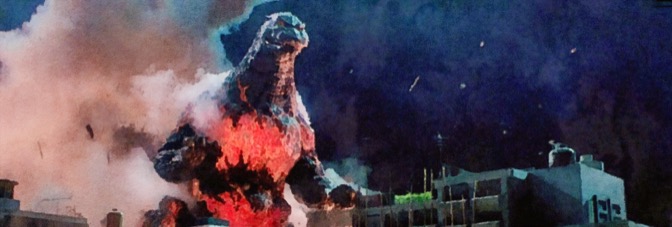
Godzilla vs. Destoroyah does a lot. It mixes an Aliens rip-off into a Godzilla movie, then tries new things for the giant monster fight, all while finishing off the series. Destoroyah is meant to close off the franchise, giving director Okawara plenty of opportunities to tug at heart strings. Okawara’s attempts at homage and reference…
-
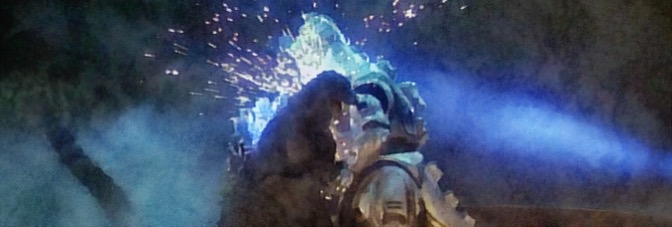
Godzilla vs. Mechagodzilla is outrageous spectacle. The film has the perfect combination of story, director and special effects. The film allows its giant monsters limited personalities, feasible motivations. It even manages to raise questions of morality as this version’s Mechagodzilla is piloted by the anti-Godzilla task force. They’re blowing up just as much as the…
-

Godzilla vs. Mothra ain’t bad. It ain’t bad at all. While Ohmori Kazuki’s script leaves something to be desired in general, it doesn’t leave anything in specific to be desired. It doesn’t fail to do something. It sets forth its concept and fulfills it. I’m thinking mostly in terms of the human stories, which are…
-

Not much goes right in Godzilla vs. King Ghidorah. Director Ohmori has a strange way of being boastful about really lame ideas and even worse technical executions. He spends a lot of time–and the film’s not short, it runs an hour and forty-three–trying to show off the film’s big ideas. It’s a bunch of time…
-

Terror of Mechagodzilla is an uncomplimentary mix of a sixties Godzilla movie with the production values of a seventies Godzilla movie. It’s got a lame monster with cool powers and a cool monsters with lame powers. The Mechagodzilla fight scene is mind-numbing. He shoots rockets at Godzilla. Explosions incur. Director Honda has all these resources–an…
-

I want to be more enthusiastic about Godzilla vs. Mechagodzilla. It has a number of good moments, often involving giant monsters, which is impressive. Godzilla facing off against a mechanical Godzilla (not to mention a flesh-covered cyborg–nothing dead will go), it’s a great visual. Director Fukuda milks it and he milks it well. The film…
-

Godzilla vs. Megalon is madness. There are two distinct portions of the film and both of them are crazy. Initially, these portions might more seem stupid than crazy, but they’re crazy. Director Fukuda gets to make an espionage thriller and a Godzilla movie where Godzilla communicates with the other monsters. He even shakes hands with…
 The Stop Button