Category: Classics
-

Mr. Deeds Goes to Town is astoundingly (and rightfully) confident. Director Capra and screenwriter Robert Riskin don’t shy away from anything in the film–Capra’s more than willing to go with sentimentality, but the film isn’t often sentimental. Even when Jean Arthur’s world-weary reporter breaks down, she doesn’t get sentimental. Most of the film involves Arthur…
-

After initially teasing some kind of narrative, Animal Crackers gives it up and embraces not just being a stage adaptation (hope I don’t forget to talk about that aspect) but also a series of sketches. Not just comedy sketches, but also musical ones. The film takes place over a day. It starts one morning, it…
-

On the Waterfront is relentlessly grim until the strangest moment in the finale. As the film finally reaches the point of savage, physical violence–it opens with the implication, but not the visualization of such violence–a supporting character (familiar but mostly background) makes a wisecrack. Until that point in the film, director Kazan forcibly pushes even…
-

The Grapes of Wrath starts in a darkened neverland. Director Ford and cinematographer Gregg Toland create a realer than real Oklahoma for protagonist Henry Fonda to journey across. The locations and sets aren’t as important as how Fonda (and the audience) experience it. It’s actually rather hostile for this beginning. It’s all about Fonda getting…
-

Some time after the halfway point in The Kid, it becomes clear the film isn’t going to end badly for its leads. Charlie Chaplin is the tramp, Jackie Coogan is his ward (a tramp in training). Chaplin, as a director, is fairly restrictive. Most of the action takes place on a few streets, primarily outside…
-

On one hand, Five Graves to Cairo is a solid stage adaptation. Director Wilder, who adapted the play with Charles Brackett, makes it feel like a film. On the other hand, Cairo–partially because Wilder sticks to the setting so thoroughly and never opens up the film–doesn’t really go anywhere. After implying complications, it ends just…
-
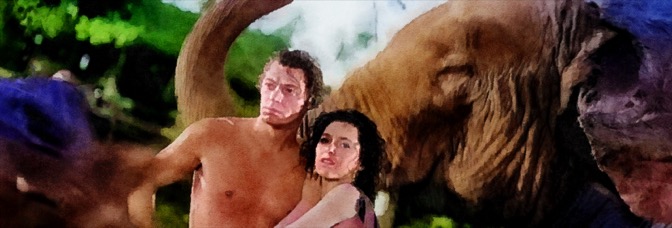
For a film called Tarzan and His Mate, Johnny Weissmuller’s Tarzan doesn’t get much to do. He spends the film rescuing Maureen O’Sullivan (which is one of the more frustrating aspects of the film–she doesn’t exhibit any jungle survival skills until the finale) from a variety of animals. These sequences are often exciting, especially since…
-

Preston Sturges has a great structure to The Lady Eve. The first part of the film–the majority of the runtime–has wealthy oddball Henry Fonda returning home on a ship and falling in love with Barbara Stanwyck. Makes sense, as she’s wonderful, only she (and her father, Charles Coburn) are card sharps out to fleece rich…
-

The Circus has a melancholic tone it doesn’t need and one director Chaplin is never fully invested in. The first half of the film is a series of fantastic gags–well, except the stuff with ring master Al Ernest Garcia being abusive to his daughter, played by Merna Kennedy. But the rest of it is hilarious.…
-

The Palm Beach Story is a narrative. Director Sturges opens with a rapidly cut prologue showing stars Claudette Colbert and Joel McCrea getting married, where he inserts clues for what will eventually be the film’s utterly pointless deus ex machina. Sure, Palm Beach runs less than ninety minutes so it’s possible the viewer be sitting…
-

Until the halfway point or so, A Day at the Races moves quite well. Sure, it gets off to a slow start–introducing Chico as sidekick to Maureen O’Sullivan and setting up her problems (her sanitarium is going out of business), which isn’t funny stuff. I think Allan Jones even shows up as her nightclub singing…
-

In Citizen Kane, director Welles ties everything together–not just the story (he does wrap the narrative visually), but also how the filmmaking relates to the film’s content. Kane’s story can’t be told any other way. That precision–whether it’s in the summary sequences or in how scenes cut together–is absolutely necessary to not just keep the…
-

The best sequence in College is also the longest. Protagonist Buster Keaton, after failing at baseball (he’s a bookworm who needs to get athletic to impress a girl), goes out for track and field. Keaton observes other men succeed at the various events, tries them himself, fails miserably (and comically), keeps trying, presumably assuming he’ll…
-

I’m hard pressed to think of a better comedy than Bringing Up Baby. Between Hawks’s direction, Dudley Nichols and Hagar Wilde’s script, the acting (particularly from Katharine Hepburn, who’s so funny, one just starts laughing when she starts talking to save the trouble of having to laugh after her line), it’s probably not possible to…
-

Ace in the Hole moves while the script–from director Wilder, Lesser Samuels and Walter Newman–never races. In fact, it’s deliberate and methodical, maybe even redundant at times (especially in the first act). The redundant moments aren’t actually a problem since Kirk Douglas is in almost every scene of the film and, even when he doesn’t…
-

Even though almost every moment of The Maltese Falcon is spent with Humphrey Bogart’s protagonist, director Huston keeps the audience at arms’ length. Most of the film’s more exciting sounding set pieces occur off-screen, but so does Bogart’s thinking. The audience gets to see him manipulating, often without context. His most honest scenes are with…
-

For the first act or so of All Quiet on the Western Front, director Milestone very gently puts the viewer amid the naïveté of the film’s protagonists, a group of students who drop out to enlist (in the first World War). He opens with this gorgeously complicated shot–brilliantly edited by Edgar Adams and shot by…
-
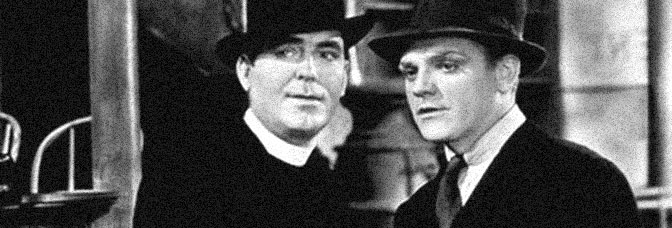
Angels with Dirty Faces runs less than ninety minutes, but doesn’t really fill them. The first fifteen minutes of the film are flashbacks, tracking James Cagney’s character from troubled boyhood to juvenile detention to prison. Once the present action starts, Cagney immediately reunites with Pat O’Brien’s now priest, former similarly troubled youth. But Angels doesn’t…
-

As good as the Marx Brothers are in A Night at the Opera–and George S. Kaufman and Morrie Ryskind’s strong script is important too–director Wood really brings the whole thing together. The film has its obligatory musical subplot and romantic leads. Wood knows how to balance those elements with the comedy; during long music sequences,…
-

The Treasure of the Sierra Madre often comes as a complete surprise, even though director Huston carefully foreshadows certain events. He’s playing with viewer expectations–both of having Humphrey Bogart as his lead and Walter Huston in a supporting role. Sierra Madre is a thriller, but a thriller set during an adventure movie. Bogart and Tim…
-

The More the Merrier is a wondrous mix of comedy (both slapstick and screwball) and dramatic, war-time romance. Director Stevens is expert at both–that war-time romance angle is as gentle as can be, with Stevens relying heavily on leads Jean Arthur and Joel McCrea to be able to toggle between both. And they do, ably.…
-
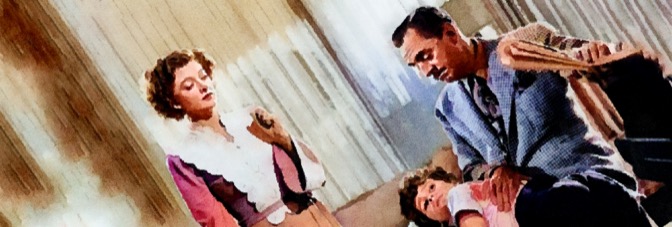
Song of the Thin Man has a lot of strong sequences and the many screenwriters sting them together well enough, but can’t figure out a pay-off. Some of the problem seems to be the brevity–while director Buzzell does an adequate job and Charles Rosher’s cinematography is good, none of the scenes end up having much…
-

The Thin Man Goes Home is very genial. It would be hard for it not to be genial given some of the supporting cast is around just to be genial–familiar character actors like Edward Brophy, Donald Meek and Harry Davenport are around to be likable. And why shouldn’t William Powell and Myrna Loy heading to…
-

Shadow of the Thin Man has a healthy mix of comedy and mystery. The resolution to mystery is a little lacking at the end, but the film moves so smoothly until then it’s easily forgivable. And there is one amusing final twist (along with a good final joke). Most of the comedy comes from William…
-
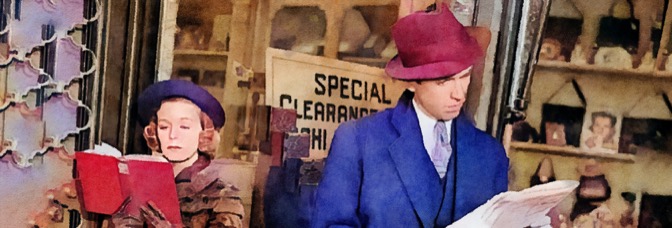
The Shop Around the Corner has a lot going on in a limited space. It’s not particularly long–under 100 minutes–and it mostly takes place in (or outside) the titular shop. And, while the present action is about six and a half months (there’s a big jump), the back story defines a lot of the characters…
-
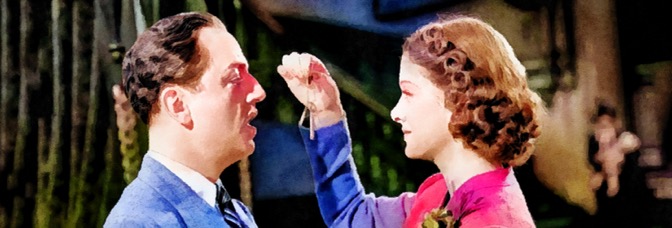
Another Thin Man is a peculiar blend of old dark house mystery and the Thin Man style of murder mystery. Most of the first half of the film is the old dark house mystery, with healthy doses of humor thrown. Frances Goodrich and Albert Hackett’s screenplay brings William Powell and Myrna Loy to New York…
-

There is very little economy to After the Thin Man; instead, screenwriters Frances Goodrich and Albert Hackett and director W.S. Van Dyke act with rampant abandon. The first twenty or so minutes of the film is just audience gratification–it’s a sequel to a popular film and the filmmakers are giving the audience what they want.…
-

While enough cannot be said about the efficiency of W.S. Van Dyke’s direction of the The Thin Man, the efficiency of the script deserves an equal amount of praise. Albert Hackett and Frances Goodrich get in so much little character stuff for the supporting cast, it’s hard to imagine how the film could possibly function…
-

It’s hard to imagine a more supreme melodrama than Random Harvest. Almost the entire first hour (of two and a nickel), the film chronicles the blissful romance of Greer Garson and Ronald Colman. He’s an amnesiac World War I veteran, she’s on the stage–a combination of song and comedy–and she’s his savior. They live in…
-
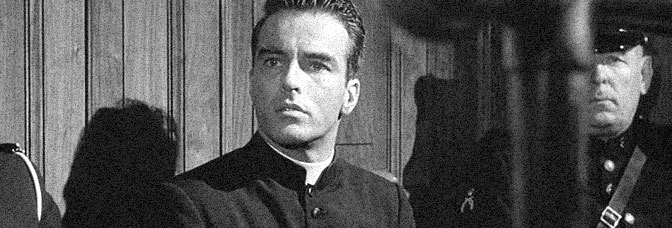
I Confess is unwieldy. Director Hitchcock is extremely precise in his composition, the same goes for Robert Burks' photography (especially the photography) and Rudi Fehr's editing (which changes in harshness based on the story's tone); sure, Dimitri Tiomkin's music is all over the place and intrusive, but it fits the script. George Tabori and William…
 The Stop Button