Category: Comedy
-

A more appropriate title for Concrete Blondes might be Bad Lesbian Hip Crime Thriller Written by Three Men. The sexuality of the protagonists sadly has a lot to do with it because writers Kalikow, Rob Warren Thomas and Chris Wyatt create a love triangle between Carly Pope and Samaire Armstrong and their Valley Girl roommate…
-

If Repo Chick were a half hour short, it would work a lot better. Sadly, it’s an almost ninety minute feature–even as a seventy minute feature, it’d be a lot better. The problem’s the front end. Cox has to introduce his cast, sure, but he never manages to give the film a real narrative. He…
-

For such an “odd” movie, Repo Man is incredibly precise. Writer-director Cox has four or five subplots–depending on if Emilio Estevez becoming a repo man and his journey as one is considered the plot, as Cox downgrades it to subplot status about three-quarters through the picture. Sometimes these subplots become so intense they jumble–I had…
-

It would have been nice if one of the three credited screenwriter of Horrible Bosses thought enough to write characters for the protagonists. Instead, the script–and director Gordon–rely on the “charm” of the three leads. Only, Charlie Day (as a lovable buffoon) and Jason Sudeikis (as a somewhat absent-minded buffoon) and Jason Bateman (as the…
-
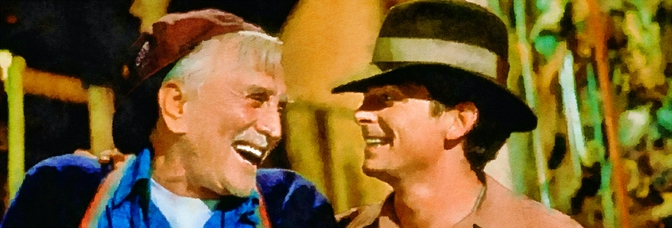
Greedy would be a mess if it weren’t so thoughtfully arranged. It’s not good, but it’s definitely intentional. The film opens with Ed Begley Jr. and his family–with Mary Ellen Trainor as his wife–going to his rich uncle’s house for a family gathering. There, the film introduces second-billed Kirk Douglas as the rich uncle and…
-
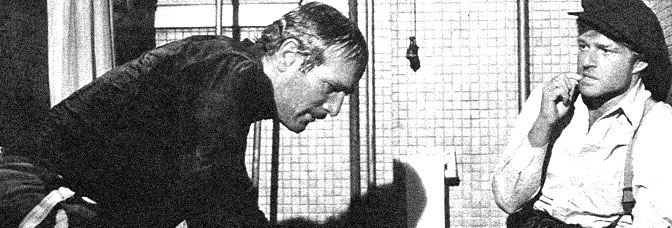
There are two immediate peculiar things about The Sting. The opening credits introduce the cast with scenes from the film, so one watches the picture waiting for a particular actor to come up. While it might have been done to get Paul Newman’s face onscreen sooner (he takes about fifteen minutes or more to appear),…
-

Office Space is the model of efficiency. Judge never races through things, he just tells them really fast or implies them. There’s the fantastic opening montage of everyone going to work, which ought to be a clue to who is and isn’t going to be important in the film, and then things just breeze along…
-
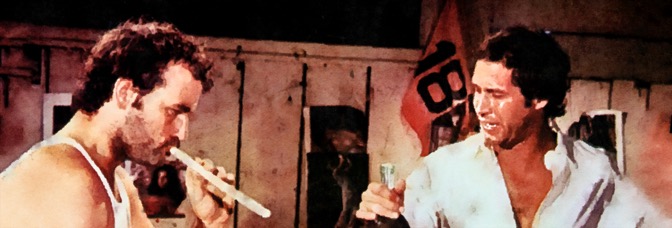
What’s the funniest thing in Caddyshack? Bill Murray is a good first choice, Rodney Dangerfield, even Ted Knight is hilarious, but Chevy Chase actually wins out. He doesn’t have as many awesome scenes as Murray, but Murray’s got a couple mundane ones. Chase–who opens the movie with lead Michael O’Keefe–is fantastic throughout all of his…
-

I’m trying to imagine The Heat without Melissa McCarthy. Even though she gets second billing–the film opens introducing Sandra Bullock’s character, a superior FBI agent with no personal skills (and an odd klutziness the film never actually deals with)–McCarthy’s the only reason to watch the film and she’s the only consistently good thing in it.…
-

At a certain point during The Way, Way Back, it became clear the film was never going to do anything interesting. Then, all of a sudden, writer-directors Faxon and Rash get to their “realistic” ending–by realistic, I mean it doesn’t resolve the most important story lines–and even though the film isn’t going to reward the…
-

There’s something strangely likable about Rise of the Fellowship, which serves as an affectionate homage–if technical spoof as well–of Peter Jackson’s Lord of the Rings adaptations. Ron Newcomb’s direction isn’t original, but it’s effective, and Brian Pennington’s photography is outstanding. The film centers around four high school students who have to beat the odds to…
-

I’ve probably seen Diner ten times but I still don’t know where to start with it. Barry Levinson sets the present action between Christmas and New Year’s, so one probably could sit down and chart out what happens on each day. There’s a big basketball bet driving some of the narrative, but mostly just for…
-

Smile is the story of the week of a regional beauty pageant in a northern California town. It’s not exactly the story of the pageant, though it does look at some of the contestants, but it also looks at how the event affects the locals. Bruce Dern gets top billing and he does tie most…
-

At ninety minutes and change, Blow Dry is too short. Given the complexities of the ground situation’s character relationships and then the character’s arcs throughout the picture, it could easily run two and a half hours. The concept, which at first blush seems sensational but turns out not to be, has Natasha Richardson and Rachel…
-

Is it or is it not post-modern mob “comedy” about gangster Robert De Niro going into witness protection and dragging his family to a quaint French town. There, wife Michelle Pfeiffer and kids Dianna Agron and John D’Leo have various crises in adjusting while De Niro contends with a pesky FBI handler (Tommy Lee Jones).…
-
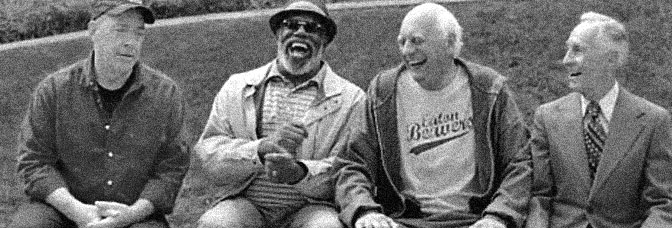
It’s frightening, but once 3 Geezers! gets going, it’s an entirely watchable terrible movie. The setup, which director Michelle Schumacher doesn’t even stick with, is J.K. Simmons playing an unveiled analogue of himself, stuck doing a movie about old people written by his wife’s little brother. Michelle Schumacher is Simmons’s wife. I’m assuming writer Randle…
-

Hitting women is funny as long as they’re think they’re tough and they’re fat. What else did I learn from Wild Girl Waltz… Oh, racist jokes are okay as long as they’re about American Indians, gay jokes are cool if you don’t say gay. I don’t know why I was expecting more from the picture,…
-

Some Like It Hot is perfectly constructed. Billy Wilder and I.A.L. Diamond’s script precisely sets up gags, even as the film moves through its three stages. For example, there’s a joke about matching blood types–type o–near the beginning and it keeps echoing throughout. It’s just in dialogue, but for another one, Wilder and Diamond cross…
-

The filmmaking economy in The Little Shop of Horrors is astounding. Most of the film takes place in one set–the titular shop–and Charles B. Griffith’s script works hard to imply the world outside that set. My favorite bit in the script is probably when leading man Jonathan Haze is shocked to discover peanut butter and…
-

Fletch Lives is a dreadful motion picture. Typing out its title, I remember–once again–the filmmakers weren’t even creative enough to come up with a good title. There’s no pun in it, no reference to the film’s narrative–no one ever thinks the character has died only to come back in a surprise. Maybe it’s a newspaper…
-
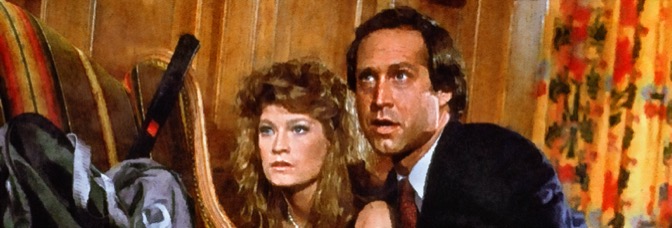
While Fletch has its technical high lights and Andrew Bergman’s script is strong both in dialogue and structure (though the Chevy-sized plot holes are a tad rampant), the film hinges on star Chevy Chase (not a car) being arrogant, likable, sincere and funny all at once. And Chase manages it. His dry, self-aware narrative even…
-

Planes, Trains & Automobiles is probably most impressive technically. The narrative is problematic but not a bad narrative, it’s just a problematic one. Director Hughes can’t decide if he wants Planes to be a comedy with John Candy or a comedy about Candy. Candy’s able to be sympathetic while still being unbelievably annoying–his performance is…
-

Crazy People is distressingly tepid. It has a number of fine performances–Dudley Moore’s sturdy and likable in the lead, Daryl Hannah’s outstanding as his love interest and the supporting cast’s so good I’m going to wait a while to talk about them to go out on an up note. But the film itself? Very tepid.…
-

Save lead Michael Keaton, the Chicago location shooting and the technical competence, Touch and Go plays like an overlong sitcom pilot. Keaton’s a star hockey player who gets mugged by a gang of young “toughs,” including Ajay Naidu. Because he’s a nice guy, Keaton doesn’t turn Naidu into the cops, instead getting involved with him…
-

What’s most admirable about Weekend at Bernie’s, outside the acting, has to be the narrative structure. The first third takes place before the titular weekend, establishing all the characters, then the rest of it takes place over a twenty or so hour period. Robert Klane’s script changes gears during the film’s final third too. Instead…
-
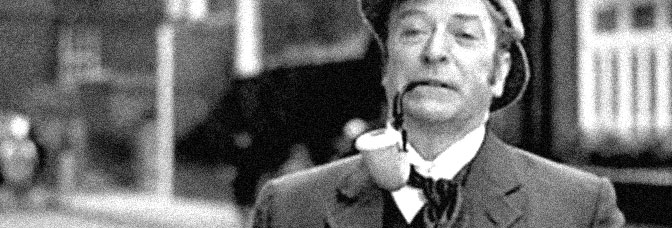
Without a Clue has an amusing premise–what if Sherlock Holmes is a buffoon and Dr. Watson is the genius–and generally succeeds in executing it. Director Eberhardt brings very little to the film (one wonders if his single goal was keeping Michael Caine in the center of each frame), but the production is handsomely enough mounted,…
-

I wonder if Cab Calloway got upset he only got half a music video in The Blues Brothers while Ray Charles and Aretha Franklin both got full ones. While these interludes are completely out of place and break up the “flow” of the film, they’re at least somewhat competent. One can see what director Landis…
-

Maybe it’s Sheldon Kahn’s editing, which doesn’t do the picture’s content justice, but Richard Pryor: Live on the Sunset Strip doesn’t feel seamless. The first twenty minutes or so do, however, which makes the change jarring. All of a sudden, the reaction shots of the audience aren’t believable. Someone, either Pryor or director Layton, decided…
-
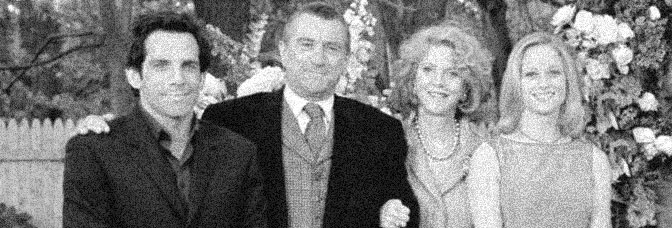
Meet the Parents requires an extraordinary suspension of disbelief. It’s an absurdist comedy, but the presence of Robert De Niro and–maybe even more so–Blythe Danner imply Parents is based in some kind of reality. So the simplest thing–believing Teri Polo could be a well-adjusted adult after growing up with De Niro as a father–becomes Parents’s…
-
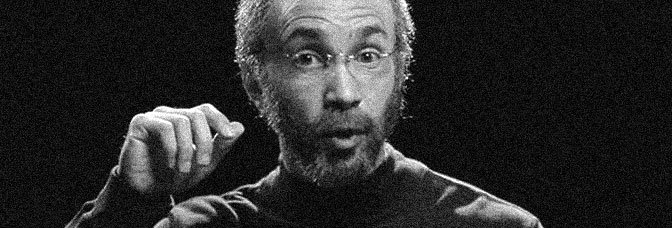
iSteve is pretty darn stupid. The film doesn’t make any attempt not to be stupid–occasionally, one has to imagine they went for the more stupid option–but it’s not unwatchable. In a few ways, it’s a great example of why biopics don’t work. In director Perez’s version, Steve Jobs doesn’t really have a particularly interesting life.…
 The Stop Button