Tag Archives: Ned Beatty

Silver Streak (1976, Arthur Hiller)

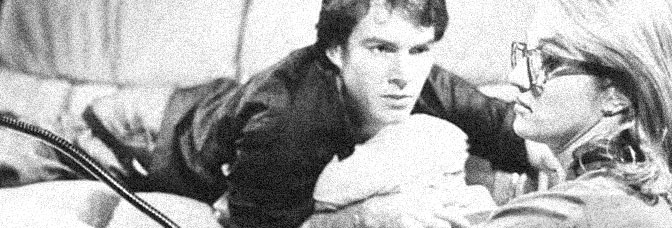
Silver Streak is a wonderful film. It opens with all these little scenes on a train between Gene Wilder and Ned Beatty and then Jill Clayburgh. At this point, Streak seems like a very intelligent romantic comedy. There’s no drama yet, just excellent dialogue from Colin Higgins’s script. If he didn’t write it for Wilder–who Higgins and director Hiller deftly turn into a leading–and Clayburgh, it feels like he did anyway. Wilder and Clayburgh have completely different acting styles and they clash and the script mashes them together and it works. Clayburgh disappears for a while soon after this scene, so it has to establish her and it does.

So Wilder’s then off on his own in what’s now an action adventure picture. Higgins’s events perturb in the most outlandish way–one’s always expecting Wilder to have to fully explain himself, but he never does. Instead, Higgins and Hiller leave that absurd summary for the viewer to tell someone else for word of mouth value.

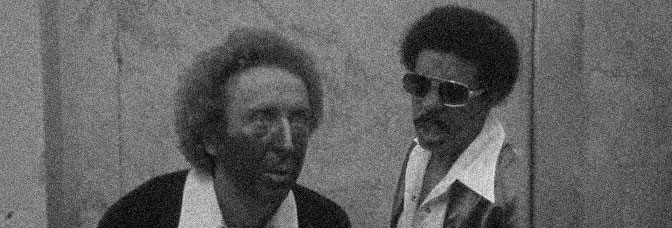
And then there’s Richard Pryor. He and Wilder have to hit it off immediately, they have to become Butch and Sundance in a conversation. Hiller’s got to get it right, Higgins has to get it right and the actors have to get it right. They do.

The film’s only letdown–all the acting’s fantastic and the script’s consistently marvelous–is Hiller. He does an outstanding workman job, but he’s never sublime.

Silver Streak is a masterpiece. Mainstream American filmmaking doesn’t get much better.

CREDITS

Directed by Arthur Hiller; written by Colin Higgins; director of photography, David M. Walsh; edited by David Bretherton; music by Henry Mancini; production designer, Alfred Sweeney; produced by Thomas L. Miller and Edward K. Milkis; released by 20th Century Fox.

Starring Gene Wilder (George Caldwell), Jill Clayburgh (Hilly Burns), Richard Pryor (Grover T. Muldoon), Patrick McGoohan (Roger Devereau), Ned Beatty (Bob Sweet), Clifton James (Sheriff Chauncey), Ray Walston (Mr. Whiney), Stefan Gierasch (Professor Schreiner), Len Birman (Chief), Valerie Curtin (Plain Jane), Lucille Benson (Rita Babtree), Scatman Crothers (Ralston), Richard Kiel (Reace) and Fred Willard (Jerry Jarvis).


Related posts:

About these ads

Switching Channels (1988, Ted Kotcheff)

In Switching Channels, Kotcheff attempts two styles he’s inept at directing—madcap and slapstick. He’s got Ned Beatty, who can act in both those styles, and Beatty does okay. He’s not any good, but one can’t hold the film’s failings against him.

But for his other buffoon, Kotcheff uses Christopher Reeve. The audience is supposed to dislike Reeve because he’s vain, wealthy and a nice guy. One of the biggest laughs in the film is supposed to be at Reeve’s expense, when he’s in an acrophobia-induced fit. Reeve’s got some decent moments (particularly at the beginning of the film), which makes it all the more unfortunate.

The hero of the film is Burt Reynolds, who doesn’t so much give a performance as audition for his subsequent sitcom. He and Reeve are rivals for Kathleen Turner’s affections… though not really. Turner and Reynolds have zero chemistry, making any romantic possibilities laughable.

If the film continued where it opened, with Reeve and Turner meeting and romancing in a tranquil Montréal resort, Switching Channels probably would’ve worked. Turner’s good. She’s just not the film’s protagonist and so, when it pretends she’s important to it, the film fails.

The film—and Kotcheff—do her and Reeve the most disservice.

Though set in Chicago, it’s a very Canadian one. City hall is apparently in an office park.

There’s some good supporting work from Henry Gibson and George Newbern’s endearing as Reynolds’s flunky.

Between Reynolds’s non-acting and Kotcheff’s awkwardness, it doesn’t have a chance.

CREDITS

Directed by Ted Kotcheff; screenplay by Jonathan Reynolds, based on a play by Ben Hecht and Charles MacArthur; director of photography, François Protat ; edited by Thom Noble; music by Michel Legrand; production designer, Anne Pritchard; produced by Martin Ransohoff; released by TriStar Pictures.

Starring Kathleen Turner (Christy Colleran), Burt Reynolds (John L. Sullivan IV), Christopher Reeve (Blaine Bingham), Ned Beatty (Roy Ridnitz), Henry Gibson (Ike Roscoe), George Newbern (Siegenthaler), Al Waxman (Berger), Ken James (Warden Terwilliger), Barry Flatman (Zaks), Ted Simonett (Tillinger), Anthony Sherwood (Carvalho), Joe Silver (Mordsini) and Charles Kimbrough (The Governor).


Related posts:

Midnight Crossing (1988, Roger Holzberg)

Midnight Crossing is a terribly written piece of garbage, but there’s some definite potential to it. It takes forever for the potential to show.

The movie opens with one of the worst directed, worst written action sequences I can think of. Then it flashes forward to modern day and it’s bad, but sometimes funny. At this point, Holzberg’s direction isn’t terrible. He’s shooting in Miami and it’s generally pleasant looking. Then he gets on the boat, which should be better, but it isn’t. It’s worse.

The two big problems are the script and Daniel J. Travanti. Wisconsin-born Travanti is playing a redneck and can’t keep his accent. If you’ve ever wanted to see him in a speedo, this movie’s the one for you. It’s shocking he couldn’t find better work after “Hill Street Blues.”

Faye Dunaway, I can sort of understand. She was at the end of her career. She still gives the best performance by far. Even if it’s sometimes silly. She reunites with Network co-star Ned Beatty, who’s laughably awful as an Australian. They must have needed to make house payments.

Kim Cattrall is bad, with flashes of decent acting. She gives the second best performance.

Leading man John Laughlin is affably bad. Sometimes his Southern accent breaks through.

The film ends with a decent thriller sequence, then that interesting final development I mentioned earlier. Sadly, Holzberg didn’t build the film around those elements.

I imagine the production story is more interesting than the picture itself.

CREDITS

Directed by Roger Holzberg; screenplay by Holzberg and Douglas Weiser, based on a story by Holzberg; director of photography, Henry Vargas; edited by Earl Watson; music by Paul Buckmaster and Al Gorgoni; production designer, Jose Duarte; produced by Mathew Hayden; released by Vestron Pictures.

Starring John Laughlin (Jeff Schubb), Faye Dunaway (Helen Barton), Daniel J. Travanti (Morely Barton), Kim Cattrall (Alexa Schubb), Pedro De Pool (Captain Mendoza) and Ned Beatty (Ellis).


Related posts:

Captain America (1990, Albert Pyun), the director’s cut

Captain America actually has a few interesting ideas. First is how Carla Cassola’s scientist (she creates the villain, Scott Paulin’s Red Skull, and Captain America—played by Matt Salinger) almost serves as a surrogate mother to the two boys. Well, they’re supposed to be boys when they change. Cassola probably gives the film’s best performance; she manages to imply depth rather well.

Second is how Captain America is a failure. The script touches on it and Salinger tries, but there’s just not enough character development to show it. Instead of focusing on the titular character, Captain America often focuses on the supporting cast.

The film reunites Christmas Story stars Darren McGavin (who’s awful) and Melinda Dillon (who’s just bad). Of course, they don’t have a scene together. Neither do Deliverance alumni Ronny Cox and Ned Beatty. Beatty’s bad, but Cox has his moments. One wonders if he wanted to be an action star, as he gets to beat up a bunch of eurotrash.

Oh, that element’s another amusing one. All of Paulin’s gang are eurotrash. It’s sort of funny.

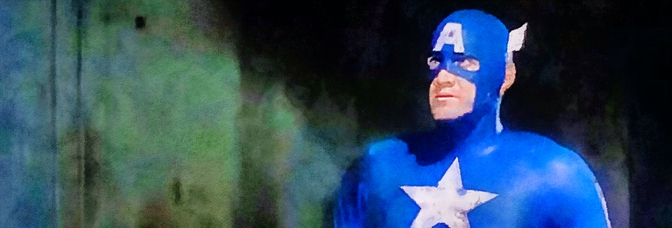
Salinger’s not always terrible, but he’s too physically awkward to be believable. Not to mention the costume being a disaster. His love interest, played by Kim Gillingham, is bad. Except in her old age makeup.

Michael Nouri manages not to embarrass himself too much.

Pyun’s direction is mostly weak, often obviously due to the minuscule budget; he’ll occasionally have a profound shot.

It’s fairly awful, but at least it’s interestingly awful.

CREDITS

Directed by Albert Pyun; screenplay by Stephen Tolkin, based on a story by Tolkin and Lawrence Block and characters created by Joe Simon and Jack Kirby; director of photography, Philip Alan Waters; edited by Jon Poll; music by Barry Goldberg; production designer, Douglas H. Leonard; produced by Menahem Golan; released by 21st Century Film Corporation.

Starring Matt Salinger (Steve Rogers / Captain America), Ronny Cox (Tom Kimball), Ned Beatty (Sam Kolawetz), Darren McGavin (General Fleming), Michael Nouri (Lt. Colonel Louis), Scott Paulin (Red Skull), Kim Gillingham (Bernice Stewart / Sharon), Melinda Dillon (Mrs. Rogers), Bill Mumy (Young General Fleming), Francesca Neri (Valentina de Santis) and Carla Cassola (Dr. Maria Vaselli).


Related posts:

Superman II (1980, Richard Lester)

There are, now, three versions of Superman II. The theatrical, an extended television version (not officially released) and original director Richard Donner’s take on it. Unfortunately, Superman II is–as a narrative and a sequel–rife with problems. Drawing attention to these problems is a bad idea. And the version with the least emphasis on them? Richard Lester’s original.

Whatever Lester’s problem with the Superman character, it’s not really apparent here. Superman II feels like a good Superman movie should feel–some of the campy humor works, some of it doesn’t. I’d say about fifty percent of Terence Stamp’s lines fail. The successful ones, however, are great. And Sarah Douglas is fantastic.

Most importantly, Lester gets some wonderful acting out of Margot Kidder and Christopher Reeve. The somewhat nonsensical romance doesn’t fit in the picture–and never will, no matter how many revisions people make–but it makes the film singular. Superman wasn’t a particularly long film series and the familiarity Lester gets out of Kidder and Reeve in this one, the first sequel, is something television shows usually have to go three or four seasons to achieve.

The special effects–particularly the flying sequences–are occasionally weak. There are a lot more complicated rear projection sequences than in the first film and they don’t work out very often.

Like I said before, Superman II‘s basically a bad idea for a movie. But it works out in the end, thanks to the actors and, yes, Lester.

That Paris opening’s great.

CREDITS

Directed by Richard Lester; written by Mario Puzo, David Newman and Leslie Newman, from a story by Puzo, based on characters created by Jerry Siegel and Joe Shuster; creative consultant, Tom Mankiewicz; directors of cinematography, Robert Paynter and Geoffrey Unsworth; edited by John Victor-Smith; music by Ken Thorne; production designers, John Barry and Peter Murton; produced by Pierre Spengler; released by Warner Bros.

Starring Gene Hackman (Lex Luthor), Christopher Reeve (Clark Kent/Superman), Ned Beatty (Otis), Jackie Cooper (Perry White), Sarah Douglas (Ursa), Margot Kidder (Lois Lane), Jack O’Halloran (Non), Valerie Perrine (Ms. Teschmacher), Susannah York (Lara), E.G. Marshall (The President), Marc McClure (Jimmy Olsen) and Terence Stamp (General Zod).


Related posts:

Alternate versions:

Superman series:

Superman (1978, Richard Donner), the director’s cut

If watching Richard Donner’s director’s cuts have taught me one thing, it’s Donner probably shouldn’t have final cut. His director’s cut of Lethal Weapon, for example, is atrocious.

He adds about nine minutes to Superman and, much like Coppola’s revision of Apocalypse Now, it’s a testament to the original film it can weather the additions. For the most part, Donner’s additions are small–I think the longest sequence is Superman versus Lex Luthor’s weapon gadgets–but these additions all go into the rather iconic sequences at the beginning of the film. In other words, Donner intrudes on the film in progress… it’s kind of like talking during the movie (or a big CG Jabba the Hutt all of a sudden appearing).

Worse, director’s cut editor Michael Thau can’t compare to original editor Stuart Baird (Superman‘s just an exquisitely edited film, an aspect I don’t think it ever gets recognized). And don’t get me started on the awful new sound mix.

But it can’t muck it up.

If anything, the director’s cut just shows Superman is bigger than the director and his troubles with the producers. The elements–the cast, the script, the effects crew and John Williams–are in place. Donner does a great job directing the picture, no doubt, but it’s never fit in his filmography. He’s never made anything half as good as a film and nothing a quarter as good as a director.

So, even though none of the additions add anything, Superman succeeds.

Wonderment outweighs bloating.

CREDITS

Directed by Richard Donner; screenplay by Mario Puzo, David Newman, Leslie Newman and Robert Benton, story by Puzo, from characters created by Jerry Siegel and Joe Shuster; creative consultant, Tom Mankiewicz; director of photography, Geoffrey Unsworth; edited by Stuart Baird and Michael Ellis; music by John Williams; production designer, John Barry; produced by Alexander Salkind and Pierre Spengler; released by Warner Bros.

Starring Marlon Brando (Jor-El), Gene Hackman (Lex Luthor), Christopher Reeve (Superman/Clark Kent), Ned Beatty (Otis), Jackie Cooper (Perry White), Glenn Ford (Pa Kent), Trevor Howard (First Elder), Margot Kidder (Lois Lane), Jack O’Halloran (Non), Valerie Perrine (Eve Teschmacher), Maria Schell (Vond-ah), Terence Stamp (General Zod), Phyllis Thaxter (Ma Kent), Susannah York (Lara), Jeff East (Young Clark Kent), Marc McClure (Jimmy Olsen), Sarah Douglas (Ursa) and Harry Andrews (Second Elder).


Related posts:

Alternate versions:

Superman series:

The Incredible Shrinking Woman (1981, Joel Schumacher)

I’m not sure I have the vocabulary to properly discuss The Incredible Shrinking Woman. It’s an experience–Ned Beatty was in Network and he appeared in this one? Sorry. Anyway, according the IMDb, the movie might have made money–in fact, it might have even been a hit. I always assumed it was an enormous failure, but if it was a success… well, first, I’m very confused. Second–there is no second. I’m still perplexed by the idea The Incredible Shrinking Woman was a hit.

Apparently, there were some really bad comedies in the late 1970s and early 1980s and Shrinking Woman is one of them. It’s a gimmick comedy, but the idea of Lily Tomlin shrinking isn’t even the gimmick–her adventures at one foot tall are pretty tame–wow, a talk show. Instead, the gimmick is Lily Tomlin appearing in multiple roles. Besides the main character, she also plays the main character’s best friend. Or the neighbor lady who annoys her until she’s shrinking, then she relies on. The movie doesn’t really have character relationships–much less development–so you have to kind of guess what it’s trying to say.

But Tomlin’s bored with her roles. She’s visibly phoning in her performance on both of them, obtuse to the goings on–it’d be hard for her to be engaged with the material, but still… she’s sleepwalking through her own vanity project.

The script’s atrocious. I don’t think it got a single laugh out of me, only because it’s condemning materialistic American culture–but it’s doing so by making everyone emotionally removed. It’s impossible to care about the characters, much less their problems. They don’t even have real problems, because Beatty and John Glover aren’t just regular businessmen, they’re about to take over the world. It’s absurdist humor without much humor.

Glover mugs through his performance, which means he doesn’t appear to be exerting or embarrassing himself. Beatty doesn’t get away clean though. His character is terribly written and he’s in it a lot.

Charles Grodin plays Tomlin’s husband and his part in the narrative is one of the bigger defects. He kind of becomes the protagonist for a while, but not long enough for it to matter, which means it was all a waste of time–and Shrinking Woman is a less than ninety-minute movie. If it has to tread water to make its running time, there’s something wrong.

Joel Schumacher–making his theatrical, directorial debut–has a few good shots. It’s pretty bland, but the sets look cheap and unfinished, so what was he going to do. He starts it–relatively–strong; I was surprised when the mediocrity set in.

I’d heard of Shrinking Woman many, many years ago. Maybe even when I was a kid–probably then, because I still would have wanted to see it because of the title. Bad idea.

CREDITS

Directed by Joel Schumacher; screenplay by Jane Wagner, based on a novel by Richard Matheson; director of photography, Bruce Logan; edited by Jeff Gourson; music by Suzanne Ciani; produced by Hank Moonjean; released by Universal Pictures.

Starring Lily Tomlin (Pat Kramer / Judith Beasley), Charles Grodin (Vance Kramer), Ned Beatty (Dan Beame), Henry Gibson (Dr. Eugene Nortz), Elizabeth Wilson (Dr. Ruth Ruth), Mark Blankfield (Rob), Maria Smith (Concepcion), Pamela Bellwood (Sandra Dyson) and John Glover (Tom Keller).


Related posts:

In the Electric Mist (2008, Bertrand Tavernier)

In the Electric Mist is a perfect example of how not to adapt a novel into a film. The source novel is the sixth novel in a series and the film–in a seemingly bold but utterly misguided move (much of it would be incoherent if I hadn’t once read the novel)–assumes the viewer is going to be familiar with all of the previous novels. There’s absolutely no introduction to the characters who aren’t related to the mystery–the film’s reliance on implying past knowledge is actually pretty cool, because it only relies on someone listening. But there are a bunch of characters who go without any explanation. It’s a film for fans of the novel series, which hurts it.

It’s a shame, because Tommy Lee Jones has a good role here. It allows him to do his more mannered performance, but mix in a little of that pseudo-action hero thing he does. Not a lot of it, but enough someone could cut a teaser trailer with it in there. In the Electric Mist doesn’t seem to be putting itself out there as a franchise starter, but the approach to the adaptation implies otherwise. There’s nothing particularly significant about the events in this picture–Jones meets movie stars, played by Peter Sarsgaard and Kelly Macdonald, and he says he’s familiar with their work… but it’s never touched on. At no time does he seem like someone who goes to the movies a lot or sits back and watches the CW. There’s a bevy of supporting characters–John Goodman’s goateed mobster and Pruitt Taylor Vince as a cop sidekick–who don’t have any real weight. It’s impossible to imagine these characters interacting together off screen.

The film also has an incredibly silly voiceover gimmick. Jones narrates his adventure, in the past tense, simply because the film doesn’t want to have a lengthy run time. Sometimes he narrates transitions, so there don’t have to be scenes. It’s obvious and annoying.

And the mystery isn’t particularly engaging, maybe because it’s really not a mystery the way the film presents it. Jones is having hallucinations of a Civil War general advising him (these sequences are handled terribly) and they move the story more than any thought processes.

Bertrand Tavernier is a fine director. His Panavision framing–I think he went wide so it wouldn’t seem like a TV movie–is excellent. There’s some bad focusing, but otherwise the visuals are solid. Marco Beltrami’s score gets repetitive and annoying pretty quick though.

Jones is good, Goodman’s okay, Vince’s okay. Sarsgaard’s amazing–I’ve seen him before, but never turn in anything like this performance. It’s just fantastic. Macdonald’s good. Ned Beatty’s not good though, which is depressing. James Gammon’s amazing. Mary Steenburgen and Justina Machado are both good–though neither have anything to do and they really ought to. John Sayles shows up for a cameo, essaying the kind of Hollywood director who’d do a Civil War movie. He has a lot of fun.

In the Electric Mist has a bad ending. It’s already got the disadvantage of being narrated by the protagonist, but the end goes and changes the protagonist for a cute fade out. It’s an awful move.

CREDITS

Directed by Bernard Tavernier; screenplay by Jerzy Kromolowski and Mary Olson-Kromolowski, based on a novel by James Lee Burke; director of photography, Bruno de Keyzer; edited by Larry Madaras and Roberto Silvi; music by Marco Beltrami; production designer, Merideth Boswell; produced by Frédéric Bourboulon and Michael Fitzgerald; released by Image Entertainment.

Starring Tommy Lee Jones (Dave Robicheaux), John Goodman (Julie ‘Baby Feet’ Balboni), Peter Sarsgaard (Elrod Sykes), Kelly Macdonald (Kelly Drummond), Mary Steenburgen (Bootsie Robicheaux), Justina Machado (Rosie Gomez), Ned Beatty (Twinky LeMoyne), James Gammon (Ben Hebert), Pruitt Taylor Vince (Lou Girard), Levon Helm (General John Bell Hood), Buddy Guy (Sam ‘Hogman’ Patin), Julio Cedillo (Cholo Manelli), Alana Locke (Alafair Robicheaux) and John Sayles (Michael Goldman).


Related posts:

Dave Robicheaux series:

Network (1976, Sidney Lumet)

Network lost Oscars. It doesn’t really matter what it lost them to, because the absurdity of the Academy Awards is summed up in that one statement. Network lost Oscars.

I’m not sure what shot is Sidney Lumet’s best in the film, because I’m remembering two of them from the last half. These aren’t necessarily the best shots in the film, but they’re memorable because I can’t quite remember ever seeing anything like them before. The first is for Ned Beatty’s big scene. It’s an amazing scene from Beatty, but Lumet’s composition, the lighting scheme, the cuts to Peter Finch, it’s a singular filmic moment. The second, unfortunately in some ways, summarizes the popular half of Network. It’s the network executives sitting around Robert Duvall’s office, deciding what must be done. It’s been about ten years since I’ve seen Network and I don’t know if I passively remembered the resolution or if, in those ten years, I’ve consumed enough media the resolution just became the most logical thing in the world. Lumet makes enough room for six people in his shot and lets the camera sit. Duvall might even walk into the shot. There’s only one close-up I can remember, otherwise Lumet just lets it sit.

The popular half of Network is the one where people remember the lines, the one acclaimed in modernity as a classic of 1970s cinema. Network is–and I’m only going to talk about this aspect for a second–more obviously true today than it was in 1976. The Saudis buying up America, for example, much more pertinent these days than then. The dehumanizing effects of television, much worse today than then… at least then, television wasn’t apathetic to suffering. It had yet to become the idiot box. It’s funny in that sad, tragic way how much acclaim the sound bits from Network get–the lip service. Makes one wonder if those giving the awards (the American Film Institute) watches the film.

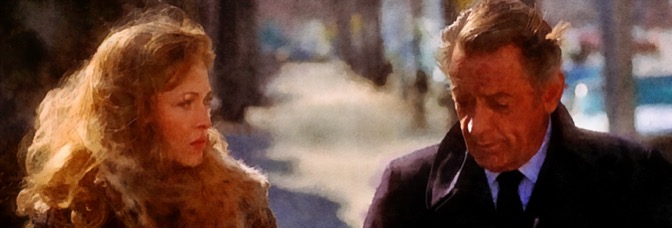
The other half of Network is, much like the non-pioneering half of Citizen Kane, forgotten. And it’s, like Kane, the more important one. In Network, it’s the William Holden side. Holden’s performance–which, incredulously, he reportedly got due to The Towering Inferno–is astounding. Network wouldn’t work if any of the cast couldn’t hold with Holden or Finch or Faye Dunaway. Duvall’s part, in the first half, is the sketchiest, just because of the plot, but Duvall holds it and makes it work and it pays off big in the end. Beatrice Straight won Best Supporting for less than six minutes. Easily deserved it. The combination of Lumet’s direction and Chayefsky’s script for scenes like Straight’s… it’s truly special filmmaking. Everything else aside, all of Finch’s hysterics aside (as well as the wonderfully absurd scenes, like the terrorists worrying about syndication rights), Network is a quiet film.

I could go on ad nauseam–I have not, for instance, discussed Dunaway’s performance or Chayefsky’ script the editing or the sound design–but it’ll turn into a list. Overanalyzing Network isn’t useful, it’s far too consequential.

CREDITS

Directed by Sidney Lumet; written by Paddy Chayefsky; director of photography, Owen Roizman; edited by Alan Heim; music by Elliott Lawrence; production designer, Philip Rosenberg; produced by Howard Gottfried; released by United Artists.

Starring Faye Dunaway (Diane Christenson), William Holden (Max Schumacher), Peter Finch (Howard Beals), Robert Duvall (Frank Hackett), Wesley Addy (Nelson Chaney), Ned Beatty (Arthur Jenson), Darryl Hickman (Bill Herron), Beatrice Straight (Louise Schumacher) and Marlene Warfield (Laureen Hobbs).


Related posts:

Superman II (1980, Richard Donner), the Richard Donner cut

Superman II might just be broken. Watching “The Richard Donner Cut,” it’s an easy conclusion to come to–the greatly anticipated Marlon Brando scenes feature a callow, selfish Superman–not one who’s bursting with love for Lois Lane, like in the theatrical version. Also problematic is the utter lack of super–it’s a Superman movie, but this version of Superman II doesn’t actually have any real Superman scenes besides the rescue of the kid at Niagara Falls and then the last act city fight (which isn’t any better). He’s not doing anything super… it’s tedious, because so much of the Lois and Clark romance is shredded. I remember a review for the Daredevil director’s cut pointing out, although Jennifer Garner has the same amount of screen time, the film’s so much less painful because of the additional scenes without her. Well, this cut of Superman II has less Superman–and even has less Kryptonian supervillains–but it seems like they’re in it a lot more… and it’s not a good thing. They were shallow characters to begin with and they aren’t any better here.

While it was nice to see the Daily Planet newsroom under Donner’s vision again–and the maligned ending actually works out fine (if you forgive the uselessness of taking away Lois’s memory of Superman, which makes no sense in any version and does a disservice to the romance), well even–the only really nice stuff in the Donner Cut is extra Gene Hackman scenes. There are only a couple, both with Valerie Perrine, and they’re both great. I was hoping Perrine would show up again, but alas, she did not and the film was coasting along–most of the scenes not working because there was nothing connecting them anymore, with all the cuts of Lester-filmed material–until Hackman shows up again.

There’s one scene created from a combination of screen tests and, while the differences are noticeable, it’s a well-acted scene–even if it isn’t better than what was in the theatrical version. There are new special effects, some of which are fine, some of which needed something as simple as a black level fix and didn’t get it. John Williams has sole composer credit now and it’s all music from the first film recycled and you can tell. This version of Superman II sounds all wrong.

It’s unfortunate, after all the hubbub, it didn’t turn out to be a major achievement or something. Like I said, maybe it just doesn’t work in any form.

CREDITS

Directed by Richard Donner; written by Mario Puzo, David Newman and Leslie Newman, from a story by Puzo, based on characters created by Jerry Siegel and Joe Shuster; creative consultant, Tom Mankiewicz; directors of cinematography, Robert Paynter and Geoffrey Unsworth; edited by Stuart Baird, Michael Thau and John Victor-Smith; music by John Williams; production designers, John Barry and Peter Murton; produced by Pierre Spengler and Thau; released by Warner Bros.

Starring Gene Hackman (Lex Luthor), Christopher Reeve (Clark Kent/Superman), Marlon Brando (Jor-El), Ned Beatty (Otis), Jackie Cooper (Perry White), Sarah Douglas (Ursa), Margot Kidder (Lois Lane), Jack O’Halloran (Non), Valerie Perrine (Ms. Teschmacher), E.G. Marshall (The President), Marc McClure (Jimmy Olsen) and Terence Stamp (General Zod).


Related posts: